Bilge Blower and Engine Compartment Ventilation on Gas Inboards and Sterndrives
Learn why gas boats have a "run the blower 4 minutes" label, how to check that the blower and vent ducts actually move air out of the engine compartment, and how to replace a blower safely with an ignition-protected marine unit.
Time
1 h
Shop would charge
$150-400
Applies to
Sterndrive (I/O), Gas inboard · Bowrider / runabout, Cabin cruiser, Yacht, Jet boat, Fishing boat
Safety first: Gasoline vapor is heavier than air, collects in the bottom of the boat and can explode from a single spark. Always sniff the engine compartment before turning anything on. If you smell gasoline or see fuel in the bilge, do not run the blower, the bilge pump, the engine or any switch: get everyone off the boat, keep flames and phones away, and call a marine mechanic or the fire department (911). Underway, shut down and call USCG on VHF 16. A blower moves vapor; it cannot fix a leak.
Fuel smell, water coming in, CO alarm or smoke? Stop, get everyone in life jackets and call USCG on VHF 16 or 911. For a tow: Sea Tow or TowBoatUS.
Owners often ask
- Do I really have to run the bilge blower for 4 minutes before starting my sterndrive?
- My bilge blower hums but I can't feel any air coming out of the vent. What's wrong?
This guide walks you through it. Still stuck? Ask the AI Mechanic about your engine.
Tools
- Flashlight or headlamp
- Screwdrivers and nut drivers
- Multimeter
- A tissue or a strip of light plastic (to see airflow)
- Wire stripper and crimper for heat-shrink connectors
Parts & supplies
- Marine ignition-protected bilge blower of the same or higher rated airflow (only if replacing)
- Blower duct hose of the correct diameter (if cracked or crushed)
- Stainless steel hose clamps or the duct maker's clamps
- Heat-shrink butt connectors and marine tinned wire
- Correct fuse for the blower circuit
Before you start
Why the rule exists. Gasoline vapors sink and settle in the engine compartment and bilge. A starter motor, a relay or a loose connection can make the spark that sets them off. Under the federal USCG ventilation standard (33 CFR 183), a compartment with a permanently installed gasoline engine and an electric starter must either be open to the air or have an exhaust blower. Boats that need one must carry a label near the ignition: "WARNING – GASOLINE VAPORS CAN EXPLODE. BEFORE STARTING ENGINE OPERATE BLOWER FOR 4 MINUTES AND CHECK ENGINE COMPARTMENT BILGE FOR GASOLINE VAPORS." This applies to boats built since about 1980; BoatUS notes older boats still have to meet minimum ventilation.
Which boats. Gas sterndrives, gas inboards, and jet boats with enclosed engine compartments. Outboard boats generally do not need an engine blower, though some have closed fuel-tank compartments with vents. Diesel boats are not covered by this rule, but BoatUS still recommends blowers for fumes and heat.
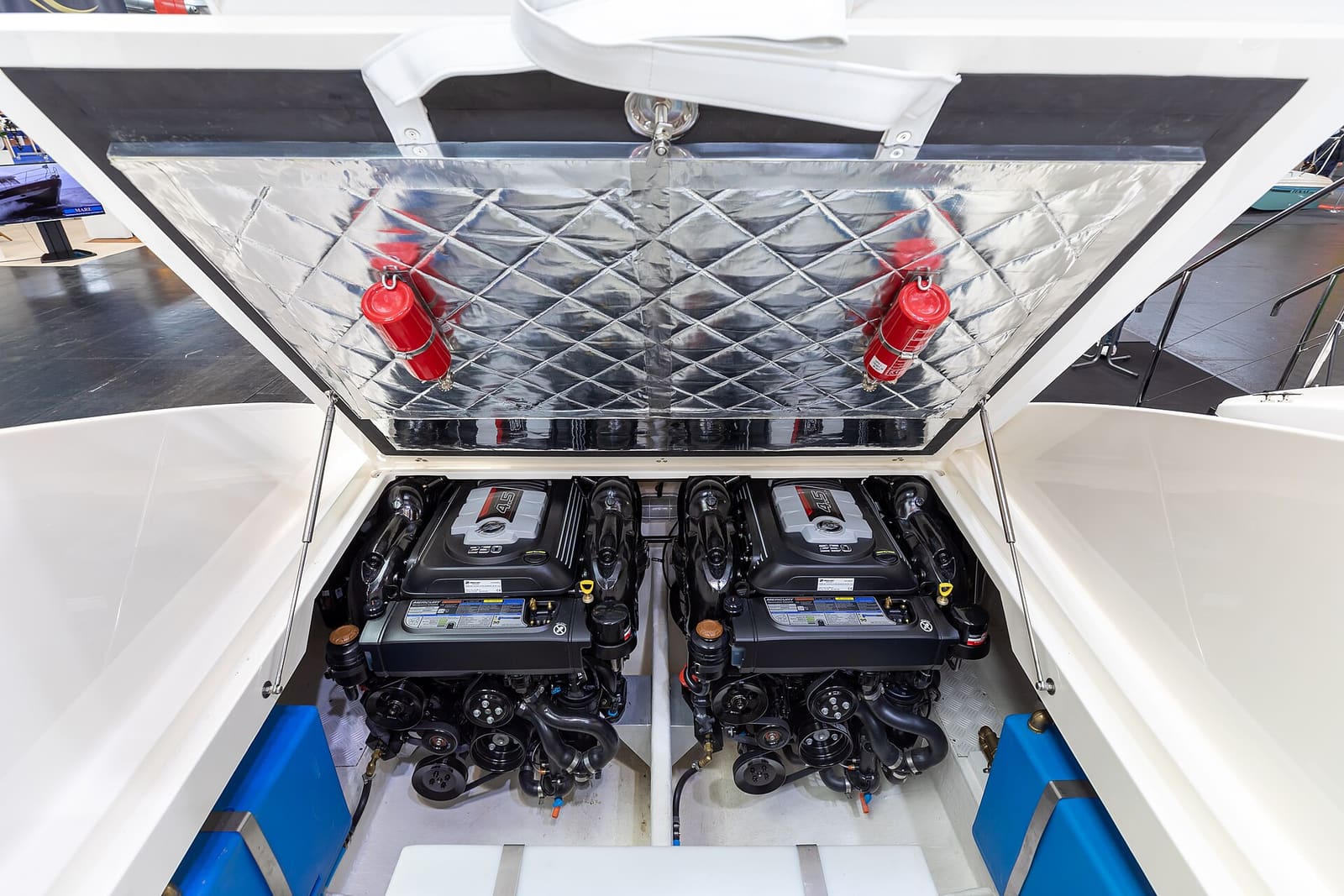
How the system works. Most boats have two kinds of ducts: supply ducts that let fresh air in and exhaust ducts that take air out. The blower sits in an exhaust duct. Its pickup must be in the lower third of the compartment and above normal bilge water, where vapor collects. Outside, you see the vents (cowls or louvers) on the hull sides or deck.
Steps
Locate the blower switch at the helm, the warning label, the blower itself (a round fan housing in a hose, or a flange-mounted unit), each duct hose, and the matching vents outside. Follow each hose from the bilge to its vent. Note the blower's size and airflow rating (cubic feet per minute) from its label.
Open the engine hatch and smell the bilge before you touch any switch. BoatUS calls your nose one of the most sensitive vapor detectors aboard. The blower can clear vapor, but it cannot clear spilled fuel, which keeps giving off more vapor.
Turn the blower on. You should hear it clearly. Go to the exhaust vent on the outside of the boat and hold a tissue or a light strip of plastic at the opening: it should blow outward steadily. If you hear the motor but feel little or no air, the hose is probably disconnected, crushed or blocked.
Run the blower for at least 4 minutes before every start, after every fueling, and whenever the boat has sat with the hatches closed. Discover Boating stresses running it after refueling. Do a final sniff before you turn the key.
With the blower off, check each hose for cracks, crushed sections, kinks and loose ends. A duct that has slid off the blower or the vent fitting moves air around inside the compartment instead of out of it. Keep hoses away from the exhaust manifolds and other hot parts, and secure them so they cannot fall into bilge water. The blower's pickup end should sit low (lower third) but above the water line in the bilge.
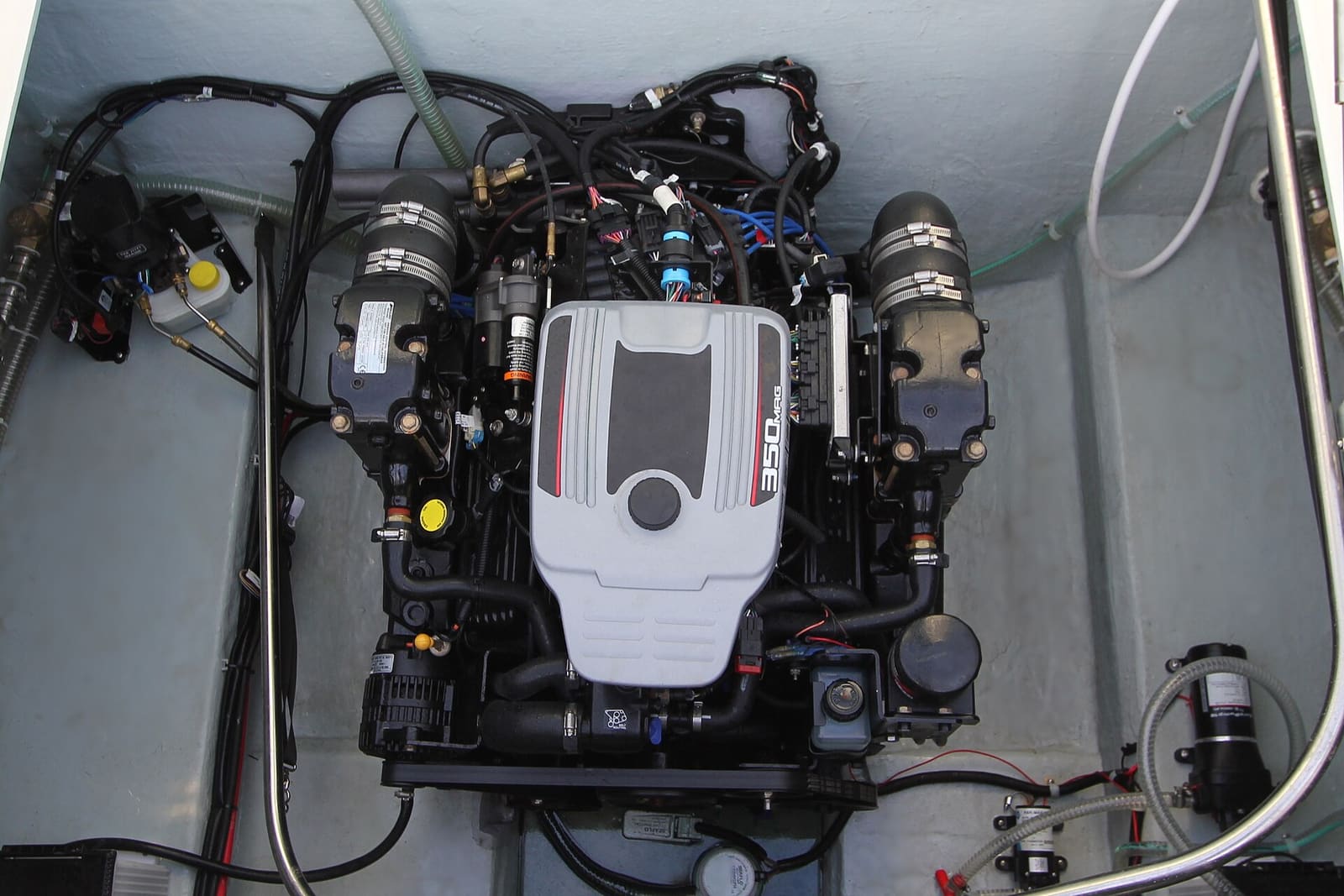
A gasoline inboard in its compartment. Vapor settles in the low spaces around and under the engine, which is why the blower pickup must sit low. Photo: Hiro / Wikimedia Commons · CC BY-SA 4.0 Look into each vent and cowl. The BoatUS Foundation notes birds and insects love to nest in ducts. Clear out nests, leaves and wasp nests. Make sure a cover, cushion or snap-on canvas does not block a vent when the boat is in use.
The blower should be screwed down firmly and its housing should not be cracked. Spin the fan by hand with the power off: it should turn freely without grinding. A seized or noisy blower is near the end of its life.
Look for green corrosion, loose connectors, electrical tape splices and wires lying in bilge water. With the switch on, check for battery voltage at the blower's wires. Voltage there but no fan means a failed motor. No voltage means a fuse, switch or wiring problem upstream. Replace a blown fuse with the same rating only; if it blows again, find the short before going further.
BoatUS points out that most bilge blowers are made for short runs, not continuous use; running them for hours can overheat them. If you want to ventilate while idling or cruising slowly, make sure your blower is rated for continuous duty. Natural vents work much better when the boat is moving than when it is sitting still.
If the blower is dead, buy a marine bilge blower labeled ignition protected, with at least the airflow of the old one and the same hose diameter. Ignition-protected parts are built so they cannot spark into fuel vapor. Never use a household, automotive or computer fan. Choose the same mounting style (in-line or flange) so the ducts fit without stretching. The federal standard sets the minimum blower rating from the volume of the engine compartment, so never downsize; two smaller blowers can be combined, but have a pro check the numbers if the engine, the compartment or the ducts were changed.
Disconnect the battery first and confirm there is no fuel smell. The blower must pull air from the bilge and push it out through the exhaust vent: check the arrow on the housing. Clamp both hoses securely. Use heat-shrink connectors and tinned wire, keep the splices high and dry, and keep the fuse the size the blower maker specifies.
Reconnect the battery, run the blower and repeat the tissue test at the outside vent. Record the date in BoatMend. Check airflow again at the start of each season and after any work in the engine compartment.
Common mistakes
- Turning the key the moment you sit down, without 4 minutes of blower and a sniff.
- Trusting the sound of the motor without checking that air actually leaves the boat.
- Replacing a blower with a cheap non-marine fan that is not ignition protected.
- Installing the new blower backward, so it blows air into the bilge instead of out.
- Leaving the duct disconnected after engine work, or letting the pickup end lie in bilge water.
- Running a short-duty blower for hours until it overheats.
- Using the blower to "clear" a fuel smell instead of finding the leak.
When to call a pro
- You smell gasoline, see fuel in the bilge, or the smell comes back after ventilating (stop and call a marine mechanic; do not start the engine)
- The blower wiring is melted or the fuse keeps blowing
- Ducts need to be rerouted, added or resized, or vents cut into the hull
- You are not sure your boat meets the USCG ventilation standard after a repower or modification
- You want a gasoline fume detector or a continuous-duty blower installed
Tips
- Put a simple "BLOWER 4 MIN" reminder next to the key if the original label has faded.
- Turn the blower on as you start your pre-trip walk-around. By the time you are done, it has run long enough.
- A gasoline fume detector is a good extra layer of protection, especially on cabin boats. Fireboy-Xintex, which makes them, points out why: a leak keeps making new vapor as fast as the blower clears it, and the blower only runs before start-up, so it does nothing about a spark from a short circuit or a charging battery later on. A detector watches the bilge all the time, and some models switch the blower on automatically when they sense fumes. Have it installed per the maker's manual, with the sensor low in the bilge.
- If you have just worked on the fuel system (new tank, hoses, fuel pump or carburetor), sniff extra carefully low in the bilge before the first start. That is when new leaks show up.
- After fueling, close the fill cap, wipe up drips and open the engine hatch for a sniff before running the blower.
Official references
We read these to write this guide. Your engine's own manual always wins.
Safety: BoatMend is for information only and does not replace a certified marine technician. You are responsible for your safety and your boat. Read the full disclaimer.
Last updated 2026-10-24
Related guides
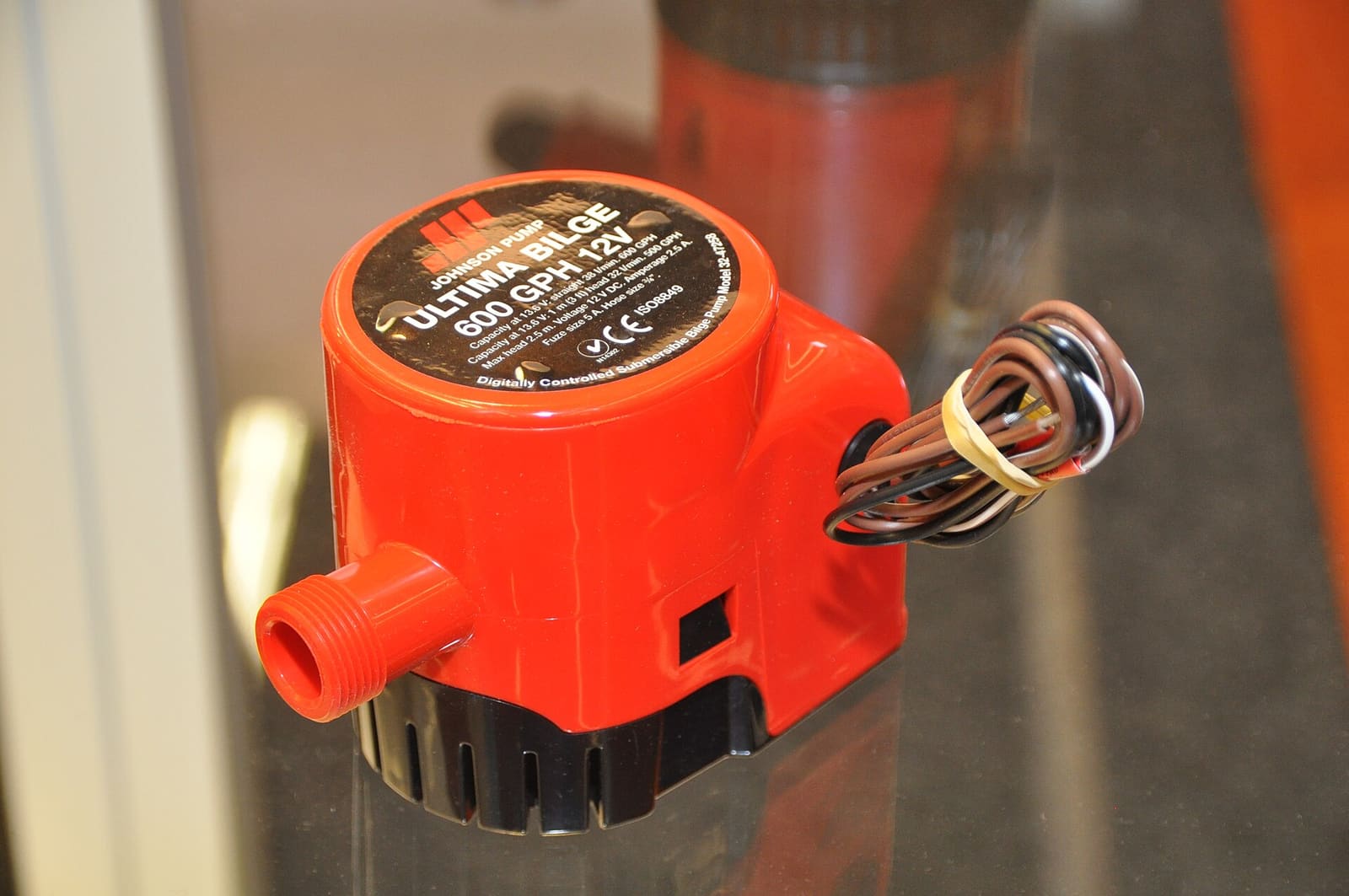
How to Test and Clean Your Bilge Pump and Float Switch
Make sure your bilge pump actually moves water overboard, both on the manual switch and automatically through the float switch. A working bilge pump is one of the most important safety systems on any boat that stays in the water.
Engine Won't Start or Won't Crank - Troubleshooting Guide
Find out why your boat engine will not turn over or will not fire, starting with the simple things owners miss most, like the kill switch lanyard and battery switch. Many no-starts are fixed at the ramp in minutes without a tow.
Ethanol (E10) Fuel Care: Stabilizer, Phase Separation, Fuel Lines and Tank Vents
Keep E10 gasoline from damaging your boat engine. Learn how to use stabilizer, test for water and phase separation, and inspect the fuel lines, primer bulb, anti-siphon valve and tank vent. Most fuel-related breakdowns start with one of these.

USCG Required Safety Equipment Check by Boat Length
Walk through your boat and confirm you carry every piece of safety gear the US Coast Guard requires for your boat's length and type, and that none of it is expired or worn out. Missing or expired gear is one of the most common tickets on the water, and it is the gear you need when things go wrong.
Marine Battery Care: Test, Charge and Store for Winter
Check your boat battery's health, charge it the right way for its type (flooded, AGM or lithium), and store it so it is ready in spring. Most "boat won't start" calls start with a neglected battery.
Launch Day and Haul-Out Checklist for Trailer Boats
A step-by-step checklist for getting your boat off the trailer and back on again safely and quickly, from the drain plug and tie-downs to the blower and ramp etiquette. Following it in order prevents the classic mistakes that sink boats and back up the ramp.
How to Winterize a Sterndrive (MerCruiser, Volvo Penta and Similar)
Get the water out of your sterndrive engine, protect it with antifreeze, and service the drive before storage. A cracked block or manifold from one missed drain plug can cost thousands, and doing it yourself saves a shop bill of several hundred dollars.