How to Get Better Fuel Economy From Your Boat
Boat fuel is expensive, but most owners can stretch every gallon further without buying anything. Learn how to find your boat's most efficient cruise RPM, why a clean bottom, the right prop, good trim and less weight matter most, which tune-up items count, how fuel flow data helps, and which fuel-saving myths to ignore.
Time
1 h 30 min
Applies to
Outboard, Sterndrive (I/O), Gas inboard, Marine diesel
Safety first: Do your fuel tests in open water with light traffic, keep a lookout while you read the gauges, and wear the engine cut-off lanyard. Saving fuel never means leaving with less than you need: plan on using one-third of your fuel going out, one-third coming back, and keeping one-third in reserve.
Owners often ask
- What RPM should I cruise at to get the best gas mileage?
- Does trimming the motor up really save fuel?
This guide walks you through it. Still stuck? Ask the AI Mechanic about your engine.
Tools
- GPS speed readout (chartplotter or phone app)
- Tachometer or engine display with fuel flow, if your engine supports it
- Notebook, phone or spreadsheet for a fuel log
- Fuel receipts (to check your numbers at the pump)
Parts & supplies
- None required
Before you start
A boat pushes through water, which takes far more energy than rolling a car down a road. That's why small changes in speed, weight, trim and hull condition make a big difference at the pump. The goal is miles per gallon (mpg): speed divided by gallons burned per hour (gph).
Know what your engine can tell you. Many modern engines report fuel flow on their gauges or apps (Mercury SmartCraft and VesselView, Yamaha Command Link, and others). Yamaha explains its engines calculate fuel use from how long the injectors are open, and the readings are accurate enough to match what you put back in at the pump. Without fuel data, you can still measure mpg with a GPS and your fuel receipts (step 2).
Steps
If you have live mpg or fuel flow, Mercury's method is simple: get on plane, let the trim settle, then change the throttle in small steps and watch for the highest mpg. Without automatic trim, adjust trim and throttle together in small amounts. Yamaha notes some owners find their boat is actually most efficient a bit faster than they thought, while others save a lot by dropping a few hundred RPM.
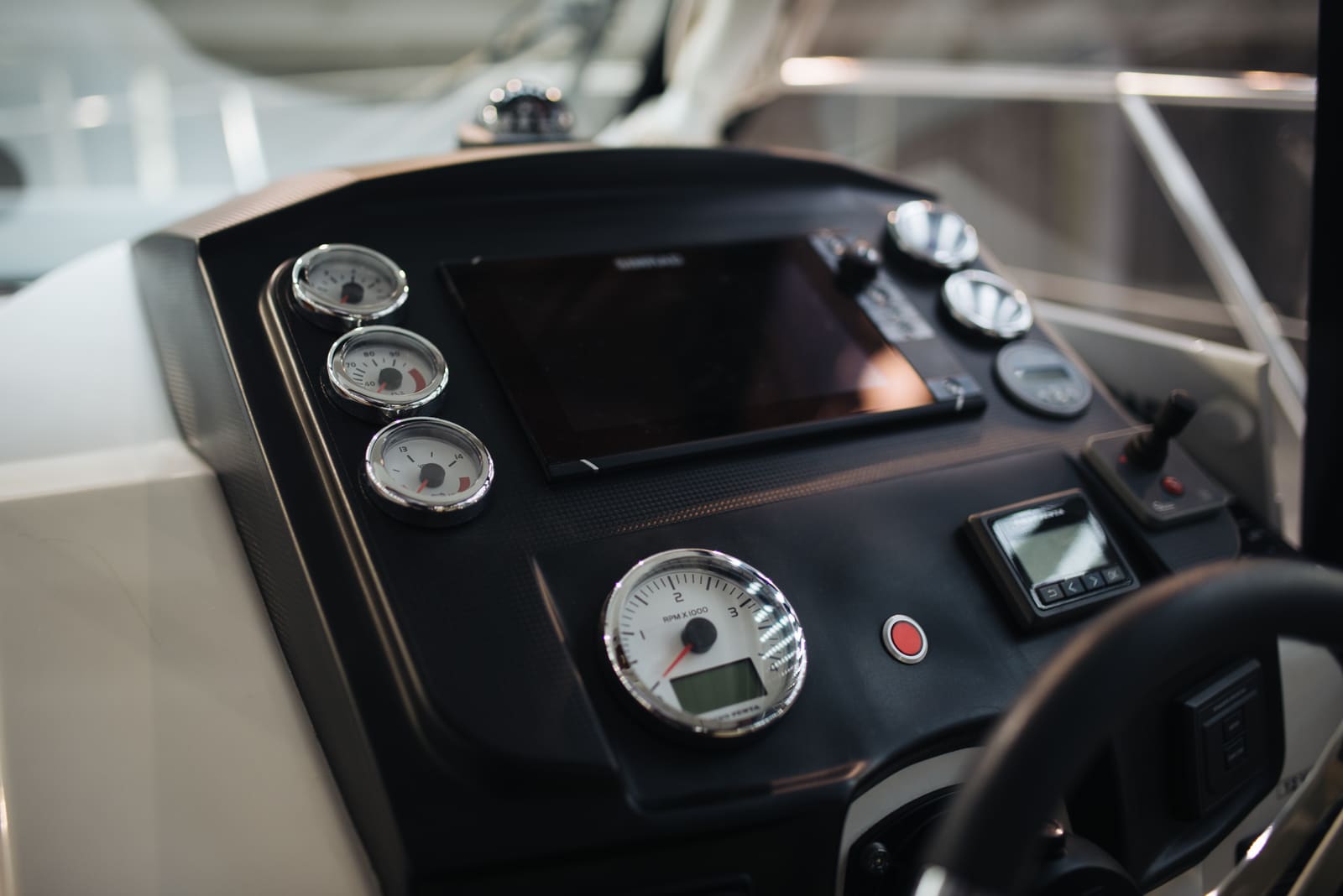
Your tachometer and engine display are your best fuel-saving tools. Photo: Shixart1985 / Wikimedia Commons · CC BY 2.0 Mercury describes this approach:
- Start with a full tank. Run at your first test RPM (just on plane) for a set time, such as 10 minutes, half in each direction, and average the GPS speeds.
- Refill and note how much fuel it took. Multiply to get gallons per hour.
- Repeat in steps of about 500 RPM up to full throttle.
- Divide speed by gph for each step to get mpg. Keep trim and trim tabs the same for every run so you compare fair numbers.
Discover Boating's first tip is simply that slower speeds use less fuel. Mercury notes the most efficient speed overall is usually slow displacement speed, before the boat gets on plane; once on plane, most outboard boats find their best mpg somewhere in the 3,000 to 5,000 RPM range, and efficiency falls steadily above that. Wide-open throttle is almost never the efficient setting. Avoid running in the "plowing" zone just below plane, where the bow is high and the boat is working hard without going fast. BoatUS adds that a planing hull is usually most economical just after it comes up on plane: it takes a fair bit of power to get over the hump, but once you're on plane and trimmed, you can often ease the throttle back a little without losing speed.
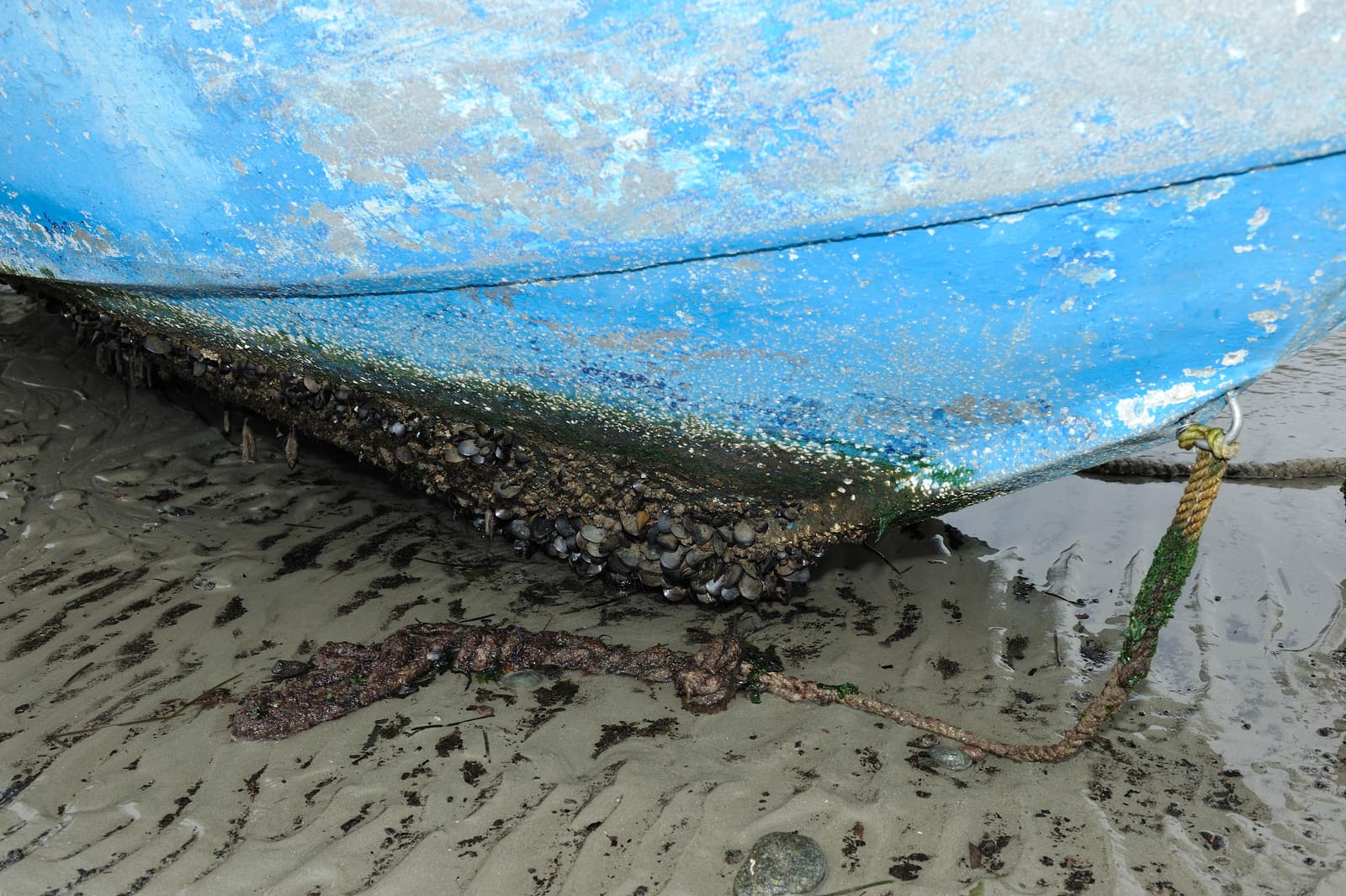
A fouled bottom is like pushing a carpet through the water. BoatTEST explains that barnacles, grass, tube worms and slime quickly add drag, and recommends choosing antifouling paint that suits your home waters. Clean or haul the boat on a schedule, and keep the prop, trim tabs and intakes clean too (see the hull cleaning and bottom paint guides).
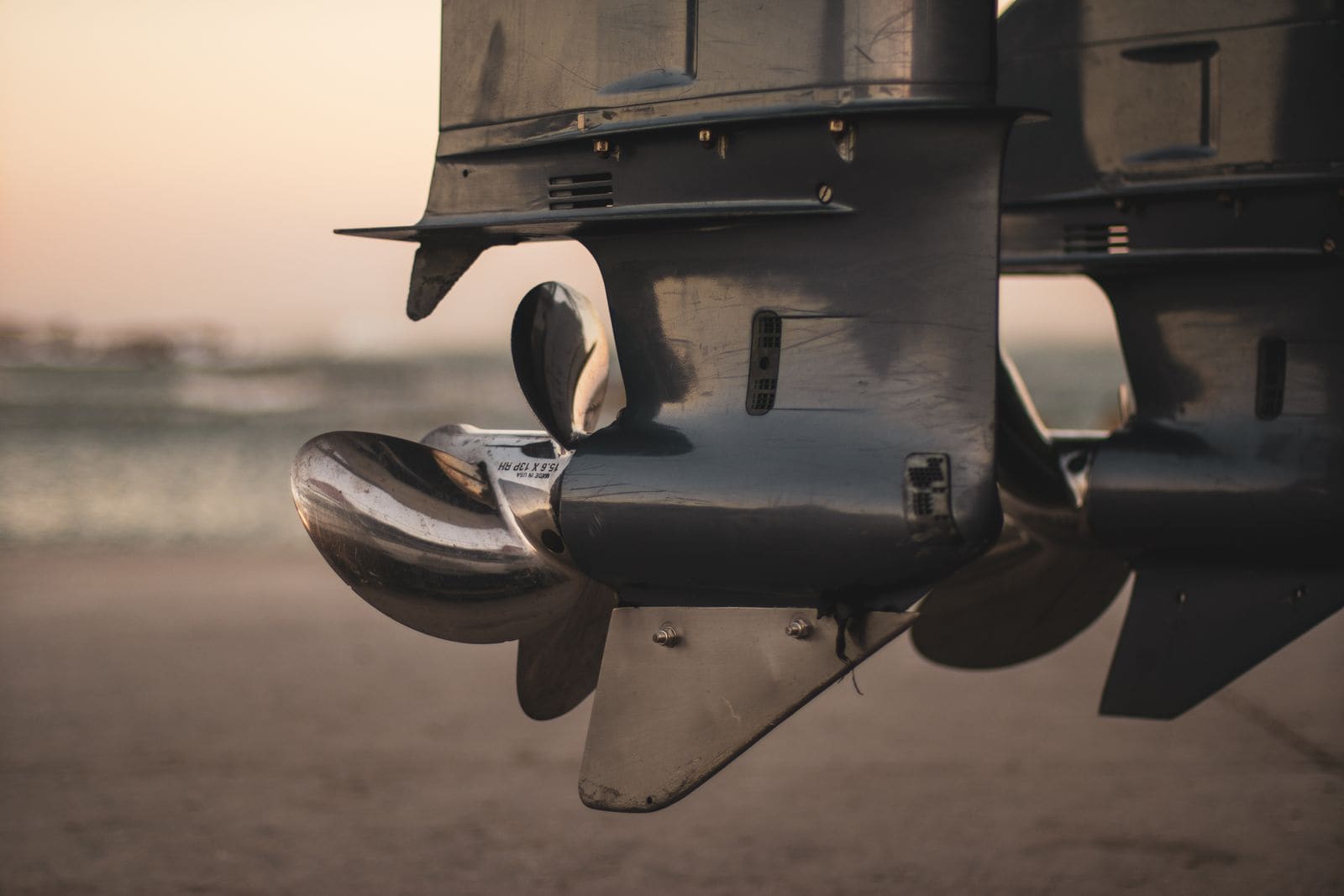
A dinged, bent or wrong prop wastes fuel. Discover Boating says that if your boat is slow out of the hole or lacks top speed, the prop may be wrong. Mercury notes the prop that gives your boat the best top speed is the most efficient at WOT, but may not be the best at cruise, so ask your dealer about props that suit how you really run. Your engine should reach its WOT RPM range from the owner's manual with a normal load. BoatUS estimates a dinged and bent prop can cost you around 10 percent of your fuel, and prop shops can measure how far out of spec it is and repair it. See the propeller guide for checks and repairs.
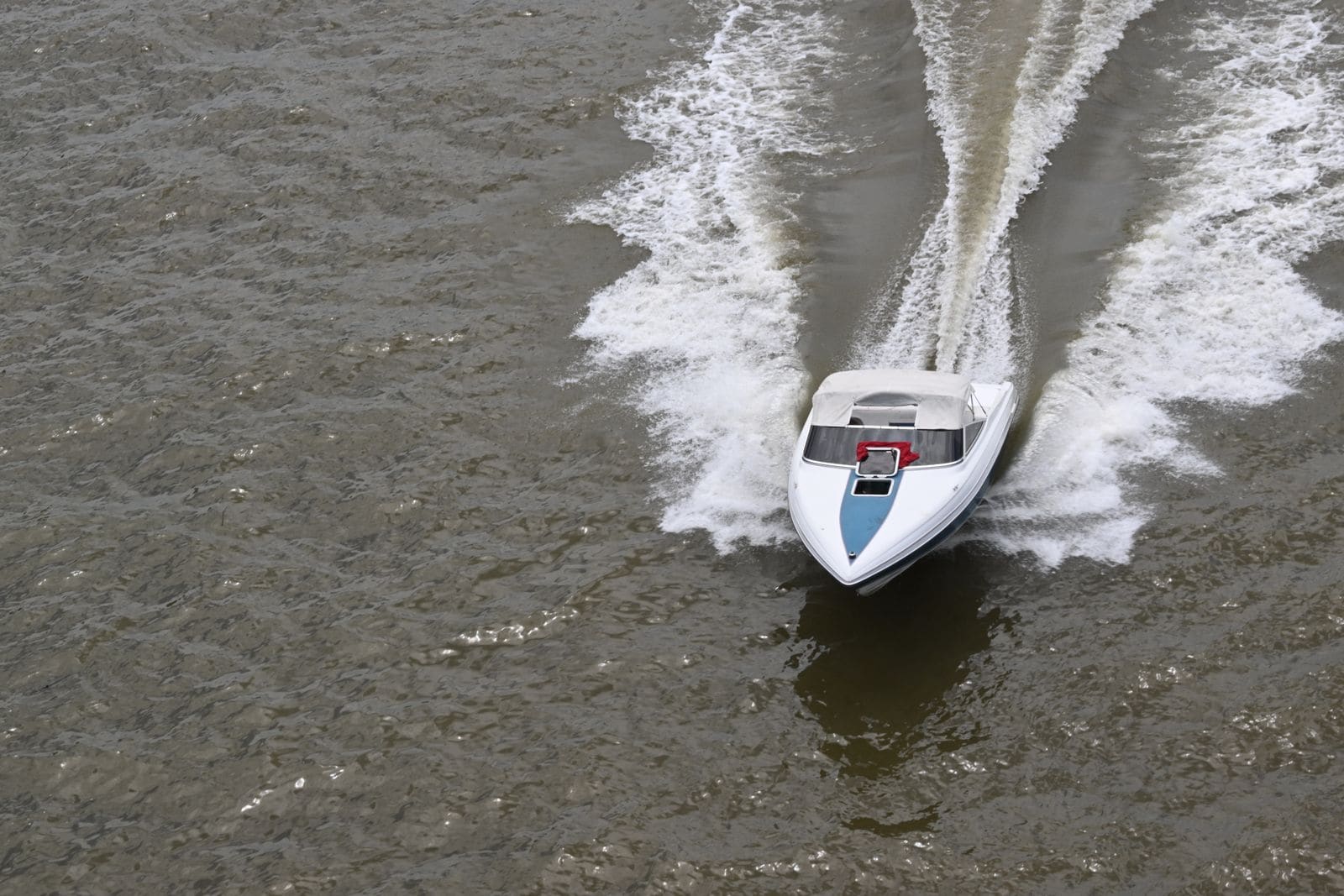
Mercury's basic sequence: trim fully in (down) at idle and while getting on plane so the prop bites, then trim out a little at a time once you're at a steady speed. Trim back in for turns and when running into a chop. Trimming out lifts the bow and reduces the wetted hull, which cuts drag. Too much trim lets the prop ventilate (grab air), so RPM rises and speed falls. With a live mpg display, trim up slowly and stop where mpg peaks. Discover Boating notes trim tabs used correctly reduce drag, especially while getting on plane; once on plane, raise them until the boat runs level. A Boating Magazine racer put it simply: a boat set up so it doesn't need much trim is more efficient.
A few more trim checks:
- Look at your wake. BoatUS's technical editor notes a well-trimmed boat usually throws the smallest wake at a given speed. A big, plowing wake means you're pushing water and burning fuel.
- Sterndrives: you can't see the drive, so use the gauge. Mercury's advice is to trim up gradually as you accelerate and stop just before the bow starts to bounce (porpoise), which is usually the most efficient point.
- Don't use trim tabs to hold up a badly loaded boat or level a list. BoatUS says that adds drag and can hide a dangerous load; move or remove the weight instead.
Extra weight means the hull sits deeper and drags more. Discover Boating has watched owners clear out around 250 pounds of things they didn't need. Ideas:
- Empty lockers and keep only what you use, plus required safety gear.
- Don't carry full water or holding tanks if you don't need them.
- Carry the fuel the trip needs plus a healthy reserve, not always a full tank on a short outing (gasoline weighs a little over 6 pounds per gallon).
- Spread weight evenly and avoid loading the bow.
Discover Boating suggests keeping time idling at the dock to a minimum. Warm up as your manual recommends, then go. Mercury's service team says a fuel-injected engine usually needs only a minute or two to reach operating temperature (longer in very cold weather, and a few minutes more for carbureted engines), and that warming up much longer just wastes fuel. On diesels, follow the maker's guidance for warm-up and avoid long periods of very light load; ask your dealer what's right for your engine.
A healthy engine burns fuel efficiently. Follow the maintenance schedule in your manual:
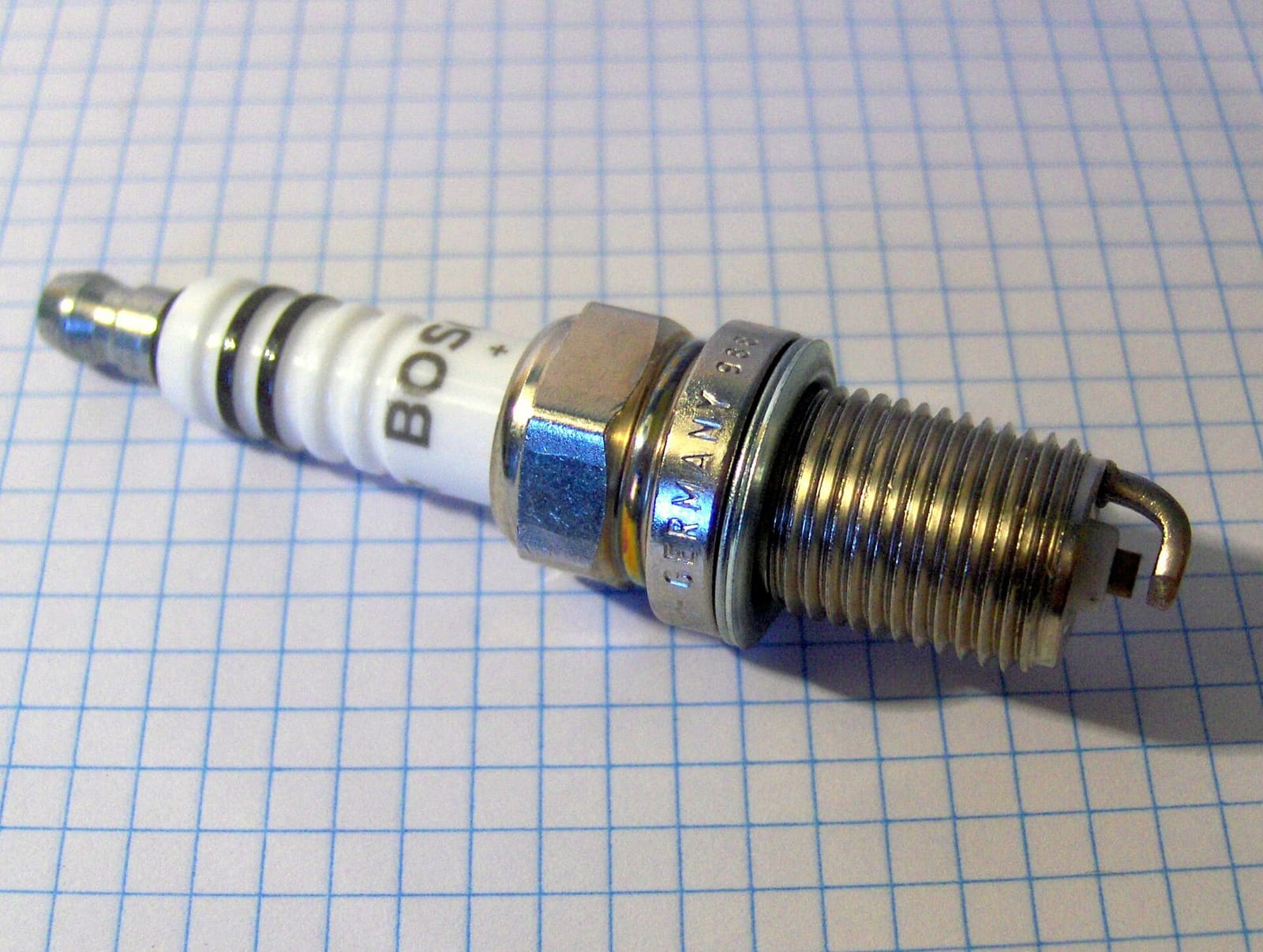
- Spark plugs (gasoline) and fuel filters, including the water-separating filter.
- Clean, fresh fuel. Mercury recommends E10 at most and treated fuel for storage; water or phase-separated fuel hurts performance.
- A clean air intake and, on diesels, clean air and fuel filters.
- The correct engine oil and a cooling system that keeps temperature normal. Discover Boating adds: use the gasoline grade your engine maker specifies.
If your engine has no fuel data, an aftermarket fuel flow sensor or engine data gateway can show gph and mpg on a chartplotter. On gasoline boats, adding a sensor means opening the fuel line, which is a job for a qualified technician using marine-rated parts. Even without one, a fuel log (step 12) gives you most of the benefit.
On twin-engine boats, engines running at different RPM or trim waste fuel and cause vibration. Sync them (see the twin engine sync guide) and compare each engine's fuel flow at the same RPM: one engine burning clearly more than the other is worth a check.
Each time you fill up, note gallons, engine hours or trip distance, and conditions. Over a season you'll see your real average, spot when economy slips (often the first sign of a dirty bottom or prop damage), and know your safe range. If economy suddenly drops, work through the boat-is-slower diagnosis guide.
Don't let the fuel gauge be your log. BoatUS points out that boat gauges are notoriously inaccurate: odd-shaped tanks built into a V-hull can read half full when three-quarters is gone, readings change between rest and planing, and sloshing makes them jump. Track gallons burned instead, and remember that a headwind, an adverse current, rough water or a fouled bottom can cut your range well below your calm-day numbers. Running out of fuel is one of the most common reasons boaters call TowBoatUS.
Common mistakes
- "Premium fuel gives better mileage." Discover Boating's advice is to use the grade your engine maker specifies. Paying for higher octane than your manual calls for is not a fuel-saving trick.
- "Cheaper E15 saves money." E15 is often the lowest price at roadside pumps, but Yamaha says E15 and E85 should not be run in any Yamaha outboard, and Mercury warns that running fuel with more than 10% ethanol voids warranty coverage on many repairs. Read the pump label and stay at E10 or less unless your manual says otherwise.
- "A smaller engine always saves fuel." Yamaha notes an underpowered boat can burn more fuel at cruise than one with enough power, because it has to work harder.
- "Full throttle gets me there faster, so it costs the same." Fuel burn climbs much faster than speed near WOT.
- "Max trim is fastest and most efficient." Past the sweet spot, the prop ventilates and you lose speed and mpg.
- Buying gadgets or additives that promise big mpg gains instead of fixing the basics: hull, prop, trim, weight and speed. Even Yamaha, which sells fuel additives, notes that no additive will restore stale fuel or remove water.
- Testing mpg with different loads and trim each time, then comparing the numbers.
When to call a pro
- Fuel economy drops suddenly and you can't find a cause in the hull, prop or load.
- The engine can't reach its WOT RPM range, or you get warning lights or rough running.
- You want a fuel flow sensor installed on a gasoline fuel line.
- Prop selection for a new use (heavier loads, watersports, different altitude): a dealer or prop shop can lend test props.
Tips
- Write your best cruise RPM on a piece of tape by the throttle so everyone who drives the boat uses it.
- Check mpg in calm water; chop and wind can change results a lot.
- A cleaner bottom and lighter boat also mean better acceleration and a smoother ride.
Official references
We read these to write this guide. Your engine's own manual always wins.
- Mercury Marine – How to Find the Ideal Cruising Speed on Your Boat (Dockline)
- Yamaha Outboards – Take Command of Fuel Efficiency
- Discover Boating – Tips for Reducing Fuel Usage
- Discover Boating – How to Make a Boat Faster
- Boating Magazine – How to Increase the Performance of an Outboard Motor
- Mercury Marine – Prop Bite, Understanding Propeller Slip (Dockline)
- BoatTEST – See What Happens with Boat Bottom Cleaning Efficiency
- Mercury Marine – Fuel Basics (Maintenance Made Easy)
- Mercury Marine – How to Trim Your Outboard for Optimal Performance (Dockline)
- Mercury Marine – Improving Your Boat's Fuel Efficiency (Dockline)
- BoatUS – Getting an Outboard Boat on Plane
- BoatUS – How Not to Run Out of Fuel
- Yamaha Outboards – Maintenance Matters, Fuel and Fuel System
- BoatUS – Getting Up On Plane (2024, loading and trim tabs)
- BoatUS – Five Reasons You May Need To Change Your Prop
- Mercury Marine – How to Trim Your Boat's Sterndrive Efficiently (Dockline)
- Mercury Marine – Ask the Pro, Should I Warm Up My Boat Engine? (Dockline)
- Mercury Marine – Beware of E15 at the Pump (Dockline)
- Yamaha Outboards – Owner Center FAQs (E15 and E85)
Safety: BoatMend is for information only and does not replace a certified marine technician. You are responsible for your safety and your boat. Read the full disclaimer.
Last updated 2026-10-25
Related guides
Boat Slower Than It Used to Be? How to Find the Cause
When your boat loses top speed or takes longer to get on plane, the cause is usually something you can check yourself: extra weight, water in the hull, trim, a dinged or fouled prop, or a dirty bottom. This step-by-step diagnosis goes from the cheapest checks to the harder ones and explains what your RPM and GPS speed are telling you.
Propeller Care: Inspect, Remove, Replace and Choose the Right Pitch
Check your prop for damage, pull it to clear fishing line and grease the shaft, reinstall it correctly, and learn how pitch affects your engine's wide-open-throttle RPM. The right prop in good shape protects your engine and often makes the boat run better and use less fuel.
How to Clean, Remove Oxidation and Wax Your Boat's Gelcoat (Plus Pontoon Tubes)
Wash your hull the right way, bring back chalky, faded gelcoat with compound, and seal it with wax so it stays glossy and protected from the sun. Includes how to clean and protect the aluminum tubes on a pontoon boat.
Bottom Paint (Antifouling): Do You Need It, Which Type, and How to Repaint
Learn whether your boat needs antifouling bottom paint, how ablative and hard paints differ, and how to prep and roll on a fresh coat safely, without poisoning yourself or the water and without ruining an aluminum hull.
How to Inspect and Troubleshoot Hydraulic and Electric Trim Tabs
Keep your trim tabs working with a simple seasonal check of the blades, anodes, fluid, lines and wiring, and track down the usual faults when a tab won't move, only one side works, or the tabs stay stuck down.
How to Inspect and Replace Spark Plugs
Pull, read and replace the spark plugs on a gas outboard, sterndrive, inboard or PWC. Fresh, correctly gapped plugs help the engine start easily and run smoothly, and the old plugs tell you a lot about the engine's health.
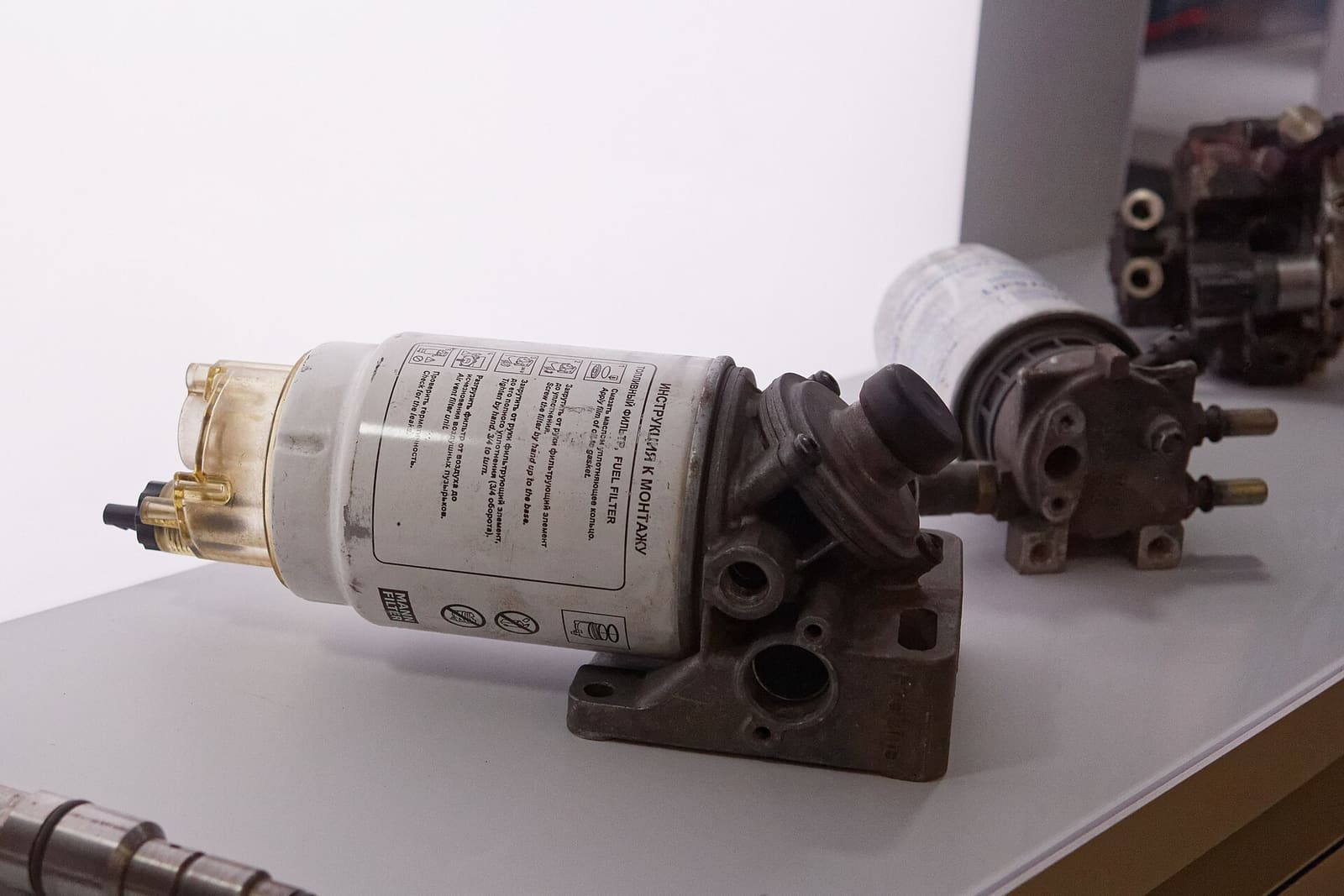
How to Replace a Fuel/Water Separating Filter (and Check for Water in Your Fuel)
Swap the spin-on fuel/water separator on your gas boat and learn to spot water and ethanol phase separation before it stalls the engine. It is one of the cheapest jobs on the boat and one of the best protections for a fuel-injected engine.
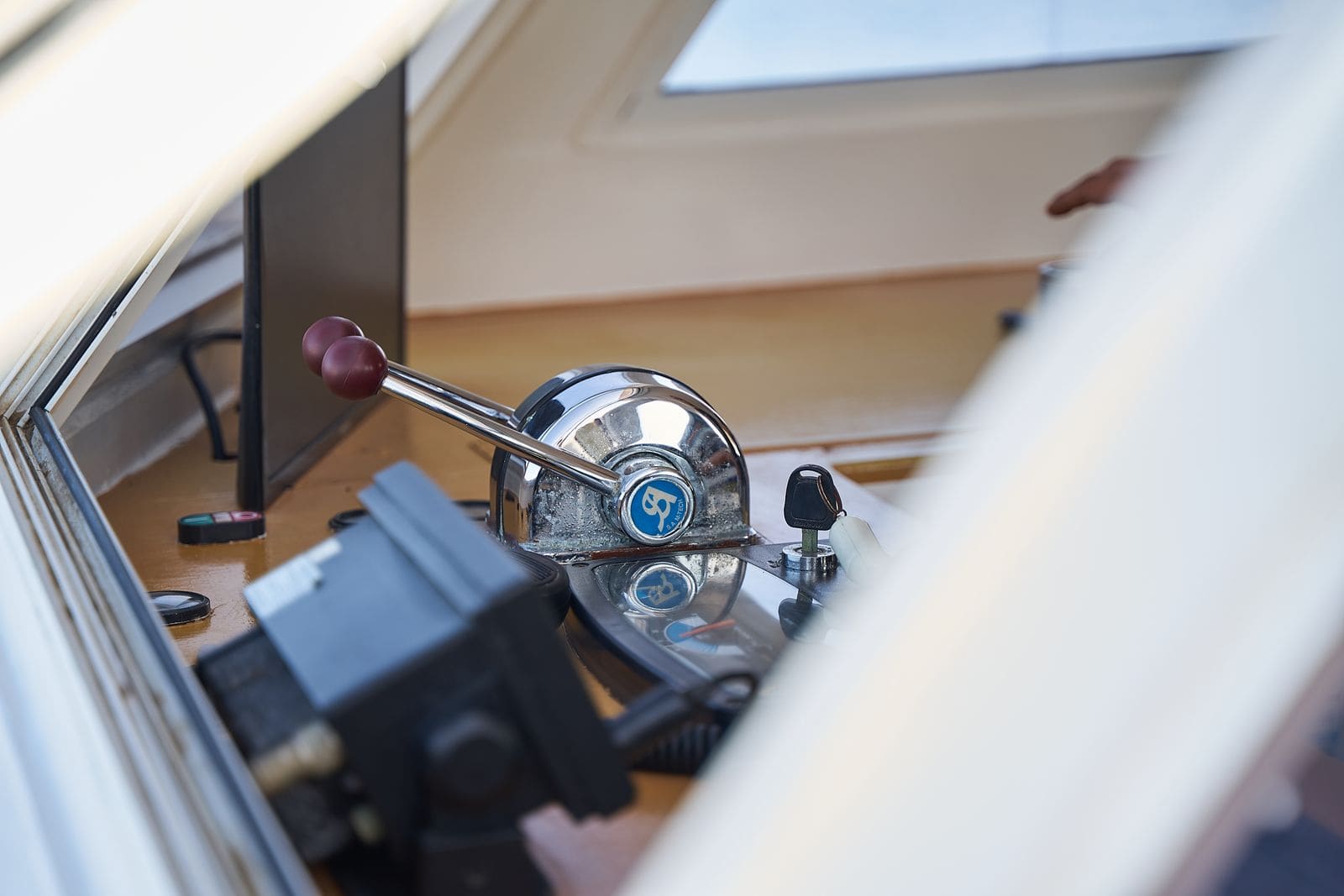
How to Synchronize Twin Engines (RPM and Trim)
Twin engines running at slightly different RPM cause a pulsing drone, extra vibration, uneven wear and wasted fuel. Learn how to sync them by tach, sync gauge or ear, use the one-button sync on digital controls, check that your tachs tell the truth, match trim, and know when uneven engines or cable adjustment are a dealer job.
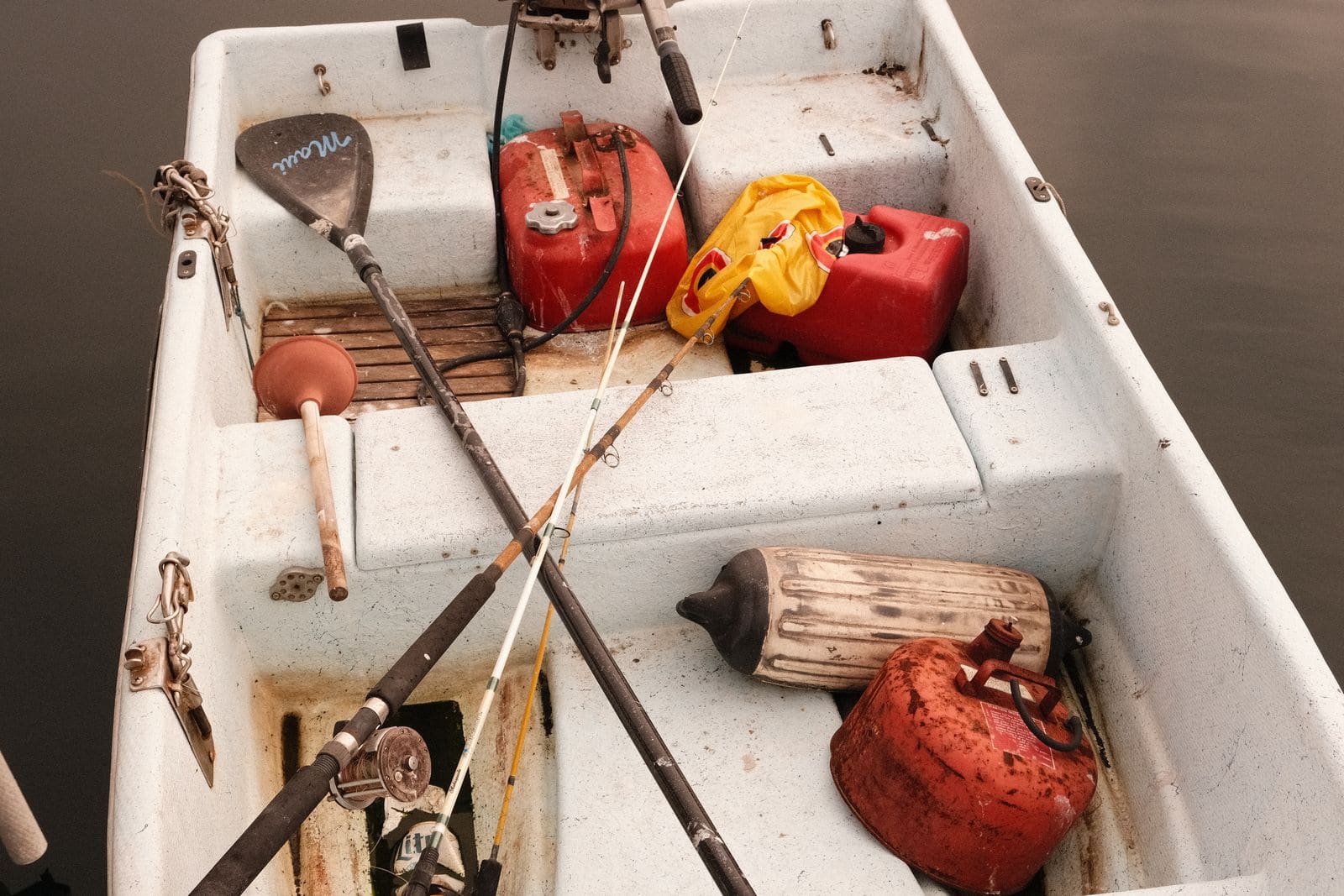
Ethanol (E10) Fuel Care: Stabilizer, Phase Separation, Fuel Lines and Tank Vents
Keep E10 gasoline from damaging your boat engine. Learn how to use stabilizer, test for water and phase separation, and inspect the fuel lines, primer bulb, anti-siphon valve and tank vent. Most fuel-related breakdowns start with one of these.