V-Drive Transmission Care for Wake and Ski Boats: Fluid, Cooler, Coupler and Shaft Seal
Wake boats and many ski boats put the engine in the stern, backward, and turn the power through a V-drive transmission. Learn how to check and read the transmission fluid, why the cooler and its drain matter in winter, what the coupler and shaft seal tell you, and which noises and leaks mean it's time for a technician.
Time
1 h
Shop would charge
$150-600
Applies to
Gas inboard
Safety first: Do every hands-on check with the engine off, the key out and the lanyard pulled; the coupler and shaft spin right next to where you kneel, and fluid and exhaust parts get hot enough to burn. When a check needs the engine running (warm fluid level, shifting), keep hands, hair and loose clothing well clear of the shaft, coupler and belts, and have the boat in the water or on the cooling-water hookup your manual specifies; inboards never run dry. If water is coming in around the shaft seal faster than a slow drip, or the bilge pump runs nonstop, treat it as an emergency: head for shore or call TowBoatUS, Sea Tow, or the Coast Guard on VHF 16 / 911.
Owners often ask
- How often should I change the V-drive transmission fluid on my wake boat?
- Why is my wake boat transmission fluid milky?
- Why is oil coming out of the vent on my V-drive box?
This guide walks you through it. Still stuck? Ask the AI Mechanic about your engine.
Tools
- Flashlight or headlamp
- Clean white rag or paper towels (to read fluid color)
- Oil extraction pump (if your transmission has no reachable drain plug)
- Drain pan and absorbent pads
- Wrenches for the drain plug and filter, per your manual
- Notebook or the BoatMend log
Parts & supplies
- Transmission fluid of the exact type your transmission manual specifies
- Filter or screen gasket, if your transmission has one
- Cooler anode (zinc), if fitted
- Antifreeze for winterizing, if your manual calls for it
Before you start
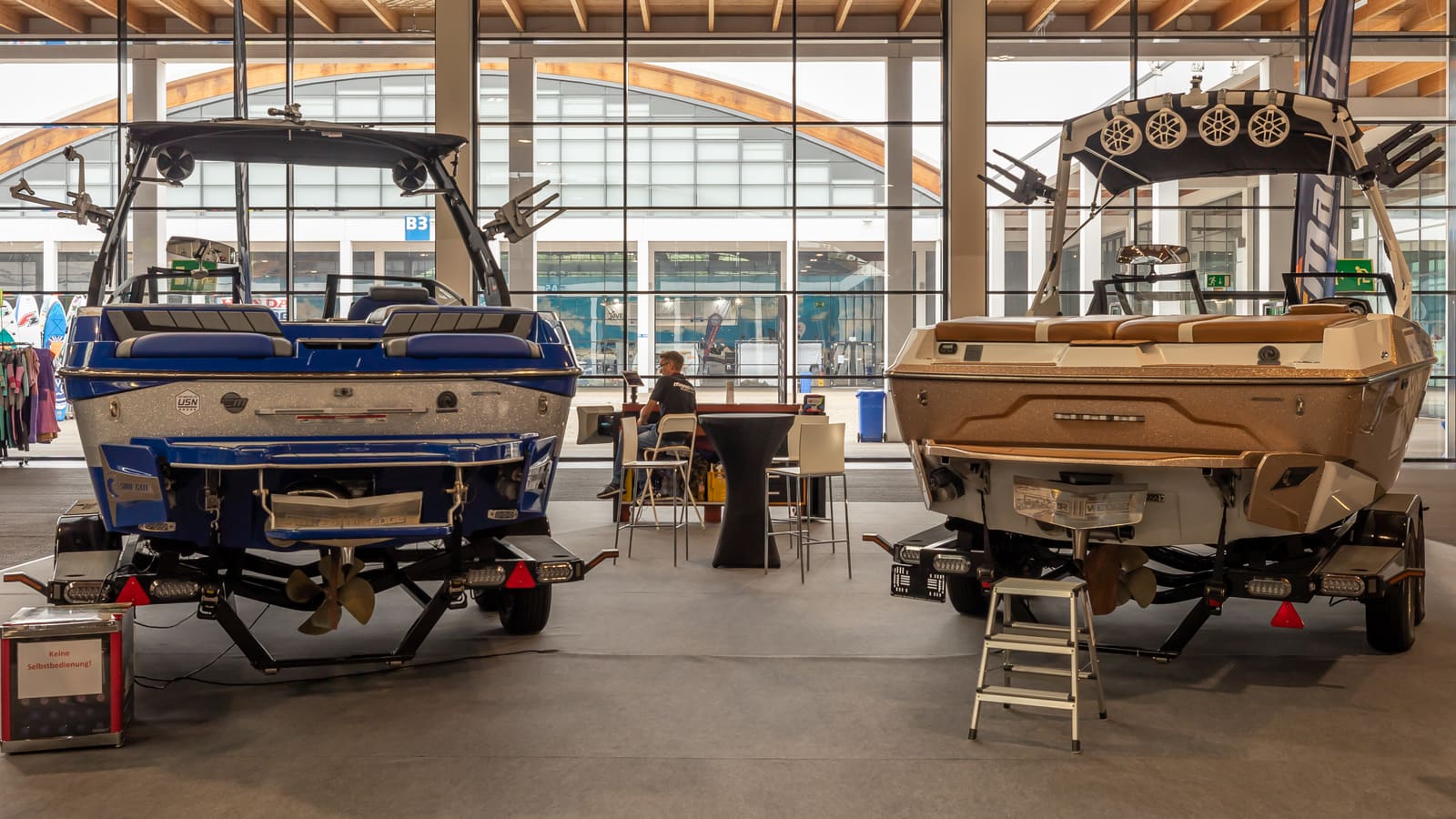
How a V-drive works. In a V-drive boat the engine sits far aft, mounted backward. Boating Magazine explains that the transmission bolts to what would normally be the front of the engine and turns the power back toward the stern, so the propeller shaft runs aft under the engine to the prop. That puts the weight in the stern (good for wakes) and frees up space in the middle of the boat. Common makers include ZF, Velvet Drive and Twin Disc; tow boats also use packages from engine suppliers like Indmar, Ilmor and PCM.
One unit or two. Many current boats use a single V-drive transmission. Some, especially older boats, have a regular transmission plus a separate V-drive gearbox behind it. Each may have its own fluid, dipstick or fill plug, and they may not take the same fluid. Your engine and transmission manuals say what you have.
What it needs. Compared with a sterndrive, Boating notes that inboard running gear has fewer parts to wear out or service. But wake boats work their drivetrain hard: heavy ballast, slow surf speeds and lots of shifting. The transmission's main needs are the right fluid at the right level, a working cooler, a straight shaft line and a sound shaft seal. The downside, as Boating also notes, is access: a crowded engine compartment with the belts facing the transom makes some jobs awkward.
Who should do what. MasterCraft recommends having the annual service done by a dealer and says shaft coupling alignment should be done only by a dealer. The checks below are what an owner can do between services.
Steps
With the engine compartment open and the engine off, find:
- the transmission (and the separate V-drive box, if you have one)
- its dipstick or fill plug, and any drain plug
- the filter or screen, if fitted
- the transmission cooler, a small cylinder or tube bundle in the raw-water hoses
- the coupler where the transmission output joins the prop shaft, and the shaft seal where the shaft leaves the hull
Take photos. They help when you talk to a technician or order parts.
Boating's ZF-based checklist starts with the outside: look for fluid running down the case, seals that are "sweating," and any water dripping onto the transmission from hoses above, which causes corrosion. Note wet spots under the coupler and the shaft seal too.
Many marine transmissions are checked warm with the boat level. Wakeboarding Magazine describes running the engine about five minutes while shifting a few times, then checking the level. Boating adds:
- Check right after shutdown. If you wait, fluid from the cooler drains back and gives a false overfull reading.
- A cold check can read above the mark, and that is normal; the mark shows the level with the transmission running.
Some transmissions have screw-in dipsticks that are read without screwing them in, others are read screwed in. Your manual says which.
If your boat has a separate V-drive box, don't assume it is checked the same way as the transmission. Some are read with the boat level and at rest after the oil has drained back, not hot right after a run. Owners often "top up" a box that only looked low, and an overfilled box can push oil out of its vent into the bilge. Follow the instructions for that box (your engine package maker or dealer has them).
Wipe the dipstick on a clean white rag:
- Automatic transmission fluid should be translucent reddish-pink.
- Gear oil or engine oil (if that's what your transmission uses) should look like maple syrup.
- Milky or pink-foamy means water, usually from a leaking cooler.
- Dark with a burnt smell, or gritty with particles, means overheating or wear.
Wakeboarding Magazine and Boating both say any of those last three is a reason to call a professional now, before a small problem becomes a failed transmission.
Boating's ZF guidance is to change it once a year at winter layup, using exactly the fluid type your manual specifies. The basic steps:
- Warm the transmission slightly so the fluid drains well, then shut down.
- Put a pan and pads under it, pull the dipstick to vent it, and remove the drain plug. If there's no reachable plug, pump the fluid out through the dipstick tube.
- Clean the screen or replace the filter if fitted. Metal or debris in the screen is a reason to consult a technician.
- Refill a little at a time, using the amount that came out as a guide, then run, shift and recheck the level warm.
If your boat has a separate V-drive box, ask your dealer or check the manual for its own fluid and schedule. Don't assume "maintenance free" means "never check." The diesel transmission oil guide covers the same job on cruiser gearboxes in more detail.
The cooler keeps the transmission fluid at a safe temperature, using raw water on most tow boats. Boating notes the cooler, if fitted, should be flushed and tested, its lines and fittings checked for leaks, and that coolers can corrode or clog with scale and often need replacing. If yours has an anode, replace it every year. A cooler that leaks internally sends water into the fluid (milky fluid) or fluid into the raw water.
With the engine off, look at the coupler (the two bolted flanges joining the transmission to the shaft):
- all bolts present and tight, with no rust streaks or shiny wear marks
- no grease or fluid flung around the area
Signs the shaft line is out of alignment include vibration that comes and goes with rpm, a shaft seal that wears quickly, and new noises. MasterCraft calls coupling alignment critical and complex, a dealer job done as part of annual maintenance. Engine mounts sag over time, so alignment drifts; the engine alignment guide explains why.
You can look at the mounts yourself. MasterCraft lists an engine-mount check owners can do: engine off and cool (the exhaust parts nearby get very hot), safety lanyard pulled and the control in neutral, then open the engine box, find the four mounts and check that the mounting hardware and adjustment lock nuts are tight. Look for cracked or oil-soaked rubber too.
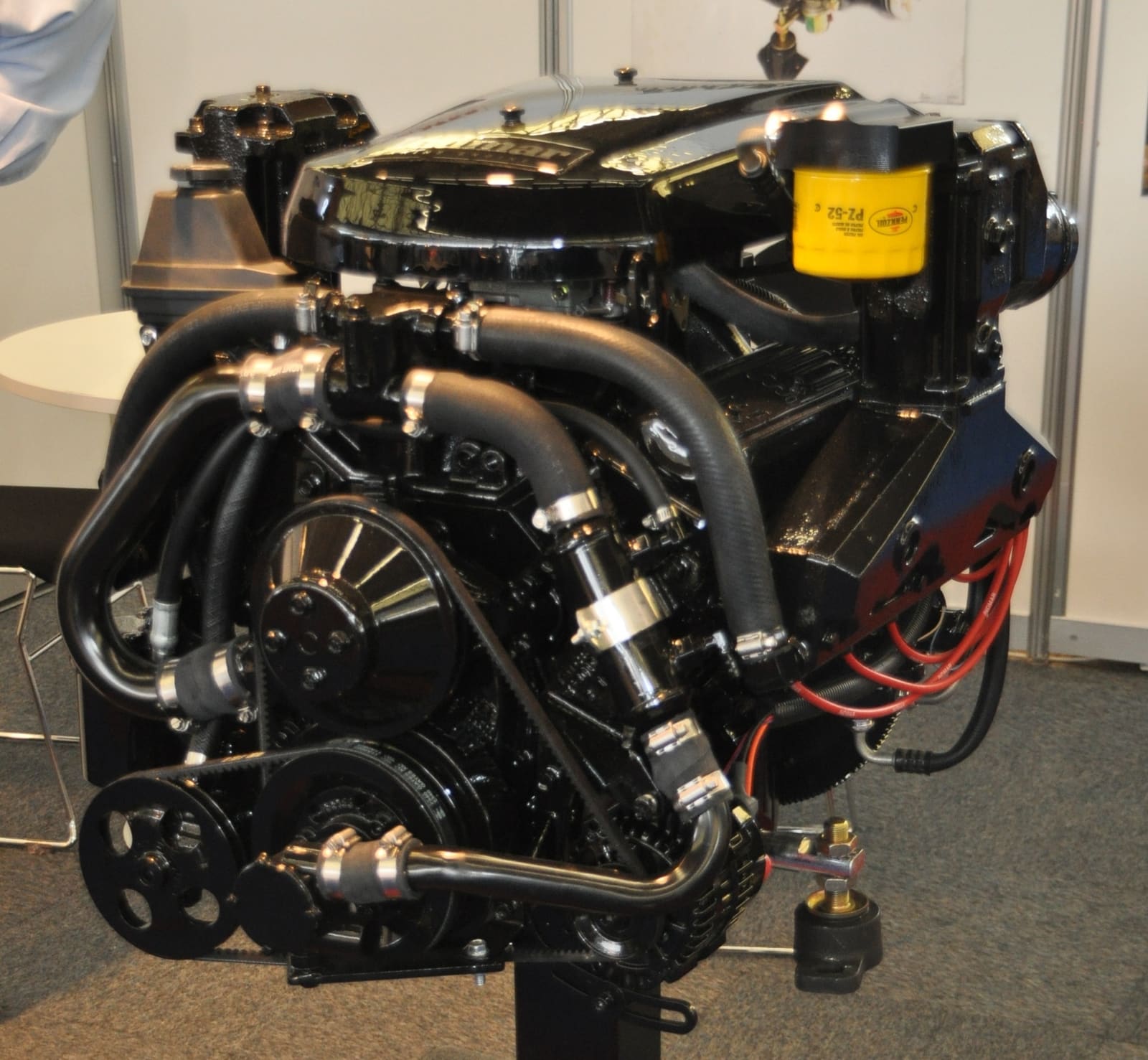
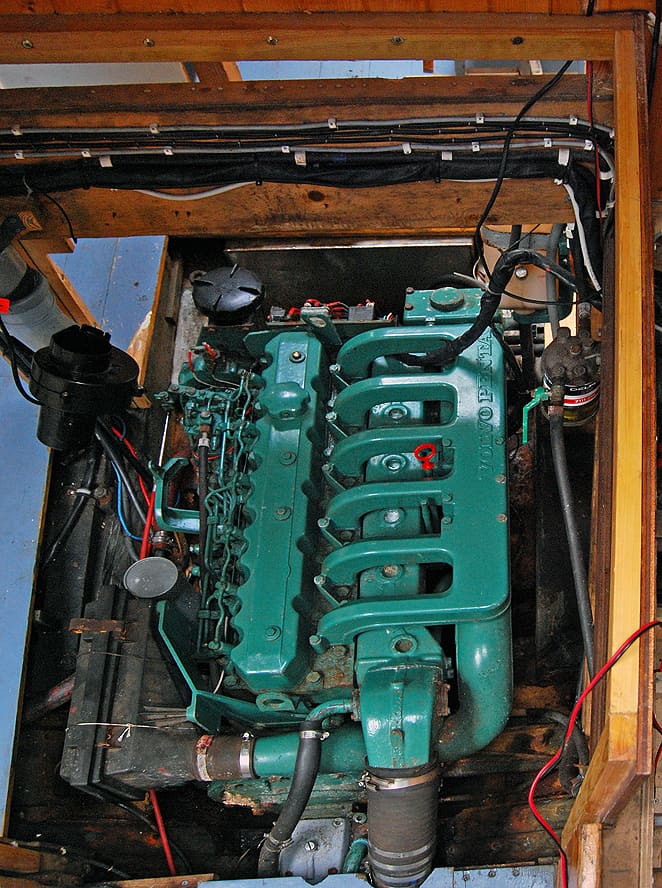
A gasoline V8 inboard of the type used in many ski and wake boats. The mount at lower right is a threaded stud with lock nuts on a rubber base; those nuts set the engine height and alignment. Photo: S.J. de Waard / Wikimedia Commons · CC BY-SA 3.0 If a mount was loose or damaged, tell your dealer: tightening or replacing a mount can change the alignment, which is the dealer's job to recheck.
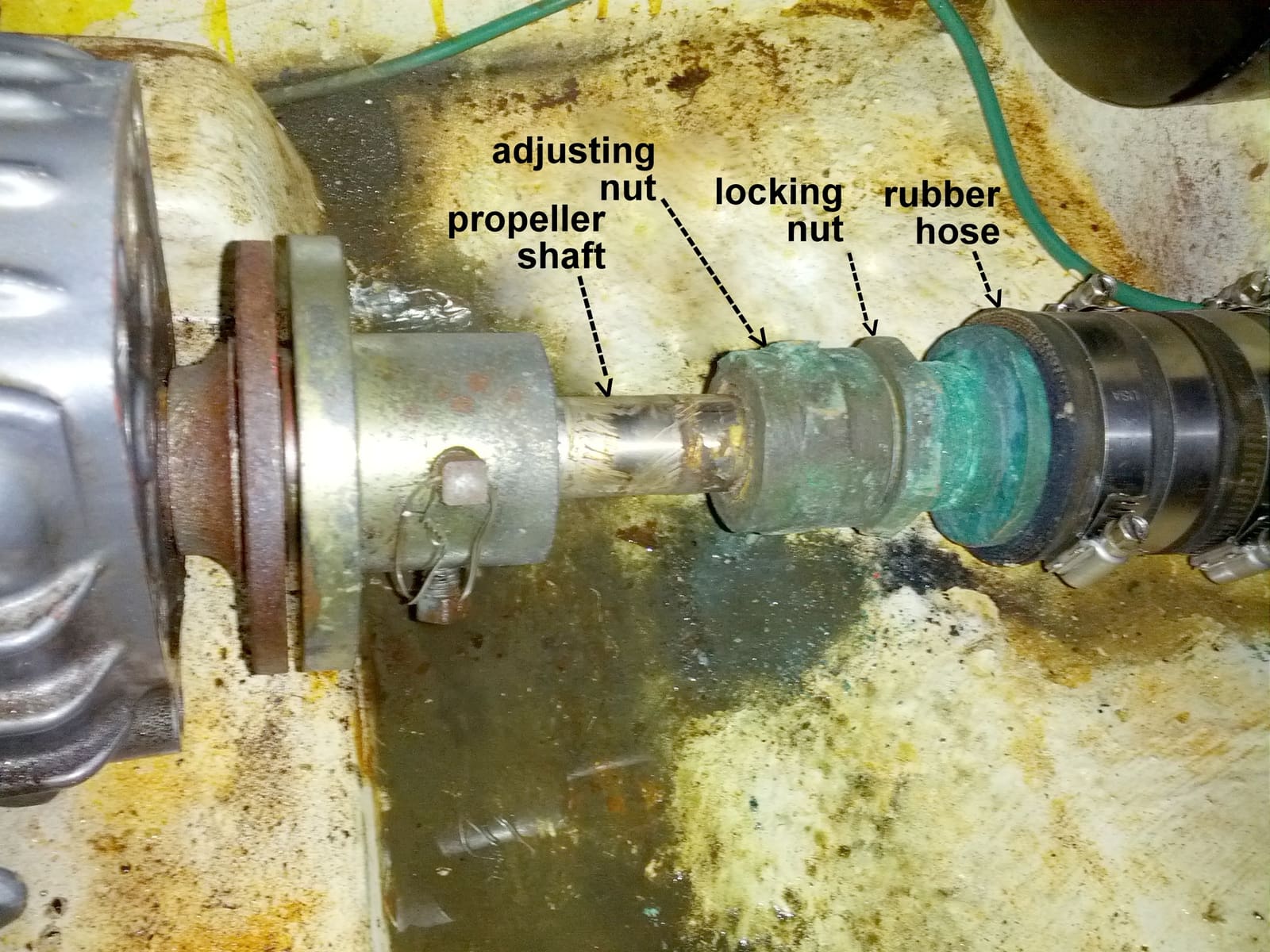
Wake boats use either a traditional packing gland (stuffing box) or a dripless seal. A packing gland is meant to drip slightly while the shaft turns, and should stay nearly dry at rest. A dripless seal should be dry. Look for streams of water, salt or rust crust, and a hot-to-the-touch housing after a run. The stuffing box and dripless seal guide shows how to read and adjust each type.
MasterCraft says never to shift with the engine off, because it wears the shifting parts faster. On the water:
- Shift at idle, and pause briefly in neutral between forward and reverse.
- Don't slam into gear at high rpm, even when docking in wind.
- If your controls let you rev in neutral to warm up, MasterCraft warns to do it sparingly.
Hard, fast shifting with a full ballast load is especially tough on the gears and clutches.
Stop and get it checked if you notice:
- whining, grinding or clunking that's new
- slipping (rpm climbs but the boat doesn't speed up)
- delayed or harsh engagement, or it pops out of gear
- a transmission temperature warning, on boats that have one
- vibration that changes with rpm
- fluid leaks or milky, burnt or gritty fluid
Note when it happens (speed, load, ballast) for your technician. If you run a lot of hours, an oil sample analysis can show wear metals before trouble is obvious.
Ballast, passengers and surf gear all add load to the drivetrain. Stay within your boat's weight capacity (see the wake boat ballast guide), keep the cooler and raw-water strainer clean so the transmission stays cool, and give the boat a minute at idle before shutdown after a long surf session at low speed and heavy load.
MasterCraft warns that water left anywhere in the cooling system or other water-holding parts can freeze and crack them, and that this damage isn't covered by warranty. It refers owners to the engine maker's manual for winterizing the engine, transmission and drive train. For the transmission, that usually means:
- changing the fluid at layup, so fresh fluid sits in it all winter
- draining the raw-water side of the transmission cooler or filling it with antifreeze, as your manual directs (owners often miss the cooler drain; find it in your manual)
- inspecting the coupler and shaft seal while the boat is out
In spring, MasterCraft lists reinstalling every drain plug in the boat and drive train and checking all fluid levels before the first start. Because the process is complex, it also recommends a dealer do the engine and drive train reactivation.
Common mistakes
- Checking the fluid cold, or long after shutdown, and then overfilling
- Using "whatever transmission fluid" instead of the exact type the manual names
- Forgetting the separate V-drive box on boats that have one
- Missing the transmission cooler drain when winterizing
- Shifting with the engine off, or slamming into gear at high rpm
- Ignoring a new vibration until the shaft seal or bearings wear out
- Treating milky fluid as "a little condensation"
When to call a pro
- Milky, burnt or gritty fluid, or metal in the screen
- Slipping, grinding, delayed engagement or popping out of gear
- Vibration, or anything involving coupler alignment or engine mounts
- Cooler replacement or any leak between the cooler's water and fluid sides
- A shaft seal that leaks steadily or runs hot
- Annual service and spring reactivation if you're not comfortable with them (MasterCraft recommends a dealer)
Tips
- Keep the fluid type, filter number and cooler anode size in your BoatMend boat profile.
- Look at the dipstick every few outings during surf season; it takes two minutes.
- After running aground or hitting something, check the prop, shaft and coupler for damage before the next run. MasterCraft also advises having the hull checked by a dealer after any strike, even if no water comes in at first, and says not to try to outrun a significant leak to shore: call for help instead. MasterCraft suggests looking over the propeller, rudder and shaft every time the boat comes out of the water.
- Carry a spare drain plug and a small funnel; dropped plugs in a deep bilge are a classic layup headache.
Official references
We read these to write this guide. Your engine's own manual always wins.
- Boating Magazine – Marine Transmission Care Tips (with ZF Marine)
- Wakeboarding Magazine – Basic Wakeboat Engine Maintenance (2025)
- Boating Magazine – The Advantages of a V-Drive
- MasterCraft Knowledge Center – Check the Propeller Shaft Coupling Alignment
- MasterCraft Knowledge Center – Check the Engine Mounts
- MasterCraft Knowledge Center – Striking Underwater Objects
- MasterCraft Knowledge Center – Shift-Throttle Control (don't shift with the engine off)
- MasterCraft Knowledge Center – After Operation (check propeller, rudder and shaft)
- MasterCraft Knowledge Center – General Storage Info (freeze damage)
- MasterCraft Knowledge Center – Reactivating the Boat After Storage
Safety: BoatMend is for information only and does not replace a certified marine technician. You are responsible for your safety and your boat. Read the full disclaimer.
Last updated 2026-10-26
Related guides
Wake Boat Ballast Systems - Care, Troubleshooting, Weight Limits and Winterizing
Keep your wake boat's ballast tanks, bags and pumps working: fill and drain them the right way, stay under the boat's weight capacity, fix tanks that won't fill or empty, change the pump impellers, stop invasive species from riding along, and protect the system from freezing.
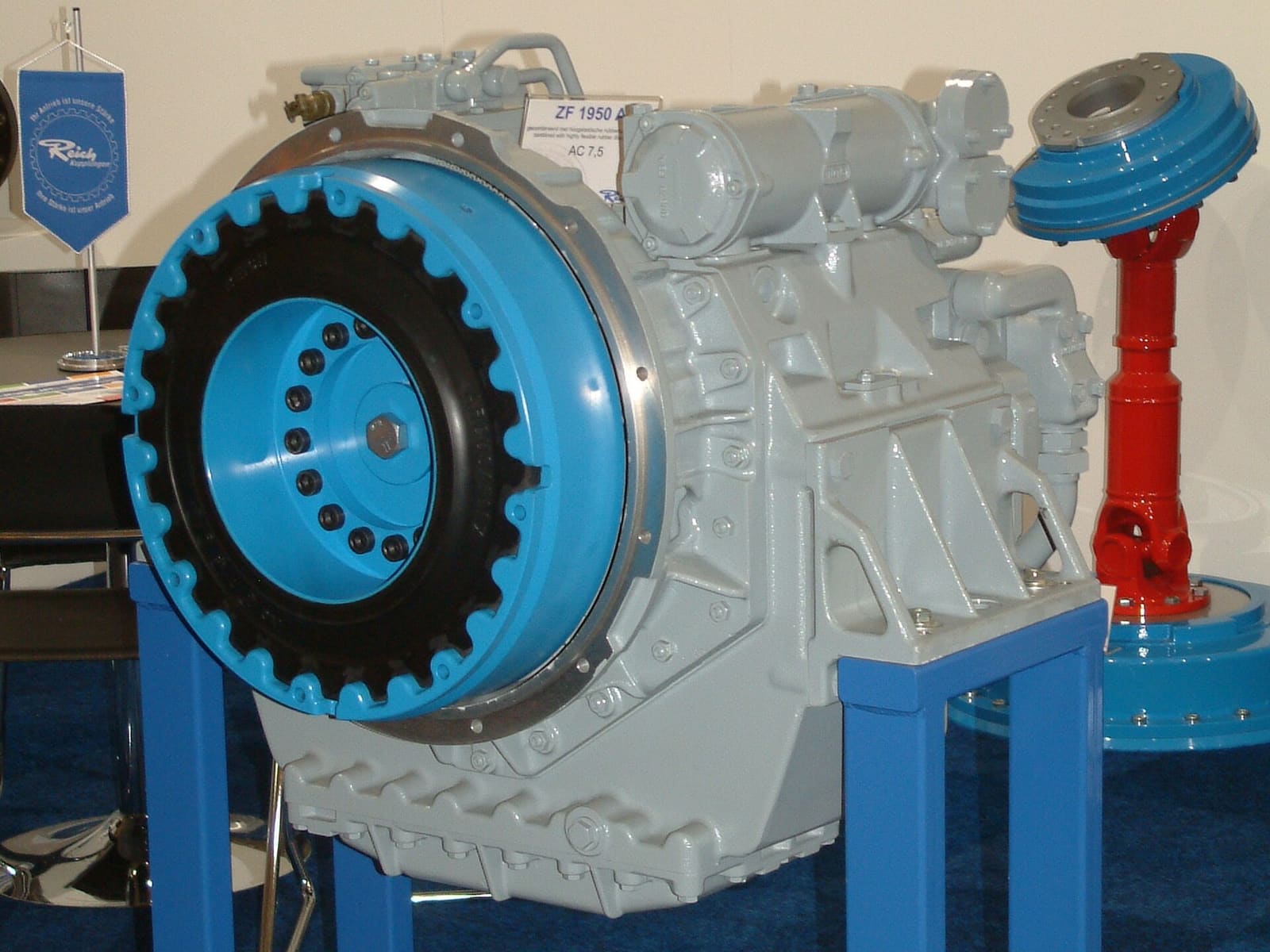
How to Check and Change Marine Transmission (Gearbox) Oil
Check, read and change the oil in the reverse gear behind your inboard diesel (ZF/Hurth, Kanzaki, Yanmar KM, Volvo Penta MS and similar). Learn what milky, burnt or gritty oil means, and why the oil cooler and its zinc matter.
How to Check, Adjust and Repack a Stuffing Box (and Care for a Dripless Shaft Seal)
Learn the right drip rate for a traditional packing gland, how to adjust it safely, when to repack it, and how to inspect and service a dripless shaft seal. The shaft seal is one of the few holes in an inboard boat that moves, and a neglected one can sink a boat at the dock.
Engine Alignment on Sterndrives and Inboards: What to Check and When
A sterndrive engine must line up with its gimbal bearing and coupler, and an inboard engine with its prop shaft. When it drifts out of line you get vibration, noise and worn-out couplers, bearings and seals. Learn the warning signs, the checks you can do yourself and why the alignment itself is a job for a pro with special tools.
How to Check the Cutless Bearing, Prop Shaft and Strut
Find out if new vibration or rumbling from the stern is a worn cutless bearing, a bent shaft, a loose strut or poor engine alignment, using simple checks you can do at the dock and at haul-out. Catching bearing wear early protects the shaft, the seal and the transmission.
How to Check and Adjust Boat Shift and Throttle Cables
Hard shifting, a lever that will not go fully into gear, or a gear that lands in a different spot every time usually point to the control cables. Learn how to find out whether the problem is the cable, the control box or the engine, how to adjust the cable ends, and when it is time to replace both cables.
How to Inspect and Clean a Raw-Water (Sea) Strainer
The sea strainer is the cheap screen that keeps weeds, shells and plastic out of your engine, generator and A/C pumps. Learn how to clean it safely with the seacock closed, reseal the lid so it can't suck air, spot a cracked bowl before it floods the boat, and winterize it.
Propeller Care: Inspect, Remove, Replace and Choose the Right Pitch
Check your prop for damage, pull it to clear fishing line and grease the shaft, reinstall it correctly, and learn how pitch affects your engine's wide-open-throttle RPM. The right prop in good shape protects your engine and often makes the boat run better and use less fuel.

Wakesurf Safety: The Right Boat, Carbon Monoxide, Spotters and Distance
A pre-ride checklist for wakesurfing - surf only behind inboard or V-drive boats built for it, keep riders away from exhaust and the engine off when they board, use a spotter and a short surf rope, stay well away from shore, docks and other boats, and never overload the ballast.

Engine and Gearbox Oil Analysis: How to Take a Clean Sample and Read the Report
A lab oil analysis is like a blood test for your engine, transmission or lower unit. Learn how to pull a clean sample, what the lab measures, what wear metals, coolant, sea water and fuel in the oil can mean, and why the trend over several samples matters more than any one number.