Smelly Head Hoses: How to Test, Choose and Replace Sanitation Hose
Find out if your toilet and holding-tank hoses are the source of that sewage smell with a simple hot-rag test, then pick the right sanitation hose, route and clamp it properly, and get rid of the old hose cleanly.
Time
5 h
Shop would charge
$400-1500
Applies to
All engines · Cabin cruiser, Yacht, Sailboat
Safety first: Sewage hoses carry germs and holding tanks make hydrogen sulfide and methane. Pump out and flush the system before you start, ventilate the boat, wear gloves and eye protection, and never use a flame or spark nearby. Many head hoses connect to through-hull fittings below the waterline: close those seacocks before you cut or pull any hose, and keep the boat out of the water or the seacocks closed until every clamp is tight. If water keeps coming in, stop and call a marine mechanic, Sea Tow or TowBoatUS; if you cannot control it, call the USCG on VHF 16 or 911.
Owners often ask
- My boat smells like sewage even after a pump-out. How do I know if the hoses are the problem?
- What kind of hose should I use for the toilet and holding tank, and can I use clear vinyl?
This guide walks you through it. Still stuck? Ask the AI Mechanic about your engine.
Tools
- Nitrile or heavy rubber gloves, safety glasses and old clothes
- Clean cotton rags or washcloths and zipper-top plastic bags
- Bucket of hot water and a kettle or thermos for softening hose ends
- Sharp utility knife or hose cutter, plus a hacksaw for wire-reinforced hose
- Nut driver or screwdriver for hose clamps
- Tape measure, marker and masking tape for labels
- Flashlight and a small inspection mirror
- Heavy-duty trash bags and duct tape
Parts & supplies
- Premium sanitation hose in the inside diameter your fittings need (see Step 4)
- Vent hose made for holding-tank vents, in the vent fitting's size
- All-stainless (316 grade preferred) hose clamps, two per below-waterline connection where the barb is long enough
- Hose lubricant compatible with your new hose (check the hose maker's spec)
- Holding-tank vent filter (optional but helpful)
- Rigid PVC elbows or Schedule 40 pipe if you need sharp bends or long runs
Before you start
Is it really the hose? A boat that smells like a sewer is not always a hose problem. Leaks at joints, a full or blocked vent, a dirty holding tank, a shower draining into the bilge or sea life dying in the toilet's intake line all smell bad too. This guide starts with the tests that tell you which one you have. The general head and holding-tank guide covers the tank, pump-outs and clogs.
Why hoses go bad. Sanitation hose is not just "white hose". Over time, odor molecules work their way through the hose wall (this is called permeation), and the outside of the hose starts to smell. Hoses that sit full of sewage, sharp low spots where waste collects, and the wrong kind of hose (clear vinyl, fuel or exhaust hose) all speed this up. BoatUS gives sanitation hose an expected life of about 10 years, but a poor installation can fail much sooner.
Plan for a full day. Old sanitation hose is stiff and the spaces are tight. On many boats you will also be working upside down in a locker. Have a helper if you can.
Steps
Pick a section of hose, especially a low spot where liquid can sit. Wipe it clean first. Then soak a clean cotton rag in hot (not scalding) water, wring it out, and wrap or rub it on the hose for a minute or two. Drop the rag in a zipper bag, seal it, carry it out into fresh air on deck, then open the bag and sniff.
- Rag smells of sewage: that hose is permeated. Washing or wrapping it will not fix it; it needs replacing.
- Rag smells clean: that section is fine. Test every run (toilet to tank, tank to deck fitting, tank to macerator or overboard, and the vent line) before you decide.
If you are not sure, scrub the hose, wait a few days and test again. If the smell returns on a clean hose, it is coming through the wall.
Look at every joint with a flashlight and mirror: stains, crust, damp spots or drips around clamps mean a leak, not permeation. A crooked clamp or a scratched hose barb can leak even when the clamp is tight. Also check:
- The vent line and its hull fitting: a blocked vent makes the system smell worse. Mud daubers love to nest in vent fittings.
- The tank itself: smell near the tank but clean rags on the hoses points to the tank, its fittings or a cracked deck pump-out line.
- The toilet intake: a rotten-egg whiff only when you flush usually comes from sea water sitting in the intake line, not from the waste hoses.
- Slow flushing or a toilet that gets harder to pump: often scale, not smell. Urine and sea water leave hard calcium deposits inside the discharge hose. Raritan warns that, over the years, this buildup can shrink the opening of a waste hose to a fraction of its size and end in a full clog. Squeeze the hose: if it feels rock-hard and the inside is crusted where you can see it, scale is part of your problem.
Trace each hose from end to end and label it with masking tape (for example "toilet to Y-valve", "tank to deck", "vent"). For each run write down:
- The inside diameter printed on the old hose or on the fitting (common sizes are 1 inch and 1-1/2 inch for waste lines and 5/8 inch for vents, but measure yours).
- The length, plus a foot or two extra for each run.
- Where it passes through bulkheads or lockers, and where it has to bend.
- Which fittings are plastic. Old plastic fittings can crack when you pull a hose off, so it is smart to have spares on hand.
Take photos of every connection and every clamp before you touch anything.
Buy hose sold specifically as sanitation hose. Hose for fuel, coolant, exhaust or drinking water is made from different materials and will not hold back odors.
- Premium sanitation hose from the major marine brands is made from odor-resistant rubbers (such as EPDM or butyl), polyurethane blends or special low-plasticizer PVC. In Practical Sailor's long-term test with real sewage, the premium hoses showed no permeation after 30 months.
- Basic white PVC sanitation hose is cheaper and widely sold in small sizes, but Practical Sailor saw possible permeation by 30 months and does not recommend it for waste lines.
- Never use clear vinyl hose for waste or vent lines: it turns yellow and starts to stink quickly.
- Vent lines need sanitation-grade hose too. BoatUS specifically says to include the tank vent hose when you replace.
- Some premium hoses are very stiff and hard to bend in tight spaces; others are soft and easy to fit. Read the maker's bend radius and pick what will fit your boat. Some flexible premium hoses are sold to slide onto standard barbs without heating; follow that hose maker's own fitting instructions.
- Look at the warranty: some premium hoses carry a long written warranty against odor permeation (Raritan offers 10 years on its butyl-rubber SaniFlex). Keep the receipt and the hose markings in your records.
- Any hose that connects to a through-hull must be strong, reinforced hose. A cheap hose there can sink the boat.
Good routing is what keeps new hose from smelling in a few years:
- Keep runs as short and straight as possible.
- After the first rise out of the toilet, slope hoses down toward the holding tank. Any hose will eventually permeate if sewage stands in it.
- The deck pump-out hose should drain back into the tank, with no loops or sags.
- Avoid sharp bends. Hose makers say it is better to use a rigid PVC elbow than to force a kink.
- For long runs, a well-supported Schedule 40 PVC pipe (not thin-wall DWV drain pipe) does not permeate at all.
- Keep any vented (anti-siphon) loop that was installed in the toilet discharge line, at the same height. It stops sea water from siphoning back into the boat. If you are not sure why a loop is there, leave it in place and ask a pro.
- Pump out the holding tank and flush plenty of fresh water through the toilet into the tank, then pump out again. BoatUS's rule of thumb for clearing a discharge hose is about two pump strokes per foot of hose.
- Close all head seacocks (intake, discharge or macerator overboard) and tag them "CLOSED, hose off".
- Turn off power to any electric toilet or macerator at the breaker.
- Open hatches and run a fan. Put on gloves, glasses and old clothes.
- Lay out trash bags, rags and a bucket under each joint.
Loosen or cut the clamps. Old sanitation hose is often stuck tight. Cut the hose lengthwise near the fitting with a utility knife, angling the blade away from the barb, and peel it off. Do not pry hard on plastic fittings or the toilet base. As each piece comes out, tape the ends shut or stuff them in a bag right away to keep spills and smell under control.
Scrape any scale off the barbs and wipe them clean. Check for cracks, scored barbs, worn threads and corrosion. Replace any cracked plastic fitting, and any metal fitting that is badly corroded. Look closely at the seacocks while the hoses are off; if one is stiff, cracked or weeps, see the seacock guide before going further.
Cut each piece a few inches longer than you think you need: hose usually gets destroyed when it comes off later, so a little extra length makes future repairs easier.
- Soften stiff hose ends in hot water from a kettle or thermos until they are warm and flexible. Avoid heat guns or open flames; hose makers warn that overheating weakens the hose.
- Use a lubricant the hose maker approves. EPDM hose does not like petroleum products, so water-based or glycol-based lubes are usually safer than grease or oil.
- Push the hose all the way onto the barb. Do not seal joints with silicone or other caulk; it is a short-term fix that hides a bad fit.
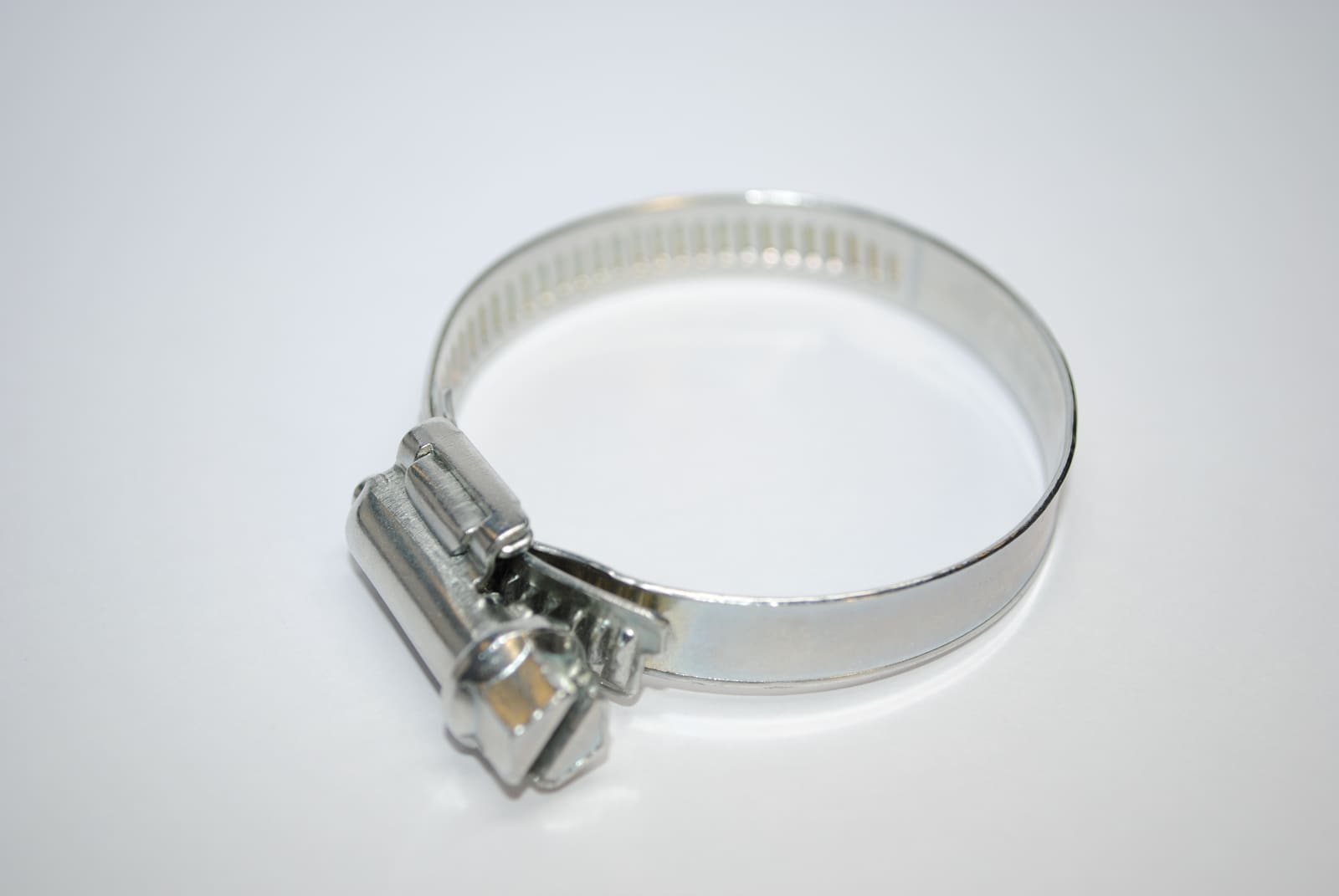
Photo: Alinkins / Wikimedia Commons · CC BY-SA 4.0 - Use all-stainless clamps. Cheap clamps with plated screws rust quickly in a head compartment.
- Double-clamp connections below the waterline, but only if the barb is long enough for both clamps to sit fully on it. A second clamp hanging off the end of the barb just cuts the hose.
- Turn the clamp screws so you can reach them later.
- Tighten firmly but do not crush or cut the hose.
- Support long runs with straps or clamps so the hose cannot sag into new low spots or chafe on sharp edges.
Run the new vent hose with a steady rise to the hull fitting and no dips where water can collect. Clean the vent fitting's small screen: insects, salt and corrosion often block it. An activated-carbon vent filter cuts the smell that comes out of the vent, especially if the vent sits near a hatch or the cockpit. Filters wear out and need replacing; follow the maker's schedule.
Open the seacocks one at a time and check each connection. Flush the toilet several times with clean water and look at every joint with a flashlight. Check again after a day of use and after a week; new hose can settle on the barbs, so snug the clamps if needed. Repeat the hot-rag test in a few weeks as a baseline.
Drain the old pieces into the toilet or holding tank before you pump out, tape or bag the ends, and double-bag everything. Most marinas let you put sealed bags in the regular trash, but ask first and follow local rules. Clean any spills with a disinfectant cleaner that is safe for your hoses and tank (not bleach), then wash your tools.
Common mistakes
- Replacing hoses without doing the rag test first. Many "bad hose" smells turn out to be a leaking clamp, a blocked vent or a dirty tank.
- Using clear vinyl, fuel or exhaust hose for waste or vent lines because it was on hand.
- Leaving low spots or long sags where sewage sits. Even the best hose will start to smell. Trident, for example, still recommends self-draining runs for its premium odor-resistant hose.
- Using leftover sanitation hose on the freshwater system. Hose makers label sanitation hose "not for potable water"; drinking-water lines need hose rated for potable use.
- Fitting a second clamp past the end of the barb, which cuts into the hose.
- Heating stiff hose with a torch or heat gun until it softens. It weakens the hose.
- Pulling a hose off with the seacock open, or starting the job while the boat is in the water without testing the seacocks first.
- Sealing a leaking joint with caulk instead of fixing the fitting or the fit.
- Using bleach or harsh cleaners in the system. They can damage seals and some hose materials.
When to call a pro
- A seacock is seized, cracked or leaking, or a through-hull fitting looks corroded
- Water keeps coming in after you close a seacock, or the boat is taking on water
- The holding tank, its fittings or the deck pump-out fitting are cracked or leaking
- You want to move the tank, add a Y-valve, macerator or vented loop, or change how the system discharges (it must meet USCG rules and ABYC standards)
- Hoses run through spaces you cannot reach without removing furniture or tankage
- An electric or macerating toilet has wiring or motor problems
Tips
- Store spare hose and a few clamps of each size aboard for quick repairs.
- Flushing enough clean water after each use, so waste does not sit in the hose, is the cheapest way to make new hose last.
- If your boat is in salt water and the head flushes with sea water, converting to a freshwater flush cuts both odors and scale in the discharge hose.
- Hose makers sell in-place descalers that you pour in through the toilet and leave to soak (Raritan suggests several hours or overnight, every few months, more often with sea-water flushing). On new hose, regular use keeps scale from building up; on old hose that is already badly narrowed or permeated, replacing it is the real fix. Use only a product your hose and toilet makers approve.
- PVC-based sanitation hoses do not like glycol- or alcohol-based winterizing antifreeze; check your hose maker's advice before you winterize.
- Log the hose change date in BoatMend so you know when the next replacement is due.
Official references
We read these to write this guide. Your engine's own manual always wins.
- BoatUS – Flush The Funk (12 tips for head odors, including the damp-cloth hose test)
- BoatUS – Choosing The Correct Boat Hose
- Practical Sailor – More Great Tips for Stopping Boat Stink (hose makers' installation tips)
- Practical Sailor – Marine Sanitation Hose Test (hose materials)
- Practical Sailor – The Fight Against Head Odors Continues (30-month hose and vent filter results)
- Raritan – C.H. Cleans Hoses (in-place hose descaler, scale buildup in sanitation hose)
- Raritan – SaniFlex Odor Shield Marine Hose
- Trident Marine – Sani Shield Sanitation Hose
Safety: BoatMend is for information only and does not replace a certified marine technician. You are responsible for your safety and your boat. Read the full disclaimer.
Last updated 2026-10-24
Related guides
Marine Head and Holding Tank Care: Odors, Clogs, Pump-Outs and Winterizing
Keep your boat's toilet and holding tank working and odor-free, clear common clogs, pump out the right way, and winterize the system. Also covers the Y-valve and the federal no-discharge rules every owner with a head needs to follow.
How to Inspect and Exercise Seacocks, Through-Hulls and Hose Clamps
Check every hole in your hull below the waterline, work each seacock open and closed, and inspect the hoses and clamps attached to them. A single failed fitting or hose is one of the most common reasons boats sink at the dock.
How to Clean and Maintain Shower Sump and Macerator Pumps (and Stay Legal)
The shower sump pump fights hair and soap scum every day, and the macerator empties the holding tank, but only where that is legal. Learn how to clean the sump and filter, test the float switch, avoid burning out pumps by running them dry, follow the 3-mile and no-discharge rules, and winterize both.

How to Prevent and Remove Mold and Mildew on Your Boat
Stop the musty smell and black spots before they start. Find and fix the water source, keep air moving, control humidity safely, and clean mold off gelcoat, vinyl and cabin surfaces with products that won't damage them.

Spiders, Wasps and Insects on Your Boat: Prevention and Safe Cleanup
Why boats attract spiders, mud daubers, wasps and swarming lake insects, how to clean webs and droppings without harming gelcoat or canvas, and how to keep nests out of the vents, telltales and fittings your boat needs to breathe.