Marine Head and Holding Tank Care: Odors, Clogs, Pump-Outs and Winterizing
Keep your boat's toilet and holding tank working and odor-free, clear common clogs, pump out the right way, and winterize the system. Also covers the Y-valve and the federal no-discharge rules every owner with a head needs to follow.
Time
1 h
Shop would charge
$150-600
Applies to
All engines
Safety first: Holding tanks make hydrogen sulfide and methane gas. Ventilate well before opening a tank or hose, and never use a flame or spark nearby. Raw sewage carries germs: wear gloves and eye protection, and wash up well. The head's intake and discharge fittings usually go through the hull below the waterline: close the seacocks before you remove any hose. If water keeps coming in, stop and call a marine mechanic, Sea Tow or TowBoatUS; if the boat is taking on water you cannot control, call the USCG on VHF 16 or 911.
Owners often ask
- Why does my boat's head smell even after I pump out the holding tank?
This guide walks you through it. Still stuck? Ask the AI Mechanic about your engine.
Tools
- Heavy rubber or nitrile gloves, safety glasses or a face shield
- Screwdrivers and a small wrench set
- Bucket, rags and a roll of paper towels
- Plumber's snake (plastic or flexible) for hoses
- Zip ties or a small padlock for securing the Y-valve
- Plastic trash bags
Parts & supplies
- White vinegar
- The pump lubricant your toilet maker specifies (often a PTFE silicone grease)
- Rebuild kit or joker valve for your toilet model, if needed
- Marine sanitation hose (if a hose fails the odor test)
- Non-toxic propylene glycol (pink) antifreeze for winterizing
- Holding tank treatment compatible with your tank material
Before you start
Know your system. Trace every hose and label it if you can:
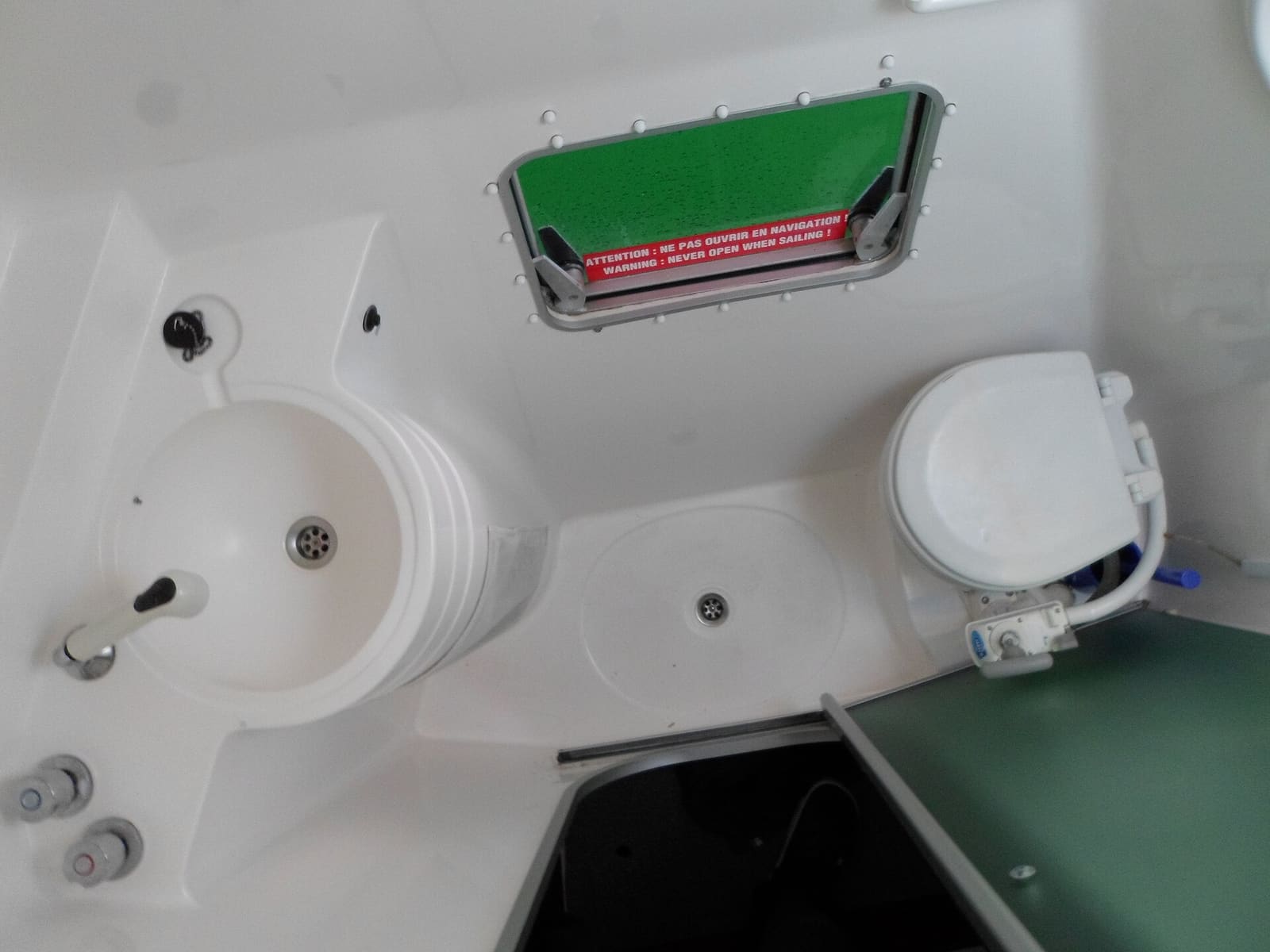
- Head (toilet): manual pump or electric. It pulls flush water in through an intake seacock (or from the freshwater tank) and pushes waste out.
- Y-valve (if fitted): sends waste either to the holding tank or overboard.
- Holding tank: with a deck pump-out fitting on top, a vent line to a small fitting on the hull, and sometimes a macerator pump that can empty the tank overboard through a seacock.
- Possibly an anti-siphon (vented) loop in the discharge line to stop seawater from siphoning back into the bowl.
Know the rules (US). An installed toilet must be connected to a Coast Guard–certified marine sanitation device (for most boats, a holding tank). Discharging untreated sewage is illegal on inland waters (lakes, rivers) and within 3 miles of shore on the coast. In No-Discharge Zones (NDZs), even treated sewage cannot be discharged. Check the EPA's NDZ list and your state rules for where you boat. In those waters, the Y-valve or overboard seacock must be secured closed in a way that prevents accidental use, such as a padlock, a non-releasable zip tie, or removing the handle. The federal rule (33 CFR 159.7) lists these methods and, for some devices, also accepts locking the door to the head compartment. When in doubt, keep it locked to the tank and use pump-outs.
Steps
Most clogs come from what goes into the bowl. Only human waste and a modest amount of quick-dissolving toilet paper (or no paper: many owners keep a lidded trash bin in the head). Never flush wipes (even "flushable" ones), paper towels, feminine products, hair or food. Post a short note in the head for guests.
Know your tank's size and how many flushes it takes to fill. Pump out often. An overfilled tank pushes waste up the vent line and into the pump-out hose, causing clogs and smells. If you have a tank level gauge, test it now and then; they are often unreliable.
Wear gloves. Open the deck fitting marked WASTE (never confuse it with fuel or water fittings). Read the pump-out station's instructions. With the station pump running and the nozzle valve closed, seat the nozzle firmly in the deck fitting, then open the valve. When the flow stops (a sight glass or sound tells you), let the pump keep running a moment to clear the hose, close the valve, and remove the nozzle. Then flush some fresh water through the head into the tank and pump out again. Close the deck cap tightly.
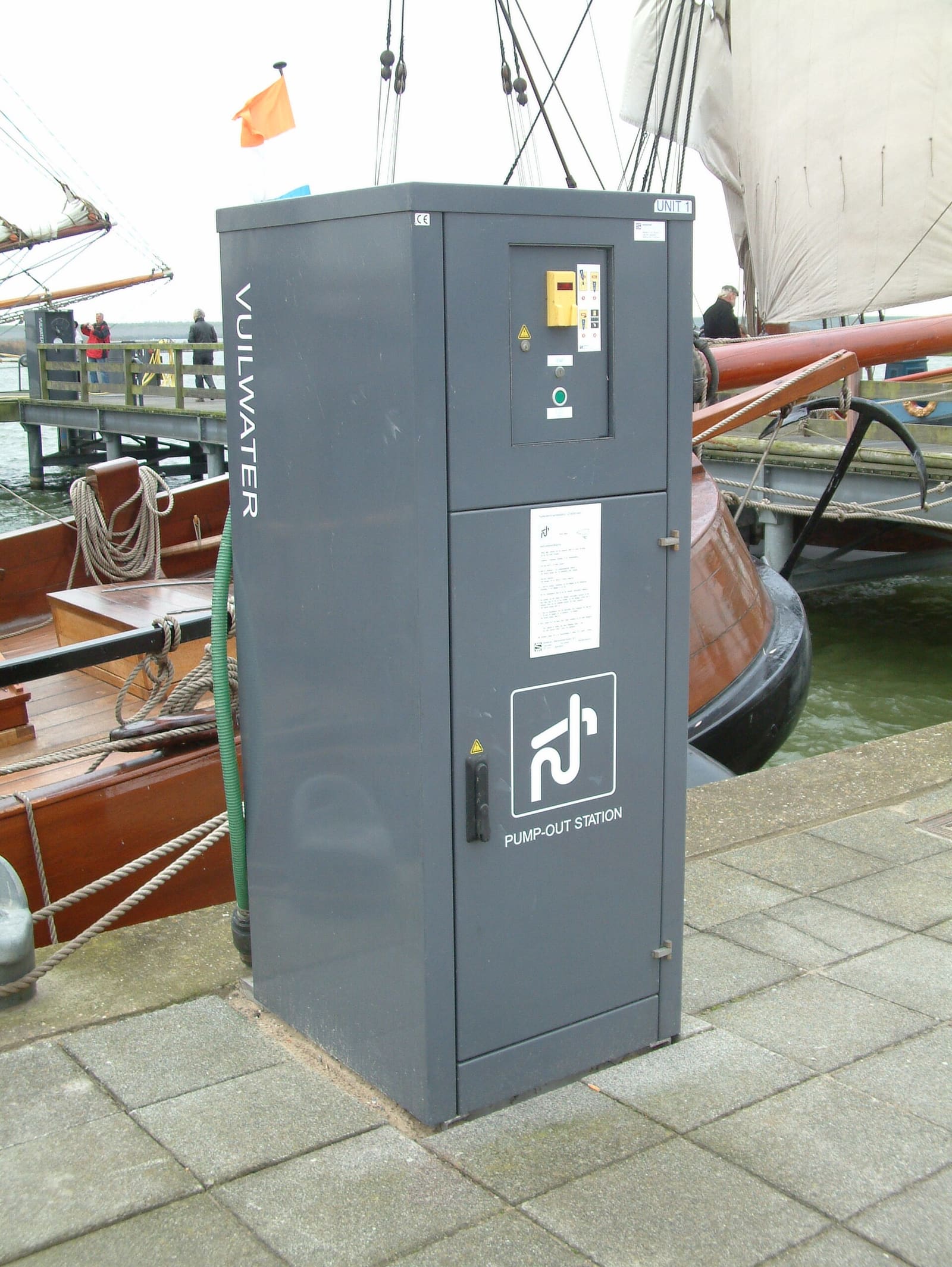
Photo: S.J. de Waard / Wikimedia Commons · CC BY-SA 3.0 Saltwater flushing leaves scale in the pump, valves and discharge hose, which slowly makes pumping harder and lets water seep back into the bowl. Once a month, run about a pint of white vinegar through the head slowly (one pump every few minutes), then flush with fresh water. Keep the pump seals supple with the lubricant your toilet maker specifies (Raritan, for example, recommends a PTFE silicone grease on the pump). Skip the old habit of pouring vegetable or mineral oil into the bowl: it only quiets a squeak for a while, and Practical Sailor's long-term test linked it to clumping in the holding tank. Avoid harsh household cleaners and bleach, which can damage rubber parts and kill the helpful bacteria in the tank.
Work through the usual suspects:
- Discharge hose permeation: wipe a section of hose (a low spot where waste sits is best) with a warm, damp, clean cloth. BoatUS suggests sealing the cloth in a zip-top bag, carrying it up into fresh air, then opening the bag and sniffing; inside the boat your nose is already used to the smell. If it smells, the hose is saturated and must be replaced with proper sanitation hose, including the tank vent hose. Washing will not fix it.
- Intake smell (rotten-egg whiff when you flush): about a gallon of seawater sits in the intake hose, and when the boat isn't used for a few days the tiny sea life in it dies and rots. SAIL notes it clears with the first flush, and a splash of holding tank deodorant in that first flush helps. A strainer in the intake helps too. Flushing with fresh water before leaving the boat, or leaving vinegar in the lines, also helps.
- Vent line: a blocked vent makes the tank smell worse (it needs air). Mud daubers and other insects love to nest in the vent fitting, and an overfilled tank pushes sewage into the vent hose. BoatUS adds that a clogged vent can let the tank collapse under the suction of a pump-out. Back-flush the vent when you pump out if you can. A vent filter reduces smell outside the boat, but filters lose their effect over time and need replacing as the maker says.
- Hose runs with low spots: hoses should be as short and straight as possible, with no loops or sags where waste can sit. The pump-out hose from the deck fitting should drain back into the tank.
- A shower that drains into the bilge, or a dead shower sump: both cause smells that seem to come from the head. Clean the sump strainer and test its pump and float switch at least once a year.
- Leaks: look at every hose joint, clamp and the toilet base for drips or stains.
Stop pumping first; forcing it can split a hose or valve. Then narrow it down:
- Check the Y-valve is fully in one position. A half-turned valve blocks flow.
- Hard to pump and bowl won't empty: the blockage is usually at the joker valve (the rubber duckbill valve at the pump outlet) or in the first section of discharge hose, often from scale or something that should not have been flushed.
- Pumps fine but water comes back: worn joker valve or flapper valves.
With seacocks closed and gloves on, remove the discharge hose at the toilet and look inside. Scale can be broken out of a removed hose by flexing it or tapping it; heavily scaled hose is usually best replaced. Never use household drain cleaners; they can damage the toilet and are dangerous with sewage.
If the toilet is hard to pump, leaks back, or smells even when clean, it is probably time for a rebuild kit for your model. The kit includes valves, seals and instructions. BoatUS tips: take the toilet out of the head compartment to work on it, lay the parts out in order, and note which way each valve faces. Tighten the bowl-to-base nuts evenly and gently to avoid cracking the china.
- Station runs but nothing comes out: the pump-out hose may be clogged (often from overfilling) or the vent may be blocked. Check the vent fitting on the hull first; the small screen often clogs with salt, insects or corrosion. A plastic snake can clear the vent hose.
- Tank fills even when nobody uses the head: often an open overboard (macerator) seacock or Y-valve lets seawater flow back in. Close and secure it.
Regular pump-outs leave some buildup behind. A common approach is to pump out, add a water-softener solution and a mild, bleach-free laundry detergent solution made with hot water, let it sit, top up with fresh water, pump out, then rinse and pump out again. A tank treatment made for holding tanks also works. Only use products compatible with your tank material (plastic, aluminum or stainless), and never mix different chemical products. BoatUS suggests a shock treatment at least once a year, and adding one about a week before the last pump-out of the season while you still use the boat, so it sloshes around and the tank goes into winter clean.
Squeeze the sanitation hoses: gummy, hard or cracked hose should be replaced. Check clamps for rust, and make sure hoses below the waterline are double-clamped where possible. Work the head's seacocks open and closed; they should move freely. See the seacocks guide for more.
Before freezing weather:
- Pump out the tank and flush it with fresh water, then pump out again.
- With the intake seacock closed, pump non-toxic propylene glycol (pink) antifreeze through the head until it comes out pink into the tank. Follow the antifreeze label for freeze protection.
- If you have a macerator, run a little antifreeze through it briefly (as its maker allows) and close its seacock.
- Leave some antifreeze in the tank only if the product and your marina allow it, and drain or protect any freshwater flush lines as part of your freshwater system.
- Close all head seacocks and tag them.
Never use automotive (ethylene glycol) antifreeze in the head or water system.
Open the seacocks, pump fresh water through and check every hose and joint for leaks. Lubricate the pump. Record the date of rebuilds, hose changes and pump-outs in BoatMend.
Common mistakes
- Flushing "flushable" wipes. They do not break down and are a leading cause of clogs on boats and at pump-out stations.
- Leaving the Y-valve or macerator seacock open and unsecured in a no-discharge area. It is illegal and can also let seawater flow into the tank.
- Using bleach or household cleaners and drain openers, which damage seals and valves.
- Overfilling the tank until waste goes up the vent line.
- Masking the smell with air fresheners instead of doing the cloth test on the hoses.
- Pulling a hose with the seacock open.
When to call a pro
- A seacock is seized, broken or leaking
- The tank, its fittings or the deck fitting are cracked or leaking
- Hard scale or solids block the tank itself or a hose you cannot reach
- An electric or macerating toilet has wiring or motor problems
- You want to add or change a holding tank, Y-valve, vented loop or treatment system (it must meet USCG and ABYC requirements)
- Water is coming into the boat and you cannot stop it
Tips
- Converting the head to flush with fresh water greatly reduces intake odors and scale; it uses more water, so watch your tank.
- Label the deck fittings clearly (WASTE, WATER, FUEL) and keep the special key for the waste cap in a known place.
- Keep a spare joker valve aboard; it is cheap and the most common part to fail.
- Pump enough after each use to push waste all the way to the tank. A common rule of thumb quoted by BoatUS is two strokes for every foot of discharge hose; if you're worried about filling the tank, do it at least once at the end of the day.
- Only double-clamp a hose if the fitting's barb is long enough for two clamps. Squeezing a second clamp onto a short barb crushes or cuts the hose and causes the leak you were trying to prevent.
- On a sailboat, close the head seacocks when sailing hard or leaving the boat, as many owners do.
Official references
We read these to write this guide. Your engine's own manual always wins.
- BoatUS – Marine Toilet Maintenance
- BoatUS – Pump Outs, The Scoop On Poop
- BoatUS – The Shocking Truth About Cleaning Holding Tanks
- US EPA – No-Discharge Zones (NDZs) by State
- eCFR – 33 CFR 159.7, Requirements for vessel operators
- BoatUS – Flush the Funk (12 ways to fix head odors)
- SAIL – Maintaining Marine Sanitation Systems
Safety: BoatMend is for information only and does not replace a certified marine technician. You are responsible for your safety and your boat. Read the full disclaimer.
Last updated 2026-10-24
Related guides
How to Inspect and Exercise Seacocks, Through-Hulls and Hose Clamps
Check every hole in your hull below the waterline, work each seacock open and closed, and inspect the hoses and clamps attached to them. A single failed fitting or hose is one of the most common reasons boats sink at the dock.
How to Test and Clean Your Bilge Pump and Float Switch
Make sure your bilge pump actually moves water overboard, both on the manual switch and automatically through the float switch. A working bilge pump is one of the most important safety systems on any boat that stays in the water.
Spring Commissioning - Getting Your Boat Ready for the Season
Wake your boat up after storage with a step-by-step check of the battery, fuel system, engine, drive and safety gear. Catching a cracked hose or dead battery in the driveway beats a tow on opening weekend, and saves a typical shop commissioning fee.
Launch Day and Haul-Out Checklist for Trailer Boats
A step-by-step checklist for getting your boat off the trailer and back on again safely and quickly, from the drain plug and tie-downs to the blower and ramp etiquette. Following it in order prevents the classic mistakes that sink boats and back up the ramp.