Shipping a Boat with a Professional Transporter: Quotes, Vetting, Prep and Claims
Most boat shipments go fine, but when they don't, the owner who checked the carrier's authority and insurance, prepped the boat properly and documented everything at pickup and delivery is the one who gets paid. Here's how to hire a transporter, prepare the boat and handle damage.
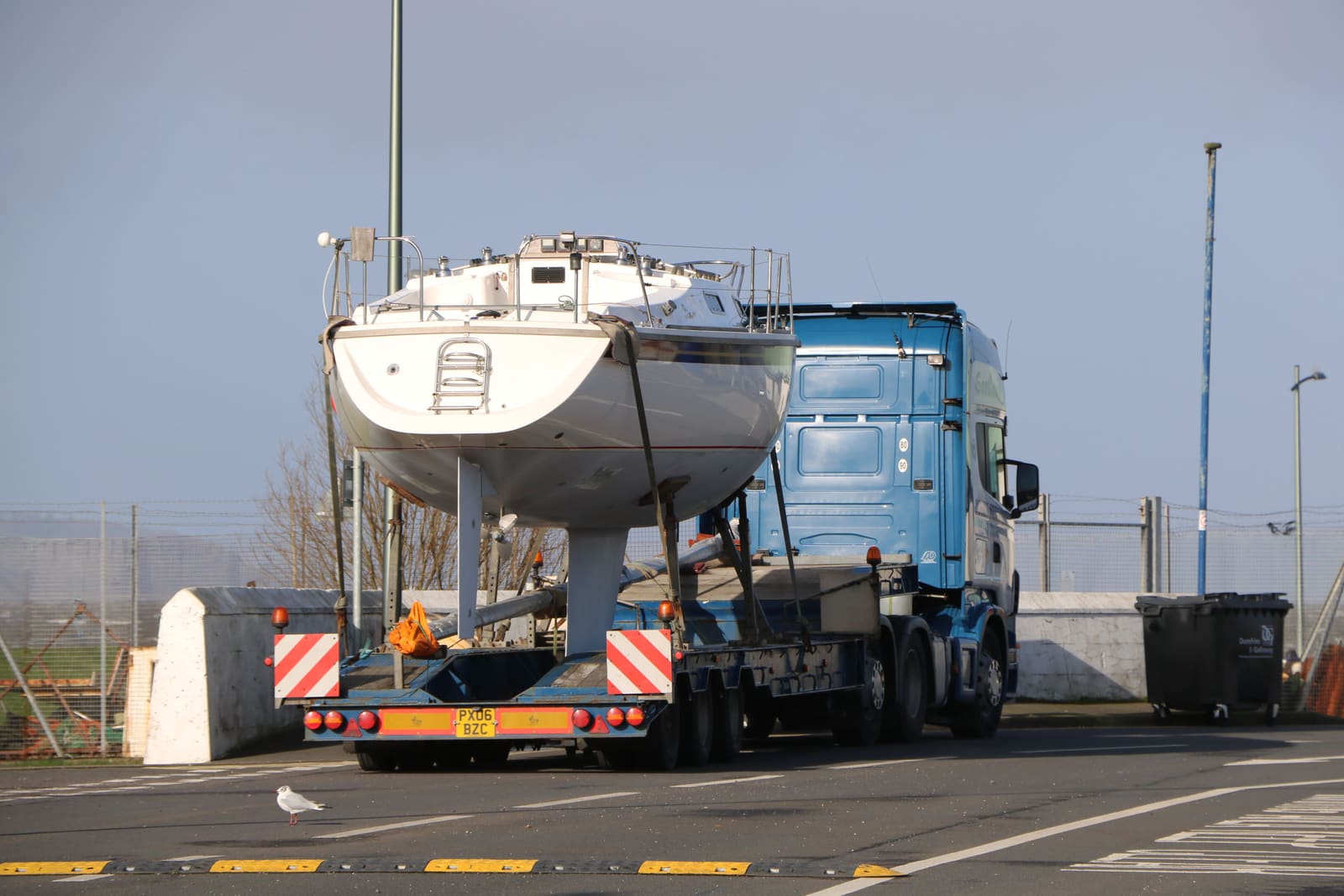
Time
4 h
Applies to
All engines
Safety first: Stay clear while the boat is lifted, loaded and strapped, and never climb aboard a boat on a transport trailer or in slings. Fuel, propane and batteries need special care in transit: follow the transporter's written instructions, shut propane off at the tank, and if you smell fuel or propane at pickup or delivery, stop the job, keep sparks away and call the fire department (911) if it's strong.
Owners often ask
- How do I check that a boat transport company is legit and actually insured before I book it?
- The driver wants me to sign the delivery receipt and says they'll handle a scratch later. Should I sign?
This guide walks you through it. Still stuck? Ask the AI Mechanic about your engine.
Tools
- Phone or camera with the date stamp turned on
- Tape measure
- Painter's tape and pallet (stretch) wrap
- Padding such as old carpet or moving blankets
- Basic hand tools for removing canvas, antennas and electronics
Parts & supplies
- Waterproof tape for hatches and vents
- Labeled bags or bins for small parts and fasteners you remove
Before you start
This guide is for hiring a company to move your boat by road. If you're towing your own boat, see our pre-trailering and oversize permit guides instead.
BoatUS describes a member whose 37-foot sailboat arrived from across the country with a gashed mast and a damaged prop and shaft. The carrier's ad promised over a million dollars of insurance, but the company handled claims under $100,000 "in house," wouldn't name its insurer, and offered to fix the mast itself when it clearly needed replacing. Repairs ran over $25,000, several times the shipping cost. Most of what follows comes from the lessons in that story.
Two facts set the tone:
- Prep is your job, not the carrier's. BoatUS says that unless the transporter agrees otherwise (most don't), its job is only to move the boat without damaging it. The most common cause of shipping damage in GEICO | BoatUS claim files is poor or incomplete preparation.
- Your boat may ride for days in the equivalent of hurricane-force wind, with constant road vibration, possibly stern-first.
Steps
Transporters quote on length, beam, height and weight. Measure:
- Length overall, including pulpits, swim platform and outboards
- Beam at the widest point
- Height from the bottom of the keel or hull to the highest fixed point (arch, hardtop, flybridge, mast step)
- Dry weight from the builder, plus an honest estimate of gear aboard
Boats over 8'6" wide or over height limits need permits and sometimes escorts, which add cost and time (see our oversize permit guide). Discover Boating's overview puts the usual over-the-road height limit at about 13'6" for boat and trailer together, with arches, towers, masts and similar parts often removed to get under it, and says the pickup and delivery spots need at least about 14 feet of overhead clearance for loading. Look up before you book: trees, wires and carports at your house or marina count.
Height and width drive the price fast. A transport manager quoted by Boating Magazine says states restrict when oversize loads may move (some only midweek, in daylight and good weather), very wide loads may have to park for the weekend, and trimming an inch or two of height can save a lot in route surveys, permits and escorts. Ask the yard that removes your arch or hardtop whether it can also recommend a carrier, so the same people take it off and put it back.
BoatUS recommends a transporter that specializes in boats, not one carrying a boat to fill an empty truck. The driver needs to know how to support, balance and secure a hull, and the company needs experience with state permit agencies, because many larger boats exceed width and height limits. Ask:
- How many boats like yours they've moved
- Whether the driver is an experienced boat hauler, and whether drivers are in-house or contracted (BoatUS prefers experienced in-house drivers)
- What trailer they'll use and how the boat will be supported
- Who handles permits and escorts, and what that adds
Get at least a few quotes, and compare what's included, not just the price.
BoatUS has received many complaints from members who used bid-style clearinghouse websites. Those sites let several carriers bid on your job, but they don't verify the carriers' claims about experience, insurance or licensing, and they won't help if something goes wrong. BoatUS even notes some members found their negative reviews deleted. If you use one, vet the winning carrier exactly as you would one you called directly.
BoatUS explains that transporters are issued operating authority by the U.S. Department of Transportation, must carry vehicle insurance, and their drivers need commercial licenses with drug and alcohol testing.
Look the company up on the FMCSA's free SAFER Company Snapshot by USDOT number, MC number or name. It shows the company's identification, size, the commodities it hauls and its safety record, including any safety rating, a summary of roadside out-of-service inspections and crash information. Red flags:
- The numbers on the quote, the website and the truck don't match the FMCSA record
- Operating status or authority shown as inactive or not authorized
- A much higher out-of-service inspection rate than average. BoatUS points out that the member above could have seen his carrier failed far more truck inspections than average, a sign of sloppy maintenance
If the company you're paying is arranging the move but another company will haul it, ask for the actual carrier's name and numbers and check them too. That arranging company is a broker. The U.S. DOT describes brokers as intermediaries who arrange for motor carriers to move a shipment and says they generally don't handle the freight or take on legal liability for cargo loss and damage. So when a broker quotes you, the insurance that matters is the hauling carrier's, and your contract should say who is responsible if the boat is damaged.
BoatUS's advice: ask to see the DOT or state documents and copies of the cargo insurance, and confirm they're current. Reluctance to provide them is reason enough to look elsewhere.
Why cargo insurance matters: the federal minimum insurance rules for for-hire freight carriers set liability limits to protect the public. The separate federal requirement for cargo coverage in that rule applies to household goods movers, so don't assume a general freight carrier's filing covers your boat. Ask for a certificate showing cargo coverage, its limit and any deductible, and ask directly whether claims go to the insurer or are handled in house.
Then call your own boat insurer. Ask whether your policy covers the boat while it's being shipped, what they need from you, and whether you must notify them before launching in a new cruising area. Boating Magazine suggests going one step further: have your insurer talk directly to the carrier's insurer so there's no gap between the two policies. A carrier's cargo policy typically answers for the carrier's negligence; an accident caused by someone else on the road may land on your own policy. While you're asking questions, ask how the boat is protected from theft and damage when the truck is parked overnight.
BoatUS says every transport agreement should be in writing and cover costs, taxes, tariffs, scheduling, security, pickup and delivery locations, and refunds for cancellations or delays. If you don't understand something, ask; if you're still unclear, BoatUS suggests talking to an attorney.
On payment, BoatUS notes transporters usually want a deposit up front (often needed to buy permits and arrange escorts) and full payment at delivery. Drivers usually won't release the boat until they're paid, so arrange a certified check or an agreed wire transfer at the drop-off point if you won't be there.
BoatUS's best bet is to have a boatyard experienced in transport prep do the work. It costs money but can save a big headache. A senior GEICO | BoatUS claims adjuster adds: get a written contract that says exactly what the yard will do. For larger boats, BoatUS suggests hiring a marine surveyor to supervise the prep and loading, and another at the destination to supervise unloading and recommissioning; they know the load points and can document damage.
Whether you or a yard does it, work through BoatUS's list:
- Canvas and frames: remove Bimini tops, enclosures and their frames.
- Mast (sailboats): remove spreaders, lights and other mast fittings. Take the stays and halyards off or secure them tightly to the mast (pallet wrap works), and wrap the whole mast in padding such as carpet. BoatUS notes stays left on can mark a painted mast. Our mast stepping guide covers taking the mast down.
- Height: it's the owner's job to remove anything that might be too high: arches, antennas, radar, and on large powerboats possibly the flybridge. Bow and stern rails and stanchions may need to come off too.
- Inside: remove loose items from lockers and secure every locker door for sudden stops.
- Hatches: dog them down and tape them from the outside to keep rain out.
- Windshields: may need to be removed.
- Dinghy: take it off the davits and carry it below or ship it separately.
- Electronics: remove expensive electronics and ship them separately, or stow them securely inside with access locked.
- Shrink wrap: BoatUS says many transporters advise against it because it can tear loose at highway speed and cause damage. Ask your carrier.
- Fuel, water, holding tanks, propane and batteries: ask the carrier for its written requirements, follow them, and close fuel valves and the propane tank.
Bag and label every part and fastener you remove, and keep the bags with you or locked aboard.
The claims adjuster BoatUS quotes recommends:
- Attending the prep if you can
- Taking lots of dated photos, bow to stern and top to bottom, including the mast and the hull supports
- Photographing the interior too, for hidden damage such as a cracked bulkhead
- A quick walk-around video to catch what photos miss
If there's existing damage, note it on the transporter's "condition of cargo" form and have the driver or a company representative sign it.
Be there, or have your surveyor or a trusted person there. Make sure the boat sits on its proper supports and is strapped without straps crossing fragile rails or canvas fittings. If you can, take a photo or video as the truck drives away.
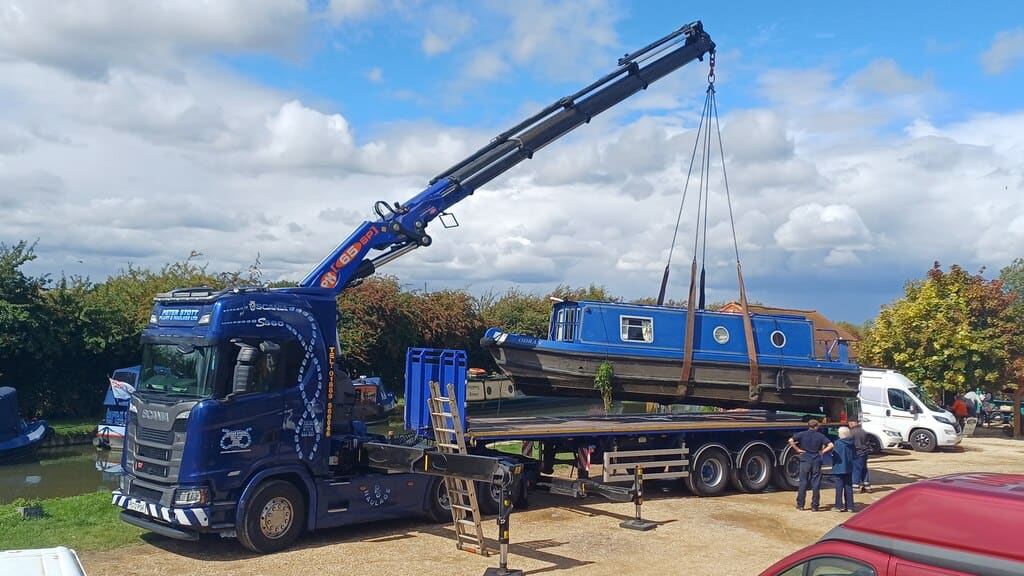
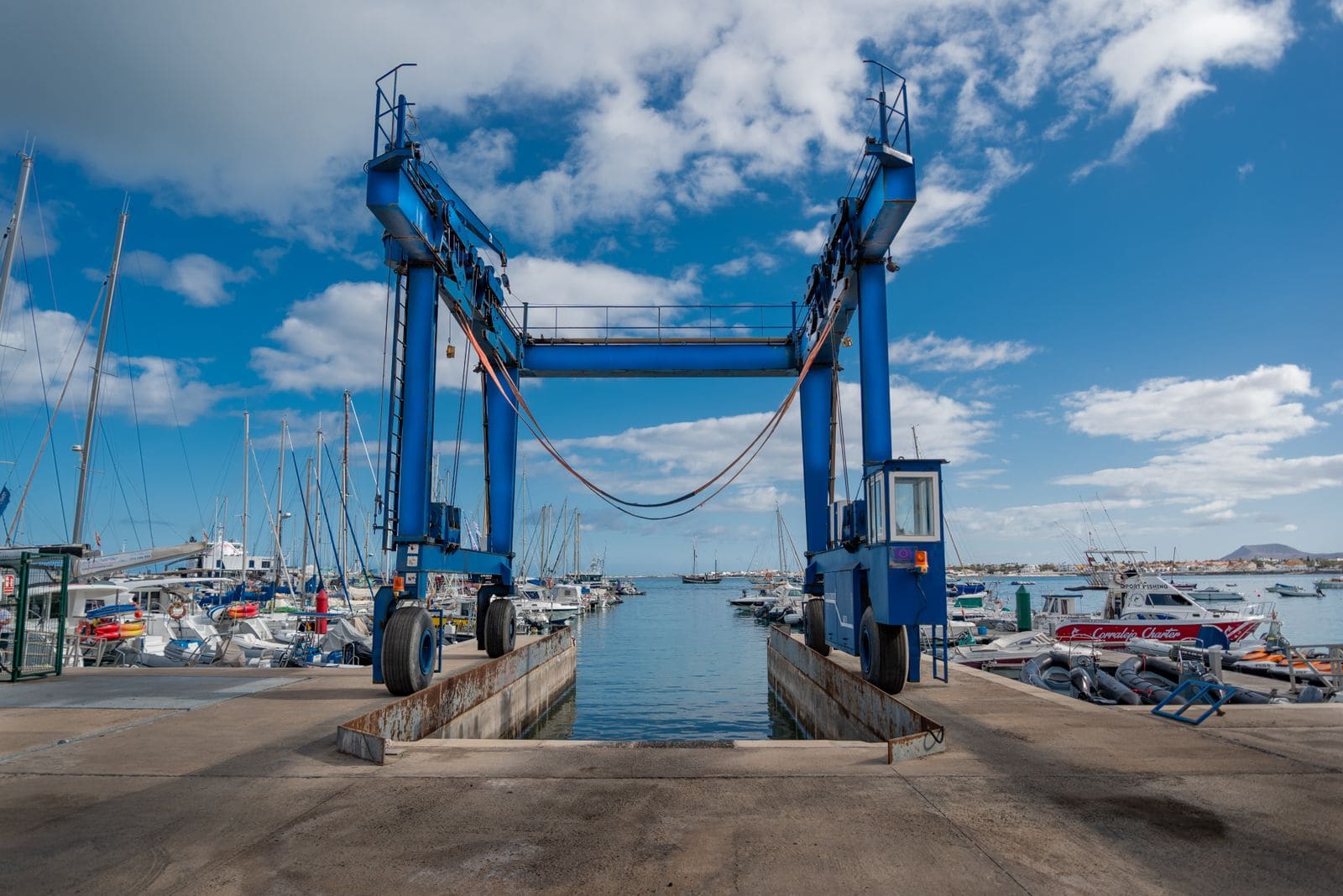
During a crane or travel-lift load, stay well clear of the suspended boat and watch where the slings and supports go. Photo: David Martin / Wikimedia Commons · CC BY-SA 2.0 Keep in mind BoatUS's reminder that delivery dates are approximate: weather, traffic and construction can push them back.
BoatUS is blunt on this: it's the owner's responsibility to document damage on arrival, and you shouldn't let the driver leave without acknowledging any damage in writing.
- Before unloading, take photos again from all sides, including how the boat and gear were secured; things may have shifted.
- Walk the boat inside and out with your before photos in hand. A third-party witness who will sign a statement helps.
- Write any damage on the delivery forms and report it to the company before accepting the boat. The adjuster warns that some drivers push you to sign a clean delivery and promise the company will "take care of it later." Don't.
- If there's new damage, get the driver's name and license number, the USDOT number on the truck, and photos of the truck. Contract drivers with their own tractors can be hard to find later.
- Make sure you get a copy of the driver's condition report and the driver gets a copy of yours.
If you can't be there, send the person receiving the boat your before photos so they can spot changes. If a surveyor supervised loading, have one at the destination; BoatUS warns that if you wait for the yard to notice problems during reassembly, you can't document them before the driver leaves.
Expect the boat to arrive dirty after a long trip, even when nothing is damaged.
- Call your insurance company right away and share your photos and the signed forms.
- BoatUS notes that most transporters require payment even when there's damage, and that smaller claims are often handled without an insurance company. You may need a marine surveyor to prepare a repair estimate and protect your interest.
- If the shipper is reluctant to make it right, BoatUS says to file a complaint with the Department of Transportation (FMCSA), which investigates complaints about carriers.
- Keep every email, text and receipt. Our insurance claim guide walks through the process.
- Reinstall canvas, electronics, rails and rigging, checking fasteners and wiring as you go.
- Reconnect batteries and reopen fuel and propane following your normal startup checks.
- Look for anything that rubbed, cracked or loosened during the trip, especially at the hull supports.
- Tell your insurer before you launch if you've moved to a new cruising area, as BoatUS reminds owners.
Common mistakes
- Hiring the lowest bid from a website without checking the carrier on SAFER.
- Taking the carrier's word on insurance without seeing a cargo certificate.
- Leaving prep to the carrier, assuming they'll take down canvas and secure gear.
- Shipping with expensive electronics left in their mounts.
- No dated "before" photos, especially of the interior and the mast.
- Signing a clean delivery receipt under pressure, then finding damage after the truck leaves.
- Forgetting to tell your own insurer about the move.
When to call a pro
- Any boat with a mast, flybridge, arch or tower that has to come off: use a yard experienced in transport prep
- Larger or high-value boats: hire a marine surveyor to supervise loading and unloading
- Damage found at delivery: call your insurer and a surveyor for an estimate before repairs start
- Contract terms you don't understand: ask the company in writing, and consider an attorney
- A fuel or propane smell at any point: stop work and call the fire department if it's strong
Tips
- Turn on your camera's date stamp and back up the photos to the cloud before the truck leaves.
- Make a simple inventory of what's aboard and what you removed; tape a copy inside the cabin.
- Ask the carrier for the driver's cell number for the trip and a call before arrival.
- Plan the destination: crane or travel lift booked, cradle or trailer ready, and enough room for the truck to get in and out.
Official references
We read these to write this guide. Your engine's own manual always wins.
- BoatUS – Navigating The Asphalt Ocean (what to know when you transport your boat overland)
- Outdoor Writers Association of America – Four Tips to Safely Truck Your Boat Down the Road (BoatUS release, 2013)
- FMCSA SAFER – Company Snapshot (carrier lookup by USDOT, MC number or name)
- U.S. DOT – FMCSA's Jurisdiction Over Interstate Property Brokers (testimony; what brokers do)
- eCFR – 49 CFR 387.303, Security for the protection of the public, minimum limits
- Discover Boating – Boat Transport, Shipping Your Boat
- Boating Magazine – Boat Transport Tips
Safety: BoatMend is for information only and does not replace a certified marine technician. You are responsible for your safety and your boat. Read the full disclaimer.
Last updated 2026-10-25
Related guides
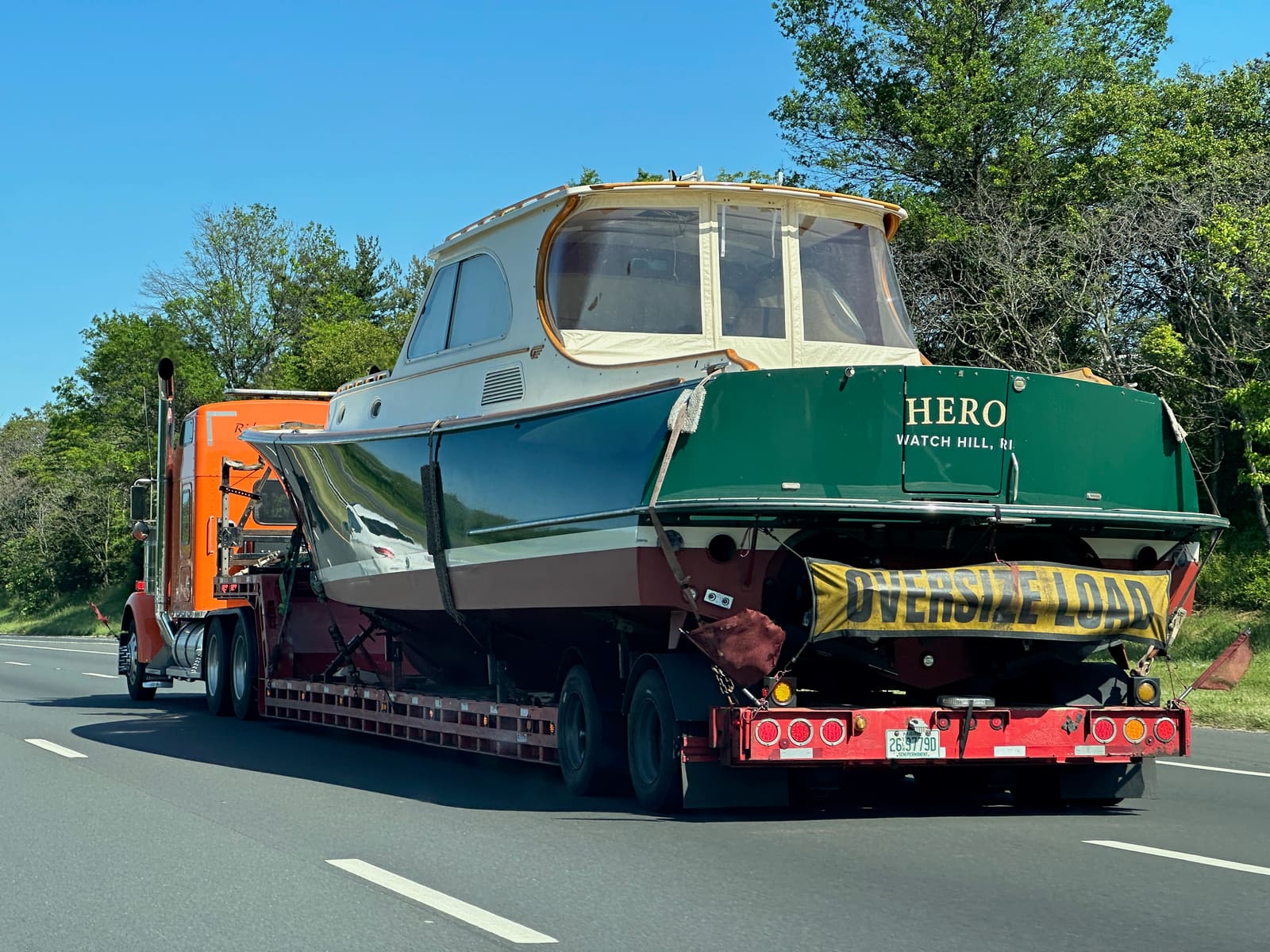
Towing a Wide or Heavy Boat: Width Limits, Oversize Permits and When to Hire a Hauler
In most states a boat or trailer wider than 8 feet 6 inches (102 inches) is a wide load that needs a permit, and some loads also need flags, signs, lights, set travel hours or escorts. Learn how to measure your rig, find each state's rules, get the permits and decide when a professional transporter makes more sense.
Boat Damaged While Trailering: What to Do on the Road or at the Ramp, Insurance, and Hidden Damage Checks
Step-by-step help after a crash, blowout, sway accident or ramp mishap with your boat on the trailer: making the scene safe, police reports, photos, which insurance usually pays (your auto policy, your boat policy's trailer coverage, or the other driver's insurer), and how to inspect the trailer, hull, drive and bunks for damage you can't see at first. Policies and state rules vary, so your own policy wording and state law win.
How to File a Boat Insurance Claim: Safety, Mitigation, Documentation and Settlement
What to do from the moment something goes wrong until the check arrives: make everyone safe, stop further damage, report right away, document with photos and your maintenance log, handle towing versus salvage, work with the adjuster or surveyor, and understand agreed value, actual cash value and the common exclusions. Policies differ, so your own policy wording always wins.
Stepping and Unstepping a Sailboat Mast: Trailer Sailers and Yard Cranes
How to raise and lower a sailboat mast safely, whether you step a trailer sailer's mast at the ramp or help the yard crane do it, including power-line checks, mast wiring, basic tuning afterward, and when to leave the job to the yard.
Buying a Boat in Another State: Survey, Paperwork, Taxes, Registration and Getting It Home
A step-by-step plan for buying a boat that is hundreds of miles away: checking it remotely with a local surveyor, matching the HIN and VIN to the title, avoiding long-distance scams, paying the right sales or use tax, registering in your home state, the trailer's own paperwork, temporary permits, and legal towing or professional transport for wide boats. Rules vary by state, so confirm each step with the agencies involved.
How to Prepare Your Boat for an Insurance or Condition Survey
Get ready for a marine survey your insurer or lender asked for: what a SAMS or NAMS surveyor looks at, the common findings you can fix beforehand (hose clamps, seacocks, bilge, fire extinguishers, wiring), the paperwork to have ready, and how to handle the recommendations afterward.
Moving Your Boat From Fresh to Salt Water (or Back): Anodes, Flushing, Corrosion, Bottom Paint and Trailer Upgrades
What to change when a lake boat moves to the coast, or a saltwater boat moves inland: switching anode material, a flush-after-every-trip routine, raw-water and closed cooling parts that wear faster in salt, bottom paint that suits your hull and drive, marine-grade hardware, and trailer upgrades that survive salt dunks. Built from BoatUS, Mercury, Yamaha and Boating Magazine advice.

How to Clean and Protect Boat Canvas, Bimini Tops and Vinyl Seats
Wash your bimini, covers and enclosure the right way, beat mildew without wrecking the stitching, keep vinyl seats soft and stain-free, look after zippers and snaps, and store everything so it comes out clean next spring.