Sterndrive Power Steering: Fluid Checks, Hard Steering and Leaks
Troubleshoot the engine-driven power steering on a MerCruiser, Volvo Penta or similar sterndrive or inboard, from the free checks (fluid, belt, cable) to the signs that the pump or actuator needs a pro. Steering that suddenly goes heavy at speed is a safety problem, not a comfort problem.
Time
1 h
Shop would charge
$150-1200
Applies to
Sterndrive (I/O), Gas inboard · Bowrider / runabout, Cabin cruiser, Fishing boat, Yacht
Safety first: Check fluid and belts only with the engine off and the key out: the belt and pulleys can take fingers off. If steering suddenly gets heavy or jerky under way, slow down right away; at low speed you can usually still steer by hand. Don't run with the power steering belt off or the fluid empty longer than it takes to get home slowly. If you lose steering in traffic or rough water, stop, call for help on VHF 16, or call TowBoatUS, Sea Tow or the Coast Guard. A power steering fluid leak near a hot engine is a fire risk: if you smell burning fluid or see smoke, shut down and get help.
Owners often ask
- My sterndrive power steering is hard in one direction only. What should I check first?
- Where is the power steering fluid on a MerCruiser, and what fluid does it take?
This guide walks you through it. Still stuck? Ask the AI Mechanic about your engine.
Tools
- Flashlight or headlamp
- Clean rags and paper towels (white, to see fluid color)
- Small funnel
- Wrenches for the belt adjuster and cable fittings, per your engine
- Marine grease and a grease gun (for the steering cable and helm, as your manual specifies)
- Spray degreaser to clean suspected leak areas
- A helper at the wheel
Parts & supplies
- Power steering fluid your engine manual specifies (many sterndrives use a power trim and steering fluid or a specified ATF; some electric/helm systems need different fluids)
- Replacement drive belt for your engine (keep a spare aboard)
- Steering cable, hoses or fittings only after a diagnosis
Before you start
How it works: most power-assisted sterndrives (MerCruiser Alpha and Bravo, Volvo Penta and similar) use an engine-driven pump, turned by a belt, that pushes fluid to a steering actuator or cylinder near the transom. Your mechanical steering cable from the helm moves a valve on that actuator, and the pressure does the heavy lifting. Some inboards use similar engine-driven systems. Newer boats may have electric power steering or a pressurized hydraulic helm (see the hydraulic steering guide); this guide is about the engine-driven type.
Two clues sort out most problems:
- Is it hard with the engine off as well as running? Then look at the cable, helm or drive (mechanical). With the engine off, power steering always feels heavy, so compare with how it felt when it was good.
- Is it fine at idle, hard at speed, or hard only one way? Then look at fluid, belt, pump or actuator (hydraulic), plus prop torque.
Which fluid: use only what your engine manual specifies. Mercury's own Power Trim and Steering Fluid page says it's for outboard and sterndrive power trim and steering systems, but not for electric power steering (which needs synthetic fluid) or for non-power hydraulic helm steering (which needs hydraulic helm fluid). Volvo Penta and other makers have their own specs. Don't guess.
Steps
Write down when it happens: engine off or running, idle or speed, turning port or starboard, cold or warm, after launch or after sitting. Listen for whining or groaning when you turn. These notes save hours for you or your mechanic.
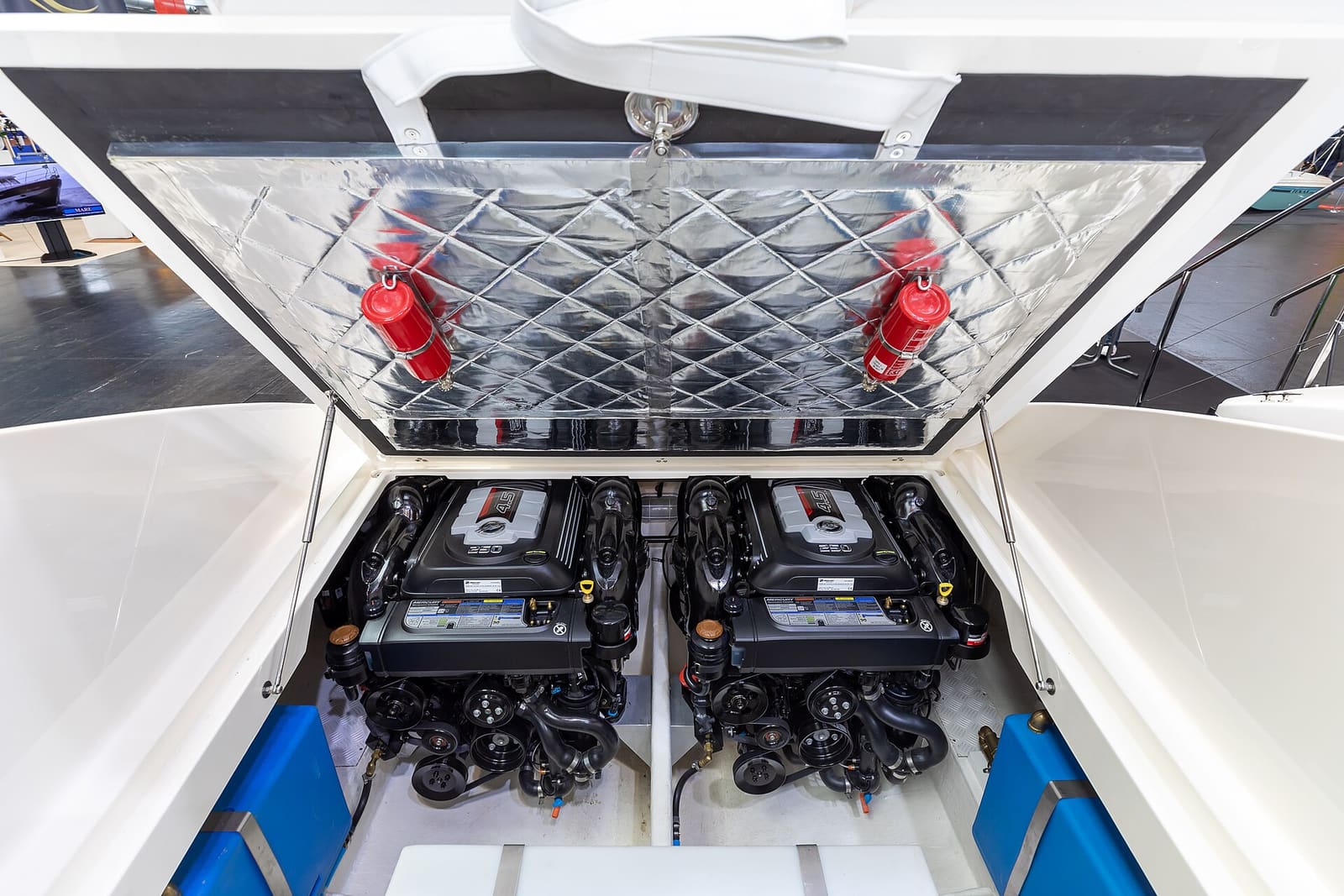
Find the power steering reservoir. On many MerCruisers it's the cap on top of the power steering pump on the front of the engine, driven by the belt. Don't confuse it with the drive gear lube monitor bottle or the trim pump reservoir, which look similar. Wipe the cap before opening it, then read the dipstick or level marks the way your manual says (some are read hot, some cold). Boating Magazine's engine checklist includes power steering fluid with coolant and trim fluid.
Put a drop on a white paper towel:
- Clean, the right color: fine.
- Milky or foamy: water or air in the system. A boat that sat for years, or a leaking cap seal, can let water in. Many sterndrive engines also run the steering fluid through a small cooler that sits in the raw-water (sea water) circuit; when that cooler corrodes inside, water can get into the fluid or fluid can be pumped overboard. A full fluid change and bleed is needed, and a pro should check the cooler.
- Dark and burnt-smelling: the pump has been overheating or running low.
- Low, and dropping between trips: there's a leak (step 5).
Add the specified fluid slowly to the correct mark. Don't overfill. If you had to add a lot, run the engine briefly (boat secured, drive in the water or with cooling water supplied), turn the wheel slowly lock to lock several times to work air out, shut down and recheck. Groaning that fades as you turn usually means air working out.
Clean the pump, hoses, fittings and the actuator area with degreaser, run the engine (drive in the water or with cooling water supplied) and turn lock to lock, then look again with a flashlight. Common leak spots are the hose fittings at the pump and at the actuator (older hoses often weep where the metal ends are crimped on, especially once they rust), the pump shaft seal behind the pulley, the steering fluid cooler if your engine has one, and the actuator or cylinder seals at the transom. Thin reddish oil under the engine after winter is a classic owner find: top up, mark the level, and watch it on the first runs before guessing which part leaks. Engine makers sometimes issue service bulletins about steering hoses or fittings, so ask your dealer whether any apply to your engine serial number. Running a pump very low on fluid can ruin it and overheat the fluid. Weeping fittings can sometimes be tightened gently; a leaking actuator or pump seal is pro work.
Engine off, key out. Look at the belt that drives the power steering pump. Boating Magazine says to press it between pulleys and make sure it springs back, and to look for cracks, glazing, dry rot, thin spots and black belt dust (a sign of damaged pulleys). Rusty, pitted pulleys can point to a water leak. A loose or slipping belt gives steering that goes heavy when you turn hard or at higher load, sometimes with a squeal. Adjust or replace as your manual shows. Mercury lists a spare belt among the parts to carry aboard a MerCruiser.
Serpentine belts: on many newer engines one long belt drives the steering pump, the alternator and often the raw-water or circulating pump, with a spring-loaded tensioner keeping it tight. If that belt comes off, steering goes heavy all at once and the engine can overheat within minutes. A BoatUS reader story describes exactly that on a twin-engine cruiser: the starboard tensioner failed, the belt fell into the bilge, and the couple had to get home on one engine with manual steering. With the engine off, look at the tensioner: the arm should hold firm pressure on the belt, the pulley should spin quietly, and the belt should sit squarely in every groove. A wobbly pulley, a weak arm or a belt riding off the edge means a new tensioner or belt before the next trip. If a belt comes off under way, shut that engine down and see the overheating guide before restarting.
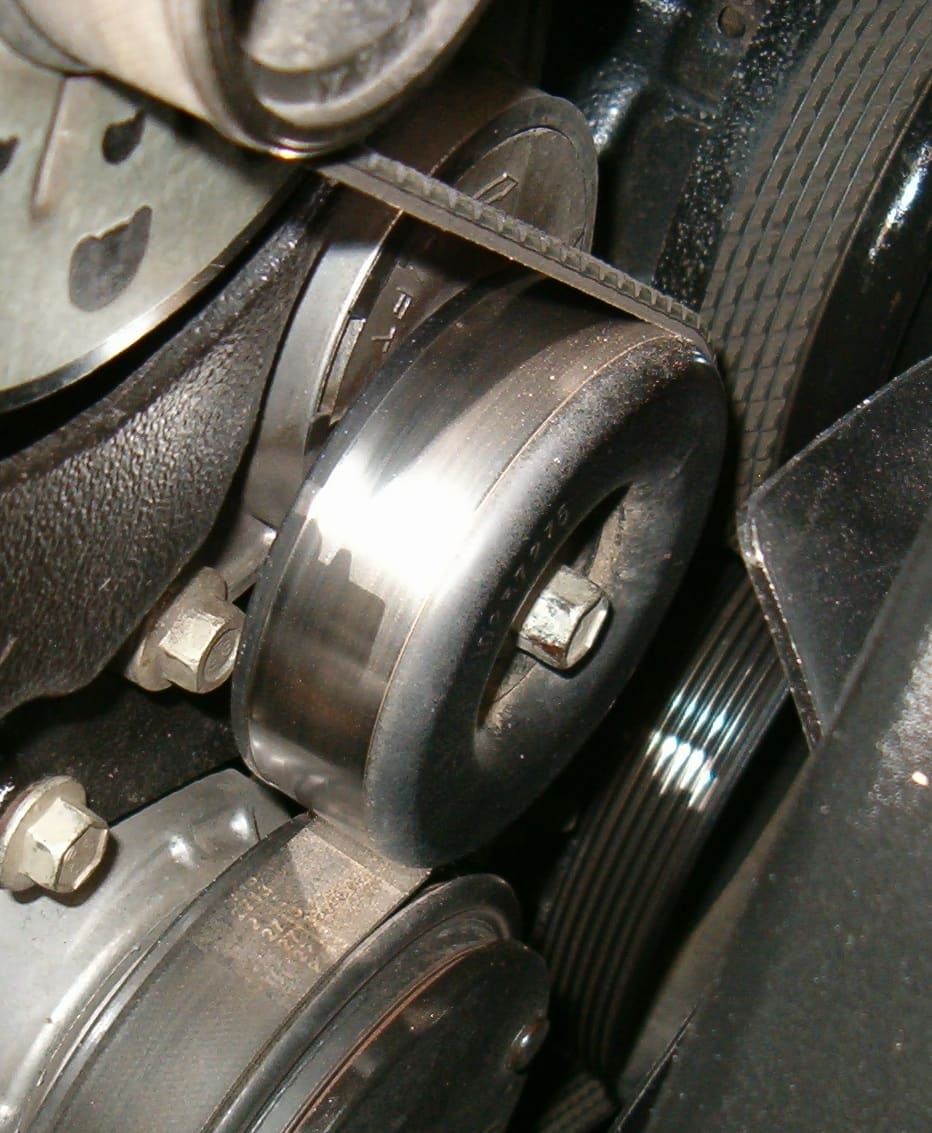
A serpentine belt tensioner, here on a car V8. Marine V8 and V6 engines use a similar spring-loaded pulley. Photo: Una Smith / Wikimedia Commons · CC BY 3.0 With a helper watching the drive, turn the wheel lock to lock with the engine off. It will be heavy, but it should be smooth and even, with no binding, clunks or tight spots. Boating Magazine says to steer lock to lock and check the cable for binding or stiffness. If it's stiff or notchy with the engine off, the problem is mechanical: go to step 8.
The helm cable is the most common cause of stiff steering on older boats. With the engine off, look at the cable from helm to transom for kinks, tight bends, cracked jacket or rust at the ends. Clean and grease the cable end and the exposed ram as your manual allows; Boating Magazine also says to clean crud off steering rams. Southern Boating notes a worn helm can make even a new cable stick or jump, so pros often replace both together. On many sterndrives the cable connects to the actuator through a fitting that must be correctly aligned; if you've had the drive off recently and the steering changed, have the connection checked.
A boat that pulls one way or steers harder one way only at speed may be fine mechanically. A single prop's torque pulls the boat to one side, and drive trim and trim tab settings change how strong that pull is. Before blaming the pump, try different trim angles. If the boat steers evenly with the drive trimmed differently, it's a setup issue, not a failure. Big changes after a prop swap are a strong clue.
Stiffness in both directions with the engine off, plus grinding or rumbling when turning, can come from the drive and gimbal area, such as a dry or failing gimbal bearing or water in the bellows. See the bellows and gimbal guide. Mercury also notes engine alignment and coupler lubrication need periodic checks on MerCruisers.
After the fluid, belt, cable and drive check out, the remaining suspects are hydraulic:
- Hard one way only with the engine running, smooth with the engine off: often the actuator's control valve or its cable connection.
- Heavy both ways at idle, whining pump: low pressure from a worn pump or a blocked line.
- Steering that kicks or jerks on its own: air in the system or a sticking valve.
- Fluid leaking from the actuator body: worn seals.
These need pressure testing, special tools and correct bleeding procedures. Leave them to a pro.
Any time the system is opened, air must be bled out as the manual describes. Then test at low speed in open water first: turn both ways at idle, then at moderate speed, and check the fluid level again after it cools.
Common mistakes
- Topping up the gear lube bottle or trim reservoir instead of the steering pump.
- Using the wrong fluid, or mixing fluid types in an electric or hydraulic helm system.
- Replacing the pump when the real problem was a dry steering cable or worn helm.
- Replacing the helm cable and reconnecting it to the actuator without the alignment your manual shows. On many power steering actuators the cable fitting also positions the control valve, so a wrong orientation can leave steering stiff or uneven right after a "simple" cable swap.
- Ignoring a slow leak until the pump runs dry and fails.
- Blaming the steering for a pull that's really prop torque or trim.
- Running for weeks with the belt slipping and squealing.
- Checking the belt or fluid with the engine running.
When to call a pro
- Steering that is jerky, kicks back or locks under way
- A leaking actuator, pump seal or high-pressure hose
- Milky or burnt fluid, or a pump that still whines after topping up and bleeding
- Hard steering in one direction only with the engine running after the basic checks pass
- Stiff steering with the engine off that greasing doesn't fix (cable, helm or gimbal work)
- Any job that means removing the drive, the actuator or the steering helm
- Smoke or a burning smell from the steering pump area
Tips
- Keep a spare belt and a small bottle of the correct steering fluid aboard, labeled.
- Check the steering fluid every time you check the engine oil.
- Steer lock to lock at the dock before every trip; heavy or notchy steering is easier to deal with tied up than in a channel.
- Write down the steering system type (engine-driven, electric or hydraulic helm) and fluid in your BoatMend boat profile.
- After winter storage, grease the cable and check the fluid before the first run.
- At lay-up, Boating Magazine's sterndrive winterizing list includes checking the steering for slop and damage and topping off both the steering and trim reservoirs, so you start spring with a known level.
- Newer MerCruiser owners can watch Mercury's free Sterndrive and Inboard Care videos (daily checks, maintenance schedule) to see where things are on their engine; your owner's manual still has the exact fluid and level procedure.
- On twin engines, ask your mechanic whether both engines supply steering assist or only one (it varies by installation). In the BoatUS story, losing one engine's belt left the boat with almost no power steering even though the other engine still ran.
Official references
We read these to write this guide. Your engine's own manual always wins.
- Boating Magazine – Five Inboard and Sterndrive Engine Checks
- Mercury Marine – Power Trim and Steering Fluid (which systems it is and isn't for)
- Mercury Marine – Service and Support FAQs (MerCruiser spare parts, alignment)
- Southern Boating – Boat Steering Repair Guide
- BoatUS – Cockpit Confessions, For Lack of a Serpentine Belt (2024)
- Boating Magazine – Tips for Winterizing Your Sterndrive (steering and trim reservoirs)
- Mercury Marine – Sterndrive and Inboard Care (MerCruiser maintenance videos)
Safety: BoatMend is for information only and does not replace a certified marine technician. You are responsible for your safety and your boat. Read the full disclaimer.
Last updated 2026-10-24
Related guides
Hydraulic Steering: Check Fluid, Bleed Air and Fix Stiff or Loose Steering
Check the fluid in your hydraulic steering helm, bleed out the air that makes steering spongy, and track down the usual causes of stiff, loose or noisy steering. Includes notes for boats with mechanical cable steering.
How to Inspect Sterndrive Bellows, Gimbal Bearing, U-Joints and Shift Cable
Learn to spot a cracked sterndrive bellows before it lets water into the boat, and to recognize the warning signs of a worn gimbal bearing, U-joints and shift cable. A failed bellows is one of the top reasons boats sink at the dock, and a 20-minute inspection can catch it.
How to Check and Top Up Power Trim and Tilt Fluid
Check and top up the hydraulic fluid in your power trim and tilt unit, then work through the simple checks when the motor won't go up, won't go down or slowly sinks. Most trim problems are a dead battery, a bad relay, low fluid or a release valve left open, and you can find those yourself.
Engine Overheating - Troubleshooting Guide
Work through the most likely causes of a hot engine or overheat alarm, from a blocked water intake to a worn impeller or stuck thermostat. Acting fast and in the right order can save your engine and often gets you home without a tow.
Launch Day and Haul-Out Checklist for Trailer Boats
A step-by-step checklist for getting your boat off the trailer and back on again safely and quickly, from the drain plug and tie-downs to the blower and ramp etiquette. Following it in order prevents the classic mistakes that sink boats and back up the ramp.
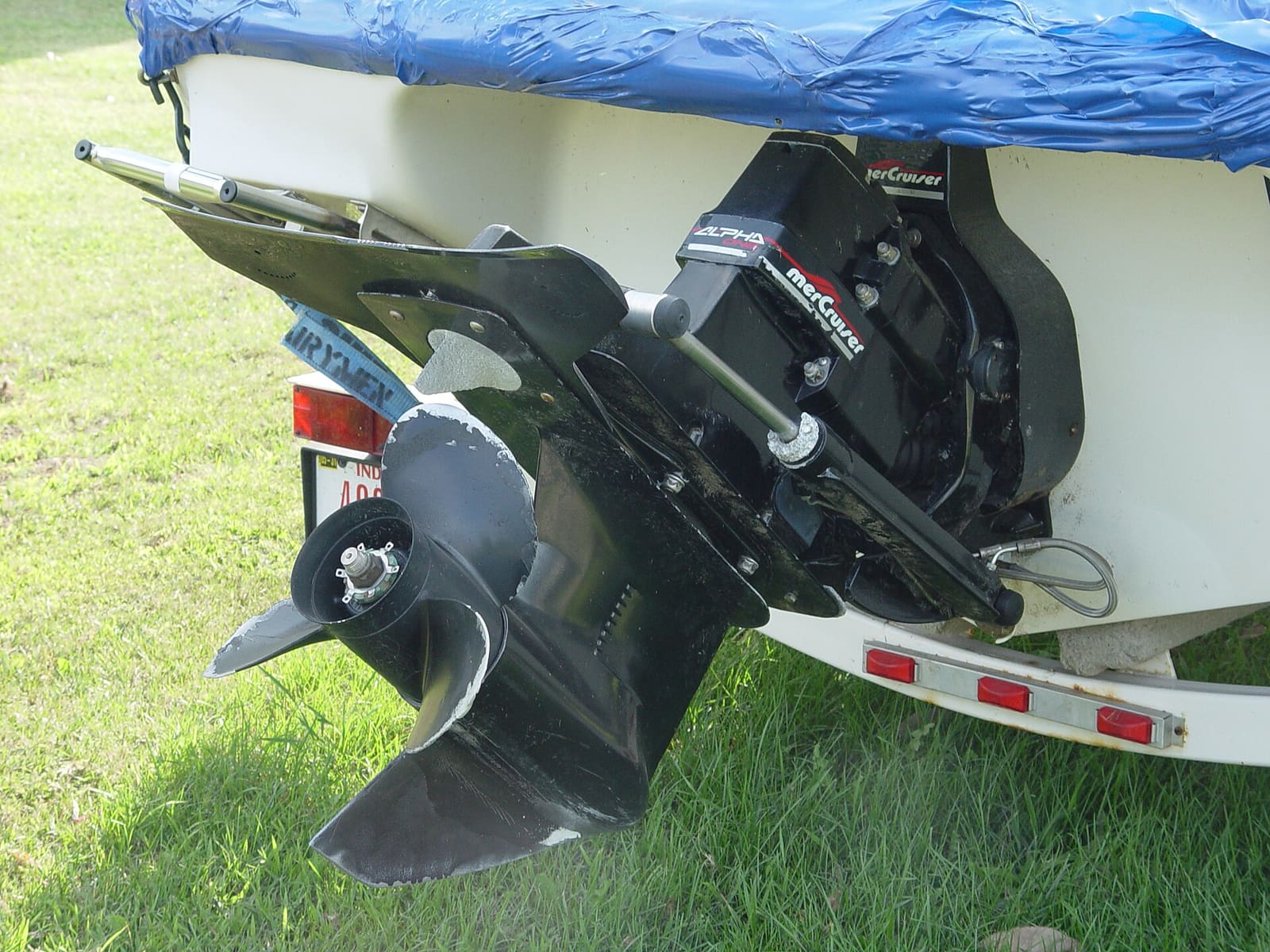
How to Winterize a Sterndrive (MerCruiser, Volvo Penta and Similar)
Get the water out of your sterndrive engine, protect it with antifreeze, and service the drive before storage. A cracked block or manifold from one missed drain plug can cost thousands, and doing it yourself saves a shop bill of several hundred dollars.