Tow Vehicle Rear Differential Care: Ramp Water, Milky Gear Oil and Limited-Slip Additive
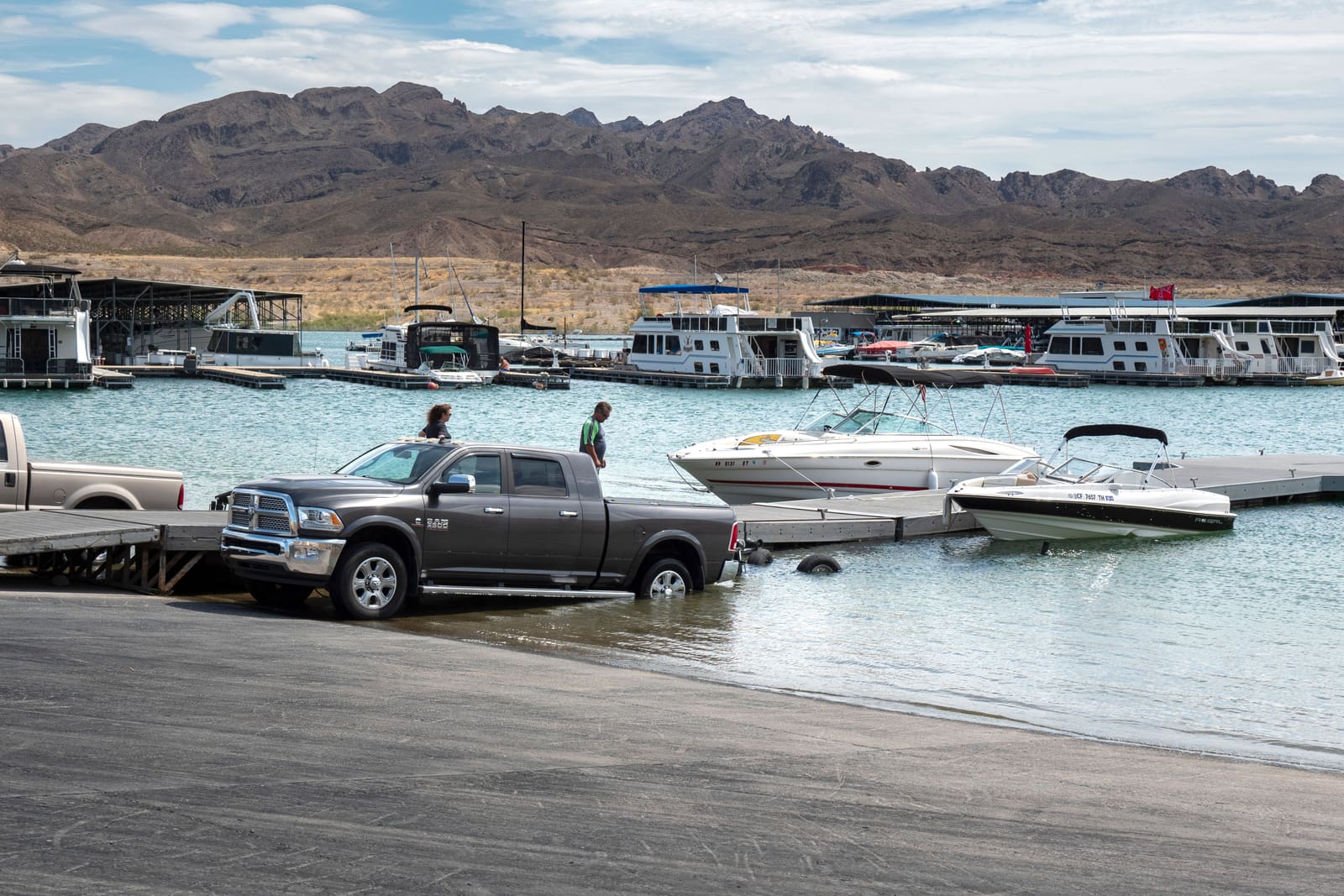
Backing the truck's rear axle into the water at the launch ramp can pull water into the differential through its vent. Learn how water gets in, how to keep the axle dry, how to drain and read the gear oil, why limited-slip axles need friction modifier, when to change the fluid, and when the differential needs a shop.
Time
1 h 30 min
Shop would charge
$100-300
Applies to
All engines
Safety first: Never work under a vehicle held up only by a jack: use ramps or jack stands on level, solid ground, set the parking brake and chock the wheels. Gear oil after a drive can be hot enough to burn. At the ramp, always set the parking brake and put the vehicle in park before anyone gets out. If the axle howls, clunks or smells burnt, have it checked before your next tow.
Owners often ask
- My truck goes into the water at the ramp. Can water get into the rear differential?
- The gear oil from my truck differential came out milky. What do I do?
This guide walks you through it. Still stuck? Ask the AI Mechanic about your engine.
Tools
- Vehicle ramps or a floor jack and jack stands rated for the vehicle
- Wheel chocks
- Socket set or square-drive ratchet (many fill and drain plugs take a square drive)
- Drain pan (clean, so you can see the oil)
- Gear oil pump or squeeze bottle with a hose
- Flashlight, rags, gloves and safety glasses
- Gasket scraper, only if your axle has a bolt-on cover instead of a drain plug
Parts & supplies
- Gear oil of the exact type and grade in your vehicle owner's manual
- Limited-slip friction modifier, if your manual calls for it and the oil isn't pre-mixed
- New gasket or the sealant your manual specifies, if you remove a cover
- Container for used oil (take it to a recycling center)
Before you start
The rear differential is the gearbox in the middle of the rear axle. It holds a few quarts of thick gear oil and has a small vent (a fitting or short hose on top of the axle) so the housing can breathe as it heats and cools.
BoatUS's ramp traction article explains the problem for boat owners: even though a differential looks sealed, water can get in through the vent tube or from condensation, and backing the rear axle into the water at the ramp makes it worse. BoatUS describes the same effect for trailer hubs: a part that's hot from the highway and then plunged into cold water cools fast and draws water in. Ram's online owner information is just as direct: water in the gear lubricant causes corrosion and can lead to failure, and driving in water requires draining and refilling the axle.
Gather:
- Your vehicle owner's manual: the axle type, the gear oil specification, whether a limited-slip additive (friction modifier) is required, and the severe-service interval for axle fluid (towing usually counts).
- Your axle's details. Many trucks have a tag on the axle or a code on the door-jamb or glovebox label that tells a dealer which differential you have.
Steps
BoatUS describes three kinds:
- Open: standard. Power goes mostly to the wheel with less grip, so one tire can spin on a slick ramp.
- Limited-slip: sends power to both wheels, not always equally. The most common option on pickups and SUVs, and the most sensitive to water and heat because most use clutch packs that wear.
- Locking: locks both rear wheels together when engaged.
Your dealer can decode the axle from the VIN if you're not sure. This matters because limited-slip axles usually need a friction modifier in the oil.
Two things break down differential oil and the friction modifier in it:
- Water that gets in through the vent or by condensation, especially when the axle is dunked.
- Heat from towing a heavy load, plus heat from the limited-slip clutches working when tires spin on gravel, mud or a slimy ramp.
BoatUS writes that factory clutch-type limited-slips on trucks used to tow and launch regularly often wear out in less than 40,000 miles, after which they act like an open differential. BoatUS adds that diligent maintenance early on can add another 10,000 to 20,000 miles.
The best fix is not dunking it:
- Back in only as far as the boat needs to float off or drive on.
- If the rear tires go under every time, look at the trailer: bunk height, winch post position or a tongue extension can let the boat load in shallower water (see our trailer bunks guide).
- On a steep or shallow ramp, a helper watching the waterline helps you stop at the right spot.
- Keep the tailpipe out of the water too.
With the vehicle parked and cool, look on top of the axle housing near the differential or along the axle tube. You'll see either a small cap-style vent or a rubber hose running up toward the frame or body.
- The cap should be present and not packed with mud.
- A hose should be intact, not kinked, cracked or pulled off its fitting, and its open end should point down or be capped as the factory designed.
Never plug or seal the vent. Without it, pressure builds as the axle heats and can push oil out past the seals.
Some trucks already route the axle vent up high with a long hose; others have a short cap right on the axle. You'll see aftermarket "vent extension" kits for owners who wade deep or launch often. Only change the vent if your vehicle maker's service information, or your dealer, approves the method for your axle. A poorly routed hose can trap water, kink or pull off, and modifications can complicate warranty claims. If your maker offers a factory extended vent, that's the one to use.
Have the differential checked soon if you notice:
- A whine or howl that changes with speed, or a clunk when you take off
- Oil seeping from the cover, the pinion seal (front of the differential) or the axle ends
- The limited-slip no longer working: on a slick ramp, one rear wheel spins and the other doesn't
- Loud chatter or binding on tight turns
Ram's owner information notes that some noise and mild shudder while turning on dry pavement can be normal for a limited-slip. Rough, loud or new noises aren't.
- Follow the severe-service schedule in your owner's manual if you tow.
- If your rear axle regularly goes in the water, BoatUS recommends draining the rear differential oil at least at the end of every boating season and checking it.
- After the axle has been submerged deeper than usual (a ramp mishap, a flooded road), drain and refill, as Ram's owner information says for driving in water.
- Salt water launches: don't wait; there's no benefit to leaving salt-contaminated oil in the axle.
If you'd rather not do it yourself, a quick-lube or dealer can do it. Ask them to show you the old oil.
Do this after a short drive so the oil flows, but not so long that it's scalding.
- Park on level ground, set the parking brake and chock the wheels. Use ramps or jack stands if you need room; never just a jack.
- Loosen the fill plug first (on the face of the housing, about halfway up). If you drain first and then can't open the fill plug, you're stuck with an empty axle.
- Put a clean pan underneath and remove the drain plug. If there's no drain plug, the cover must come off: loosen its bolts, leave the top ones loose to tilt it, and let the oil run out slowly.
- Let it drain fully. Check the drain plug's magnet (if it has one) and wipe it clean.
BoatUS gives a simple guide:
- Milky, foamy, or yellow-brown: water got in.
- Burnt smell: the limited-slip clutches are worn out.
- Metal flakes or particles in the oil or on the plug: excessive wear.
A fine gray paste on a magnet is normal wear. Chunks, slivers or chips are not.
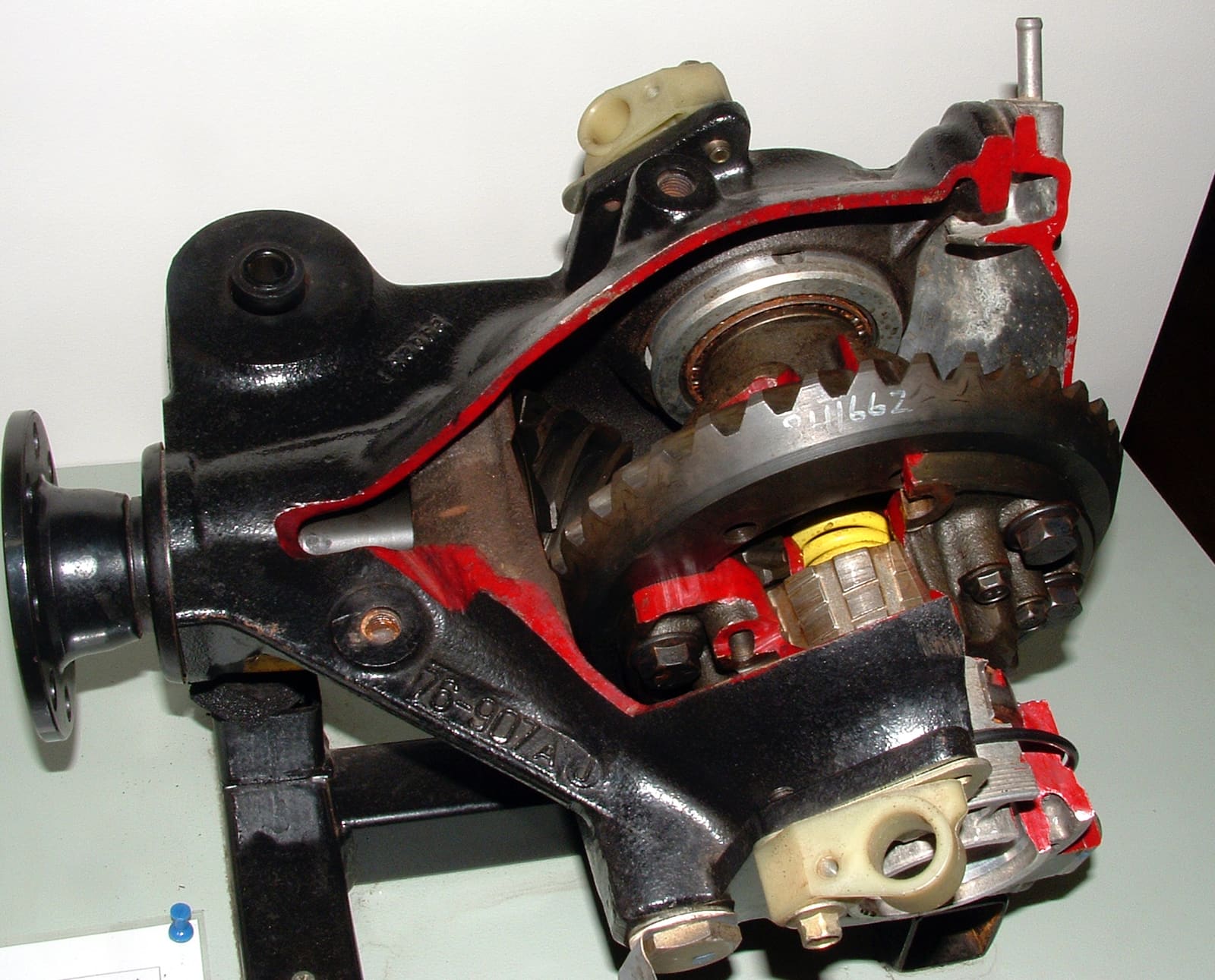
Photo: RB30DE / Wikimedia Commons · CC BY-SA 3.0 If the oil only had water in it and nothing else looked wrong, BoatUS says to refill with the gear oil your owner's manual recommends and add the recommended amount of limited-slip friction modifier. Ram's owner information says limited-slip axles do require the additive, unless the oil is already pre-mixed with it.
- Use exactly the oil type and grade in your manual. BoatUS warns not to use a synthetic gear oil unless it meets your vehicle's limited-slip requirements.
- Add the friction modifier first if your manual says so, then fill with oil.
- Read the gear oil label before you buy a separate bottle of additive. Some gear oils already contain a limited-slip additive. Valvoline's full synthetic 75W-140, for example, lists the GL-5 and vehicle-maker specs it meets and states that a supplemental friction modifier is not required. Match the specs on the label to the ones in your owner's manual, and don't add extra modifier "for good measure."
- Fill until oil reaches the level your manual specifies at the fill hole. Ram's manual, for example, describes using a bent wire as a dipstick through the fill hole.
- Reinstall the drain and fill plugs (or the cover with a new gasket or the specified sealant) and tighten to the manual's spec.
BoatUS adds that a "weak" limited-slip can sometimes be helped just by fresh oil and the correct amount of friction modifier.
Wipe the housing clean, drive a few miles, then look for drips around the plugs, cover and pinion seal. On a gravel lot or wet grass, you can feel whether both rear wheels are pulling. Write the date, mileage and what you found in your maintenance log or on a sticker inside the door.
On four-wheel-drive trucks, the front differential and the transfer case also have vents and can take on water if they go deep. Ram's owner information covers rear and front driving axles together. If the front axle went under, have it checked too.
If the oil smells burnt, has metal in it, or the limited-slip no longer works after fresh oil and additive, the clutches or bearings are probably worn. BoatUS put a limited-slip rebuild at about $500 to $1,200 when it wrote about this in 2013; expect more today depending on the vehicle. That's a job for a certified repair shop or dealer.
Common mistakes
- Backing in until the whole rear axle is under water every launch, then never checking the oil.
- Draining the axle before making sure the fill plug will come out.
- Refilling a limited-slip axle without the friction modifier your manual calls for.
- Using any synthetic gear oil "because it's better" when it doesn't meet the vehicle's limited-slip spec.
- Plugging or cutting the axle vent, or adding a vent extension your vehicle maker doesn't approve.
- Ignoring milky oil because the truck "drives fine."
- Forgetting the front axle on a 4x4 that waded deep.
When to call a pro
- The oil smells burnt or has metal chips or slivers
- The axle howls, whines, clunks or leaks at the pinion or axle seals
- The limited-slip doesn't work even after fresh oil and additive
- The axle was fully submerged in salt water, or the vehicle went deeper than the ramp (also check brakes, wheel bearings and electrical connectors)
- You don't have safe ramps or stands to work under the vehicle
Tips
- After a launch, look at where the water came to on your tires. If it's above the hub center regularly, change your launch habits or trailer setup.
- Keep a small bottle of the correct friction modifier with your truck records so whoever services the axle uses it.
- Ask your shop to check the differential oil at every oil change during boating season; it takes a minute with the fill plug out.
- Rinse the underside after saltwater launches, as our tow vehicle maintenance guide explains.
Official references
We read these to write this guide. Your engine's own manual always wins.
- BoatUS – Ramp Traction (limited-slip differentials, water and heat, Bruce W. Smith)
- Ram (Mopar) – 2022 Ram 2500/3500 online owner information, axle Lubricant Selection
- Ram (Mopar) – 2022 Ram 2500/3500 online owner information, Rear Axle Fluid Level
- BoatUS – Hubs and Bearings (why a hot part dunked in cold water draws water in)
- Valvoline – Full Synthetic Gear Oil SAE 75W-140 (limited-slip additive, specs met)
Safety: BoatMend is for information only and does not replace a certified marine technician. You are responsible for your safety and your boat. Read the full disclaimer.
Last updated 2026-10-26
Related guides
Tow Vehicle Maintenance for Boat Owners (Transmission, Differential, Brakes, Hitch)
Keep the truck or SUV that pulls your boat ready for the job: follow the severe-service schedule, protect the transmission from heat, check the rear differential for ramp water, keep brakes, tires, hitch and wiring in shape, and rinse salt off the underside after every saltwater launch.
Boat Ramp Traction with a 2WD or Front-Wheel-Drive Vehicle: Stop Spinning, Stay Dry
Spinning tires on a slick ramp are embarrassing at best and dangerous at worst. Learn how rear-wheel, front-wheel, AWD and 4WD vehicles behave on a ramp, how to set up weight and tires, when to use 4WD Low, how to keep the vehicle from sliding in, and what to do if you get stuck.
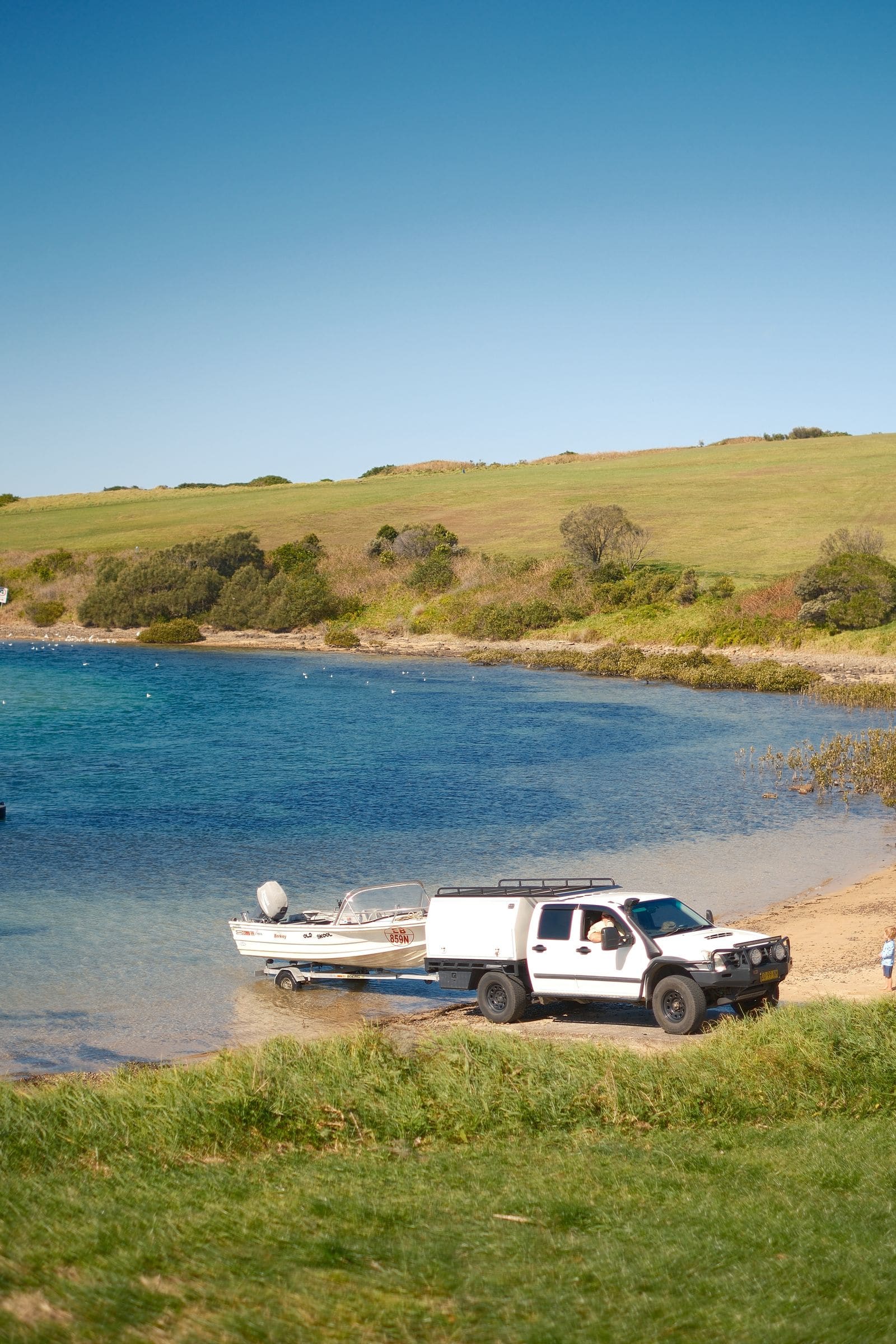
Is My Vehicle Rated to Tow This Boat? Towing Capacity, GCWR and Tongue Weight Explained
The towing number in the ad is only one of several limits. Learn which ratings matter (towing capacity, GCWR, GVWR, axle and tongue limits, hitch class and ball rating), how to weigh your real rig at a truck scale, and when you need trailer brakes and towing mirrors.

How to Launch and Retrieve Your Boat Alone
A repeatable routine for putting a trailer boat in and taking it out by yourself: what to do in the staging area, how to rig one long line so you can control the boat from the dock, when power loading is off-limits, and the safety habits that keep you, your boat and the next boater out of trouble.
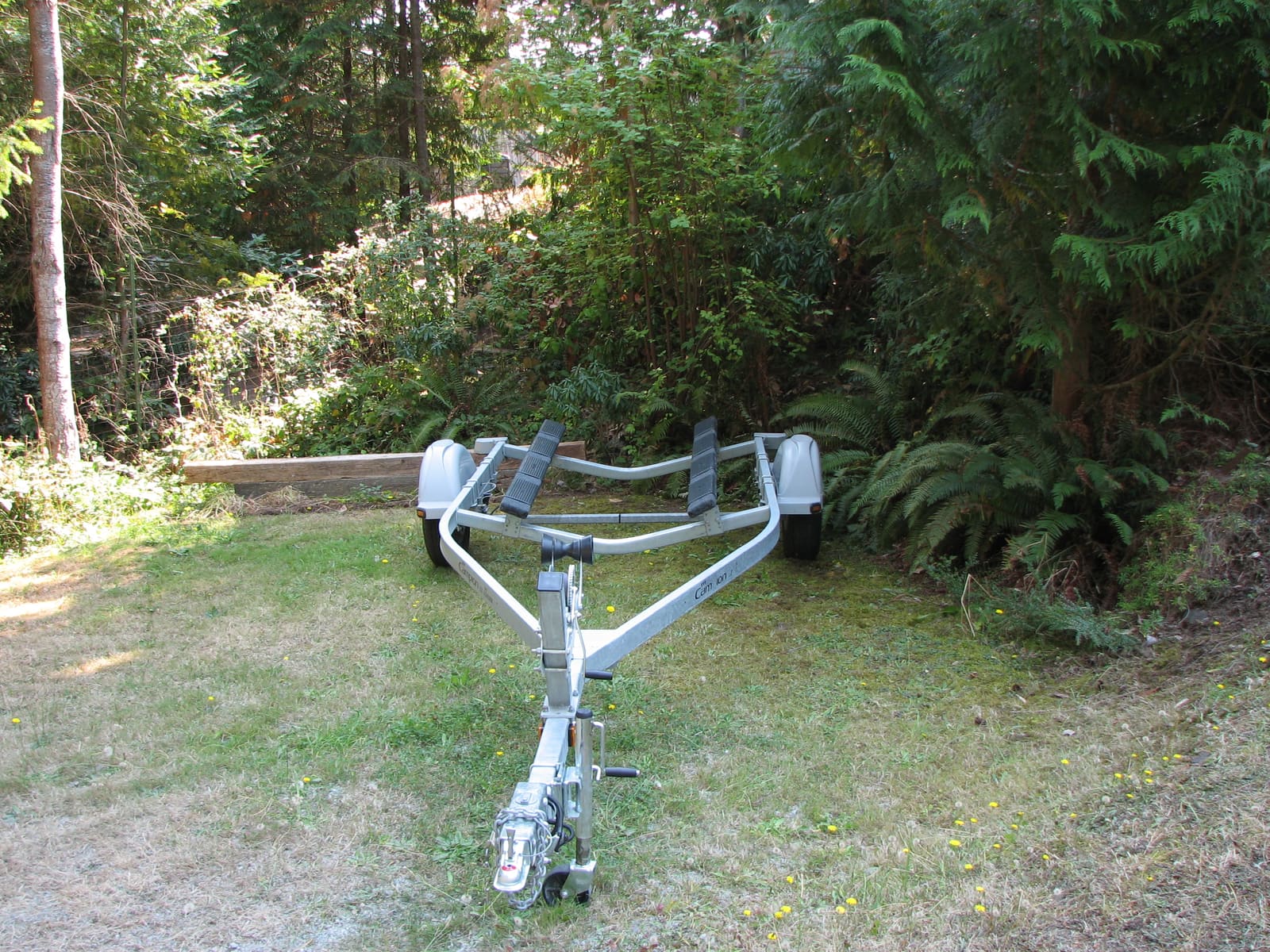
How to Adjust and Replace Trailer Bunks and Rollers So Your Boat Sits Right
Set up your boat trailer so the hull is supported in the right places: bunks and rollers clear of the strakes, the transom fully supported, the bow snug against the winch stop and the weight balanced on the tongue. Also covers replacing rotten bunk boards and worn carpet or rollers.
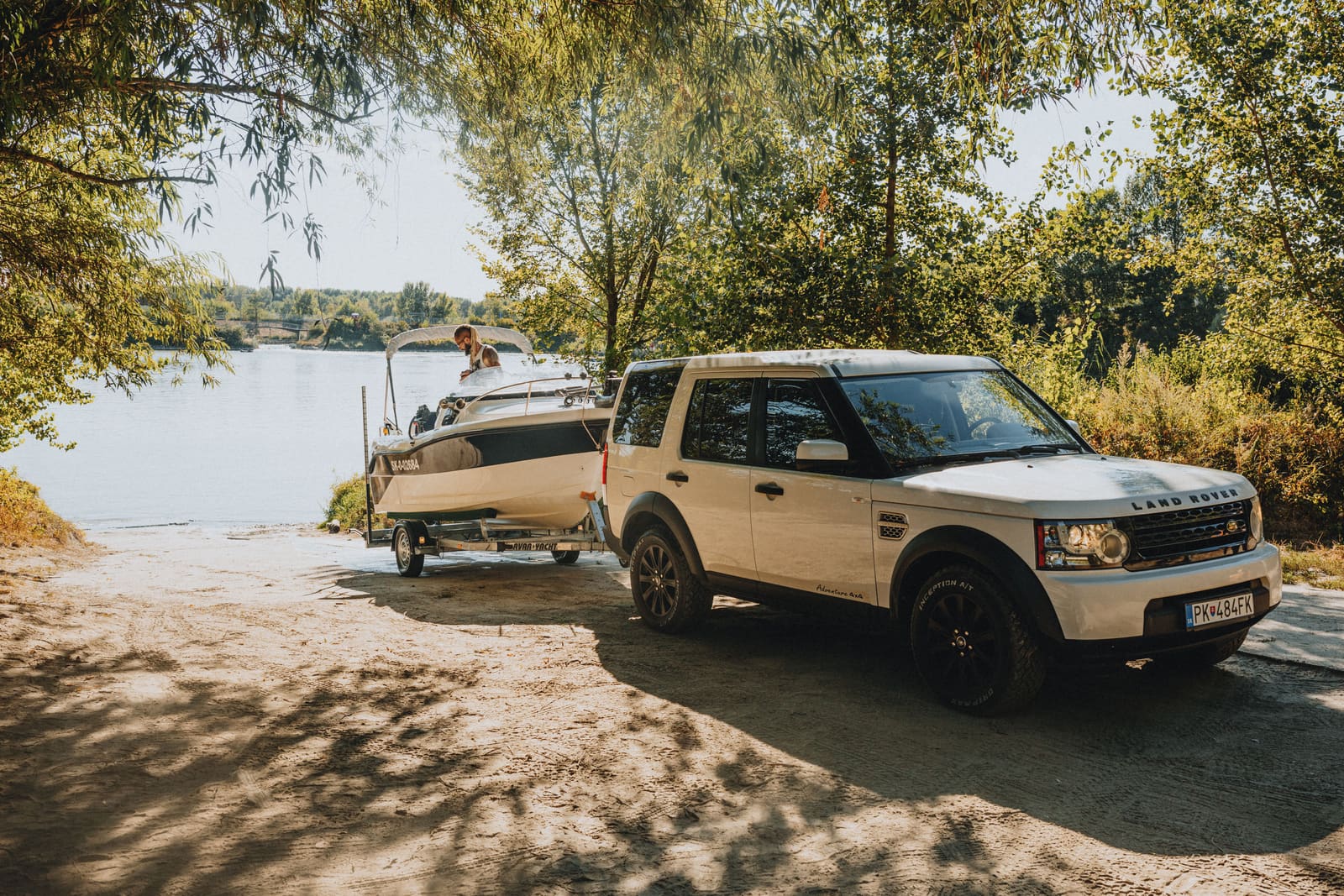
Get Your Boat Ready for the Road: Pre-Trailering Checklist
Most trailering trouble starts in the driveway: an engine left without support, a loose strap, a cover that balloons at 60 mph, gear that blows out or tongue weight that makes the rig sway. Work through this checklist before every trip and do a quick walkaround at each stop.
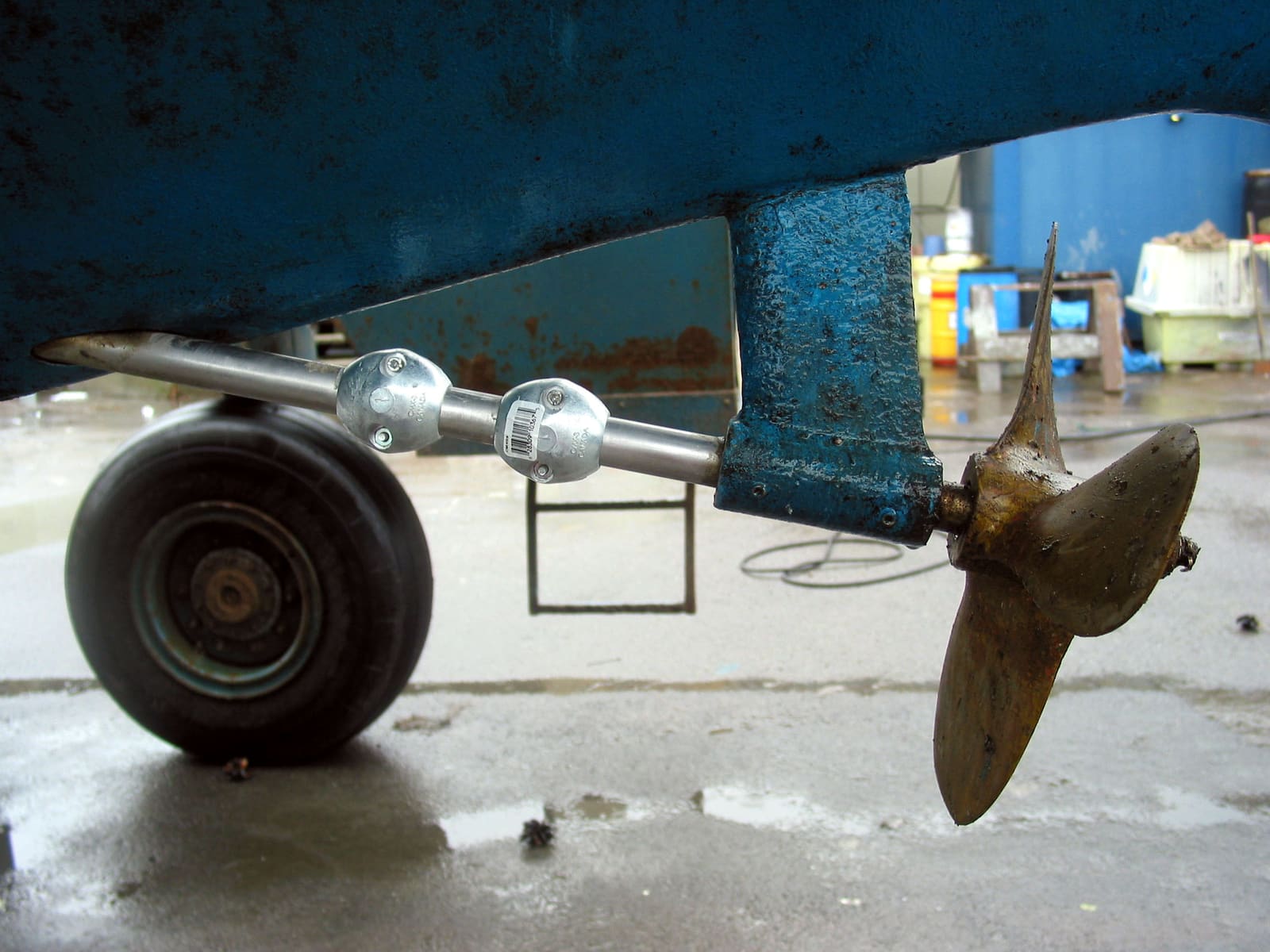
Moving Your Boat From Fresh to Salt Water (or Back): Anodes, Flushing, Corrosion, Bottom Paint and Trailer Upgrades
What to change when a lake boat moves to the coast, or a saltwater boat moves inland: switching anode material, a flush-after-every-trip routine, raw-water and closed cooling parts that wear faster in salt, bottom paint that suits your hull and drive, marine-grade hardware, and trailer upgrades that survive salt dunks. Built from BoatUS, Mercury, Yamaha and Boating Magazine advice.

How to Keep a Boat Maintenance Log and Organize Your Receipts
Set up a simple maintenance log that records the date, engine hours, work done, parts and who did it, and keep receipts and photos organized. Good records help with warranty and insurance claims, show buyers the boat was cared for and reveal wear patterns before something fails.