Composting Toilets on Boats: How They Work, the Rules, Emptying and Winter Care
A composting (dry, urine-separating) head can replace a smelly holding tank, but it has its own routine. Learn how these toilets work, how they fit the Coast Guard's sanitation rules, how to prepare the medium, empty the liquids bottle and solids bin legally, keep odors away and handle cold weather and winter layup.
Time
30 min
Shop would charge
$800-2500
Applies to
All engines
Safety first: Urine and the solids bin both count as sewage under US rules, so neither goes over the side inside US waters. Wear gloves when you empty anything, wash your hands well, and keep the bin away from food prep areas. If you're removing an old holding-tank system to make room, every unused seacock and through-hull must be removed and glassed over, or securely plugged and closed: a forgotten hose on an open seacock can sink a boat. If water is coming in and you can't stop it, call the Coast Guard on VHF channel 16 or 911.
Owners often ask
- Is a composting toilet legal on a boat in the US, and where am I allowed to empty the urine bottle?
- Why does my composting head smell like ammonia after a weekend?
- Has the Coast Guard approved my composting toilet, or is it up to the manufacturer?
This guide walks you through it. Still stuck? Ask the AI Mechanic about your engine.
Tools
- Nitrile or rubber gloves, and a dust mask when emptying the solids bin
- Spray bottle for a vinegar-and-water mix
- Bucket of water for soaking the coir brick
- Heavy-duty trash bags or a compostable bin liner
- Spare liquids bottle with a sealing cap
Parts & supplies
- Composting medium the maker recommends (coconut coir or sphagnum peat moss)
- Spare 12-volt vent fan and fuse
- Coffee filters (handy for keeping the trap door clean)
Before you start
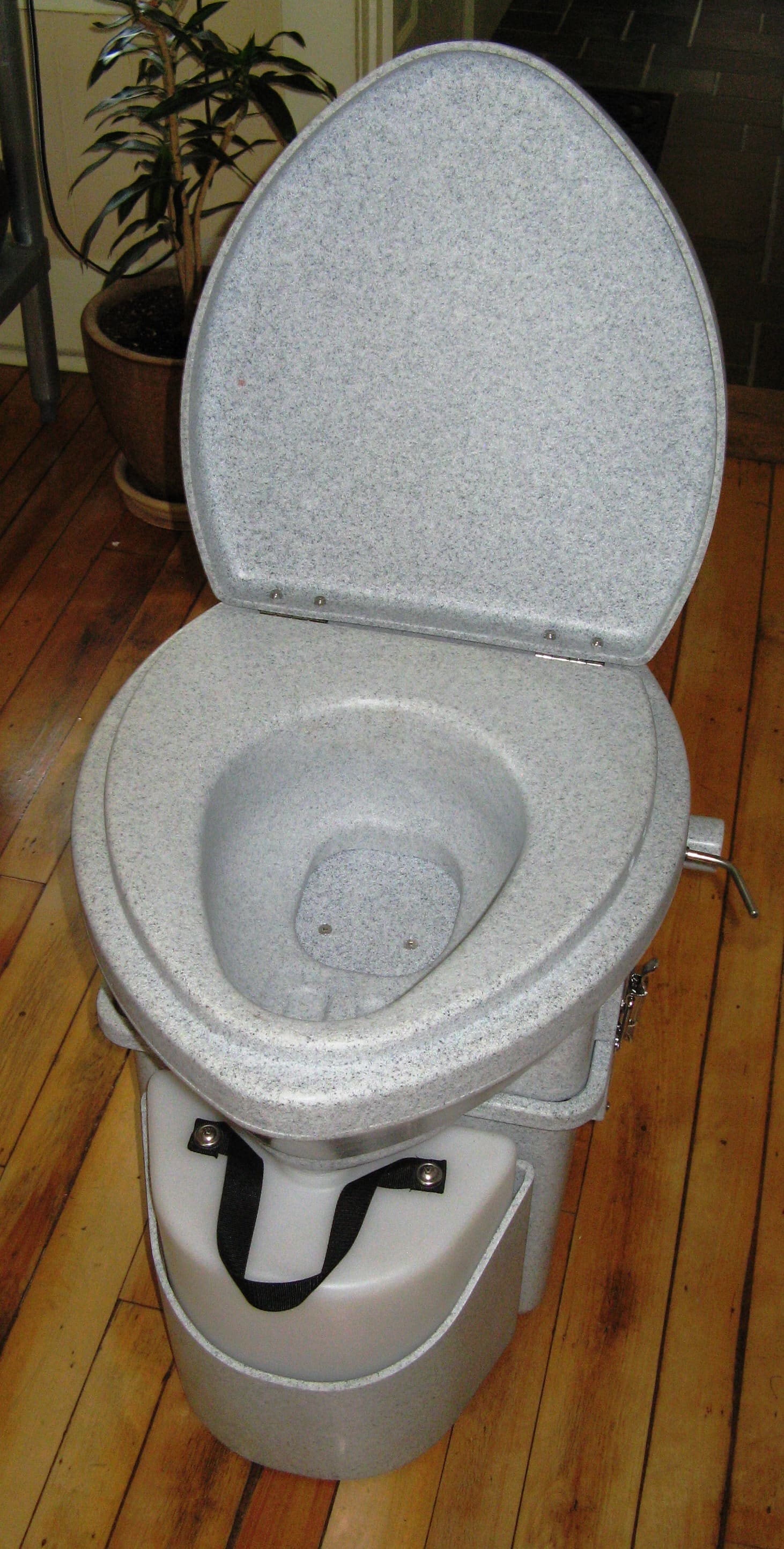
How a composting head works. Most marine units (Nature's Head and Air Head are the two best known in the US) separate liquids from solids the moment they're deposited:
- Urine runs through holes at the front of the bowl into a removable bottle.
- Solids drop through a trap door into a bin with a dry, fibrous medium such as coconut coir or peat moss. A crank turns an agitator to mix them in.
- A small 12-volt fan pulls air through the bin and out a vent hose to the outside, which dries the solids and carries smells away.
Practical Sailor describes the key point: keeping urine and solids apart and giving the solids air lets oxygen-loving bacteria break them down without the sewage smell of a holding tank. In a weekend boat, "composting" is mostly drying: Nature's Head notes that true composting slows to almost nothing below about 55°F.
Is it legal? Federal rules say a boat with an installed toilet must have an operable marine sanitation device (33 CFR 159.7). A Type III device is one designed to prevent overboard discharge of sewage (33 CFR 159.3), and 33 CFR 159.12a treats a Type III device that only stores sewage at normal air pressure and temperature as certified without a Coast Guard label. Both major makers describe their units as Type III marine heads, and Boating Magazine notes that, with no possible overboard discharge, a composting head also works in no-discharge zones.
What the government actually says. We found no Coast Guard page that rules on composting toilets by name. The closest official statement is EPA's vessel sewage FAQ, which says composting toilets may be considered a Type III device by the Coast Guard; that Type III devices storing sewage at normal air pressure and temperature don't go through formal Coast Guard certification as long as they're designed to prevent overboard discharge; that most composting toilets have not been examined by the Coast Guard, and the maker is usually the one attesting that the unit meets the requirement; and that the contents of both the liquids container and the solids chamber must be disposed of so that nothing goes overboard. So "legal as a Type III" is the reading EPA describes and the makers claim, not a Coast Guard approval of a particular model. Two points to remember:
- The toilet is legal; dumping its contents is not, inside the 3-nautical-mile limit and on inland waters. Practical Sailor stresses that urine is still sewage under the law, even though it's nearly sterile.
- A few states, local authorities, marinas and charter companies have their own rules. Ask your marina, and if your boat is inspected or carries passengers for hire, check with the Coast Guard before you switch.
What to have ready: the owner's manual, a bag or brick of medium, gloves, a spare liquids bottle and a plan for where you'll empty both containers.
Steps
Make sure the unit is bolted down with its brackets so it can't move in a seaway, the trap-door lever and crank turn freely, and the vent hose runs to the outside without dips or kinks where moisture can collect. Many owners vent through a deck or hull vent, or into a ventilated anchor locker; the vent must not end in a closed cabin space. If you replaced a holding tank, double-check that all the old seacocks are removed or closed and plugged, and that the old deck pump-out fitting is sealed.
The fan is what keeps odors out of the cabin, and both makers say to run it continuously while the head is in use. It draws very little: Nature's Head says under 1.8 amp-hours a day and Air Head about 1.4 amp-hours a day for their standard fans. Wire it to the house bank through a fuse or breaker sized per the maker's instructions, or use the maker's solar or AC options. Check that it spins and that you feel air at the outside vent.
Use the medium your maker recommends: organic sphagnum peat moss or coconut coir. Coir usually comes as a compressed brick that you crumble and soak in water until it fluffs up, then wring out so it's damp but not wet. Fill the solids bin to the level shown in your manual, usually just below the agitator shaft. Too much medium makes the crank hard to turn; too little leaves solids wet.
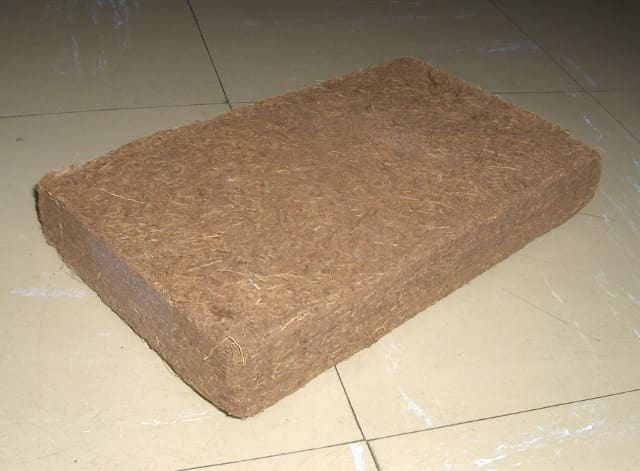
Coconut coir comes as a compressed brick that you crumble and moisten before filling the solids bin. Photo: MatiasMiika / Wikimedia Commons · CC BY 3.0 Every visit is a sit-down visit, because urine has to reach the drain holes at the front. Keep the trap door closed when only urinating, open it for solids, and close it again. A coffee filter on the closed trap door before a solids deposit keeps the door clean. Nature's Head notes that some users put used toilet paper in a small lidded bin rather than the toilet, which slows how fast the solids bin fills; either way is fine. Nothing else goes in: no wipes, tampons, or food scraps.
After each solids deposit, close the trap door and give the crank a few turns to bury the solids in the medium. Don't force it if it's stiff: the bin may be too full, too dry (add a little water) or frozen.
Urine smells worse the longer it sits and can stain the bottle. Air Head estimates that a couple using the head full time will empty the small bottle every day or two. Cap it tightly, carry it ashore and empty it into a toilet at the marina, a pump-out station's toilet dump if it has one, or a shore sewer connection. Rinse it and refit. Carrying a spare bottle with a sealed cap lets you swap and empty later. Never pour it over the side inside US waters, and don't route it to an overboard through-hull.
Makers estimate a bin lasts around 60 to 80 uses, roughly a month for two people living aboard, or a full season for weekend use. Nature's Head suggests waiting several hours after the last use; for a weekend boat, many owners empty it once a season. To empty:
- Wear gloves and a dust mask, and work in a ventilated spot.
- Remove the bin as your manual shows and tip the contents into a heavy-duty bag or compostable liner, then close it tightly.
- Take it ashore. A home compost pile used only for non-edible plants is one option; otherwise bag it for the trash if your marina or local trash service allows it. Ask first: some marinas don't accept human waste in their dumpsters.
- Leave a little old material in the bin if your manual suggests it, then add fresh medium.
Nature's Head recommends spraying a 1:1 vinegar and water mix in the bowl and down the urine holes after use, which stops scale building up in the urine trap. Avoid bleach, products containing bleach, abrasive cleaners, scrub pads and toilet-bowl chemicals; Nature's Head warns that they harm the composting process and can damage the bowl's coating. Keep toilet paper out of the urine holes.
A composting head should smell only faintly earthy. If it smells:
- Ammonia: the liquids bottle is too full or overdue, or urine is getting into the solids bin. Empty and rinse the bottle, and check that the urine drain is clear.
- Sewage: the solids are too wet. Add dry medium, keep the fan running, and make sure crew close the trap door when only urinating.
- Musty or stale: the fan has stopped or the vent hose is kinked, blocked or too long. Check the fuse, the fan and the outside vent.
Small flies can appear in warm weather when solids are wet. Keep the bin on the dry side, keep the fan running (it also helps keep insects away), put insect screen over the outside vent, and empty and restart the bin if they take hold.
Cold doesn't hurt the toilet, but it changes the routine:
- Below about 55°F, solids mostly dry rather than compost. That's fine; expect to empty more often.
- If the bin freezes, the crank may not turn. Don't force it.
- Freezing urine expands and can crack the bottle. Empty the liquids bottle before any freeze. Air Head suggests that if you use the boat now and then in winter, a little non-toxic antifreeze in the urine bottle helps.
- For layup, empty the bottle and either empty the bin or leave a dry bin to finish over winter, as your manual suggests, then empty it at spring commissioning. Nature's Head notes that if the fan runs for months with no use, the bin can dry out and the crank can get hard to turn, so some owners unplug it for winter storage.
Note medium changes, bin empties and fan replacements in BoatMend, so you know how long a bin lasts with your crew and when the fan is due.
Common mistakes
- Pouring urine over the side "because it's sterile." It's still sewage under the law inside US waters.
- Letting the liquids bottle overflow into the solids bin, which causes the smell owners were trying to escape.
- Turning the fan off to save power. It uses very little and is the main odor control.
- Packing the bin with too much medium, so the crank jams.
- Cleaning with bleach or regular toilet-bowl cleaner.
- Leaving old holding-tank seacocks open or hoses attached after a conversion.
- Venting the fan into a closed locker or under a cockpit seat with no outside air.
When to call a pro
- Removing a holding tank, Y-valve and seacocks, or glassing over through-hulls
- Cutting new deck or hull holes for the vent, especially below the sheer or near the waterline
- Wiring a new circuit if you're not comfortable with marine 12-volt work
- Questions about whether your boat, charter or passenger operation can use one (ask the Coast Guard or your state boating agency)
- Any water coming in around old through-hulls after the conversion
Tips
- Keep two or three liquids bottles with sealed caps for longer trips.
- Store spare medium in a sealed bag so it stays dry.
- Put a simple card in the head explaining "sit down, trap door closed for liquids, crank after solids."
- Tell your insurer and surveyor when you remove a holding tank; it's an equipment change they may want to note.
Official references
We read these to write this guide. Your engine's own manual always wins.
- eCFR – 33 CFR 159.3: Definitions (Type III marine sanitation device)
- eCFR – 33 CFR 159.7: Requirements for vessel operators
- eCFR – 33 CFR 159.12a: Certification of certain Type III devices
- EPA – Marine Sanitation Devices (MSDs)
- EPA – Vessel Sewage Frequently Asked Questions (Can I use a composting toilet onboard my vessel?)
- Practical Sailor – Composting Marine Heads
- Boating – Choosing a Composting Marine Toilet
- Nature's Head – FAQs
- Nature's Head – Boats and Marine
- Air Head – FAQs
Safety: BoatMend is for information only and does not replace a certified marine technician. You are responsible for your safety and your boat. Read the full disclaimer.
Last updated 2026-11-06
Related guides
Portable Toilets on Boats: Emptying, Chemicals, Odor, Seals and Winter Storage
A portable toilet (Porta Potti type) is the simplest legal head for a small boat, as long as it is emptied the right way. Learn where to dump it, which chemicals to use, how to stop odor and leaks, how to secure it aboard, and how to store it for winter.
Marine Head and Holding Tank Care: Odors, Clogs, Pump-Outs and Winterizing
Keep your boat's toilet and holding tank working and odor-free, clear common clogs, pump out the right way, and winterize the system. Also covers the Y-valve and the federal no-discharge rules every owner with a head needs to follow.
How to Use a Pump-Out Station: Finding One, Hooking Up and Rinsing the Tank
Find a pump-out near you with state maps and free apps, hook up to the deck fitting without spills, rinse the holding tank, leave the station clean for the next boat and know the rules for no-discharge zones and mobile pump-out boats.
How to Check a Holding Tank Vent and Replace the Vent Filter
A blocked holding tank vent makes the head gurgle, pressurizes the tank every flush and can collapse it at the pump-out dock. Learn the warning signs, how to clear the vent fitting and hose, when and how to replace the carbon vent filter, and how to keep insects and overfills from plugging it again.
How to Improve Cabin Ventilation with Solar Vents, Dorades and Hatches
Moving air through a closed boat is the cheapest way to stop mold, mildew and musty smells. Learn how much air your cabin needs, where to put intake and exhaust vents, how solar vents and dorade boxes work, and how to add one without letting water in.
Type I and II Treatment Systems (Electroscan, Purasan, Lectra/San): Care, Salt, Tablets and Winter
A flow-through treatment system lets a boat discharge treated waste where the law allows, but only if it works and only outside no-discharge zones. Learn how these units work, why salt and tablets matter, how to keep electrodes and dispensers clean, how to lock the system in a no-discharge zone, and how to lay it up dry for winter.