How to Find Your Engine's Serial Number, Model and Year (and Get the Official Manual)
Find the ID label on your outboard, sterndrive, inboard diesel or PWC, read the model and serial number correctly, tell it apart from the boat's HIN, and use it to open the free official owner's manual. It's the first step for ordering the right parts and following the right maintenance plan.
Time
20 min
Applies to
All engines
Safety first: Do this with the engine off, the key out (or the lanyard off) and the boat secure on its trailer or at the dock. To reach an outboard's label you may have to tilt the engine up: use the tilt support lock and never put your hands or body under a raised engine that is held only by the trim system. Do not climb into a tight engine compartment with the engine hot or running.
Owners often ask
- How do I find my engine's serial number and model year?
This guide walks you through it. Still stuck? Ask the AI Mechanic about your engine.
Tools
- Flashlight
- Phone camera
- Clean rag and a little mild cleaner (to wipe a dirty label)
- Small mirror (helpful for labels on the back or underside of brackets)
Before you start
There are three different numbers on most boats, and owners mix them up all the time:
- Hull Identification Number (HIN): the boat's own 12-character ID, like a car's VIN. BoatUS says it is usually on the upper right (starboard) side of the transom. Its last characters give the boat's build date and model year, not the engine's.
- Engine model: tells you the engine family and horsepower (for example a model code, a horsepower rating or a designation like "D2-40").
- Engine serial number: unique to your engine. This is what most manufacturers ask for to open the right owner's manual, look up parts and check recalls.
A sterndrive or inboard often has separate serial numbers for the engine, the transom assembly and the drive. Twin engines each have their own.
Before you go hunting, check your paperwork: registration, title, the warranty card, the sales receipt, and the back pages of an existing manual. Sea-Doo, for example, suggests writing the HIN and engine serial on a page in the Operator's Guide.
Steps
Mercury says to turn the outboard all the way to port, tilt it up, and look on the starboard side of the transom (clamp) bracket, about halfway down. The serial number has a number, a letter and six numbers (for example 0G112233). The label also shows the model and horsepower. On the latest labels, Mercury says a two-digit number in a box at the lower right is the year the outboard was built (for example "10" for 2010).
Some older Mariner outboards were built in Japan and use a different format, with a model code in front of the serial (owners often see codes like "6E9"). A Mercury dealer can match these to a model year and the right service manual.
The engine's label is on the side of the engine or on top of the flame arrester cover, according to Mercury's manual instructions. The transom assembly and the drive carry their own labels or stamped numbers. Note each one separately.
Look for the serial number label on the clamp/swivel bracket. Yamaha's manual lookup asks for the Primary ID, which has three parts: the prefix model code, the shaft length and the serial number. All three are on the label and on your warranty card. Yamaha notes that older engines may not show leading zeros, but you must type them in.
The serial label is on the clamp bracket. Suzuki's Technical Manual Library lets you filter by engine model (for example DF140B), engine prefix and serial number; together the prefix and serial make up the full number on the label. The matching row shows which owner's and service manual covers your serial range.
Honda says the model name is on the engine cover sticker; every Honda model starts with "BF", but those two letters don't appear on the sticker. The frame serial number is stamped into a metal plate on or near the stern bracket, in the form "BXXX-XXXXXXX". Honda also calls it the product identification number.
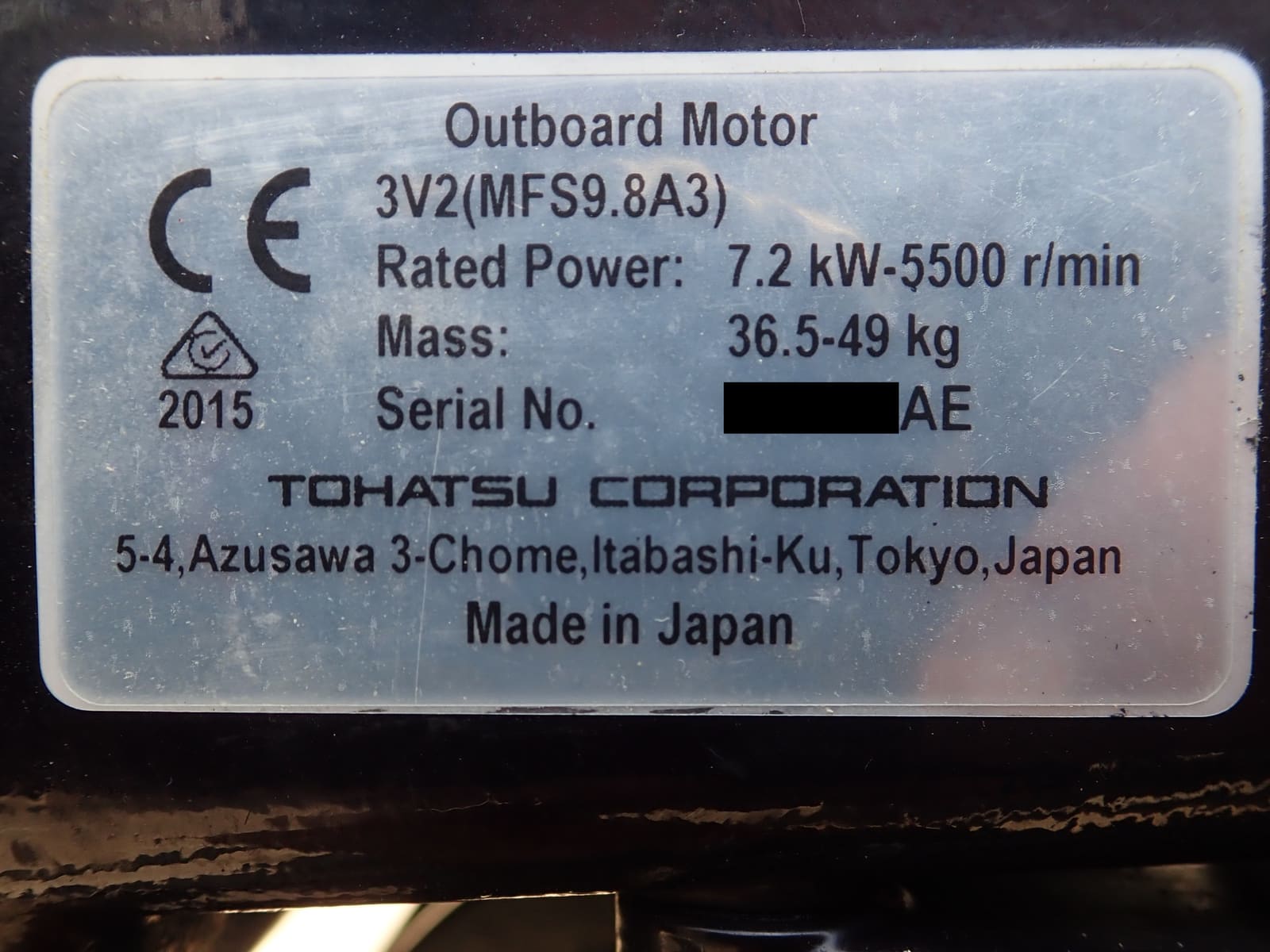
The model and horsepower are on the serial label on the clamp bracket (the cover photo of this guide shows one). Tohatsu's manual page is sorted by horsepower (and by kW output for electric models), so the model code and horsepower are what you need. Many older Nissan outboards were built by Tohatsu; a Tohatsu dealer can confirm the match from the serial number.
The model and serial number are on a label on the swivel or clamp bracket. Evinrude Operator's Guides are on BRP's Operator's Guides site: choose Evinrude, then the folder that matches the letter code in your model number (newer guides are grouped as "AG Models," "AH Models" and so on, then by E-TEC or E-TEC G2 and horsepower), or the model year for 2004 to 2012 engines. The Johnson section there only covers 2004 to 2007. BRP stopped building Evinrude outboards in 2020, so for older Johnson/OMC engines, or if your guide isn't listed, ask an Evinrude service dealer.
Volvo Penta engines have an identification decal on the engine, and the drive has its own. Volvo Penta's support site searches manuals by product designation (for example D2-40 or V8-350) or by serial number. Some documents need a free Volvo Penta Connect account.
Diesel engines usually carry a nameplate on the engine itself, often on top of the engine or on the valve (rocker) cover. You need the exact model (for example 3YM30AE or 4JH45) and the serial number. Yanmar's own FAQ says the serial number is on the engine information plate and that the engine model name (such as 4JH3 or 6LY2) should always go with it; the Operation Manual for current engines is on each engine's page on Yanmar's site, and for older engines Yanmar points owners to a dealer or distributor. If the plate is painted over or missing, a dealer can often find a number stamped into the block. The manual finder also covers Cummins, Caterpillar, Westerbeke, Beta Marine and other diesel makers.
On a PWC the HIN is on the back of the hull, and it is what most PWC makers use to look up the model and year. The engine has its own serial number, which Sea-Doo recommends recording in the Operator's Guide. Kawasaki and Yamaha WaveRunner manual lookups also go by model, year or HIN.
Clean a dirty label gently with a damp rag; don't scrub, or the print can wipe off. Take a clear photo of every label. Copy the numbers exactly: watch for 0 vs O, 1 vs I, 8 vs B and 5 vs S. Save the photo and the numbers in your BoatMend boat profile so you never have to tilt the engine to find them again.
Some labels show the model year or a production date (like the year box on newer Mercury labels); many don't. Don't assume the boat's model year from the HIN applies to the engine: engines are often older or newer than the hull, or replaced. If the label doesn't say, an authorized dealer for your brand can look up the year from the serial number, and some manufacturer lookups (like Suzuki's serial-range table) narrow it down.
Open the BoatMend manual finder, pick your engine brand, and follow the link to the maker's official owner's manual page with your model and serial number in hand. Most owner's manuals are free (Mercury, Yamaha, Suzuki, Honda, Tohatsu); a few brands only sell printed copies. BoatMend never hosts the manufacturers' manuals itself; it sends you to the official source.
Check your paperwork, then ask a dealer: many engines also have numbers stamped on the block or bracket, and dealers know where. If you are buying a used boat and the engine's ID labels and stamped numbers have been removed or altered, be very careful: it can be a sign of a stolen engine. Ask for proof of ownership before you buy.
Common mistakes
- Giving the dealer the HIN when they asked for the engine serial number, or the other way around.
- Typing a Yamaha serial without its leading zeros, so the manual lookup fails.
- Mixing up similar characters (0 and O, 1 and I, 8 and B).
- Assuming the engine is the same year as the boat.
- On a sterndrive, ordering drive parts with the engine's serial number.
- Scrubbing a faded label with solvent and wiping the print off.
When to call a pro
- The label is missing, painted over or unreadable and you can't find stamped numbers
- You need the exact model year or production date and the label doesn't show it
- You suspect the engine was replaced, rebuilt or has altered ID numbers (especially before buying)
- Twin-engine or sterndrive setups where you're not sure which serial belongs to which component
Tips
- Photograph every ID label (engine, drive, transom assembly, HIN) the day you buy the boat.
- Register the engine with the manufacturer so you get recall and service notices. BoatUS points out that makers must contact original owners about recalls but often lose track of later owners, so if you bought used, tell the manufacturer you are the new owner.
- Check for recalls yourself on the Coast Guard's recall database (uscgboating.org), which you can search by company name; engine and equipment recalls are listed there along with boats.
- Keep the numbers in your phone too: dealers will ask for them over the phone.
- When you order parts, give the full model and serial number every time; parts often change partway through a model year.
Official references
We read these to write this guide. Your engine's own manual always wins.
- Mercury Marine – Owner's Manuals (Find Your Serial Number)
- Mercury Marine – Quick Tip, How to Get a Digital Copy of Your Mercury Owner's Manual
- Yamaha Outboards – Owner's Manuals
- Suzuki Marine – Technical Manual Library
- Honda Marine – Outboard Motor Serial Number Locator
- Tohatsu – Owner's Manuals
- Volvo Penta – Support
- BRP – Operator's Guides (Evinrude and Johnson)
- Sea-Doo – Personal Watercraft Owner's Manual
- BoatUS – Where to Find Your Boat Hull ID Number
- Mercury Marine – Owner FAQs (serial number label and year of manufacture)
- Yanmar Marine – FAQ (serial number and engine information plate)
- U.S. Coast Guard Boating Safety – Recalls
- BoatUS – Recalls, Bulletins, and Advisories Explained
Safety: BoatMend is for information only and does not replace a certified marine technician. You are responsible for your safety and your boat. Read the full disclaimer.
Last updated 2026-10-24
Related guides
How to Inspect a Used Boat Before You Buy
A step-by-step checklist for looking over a used boat, from paperwork and the hull ID number to the transom, engine, compression test, sea trial and trailer. Know what to check yourself, what the red flags mean, and when to pay a marine surveyor.
How to Change the Oil and Filter on a 4-Stroke Outboard
Drain the old oil, swap the filter and refill with the right marine oil on your 4-stroke outboard. It is the most common service job, takes about an hour, and costs a fraction of the dealer price.
How to Winterize an Outboard Engine
Protect your outboard from freeze damage, stale fuel and internal corrosion over the off-season. Most owners can do it in an afternoon with basic tools, compared with a shop bill that often runs several hundred dollars.
How to Winterize a Sterndrive (MerCruiser, Volvo Penta and Similar)
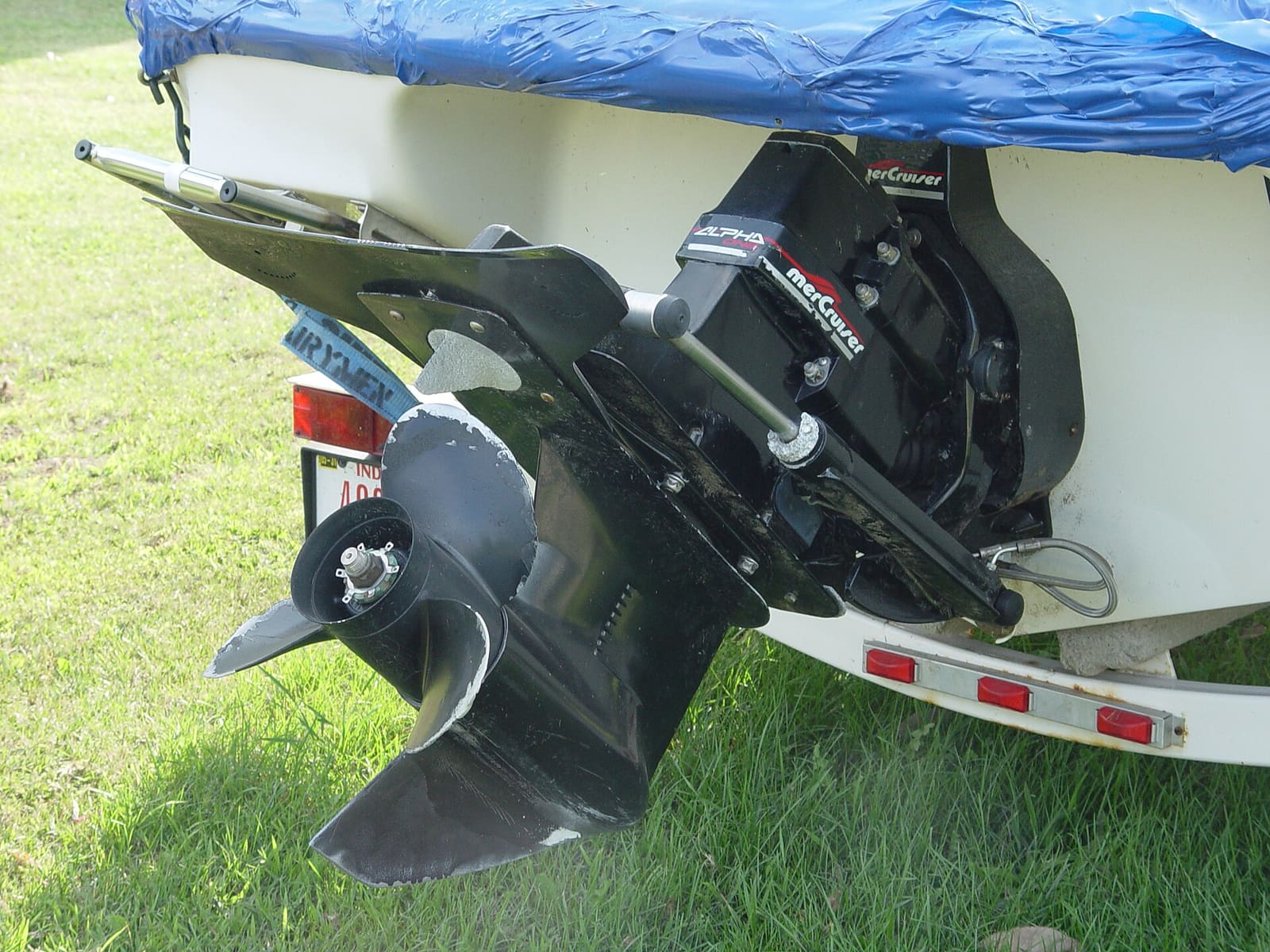
Get the water out of your sterndrive engine, protect it with antifreeze, and service the drive before storage. A cracked block or manifold from one missed drain plug can cost thousands, and doing it yourself saves a shop bill of several hundred dollars.
Marine Diesel Service: Oil Change, Fuel Filters and Bleeding Air
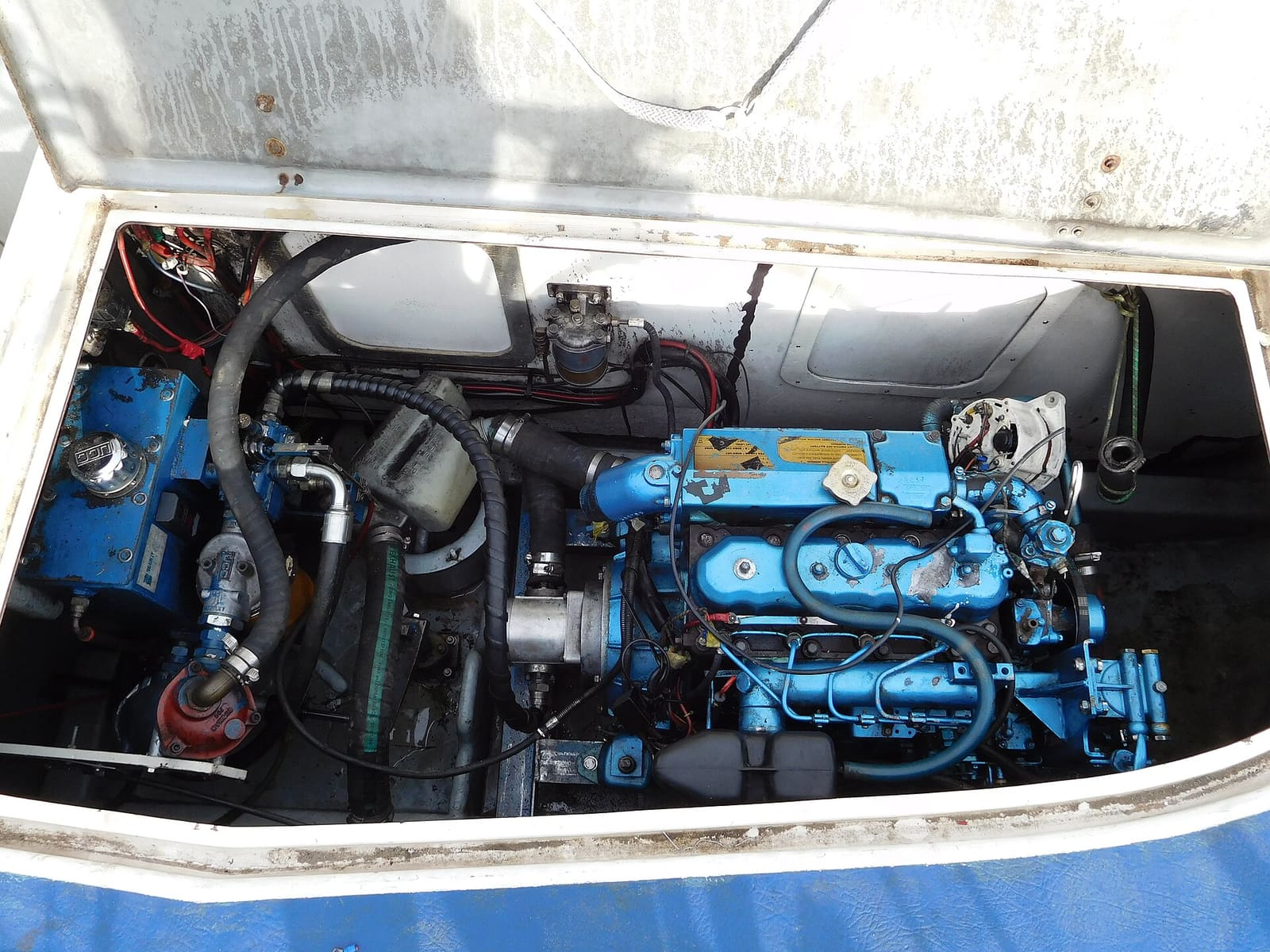
Change the oil and oil filter, replace the primary and secondary fuel filters, and bleed air from the fuel system on a Yanmar, Volvo Penta, Beta, Cummins or similar marine diesel. These three skills cover most routine diesel care and can get you out of trouble when the engine dies on a passage.

Jet Ski and Jet Boat Pump Care: Clearing the Intake Grate and Checking the Impeller and Wear Ring
Clear weeds, rope and rocks from the intake grate of a Sea-Doo, Yamaha WaveRunner, Kawasaki Jet Ski or jet boat, and learn to spot a damaged impeller or worn wear ring. A clogged or worn pump is the usual reason a jet craft revs high but goes slow.