EPIRB and PLB Care: Registration, Batteries, Self-Test and Mounting
Keep your 406 MHz emergency beacon ready to work on the worst day of your life. Register it free with NOAA and renew every two years, track the battery and hydrostatic release dates, run the self-test without triggering a false alert, and know what happens after you press the button.
Time
30 min
Applies to
All engines
Safety first: A 406 MHz beacon is a direct call to search and rescue. Never switch it on "just to try it": use only the self-test described in your manual. If it goes off by accident, do not just turn it off and hope; call the Coast Guard at 1-855-406-8724 (EPIRB) or the Air Force Rescue Coordination Center at 1-800-851-3051 (PLB) so they can stand down the search. In a real emergency, activate the beacon and also call USCG on VHF channel 16 or use your radio's DSC distress button.
Owners often ask
- I bought a used EPIRB. How do I register it, and how often does registration need renewing?
- My EPIRB went off by accident and I turned it off. What should I do now?
This guide walks you through it. Still stuck? Ask the AI Mechanic about your engine.
Tools
- Computer or phone with internet access
- Flashlight
- The beacon's owner's manual
Parts & supplies
- Replacement hydrostatic release unit for float-free EPIRBs (when due)
- Battery service at an authorized center (when due)
Before you start
Know which beacon you have.
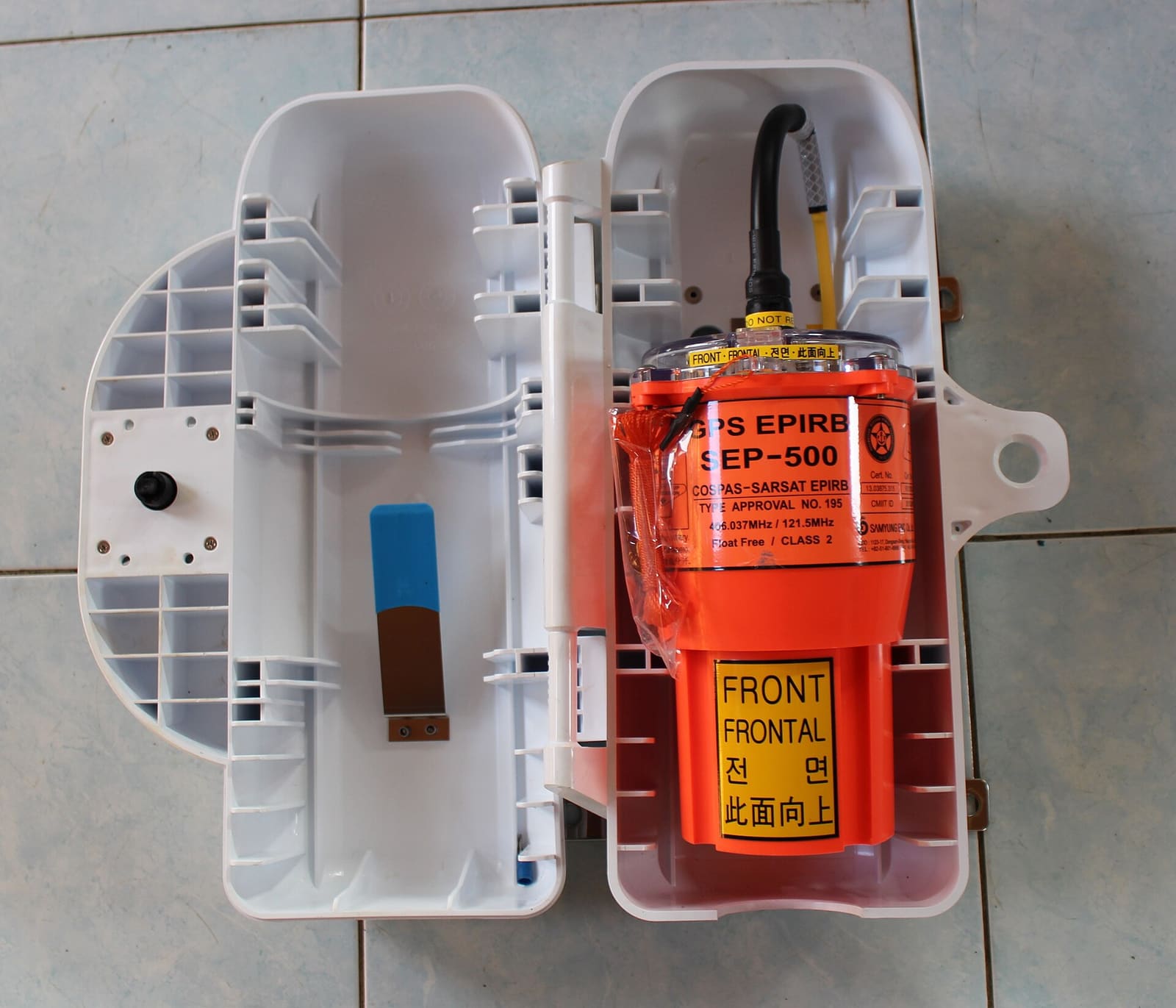
- EPIRB (Emergency Position Indicating Radio Beacon) is registered to a boat. A Category I EPIRB sits in a float-free bracket with a hydrostatic release and turns on by itself if the boat sinks. A Category II EPIRB is manual: you take it out of its bracket and switch it on, or it activates when it gets wet out of the bracket.
- PLB (Personal Locator Beacon) is registered to a person. It is pocket-sized, always manually activated, and many fit inside an inflatable life jacket.
Find the 15-character Unique ID (HEX ID). It is printed on the beacon and on its box. You need it for everything below. Take a photo of it.
Is it required? Most recreational boats are not required to carry an EPIRB, but if you go offshore beyond VHF and cell range, it is one of the best safety tools you can own. The BoatUS Foundation rents EPIRBs for single offshore trips.
Steps
Every US-coded 406 MHz beacon must be registered with NOAA by law, whether you bought it new or used. Go to beaconregistration.noaa.gov, create a login, and enter the HEX ID, your contact details, your boat's description, and two emergency contacts who know your plans. Registration is free. If anyone asks you to pay to register a beacon, it is a scam; NOAA asks you to report it to beacon.registration@noaa.gov.
A few details from NOAA's registration FAQ that save owners time:
- Online registrations are active immediately; mailed or faxed forms take about 2 business days after NOAA receives them.
- The 5-character checksum (marked CHK) usually appears only on the registration form packed with a new beacon. It lets NOAA catch a typo in the HEX ID, so keep that form. Without it, check every character twice.
- Your emergency contact should be someone who usually knows your plans and is not on the boat with you.
- A PLB you carry on the boat: fill in the vessel fields (name, MMSI, home port) and use "Additional Data" to describe the boat. If your PLB or EPIRB has built-in AIS, enter its own AIS MMSI (it starts with 970, 972 or 974) in the AIS MMSI field, not your boat's MMSI.
- Not registering, or not telling NOAA about a change of owner, can lead to FCC penalties.
NOAA only registers beacons coded for the United States (the country code is part of the HEX ID). If you bought a beacon abroad, contact the manufacturer about recoding or registering it in the right country.
A NOAA registration is valid for two years, and you are required to renew it every two years. NOAA will try to reach you before it lapses, but email changes and reminders get lost. Add the date in BoatMend. After you register or renew, NOAA sends a confirmation: check that the HEX ID on it matches the one on your beacon exactly.
Do not leave it to the night before a trip. The NOAA site goes offline now and then for maintenance (it announced an outage of up to 48 hours starting October 27, 2026), and its login can take time to set up. If the website is down or you cannot use it, NOAA also posts fill-in registration forms on its Beacon Registration Forms page that you can email back, fax or mail.
Log in and update right away if you change your phone number, address, emergency contacts, or boat. If you sell the beacon, log in and change its status to "Sold/Transferred," and tell the buyer they must register it in their own name. (Buying used? NOAA's site will warn that the beacon was registered before; check the HEX ID, submit anyway, and staff will process it as "Pending" within a few days.) Otherwise rescuers will call you, not them, if it goes off. Update before any long trip so your emergency contacts have your float plan.
Every beacon has a battery expiration label, usually on the back or side. Write the date in BoatMend. Unless your manual says the battery is user-replaceable, the battery must be replaced by the manufacturer's authorized battery service center, which also checks the seals and tests the unit. Plan ahead: shipping and service can take weeks.
Replace the battery early if the beacon was ever activated, even by accident, or if you have used up the number of self-tests the manual allows.
On a Category I bracket, find the hydrostatic release unit (HRU), a small canister that cuts the EPIRB free when it is pushed a few feet underwater. Most disposable HRUs are good for two years after installation, and the replacement month and year should be marked on the HRU and on the bracket label. If there is no date, or it has passed, replace the HRU with the exact model your bracket's maker specifies.
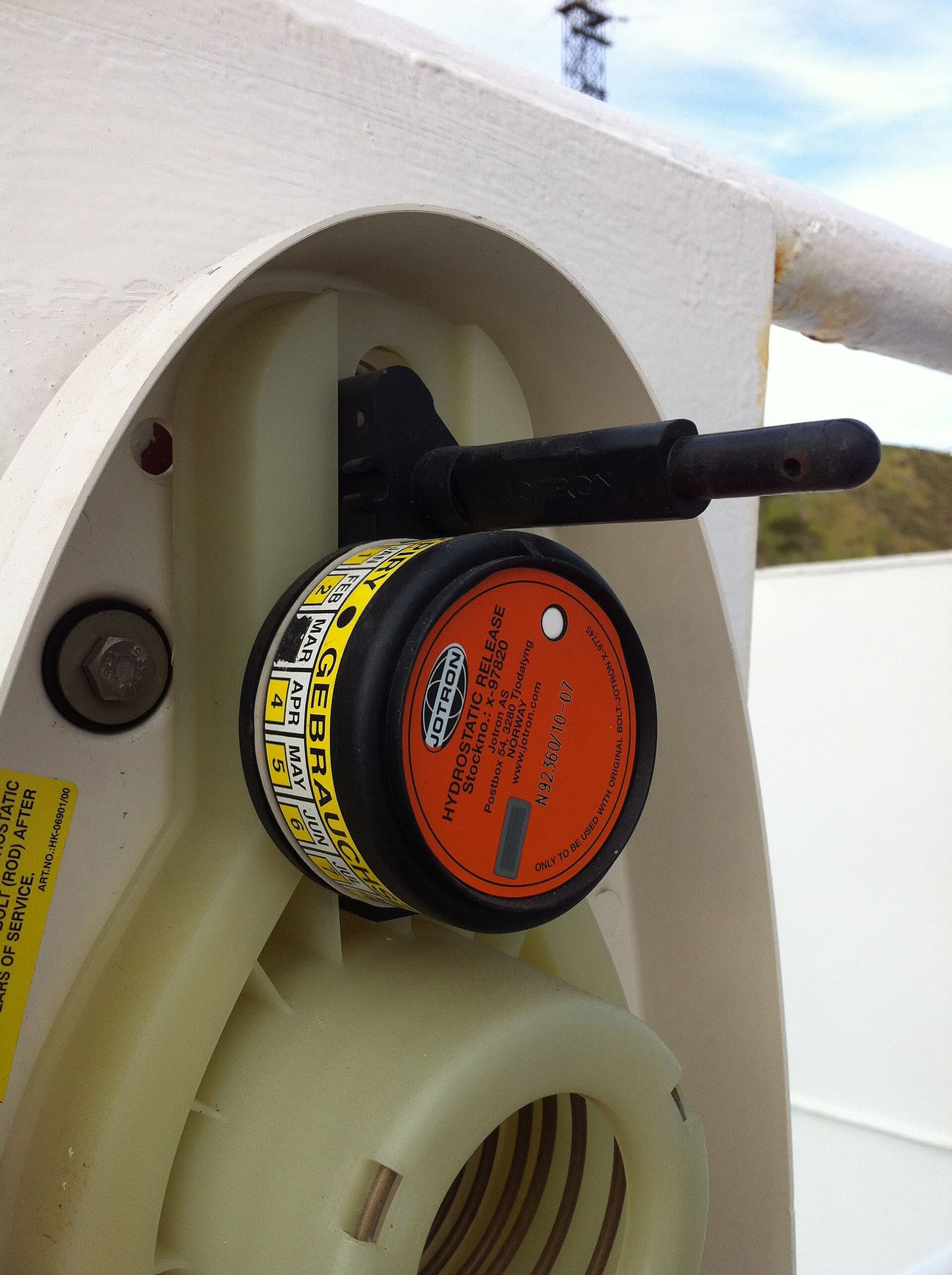
Photo: 12thave / Wikimedia Commons · CC BY-SA 3.0 Never add extra straps, zip ties or lashings around the housing. They can stop the cover from releasing and keep the EPIRB from floating free.
Look for cracks in the case, a damaged or bent antenna, a missing or frayed lanyard, a cloudy or cracked strobe lens, and corrosion. Make sure the safety cover over the ON button is intact. On a float-free EPIRB, check the bracket is solid and the housing cover moves freely. Any physical damage means it goes to the manufacturer for service.
NOAA allows self-testing without any approval, as long as you follow the manufacturer's procedure. During a self-test the beacon checks its circuits and may send a special test burst that the satellites are designed to ignore. Do it like this:
- Read the self-test section of your manual first. The test button is not the ON button.
- Hold the test button for the time the manual says, then release.
- Watch for the light pattern, display or beep that means "pass."
Self-tests use battery power, so makers limit how many you should do over the battery's life; your manual or the product page gives the number and how often to test. A separate GPS self-test, on beacons that have one, may be allowed only once or twice over the life of the battery.
If the test fails, first make sure you followed the steps exactly, then contact the manufacturer or its service agent. If the beacon behaves strangely (keeps flashing, does not show the expected result, or you think you pressed ON), you may have sent a live distress signal. Turn it off as the manual describes and call the Coast Guard at 1-855-406-8724 right away. They may also call you first, which is exactly why your registration needs a working phone number.
- Category I EPIRB: outside the cabin, in a spot where it can float up and away if the boat goes down. Not under a hardtop overhang, T-top shelf, or tangled in rigging.
- Category II EPIRB: in its bracket near the companionway or helm, where anyone can grab it in seconds, or in your ditch bag.
- PLB: on your body. A PLB in a locker is useless if you go overboard. Many owners clip it to their life jacket or fit it in a life jacket pocket designed for it.
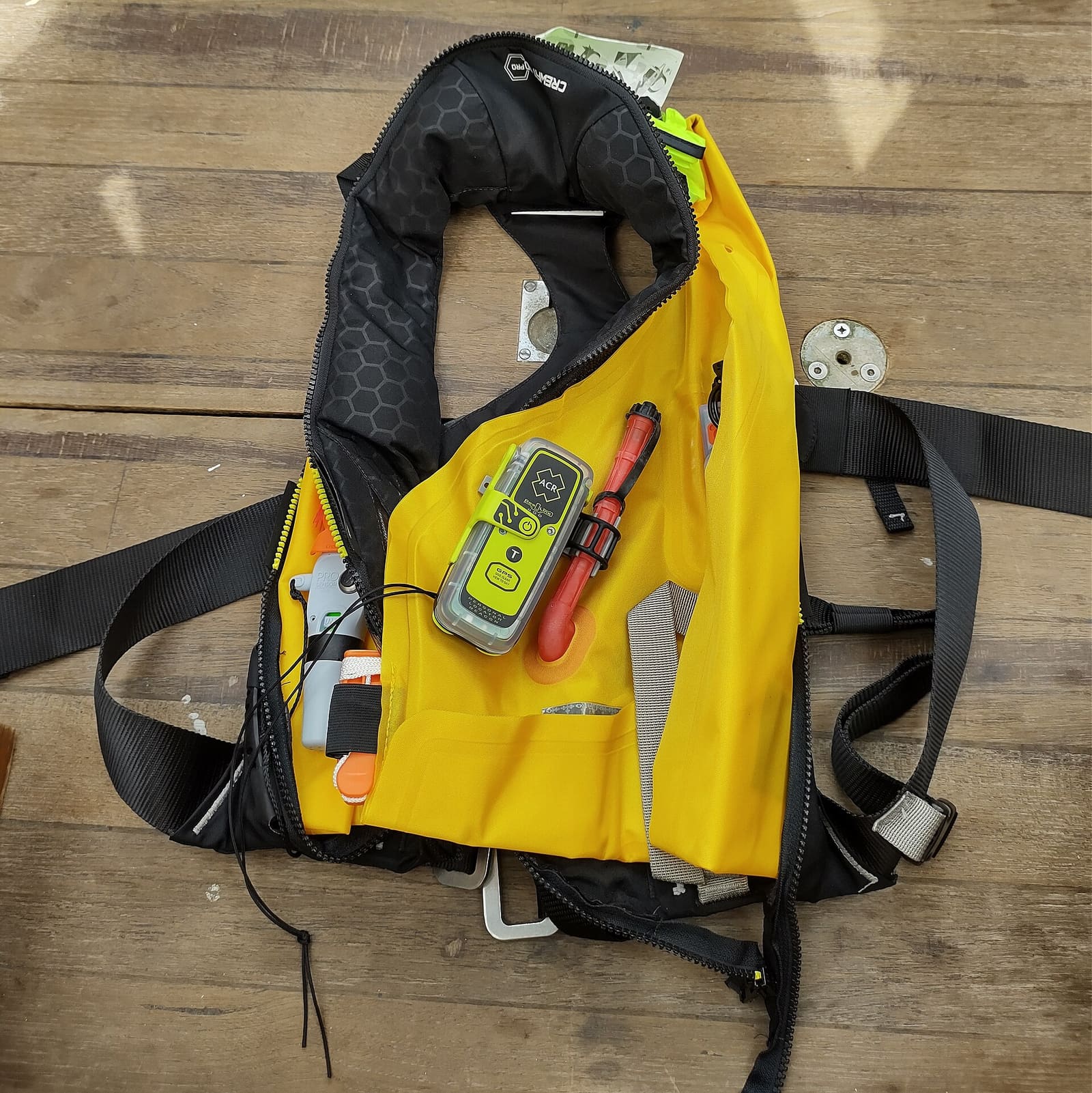
Photo: Addshore / Wikimedia Commons · CC BY-SA 3.0 Keep beacons away from strong magnets and speakers if your manual warns about it, and keep the compass safe distance printed on the label.
- A 406 MHz beacon sends your HEX ID (and, on GPS models, your position) to satellites within minutes. GPS-encoded positions are usually accurate to about 100 meters.
- The Rescue Coordination Center looks up your registration and calls your phone and emergency contacts to confirm the emergency and learn your boat, crew and plans.
- EPIRBs transmit for at least 48 hours and PLBs for at least 24 hours. A low-power homing signal lets rescue boats and aircraft find you once they are close.
- Some newer beacons have a Return Link Service (RLS) light. It confirms the alert was received and passed to rescuers. It does not mean a rescue is already on the way, so keep signaling.
Once activated in a real emergency, leave it on until you are rescued. Hold a PLB with the antenna fully extended and pointing straight up with a clear view of the sky. Tie an EPIRB to you or the life raft so it does not drift away.
Show everyone where the beacon is and how to activate it, step by step. NOAA notes that most false alerts happen during handling, testing, repair and installation, so make sure guests know not to touch it, and kids especially. Store the manual or a laminated card next to it.
When a beacon reaches the end of its life, do not throw it in the trash; a beacon in a landfill can activate and start a search. Remove the battery (or have the manufacturer do it), mark the outside of the case clearly as deactivated so nobody grabs it in a real emergency, recycle the battery and the case through an electronics or battery recycler (the manufacturer may take it back), and update your NOAA registration to show the beacon was disposed of. The international Cospas-Sarsat program lists exactly these three steps. If you ship a beacon back to the manufacturer with its battery still inside, NOAA's SARSAT FAQ says to wrap it in aluminum foil so it cannot send a signal in transit.
Common mistakes
- Registration expired years ago. It is only valid for two years. An outdated phone number makes rescuers waste time confirming the emergency.
- Buying a used beacon and never registering it. It may still be registered to the previous owner, or not at all.
- Pressing ON to "test" it. That is a real distress alert. Only use the self-test.
- Turning off an accidental activation and saying nothing. Rescue may already be launching. Call and let them know.
- Lashing the float-free housing down so it cannot release.
- Leaving the PLB in the boat's locker when you are the one who might go overboard.
- Ignoring the battery date because the self-test still passes. Batteries are only rated to their marked date.
- Thinking a fresh registration means the beacon works. NOAA is clear that registration has nothing to do with whether the beacon and battery are in working order. (The reverse is also true: an expired registration does not stop the beacon from transmitting, but rescuers get your old details.)
When to call a pro
- The battery is expired or the beacon was activated: send it to an authorized battery and service center
- The self-test fails after you followed the manual, or the case, seals or antenna are damaged
- You need a new float-free bracket installed or are unsure the location will release
- You think the beacon sent a live alert: call the Coast Guard (EPIRB) or Air Force RCC (PLB) right away
Tips
- Keep a photo of the HEX ID and your NOAA login details somewhere other than the boat.
- Set reminders for three dates in BoatMend: NOAA renewal, battery expiry, and HRU expiry.
- A beacon complements, but does not replace, a VHF radio with DSC. Use both in an emergency.
- If you are heading offshore once and do not own a beacon, look into the BoatUS Foundation EPIRB rental program.
Official references
We read these to write this guide. Your engine's own manual always wins.
- NOAA – United States 406 MHz Beacon Registration
- NOAA – Beacon Registration Forms
- Cospas-Sarsat – Disposal of Old Beacons and Old Batteries
- eCFR – 47 CFR 80.1061 (406 MHz EPIRB registration)
- NOAA SARSAT – Why Register Your Beacon
- NOAA SARSAT – 406 MHz Emergency Distress Beacons
- NOAA SARSAT – Emergency Beacon Testing
- NOAA SARSAT – Preventing False Alerts
- NOAA SARSAT – Frequently Asked Questions
- NOAA Beacon Registration – Frequently Asked Questions
- ACR Electronics – Support FAQs
- Australian Maritime Safety Authority – Correct use of hydrostatic release units
Safety: BoatMend is for information only and does not replace a certified marine technician. You are responsible for your safety and your boat. Read the full disclaimer.
Last updated 2026-10-24
Related guides
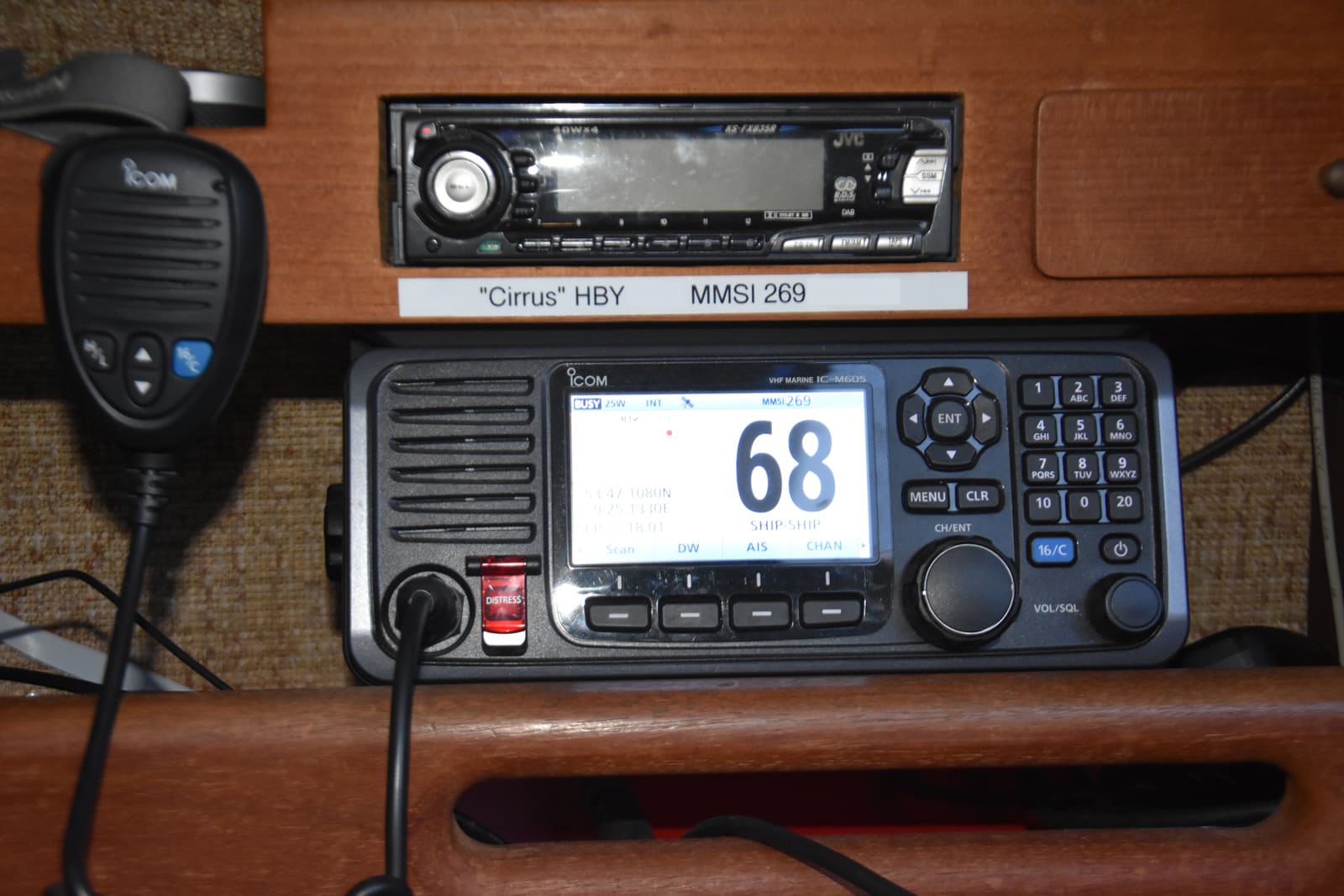
Set Up Your VHF Radio: MMSI, DSC, GPS Hookup and Radio Checks
Get a free or low-cost MMSI number, program it into your DSC radio, connect your GPS so a distress alert sends your exact position, check the antenna, and learn the Channel 16 rules and the right way to do a radio check.

USCG Required Safety Equipment Check by Boat Length
Walk through your boat and confirm you carry every piece of safety gear the US Coast Guard requires for your boat's length and type, and that none of it is expired or worn out. Missing or expired gear is one of the most common tickets on the water, and it is the gear you need when things go wrong.
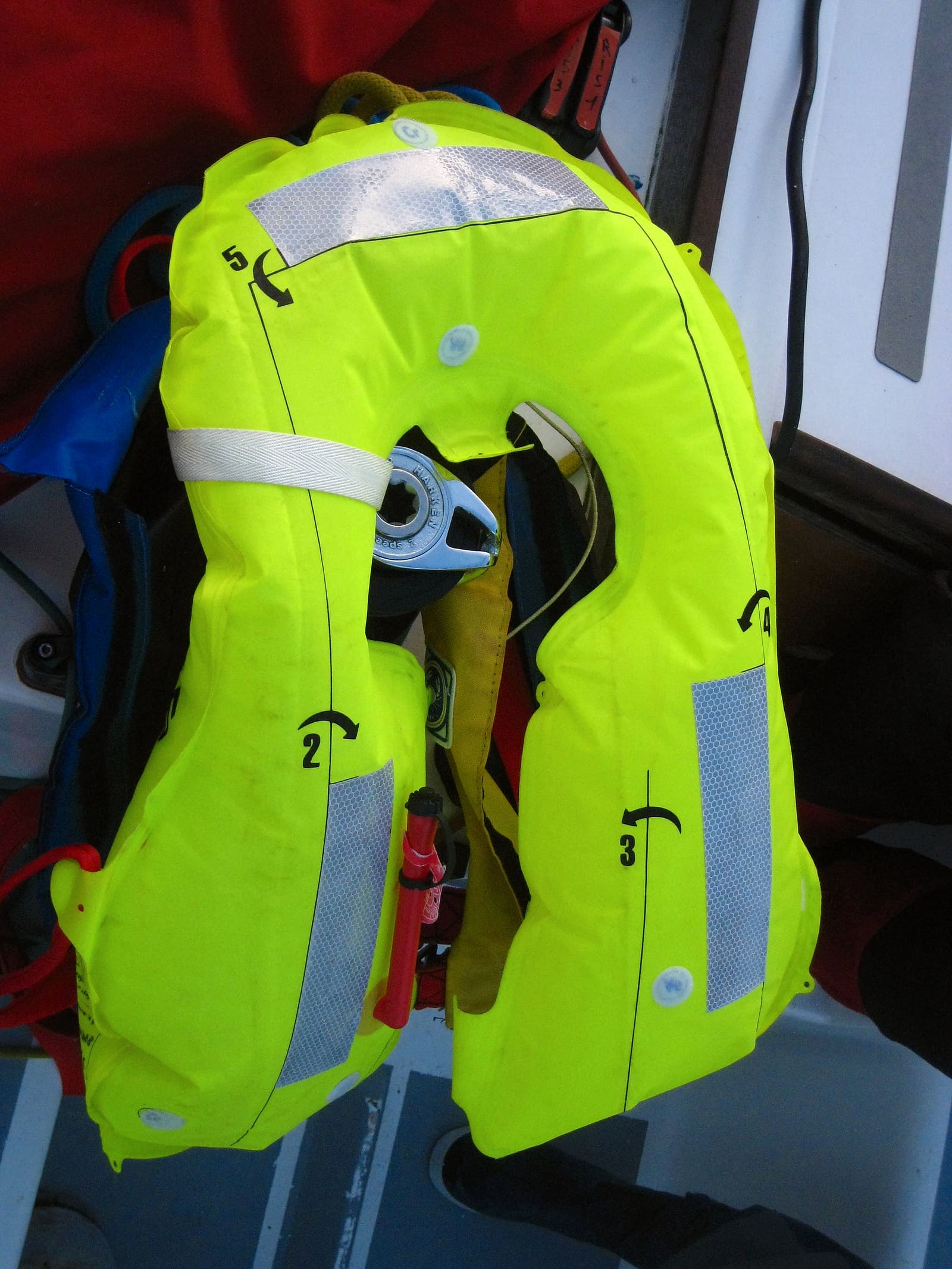
Inflatable Life Jacket Care: Inspect, Test and Rearm
An inflatable life jacket only saves a life if the cylinder is full, the inflator is armed and the bladder holds air. Learn the quick check before every trip, the overnight leak test, how to read replacement dates and how to rearm it after it fires.
What to Do When Your Boat Is Taking On Water: Emergency Steps and Prevention
A step-by-step emergency plan for water coming into the boat - life jackets on, call for help early on VHF 16, find and slow the leak, pump, and head for shallow water if needed - plus the maintenance checklist that prevents most sinkings.