Livewell, Baitwell and Washdown Pumps - Clean, Troubleshoot and Winterize
Find out why a livewell or washdown pump runs but moves no water, from a closed valve or clogged pickup to an airlock, then clean the system and winterize both sides of every pump so nothing cracks over the winter.
Time
1 h
Shop would charge
$100-300
Applies to
All engines · Fishing boat, Center console
Safety first: Every livewell and raw-water washdown pump is connected to a hole in the hull. Before you take a hose off below the waterline, close the seacock or valve, or do the work with the boat out of the water. If water is coming in and you cannot stop it, put on life jackets and call USCG on VHF 16 or 911, then Sea Tow or TowBoatUS. Switch off the pump's breaker before touching wiring.
Owners often ask
- My livewell pump runs but no water comes out. Is it airlocked or dead?
- How do I winterize the raw water washdown pump so the hose doesn't crack?
This guide walks you through it. Still stuck? Ask the AI Mechanic about your engine.
Tools
- Screwdrivers and nut drivers
- Multimeter
- Flashlight or headlamp
- Stiff wire or a long zip tie (to clear a pickup scoop)
- Soft brush, sponge and towels
- Bucket and a short length of hose
Parts & supplies
- Non-toxic propylene glycol antifreeze (about a gallon per pump; more for long runs)
- Replacement pump cartridge or impeller (if worn or jammed)
- Stainless steel hose clamps
- Heat-shrink connectors and marine tinned wire (if repairs are needed)
- Correct fuse for each pump circuit
Before you start
Know which pumps you have:
- Livewell fill (aerator) pump. Pulls lake or sea water through a pickup in the hull and sprays it into the well. Most are small cartridge-style centrifugal pumps mounted low near the transom. They are not self-priming: they must sit below the waterline with water at the inlet.
- Recirculating pump. Pulls water from the bottom of the well and sprays it back in, used when the water outside is too warm or dirty. Its pickup is a screen inside the well.
- Washdown pump. Usually a self-priming diaphragm pump with a pressure switch that turns it on when you squeeze the nozzle. It may draw raw water through its own seacock and strainer, or fresh water from the tank.
Find each pump's switch, fuse or breaker, seacock or ball valve, strainer and discharge. Many livewell fill lines also have a valve in the well or near the transom.
Troubleshoot in order. The steps go from the cheapest, most common causes to the least likely. Most "dead" livewell pumps turn out to be a closed valve, a clogged pickup or an airlock.
Steps
A livewell fill pump cannot pick up water on the trailer. Running it dry for more than a few seconds can damage it. Do your real test at the dock or ramp with the boat floating, and only bump the switch briefly on the trailer to hear whether the motor runs.
Make sure the intake seacock or ball valve is open, along with any fill valve in the well. Owners lose whole fishing days to a valve that someone closed for trailering. If your boat has a fill or recirculate selector, set it to fill.
Turn the switch on and listen and feel the pump. Silence usually means a blown fuse, a tripped breaker, a failed switch or timer, or a corroded connection. With a multimeter, check for battery voltage at the pump's wires while the switch is on. Voltage there but no sound means the pump motor is dead. Low voltage makes pumps weak, so check the battery too.
When you replace a blown fuse, use the size printed on the pump's label, never bigger. A BoatUS surveyor explains why: if debris jams the impeller and the fuse is oversized, the stalled motor keeps drawing power, overheats and can melt or start a fire before the fuse ever blows.
Weeds, grass, shells and trash clog the hull pickup and strainer. With the boat out of the water (or the seacock closed if the strainer is inside), clear the scoop with a stiff wire or long zip tie and clean any inline strainer. Clean the screen over the recirculating pickup inside the well.
On many cartridge-style livewell pumps you can twist or unclip the motor cartridge off its base without removing hoses (close the seacock first if the pump is below the waterline). Pull out fishing line, weeds and grit wrapped around the impeller. If the impeller is chewed or the motor hums but barely spins, a new cartridge is a cheap fix.
Symptom: the pump runs and sounds normal but no water comes out. Air is trapped in the pump body, often after running on plane, sitting on the trailer, or after the pickup broke the surface in waves. Turn the pump off for about 15 seconds and try again; repeat a couple of times. Check your pump's instructions, since some makers list their own airlock procedure. Stopping the boat or idling lets water flood back into the pickup. If airlocks happen every trip, the pump may be mounted with its outlet pointing down, or the hose may have a dip that traps air. The outlet should point up or at least level so air can escape. On fast offshore boats that get airborne, Boating Magazine describes a sealed pump box with a small vent hose and check valve near its top, routed well above the waterline with no dips, so trapped air can bleed off on its own. That is an installation upgrade for a rigger, but it explains why the problem keeps coming back on some boats.
Look for a kinked or collapsed discharge hose, a cracked fitting, and loose clamps on the suction side (they let the pump suck air instead of water). Check that the overflow and drain hoses are still connected; a disconnected overflow can flood the bilge. Replace rusty clamps with stainless ones.
Well overflows onto the deck? The drain is not keeping up with the fill. Boating Magazine's rule of thumb is a drain hose about twice the diameter of the fill hose; a clogged overflow screen or a kinked drain hose does the same thing. If there is a valve on the pump's outlet, close it partway to slow the fill.
- Runs but little or no water: closed seacock, clogged strainer, or an air leak on the intake side.
- Cycles on and off with the nozzle closed: a leak in the hose or nozzle, or air in the line. Look for drips.
- Won't shut off: a leak downstream, a worn pressure switch, or a tired diaphragm. Check the hose first.
- No sound at all: check the fuse, switch and wiring as in step 3.
After each trip, drain the well, rinse it with fresh water and a mild soap, and leave the lid open to dry. Avoid harsh cleaners that leave residue fish will absorb. Once a season, pull out the screens, overflow tube and spray head and clean the slime and debris off them.
Drain it before you leave the ramp. Livewell water can carry invisible zebra mussel larvae and other invasive species to the next lake. The national Clean Drain Dry campaign asks boaters to drain the livewell, bilge, motor and bait containers before leaving the water access, and to put unwanted bait in the trash. In some states it is the law: the Minnesota signs below, for example, say it is unlawful to transport lake water on the road in a livewell or to leave with the drain plug in. Check your state's rules.
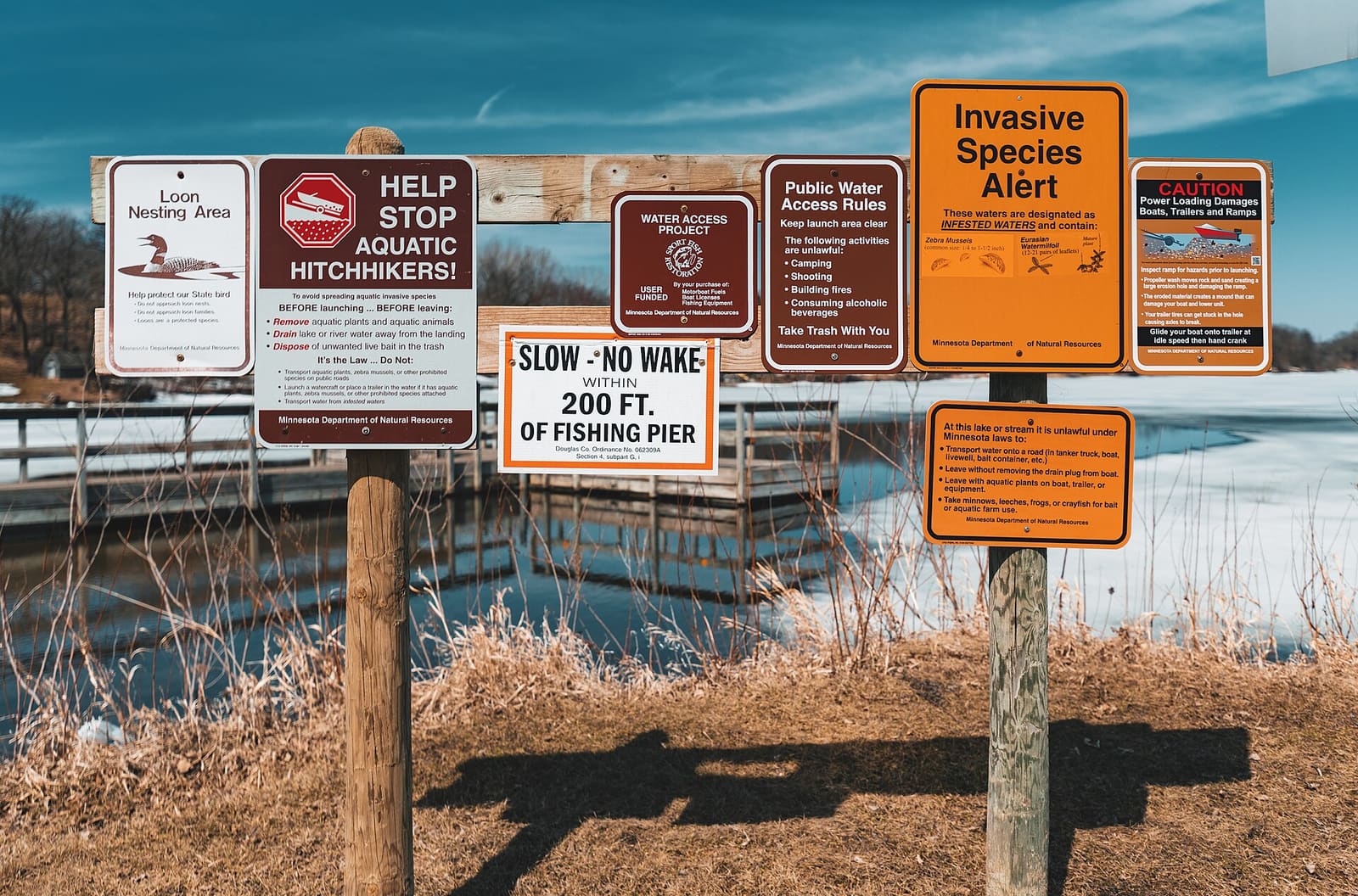
Ramp signs like these list the drain rules for that state. Photo: Tony Webster / Wikimedia Commons · CC BY 2.0 Drain lines clogged with scales, blood or slime? Clear the overboard drain and pickup with a long zip tie or a small drain snake, then back-flush the line with a garden hose from the outside fitting. Take the hose off the pump first if you can, so debris isn't pushed into the impeller. Skip household drain cleaners: they end up in the water and can attack hoses and fittings.
Close the seacocks, drain the livewells and baitwells and take off the drain plugs. Bassmaster's advice is to towel out every bit of water around fittings and screens and briefly run the pumps to spit out what is left. Discover Boating adds: if you still hear gurgling and know water is trapped, give that line a dose of antifreeze.
Following Xylem's Jabsco method: switch off the power and close the seacock. Disconnect the pump's inlet fitting and put a short hose from the pump into a jug of propylene glycol antifreeze. Restore power, go to the nozzle and squeeze until it runs clear water, then full pink. Shut it off. Then protect the inlet hose between the seacock and the pump: pour antifreeze into it or disconnect it at the seacock so the pump draws antifreeze up through it. Xylem says this inlet hose is the part most people forget.
If a livewell pump or line sits in a low spot that will not drain, pour antifreeze into the pickup side or the pump body so the trapped water is displaced. Leave the seacocks closed for the winter, and tag the helm switch so nobody runs the pumps dry.
Open each seacock before you switch any pump on; Xylem calls this the most easily forgotten spring step. Check every hose and clamp for winter cracks. Flush the washdown until the water runs clear, and rinse the livewell well before you put bait or fish in it.
Common mistakes
- Testing the livewell pump on the trailer and burning up the cartridge running it dry.
- Buying a new pump when the problem was a closed valve, a blown fuse or an airlock.
- Winterizing only the discharge side and leaving water in the hose from the seacock to the pump.
- Leaving the seacock closed in spring and running the pump against it.
- Using a much bigger pump on small fittings and hoses, which chokes the flow.
- Leaving loose or rusty clamps on the suction side, so the pump pulls air instead of water.
- Fitting a bigger fuse because the pump "keeps blowing them." Find the jam or short instead.
- Leaving the ramp with lake water still in the livewell and carrying invasive species to the next lake.
When to call a pro
- A seacock is frozen, cracked or will not close, or a through-hull fitting leaks
- Water shows up in the bilge from livewell or washdown plumbing and you cannot find the source
- You need to add a new through-hull, move a pickup, or rewire a pump circuit
- Wires or switches are melted or the same fuse keeps blowing
- You fish offshore and want a sea chest or a larger raw-water system installed
Tips
- Carry a spare livewell pump cartridge and a fuse aboard. Swapping one at the ramp saves the day. A spare that already has waterproof plug-in connectors on its wires swaps fastest.
- If your well has two pumps or a pump box with two outlets, valves that let either pump feed the well give you a backup when one fails.
- Put a coarse screen or strainer over the pickup if you fish weedy water.
- Label each livewell switch and valve so guests do not run pumps with the valves closed.
- Run the washdown for a minute after a saltwater trip with fresh water if your system allows it, to cut down on salt buildup.
Official references
We read these to write this guide. Your engine's own manual always wins.
- Xylem (Jabsco) – Expert winter maintenance tips for Jabsco pumps and marine toilets
- Xylem (Jabsco) – Winterize a washdown pump (video and transcript)
- BoatUS – How to Winterize Boat Plumbing
- Discover Boating – How to Winterize a Boat
- Boating Magazine – Installing a High-Speed Center-Console Livewell
- Bassmaster – Don't freeze your assets off (winterizing a bass boat)
- Stop Aquatic Hitchhikers – Clean Drain Dry prevention steps
- BoatUS – Avoiding Boat Electrical Mistakes (fusing pump motor circuits)
Safety: BoatMend is for information only and does not replace a certified marine technician. You are responsible for your safety and your boat. Read the full disclaimer.
Last updated 2026-10-24
Related guides
How to Test and Clean Your Bilge Pump and Float Switch
Make sure your bilge pump actually moves water overboard, both on the manual switch and automatically through the float switch. A working bilge pump is one of the most important safety systems on any boat that stays in the water.
How to Inspect and Exercise Seacocks, Through-Hulls and Hose Clamps
Check every hole in your hull below the waterline, work each seacock open and closed, and inspect the hoses and clamps attached to them. A single failed fitting or hose is one of the most common reasons boats sink at the dock.

How to Winterize (and Recommission) Your Boat's Freshwater System
Protect the tank, pump, water heater, faucets and showers from freeze damage with non-toxic antifreeze, then flush and sanitize everything in the spring so the water is clean again. A cracked pump or split fitting is a common, avoidable winter repair bill.
Marine Battery Care: Test, Charge and Store for Winter
Check your boat battery's health, charge it the right way for its type (flooded, AGM or lithium), and store it so it is ready in spring. Most "boat won't start" calls start with a neglected battery.
How to Winterize an Outboard Engine
Protect your outboard from freeze damage, stale fuel and internal corrosion over the off-season. Most owners can do it in an afternoon with basic tools, compared with a shop bill that often runs several hundred dollars.
Spring Commissioning - Getting Your Boat Ready for the Season
Wake your boat up after storage with a step-by-step check of the battery, fuel system, engine, drive and safety gear. Catching a cracked hose or dead battery in the driveway beats a tow on opening weekend, and saves a typical shop commissioning fee.