How to Keep Your Boat Fridge, Freezer or Icebox Cold (and Off Your Batteries' Back)
Most boat fridge problems are not a dead compressor: they are trapped heat, low voltage, leaky seals or too much frost. Learn the owner checks for air-cooled, water-cooled and keel-cooled units, how to estimate power draw, and how to store the system for winter.
Time
1 h
Shop would charge
$150-800
Applies to
All engines · Cabin cruiser, Yacht, Sailboat, Center console
Safety first: Switch off the fridge breaker before you touch wiring or remove a cover, and switch off shore power too if the unit also runs on 120 volts AC. Never puncture, cut or "top up" the refrigerant lines yourself; refrigerant work needs a certified technician. Never chip ice off the evaporator with a knife, ice pick or screwdriver, and don't use a heat gun: one slip punctures the plate and ends the system. On water-cooled units, close the seacock before opening the strainer or hoses, and if water comes in faster than you can stop it, call for help.
Owners often ask
- My boat fridge runs all the time but never gets really cold. Is the compressor dying?
- Why does my 12-volt fridge shut off overnight at anchor?
This guide walks you through it. Still stuck? Ask the AI Mechanic about your engine.
Tools
- Flashlight or headlamp
- Soft brush and a vacuum with a brush nozzle
- Multimeter
- Fridge thermometer
- Screwdrivers and nut drivers
- Dollar bill or strip of paper (for testing door seals)
Parts & supplies
- Replacement door or lid gasket (if worn)
- Dielectric grease and heat-shrink connectors (for corroded terminals)
- Raw water strainer basket or pump impeller (water-cooled units with a pump, per your manual)
Before you start
Boats use three main kinds of cold storage:
- Insulated icebox or cooler with ice. No power, but it needs good insulation and a drain.
- Built-in 12/24-volt fridge or freezer. A compressor (often a small variable-speed DC one) pumps heat out of the box through an evaporator plate and dumps it at a condenser. That heat has to go somewhere:
- Air-cooled: a fan blows cabin or locker air over a finned condenser. Simple, but it struggles in hot, closed spaces.
- Water-cooled with a pump: seawater flows through a small heat exchanger. Very efficient in the tropics, but it has a seacock, strainer and pump to look after.
- Keel cooler: a fitting on the outside of the hull uses the water around the boat to cool the refrigerant, with no pump. Practical Sailor explains that the cooler the condenser, the more heat it removes, which is why water-cooled systems outperform air-cooled ones (especially in southern waters), at the cost of more complexity and maintenance.
- AC/DC household-style fridge on larger yachts, running from shore power, generator or an inverter.
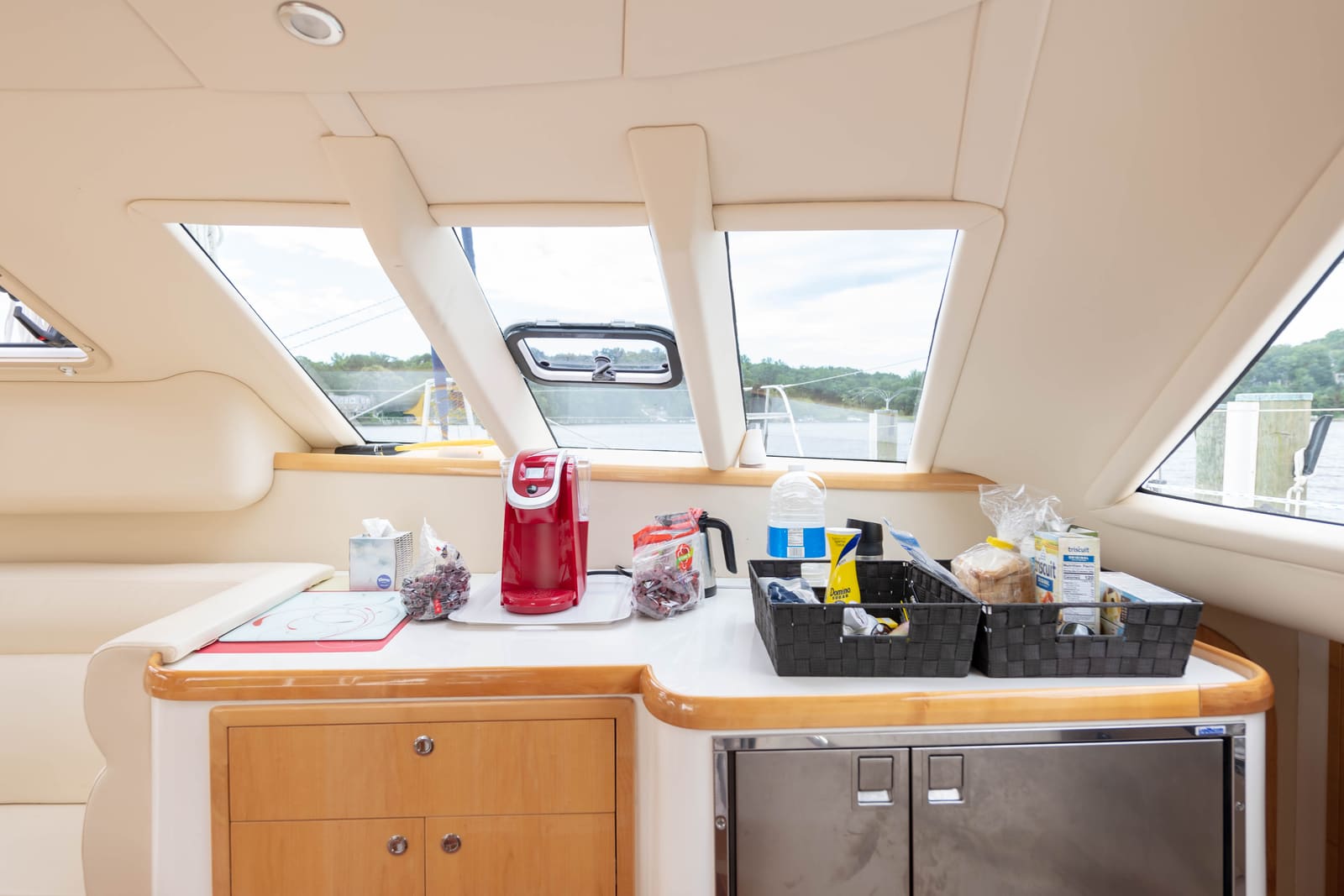
Holding plate systems are common on cruising sailboats. Good Old Boat explains that the evaporator sits inside a tank of "eutectic" solution; once frozen, it works like a block of ice and can keep a well-insulated box cold for up to about a day without the compressor running. Many of these use a smart thermostat that refreezes the plate when it senses charging voltage (engine running or charger on) and holds off when battery voltage is low. If yours is like that, a box that warms up after a few days at anchor with low batteries is telling you about charging, not a broken fridge. Engine-driven compressors (belt and clutch, like a car's air conditioning) only cool while the engine runs.
Why this matters: Dometic says that across boating forums the same complaints repeat (running nonstop, freezer not freezing, shutting off after a voltage dip), and the cause is rarely the compressor. It is usually airflow, power supply or installation. Do the cheap checks below before paying for a new system.
Have the fridge's manual, a thermometer and a multimeter. Coastal Climate Control suggests keeping a fridge at about 35–40°F for safe food storage.
Steps
Put a fridge thermometer in the middle of the box for a few hours. Note whether the compressor runs nonstop or cycles on and off, and how warm the cabin is. "It never gets below 50°F with the compressor running all day" and "it works, then shuts off after dinner" point to different problems.
Find the compressor and condenser, usually in a locker near or under the box. Dometic explains that marine fridges dump their heat behind or below the cabinet; if that heat is trapped, the system runs longer, cools less and wears out sooner. Make sure:
- Nothing is stuffed around the unit (fenders, dock lines, spare parts).
- Cool air can get in low and warm air can get out high. A grill or louver in the cabinet face often does this; keep it clear.
- The fan spins when the compressor runs.
With the breaker off, brush and vacuum the dust, lint and pet hair off the condenser fins. A matted condenser can't shed heat. Be gentle; the fins bend easily. Check for corrosion on a unit in a damp bilge locker.
- Pumped units: with the seacock closed, clean the strainer basket, reopen the seacock and make sure the pump moves water when the compressor runs (look for flow at the overboard discharge). The raw water pump and strainer need the same care as an air conditioner's; see the marine AC guide.
- Keel coolers: when the boat is hauled, clean growth off the keel cooler gently with a soft brush or plastic scraper and look for corrosion or damage. Follow your manual's advice on cleaning and on how it is bonded or grounded; don't paint over it unless the maker allows a specific paint.
Low voltage is the "silent performance killer," in Dometic's words: long cable runs, shared circuits, a tired battery and corroded connectors all reduce the voltage that reaches the compressor. With the compressor running, measure DC voltage at the fridge's own terminals, then at the battery. A big difference means undersized wire, a bad connection or a weak fuse holder. Clean and protect corroded terminals, and check that the fuse is the size the maker specifies.
Most DC compressor fridges switch off to protect the battery when voltage drops. Dometic lists about 10.4 volts off and 11.7 volts back on for its 12-volt units (other makers and settings vary). If your fridge "dies" at night or after winter, check the house battery's state of charge before blaming the fridge. Recharging often brings it back.
Close the door on a dollar bill or strip of paper at several points around the gasket. If it slides out with no drag, the seal leaks. Coastal Climate Control explains that cold air is heavy and spills out of any weak seal, unplugged drain or gap, and warm, humid cabin air gets pulled in at the top. That shows up as heavy frost at the top of the evaporator. Replace a torn or flattened gasket and plug any open drain or wiring hole.
A thin layer of frost on the plate is normal. Once it is thicker than about 1/8 inch, Coastal Climate Control says it starts acting like insulation and the system works harder. Switch off, empty the box into a cooler, prop the door open and let the ice melt on its own (a small lamp in the box is fine). No hair dryers, heat guns, hot water or ice picks. Dry the box before restarting.
Don't cram the box: Coastal Climate Control notes that over-stuffing blocks the air movement that cools the food. Pre-chill food and drinks at home or on shore power, keep frequently used items near the door, and open it less often. Each opening lets warm air in, especially in hot weather, as Dometic points out. For iceboxes, keep the lid closed, drain melt water and keep the box out of the sun.
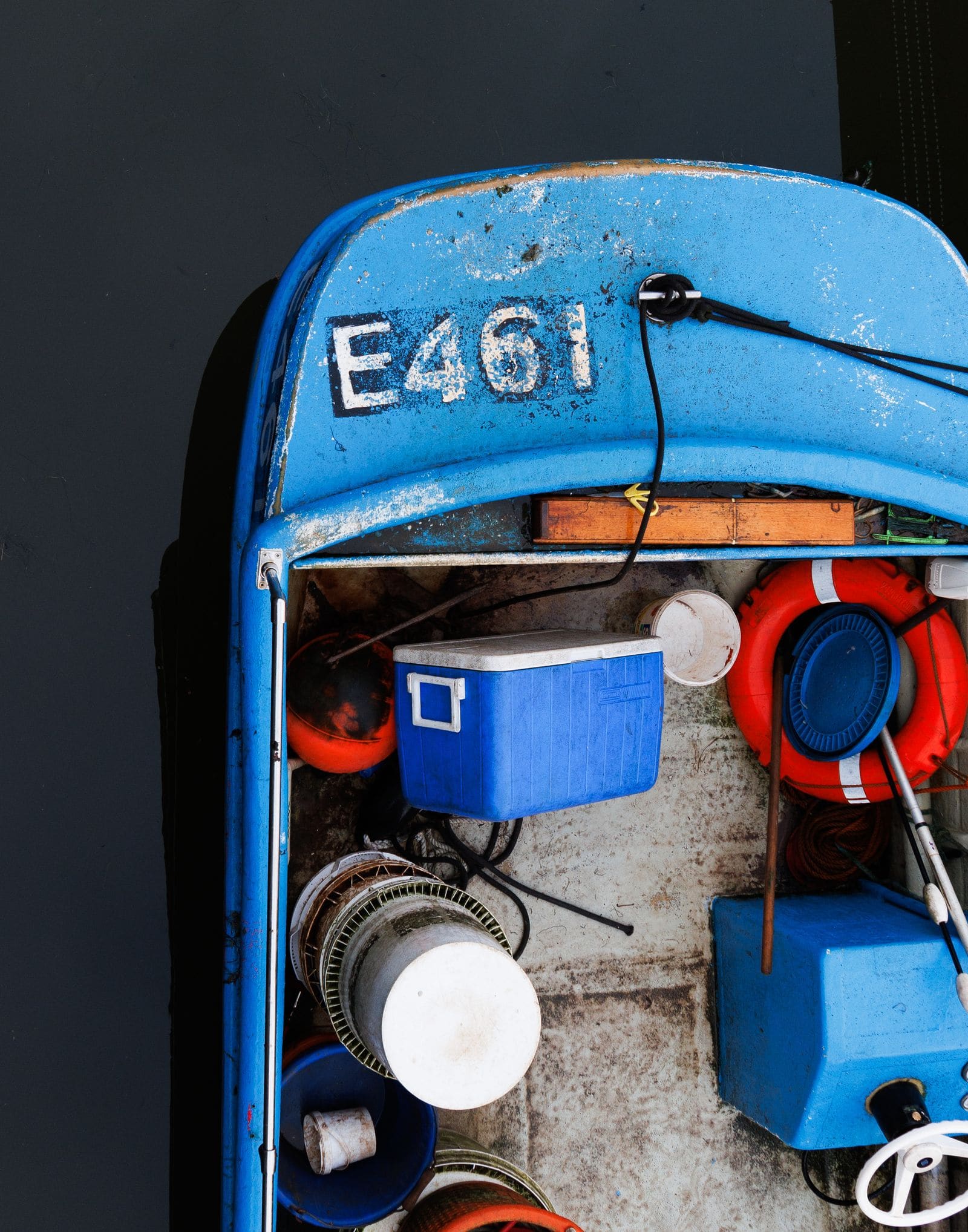
On smaller boats the 'fridge' is often a cooler. Keep it shaded, closed and drained, and pre-chill everything you put in it. Photo: Ellie Burgin / Pexels A compressor fridge is often the biggest steady load on a cruising boat. Practical Sailor gives a simple example: even a modest 2 to 3 amps adds up to roughly 48 to 72 amp-hours per day if it runs all the time. Real draw depends on box size, insulation, cabin heat and how often you open it. A battery monitor shows your real numbers. If the fridge is draining the bank, start with insulation, seals and ventilation, then look at charging (solar, alternator) or battery size. Practical Sailor's refrigeration survey makes the point that how much heat leaks in through the box's insulation matters even more than how efficient the cooling unit is.
Coastal Climate Control's list of signs a system needs a pro or replacement includes a box that no longer reaches its set temperature, a unit that works only sometimes, rising power use, new noises and an age over about 20 years. A diagnostic light that blinks a fault code on many DC compressors can tell a tech a lot; write down the blink pattern. Coastal Climate Control also warns not to assume the compressor is bad, because the fault often lies elsewhere.
- Switch off the breaker, empty the box and defrost it fully.
- Clean the inside with mild soap and water (or a little baking soda), dry it completely and leave the door or lid propped open so mold and odors don't grow.
- On pumped water-cooled units, the raw water side must be drained or protected with non-toxic antifreeze if it can freeze; follow your manual.
- Keep the house batteries charged over the winter, so the fridge starts in spring. Dometic notes that a flat house battery is the most common "it was fine last year" problem.
Common mistakes
- Assuming the compressor is dead and buying a new system, when the problem was airflow, voltage or a leaky seal.
- Stuffing the compressor locker with gear so the condenser can't breathe.
- Chipping ice with a knife or using a heat gun, and puncturing the evaporator.
- Adding "leak stop" or refrigerant from a can. Refrigerant work belongs to a certified technician who can test for leaks and charge the correct amount.
- Ignoring a gasket that has gone flat or torn, then defrosting every few days.
- Leaving the door shut in storage and finding a moldy box in spring.
- Forgetting the raw water strainer on a pumped water-cooled unit, then wondering why it runs hot.
When to call a pro
- The compressor runs but the box never gets cold after you have cleared airflow, checked voltage and fixed the seals
- The unit shows a fault code you can't clear, or the compressor won't start with good voltage at its terminals
- You suspect a refrigerant leak (oily spots at fittings, no frost on the plate at all)
- A keel cooler or water-cooled fitting is leaking, damaged or corroded (water ingress risk: call right away)
- The fridge also runs on 120 volts AC and you need to work on that wiring
- You want to add a water-cooled condenser, a keel cooler or more insulation to an existing box
Tips
- A cheap remote thermometer with an alarm tells you the fridge failed before the food does.
- On hot days, give the compressor locker a small fan or vent if the maker allows it.
- Many variable-speed compressors can be set to run slower and longer; that is often the most battery-friendly mode on solar. Check your controller's manual.
- Freeze bottles of water at home and use them as cold mass in the box; they cool the box and become drinking water.
Official references
We read these to write this guide. Your engine's own manual always wins.
- Good Old Boat – Boat Refrigeration 101
- Dometic – Cold Drinks, Warm Days, Expert Advice for Better Fridge Performance
- Coastal Climate Control – Defrosting Your Boat's Refrigerator, Again?!
- Coastal Climate Control – 10 Signs it's Time to Replace Your Boat's Refrigeration
- Coastal Climate Control – Refrigeration Troubleshooting
- Practical Sailor – Refrigeration Survey 2002
- Practical Sailor – Conversion Kits that Turn Your Boat's Ice Box Into a Galley Refrigerator
Safety: BoatMend is for information only and does not replace a certified marine technician. You are responsible for your safety and your boat. Read the full disclaimer.
Last updated 2026-10-24
Related guides
Marine Battery Care: Test, Charge and Store for Winter
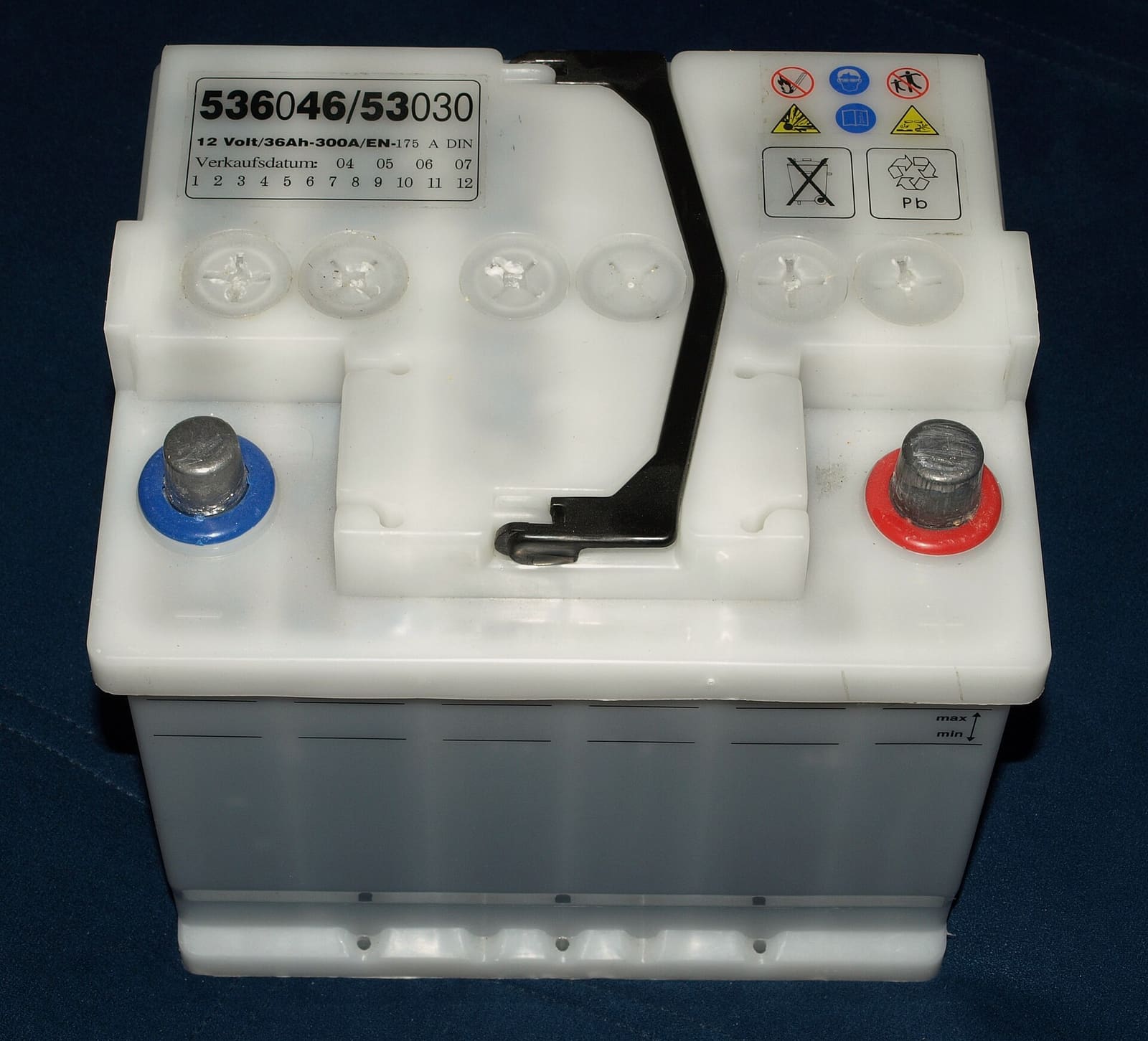
Check your boat battery's health, charge it the right way for its type (flooded, AGM or lithium), and store it so it is ready in spring. Most "boat won't start" calls start with a neglected battery.
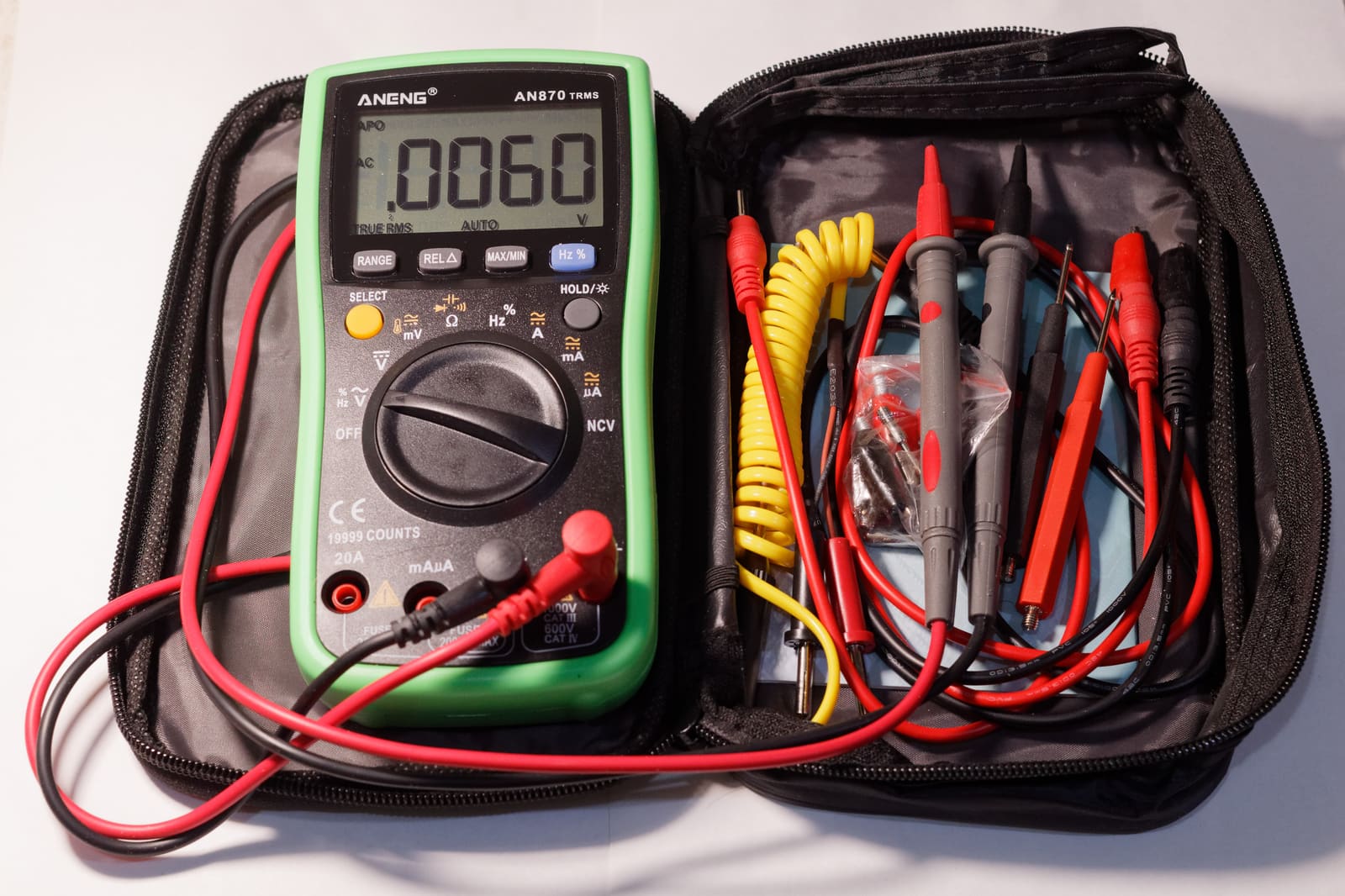
Is My Engine Charging the Battery? Test the Charging System With a Multimeter
A step-by-step way to find out whether your outboard's stator and rectifier/regulator or your inboard's alternator is really charging the battery, what the voltage readings usually mean, and when the problem is just a dirty connection. Exact test specs come from your engine's service manual.
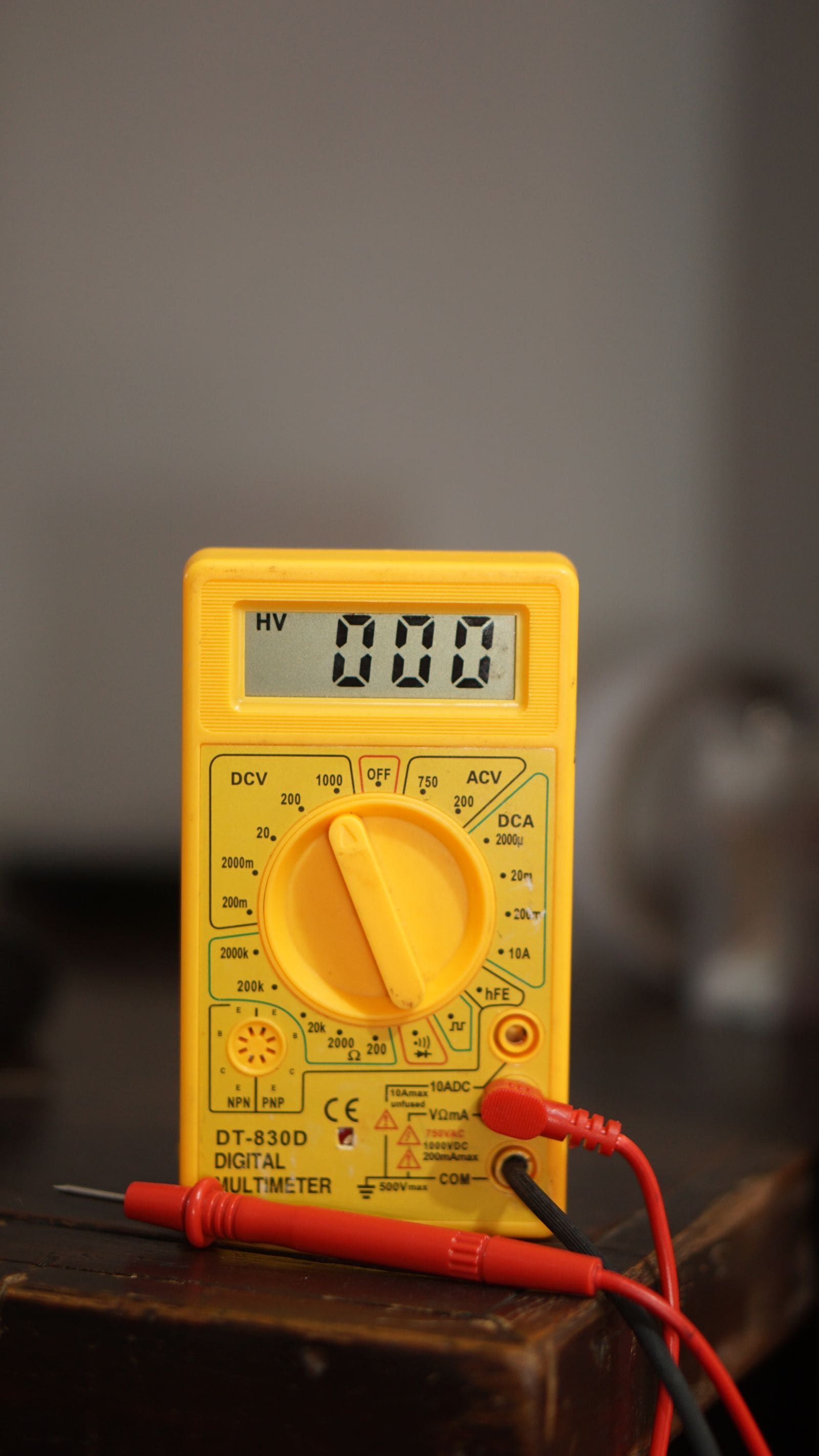
Battery Goes Dead While the Boat Sits - How to Find a Parasitic Drain
If your boat battery is flat every time you come back, something may be quietly drawing power while you are away. Learn how to tell a bad battery from a drain, find the circuit with a multimeter and the fuse panel, and fix the usual culprits without disabling your bilge pump.
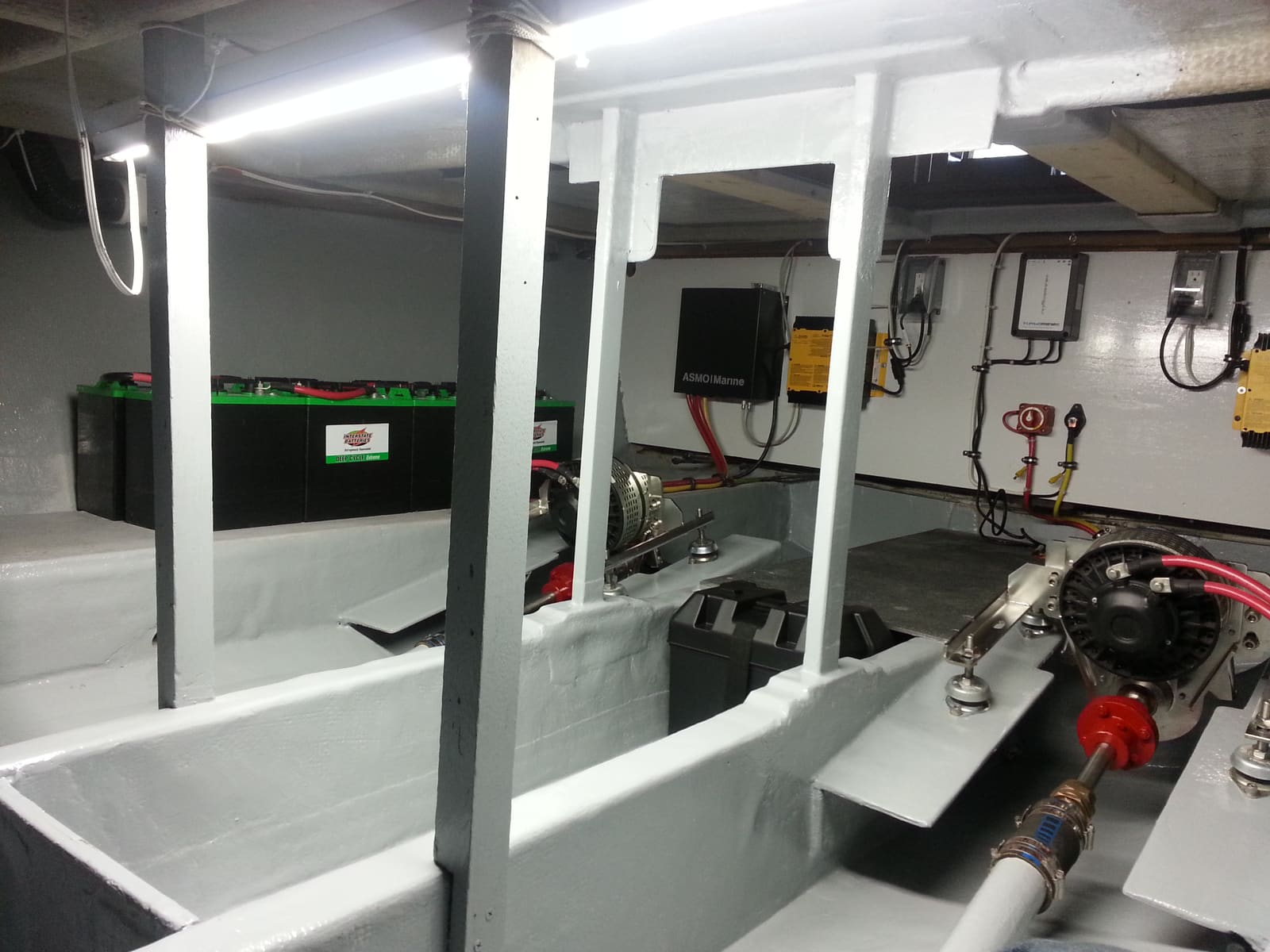
How to Choose, Install and Maintain an Onboard Battery Charger
Pick the right marine charger for your batteries (how many banks, how many amps, flooded, AGM or lithium), mount and fuse it safely, set the charge profile, and use it to keep batteries healthy all season and through the winter. The AC (shore power) side is a job for a marine electrician.
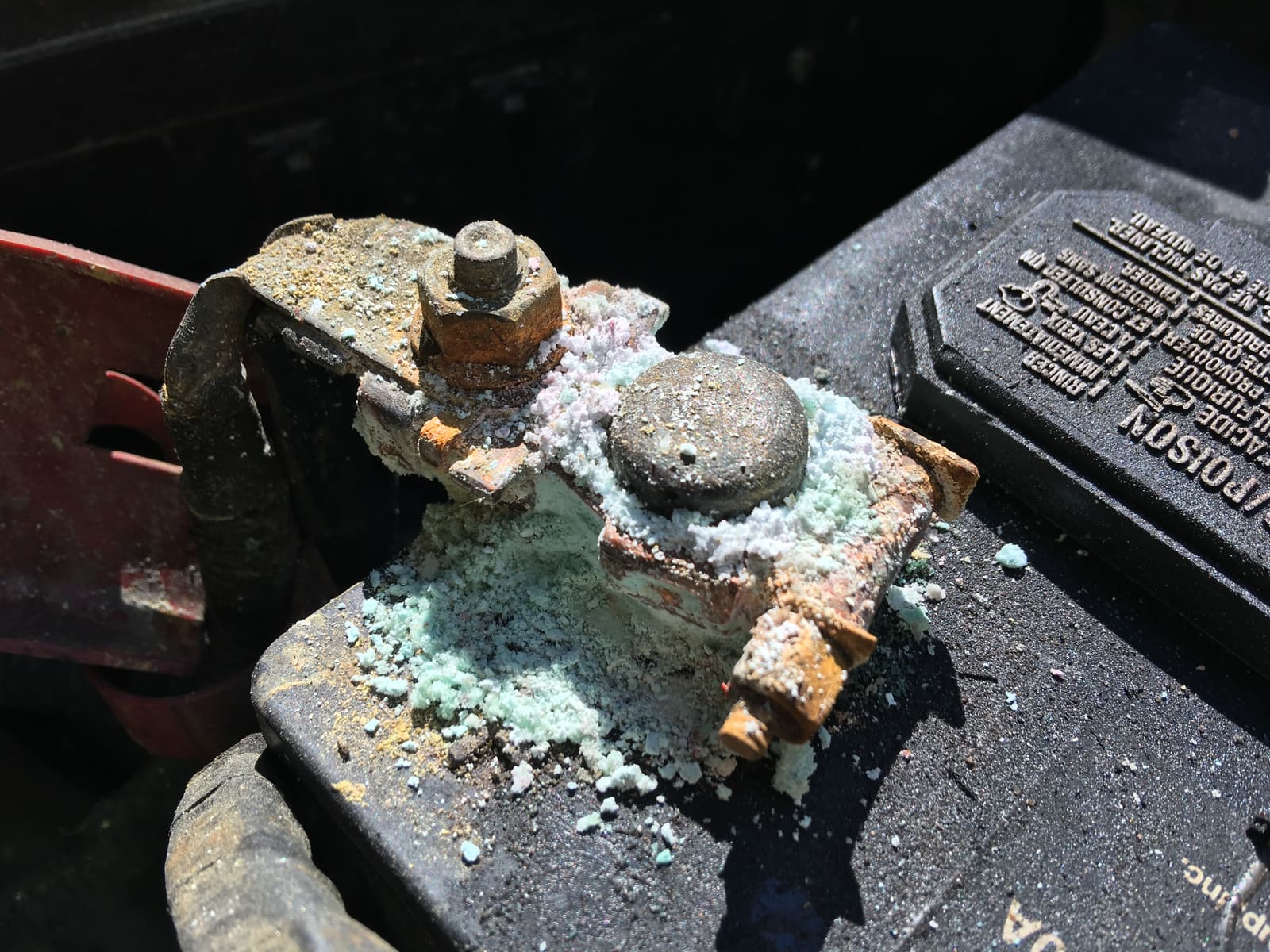
How to Find and Fix Corroded Electrical Connections on a Boat
Track down the green crust and loose terminals behind flickering lights, dead gauges and slow cranking with a simple voltage-drop test, then remake the connection the marine way: tinned wire, a proper crimp, adhesive-lined heat shrink and a protective coating.

How to Maintain Your Boat's Air Conditioning Seawater System
Keep seawater flowing through your marine A/C by cleaning the strainer, checking the pump and overboard discharge, descaling the condenser coil when flow drops, cleaning the air filter, and winterizing the seawater circuit before a freeze. Most "A/C not cooling" calls are a water-flow problem.

How to Prevent and Remove Mold and Mildew on Your Boat
Stop the musty smell and black spots before they start. Find and fix the water source, keep air moving, control humidity safely, and clean mold off gelcoat, vinyl and cabin surfaces with products that won't damage them.
Shore Power Safety: Cords, Inlets, Burned Plugs and Electric Shock Drowning
An owner's inspection routine for your shore power cord, plugs, boat inlet, galvanic isolator and ground-fault protection, plus the right way to plug in and the facts about Electric Shock Drowning. This guide is for looking and testing only; any electrical repair belongs to an ABYC-certified marine electrician.