Two-Stroke Smoking More Than Usual - Troubleshooting Guide
Tell normal two-stroke smoke from a warning sign, then work through the usual causes in order, from the oil mix and choke to spark plugs, oil injection, carburetor and overheating, and know when to shut down.
Time
1 h 30 min
Applies to
Outboard, Jet ski / PWC
Safety first: Never "fix" smoke by cutting back the oil. Too little oil can seize a two-stroke in minutes. If the smoke comes with an overheat alarm, no water from the telltale, knocking, a hot-metal smell or a sudden loss of power, shut the engine down right away. Do not work on plugs or fuel parts with the engine running, and keep the kill switch lanyard off while you work.
Owners often ask
- My two-stroke outboard is smoking a lot more than last year. What should I check first?
- Do I still need to premix gas if my two-stroke has oil injection?
This guide walks you through it. Still stuck? Ask the AI Mechanic about your engine.
Tools
- Flashlight
- Spark plug socket
- Measuring cup or oil-mix bottle marked in ounces and milliliters
- Clean clear jar for a fuel sample
- Notebook to log oil use and hours
Parts & supplies
- Spark plugs (the exact type your manual lists)
- NMMA TC-W3 two-stroke oil (or the grade your manual requires)
- Fresh gasoline
Before you start
Some smoke is normal on a two-stroke. The oil is burned along with the fuel, so an older carbureted motor puffs blue-gray smoke at startup and idle, and it usually thins out once you are running at cruise speed. Modern direct-injection two-strokes (such as E-TEC, OptiMax, HPDI and TLDI) meter oil much more precisely and should smoke far less. As West Marine notes, a direct-injection motor that smokes like an old carbureted one is a stronger sign of trouble.
Answer these before you start:
- Is this more smoke than this same engine made last season? Compare with itself, not with your buddy's four-stroke.
- When does it smoke? Only cold, only at idle, only after long trolling, or all the time, even at cruise?
- What color? Blue-gray is burned oil. Black or sooty means too much fuel. Thick white that smells sweet or steamy can mean water or coolant, which is serious.
- Is the engine premix or oil-injected? Look for an oil tank under the cowl or in the boat. If you are not sure, check your manual.
Steps
These are not problems:
- First start after winter storage. Fogging oil makes heavy white smoke for a few minutes. Let it burn off before you judge.
- Cold starts. Smoke is heavier until the engine warms up.
- Break-in. Many motors run extra oil during break-in. Tohatsu, for example, uses a 25:1 mix during break-in instead of the normal 50:1 and notes the engine will smoke more than usual. See Engine Break-In.
If the smoke clears once the engine is warm and under load, it is very likely normal.
On premix engines, too much oil is the most common cause of extra smoke. Look up the ratio in your manual; do not assume 50:1 applies to every motor. Then check how you actually mix:
- Use a marked mixing bottle, not a guess or a "glug."
- Know the true size of your tank. A "6-gallon" tank that you fill with 4 gallons gets too much oil if you pour in a 6-gallon dose.
- If someone else filled the tank, ask what ratio they used.
If the ratio was off, run the tank down and refill with a correct mix.
This catches many buyers of used boats. If the engine has working oil injection and you also premix the gas, the engine gets oil twice. Tohatsu notes its oil-injected engines mix the oil automatically, so you do not premix with them. Find out what your motor has before the next fill. If a previous owner disabled the injection, you must premix, and the oil injection system's lines and warning horn need to be dealt with properly. See Two-Stroke Premix Conversion.
Use only two-stroke outboard oil with the NMMA TC-W3 rating, or the special grade your manual names. Never use automotive or small-engine oil. Mercury says TC-W3 oil helps reduce smoke and controls deposits that foul spark plugs and stick piston rings. Tohatsu adds that its TLDI direct-injection engines need semi-synthetic or full synthetic oil that meets or beats TC-W3, so check your manual.
Long idling or slow trolling lets oil and fuel puddle inside many older carbureted two-strokes. When you finally throttle up, you get a big puff of smoke. It is common and usually harmless. Run the engine at a higher speed for a few minutes after long trolling to clear it out. If the motor smokes heavily all the time, even after a good run, keep going down this list.
A choke stuck on, an electric enrichener (primer) that keeps feeding fuel, or a fast-idle lever left up makes the engine run rich. That shows as black, sooty smoke, a fuel smell and wet plugs. With the engine off, make sure the choke plate opens fully and that any choke or primer button returns to its rest position.
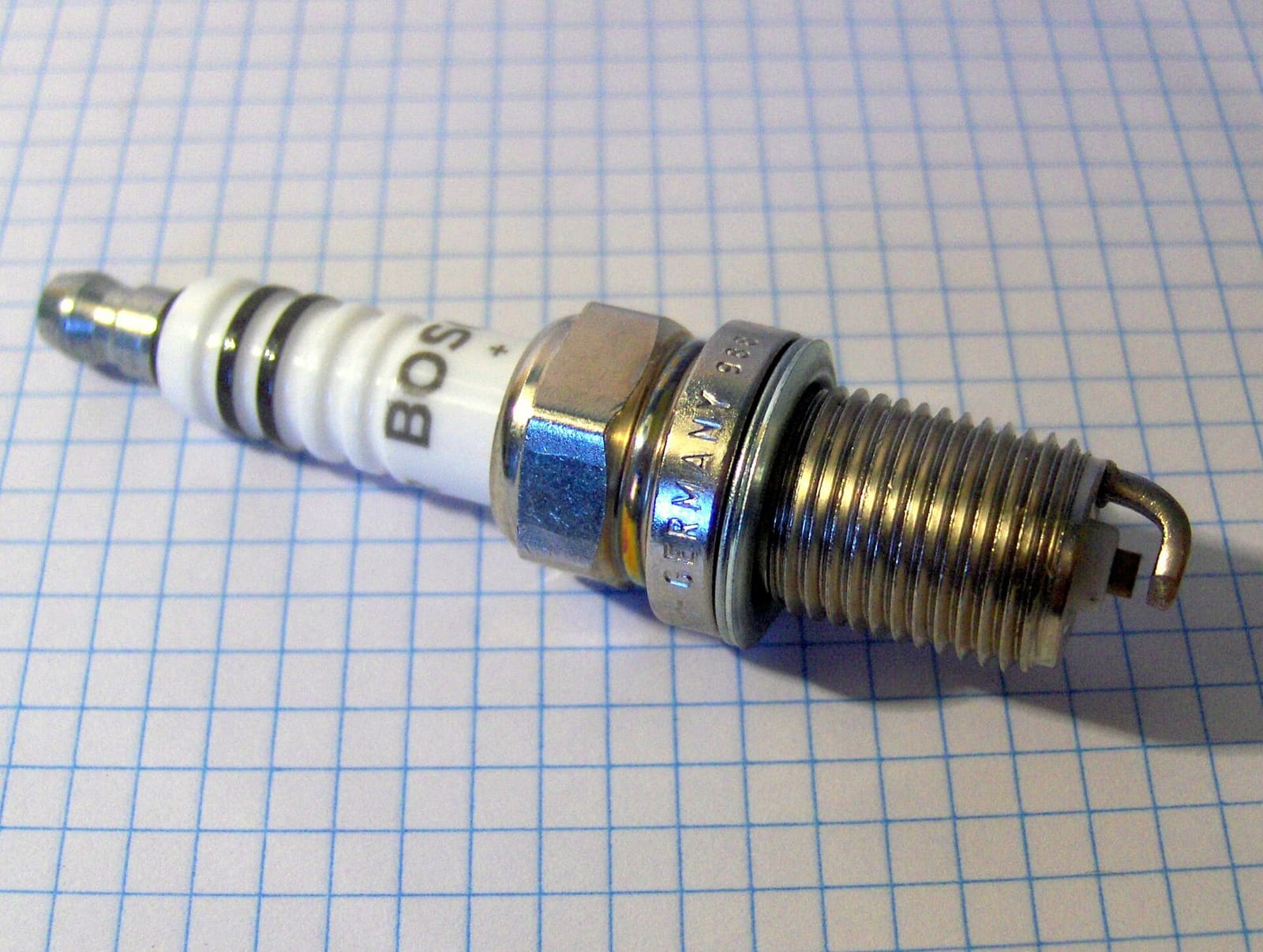
With the engine off and cool, remove the plugs and lay them in order. Compare them:
- Wet and oily: too much oil, too much fuel, or a weak cylinder.
- Black and sooty: running rich (choke, carburetor or fuel issue).
- One plug very different from the others: that cylinder has a problem. Note which one.
Replace fouled plugs with the exact type in your manual. See Spark Plugs.
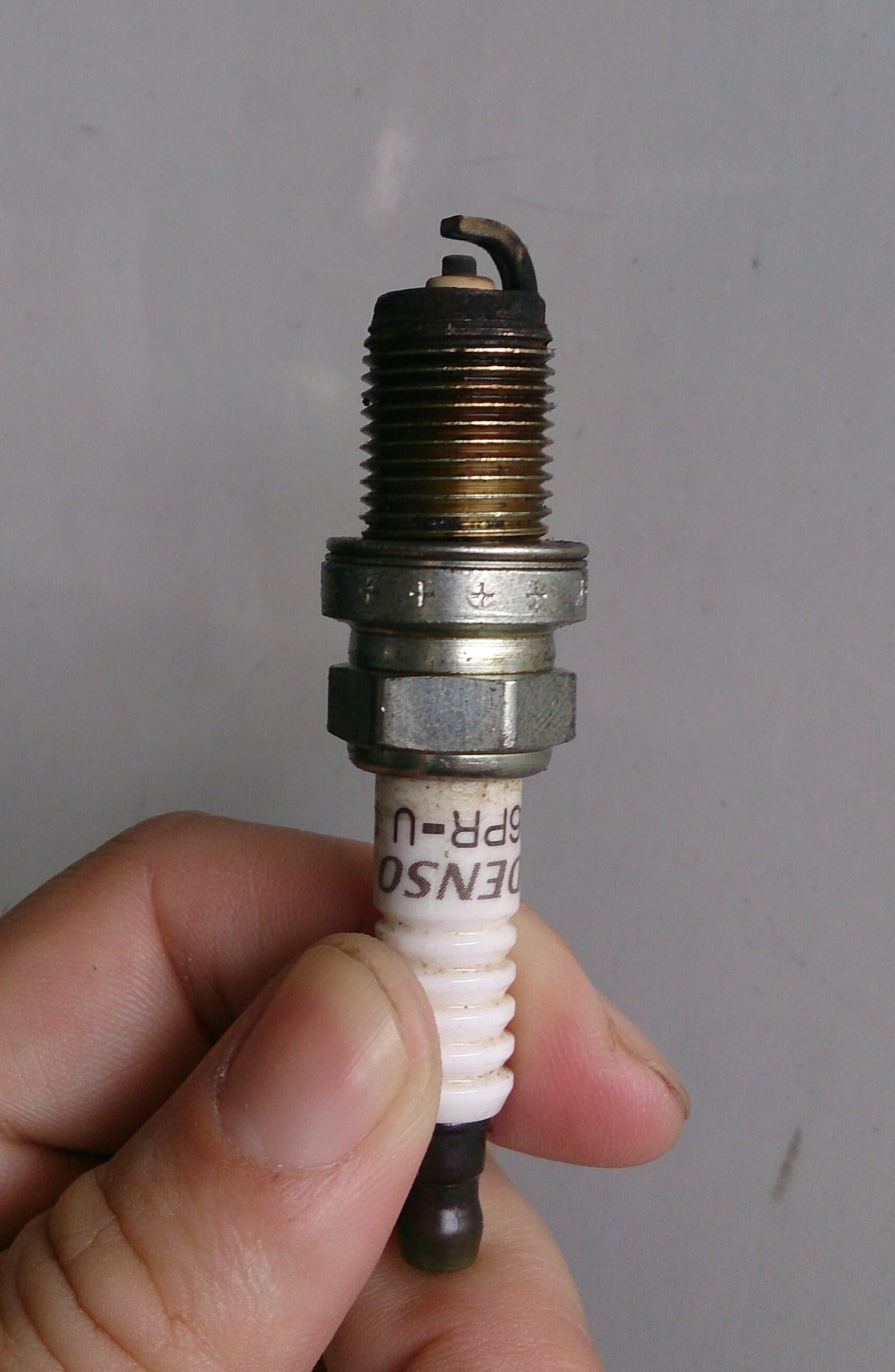
A used plug with dark deposits on the firing end. Wet, oily or sooty plugs help point to the cause of extra smoke. Photo: ProjectManhattan / Wikimedia Commons · CC BY-SA 3.0 If your engine has oil injection, write down the oil tank level and engine hours at each fill. If it suddenly uses noticeably more oil than before for the same running, the injection pump may be delivering too much. Adjusting or testing the oil pump is usually a dealer job, because it is calibrated to throttle position. Owners who see smoke rise with no obvious cause are often told to have the link between the throttle and the oil pump checked: on some engines a worn or broken linkage part can leave the pump feeding more oil than it should. The service manual for your model has the check. See Two-Stroke Oil Injection.
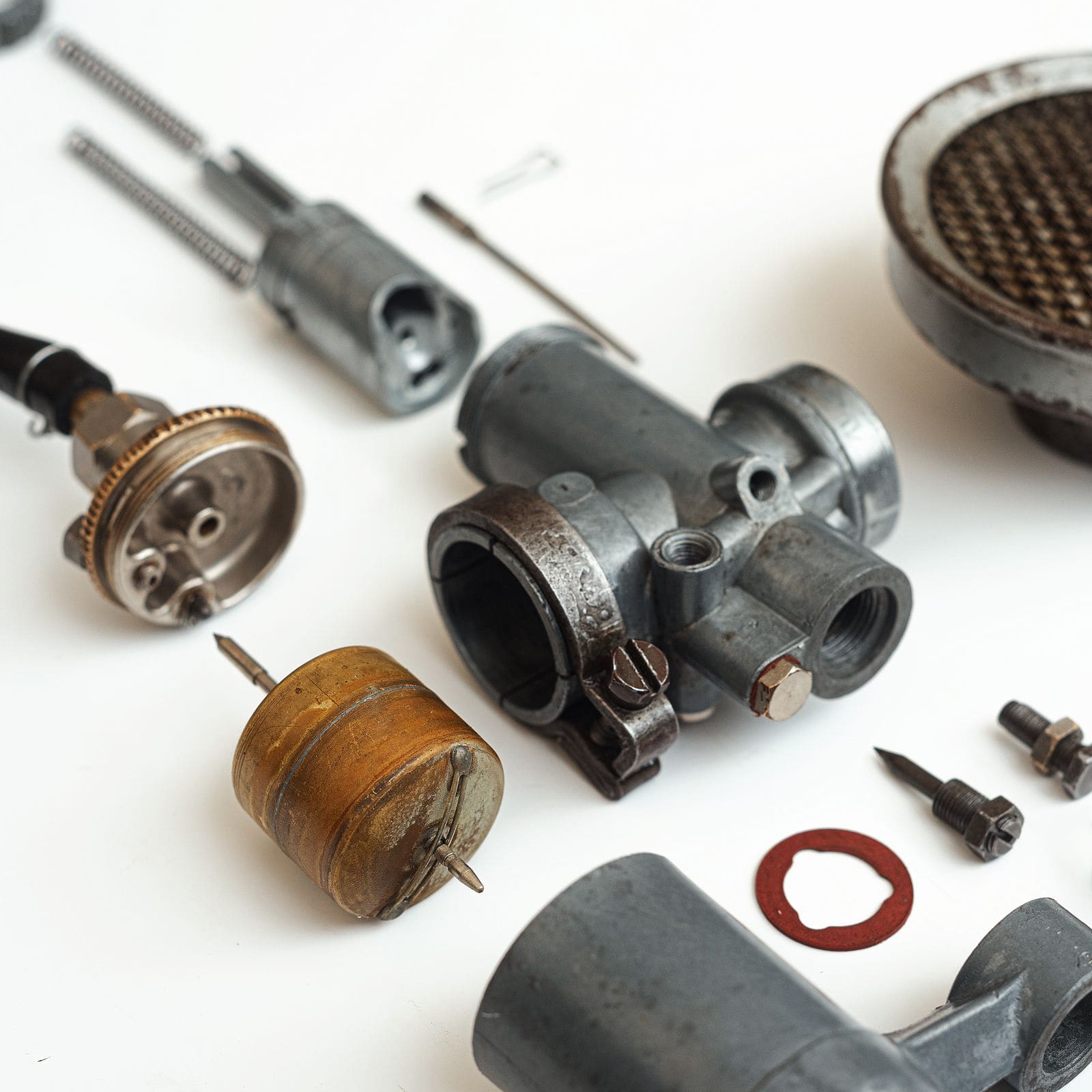
A carburetor with a sticking float or worn needle valve can flood the engine with fuel, causing black smoke and fuel smell. Stale fuel can also make the engine run poorly and smoke. Take a sample of fuel in a clear jar and look for water or a cloudy layer. If the fuel is old or cloudy, drain it and refill with fresh fuel; Yamaha points out that no additive will restore stale fuel or remove water. If the carburetor overflows or the motor smells strongly of raw fuel, see Carburetor Cleaning. Any fuel leak means stop and repair before running.
Thin white vapor on a cold, humid morning is just condensation. Thick white smoke that keeps coming after warm-up, especially with rough running or a sweet smell, can mean water is getting into a cylinder, for example through a failed head gasket. On a PWC or outboard that was swamped or flipped, water in the engine is also possible. Stop running it and have a mechanic check. See Submerged Engine Recovery if the engine was dunked.
An engine that runs hot can scuff or score its pistons, which leads to smoke, lost compression and power. Check that the telltale (pee stream) is strong on outboards, or that the cooling outlet is flowing on a PWC. A weak or missing stream means stop. See Engine Overheating.
Running too cold matters too. Yamaha notes that deposits, especially from salt water, can make the thermostat or poppet valve stick open so the engine never reaches its proper operating temperature. If the extra smoke showed up as the water turned cold in fall, or the temperature gauge sits lower than usual, have the thermostat checked (see Thermostat Replacement). Also make sure it's really smoke and not steam on a cool, damp morning.
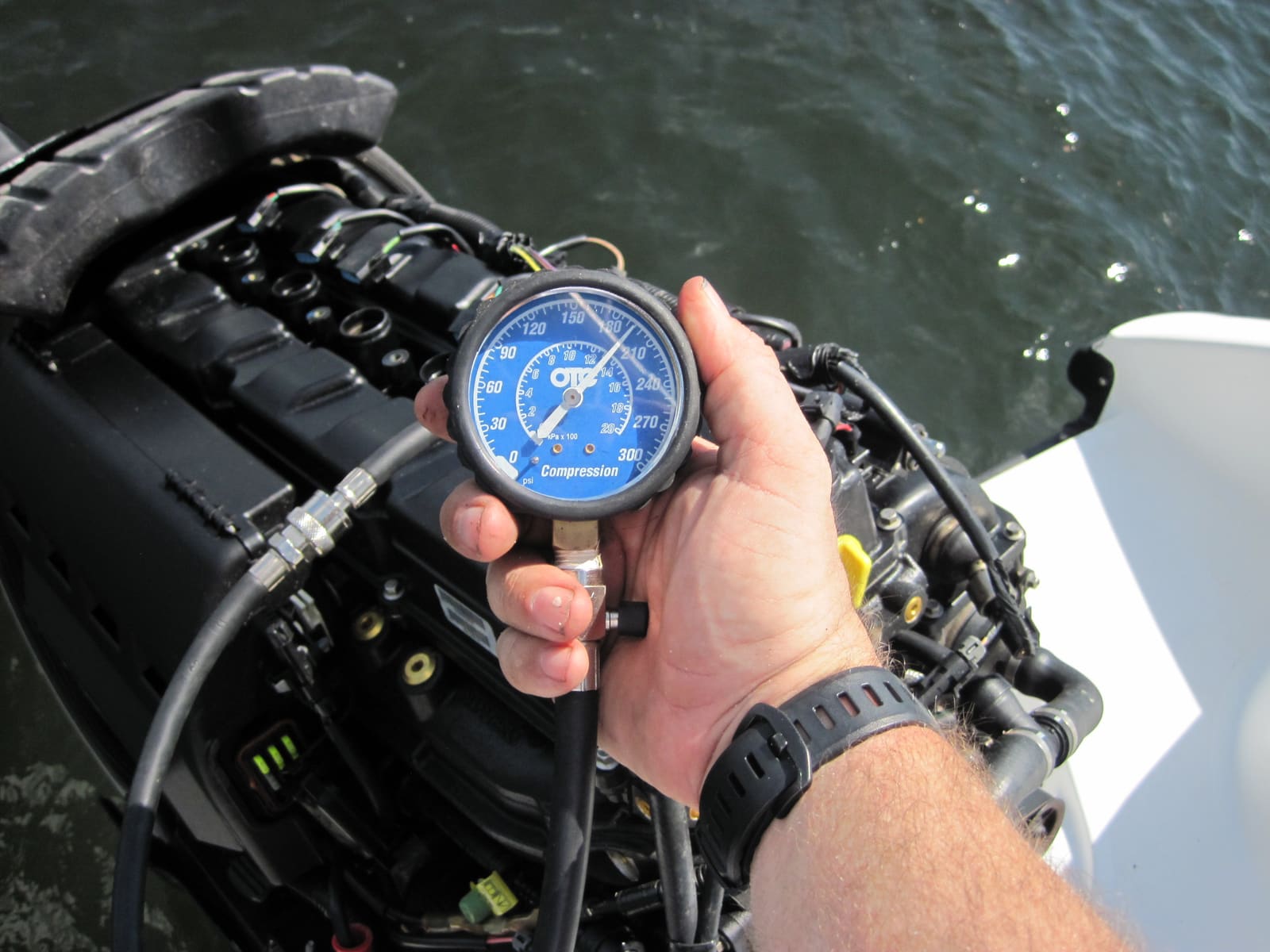
If the smoke persists at cruise speed after the checks above, a compression test tells you if rings or pistons are worn. Readings much lower on one cylinder than the others point to internal damage. See Compression Test. West Marine notes that worn rings tend to come with a gradual loss of performance, not just smoke.
Common mistakes
- Cutting the oil ratio below what the manual says to reduce smoke. It can destroy the engine.
- Premixing gas in an engine that still has working oil injection, then blaming the motor for smoking.
- Using automotive or lawn-mower oil instead of TC-W3.
- Judging smoke on the first start after winter, when fogging oil is still burning off.
- Comparing an old carbureted two-stroke with a direct-injection motor or a four-stroke.
- Ignoring one plug that looks very different from the others; that cylinder may be failing.
When to call a pro
- Smoke with an overheat alarm, a weak or missing telltale, knocking or loss of power
- Heavy smoke that does not clear at cruise speed after you have checked the mix, oil and plugs
- Thick white smoke with rough running, or water found on a plug
- Oil injection use jumps suddenly, or the oil warning horn sounds
- Low or uneven compression
- A strong raw-fuel smell or fuel leak; stop and do not restart until it is fixed
Tips
- Keep a simple log: date, hours, oil added and how much fuel you burned. It turns "it seems to smoke more" into facts.
- Store a correctly marked mixing bottle with the boat so anyone who fuels it gets the ratio right.
- Label premix tanks clearly so nobody pours premix into an oil-injected boat, or straight gas into a premix one.
- After long trolling, a few minutes at higher speed clears out puddled oil and fuel.
Official references
We read these to write this guide. Your engine's own manual always wins.
- West Marine – Diagnosing Two-Stroke Outboard Excessive Smoke
- Tohatsu Outboards – Oil and Gas Mixture Ratios
- Tohatsu Outboards – FAQ
- Mercury Marine – Mercury 2-Stroke Premium Marine Engine Oil (TC-W3)
- Yamaha Outboards – Maintenance Matters, Engine Oil and Lube
- Yamaha Outboards – Maintenance Matters, Fuel and Fuel System
- Yamaha Outboards – Maintenance Matters, Additional Tasks (thermostat and poppet valve sticking open)
Safety: BoatMend is for information only and does not replace a certified marine technician. You are responsible for your safety and your boat. Read the full disclaimer.
Last updated 2026-10-25
Related guides
Two-Stroke Oil Injection vs. Premix: How It Works and How to Check It
A two-stroke engine dies quickly without oil in its fuel, so the oil injection system and its alarms deserve regular attention. Learn how injection and premix differ, what the warning horn is telling you, how to check the system, how to premix safely using your manual's ratio, and the real risks of disabling injection.
Two-Stroke Premix Conversion: Living With an Engine That Had Its Oil Injection Removed
Bought a two-stroke outboard or PWC whose oil injection was removed, or thinking of doing it? Learn how to confirm what was done, mix fuel at the ratio from your manual every single time, label your tanks so nobody forgets, choose NMMA TC-W3 oil and understand the real risks.
How to Inspect and Replace Spark Plugs
Pull, read and replace the spark plugs on a gas outboard, sterndrive, inboard or PWC. Fresh, correctly gapped plugs help the engine start easily and run smoothly, and the old plugs tell you a lot about the engine's health.
How to Clean the Carburetor on a Small or Older Outboard
Old fuel turns to varnish and plugs the tiny jets in a carburetor, so the engine only runs on choke, surges or will not idle. Learn when the carburetor really is the problem, how to drain and clean it, and when a rebuild kit or a replacement makes more sense.
How to Fog an Engine for Storage
Coat the inside of your engine's cylinders with fogging oil before a long layup so rust does not form over the winter. Learn when fogging applies, how it differs for carbureted, fuel-injected and direct-injection engines, and why your maker's instructions come first.

Engine Overheating - Troubleshooting Guide
Work through the most likely causes of a hot engine or overheat alarm, from a blocked water intake to a worn impeller or stuck thermostat. Acting fast and in the right order can save your engine and often gets you home without a tow.
How to Do a Compression Test on an Outboard, Sterndrive, Inboard or PWC
A compression test tells you whether the pistons, rings, valves and head gasket in each cylinder are sealing. Learn when to do one, how to do it safely, how to read the numbers by comparing cylinders, and what a wet test and a leak-down test add.
How to Break In a New or Rebuilt Boat Engine
The first hours on a new or rebuilt engine decide how well its piston rings seat and how long it lasts. Learn how to follow your maker's hour and RPM schedule, why you should keep changing the throttle, what to avoid (constant RPM, early full throttle, long idling), what to check every trip and when to do the first oil change.
Loss of Power, Hesitation or Misfire - Troubleshooting Guide
Figure out why your engine bogs down, stumbles, will not reach full rpm or runs rough. Work from simple checks like trim, prop and fuel filter to ignition and engine protection modes before paying for diagnostics.