Milky Engine Oil or Water in the Oil - What It Means and What to Do
Milky, creamy or rising engine oil usually means water is getting into the engine. Learn why you should stop running it right away, how to tell harmless condensation from a real leak, and which parts are the usual suspects: head gaskets, exhaust risers and manifolds, intake manifold gaskets, oil coolers and freeze cracks.
Time
1 h
Applies to
Outboard, Sterndrive (I/O), Gas inboard, Marine diesel
Safety first: If the oil on your dipstick looks milky, creamy or like coffee with cream, shut the engine off and don't restart it. Sea Tow warns that running an engine with water in the oil can wreck the bearings and pistons within minutes. Don't try to "limp home" on it. If you're on the water, anchor if it's safe, make sure everyone has a life jacket on, and call TowBoatUS or Sea Tow; in an emergency use VHF channel 16 or dial 911. If the boat is also taking on water, that's the emergency to deal with first.
Owners often ask
- The oil on my dipstick looks milky. Can I still run the engine?
- There's white gunk under my oil fill cap. Is that a blown head gasket?
This guide walks you through it. Still stuck? Ask the AI Mechanic about your engine.
Tools
- Clean white paper towels or shop rags
- Flashlight
- Clear glass jar (for an oil sample)
- Notebook or the BoatMend maintenance log (hours, recent events, readings)
- Spark plug socket (gas engines, for a look only if a pro asks)
Parts & supplies
- None to start; oil, filter and gaskets depend on what the diagnosis finds
Before you start
Healthy engine oil looks amber to dark brown and slick. When water gets into it, the two mix into a light brown, tan or cream-colored "milkshake," often with foam or bubbles, and the level on the dipstick may go up even though you haven't added oil.
Water in the oil can come from outside (rain or bilge water getting in, or the boat being submerged) or from inside, where the engine's own cooling water leaks past a gasket or through a crack. This guide helps you collect the facts a mechanic needs and avoid making the damage worse. Most of the real fixes need a shop.
Two related problems that look similar but aren't the same:
- Oil level rising and smelling like gasoline on a four-stroke outboard is usually fuel, not water. See the guide on rising oil level.
- Milky gear lube in the lower unit or sterndrive is a seal leak in the gearcase, not the engine. See the lower unit oil change guide.
Steps 1–5 are things you can check yourself. Steps 6–11 explain the usual causes, from the most common to the most serious, so you know what the mechanic is looking for.
Steps
This is the most important step. Water thins the oil so it can't protect the bearings, and if water is getting into a cylinder, cranking the engine can bend internal parts because water doesn't compress. Turn the key off, remove the lanyard, and leave it off until you know what's going on.
With the engine off and level, pull the dipstick and wipe it on a white paper towel:
- Uniform cream, tan or "chocolate milk" color throughout: water is mixed through the oil. Treat it as serious.
- Water droplets or a gray layer at the tip of the dipstick: free water sitting in the bottom of the oil pan.
- Normal color but the level has gone up and it smells like gas: that's fuel dilution, a different problem.
- Normal oil: check under the oil fill cap too (step 3).
For a second look, let a sample settle in a clear glass jar for a few hours. Water sinks to the bottom and separates from the oil.
A little light, mayonnaise-like film only under the oil fill cap or in the breather hose, with normal-looking oil on the dipstick, can come from condensation. It's more common when an engine makes many short runs in cool, damp weather and never gets fully warm. Yamaha notes that engines constantly breathe humid air off the water's surface, and that air gets inside the engine. If the dipstick oil is clean, wipe the cap, run the engine fully warm on the next trip, and check again. If the film keeps coming back or spreads to the dipstick, treat it as a real leak.
These details save hours of diagnosis:
- Did the engine overheat, even briefly? Overheating is one of the most common causes of gasket failure.
- Was the boat stored in freezing weather, and was the engine fully winterized? Water left in the block, head, manifolds or oil cooler can freeze and crack them.
- Was the boat swamped, submerged or flooded, or did it take on water in rough seas?
- How old are the exhaust manifolds and risers, and has the boat spent its life in salt water?
- Has the coolant level dropped (closed-cooled engines)? Any white smoke or steam from the exhaust? Rough running or a misfire on start-up?
Many sterndrives, inboards and diesels have a coolant tank like a car. With the engine cold, check the level. A dropping coolant level together with milky oil points to an internal leak between the coolant passages and the oil, typically a head gasket, a cracked head or block, or on some engines an oil cooler. Raw-water-cooled engines and outboards don't have this tank, so you can't use this clue.
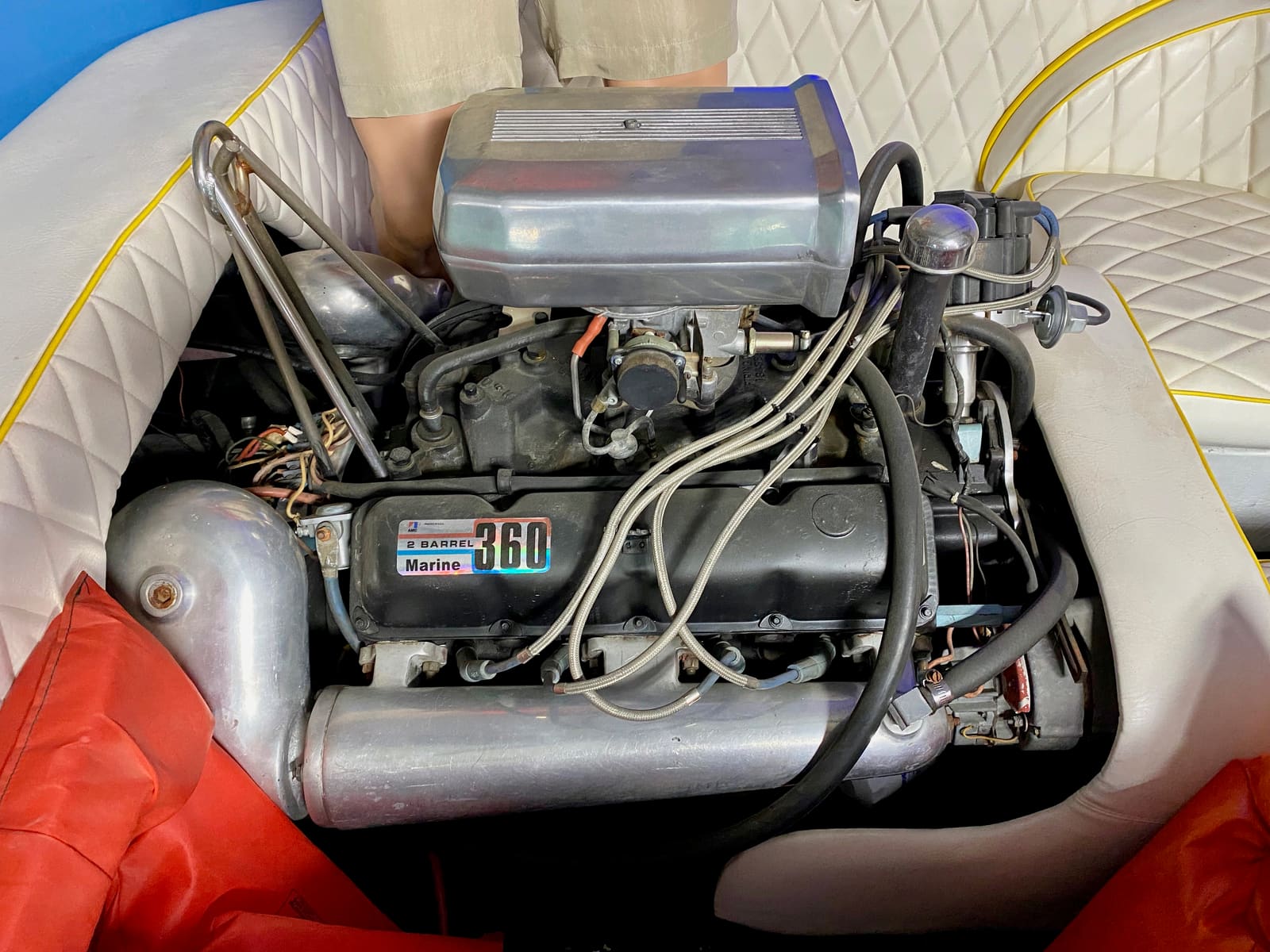
On gas inboards and sterndrives, the cast-iron exhaust manifolds and risers are a pipe inside a pipe: hot exhaust in the middle, cooling water around it. BoatUS explains that when corrosion eats through the inner wall or the gasket between the manifold and riser fails, water can get into the exhaust side and run back into the cylinders while the engine sits. The result can be rusted, seized pistons or a hydrolocked engine that's badly damaged when you try to start it. From the cylinders, water can also end up in the oil.
Warning signs BoatUS lists include hard starting, a knock when starting, rust on the outside of the manifolds or risers, and corrosion or seepage at the joint between them. It suggests periodic removal and inspection, and calls rust on the outside a sign that it's past time. See the exhaust manifold and riser guide.
A pattern owners report on V8 sterndrives: the engine runs hot, the oil turns milky, and the plugs from the cylinders on one side (nearest one manifold) come out wet. When the mechanic pulls that manifold, the bolts or the exhaust ports near those cylinders are rusty, which points to a manifold-to-riser leak rather than a head gasket. The shop confirms it by inspecting the gasket surfaces and pressure testing; there should be no rust inside a healthy exhaust port.
The head gasket seals the joint between the cylinder head and block, including the water passages next to the cylinders. Sea Tow lists a failed head gasket as one of the most common ways coolant or raw water ends up in the oil, and overheating is a frequent trigger. On outboards, saltwater corrosion around the gasket's water passages can also cause it. Clues include white smoke or steam from the exhaust, overheating, rough running, and pressure in the cooling system. A shop confirms it with a compression or leak-down test and a cooling system pressure test.
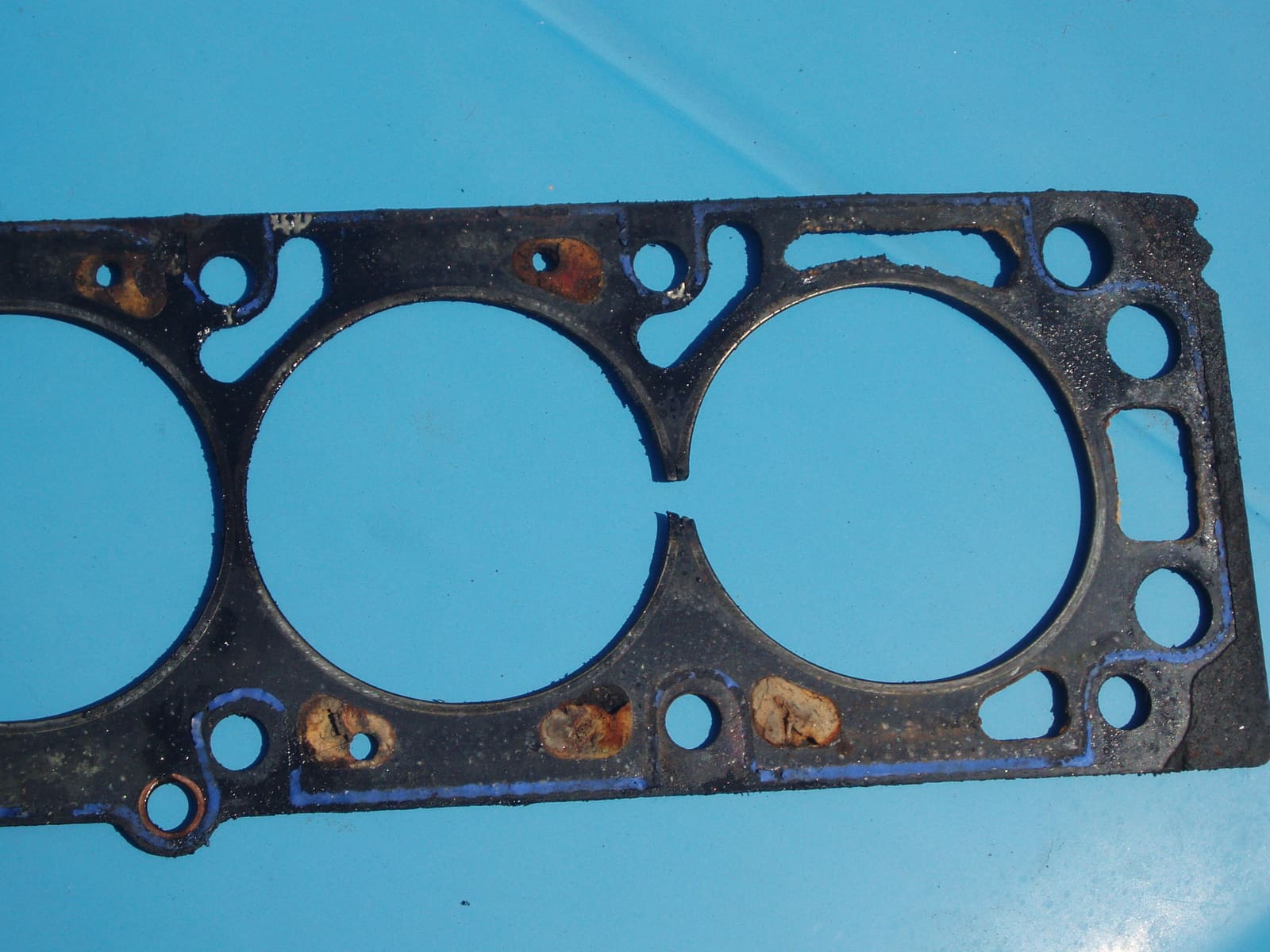
A failed head gasket from a car engine, burned through between two cylinders. Marine engines use the same kind of gasket, and a failure next to a water passage can let water into the oil or cylinders. Photo: Lewis Collard / Wikimedia Commons · CC BY-SA 3.0 On many V6 and V8 marine gas engines, cooling water also flows through passages in the intake manifold that sits in the valley between the cylinder banks. If the intake manifold gasket fails around one of those water passages, water can leak straight down into the engine and the oil, often without obvious outside signs. This is something the mechanic checks with a cooling system pressure test, sometimes with the manifold removed.
Many diesels and some gas engines have an oil cooler, a small heat exchanger where cooling water flows past tubes carrying hot oil. If a tube corrodes through, oil and water can mix. Depending on the pressures, you may see oil in the coolant or raw-water discharge, or water in the oil. Oil coolers are also a common freeze-damage point if the engine wasn't drained or winterized properly.
Severe overheating or freezing can crack the block or cylinder head, as Sea Tow notes. Freeze damage is the classic spring discovery after a missed or incomplete winterization. Cracks can be hard to see from outside and are usually found with pressure tests. A cracked block generally means a major repair or a replacement engine.
If the boat was swamped, sank or sat with water over the engine, water can enter through the air intake, exhaust, dipstick tube or breather. This needs prompt professional attention: the engine should be drained and cleaned out before corrosion sets in. Insurance companies and towing services often have guidance for submerged engines; call them right away.
A dropped or sunk outboard is a race against air. Southern Boating, quoting outboard technicians, explains that corrosion speeds up once a wet engine is exposed to air, especially after salt water. If you can't get it to a shop right away:
- Don't try to start it and don't crank it with the plugs in.
- After salt water, the technicians' advice is to rinse the whole engine with plenty of fresh water, and if the shop visit will be delayed, keep it submerged in fresh water (a large tub or barrel works) until someone can work on it.
- Get it to a marine technician as soon as possible, ideally the same day. They'll drain the cylinders, oil and fuel, protect the internals, and clean the starter, wiring and electronics, which often need replacing.
- Small portables most often go overboard because the clamp screws vibrated loose. A cable or small lock through both clamp handles, plus a safety line, prevents it (see the portable outboard guide).
A typical diagnosis and repair path:
- Drain and inspect the oil, and possibly send a sample to an oil lab (labs can detect coolant in oil).
- Pressure-test the cooling system and do compression or leak-down tests on the cylinders.
- Remove and inspect the risers and manifolds on gas inboards and sterndrives.
- Repair the cause (gaskets, risers, manifolds, oil cooler, or more).
- Change the oil and filter, often more than once after a short run, until the oil stays clean. Don't do these oil changes yourself as a "fix" before the cause is found; the water will just come back.
Common mistakes
- Running the engine "just to get back to the dock" with milky oil. That's how a gasket job becomes a new engine.
- Cranking an engine over and over when it won't start after sitting. If water is in the cylinders, cranking can bend rods.
- Changing the oil and going boating without finding where the water came from.
- Panicking over a little condensation film under the oil cap when the dipstick oil is clean, or ignoring it when it keeps getting worse.
- Confusing milky gear lube in the lower unit with milky engine oil, or fuel-diluted oil with water.
- Skipping or rushing winterization, then finding cracked manifolds, blocks or oil coolers in spring.
- Waiting for exhaust risers to show obvious problems instead of having them inspected on a schedule, especially in salt water.
When to call a pro
- Any milky, creamy or rising oil on the dipstick, or water droplets on it
- Coolant dropping with no visible leak, white smoke or steam from the exhaust, or an overheating alarm
- An engine that won't turn over, knocks on start-up, or ran badly after sitting
- A boat that was swamped or submerged
- If it happens on the water: stop the engine, anchor if needed, and call TowBoatUS or Sea Tow; in an emergency use VHF 16 or 911
Tips
- Check the oil before every trip. You'll catch a change early, and you'll know what "normal" looks like for your engine.
- Make sure the engine reaches full operating temperature on most runs, which helps cook off normal condensation.
- Keep records of overheating events, winterization and riser replacements. They help the mechanic and the next owner.
- Ask your mechanic about an oil analysis at each annual service. A lab report can spot coolant or other trouble before you see it. BoatUS explains that a lab checks the oil for water, coolant, fuel and wear metals, and that a yearly sample (or one every 50 hours, or just before winter layup) builds a baseline so small changes stand out. If you take the sample yourself, do it with the engine warm, through the dipstick tube with a clean sampling pump, keeping the tube just off the bottom of the oil pan, and use a new tube every time.
- Diesel owners have one more quick check, per BoatUS: some moisture under the oil filler cap is normal, but a lot of water there, or oil that turns creamy after a run, can point to a head gasket, cracked head or corroded cylinder liner. Get a mechanic.
- On older gas sterndrives and inboards, especially in salt water, budget for riser and manifold inspection as routine maintenance.
Official references
We read these to write this guide. Your engine's own manual always wins.
- Sea Tow – Water in Boat Engine Oil, What to Do
- BoatUS – Inspecting Exhaust Manifolds and Risers
- Boating Magazine – Five Inboard and Sterndrive Engine Checks
- Yamaha Outboards – Maintenance Matters, Engine Oil and Lubrication
- Southern Boating – When Your Outboard Goes Under, Dunked Outboard Rescue
- BoatUS – What Your Oil Says About Your Boat's Health (oil sampling)
- BoatUS – Oil Sample Analysis
- BoatUS – Maintaining Marine Diesel Engines (water under the filler cap)
Safety: BoatMend is for information only and does not replace a certified marine technician. You are responsible for your safety and your boat. Read the full disclaimer.
Last updated 2026-10-24
Related guides
Four-Stroke Outboard Oil Level Rising or Smelling Like Gas: What It Means and What to Do
If the oil on your four-stroke outboard's dipstick keeps going up or smells like gasoline, fuel is probably getting into the crankcase. Learn how to check the level the right way, why lots of idling, trolling, short runs and cold water cause it, what you can do yourself, and when a fuel-system fault needs a dealer.
How to Inspect Exhaust Manifolds and Risers on a Sterndrive or Inboard
Cast-iron exhaust manifolds and risers rust from the inside, and when they fail they can let water into the cylinders and ruin the engine. Learn the warning signs, how often to inspect them in salt and fresh water, how to check a riser yourself, and when replacement is a job for a pro.
Engine Overheating - Troubleshooting Guide
Work through the most likely causes of a hot engine or overheat alarm, from a blocked water intake to a worn impeller or stuck thermostat. Acting fast and in the right order can save your engine and often gets you home without a tow.
How to Check and Change Coolant in a Closed Cooling System
Check, test and change the coolant in a freshwater-cooled (closed cooling) inboard, sterndrive or diesel, and learn the heat exchanger basics that keep it working. Old coolant quietly eats hoses, pumps and engine passages, and many boats go a decade without a change.
How to Winterize a Sterndrive (MerCruiser, Volvo Penta and Similar)
Get the water out of your sterndrive engine, protect it with antifreeze, and service the drive before storage. A cracked block or manifold from one missed drain plug can cost thousands, and doing it yourself saves a shop bill of several hundred dollars.
How to Change Lower Unit (Gearcase) and Sterndrive Oil
Drain and refill the gear oil in your outboard lower unit or sterndrive, and learn to spot water intrusion before it destroys the gears. It is a 30-minute job that protects a gearcase costing thousands to replace.
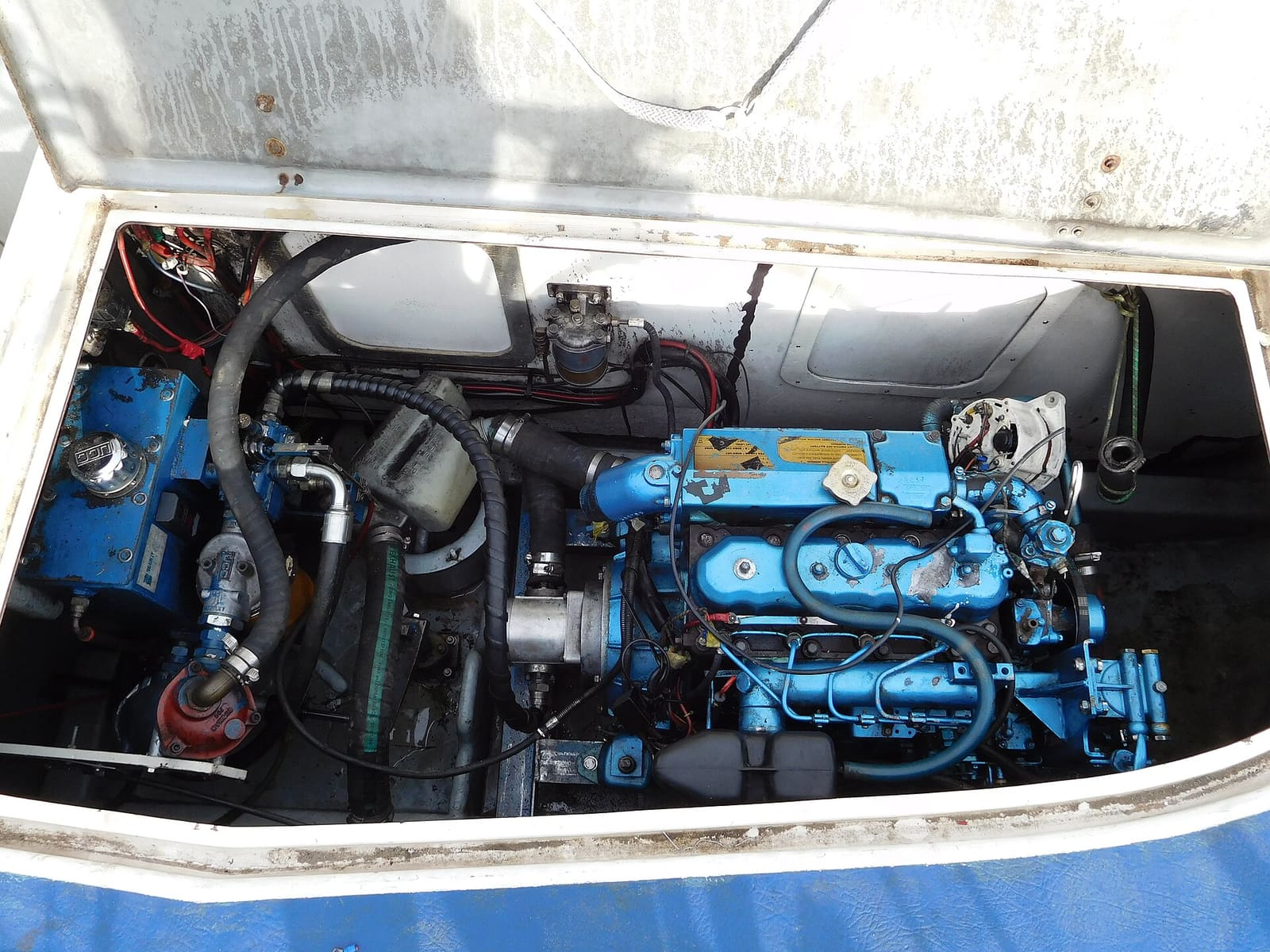
Marine Diesel Service: Oil Change, Fuel Filters and Bleeding Air
Change the oil and oil filter, replace the primary and secondary fuel filters, and bleed air from the fuel system on a Yanmar, Volvo Penta, Beta, Cummins or similar marine diesel. These three skills cover most routine diesel care and can get you out of trouble when the engine dies on a passage.
What to Do When Your Boat Is Taking On Water: Emergency Steps and Prevention
A step-by-step emergency plan for water coming into the boat - life jackets on, call for help early on VHF 16, find and slow the leak, pump, and head for shallow water if needed - plus the maintenance checklist that prevents most sinkings.
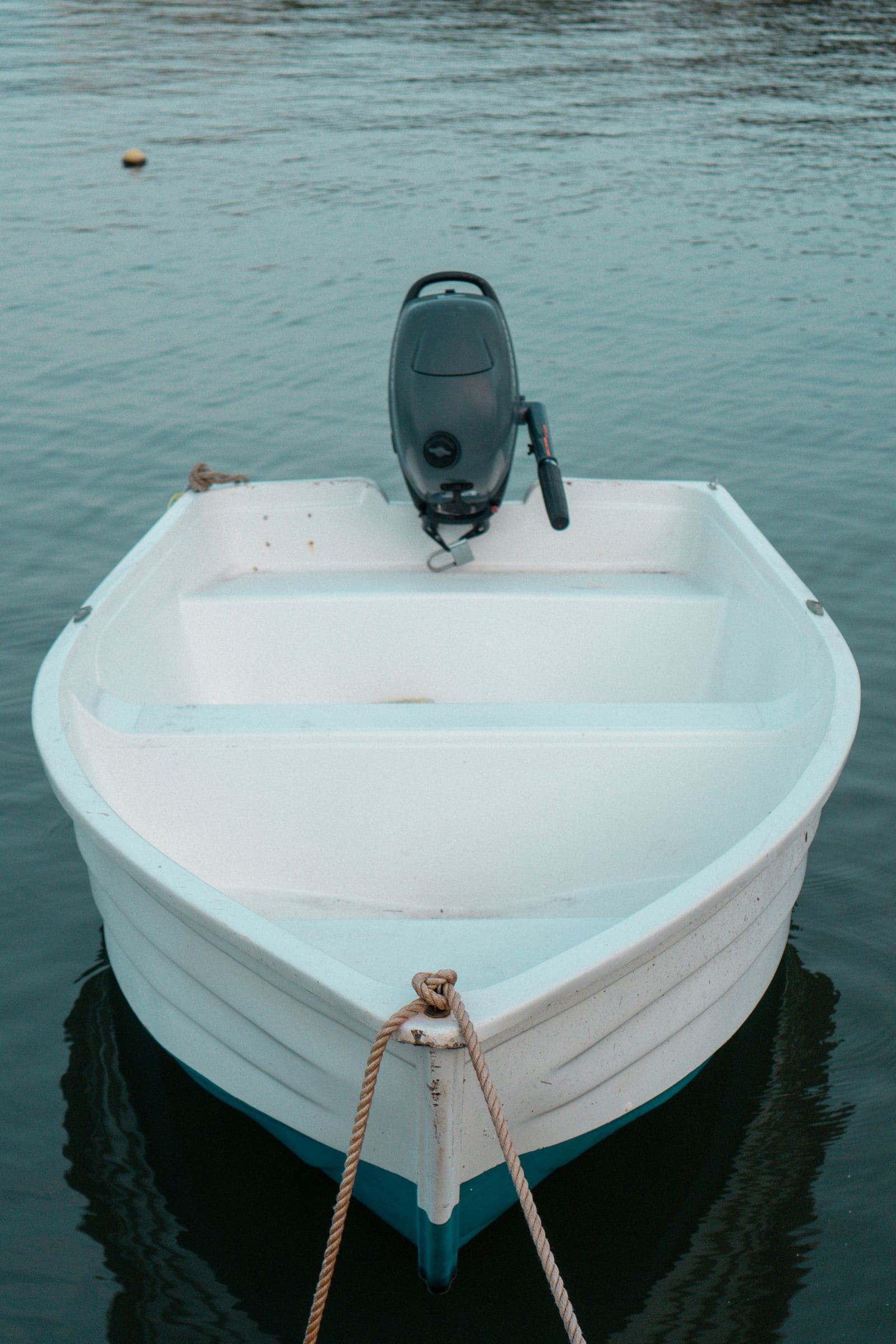
Small Portable Outboard Care (2.5 to 20 hp Kickers and Dinghy Motors)
Keep your dinghy motor or kicker starting on the first few pulls. Use fresh fuel, flush it, run the carburetor dry before you put it away, carry and lay it down on the correct side so oil doesn't flood the cylinders, and check the shear pin or prop, gear oil and engine oil on schedule.