Renaming a Boat: Paperwork, Removing the Old Name and the Optional Ceremony
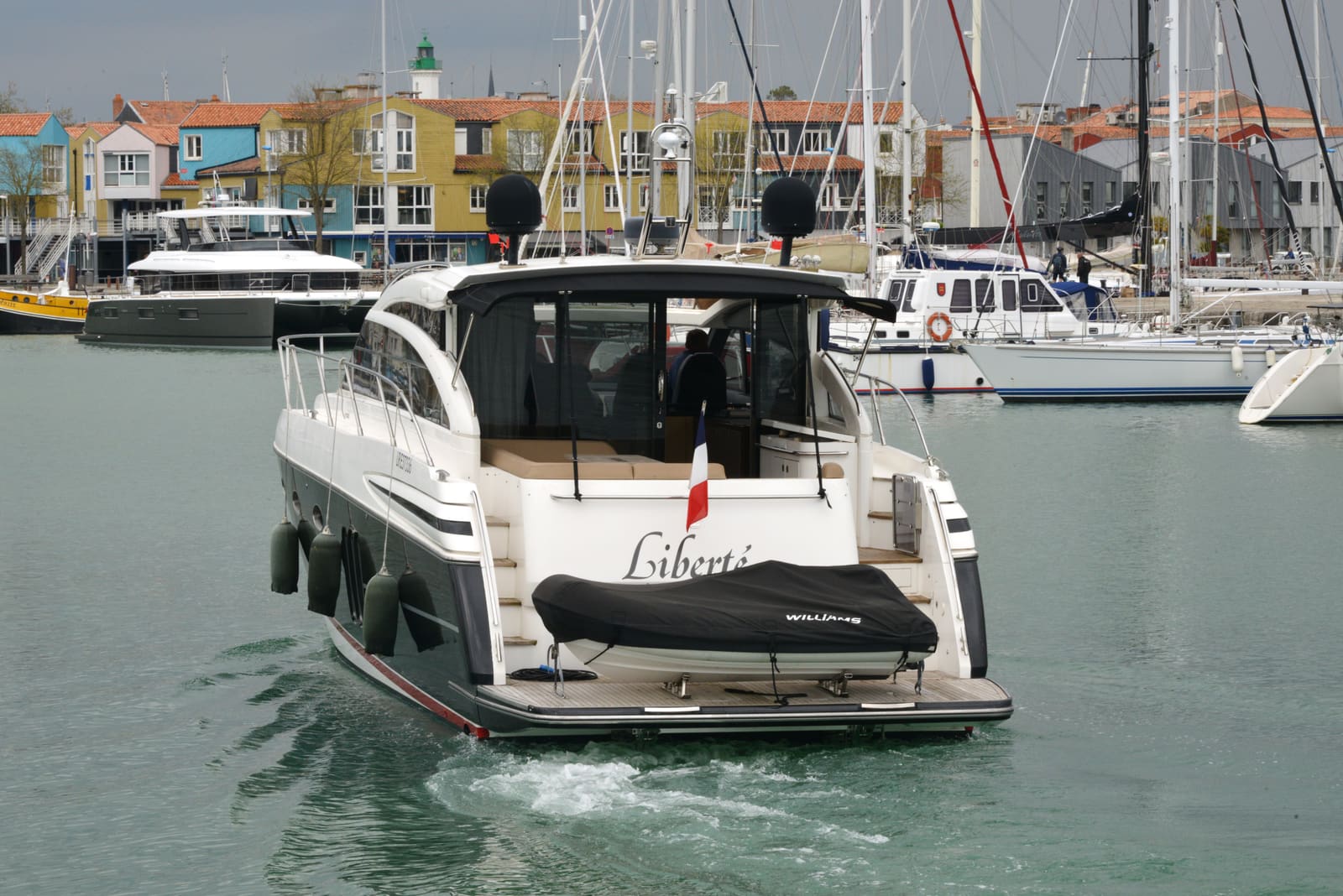
Change your boat's name the right way: what a state-registered boat needs versus a Coast Guard documented boat (name change and hailing port go through the NVDC before you letter the hull), getting every trace of the old name off, lettering rules for documented boats, who else to tell (insurer, marina, MMSI, EPIRB, AIS), and the traditional renaming ceremony if you want the fun.
Time
4 h
Shop would charge
$150-600
Applies to
All engines
Safety first: Heat guns can blister gelcoat and paint and start fires near fuel vents, canvas or foam; keep the gun moving and never use one near a fuel fill or a fuel smell. Never use a steel razor blade or a sander on gelcoat unless you plan to refinish it. Work from a stable platform, not a wobbly ladder on a wet ramp. This guide is practical help, not legal advice: documentation rules come from 46 CFR Part 67 and your state sets its own registration rules, so confirm with the National Vessel Documentation Center (NVDC) or your state boating agency before you letter the hull.
Owners often ask
- I just bought a documented boat and want to rename it. Can I just put new vinyl on the stern?
- Do I really have to do a denaming ceremony before I rename my boat?
This guide walks you through it. Still stuck? Ask the AI Mechanic about your engine.
Tools
- Heat gun or hair dryer
- Plastic razor blades or a plastic scraper
- Adhesive remover safe for gelcoat (test first)
- Rubbing compound, polish and wax
- Masking tape, tape measure and a level
- Plastic squeegee and lint-free towels
- Isopropyl alcohol
Parts & supplies
- New marine-grade vinyl name (and hailing port if documented)
- Optional new nameboards, life ring lettering or dinghy lettering
Before you start
First, find out how your boat is identified. Look at your paperwork:
- State registered (and maybe state titled): you have a state certificate of number, and the bow shows numbers like
FL 1234 AB. The name is mostly your own business. Many states don't record a name at all, and some do; check your registration card. - Coast Guard documented: you have a Certificate of Documentation (COD) from the NVDC with an official number. BoatUS explains that a documented boat shows its name and hailing port instead of state numbers. For these boats the name is part of the federal record, and changing it is a formal process.
Is there a loan on the boat? If the boat is documented and has a recorded preferred mortgage, the lender has to agree to the name change (more in step 3).
Pick a name that works on the radio. BoatUS notes that a shorter name is easier to read from the dock and to say over the VHF. Say it out loud as if you were calling for help. For documented boats there are also hard rules (step 2).
Timing. Plan the paperwork first, then remove the old name, then letter the new one. For a documented boat, the new name goes on only after the new certificate arrives.
Steps
A state-registered boat only needs a new name on the hull (and an update with your state if it records names). A documented boat has two federal markings: the name and the hailing port. Under 46 CFR 67.119 the hailing port must be a place in the United States and must include the state, territory or possession. You can change the hailing port at the same time as the name. It doesn't have to be where the boat is kept, but it does have to be a real U.S. place.
Under 46 CFR 67.117, a documented boat's name:
- Must use letters of the Latin alphabet or Arabic or Roman numerals
- May not be identical, or sound identical, to words used to ask for help at sea (no "Mayday" or "Pan Pan")
- May not contain, or sound like, obscene, indecent or profane language or racial or ethnic slurs
- May not be changed without prior approval of the NVDC Director
State-registered boats don't fall under this rule, but avoid distress words anyway, and check whether your state has its own limits.
Older documented boats: 67.117(d) says the naming rules above don't apply to boats validly documented before January 1, 1994, until the owner changes the name. So an old boat can keep a name that wouldn't be approved today, but the moment you rename it, the new name has to meet the current rules.
Changing the name or hailing port is not a quick update. Under 46 CFR 67.167(b), a Certificate of Documentation becomes invalid immediately when the vessel's name or hailing port changes, so you apply for an exchange of the certificate on the application form the NVDC uses for initial issue and exchange (CG-1258, named in 67.117). Things to know:
- Fees: the federal fee table (46 CFR 67.550, checked on the eCFR in October 2026) lists a recreational exchange at $84 for one year, plus $26 for each extra year if you choose a 2 to 5 year certificate. Fees change; confirm on the NVDC site before you pay.
- Mortgage on the boat: under 46 CFR 67.145, a documented boat with a recorded mortgage can't have its certificate exchanged for a name or hailing port change without the lender's consent, filed on form CG-4593. The fee table lists $24 for approval of an exchange that needs mortgagee consent. Call your lender first; they may have their own paperwork.
- Apply directly with the NVDC. Third-party websites can file for you for a fee, but BoatUS notes they aren't endorsed by the Coast Guard and typically charge much more.
The NVDC website (dco.uscg.mil) has the current forms and instructions. It sometimes blocks automated tools but works in a normal browser. As of October 2026 the NVDC home page says its old phone line is no longer monitored and that all documentation and payments must go through its online eStorefront, which handles exchanges of a Certificate of Documentation. Owners in forums sometimes pass around links to private "documentation" sites as if they were the Coast Guard; the real eStorefront is on a uscg.mil address.
46 CFR 67.329 says the owner may not change the name of a documented boat without exchanging the certificate, and the new name must be marked on the boat once the new certificate is received. In practice: remove the old name if you like, but put the new one on after the new COD is in your hands. Keep the old certificate's details until then, and don't take the boat out with markings that match neither document.
BoatUS's 2026 renaming article (written by a marine surveyor) suggests collecting every item that bears the old name before you start: documents, nameboards, life rings, mugs, towels, cushions, dinghy lettering. This is both the traditional first step of a renaming and a practical way to avoid a life ring with the wrong name being the thing rescuers see.
Keep the old logbook, don't destroy it. The same article points out that the old name in your log was correct up to the date of the change, and a log can matter as a record. Store the old one ashore and start a new log.
BoatUS says to scrape, peel or sand the old name off completely rather than paint over it, and to remove any older names found underneath too. For vinyl lettering:
- Warm a few letters at a time with a heat gun on low or a hair dryer, keeping it moving.
- Lift an edge with a plastic blade and peel slowly at a low angle.
- Clean leftover adhesive with a remover that's safe for gelcoat. Test it on a hidden spot first.
- Wash, then wipe with isopropyl alcohol.
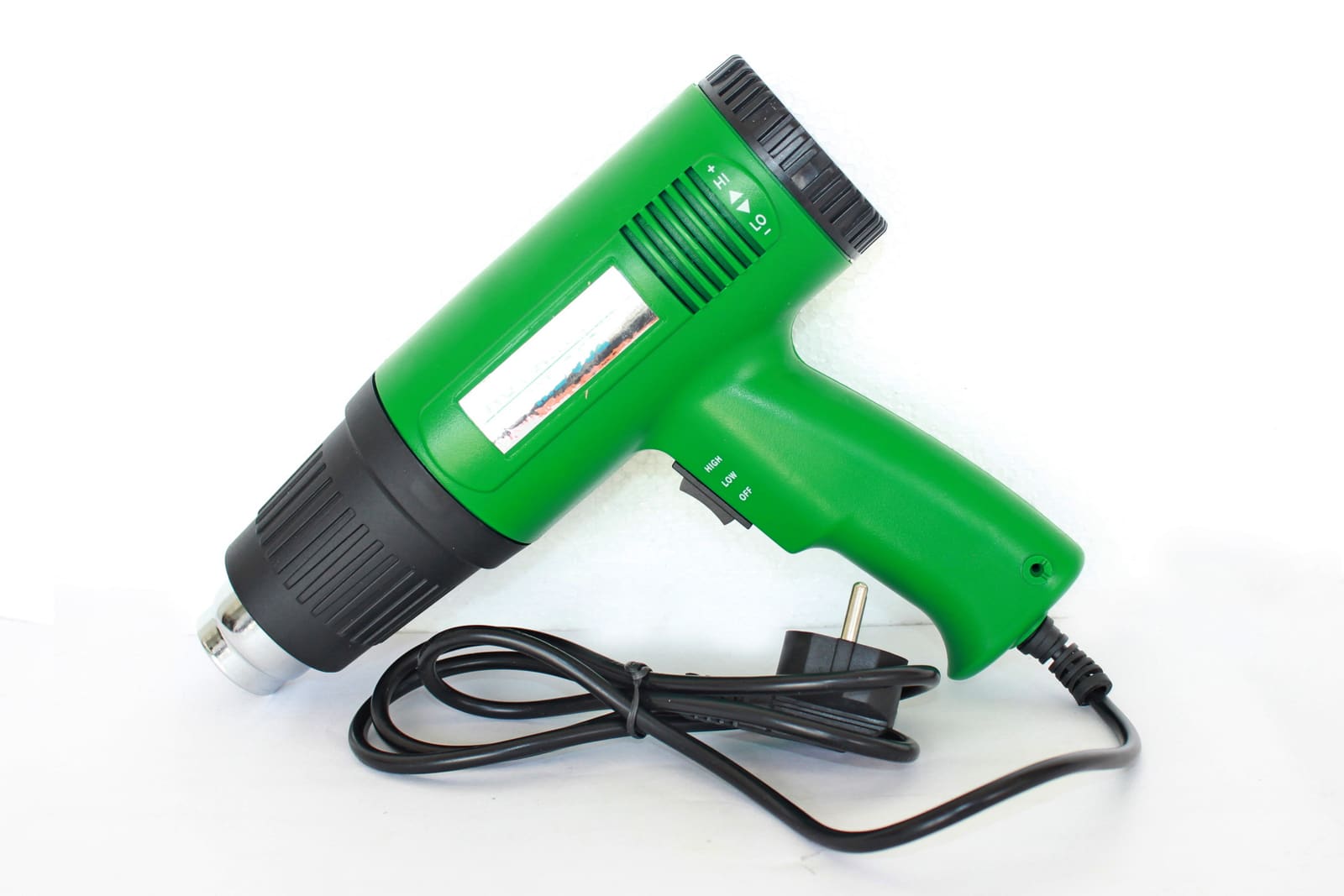
A heat gun on its low setting softens vinyl lettering so it peels off. Keep it moving so the gelcoat doesn't blister. Photo: Suyash Dwivedi / Wikimedia Commons · CC BY-SA 4.0 Painted names, or names on a painted hull, are a different job: sanding through paint means refinishing. That's often a job for a pro (see "When to call a pro"). Our boat decals and graphics guide covers vinyl removal in more detail.
Old vinyl protects the gelcoat under it from sun, so a cleaner, brighter outline of the old letters often shows once they're off. Compound and polish the whole area (not just the letter shapes) to blend it, then wax. If the ghost still shows, plan the new name so it covers the same area, or ask a detailer to blend it. Don't paint over it.
- State-registered boats: there's no federal rule on where or how big the name goes. Keep it off the forward-half number area so it doesn't crowd your registration numbers; 33 CFR 173 bars other numbers there, and a clean bow is easier for officers to read.
- Documented boats: under 46 CFR 67.123, a recreational documented boat must have its name and hailing port marked together on a clearly visible exterior part of the hull, in Latin letters or Arabic or Roman numerals at least 4 inches tall. BoatUS notes there's no rule on font or color, and that adding the name on the bows is allowed but not required for recreational boats. The official number (on an interior structural part of the hull) doesn't change with a rename.
Mark a level baseline with masking tape, center the name, use the hinge method with masking tape and squeegee from the center outward. Our decals guide walks through the application.
The name is stored in more places than the hull:
- Insurance policy and towing membership: call your agent so a claim isn't delayed by a name that doesn't match.
- Marina, yacht club and storage contracts.
- MMSI registration: BoatUS explains that the information given when you get an MMSI is passed to the Coast Guard's distress database. If your MMSI came from BoatUS, log in and update the boat information. If you have an FCC ship station license, update it through the FCC: the FCC has announced that a change of vessel name on a ship station license is filed as an "administrative update" in its Universal Licensing System (ULS), not as a new license. The MMSI number itself stays the same after a rename; it's the registration details behind it that need the new name.
- EPIRB or PLB: NOAA says you must update your 406 MHz beacon registration whenever registered information changes. The vessel name is part of that record.
- AIS: the vessel name is part of the AIS data your unit broadcasts. Some units let you change it once, others need the dealer; check your manual.
- State agency: if your state records the name, update it. If the boat is documented and also state registered, update the state too.
- Lender: send a copy of the new COD if the boat is financed.
Swap the life ring lettering, dinghy name, nameboards, cushions and anything else you removed in step 5 for new-name versions. Change the name on your float plan template, emergency card by the VHF and the boat's record in the BoatMend app.
Plenty of boaters won't rename a boat without one, and it's a good excuse for a party. The traditional version, as told by Discover Boating and BoatUS, goes roughly like this:
- Denaming first. With the old name gone from the boat, write it in water-soluble ink on a metal tag. Ask Poseidon to strike the old name from his "Ledger of the Deep," drop the tag over the side and pour a libation into the sea.
- Naming. Ask Poseidon to record the new name and grant the boat safe passage, and pour another libation.
- The winds. Many versions finish by toasting the gods of the four winds, facing north, west, east and south in turn.
- Then bring the first new-name item aboard (or uncover lettering you've already applied).
Discover Boating suggests keeping new-name items off the boat until the ceremony is done, or keeping the new lettering covered. BoatUS's author advises not cheaping out on the champagne. Be kind to the water: skip glitter, balloons and anything that won't break down, and be careful with glass. If you want to break a bottle, BoatUS suggests a pre-scored bottle in a mesh bag, swung at a strong metal fitting like the anchor rather than the gelcoat.
Keep the new COD (or registration) aboard as your state or the Coast Guard requires, a copy at home and a photo on your phone. Photograph the new name and hailing port for your insurer and the boat's file. Keep the old certificate, bill of sale and logbook together; they're part of the boat's history when you sell it.
Common mistakes
- Lettering the new name on a documented boat before the new certificate arrives, so the boat no longer matches its paperwork.
- Forgetting the lender's consent when there's a recorded mortgage, which stalls the NVDC application.
- Paying a look-alike "documentation service" several times the NVDC fee.
- Painting over or vinyl-covering the old name instead of removing it.
- Scraping vinyl off with a steel blade and gouging the gelcoat.
- Updating the hull but not the MMSI, EPIRB registration or AIS, so rescuers see the old name.
- Choosing a long, punny name that nobody can understand over the radio.
- Leaving off the hailing port, or using a hailing port without the state, on a documented boat.
When to call a pro
- The old name is painted on, or the hull is painted, and removing it means sanding and refinishing
- The ghost of the old name won't polish out, or the gelcoat is chalky or thin
- Large, curved or multicolor lettering on a big transom: a sign shop can measure, design and install it
- The boat is documented and financed, or owned by an LLC or trust, and the paperwork is confusing: call the NVDC, your lender or a documentation professional you hire knowingly
- Your AIS unit needs dealer programming to change the vessel name
Tips
- Order the new lettering with a spare set; vinyl can tear on application.
- Ask your sign shop for a printed proof at full size and tape it on the transom before you order.
- Do the paperwork in the off-season, when the boat isn't being used and processing delays don't cost you boating days.
- Take a "before" photo of the old name for the boat's history file.
- If you're buying a boat and plan to rename it, fold the name change into the documentation transfer so you file once.
Official references
We read these to write this guide. Your engine's own manual always wins.
- eCFR – 46 CFR 67.117, Vessel name designation
- eCFR – 46 CFR 67.119, Hailing port designation
- eCFR – 46 CFR 67.123, Name and hailing port marking requirements
- eCFR – 46 CFR 67.167, Requirement for exchange of Certificate of Documentation
- eCFR – 46 CFR 67.145, Restrictions on exchange; mortgagee consent
- eCFR – 46 CFR 67.329, Unauthorized name change
- eCFR – 46 CFR 67.550, Fee table
- U.S. Coast Guard – National Vessel Documentation Center (eStorefront notice)
- BoatUS Magazine – What's In A Name? (2026)
- BoatUS – U.S. Coast Guard Vessel Documentation FAQs (2020)
- BoatUS – USCG lettering requirements
- BoatUS – Boat name ideas and tips
- BoatUS – MMSI numbers and DSC radios
- FCC – Change of Vessel Name Is Made Under Administrative Update (ULS ship station licensing)
- NOAA SARSAT – Register your beacon
- Discover Boating – Ceremony for Renaming Your Boat
Safety: BoatMend is for information only and does not replace a certified marine technician. You are responsible for your safety and your boat. Read the full disclaimer.
Last updated 2026-10-25
Related guides
How to Remove and Apply Boat Names, Graphics and Registration Decals
Take off old vinyl names and graphics without scratching the gelcoat, clean up the glue and the "ghost" outline, then apply new lettering straight and bubble-free, and display your registration numbers the way federal rules require.
Boat Registration Numbers and Validation Decals: Federal Display Rules, State Placement and Renewals
Display your state registration number and validation decal the way federal rules (33 CFR 173 and 174) and your state require: size, block style, contrast, spacing, placement on the forward half, decal position, what documented boats show instead (name and hailing port), what to carry aboard, and how to never miss a renewal. States add their own details, so check your state boating agency.
USCG Documentation Renewal: When, How, What It Costs and How to Avoid Look-Alike Renewal Mailers
Keep your boat's Coast Guard Certificate of Documentation current: how long a recreational certificate lasts (1 to 5 years), the federal fee schedule, renewing directly with the NVDC online, what happens if it lapses, why many states still want registration and a decal, and how to spot the third-party letters that charge several times the real fee.
Set Up Your VHF Radio: MMSI, DSC, GPS Hookup and Radio Checks
Get a free or low-cost MMSI number, program it into your DSC radio, connect your GPS so a distress alert sends your exact position, check the antenna, and learn the Channel 16 rules and the right way to do a radio check.
EPIRB and PLB Care: Registration, Batteries, Self-Test and Mounting
Keep your 406 MHz emergency beacon ready to work on the worst day of your life. Register it free with NOAA and renew every two years, track the battery and hydrostatic release dates, run the self-test without triggering a false alert, and know what happens after you press the button.
AIS on Your Boat: Receiver vs. Class B, MMSI Programming, Antennas and Checking You're Seen
Choose between a receive-only AIS and a Class B transponder, get the MMSI programmed the legal way, sort out the GPS and VHF antenna (or splitter), confirm other boats and the Coast Guard actually see you, and understand silent mode and AIS man-overboard beacons.
Used Boat Paperwork: Titles, Liens, HIN Checks, Bill of Sale and Registration
A practical checklist for the paperwork side of buying a used boat: state title or Coast Guard documentation, checking for liens and theft, verifying the hull ID number, writing a proper bill of sale, the trailer's own title, registering in your name, and transferring warranties and checking recalls. Rules vary by state, so confirm each step with your state agency.
Used Boat Purchase Agreement and Closing: Deposit, Contingencies, Bill of Sale and Who Pays What
A plain-English walk-through of buying a used boat on paper: getting ready before you offer, what the purchase and sale agreement should say, how the deposit is held and when it comes back, survey, sea trial, financing and insurance contingencies, paying off the seller's loan, the bill of sale, closing and transferring the paperwork, and the costs each side usually covers. Practical help, not legal advice; rules vary by state.
Financing a Boat: Loan Terms, Survey and Insurance Requirements, Liens and the True Cost of Ownership
Understand a boat loan before you sign: typical terms and down payments, what lenders check, why they want a survey and insurance, how the lien is recorded (Coast Guard preferred mortgage for documented boats, state title for the rest), how the payoff works when you sell, and how to add up the real yearly cost beyond the monthly payment. Practical guidance, not financial advice.
How to Prepare Your Boat for an Insurance or Condition Survey
Get ready for a marine survey your insurer or lender asked for: what a SAMS or NAMS surveyor looks at, the common findings you can fix beforehand (hose clamps, seacocks, bilge, fire extinguishers, wiring), the paperwork to have ready, and how to handle the recommendations afterward.