Used Boat Purchase Agreement and Closing: Deposit, Contingencies, Bill of Sale and Who Pays What
A plain-English walk-through of buying a used boat on paper: getting ready before you offer, what the purchase and sale agreement should say, how the deposit is held and when it comes back, survey, sea trial, financing and insurance contingencies, paying off the seller's loan, the bill of sale, closing and transferring the paperwork, and the costs each side usually covers. Practical help, not legal advice; rules vary by state.
Time
4 h
Applies to
All engines
Safety first: This is practical help, not legal advice. A signed offer is a binding contract, so read every page before you sign and have a marine attorney review anything you don't understand, especially for an expensive, financed or documented boat. Contract, title and tax rules vary by state. Never hand over the full price before you hold the signed title or documentation papers, a bill of sale and any lien release, or before a closing service you chose confirms everything is in order.
Owners often ask
- How much deposit should I put down on a used boat, and when do I get it back?
- Who pays for the survey and haul-out when buying a used boat?
- The boat I want is in winter storage for three months and the broker won't hold it without a signed offer. How do I protect my deposit?
This guide walks you through it. Still stuck? Ask the AI Mechanic about your engine.
Tools
- Written purchase and sale agreement (standard form or your state's form)
- Phone camera (photos of the HIN, title, signed papers)
- Calendar for the contract deadlines
Before you start
How much paperwork you need depends on the boat. BoatUS (2025) says a small, inexpensive used boat bought for cash can sometimes be done in a day, like a car: both sides meet, the money is exchanged for the signed title and a bill of sale, no deposit needed. That's simple, but it gives little protection to either side and can leave the transfer paperwork incomplete.
For a bigger boat, BoatUS says to plan on about a month between offer and closing, with a series of steps: deposit, survey and trial run, acceptance, then closing. This guide follows that order. Even for a small boat, a short written agreement and a good bill of sale are worth the half hour.
Steps
BoatUS reminds buyers that an offer is a binding contract and that a seller might say yes to a low offer. Before you make one:
- Line up where the boat will live (slip, storage or driveway space).
- Get insurance quotes; some insurers want a survey first.
- Talk to lenders if you need financing. BoatUS notes boat loans often work more like a mortgage than a car loan, with financial statements and tax returns. Mercury points out that boat loans can now run much longer than car loans (it mentions terms up to 20 years), which lowers the payment but raises the total interest; compare the full cost, not just the monthly number.
- Budget for the costs that pile up at once: survey, haul-out, insurance, storage, taxes and fees.
- Check your calendar. You'll want to attend the survey and trial run, and you need time to take the boat away after closing.
Whether or not a broker is involved, BoatUS (2025) recommends making the offer in writing on a purchase and sale agreement (PSA). Standard forms written by attorneys for broker associations are designed to protect everyone. If a brokerage uses its own form, ask where it came from, because a rewritten form may protect you less. For private sales, Discover Boating notes some states publish their own boat purchase agreement forms, and some require the agreement to be notarized.
Read the whole thing, ask questions, and don't sign what you don't understand. Terms can be negotiated.
Before you write the number, ask the broker whether there are other offers on the boat. A longtime BoatUS consumer-affairs adviser lost a clean boat by a few hundred dollars because she assumed a slow market and a counteroffer; there was already another offer. Bid realistically on a boat you really want.
BoatUS lists the minimum content of a boat sales agreement. Make sure yours has:
- Full names and addresses of buyer and seller
- A full description: make, model, year, HIN, and engine serial numbers
- The trailer's serial number (VIN), if one is included
- A complete equipment list of what conveys with the boat, and anything excluded
- The price, the deposit, and how the balance will be paid
- Separate prices for the boat, the motor and the trailer (states often tax and register the trailer separately)
- A delivery or closing date and place
- The boat's condition at delivery, and whether it is sold "as is" or with any warranty
- Your contingencies (step 5)
- A statement that the boat is free of liens and encumbrances
If a broker filled in details like engine hours or tank sizes, BoatUS warns the information is only as good as what the seller provided; check it.
- Amount: the International Yacht Brokers Association (IYBA) says the pleasure-boat industry standard is a deposit of 10 percent of the offer. On a private sale of a small boat it's whatever you agree; write it down.
- Timing: BoatUS says the deposit is typically made within two to three days after the offer is accepted.
- Who holds it: a neutral third party both sides trust. IYBA lists a broker's trust account, an attorney's trust account, a bank or escrow service, or a joint account. Never wire a deposit to a stranger, and never use an escrow company the seller insists on; see our boat-buying scams guide.
- What happens to it: the agreement should say exactly when the deposit is refunded and when the seller can keep it. IYBA notes most fights over failed deals are about who broke the agreement and who gets the deposit.
Contingencies are the conditions that let you back out and get your deposit back. BoatUS says to spell out that the sale depends on:
- A satisfactory survey
- A satisfactory sea trial or trial run
- Getting acceptable financing
- Getting acceptable marine insurance
Discover Boating adds a mechanical inspection as a common contingency. IYBA notes that the refund only works if the buyer notifies the seller within the time the contract allows. So the dates matter as much as the conditions: write down the deadline for each one and how notice must be given (for example, in writing by email).
Boat in winter storage? Owners often ask what to do when the boat is shrink-wrapped or stacked in a heated building for months and the seller won't take it off the market without a signed offer. That's normal. Make the offer with a deposit held in escrow, and set the survey and sea trial deadlines for a date after the boat can realistically be launched, with the refund terms spelled out if it can't be.
BoatUS (2025) also warns not to lean on these "outs" to escape a deal you weren't ready for. If your financing or insurance plans aren't really in place, you can still lose the deposit or end up in an awkward dispute.
BoatUS (2026) says to start the survey process as soon as the offer is accepted:
- You choose and pay the surveyor. The surveyor works for you, not the seller, broker or lender, and the report belongs to you. Check which surveyor associations (SAMS or NAMS) your insurer and lender accept.
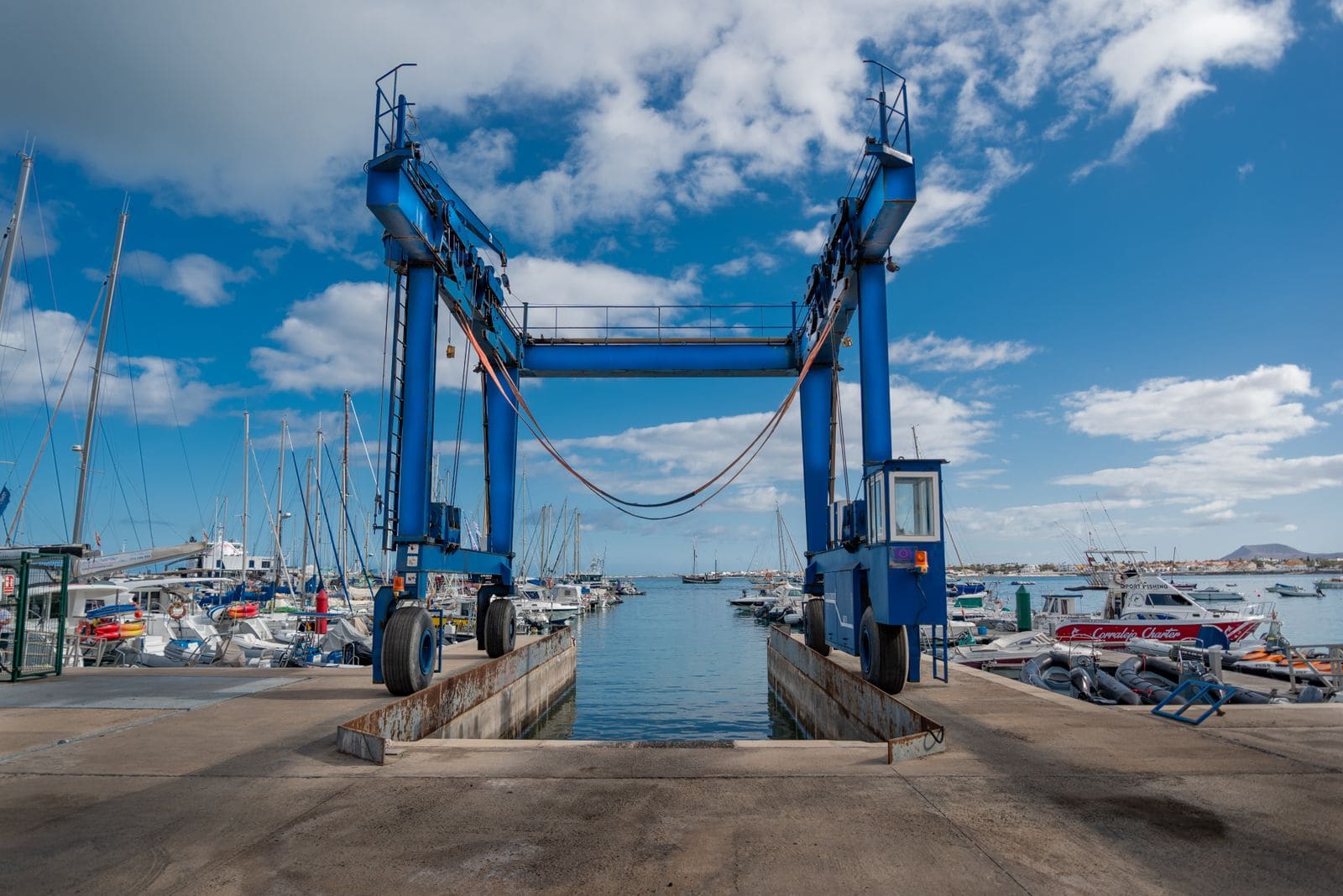
- A typical pre-purchase survey includes an in-water inspection, a short haul-out to see the bottom, and a trial run.
- The seller (or their captain) runs the boat. The boat still belongs to the seller, so neither the buyer nor the buyer's broker should drive it, especially near the dock.
- Ask for a cold start. Ideally the engines haven't run for 24 hours, so the surveyor can watch the first start.
- Consider an engine survey by a mechanic for that engine brand when the engines are a big part of the boat's value, and a rigging survey on a sailboat.
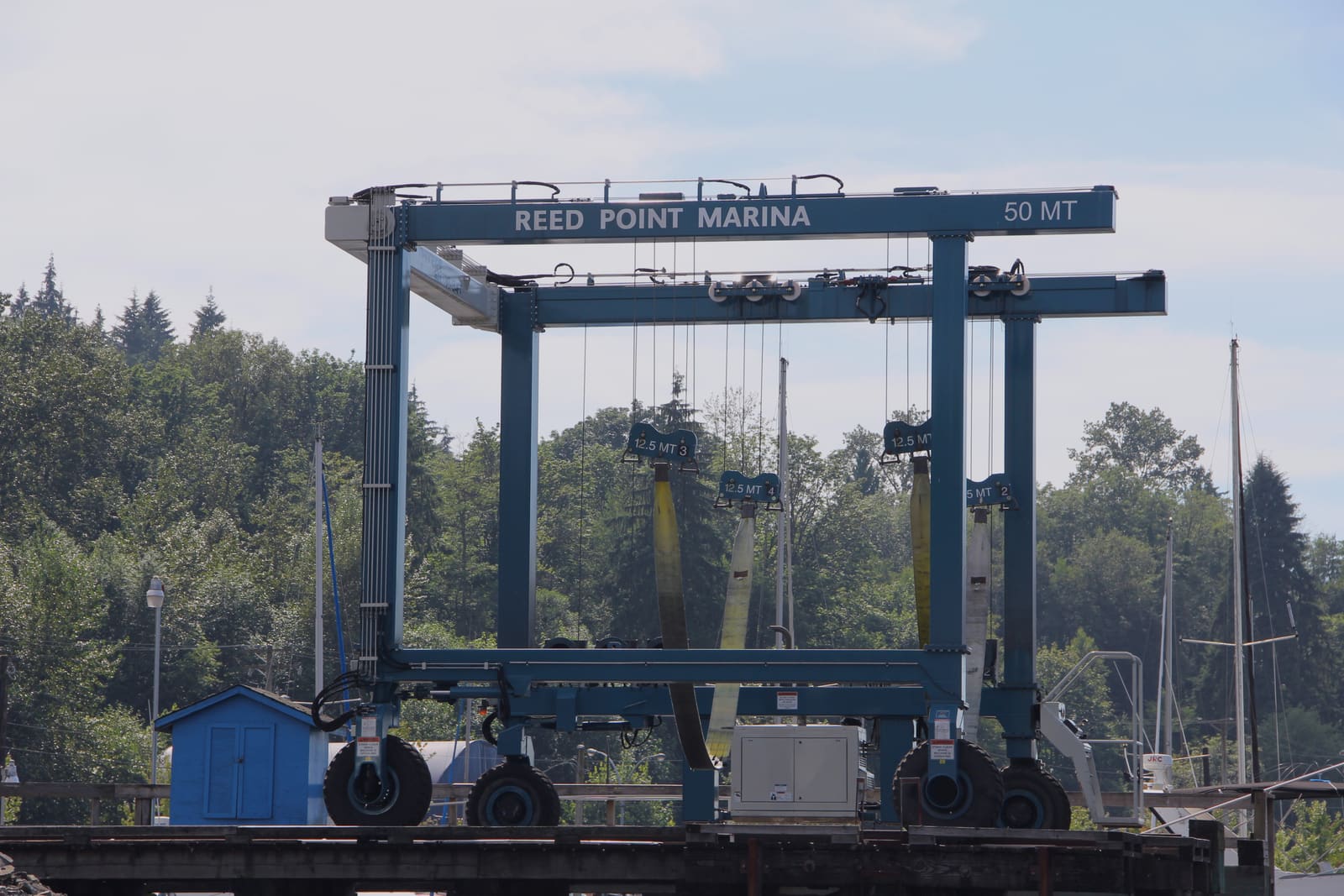
A travel lift like this one does the short haul during a pre-purchase survey, so the surveyor can see the bottom, running gear and anodes. Photo: ~riley / Wikimedia Commons · CC BY-SA 3.0 BoatUS says a survey report usually takes three to four days to arrive and can run about 30 pages. It recommends setting the acceptance date in your agreement at least a week after the survey, so you have time to read it, ask the surveyor questions, and renegotiate if needed.
After the survey and trial run you have three choices:
- Accept the boat as is, and sign the acceptance by the deadline.
- Renegotiate. Big findings or a survey valuation well below your offer are fair reasons to ask for a lower price or for the seller to fix something before closing. Put any new price or repair promise in a written amendment signed by both sides. If the seller is paying a yard for repairs, list the specific jobs in the amendment and ask for the yard's invoice before closing; otherwise you can't tell what the money actually bought. The same BoatUS buyer also suggests reading the yard's warranty on that work and checking whether it transfers to you, since there's no standard warranty length for service work, and testing the repaired items right away.
- Reject the boat under your contingency, in writing, before the deadline, and ask the escrow holder to return your deposit as the agreement says.
Never let a deadline pass while "waiting to hear back." Silence can count as acceptance in some agreements.
BoatUS explains that a bank loan normally has to be paid off before the title can transfer. If the seller still owes money:
- Close at the lender's office, or through your closing service, so part of your payment goes straight to the lender.
- Get the lender's written payoff amount and, after payment, the lien release (or the clean title) before the rest of the money goes to the seller.
- For a documented boat, BoatUS suggests checking with the Coast Guard's documentation center whether any mortgage or lien is recorded. Our paperwork guide explains how to request the Abstract of Title.
The bill of sale is the receipt that proves the deal. Discover Boating says it should include:
- Buyer's and seller's names, addresses and contact information
- The boat's brand, model, year, length and HIN
- An outboard motor listed separately with its serial number
- A trailer listed separately with its VIN
- A separate price for the boat, the motor and the trailer
- Equipment included (electronics, trolling motor, spare props), with serial numbers when available
- Date of sale and signatures of everyone on the title
Discover Boating notes a state bill of sale isn't for Coast Guard documented boats, which use separate forms. BoatUS says the seller of a documented boat should complete the Coast Guard bill of sale (form CG-1340); get the current form from the Coast Guard documentation center's website.
- Funds: BoatUS (2025) says brokers accept only wires, and many banks still require you to come in person to send one. Plan for that day.
- Signatures: you usually don't need to be in the same room, but documents may need to be signed, notarized and mailed, which takes time.
- Verify wiring instructions by calling a number you already know for the closing service. Don't trust new instructions sent by email.
- What you should hold at the end: the signed title (or documentation bill of sale), the bill of sale, any lien release, the trailer's title or registration where required, keys, manuals and service records.
- Risk passes to you. BoatUS notes the boat becomes your responsibility the day you close, so have insurance in force and a plan to move or store it.
Customs vary by region and broker, so write the split into the agreement. Common practice:
- Usually the buyer: the survey (BoatUS says you hire and pay the surveyor), the haul-out for the survey, any engine or rigging survey, sales or use tax, title and registration fees, documentation fees, insurance and transport.
- Usually the seller: paying off their own loan and liens, getting the boat to the survey and running it for the trial, and the listing broker's commission when there is one.
- Negotiable: escrow or closing fees (often split), slip or storage fees on closing day (BoatUS suggests agreeing whether dockage is prorated), and "extras" like a tank of fuel left aboard.
- Transfer the title and registration into your name within your state's deadline; late filing can bring penalties. Our paperwork guide covers this step by step.
- Example, Texas: Texas Parks and Wildlife says the transfer must be filed within 45 working days of the purchase or tax penalties and interest apply. Outboard motors there have their own titles, trailers are titled separately through the county tax office, and a handwritten bill of sale must list the trailer's price separately. TPWD suggests buyer and seller go to the office together, so any title problem can be fixed on the spot, and warns that a purchase without the title and bill of sale may only be titled through a slower, more expensive bonded-title process. Check your own state's rules; they differ.
- Keep a folder with the agreement, amendments, survey, bill of sale, lien release and closing statement. You'll need it for taxes, insurance and the day you sell.
- Send the survey's safety findings to the top of your to-do list before the first trip.
Common mistakes
- Making an offer before storage, insurance and financing are lined up, then hoping the contingencies will save the deposit.
- Letting a contingency deadline pass without written notice.
- Paying the seller directly while a bank loan is still on the boat.
- Leaving the trailer or outboard out of the agreement and bill of sale.
- Agreeing to price changes or repairs by phone, with nothing signed.
- Driving the seller's boat during the trial run.
- Accepting wiring instructions sent in a surprise email.
When to call a pro
- The boat is expensive, financed, documented, or in another state or country: a marine attorney, documentation professional or closing service is worth the fee
- The seller still owes money on the boat, or there's a lien without a release
- The seller is an estate, a company or someone other than the owner on the title
- You and the seller disagree about who broke the agreement or who gets the deposit
- You want a broker to represent only you: ask a buyer's broker; BoatUS notes a seller's broker dealing with an unrepresented buyer often acts as a go-between for both sides
Tips
- Avoid "first and only offer" language; BoatUS says it sets a combative tone.
- Ask whether the seller will include extras such as dockage time or a tank of fuel.
- Attend the survey. BoatUS calls survey day your chance to learn more about the boat than you would in a year of owning it.
- Keep every signed page as a PDF in your email so you can find it later.
- Get a closing statement that lists every dollar: price, deposit credit, payoff, fees and the amount to the seller.
Official references
We read these to write this guide. Your engine's own manual always wins.
- BoatUS – How To Make An Offer On A Used Boat (2025)
- BoatUS – Sales Contracts (what a boat sales agreement should include)
- BoatUS – Lessons Learned In Buying A Boat (2017)
- BoatUS – The Boat Survey (2026)
- BoatUS – After the Sale Details (titles, liens, documentation)
- Discover Boating – Boat Bill of Sale and Purchase Agreements
- Discover Boating – How to Buy a Pre-Owned Boat from a Private Seller
- International Yacht Brokers Association – Money Matters, Escrow Agents and Deposits
- Texas Parks and Wildlife – Buying and Selling a Boat (title, bill of sale, 45-working-day transfer)
- Mercury Marine – Five Things to Know When Buying a Boat and Financing It
Safety: BoatMend is for information only and does not replace a certified marine technician. You are responsible for your safety and your boat. Read the full disclaimer.
Last updated 2026-10-25
Related guides
Used Boat Paperwork: Titles, Liens, HIN Checks, Bill of Sale and Registration
A practical checklist for the paperwork side of buying a used boat: state title or Coast Guard documentation, checking for liens and theft, verifying the hull ID number, writing a proper bill of sale, the trailer's own title, registering in your name, and transferring warranties and checking recalls. Rules vary by state, so confirm each step with your state agency.
Avoiding Boat-Buying Scams: Fake Listings, Fake Escrow, Overpayment Checks and Safe Payment
How to spot and avoid the scams that target boat buyers and sellers: too-good-to-be-true listings, sellers who are always overseas, look-alike escrow and shipping websites, overpayment checks and fake payment notices. Covers verifying the boat, the title, the HIN and the seller, paying safely, and what to do fast if you already sent money. Practical help, not legal advice.
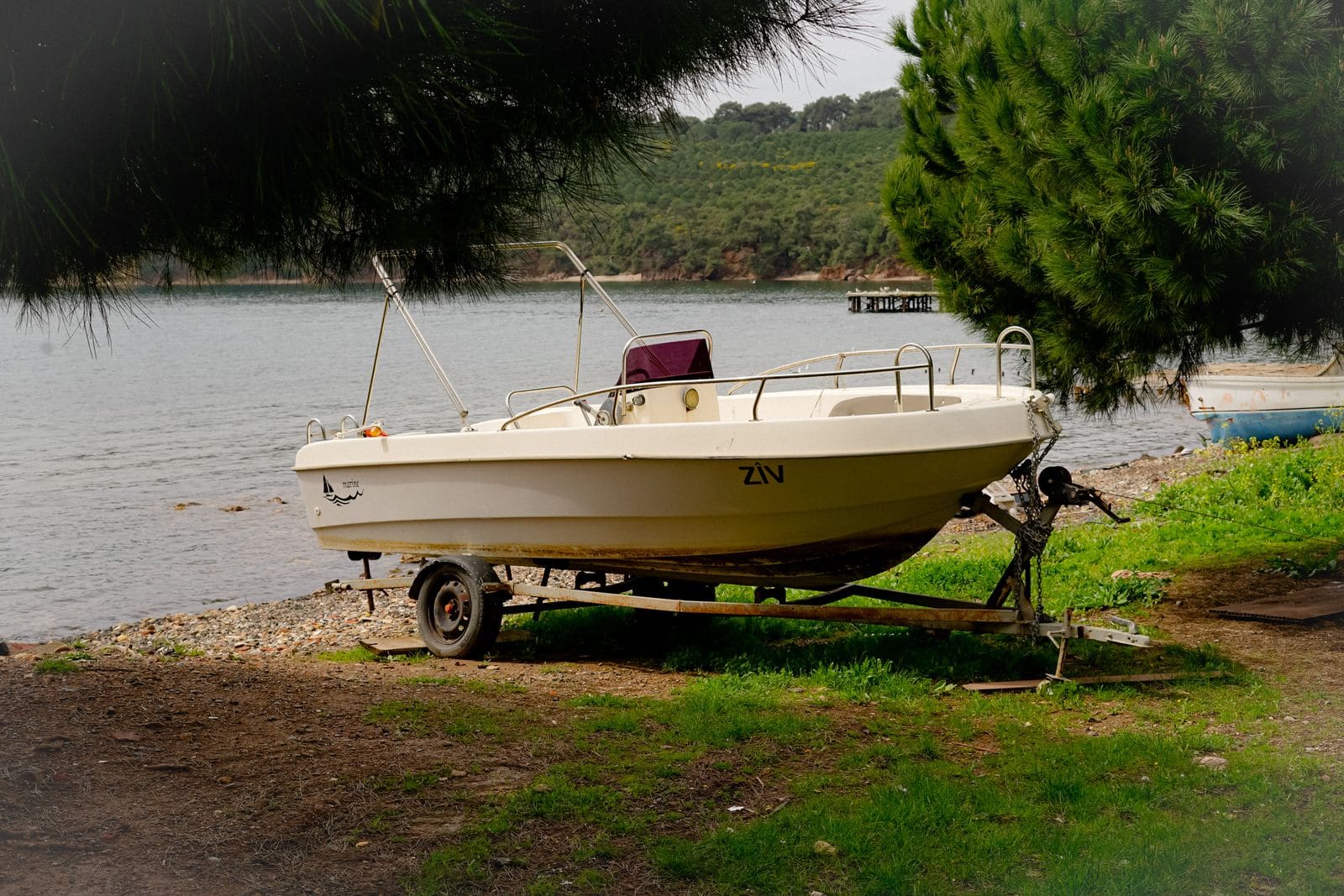
How to Inspect a Used Boat Before You Buy
A step-by-step checklist for looking over a used boat, from paperwork and the hull ID number to the transom, engine, compression test, sea trial and trailer. Know what to check yourself, what the red flags mean, and when to pay a marine surveyor.
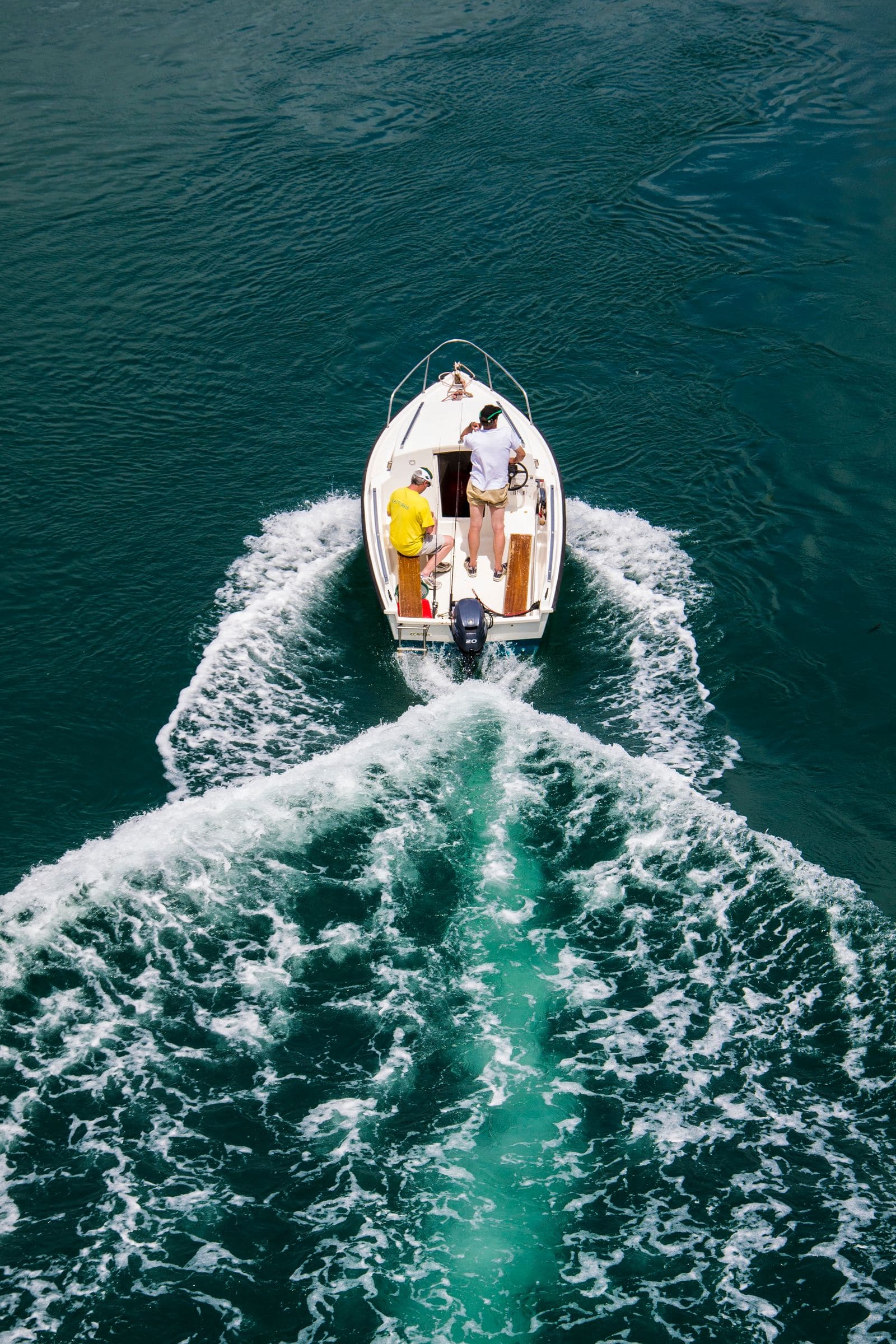
How to Sea Trial Your Boat After Maintenance or Repair
A step-by-step test run after service work: dock checks first (leaks, fluids, steering, kill switch), then a gradual climb through the RPM range while you watch temperature and pressure, a wide-open-throttle check against your engine's spec, shifting and trim tests, and a bilge check afterward. Catch a loose clamp or a missed step at the dock, not miles out.
How to Prepare Your Boat for an Insurance or Condition Survey
Get ready for a marine survey your insurer or lender asked for: what a SAMS or NAMS surveyor looks at, the common findings you can fix beforehand (hose clamps, seacocks, bilge, fire extinguishers, wiring), the paperwork to have ready, and how to handle the recommendations afterward.
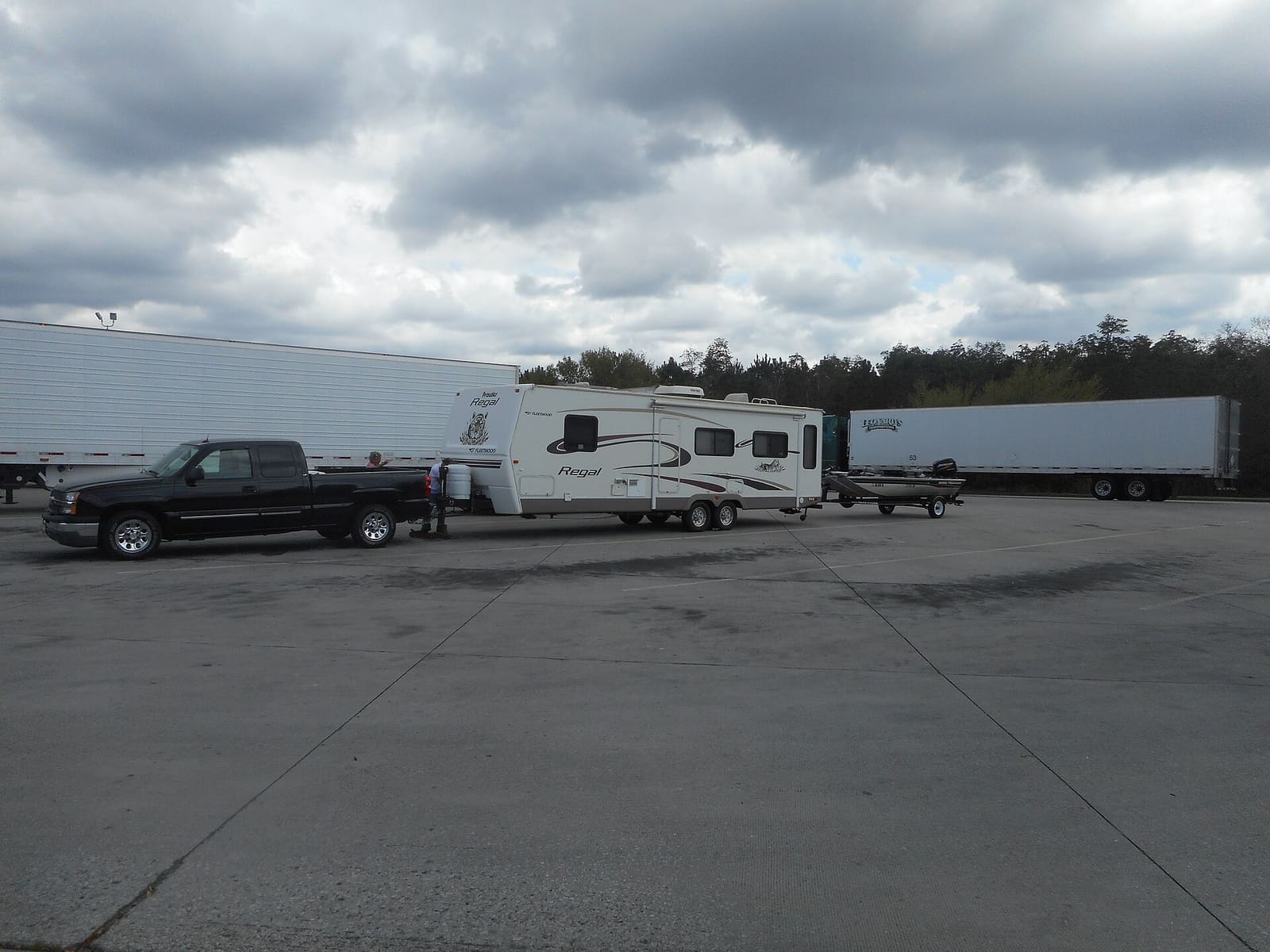
Buying a Boat in Another State: Survey, Paperwork, Taxes, Registration and Getting It Home
A step-by-step plan for buying a boat that is hundreds of miles away: checking it remotely with a local surveyor, matching the HIN and VIN to the title, avoiding long-distance scams, paying the right sales or use tax, registering in your home state, the trailer's own paperwork, temporary permits, and legal towing or professional transport for wide boats. Rules vary by state, so confirm each step with the agencies involved.

How to Get Your Boat Ready to Sell (Records, Title and Prep)
Prepare your boat for sale the way buyers and surveyors expect: gather the title, registration and HIN paperwork, organize your maintenance records and receipts, fix the small stuff, detail the boat, get it ready for a sea trial and buyer's survey, and close the deal with the right documents.