USCG Documentation Renewal: When, How, What It Costs and How to Avoid Look-Alike Renewal Mailers
Keep your boat's Coast Guard Certificate of Documentation current: how long a recreational certificate lasts (1 to 5 years), the federal fee schedule, renewing directly with the NVDC online, what happens if it lapses, why many states still want registration and a decal, and how to spot the third-party letters that charge several times the real fee.
Time
30 min
Applies to
All engines
Safety first: An expired Certificate of Documentation can leave your boat without valid federal paperwork, which can mean trouble at a boarding, a delayed insurance claim, a stalled sale or a problem entering a foreign port. Renew only through the Coast Guard's National Vessel Documentation Center (NVDC); third-party sites and mailers are not the Coast Guard. This guide is practical help, not legal advice: fees and procedures come from 46 CFR Part 67 and can change, and each state sets its own registration rules for documented boats.
Owners often ask
- I got a letter saying my Coast Guard documentation is due and it costs over $100. Is that legit?
- My boat is documented with the Coast Guard. Why is my state still asking me to register it?
- I bought a documented boat and the Coast Guard certificate expired years ago. What do I do?
This guide walks you through it. Still stuck? Ask the AI Mechanic about your engine.
Tools
- Your current Certificate of Documentation (COD) and the official number
- Computer or phone with a card for the federal fee
- Calendar or phone reminders
Before you start
What documentation is. BoatUS describes Coast Guard documentation as registering a boat at the federal level with the NVDC; the Certificate of Documentation (COD) establishes ownership and nationality. To qualify, a recreational boat must be wholly owned by a U.S. citizen and measure at least five net tons (46 CFR 67.9 excludes anything smaller). BoatUS says boats roughly 25 to 27 feet and up usually meet that, but it's a volume measurement, not a length rule.
Why people document. BoatUS lists three common reasons: easier entry to foreign ports (the COD is recognized internationally), not wanting state numbers on the bow, and a lender that requires it because documented boats qualify for a preferred ship mortgage.
Documentation is not the same as state registration. BoatUS notes that a documented boat can't also be titled by a state, but some states still require documented boats to register with them and pay state taxes. Texas, for example, requires documented boats that need Texas registration to show only the validation decal on both sides of the bow, not the TX number. Check your state boating agency.
Have ready: your current COD (it shows the official number and expiration date), the owner's contact details, and a card for the fee.
Steps
Look at your COD. Under 46 CFR 67.163, a recreational endorsement is valid for 1, 2, 3, 4 or 5 years, depending on what was chosen when it was issued or last renewed. (Commercial endorsements, and a COD that carries both recreational and commercial endorsements, are valid for one year only.) Put the date in your phone now with reminders 60 and 30 days ahead.
About older articles: BoatUS reported in 2020 and 2021 that recreational documentation would move to five-year-only renewals in 2022. The regulation was later amended, and the current eCFR text (checked October 2026) again allows 1 to 5 years. Trust the current regulation and the NVDC site over older articles.
BoatUS says to expect a renewal notice from the Coast Guard about 45 days before expiration. Mail gets lost and addresses change, so treat the notice as a backup, not your reminder. If your mailing address has changed, that's also something you have to report (step 9).
The federal fee table (46 CFR 67.550, checked on the eCFR in October 2026) lists recreational renewal at:
- 1 year: $26
- 2 years: $52
- 3 years: $78
- 4 years: $104
- 5 years: $130
- Late renewal: an extra $5 on top of the renewal fee
These are federal fees and can change. Check the NVDC site for the current schedule before you pay. If someone is asking you for far more than this for a simple renewal, you're probably not dealing with the Coast Guard.
The NVDC lets recreational owners renew online through its own website, the NVDC eStorefront (reach it from the National Vessel Documentation Center pages on the Coast Guard's dco.uscg.mil site). The renewal itself is the Vessel Renewal Notification, Application for Renewal (form CG-1280): under 46 CFR 67.163 you certify that the information on the COD is still accurate and that the certificate hasn't been lost, mutilated or wrongfully withheld. Pick how many years you want, pay the fee and save the receipt.
As of October 2026 the NVDC home page says its old main phone line is no longer monitored and that all documentation and payments must be submitted online through the eStorefront. The same page lists what the eStorefront handles: recreational renewals for 1 to 5 years, initial issue, exchange, replacement and reinstatement of a certificate, and requests for an abstract of title.
If something on the certificate is no longer true (new owner, new name, new hailing port, changed owner name), a plain renewal isn't the right form. See steps 8 and 9.
There's no discount for multiple years; the per-year fee is the same. Longer terms mean fewer chances to forget. But BoatUS (2021) noted the Coast Guard doesn't refund fees if you cancel documentation early or sell the boat during the term. If you're likely to sell soon, a shorter term may make sense.
BoatUS has warned for years about third-party companies that:
- Send letters with names or return addresses resembling the NVDC (which is in Falling Waters, West Virginia)
- Point you to websites with official-looking logos and Coast Guard boat photos
- Typically charge about three times what the NVDC charges, and push multi-year prepayments
- Offer "expedited" service, which the Coast Guard says gets no priority
BoatUS quotes a 2017 Coast Guard bulletin saying these companies don't act for the Coast Guard and can't issue any documentation, including travel letters or permits. They're legal, but you don't need them.
How to check a letter: the Coast Guard's own website is on the dco.uscg.mil domain. Type the address yourself instead of using a link or QR code from the letter, and compare the price against step 3.
If you got a misleading letter or already paid one: the Coast Guard statement BoatUS quotes points complaints to the Federal Trade Commission (ReportFraud.ftc.gov), and BoatUS also suggests reporting mail you think is deceptive to the U.S. Postal Inspection Service, which takes reports of mail-related crimes and fraud on its website. If you paid by card, call your card issuer quickly. Then renew directly with the NVDC anyway: a third party's receipt is not a Coast Guard renewal.
46 CFR 67.313 requires the person in command to have the original COD currently in effect on board (exceptions include a boat in storage or out of the water, or a certificate sent to the NVDC for exchange). Keep it in a waterproof sleeve with your state registration card if your state requires one, and keep a copy at home and a photo on your phone.
46 CFR 67.167(b) says a COD becomes invalid immediately when ownership changes, the boat's name changes or the hailing port changes. The new owner (or you, for a rename) applies to the NVDC for an exchange of the certificate. The recreational exchange fee in 67.550 is $84 for one year plus $26 for each extra year. BoatUS notes a sale uses a Coast Guard bill of sale (form CG-1340) or the transfer section on the back of the COD. If there's a recorded mortgage, the lender has to consent. See our renaming and purchase-and-closing guides.
Under 46 CFR 67.319, the owner must tell the Coast Guard about any change in the information the COD is based on (such as the managing owner's address) within 30 days. If you don't, the certificate is terminated at the end of that 30-day period. Moving house is the one owners forget. 46 CFR 67.113(e) separately requires the managing owner to report a new address within 30 days (the NVDC's general FAQ, last updated in 2025, still quotes an older 10-day rule, so just do it right away). The FAQ says to use the "I need to change my address" button in the eStorefront or change it while renewing; there's no charge, and only the managing owner can authorize it (a third party needs the owner's written authorization).
- Recently expired: renew as soon as you notice, and expect the late renewal fee on top.
- What lapsing means: under 46 CFR 67.171, failing to renew is one of the reasons a boat becomes subject to deletion from the roll of documented vessels. Failing to keep the required name and hailing port markings, or failing to exchange the certificate after a sale or rename, are others.
- If the boat was deleted: you can apply to return it to documentation (the fee table lists $84 for a recreational return), or switch to state registration. BoatUS notes that engine-powered boats must be either registered with a state or documented, so an undocumented motorboat needs state numbers before you use it.
- Financed boat: your loan papers probably require you to keep the documentation current. Call your lender if it has lapsed.
- Buying a boat whose COD expired: a common forum story is a seller who kept renewing the state registration but let the federal certificate lapse. Sort out the documentation status before you pay, with the NVDC's reinstatement and exchange options in the eStorefront (or state registration if the boat is deleted), and check the abstract of title for liens. Forum posts often link to private documentation sites; use the Coast Guard's own eStorefront.
Contact the NVDC directly if you're unsure where your boat stands.
If your state requires documented boats to register, its renewal is separate from the Coast Guard's and usually on a different cycle (often every year or two). Put both dates in your calendar. Display only the state decal if your state allows that for documented boats; documented boats show their name and hailing port (46 CFR 67.123) instead of state numbers.
Renewal time is a good moment to walk around the boat. The name and hailing port must be marked together on a clearly visible exterior part of the hull, at least 4 inches tall, and the official number must be permanently fixed inside on a structural part of the hull (see our registration numbers guide). Faded or missing markings are both a boarding problem and, under 67.171, a reason for deletion.
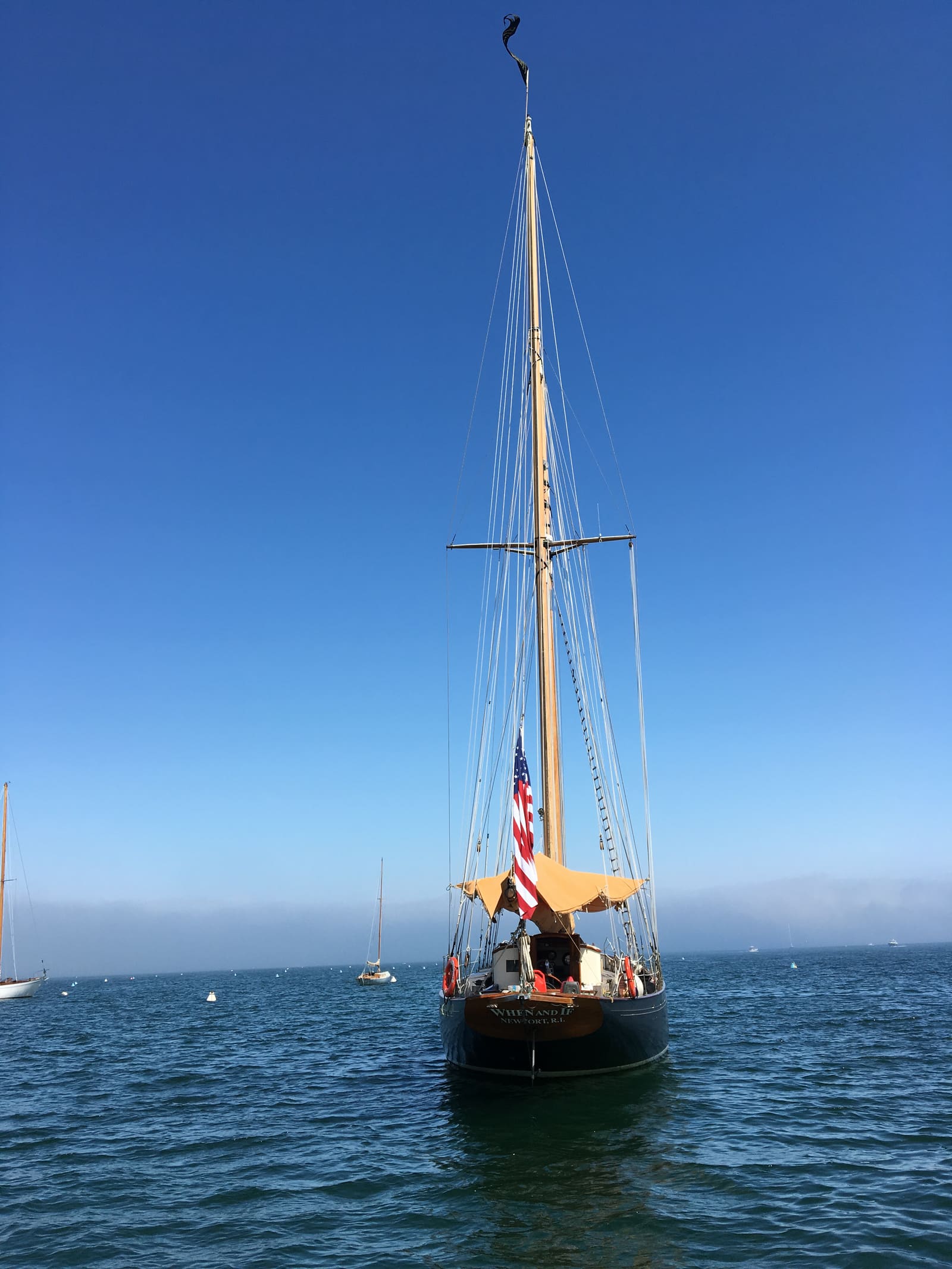
Name and hailing port (city and state) lettered together on the transom: the layout a documented recreational boat needs. Photo: Luciano Ramalho / Wikimedia Commons · CC BY-SA 4.0
Common mistakes
- Paying a look-alike service $100 or more for a renewal the NVDC does for $26 a year.
- Relying on the mailed notice and letting the certificate expire.
- Believing older articles that say five years is the only choice, or that renewal costs a flat amount.
- Filing a renewal when the boat has changed hands or been renamed; that needs an exchange.
- Moving and never updating the address with the NVDC.
- Forgetting the separate state registration and decal for a documented boat.
- Keeping only a photocopy aboard when the rule calls for the original certificate.
When to call a pro
- The boat's documentation was deleted, or ownership records are messy (estate, divorce, LLC or trust ownership): call the NVDC, and consider a maritime attorney or a documentation professional you choose knowingly, not one who found you by mail
- There's a lien or mortgage you didn't expect on the abstract of title
- You plan to take the boat to a foreign country and need to know what papers to carry
- Your lender, insurer or a buyer is asking for documentation you can't produce
Tips
- Choose a renewal term that lines up with when you expect to own the boat; there are no refunds for early cancellation.
- Keep a "boat papers" folder: COD, state registration, bill of sale, insurance and loan payoff letters.
- Set the reminder on two phones (yours and a family member's).
- If a letter about your documentation arrives, compare the sender and website to dco.uscg.mil before doing anything.
- When selling, have the buyer check the COD and renewal status as part of closing; our scams and escrow guide covers what else to check.
Official references
We read these to write this guide. Your engine's own manual always wins.
- eCFR – 46 CFR 67.163, Renewal of endorsement
- eCFR – 46 CFR 67.317, Requirement to renew endorsements
- eCFR – 46 CFR 67.550, Fee table
- eCFR – 46 CFR 67.517, Application for late renewal
- eCFR – 46 CFR 67.171, Deletion; requirement and procedure
- eCFR – 46 CFR 67.167, Requirement for exchange of Certificate of Documentation
- eCFR – 46 CFR 67.319, Requirement to report change in vessel status
- eCFR – 46 CFR 67.313, Requirement to have Certificate of Documentation on board
- eCFR – 46 CFR 67.9, Vessels excluded from or exempt from documentation
- eCFR – 46 CFR 67.123, Name and hailing port marking requirements
- eCFR – 46 CFR 67.113, Managing owner designation; address; requirement to report change of address
- U.S. Coast Guard – National Vessel Documentation Center (eStorefront notice)
- U.S. Coast Guard NVDC – FAQ, General Information (updated 10/2025)
- BoatUS – U.S. Coast Guard Vessel Documentation FAQs (2020)
- BoatUS Magazine – Boat Documentation Double Take (2021)
- BoatUS Magazine – A Warning On Vessel Documentation (2020)
- BoatUS – Consumer alert on look-alike documentation renewal notices
- Marine Fabricator – BoatUS warns of unofficial U.S. Coast Guard renewal letters (2025)
- U.S. Postal Inspection Service – Report a Crime
- FTC – ReportFraud.ftc.gov
- BoatUS – Boat Registration, Titling and Documentation (2019)
- Texas Parks and Wildlife – Numbers and Decals on Vessels
Safety: BoatMend is for information only and does not replace a certified marine technician. You are responsible for your safety and your boat. Read the full disclaimer.
Last updated 2026-10-25
Related guides
Boat Registration Numbers and Validation Decals: Federal Display Rules, State Placement and Renewals
Display your state registration number and validation decal the way federal rules (33 CFR 173 and 174) and your state require: size, block style, contrast, spacing, placement on the forward half, decal position, what documented boats show instead (name and hailing port), what to carry aboard, and how to never miss a renewal. States add their own details, so check your state boating agency.
Renaming a Boat: Paperwork, Removing the Old Name and the Optional Ceremony
Change your boat's name the right way: what a state-registered boat needs versus a Coast Guard documented boat (name change and hailing port go through the NVDC before you letter the hull), getting every trace of the old name off, lettering rules for documented boats, who else to tell (insurer, marina, MMSI, EPIRB, AIS), and the traditional renaming ceremony if you want the fun.

Financing a Boat: Loan Terms, Survey and Insurance Requirements, Liens and the True Cost of Ownership
Understand a boat loan before you sign: typical terms and down payments, what lenders check, why they want a survey and insurance, how the lien is recorded (Coast Guard preferred mortgage for documented boats, state title for the rest), how the payoff works when you sell, and how to add up the real yearly cost beyond the monthly payment. Practical guidance, not financial advice.
Used Boat Paperwork: Titles, Liens, HIN Checks, Bill of Sale and Registration
A practical checklist for the paperwork side of buying a used boat: state title or Coast Guard documentation, checking for liens and theft, verifying the hull ID number, writing a proper bill of sale, the trailer's own title, registering in your name, and transferring warranties and checking recalls. Rules vary by state, so confirm each step with your state agency.
Buying a Boat in Another State: Survey, Paperwork, Taxes, Registration and Getting It Home
A step-by-step plan for buying a boat that is hundreds of miles away: checking it remotely with a local surveyor, matching the HIN and VIN to the title, avoiding long-distance scams, paying the right sales or use tax, registering in your home state, the trailer's own paperwork, temporary permits, and legal towing or professional transport for wide boats. Rules vary by state, so confirm each step with the agencies involved.
Used Boat Purchase Agreement and Closing: Deposit, Contingencies, Bill of Sale and Who Pays What
A plain-English walk-through of buying a used boat on paper: getting ready before you offer, what the purchase and sale agreement should say, how the deposit is held and when it comes back, survey, sea trial, financing and insurance contingencies, paying off the seller's loan, the bill of sale, closing and transferring the paperwork, and the costs each side usually covers. Practical help, not legal advice; rules vary by state.
Avoiding Boat-Buying Scams: Fake Listings, Fake Escrow, Overpayment Checks and Safe Payment
How to spot and avoid the scams that target boat buyers and sellers: too-good-to-be-true listings, sellers who are always overseas, look-alike escrow and shipping websites, overpayment checks and fake payment notices. Covers verifying the boat, the title, the HIN and the seller, paying safely, and what to do fast if you already sent money. Practical help, not legal advice.

How to Get Your Boat Ready to Sell (Records, Title and Prep)
Prepare your boat for sale the way buyers and surveyors expect: gather the title, registration and HIN paperwork, organize your maintenance records and receipts, fix the small stuff, detail the boat, get it ready for a sea trial and buyer's survey, and close the deal with the right documents.
USCG Required Safety Equipment Check by Boat Length
Walk through your boat and confirm you carry every piece of safety gear the US Coast Guard requires for your boat's length and type, and that none of it is expired or worn out. Missing or expired gear is one of the most common tickets on the water, and it is the gear you need when things go wrong.
How to Prepare for a Free Vessel Safety Check
Volunteers from the Coast Guard Auxiliary and America's Boating Club will inspect your boat's safety gear for free, with no ticket if something is missing. Learn how to request a Vessel Safety Check, what the examiner looks at, how to get your boat ready and what to do with the fix list.