How to Test a Marine Diesel Lift Pump (Feed Pump): Flow Test, Vacuum Gauge and Warning Signs
The lift pump pulls diesel from the tank through the primary filter and feeds the injection pump. When it weakens, the engine starts hard, loses power or dies. Learn how to find it, tell a mechanical pump from an electric one, check it with the priming lever, run a simple flow test into a clear container, read a vacuum gauge on the primary filter, and spot a leaking diaphragm before it fills your oil with fuel.
Time
1 h
Shop would charge
$150-600
Applies to
Marine diesel
Safety first: You'll be opening fuel lines, so expect spilled diesel. No smoking, flames or sparks nearby, keep the engine-room hatch open for air, catch every drip with pads, and keep fuel off hot engine parts. Never loosen the steel high-pressure lines between the injection pump and the injectors for this test, and never put your hand near a leaking high-pressure line or injector while the engine cranks: a fine spray can be injected through the skin and needs emergency treatment. If you need to crank the engine, close the raw-water seacock first so the exhaust can't fill with water, and reopen it before the engine runs. If you smell fuel you can't find, or see fuel in the bilge, stop and call a mechanic; don't pump fuel-contaminated bilge water overboard.
Owners often ask
- How do I know if my diesel lift pump is bad or if it is just a clogged fuel filter?
- My diesel oil level keeps going up. Can the lift pump put fuel in the oil?
- Why does the priming lever on my diesel lift pump feel dead and not move any fuel?
This guide walks you through it. Still stuck? Ask the AI Mechanic about your engine.
Tools
- Clear plastic container or jar (a clean one you can seal and label)
- Short length of clear fuel-rated hose that fits the pump outlet
- Wrenches or a nut driver for the fuel line fittings and clamps
- Absorbent pads, rags and a sealable bag for oily waste
- Nitrile gloves and safety glasses
- Multimeter (for electric lift pumps)
- Fuel vacuum gauge on the primary filter (many boats have one fitted)
Parts & supplies
- Sealing washers or O-rings for any fitting you open, as your manual lists
- Spare primary and secondary fuel filter elements
- Replacement lift pump for your engine, only once it has tested bad
Before you start
What the lift pump does: on a typical mechanical diesel, fuel goes from the tank through a coarse primary filter (often a water separator with a clear bowl), then to the low-pressure lift pump, which pushes it through the fine secondary filter on the engine and on to the high-pressure injection pump and injectors. Cruising World's Steve D'Antonio lists clogged filters, a defective lift pump and air in the lines as the most common reasons a diesel cranks but won't start, and notes that if the lift pump fails, the engine won't start.
Two kinds of pump:
- Mechanical: bolted to the engine and driven by a cam. Most have a small hand lever for priming. Inside is a flexible diaphragm with one-way valves.
- Electric: a separate pump in the fuel line, powered when the key is on or the engine runs. Cruising World notes that on some engines it only runs with the glow plugs on or with the engine running.
Test the cheap things first. A clogged filter, a closed fuel valve, a tank that's low (with the boat rolling, the pickup can suck air) or an air leak all look exactly like a weak pump. This guide goes in that order. If you just changed filters, bleed the system first (see the bleeding guide).
Steps
With the engine off and cool, follow the fuel hose from the primary filter to the engine. On a mechanical engine the lift pump sits on the side of the block with a hose in and a hose or pipe out to the secondary filter; look for the priming lever. On an electric system, find the pump in the line and its two wires. Mark the inlet and outlet and take photos before you open anything.
- Fuel in the tank (don't trust a fuel gauge on its own).
- Fuel valve at the tank fully open.
- Primary filter bowl free of water and sludge (see the fuel water separator guide).
- Filter elements not overdue.
- Hose clamps tight on the suction side. Air can only get in where there's suction, between the tank and the lift pump, as D'Antonio points out, so a loose clamp there lets air in without dripping fuel.
Work the hand lever on a mechanical pump. A good pump usually gives a firm stroke with some resistance as it moves fuel. If the lever moves only a little or feels dead, the cam inside may be holding it up. Cruising World and BoatUS both describe the fix: turn the engine over a little, by hand or with a very brief bump of the starter (seacock closed), and try again. A lever that moves with no resistance at all, every time, can mean an empty system, an air leak upstream, or a failed diaphragm.
In a Practical Sailor owner's account, the clues to a worn-out lift pump on a 29-year-old engine were a sluggish priming lever with very little resistance that took ages to fill the secondary filter, and old filters that came out clean, which told him the filters weren't the cause. Fresh filters are still a sensible first step, but if the old ones look clean, look harder at the pump.
Loosen the bleed screw on the secondary (engine) filter about a turn, with a pad underneath, and work the priming lever (or turn the key on for an electric pump). After some froth, you should get a steady, bubble-free stream of fuel, as Cruising World describes for bleeding. Tighten the screw while fuel is still flowing.
- Steady fuel, no bubbles: the pump can at least prime, and the suction side is reasonably tight.
- Endless bubbles: air is getting in on the suction side. Recheck clamps, the primary filter lid and seal, and fittings.
- Nothing at all: blockage, closed valve, empty tank, or a dead pump. Go to the flow test.
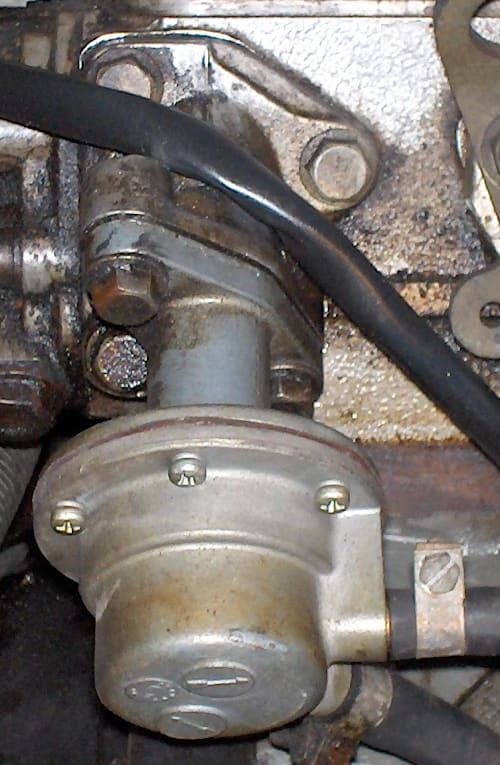
A mechanical diaphragm pump bolted to an engine (this one is on a car engine). Marine diesel lift pumps work the same way, and most add a hand priming lever. Photo: Sonett72 / Wikimedia Commons · Public domain A flow test shows how much fuel the pump actually delivers, separate from the rest of the system. With the engine off:
- Close the raw-water seacock and hang a tag on the key (you may crank the engine).
- Put pads under the pump and secondary filter.
- Disconnect the pump's outlet line (or the inlet to the secondary filter) and fit a short clear hose that runs into your clear container. Keep the container steady and below the outlet.
- Mechanical pump, hand lever: pump the lever with steady strokes and watch the hose.
- Mechanical pump, engine-driven: crank the engine in short bursts as your manual allows; it can't start because fuel is going into the jar, not the injection pump.
- Electric pump: turn the key on (or use the priming switch if your engine has one).
You're looking for a firm, steady flow with no air. Some engine manuals or service manuals give a delivery rate (an amount in a set time); if yours does, time it. If not, compare with what you saw when the engine ran well, or with a mechanic's judgment. A weak dribble, a flow full of bubbles, or flow that fades out points to a restriction on the suction side or a worn pump. Reconnect the line and tighten it, clean up, and reopen the seacock before the engine is run.
If flow is weak, find out whether the pump or the supply is to blame. D'Antonio describes feeding the pump from a separate fuel supply as one way around a clogged pump screen. With a short hose from the pump's inlet into a container of clean diesel, repeat the test. Strong flow now means the problem is upstream: tank pickup, fuel valve, hose, primary filter or an air leak. Still weak means the pump (or its own filter screen, which D'Antonio notes some lift pumps have) is the problem. Keep the container stable and below anything hot.
Many boats have a vacuum gauge on the outlet of the primary filter, measuring how hard the lift pump has to pull. Power & Motoryacht describes how to use one: note the reading with a new filter element at cruising speed as your baseline, then watch for it to rise as the filter clogs. D'Antonio adds that if the vacuum climbs while you crank, there's a restriction on the suction side, so check and change the element first; if it stays low (he uses roughly 3 inches of mercury as the line) the restriction isn't between the tank and the pump. A low reading together with a weak flow test points at the pump itself or an air leak. Your filter or engine maker may give its own change-out reading.
If an electric pump is silent or weak, check its power before replacing it. With the key on, measure the voltage at the pump's terminals with a multimeter and compare it with the battery voltage; a big difference means a bad connection, ground, fuse or relay rather than a bad pump. Listen for the pump ticking or humming. Clean and tighten corroded connections (see the wiring and corrosion guides). Don't hot-wire it permanently; Cruising World mentions temporary hot-wiring for bleeding on engines whose pump only runs with the engine, and a proper priming switch is the safer long-term answer.
A mechanical lift pump has a diaphragm with the fuel on one side and the engine's crankcase on the other. In Good Old Boat, a Yanmar owner describes a leaking lift pump letting diesel into the oil, with three signs: the oil level rising on the dipstick, lower oil pressure (especially at idle when warm), and an oil analysis showing fuel. His Yanmar dealer called the lift pump the most likely source, ahead of the injection pump and worn rings. If your oil level is rising or the oil smells of diesel, see the rising oil level guide, send an oil sample, and don't run the engine more than you have to until it's fixed.
Lift pumps are usually a bolt-on part. Use the pump your engine maker specifies, new gaskets or washers, and the orientation of the old one (take photos). On cam-driven pumps, the lever must sit correctly on the cam; follow the manual. Bleed the system afterward, run the engine, and check every fitting for drips and the oil level after the first few hours.
Record the flow test, vacuum readings and filter changes in BoatMend. A baseline from a healthy engine makes the next test much easier to read.
Common mistakes
- Replacing the lift pump when the real problem was a clogged primary filter, a closed valve or a loose clamp on the suction side.
- Looking for air leaks where fuel drips. On the suction side, a leak pulls air in and may not drip at all.
- Cranking for a long flow or bleed test with the raw-water seacock open, then flooding the exhaust.
- Forgetting to reopen the seacock before the engine actually runs.
- Closing the fuel valve at the tank for a filter or pump change and forgetting to reopen it. The Practical Sailor owner's newly repaired engine started, then died ten minutes later for exactly this reason.
- Opening high-pressure injector lines when you only needed to test the low-pressure side.
- Ignoring a slowly rising oil level, which can be fuel from a leaking diaphragm.
- Leaving fuel-soaked pads in the bilge.
When to call a pro
- The engine still won't start or loses power after the pump tests good and the filters are new
- Fuel in the oil, or the oil level keeps rising
- Air you can't find on the suction side, or a tank pickup you suspect is blocked
- Any fuel leak on the high-pressure side (injection pump or injector lines)
- An electric pump wiring problem you can't trace to a connection, fuse or relay
- A common-rail or electronic diesel: their fuel systems and fault codes are dealer work
Tips
- If your boat has no vacuum gauge on the primary filter, D'Antonio strongly recommends adding one.
- Carry a spare lift pump (or rebuild kit, if your maker sells one) and spare filter elements on long trips.
- Paint the priming lever and bleed screws a bright color so you can find them fast in a dark engine room, as BoatUS suggests.
- Keep the tank fuller in rough water. A low tank sloshing past the pickup is one of the simplest causes of air in the system.
Official references
We read these to write this guide. Your engine's own manual always wins.
- Cruising World – Troubleshooting Your Auxiliary Diesel Engine (Steve D'Antonio)
- Cruising World – Bleed Out Air
- Power & Motoryacht – How to Stay on Top of Your Boat's Fuel System Health
- Good Old Boat – Engine Oil Mystery
- BoatUS – Bleeding a Marine Diesel Engine
- SAIL Magazine – Hydrolock Headache
- Practical Sailor – Fuel Lift Pump: Easy DIY Diesel Fuel System Diagnostic and Repair (Marc Robic, 2024)
Safety: BoatMend is for information only and does not replace a certified marine technician. You are responsible for your safety and your boat. Read the full disclaimer.
Last updated 2026-11-06
Related guides
Marine Diesel Won't Start: Troubleshooting From Battery to Fuel
Work through the usual reasons a Yanmar, Volvo Penta, Westerbeke, Beta or similar marine diesel won't crank, or cranks but won't fire, starting with the free and simple checks. Most no-starts come down to the battery, preheat, air in the fuel or a fuel shutoff solenoid.
How to Bleed Air From a Marine Diesel Fuel System
A diesel that sucks air after a filter change, a fuel leak or running the tank dry may not start until the air is pushed out. Learn the order that works on most older mechanical diesels, why common-rail engines are different, how to protect the starter and exhaust while cranking, and the high-pressure fuel dangers you must respect.
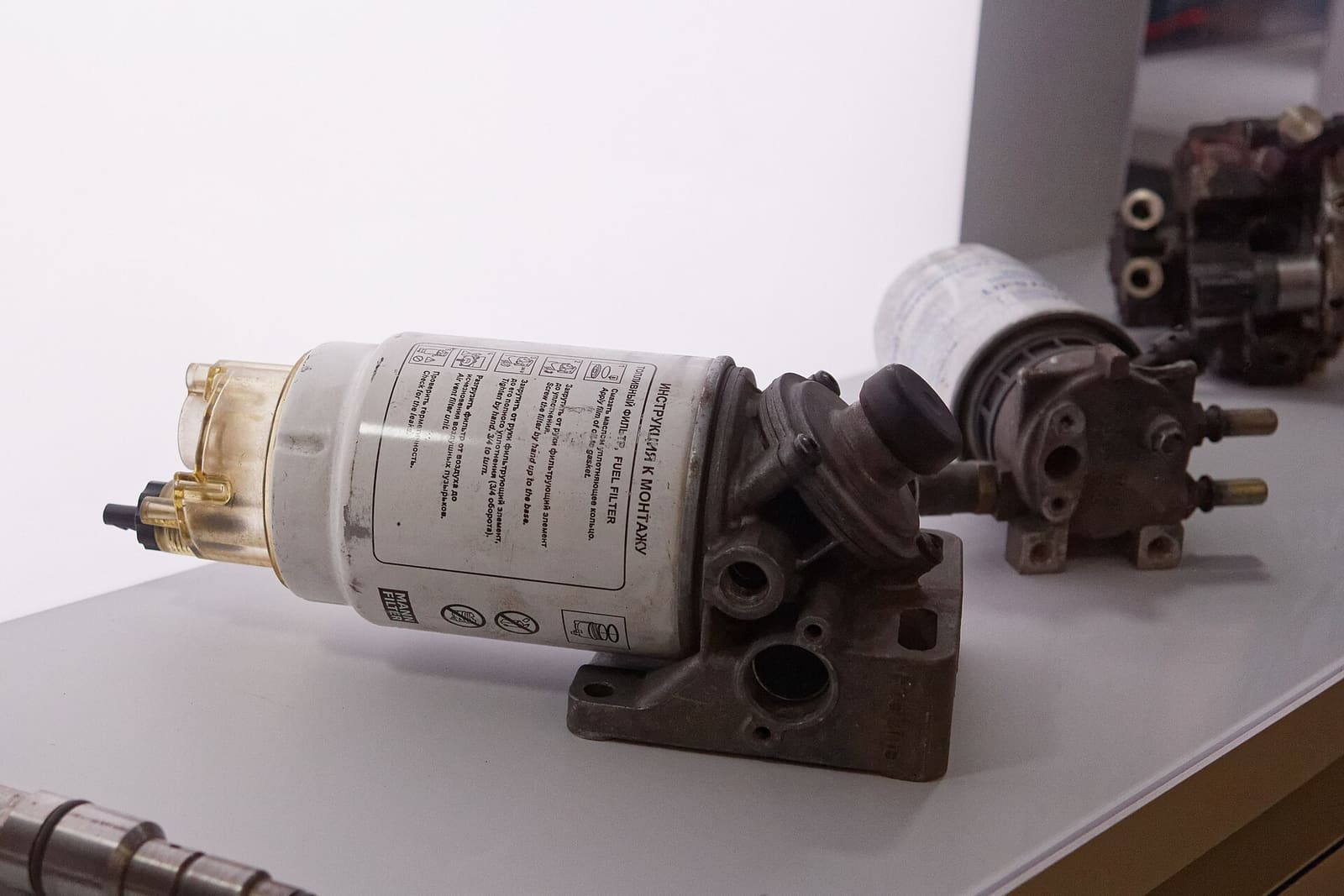
How to Replace a Fuel/Water Separating Filter (and Check for Water in Your Fuel)
Swap the spin-on fuel/water separator on your gas boat and learn to spot water and ethanol phase separation before it stalls the engine. It is one of the cheapest jobs on the boat and one of the best protections for a fuel-injected engine.
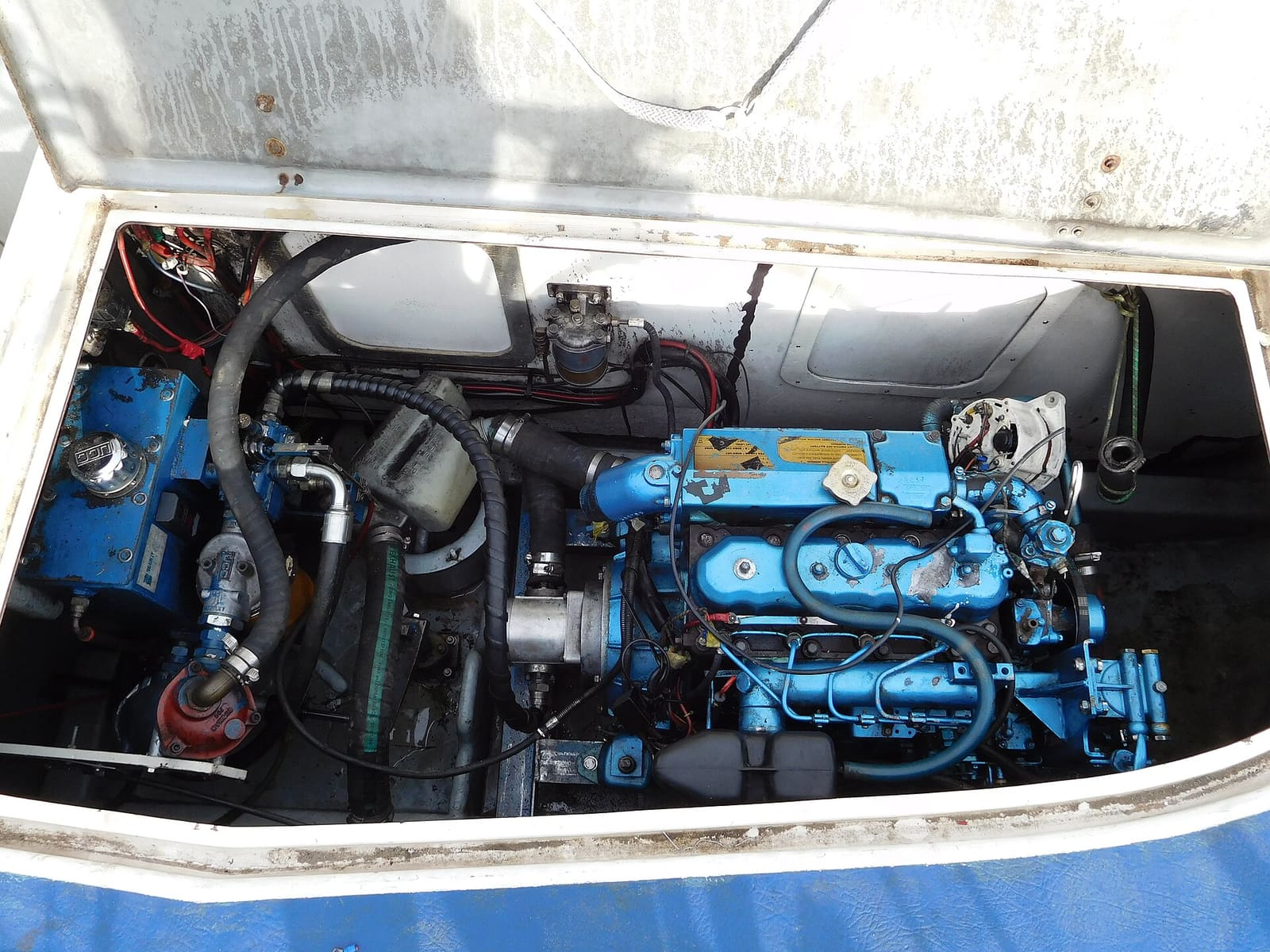
Marine Diesel Service: Oil Change, Fuel Filters and Bleeding Air
Change the oil and oil filter, replace the primary and secondary fuel filters, and bleed air from the fuel system on a Yanmar, Volvo Penta, Beta, Cummins or similar marine diesel. These three skills cover most routine diesel care and can get you out of trouble when the engine dies on a passage.
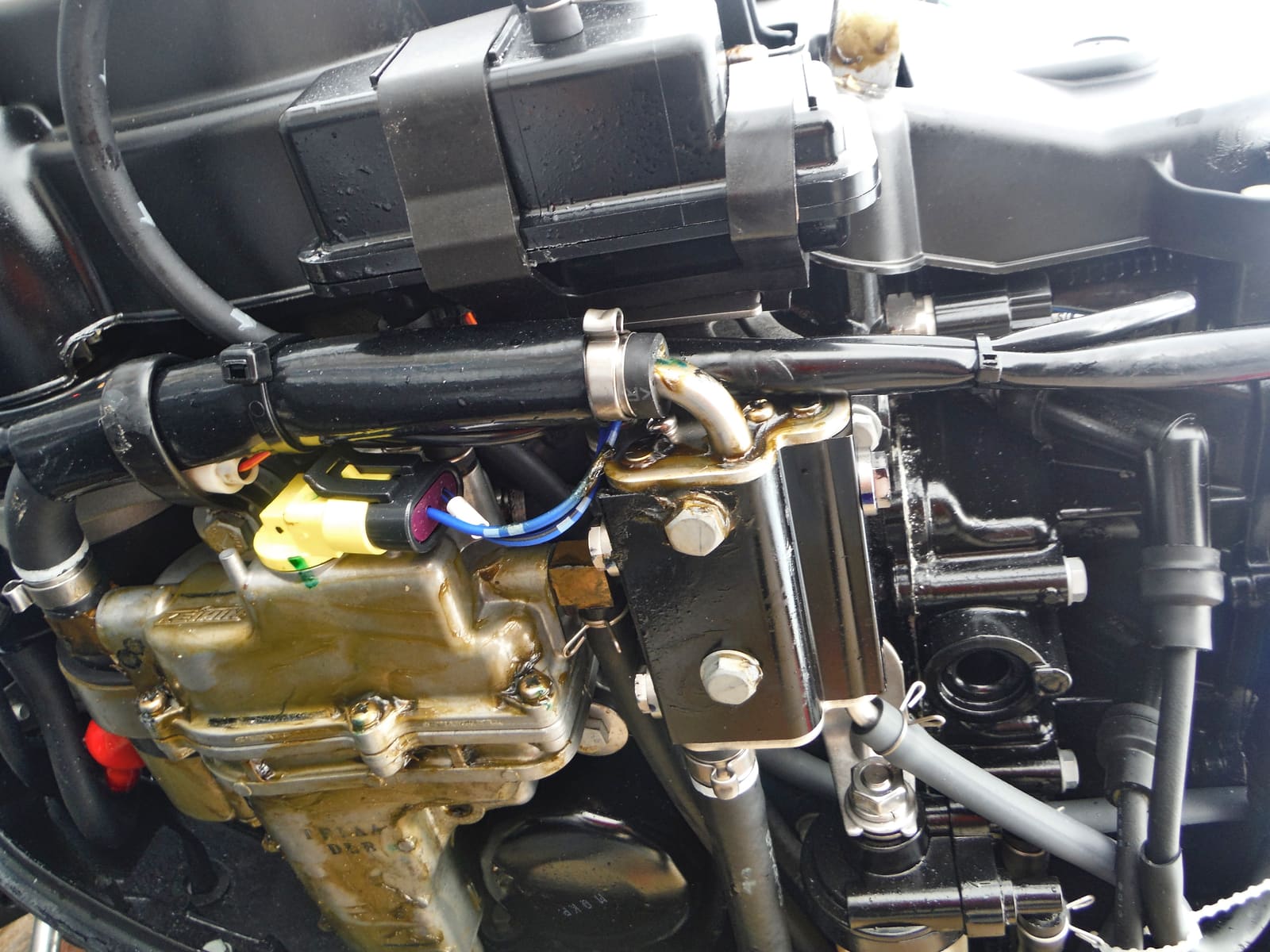
Four-Stroke Outboard Oil Level Rising or Smelling Like Gas: What It Means and What to Do
If the oil on your four-stroke outboard's dipstick keeps going up or smells like gasoline, fuel is probably getting into the crankcase. Learn how to check the level the right way, why lots of idling, trolling, short runs and cold water cause it, what you can do yourself, and when a fuel-system fault needs a dealer.
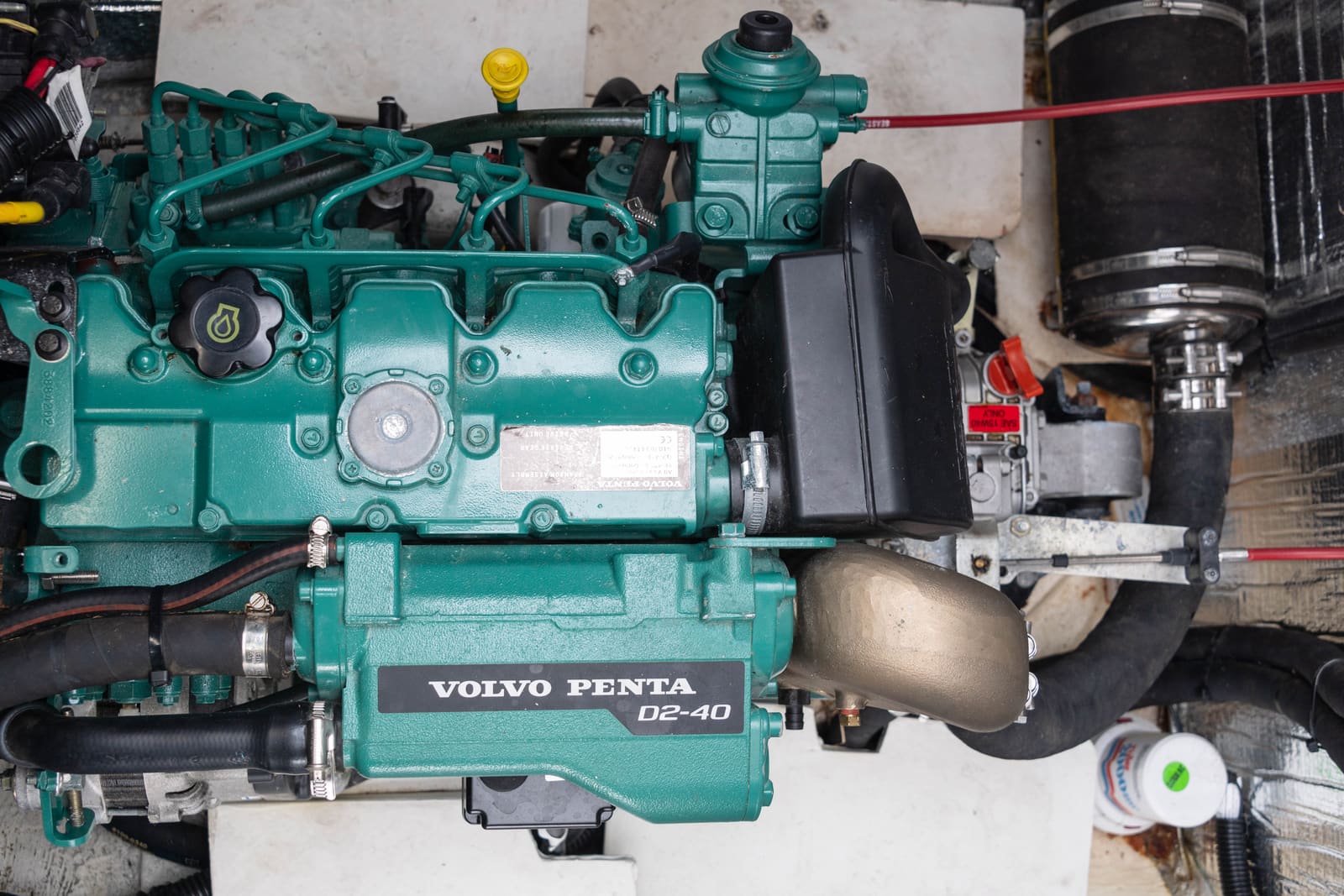
Wet Exhaust and Waterlift Mufflers: Stop Water Flooding the Engine and Catch Leaks Early
On most sailboats and many power boats, cooling water is sprayed into the exhaust and pushed out through a waterlift muffler. Learn how the system works, why long cranking can flood the engine with seawater (and when to close the seacock), and how to inspect the muffler, hoses, clamps and siphon break, including the scorch marks that tell you the exhaust once ran dry.
How to Deal with Diesel Fuel Contamination, Diesel Bug and Fuel Polishing
Learn the signs of water, sludge and microbial growth ("diesel bug") in your diesel tank, how to check a fuel sample, when a biocide helps, and when the tank needs polishing or cleaning. Clean fuel prevents most diesel breakdowns.
Fuel Pump Checks - Is It the Pump or Something Starving It?
Bogging at speed, surging or dying after a few minutes is often blamed on the fuel pump, but vents, filters, primer bulbs and anti-siphon valves cause the same symptoms. Learn how mechanical, pulse and electric pumps work, the safe checks you can do, what the primer bulb is telling you, and why a real pressure test needs the right gauge and the factory spec.
How to Inspect Your Boat's Fuel Tank, Fill, Vent and Hoses
A leaking gas tank is one of the most dangerous problems a boat can have, and it usually starts out of sight. Learn how to inspect portable and built-in tanks, spot aluminum tanks corroding from below, know the ethanol risk for old fiberglass tanks, and check the fill, vent, hoses, clamps and sender, plus why tank replacement is a job for a pro.
Engine and Gearbox Oil Analysis: How to Take a Clean Sample and Read the Report
A lab oil analysis is like a blood test for your engine, transmission or lower unit. Learn how to pull a clean sample, what the lab measures, what wear metals, coolant, sea water and fuel in the oil can mean, and why the trend over several samples matters more than any one number.
Loss of Power, Hesitation or Misfire - Troubleshooting Guide
Figure out why your engine bogs down, stumbles, will not reach full rpm or runs rough. Work from simple checks like trim, prop and fuel filter to ignition and engine protection modes before paying for diagnostics.