Fuel Pump Checks - Is It the Pump or Something Starving It?
Bogging at speed, surging or dying after a few minutes is often blamed on the fuel pump, but vents, filters, primer bulbs and anti-siphon valves cause the same symptoms. Learn how mechanical, pulse and electric pumps work, the safe checks you can do, what the primer bulb is telling you, and why a real pressure test needs the right gauge and the factory spec.
Time
1 h
Shop would charge
$100-500
Applies to
Outboard, Sterndrive (I/O), Gas inboard
Safety first: Gasoline vapor is heavier than air and collects in bilges and engine compartments. Work with the engine off and cool, keep sparks and flames away, catch every drop of fuel in rags and a drip pan, and keep a fire extinguisher within reach. On sterndrives and inboards, run the blower for at least 4 minutes and sniff before you start the engine. Fuel-injected engines hold fuel under high pressure even when switched off: do not open those lines yourself. If you smell fuel or see a leak, stop and fix it or call a pro. If you are stranded on the water, call TowBoatUS or Sea Tow, and in an emergency use VHF channel 16 or dial 911.
Owners often ask
- My primer bulb goes flat while the engine is running and it bogs at speed. Is it the fuel pump?
- How do I know if my boat fuel pump is bad or something else is starving the engine?
This guide walks you through it. Still stuck? Ask the AI Mechanic about your engine.
Tools
- Flashlight and inspection mirror
- Clean glass jar or clear container for a fuel sample
- Shop rags and a drip pan
- Screwdrivers and nut drivers for hose clamps and covers
- Digital multimeter (for electric pump power checks)
- Fire extinguisher within reach
- Flush muffs or a test tank for running an outboard ashore (or the cooling-water hookup your manual specifies)
Parts & supplies
- Water-separating fuel filter specified in your owner's manual
- Replacement primer bulb and fuel line assembly made for your engine (if needed)
- Fuses of the correct rating
Before you start
Owners often replace a fuel pump and find the problem is still there. Before you blame the pump, remember that every pump can only deliver what reaches it. A blocked tank vent, a sticking anti-siphon valve, a clogged filter, a tired primer bulb, a collapsing hose or bad fuel can all starve the engine and feel exactly like a weak pump. This guide works from those cheap causes toward the pump itself.
Know which pumps your engine has:
- Carbureted outboards (most older two-strokes and small four-strokes): a mechanical diaphragm pump on the powerhead. On many two-strokes it is a "pulse" pump, moved by pressure pulses from the crankcase through a small pulse hose. On many four-strokes it is driven by the camshaft. Either way, it sucks fuel from the tank through the primer bulb.
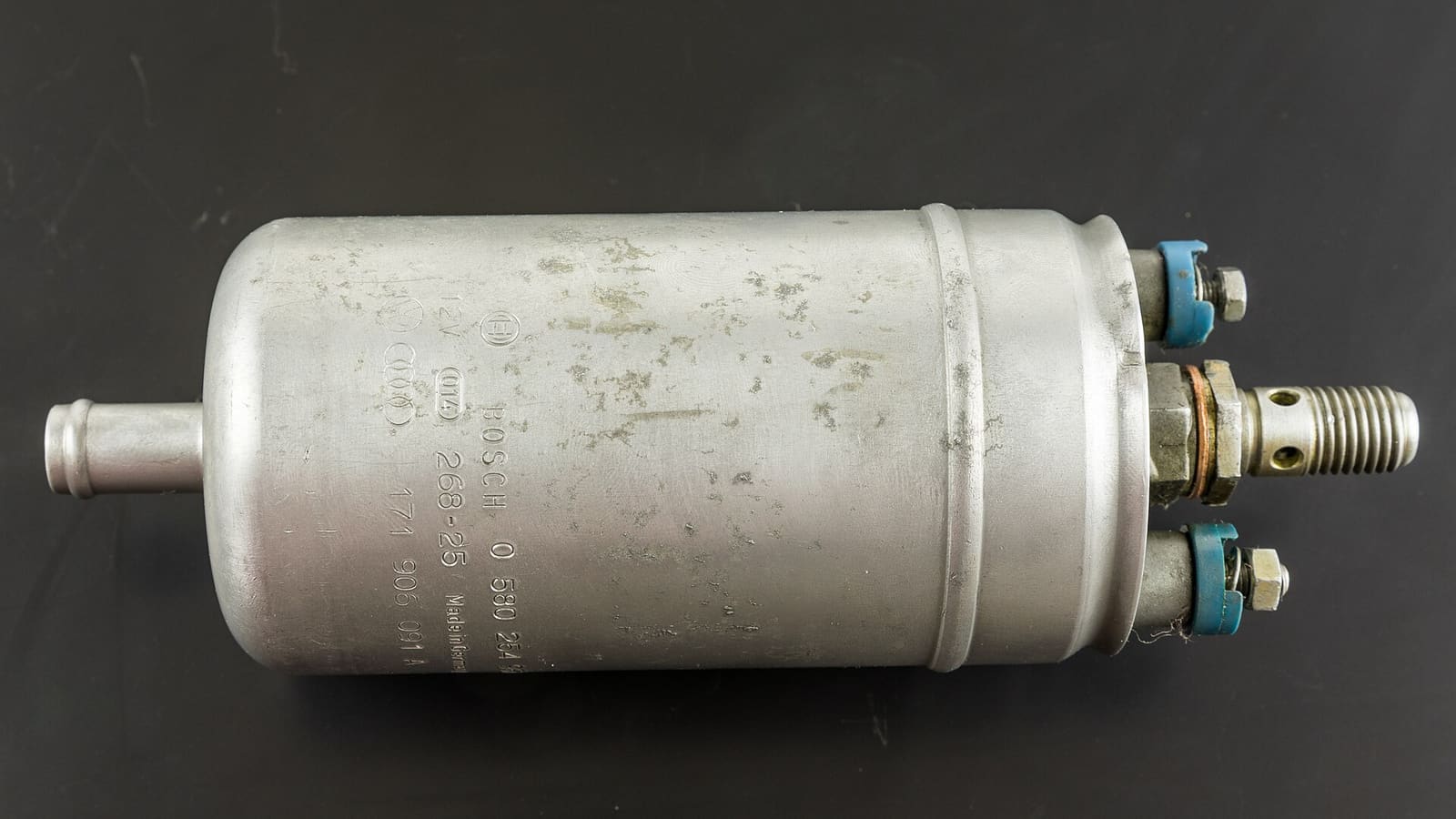
- Fuel-injected (EFI) outboards: usually two stages. A low-pressure lift pump (mechanical or electric) pulls fuel from the boat's tank into the vapor separator tank (VST) or fuel supply module, and an electric high-pressure pump inside it pressurizes the fuel rail that feeds the injectors. See the efi-vapor-separator guide.
- Carbureted sterndrives and inboards: usually a mechanical pump bolted to the engine block; some use an electric pump.
- Fuel-injected sterndrives and inboards: electric pumps, often in a module on the engine.
Typical weak-pump or fuel-starvation symptoms:
- Starts and idles fine, but bogs, surges or dies when you open the throttle or after several minutes at cruise.
- Won't hold RPM at higher speeds, then recovers after you slow down.
- Hard to restart after it stalls, until the fuel system is primed again.
- On EFI engines, a warning horn or fault message about fuel pressure or the lift pump.
Steps
Draw a sample from the water-separating filter or the tank into a clean glass jar. Look for water at the bottom, cloudiness, debris or a dark, varnish smell. Mercury explains that once ethanol fuel phase-separates, no additive will mix it back; the water must be removed, the fuel disposed of properly and the tank started fresh. Boating Magazine printed the story of a master mechanic who rebuilt half his engine, including the fuel pump, before a tank of fresh gas cured the problem. Check the fuel before you buy parts.
A tank can't feed the engine if air can't get in to replace the fuel. Salt Water Sportsman notes that an engine that dies, runs sluggishly or slows down on its own may have a blocked vent; if you hear a rush of air when you open the fill cap, the vent is likely clogged. Boating Magazine adds that vent screens collect salt, grime and insects, that a sagging vent hose can trap fuel and block the vent, and that an in-line no-spill valve can stick with gummy residue (if you shake it and the ball inside doesn't rattle, replace it).
On portable tanks, make sure the vent screw on the cap is open. Test: run the engine with the fill cap loosened (on the water, or an outboard in a test tank or on external flush muffs, never on the built-in flush port; in a safe, ventilated place, never while refueling). If the problem disappears, it's the vent.
Look along the whole line from tank to engine. You're looking for cracks, kinks, chafed spots, hoses that feel soft or swollen, and loose clamps. Salt Water Sportsman points out that a loose fitting, a split line or a cracked primer bulb lets air in and interrupts fuel flow. Check the quick-connect fittings at the tank and engine; worn O-rings there are a common air leak. Older hoses may not be ethanol-resistant: Mercury suggests replacing fuel system rubber parts from the 1980s or earlier with ethanol-safe parts.
The primer bulb is a free diagnostic tool on boats that have one:
- It never gets firm when you squeeze it before starting: Yamaha's advice is to look for a fuel leak, and if there is none, replace the bulb. The check valves inside may be worn.
- It goes soft or gets sucked flat while the engine runs: Boating Magazine says a bulb should stay firm while the engine is running and drawing fuel. A bulb that flattens means the pump is pulling against a restriction between the bulb and the tank: a blocked vent, a sticking anti-siphon valve, a plugged tank pickup, a kinked hose or a collapsed inner hose liner.
- It stays firm but the engine still starves: the restriction or fault is more likely downstream (filters, the pump, or the carburetor or injection system).
Don't keep squeezing the bulb while the engine runs as a way to get home faster. Some owner's manuals warn that squeezing it with the engine running or tilted up can make fuel overflow, so check yours. If the engine runs only while you pump the bulb, slow down and head in, or call for a tow.
Most boats with a built-in tank have an anti-siphon valve where the fuel line leaves the tank. It stops fuel from siphoning out if a line breaks, so it is a safety part. A valve that sticks partly closed is a classic cause of starving at high RPM. Have it inspected or replaced with the correct part; never drill it out or remove it to "fix" the problem.
A partly clogged filter is the most common restriction of all. Yamaha recommends replacing its 10-micron external fuel/water separating filter every 50 hours or after a bad tank of gas, and warns not to dump a filter and reinstall it. Check the small on-engine filter too (often a clear cup on the powerhead), and replace it if you see water or debris. See the fuel-water-separator guide.
Don't add extra fine filters "for protection." Mercury's FAQ explains that another filter is another restriction that can starve the engine, and that the factory filtration is already designed for the engine.
Air left in the line can look like a pump problem. Mercury's quick tip says to squeeze the primer bulb until it is firm on smaller engines with a bulb, and on its FourStroke models of 75hp and up to turn the key to "run" and wait while the onboard electric pump primes the system. Salt Water Sportsman notes that many modern engines prime when you turn the key to the first position and wait about 30 seconds. Check your owner's manual for your engine's method.
With the boat in a quiet spot, have a helper turn the key to "on" without cranking. Mercury describes hearing a beep and then the electric fuel pump running for a few seconds. On many engines you'll hear a short hum from the engine.
- You hear it: the pump has power and is turning. That does not prove it makes enough pressure under load, but it rules out a dead pump or blown fuse.
- You hear nothing (and no key-on beep either): first make sure the kill-switch lanyard clip is in place and the switch itself isn't faulty, since on many engines the computer doesn't wake up without it. Then check the fuses and relays your manual lists for the fuel pump, the battery voltage, and the engine harness connectors. On many EFI outboards the pump gets its power through a relay and the engine computer switches it on, so a test light at the pump plug can read dead even when the pump is fine; your service manual shows where to test. If those are fine, the pump, its wiring or the engine computer needs a dealer diagnosis. Replace a blown fuse only with the same rating; if it blows again, stop and call a pro.
- Cheap relay check: many fuel-injected sterndrives and outboards have a small relay block with several identical relays. If your manual shows the fuel pump relay shares a part number with another one (horn, trim or a spare), swap them with the key off and try again. Owners regularly find a "dead" pump was a corroded relay or a loose relay socket. A relay that works again after swapping may just have had dirty contacts, so replace it rather than trust it.
- Twin engines: compare the two at key-on. One pump that sounds noticeably weaker or shorter than the other is worth mentioning to your mechanic, even if that engine still starts.
On fuel-injected outboards, BoatTest explains that the computer runs the lift pump to fill the VST and logs a "lift pump time out" type fault when the VST does not fill, which usually means no fuel is reaching the engine from the boat. That points you back to steps 1 to 6.
With the engine off and cool:
- Look for fuel wetness or stains around the pump body and fittings. Any leak means the pump or its gaskets need service.
- On pulse pumps (many two-strokes), look at the small pulse hose from the crankcase to the pump. A cracked, loose or oil-soaked pulse hose weakens the pump. Fuel inside that hose can mean a ruptured diaphragm.
- On four-stroke engines with a cam-driven pump, a torn diaphragm can let gasoline into the crankcase. A rising oil level that smells of fuel is a warning sign (see the oil-level-rising guide).
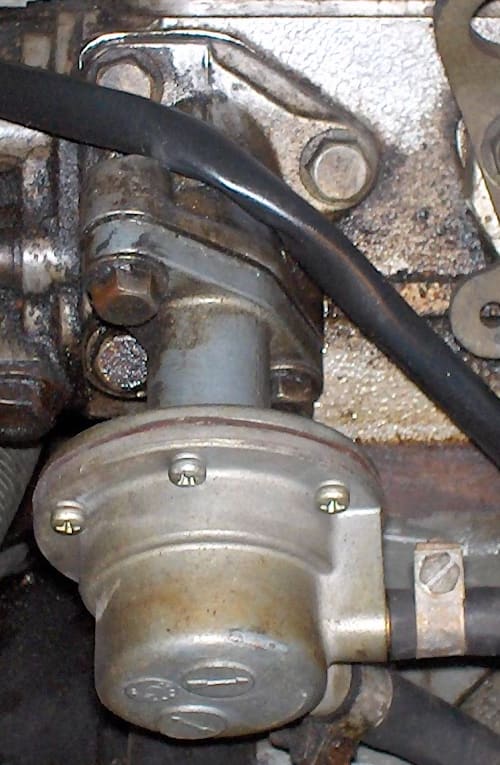
A mechanical diaphragm fuel pump bolted to an engine (this one is on a car engine; many older carbureted inboards use a similar design). Fuel stains around the cover or a weeping fitting mean it needs service. Photo: Sonett72 / Wikimedia Commons · Public domain If everything upstream checks out and the problem persists, run the boat (or an outboard in a test tank) and note exactly when it happens: how many minutes, what RPM, and whether the primer bulb collapses. Ashore, an outboard needs a test tank or flush muffs, and the built-in flush port is for engine-off flushing on most models, so don't run on it unless your manual allows it. Most fuel-starvation problems only show up at higher RPM under load, so a run on muffs at idle may not reproduce it. That's useful information for your mechanic.
This is the point where testing moves beyond looks and listening:
- Vacuum (restriction) test: a vacuum gauge is placed in the suction side of the fuel system, between the tank and the pump. Power & Motoryacht explains the idea: compare the reading against a known clean baseline, and rising vacuum means a growing restriction such as a clogging filter. Your engine's service manual gives the maximum vacuum allowed and where to connect the gauge.
- Pressure test, mechanical pumps: a gauge on the pump outlet shows whether the pump makes the pressure the service manual specifies at a given RPM.
- Pressure test, EFI: the fuel rail operates at high pressure. Testing needs a gauge that fits the engine's test port, the factory pressure spec for key-on, idle and load, and the safety procedure for relieving pressure. On EFI engines this is a dealer job, often combined with a diagnostic scan.
Without the spec for your exact engine, a gauge reading doesn't tell you much. That's why this guide does not give pressure numbers.
- Fuel, vent, lines, bulb, anti-siphon valve and filters all good, but the bulb still collapses: look for a restriction you haven't found yet, such as the tank pickup screen or a fuel selector valve on boats with two tanks.
- Bulb stays firm, filters new, and the engine still starves at speed: the engine-side pump, the VST or the carburetor or injection system is the likely cause. Book a pressure test.
- External fuel leak at the pump or fittings: don't run the engine. Have it repaired.
Common mistakes
- Replacing the fuel pump first, before checking fuel quality, the tank vent and the filters.
- Running with the fuel tank vent screw closed on a portable tank.
- Removing or drilling out the anti-siphon valve instead of replacing it. It's a safety part that keeps fuel in the tank if a line fails.
- Adding a second fine filter "for extra protection" and creating a new restriction.
- Dumping and reinstalling a used filter instead of replacing it.
- Holding the primer bulb squeezed to keep the engine running, or pumping it with the engine running or tilted up.
- Replacing an engine's mechanical pump with an add-on electric pump, or "deleting" the VST. An engine-driven pump stops when the engine stops; a wrongly wired electric pump keeps pumping fuel into a broken line or a flooded cowling after a stall.
- Using automotive hose, clamps or an automotive electric pump on a boat. Marine fuel parts must meet Coast Guard and ABYC requirements, including ignition protection in engine spaces.
- Opening an EFI fuel line without relieving pressure, which sprays gasoline.
When to call a pro
- Any fuel leak, fuel smell in the bilge or engine compartment, or fuel in the pulse hose
- Fuel-injected engines that need a fuel pressure test, VST service or a diagnostic scan
- An electric pump that has power but doesn't run, or fuses that keep blowing
- Pump replacement on sterndrives and inboards, where parts must be marine-rated and ignition-protected
- Phase-separated fuel or water in a built-in tank (it needs to be pumped out and disposed of properly)
- Stranded on the water: TowBoatUS or Sea Tow, and in an emergency VHF channel 16 or 911
Tips
- Carry a spare water-separating filter and a spare fuel line with primer bulb for your engine. Together they cure a lot of fuel days.
- Buy fuel where lots of boats and cars fill up, and treat it with a marine stabilizer as your manual suggests.
- Write down symptoms as they happen (RPM, minutes running, bulb soft or firm). A mechanic can find the cause much faster.
- If you have twin tanks, label the selector valve clearly. Running a tank dry, then switching, means you must prime again before restarting.
Official references
We read these to write this guide. Your engine's own manual always wins.
- Yamaha Outboards – Fuel & Fuel System Maintenance (Maintenance Matters)
- Mercury Marine – Quick Tip, Priming Your Fuel System
- Mercury Marine – Service & Support FAQs (ethanol, phase separation, extra filters)
- BoatTest – Your Outboard Vapor Separator Tank (lift pump and high-pressure pump)
- Boating Magazine – Use Your Primary Senses to Keep Your Boat in Great Condition (primer bulb)
- Boating Magazine – Five Boat Fuel Tank Vent Tips
- Salt Water Sportsman – 10 Common Solutions for Boat Engine Problems
- Power & Motoryacht – How to Stay on Top of Your Boat's Fuel System Health (vacuum gauges)
- Boating Magazine – I Learned About Boating From This, Bad Gas
Safety: BoatMend is for information only and does not replace a certified marine technician. You are responsible for your safety and your boat. Read the full disclaimer.
Last updated 2026-10-24
Related guides
Loss of Power, Hesitation or Misfire - Troubleshooting Guide
Figure out why your engine bogs down, stumbles, will not reach full rpm or runs rough. Work from simple checks like trim, prop and fuel filter to ignition and engine protection modes before paying for diagnostics.
Engine Starts Then Dies - Troubleshooting Guide
Track down why your boat engine fires up and then stalls, whether at idle, when you shift into gear, or after a few minutes of running. Most causes are in the fuel supply and can be checked with no special tools.
How to Replace a Fuel/Water Separating Filter (and Check for Water in Your Fuel)
Swap the spin-on fuel/water separator on your gas boat and learn to spot water and ethanol phase separation before it stalls the engine. It is one of the cheapest jobs on the boat and one of the best protections for a fuel-injected engine.
Ethanol (E10) Fuel Care: Stabilizer, Phase Separation, Fuel Lines and Tank Vents
Keep E10 gasoline from damaging your boat engine. Learn how to use stabilizer, test for water and phase separation, and inspect the fuel lines, primer bulb, anti-siphon valve and tank vent. Most fuel-related breakdowns start with one of these.
How to Inspect Your Boat's Fuel Tank, Fill, Vent and Hoses
A leaking gas tank is one of the most dangerous problems a boat can have, and it usually starts out of sight. Learn how to inspect portable and built-in tanks, spot aluminum tanks corroding from below, know the ethanol risk for old fiberglass tanks, and check the fill, vent, hoses, clamps and sender, plus why tank replacement is a job for a pro.
EFI Outboard Vapor Separator Tank (VST) and Injectors - Symptoms, Filters and When It's a Dealer Job
On a fuel-injected outboard, the vapor separator tank holds fuel right at the engine and feeds the high-pressure pump and injectors. Learn why ethanol varnish and debris clog its filter, how a starving VST feels (stalls at speed, won't hold RPM), what you can safely maintain yourself, and when it's time for the dealer.
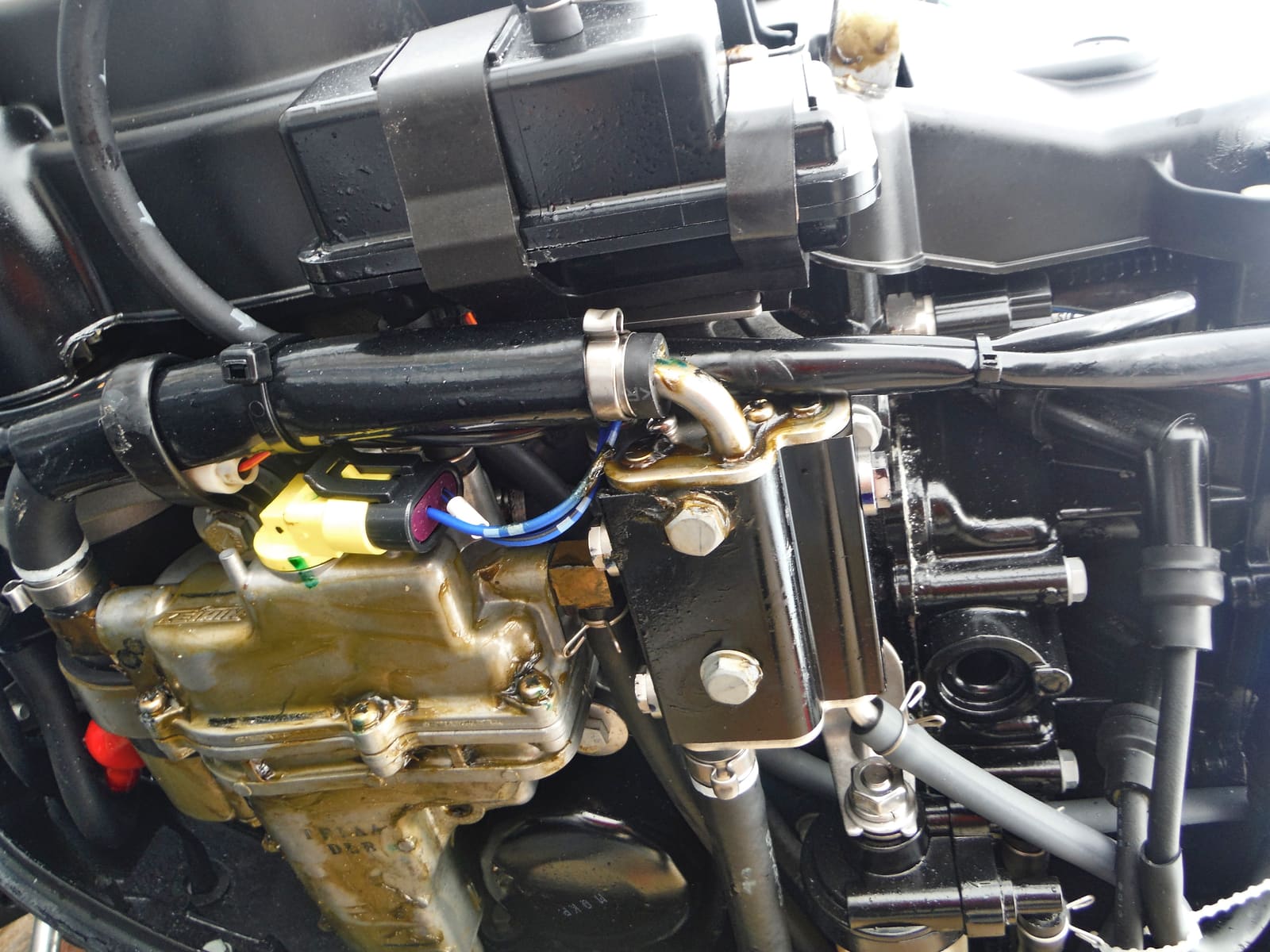
Four-Stroke Outboard Oil Level Rising or Smelling Like Gas: What It Means and What to Do
If the oil on your four-stroke outboard's dipstick keeps going up or smells like gasoline, fuel is probably getting into the crankcase. Learn how to check the level the right way, why lots of idling, trolling, short runs and cold water cause it, what you can do yourself, and when a fuel-system fault needs a dealer.
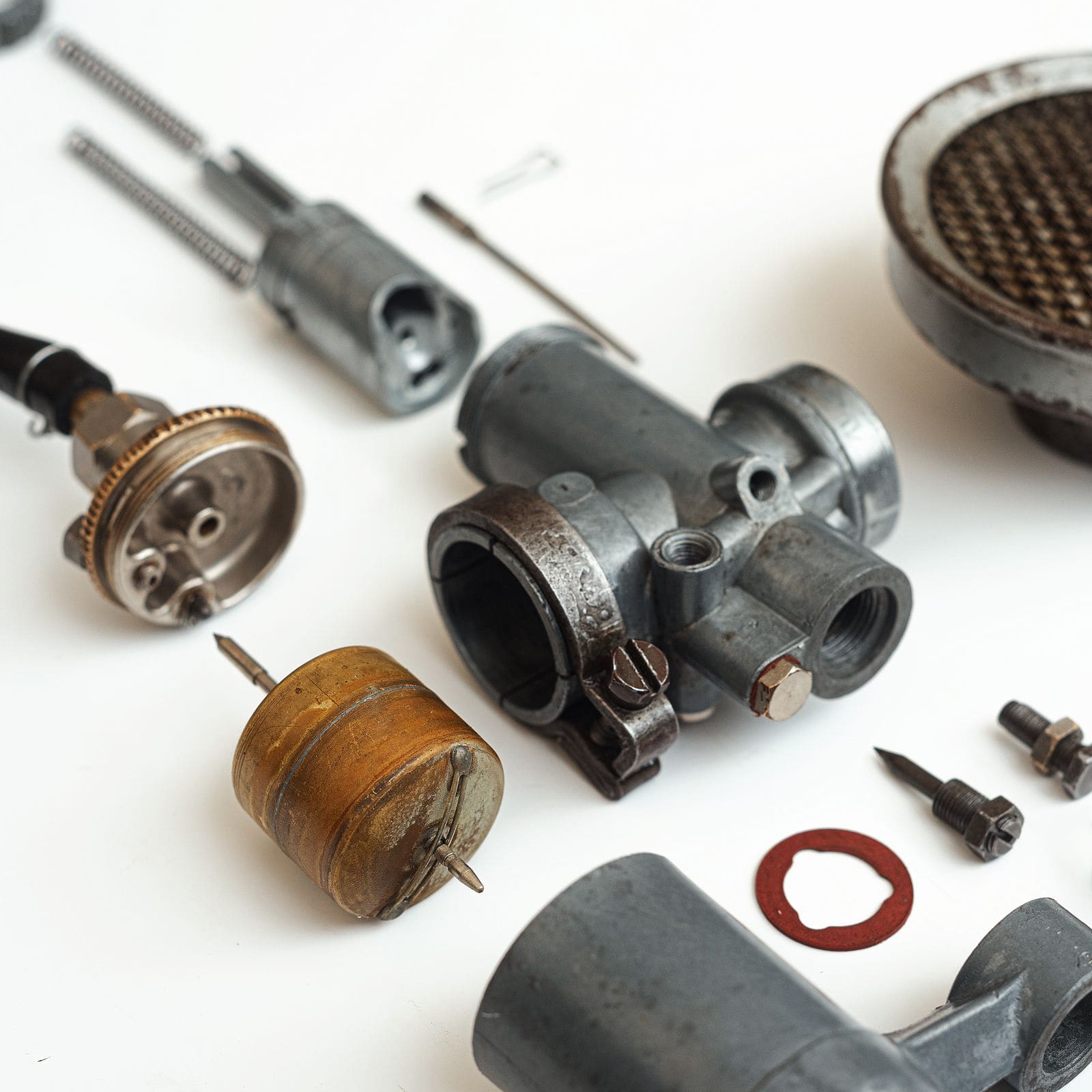
How to Clean the Carburetor on a Small or Older Outboard
Old fuel turns to varnish and plugs the tiny jets in a carburetor, so the engine only runs on choke, surges or will not idle. Learn when the carburetor really is the problem, how to drain and clean it, and when a rebuild kit or a replacement makes more sense.
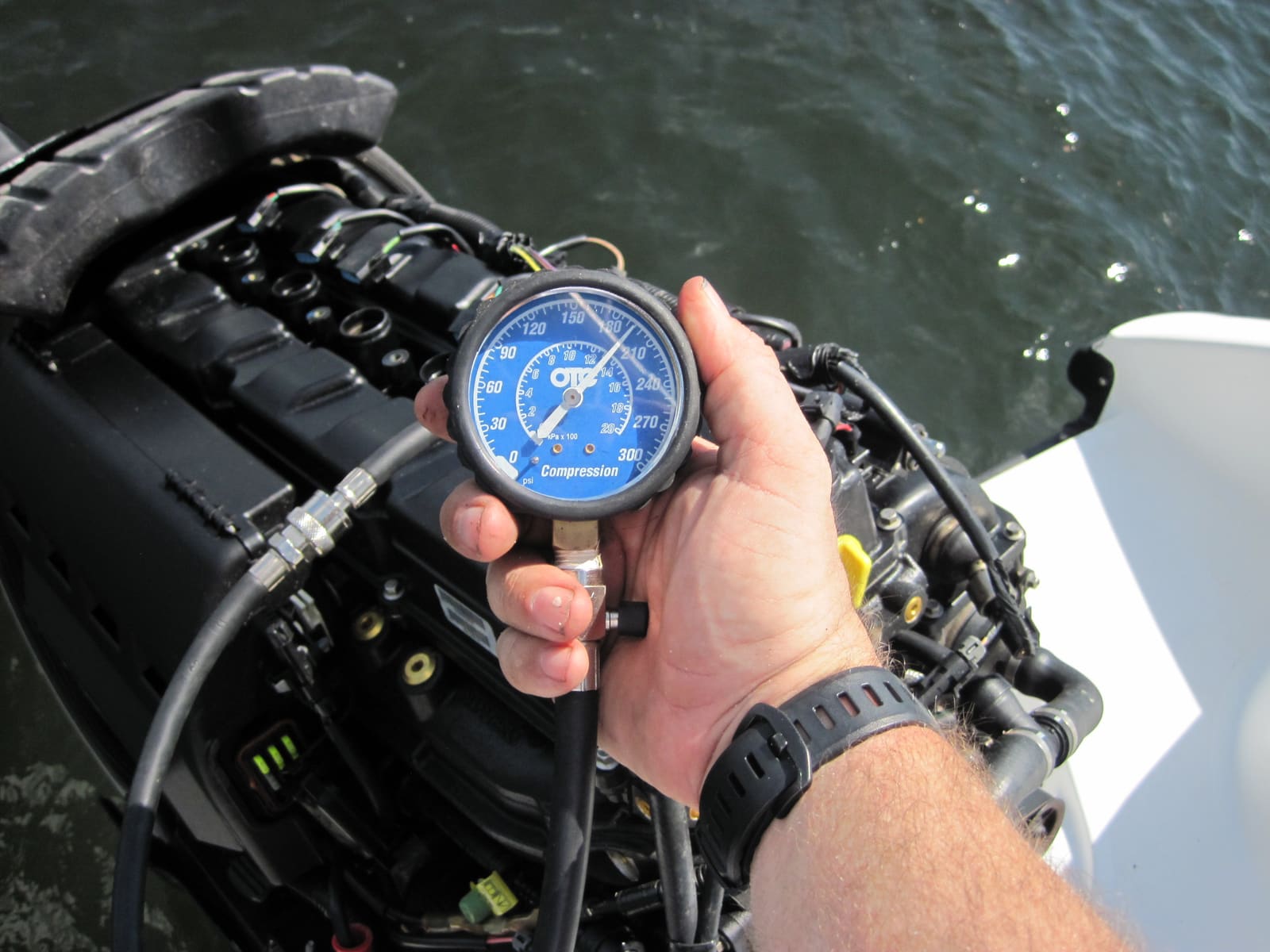
How to Do a Compression Test on an Outboard, Sterndrive, Inboard or PWC
A compression test tells you whether the pistons, rings, valves and head gasket in each cylinder are sealing. Learn when to do one, how to do it safely, how to read the numbers by comparing cylinders, and what a wet test and a leak-down test add.
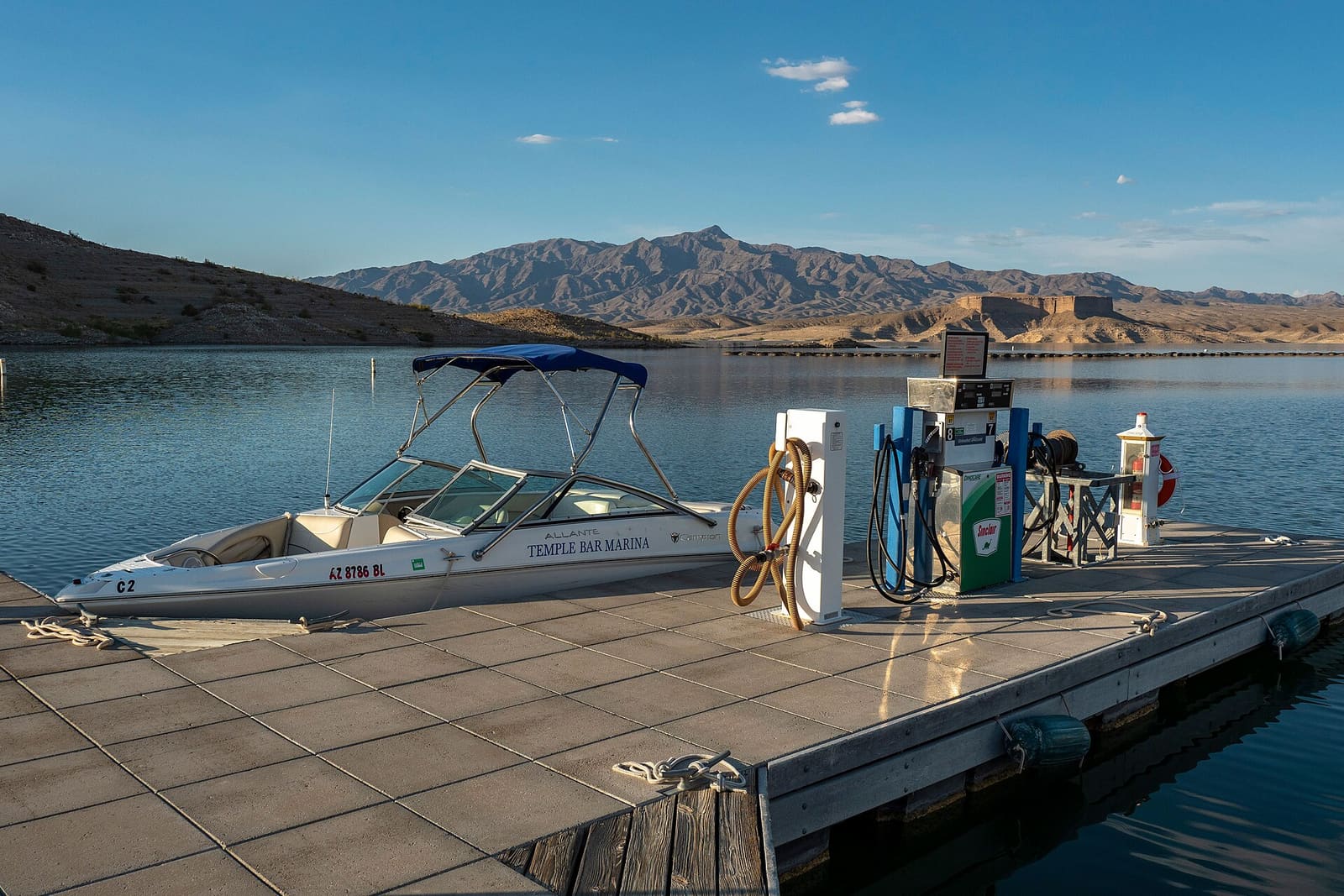
How to Refuel a Boat Safely (Gas Dock, Gas Station and Portable Tanks)
A step-by-step fueling routine that keeps gasoline vapor out of your bilge and fuel out of the water: shut everything down, close up, keep the nozzle in contact, stop short of full, ventilate, run the blower and sniff before you start. Includes portable tanks, personal watercraft and what to do about a spill.