EFI Outboard Vapor Separator Tank (VST) and Injectors - Symptoms, Filters and When It's a Dealer Job
On a fuel-injected outboard, the vapor separator tank holds fuel right at the engine and feeds the high-pressure pump and injectors. Learn why ethanol varnish and debris clog its filter, how a starving VST feels (stalls at speed, won't hold RPM), what you can safely maintain yourself, and when it's time for the dealer.
Time
45 min
Shop would charge
$200-900
Applies to
Outboard
Safety first: The high-pressure side of an EFI fuel system (the pump inside the VST, the fuel rail and the injectors) stays pressurized after the engine stops. Opening it without the factory procedure sprays gasoline onto a hot engine. Leave those parts to a dealer. Work with the engine off and cool, keep sparks and flames away, and keep a fire extinguisher close. If you smell fuel under the cowling or see a leak, don't start the engine. If you are stranded on the water, call TowBoatUS or Sea Tow, and in an emergency use VHF channel 16 or dial 911.
Owners often ask
- My fuel-injected outboard idles fine but dies or won't hold RPM at speed. Could it be the vapor separator?
- Can I clean the vapor separator tank filter myself, or is it a dealer job?
This guide walks you through it. Still stuck? Ask the AI Mechanic about your engine.
Tools
- Flashlight
- Clean glass jar for a fuel sample
- Filter wrench for the spin-on water-separating filter
- Shop rags and a drip pan
- Fire extinguisher within reach
- Notepad or phone to record symptoms, RPM and any warning messages
Parts & supplies
- Water-separating fuel filter specified in your owner's manual
- On-engine fuel filter element and O-ring (only if your manual lists it as owner-serviceable)
- Marine fuel stabilizer
Before you start
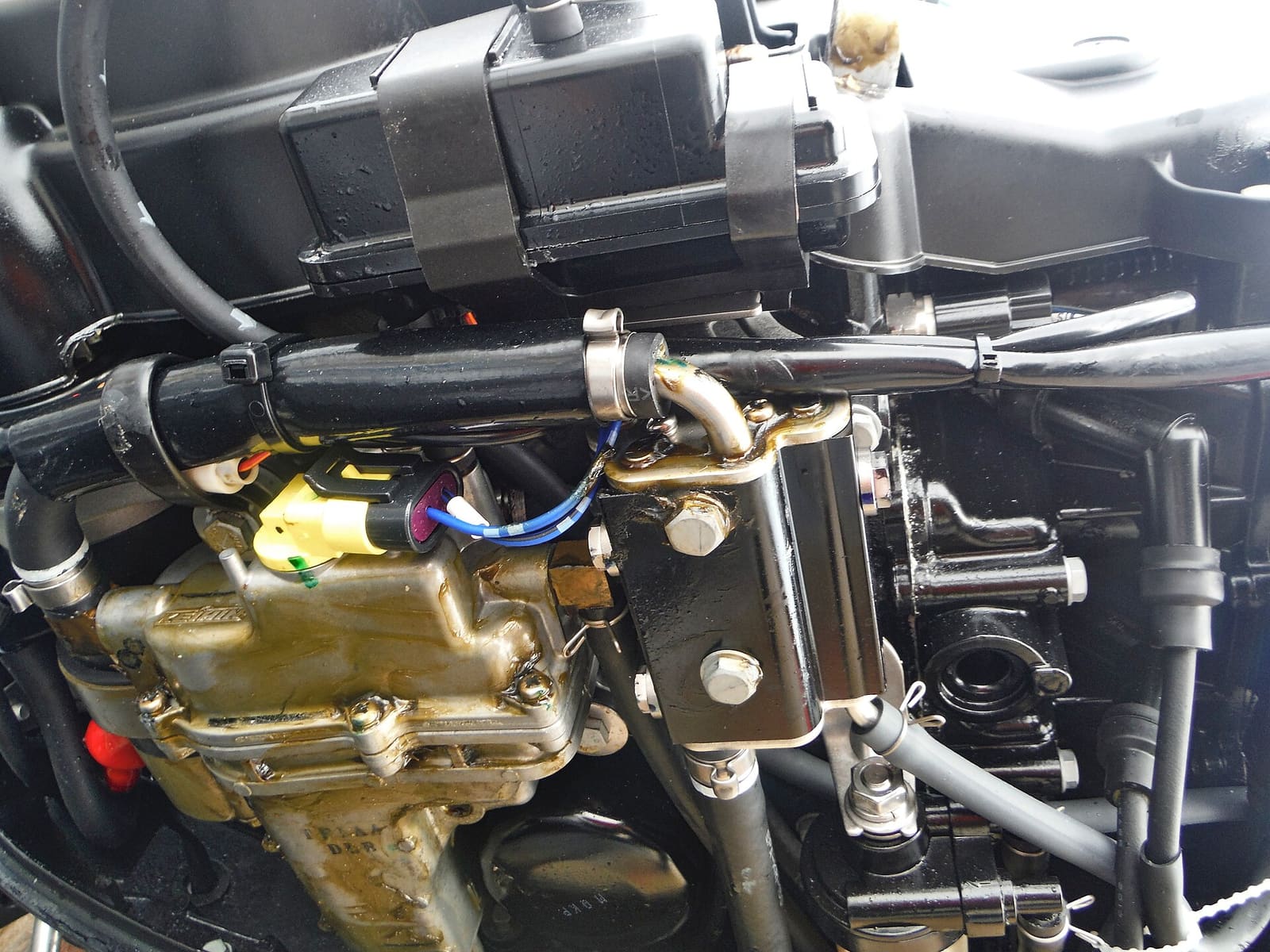
What the VST does. On most fuel-injected outboards, fuel from the boat's tank is pulled to the engine by a low-pressure lift pump and fed into a small reservoir on the powerhead called the vapor separator tank (VST). Mercury calls its version on many larger engines a fuel supply module (FSM). BoatTest describes the usual layout:
- A float shuts off incoming fuel when the tank is full, like the float in a carburetor bowl.
- An electric high-pressure pump inside draws fuel from the reservoir and pressurizes the fuel rail.
- A filter or screen sits on the pump inlet.
- A pressure regulator controls rail pressure; on some models it is inside the VST.
- A vent lets fuel vapor escape, so the high-pressure pump gets liquid fuel, not bubbles.
- Some designs add a fuel cooler that runs cooling water past the fuel.
The fuel rail then feeds the injectors, which spray a fine mist into each cylinder. Yamaha explains that each injector has its own fine-mesh screen built in. An engine control module (ECM) decides how much fuel each injector sprays, using sensors for throttle position, RPM, engine temperature, air temperature and pressure, as Mercury describes.
Small tiller motors count too. Mercury notes that most of its outboards from 8hp up are now fuel injected, including rope-start 8 to 30hp models with a battery-free EFI system that powers the ECM when you pull the cord. If your small portable has no carburetor, this guide applies to it; the parts are just smaller and more tightly packed, so read the manual before opening anything.
Why ethanol and varnish cause trouble here. Yamaha points out that ethanol attracts water and is a strong solvent that loosens old debris in tanks and lines, and that today's fuel can start to break down in a matter of weeks. Mercury explains that if enough water gets in, ethanol and water separate out and sink to the bottom of the tank, where the pickup is. Old fuel that dries out leaves gum and varnish. The VST is where all of this ends up: it holds a small amount of fuel that sits whenever the boat sits, its float and needle valve are small, and its filter is the last screen before the rail. Boating Magazine notes that dirty injectors are usually clogged with stale fuel that dried and turned to varnish.
Typical symptoms:
- Starts and idles, but stalls or loses power at speed, or won't hold RPM and surges up and down.
- Runs fine for a few minutes, then falls on its face under load.
- Hard starting or a rough idle after the boat has sat for weeks.
- A warning horn or display message for fuel pressure, lift pump or a lean condition.
- A flooding VST (float stuck open) can do the opposite: hard starting, raw-fuel smell, black smoke, or engine oil that rises and smells of fuel (see the oil-level-rising guide).
Many of these symptoms are also caused by a blocked tank vent, a sticking anti-siphon valve, a clogged external filter or bad fuel. Start with the fuel-pump-test guide's cheap checks before assuming the VST is the problem.
Steps
Write down when it happens (how many minutes after starting, what RPM, how much load), whether the primer bulb (if you have one) goes flat, and any warning messages or beeps. A dealer can find a VST or pump fault much faster with this information, and it helps you separate a fuel problem from a propeller or ignition problem.
Take a sample from the water-separating filter or the tank into a clean glass jar. Water at the bottom, cloudiness, debris, a dark color or a sour varnish smell mean the fuel is the problem. Mercury's FAQ explains that no additive can remix phase-separated fuel: the water and bad fuel must be removed and disposed of properly, and the tank refilled with fresh fuel. If you find water or phase separation, assume the VST may have taken some in too, and tell your dealer.
Work through the tank vent, fuel line, quick-connect fittings, primer bulb and anti-siphon valve as described in the fuel-pump-test guide. A VST can only be as full as the lift pump can keep it, and the lift pump can only move what the boat's fuel system supplies.
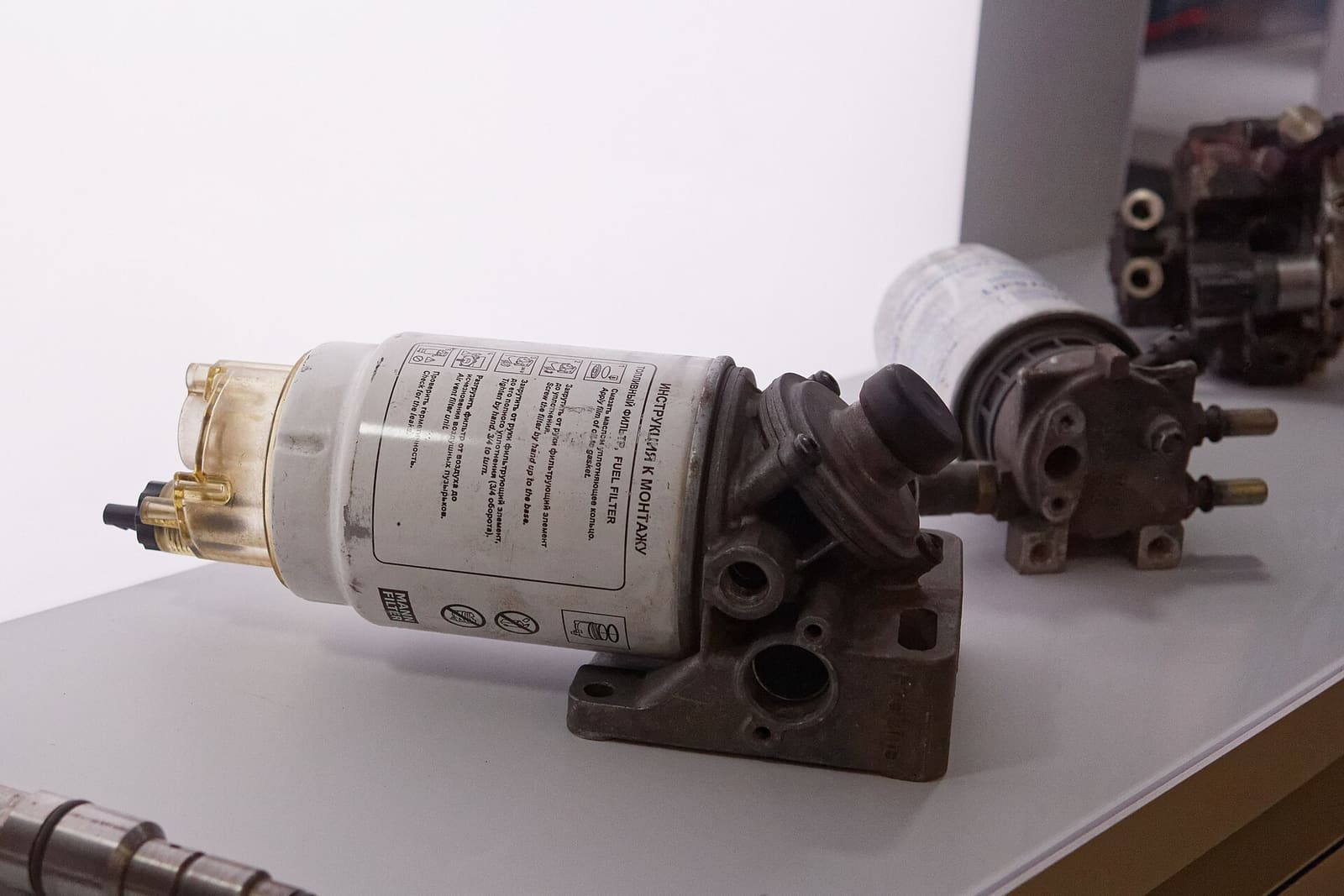
This is the most important filter you can change yourself, because it protects everything downstream. Yamaha recommends replacing its 10-micron fuel/water separating filter every 50 hours or after a bad tank of gas. It suggests a thin film of clean oil on the gasket and pre-filling the new filter about three-quarters with fresh, stabilized fuel so the system primes more easily. Don't drain and reinstall an old filter: Yamaha warns that trapped debris and water can get onto the clean side. See the fuel-water-separator guide for the full procedure.
Yamaha describes a primary on-engine filter, usually a see-through cup on the front, side or back of the powerhead with a small water trap. Look at it with a flashlight:
- Water or debris in the cup: replace the external filter (step 4) and, if your owner's manual lists it as an owner task, the on-engine element. On Yamaha outboards there may be a red ring inside; Yamaha says never to remove it, and if it is floating, there is water in the trap.
- Clean: leave it, and move on.
Some models also have in-line filters between the lift pump and the VST, or between the VST and the fuel rail. Your manual shows which ones exist on your engine and which are dealer items.
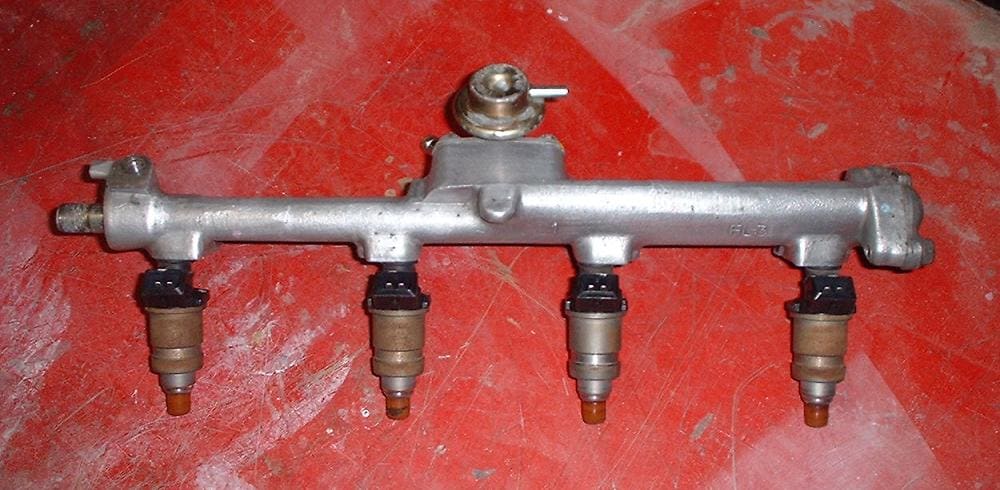
A fuel rail with its injectors and pressure regulator (this one is from a car engine; outboard rails work the same way). The VST pump pressurizes the rail, and each injector has its own tiny screen. Photo: Ian Brockhoff / Wikimedia Commons · CC BY-SA 3.0 After any filter change, prime the fuel system the way your owner's manual describes (squeezing the bulb until firm, or turning the key on and waiting while the electric pump runs). Check every fitting you touched for leaks before starting. Then run the engine with cooling water: in the water, in a test tank or on flush muffs (the built-in flush port is for engine-off flushing on most outboards, unless your manual allows running on it). If the symptom only shows up under load, a careful test run on the water is the real test.
Yamaha describes a filter attached to the electric fuel pump inside the VST that cleans the fuel one last time before it is pressurized for the rail, and recommends having an authorized dealer replace it every 300 hours, as long as the external and on-engine filters have been maintained. Treated fuel helps it last. Other brands have similar parts with their own intervals; check your maintenance schedule. Because the VST is part of the pressurized system and has a float, gaskets and sometimes a pressure regulator inside, opening it is a job for a trained technician.
If the symptoms continue after steps 1 to 6, a dealer will typically:
- Connect a diagnostic tool to read fault codes and live data.
- Measure fuel pressure at the rail against the factory spec at idle and under load.
- Inspect the VST: float and needle valve, pump inlet filter or screen, high-pressure pump, regulator and vent.
- Clean or replace the VST filter, pump or float parts as needed.
- Check the injectors. Yamaha notes that if debris reaches the injector screens, the injectors must be professionally removed and cleaned or replaced.
Ask for the fault codes and pressure readings in writing so you have them for the boat's records.
Boating Magazine, quoting a marine injector specialist, suggests professional injector cleaning and flow-testing at roughly 300 engine hours or every three to four years, and notes that home cleaning methods can't confirm the injectors are back to spec. Signs include hard starting, a rough idle and surging on the way to full throttle. Injector service is usually done together with VST service, since the same contamination affects both.
- Treat every tank with a marine fuel stabilizer as your manual recommends, and buy fuel where lots of boats and cars fill up.
- Run treated fuel through before storage, so the VST and rail hold stabilized fuel instead of fresh gas that will go stale. Follow your owner's manual's storage procedure for your engine; don't just leave old fuel in the system for months. Yamaha's layup advice adds three habits: change the 10-micron fuel filter before storage (water left in the canister can freeze), store with the tank about 7/8 full to limit condensation, and never plug or cap the tank vent.
- Keep water out: check the tank vent, fill cap O-ring and the water-separating filter bowl regularly.
- Use the fuel your manual specifies. Mercury states fuels with more than 10 percent ethanol are not acceptable for its engines and can void the warranty.
- Don't add extra fine filters to the system. Mercury warns that another filter is another restriction that can starve the engine.
Note the date and engine hours of every filter change, fuel problem and dealer visit. A pre-purchase engine surveyor will often take a fuel sample straight from the injector rail, as Power & Motoryacht describes, and good records make a used outboard easier to sell.
Common mistakes
- Replacing the VST pump or injectors before checking fuel quality, the tank vent, the anti-siphon valve and the external filter.
- Leaving untreated ethanol fuel in the boat for a whole season and hoping it starts in spring.
- Opening the VST, fuel rail or injector lines at home without relieving pressure and without the gaskets and specs.
- Draining a filter and reinstalling it instead of replacing it.
- Removing or bypassing the VST, the primer bulb or the fuel pump to "simplify" the system. Fuel system changes create leak and fire risks and the engine will not run correctly.
- Adding extra fine filters that starve the engine at high RPM.
- Running the engine on the built-in flush port to test it, when the manual says the port is for engine-off flushing.
When to call a pro
- Any fuel smell or leak under the cowling: don't run the engine
- Stalling at speed or poor RPM that continues after fresh fuel, a new external filter and boat-side checks
- Fuel pressure, lift pump or lean warnings on the display
- VST filter service, float or pump replacement, fuel pressure tests and injector cleaning
- Water or phase-separated fuel found in the system
- Stranded on the water: TowBoatUS or Sea Tow, and in an emergency VHF channel 16 or 911
Tips
- Carry a spare external water-separating filter and the wrench to change it. It fixes many "VST problems" on the spot.
- If the boat will sit for more than a few weeks, add stabilizer at the fuel dock and run the engine long enough to get treated fuel through to the VST.
- After a bad tank of gas, replace the external filter, then watch the on-engine filter for a few trips.
- Ask your dealer to show you where the VST and filters are on your engine at the next service, so you know what you're looking at.
Official references
We read these to write this guide. Your engine's own manual always wins.
- Yamaha Outboards – Fuel & Fuel System Maintenance (Maintenance Matters)
- Yamaha Outboards – Extended Storage for Your Outboard (Maintenance Matters)
- BoatTest – Your Outboard Vapor Separator Tank
- Boating Magazine – Fuel Injector Cleaning
- Mercury Marine – Service & Support FAQs (ethanol, phase separation, storage, extra filters)
- Power & Motoryacht – How to Survey Outboards (fuel sample from the injector rail, phase separation)
- Mercury Marine – What Is Electronic Fuel Injection?
Safety: BoatMend is for information only and does not replace a certified marine technician. You are responsible for your safety and your boat. Read the full disclaimer.
Last updated 2026-10-24
Related guides
Fuel Pump Checks - Is It the Pump or Something Starving It?
Bogging at speed, surging or dying after a few minutes is often blamed on the fuel pump, but vents, filters, primer bulbs and anti-siphon valves cause the same symptoms. Learn how mechanical, pulse and electric pumps work, the safe checks you can do, what the primer bulb is telling you, and why a real pressure test needs the right gauge and the factory spec.
Ethanol (E10) Fuel Care: Stabilizer, Phase Separation, Fuel Lines and Tank Vents
Keep E10 gasoline from damaging your boat engine. Learn how to use stabilizer, test for water and phase separation, and inspect the fuel lines, primer bulb, anti-siphon valve and tank vent. Most fuel-related breakdowns start with one of these.
How to Replace a Fuel/Water Separating Filter (and Check for Water in Your Fuel)
Swap the spin-on fuel/water separator on your gas boat and learn to spot water and ethanol phase separation before it stalls the engine. It is one of the cheapest jobs on the boat and one of the best protections for a fuel-injected engine.

Loss of Power, Hesitation or Misfire - Troubleshooting Guide
Figure out why your engine bogs down, stumbles, will not reach full rpm or runs rough. Work from simple checks like trim, prop and fuel filter to ignition and engine protection modes before paying for diagnostics.
Engine Starts Then Dies - Troubleshooting Guide
Track down why your boat engine fires up and then stalls, whether at idle, when you shift into gear, or after a few minutes of running. Most causes are in the fuel supply and can be checked with no special tools.
Four-Stroke Outboard Oil Level Rising or Smelling Like Gas: What It Means and What to Do
If the oil on your four-stroke outboard's dipstick keeps going up or smells like gasoline, fuel is probably getting into the crankcase. Learn how to check the level the right way, why lots of idling, trolling, short runs and cold water cause it, what you can do yourself, and when a fuel-system fault needs a dealer.
Boat Fuel Additives Explained: What Stabilizers, Ethanol Treatments and Boosters Really Do
The marine store shelf is full of bottles that promise to fix fuel problems. Learn what stabilizers, ethanol treatments, water removers, octane and cetane boosters, cleaners and diesel biocides actually do, what no additive can do, how to dose them by the label and why you should not stack several products in one tank.
How to Inspect Your Boat's Fuel Tank, Fill, Vent and Hoses
A leaking gas tank is one of the most dangerous problems a boat can have, and it usually starts out of sight. Learn how to inspect portable and built-in tanks, spot aluminum tanks corroding from below, know the ethanol risk for old fiberglass tanks, and check the fill, vent, hoses, clamps and sender, plus why tank replacement is a job for a pro.
How to Winterize an Outboard Engine
Protect your outboard from freeze damage, stale fuel and internal corrosion over the off-season. Most owners can do it in an afternoon with basic tools, compared with a shop bill that often runs several hundred dollars.

Engine Warning Horn and Dash Lights: What They Usually Mean and What to Do
Learn what a warning horn, beeps or a dash light usually mean on a boat engine, from overheating and low oil pressure to water in the fuel and reduced-power (limp) mode. Find out what to do right away and when to stop the engine. Patterns differ by brand, so match what you hear and see to your owner's manual.