Engine Room Automatic Fire Suppression: How It Works, Checks and What to Do After a Discharge
Understand the fixed clean-agent extinguisher in your engine room - how it fires, why the engines must shut down, how to check the helm status light, gauge and cylinder weight, when it needs service - and the safe sequence to follow if it ever goes off, starting with keeping the hatch closed.
Time
30 min
Shop would charge
$150-400
Applies to
Gas inboard, Sterndrive (I/O), Marine diesel · Cabin cruiser, Yacht
Safety first: If the system discharges or you see smoke from the engine room, do not open the engine hatch. Fresh air can turn a smothered fire back into a blaze. Shut down engines, generator and blowers, get everyone into life jackets and away from the engine space, and call the Coast Guard on VHF 16 (or 911 near shore). Never go into the engine room right after a discharge: it can be very hot, full of toxic smoke and low on oxygen.
Fuel smell, water coming in, CO alarm or smoke? Stop, get everyone in life jackets and call USCG on VHF 16 or 911. For a tow: Sea Tow or TowBoatUS.
Owners often ask
- My engine room fire extinguisher went off. When is it safe to open the hatch and restart the engines?
- How do I check whether the automatic fire extinguisher in my engine room is still charged?
This guide walks you through it. Still stuck? Ask the AI Mechanic about your engine.
Tools
- Flashlight
- Owner's/installation manual for your extinguisher and engine shutdown system
- Bathroom or hanging scale (only if the manual allows owner weighing)
- Notebook or phone for an inspection log
Parts & supplies
- Replacement cylinder or recharge from an authorized service center (only after a discharge or failed check)
Before you start
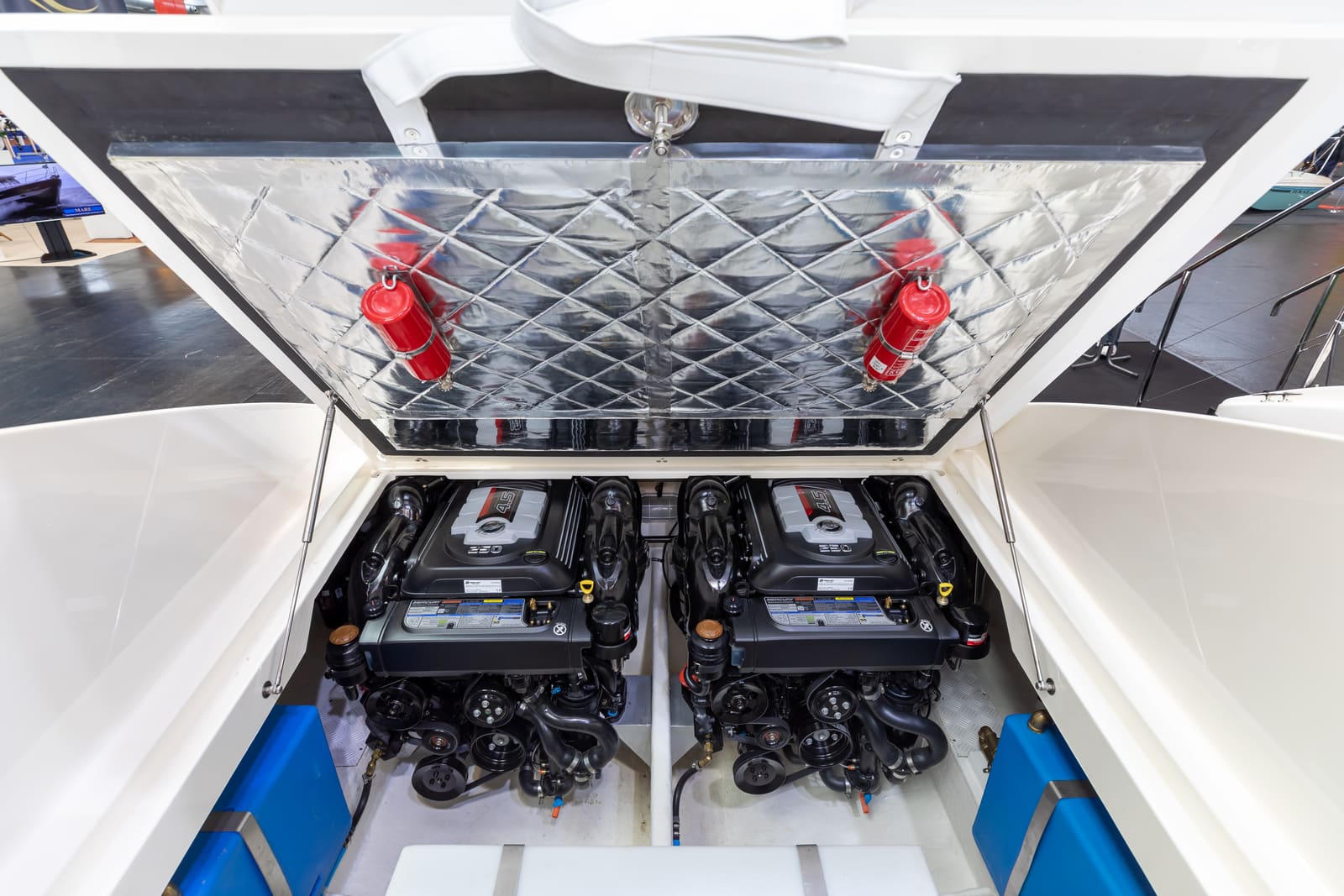
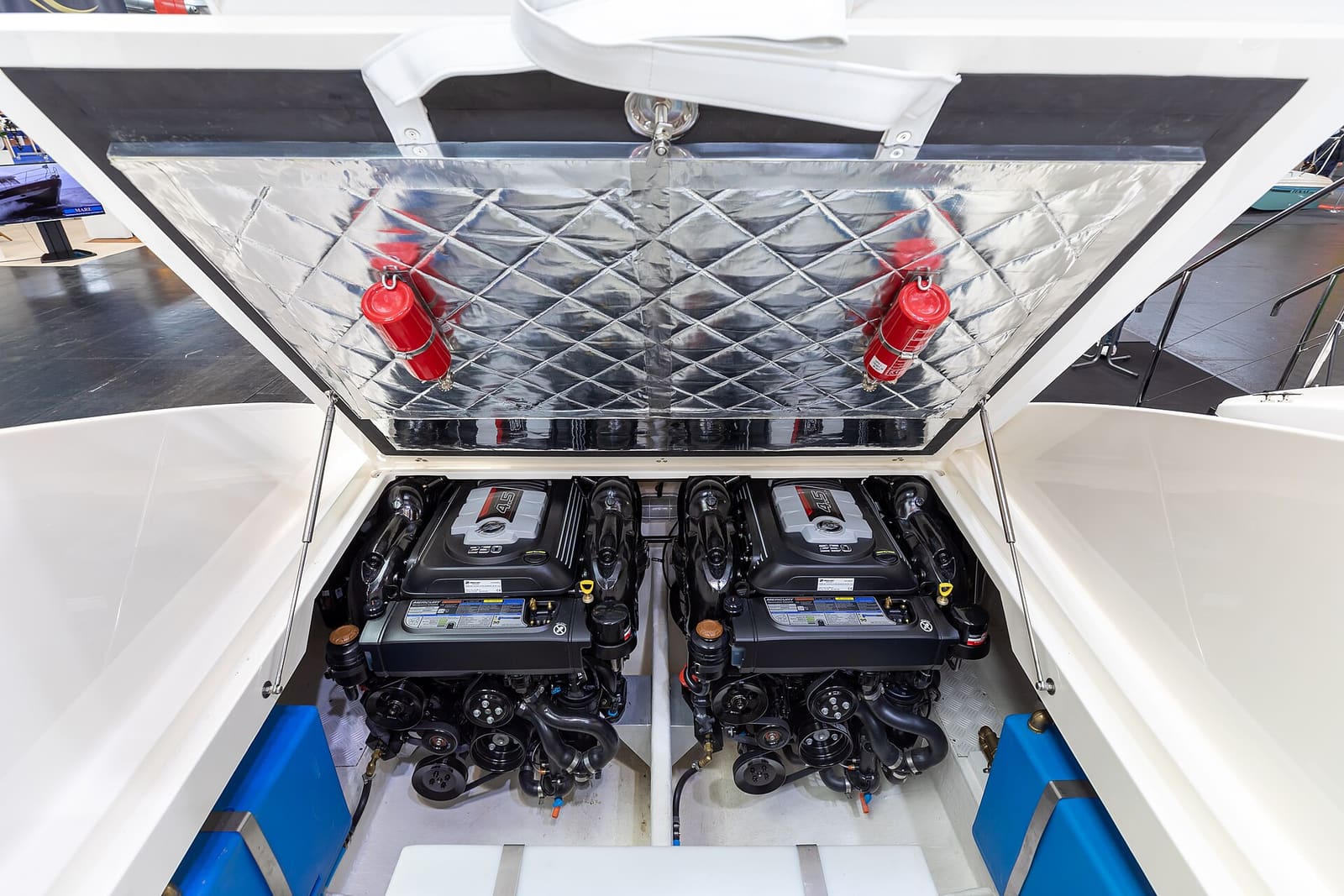
Most cabin cruisers and yachts with inboard engines have a fixed, automatic extinguisher in the engine room: a cylinder mounted high on a bulkhead or overhead, filled with a "clean agent" gas (HFC-227ea, also sold as FM-200, or FK-5-1-12, sold as Novec 1230; older boats may still have halon). Brands include Fireboy-Xintex, Sea-Fire and Blaze-Cut. This guide covers what an owner can check and how to react. Installing, recharging or rewiring a system is a job for an authorized technician.
Why it matters: In a BoatUS Foundation demonstration burn, a fire started in an engine compartment made the bow the only safe spot within about 4 minutes, and two minutes later the windshield shattered. Opening the hatch to "take a look" is the most natural reaction and the worst one.
Steps
Fireboy says its clean-agent systems fire on their own when the space reaches about 175°F and empty in under 10 seconds, flooding the whole compartment. The trigger is usually a heat-sensitive bulb or metal element on the cylinder head. "Clean agent" means it leaves no powder behind, so the engine is not ruined the way dry chemical can ruin it. BoatUS explains that the agent amounts in a correctly sized, pre-engineered unit stay below harmful levels for the space it's made for, but these are for unoccupied spaces.
With the engines off and cool, open the engine room and locate:
- The cylinder(s) and the heat-sensing head
- The manual pull handle, usually at or near the helm, outside the engine room. BoatUS recommends one on every automatic system so you can fire it the moment you see smoke.
- The helm status panel or light (charged/discharged)
- The engine shutdown control box and its override switch, if fitted
- A fire port (a small hatch to discharge a portable extinguisher into the space without opening it), if you have one
Make the helm indicator part of your pre-departure check. A light showing "discharged," no light at all, or a fault means the system may not protect you. Check the fuse feeding the panel before assuming the worst, then call a technician.
- Mounting brackets tight; cylinder not corroded, dented or sitting in water
- Heat-sensing head clean, not painted over or caked with grime
- Safety pin removed (it's left in only during installation or service)
- If your unit has a pressure gauge, the needle in the green
- Manual pull cable intact, not kinked or cut
Many clean-agent cylinders have no gauge because the agent's pressure says little about how much is inside. Those are checked by weight.
The cylinder label usually lists its full (charged) weight. BoatUS notes cylinders must be mounted so they can be removed for weighing and inspection. Follow your manual: some makers let owners weigh the cylinder, others want a technician to do it. Don't remove a cylinder until you know how to disarm the manual cable and keep from setting it off. A weight below the limit in the manual means a leak; take it out of service and get it recharged or replaced.
Each maker sets its own schedule for professional inspection, recharging and cylinder replacement; read the manual and write the dates in your log. Fireboy says its cylinders can be refilled at the factory except after a discharge caused by an actual fire. BoatUS notes halon systems can stay in use as long as they pass their annual inspection. Keep the service receipts: surveyors and insurers ask for them.
The gas does not stop engines. Fireboy warns that a running engine pulls the agent out of the space and lowers it below the level needed to put the fire out. That's why its shutdown system is mandatory for engines (and generators) that draw their air from inside the protected space, and BoatUS says makers often require it for diesels. Many shutdown systems also stop blowers and close dampers so the agent isn't vented away. Most systems pair the shutdown with a helm display panel that gives a visual and audible alarm and has an override; check how yours is set up.
Fireboy's product pages carry two plain warnings worth remembering: a boat with equipment that draws intake air from inside the protected space needs a shutdown system, and so does any diesel-powered boat. If your diesel boat has a cylinder but no shutdown panel at the helm, ask a technician to look at it.
The shutdown panel has an override so you can restart after the fire is out. Make sure the override is off in normal use; leaving it on defeats the system.
Many shutdown panels have a test function that sounds the alarm and shows the status lights without releasing agent. Follow your manual exactly. Never test by pulling the manual handle or heating the sensor: that empties the cylinder.
- Keep the engine hatch and doors closed.
- Make sure engines, generator and blowers are off (pull the throttles back and turn off the ignitions if the shutdown didn't).
- Life jackets on everyone; move people away from the engine room and toward the bow or upwind.
- Call for help on VHF 16 (MAYDAY if there's fire or smoke, PAN-PAN if it's under control), or your tow service.
- Have portable extinguishers ready. If smoke keeps coming and you have a fire port, discharge a portable clean-agent unit through it.
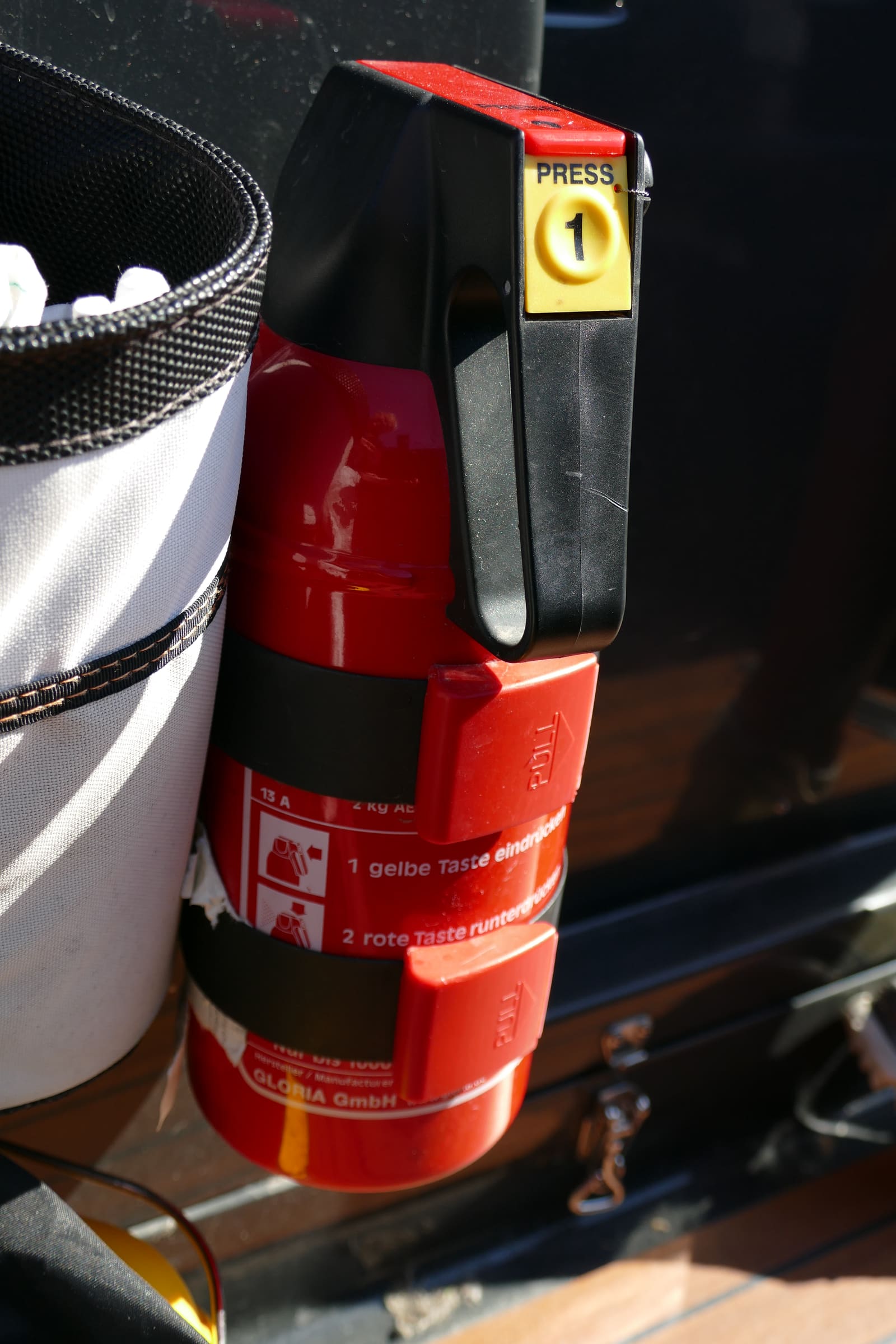
Photo: Kritzolina / Wikimedia Commons · CC BY-SA 4.0 Give the agent time to soak and the hot metal time to cool, so the fire can't flash back when air comes in. Navy research on shipboard systems uses at least a 15-minute hold before anyone re-enters a protected machinery space; on your boat, wait at least that long, longer if the manual says so, and feel the hatch or bulkhead for heat first. Then open it a crack with an extinguisher ready, stand back, and let it air out. Don't breathe the smoke or fumes, and don't go down into the space until it has fully ventilated.
BoatUS notes that because a clean agent doesn't harm the engine, boaters can often restart and get home under their own power once the cause is found and fixed (a burst fuel line, overheated exhaust, electrical short). If you smell fuel, see melted wiring or can't find the cause, don't restart: get a tow. Use the override only after you're sure it's safe, and turn it back off afterward.
The system is now empty and you have no protection. Have it recharged or replaced by an authorized service center before the next trip, have the cause repaired by a pro, and call your insurer if there was fire damage.
Common mistakes
- Opening the hatch to check after smelling smoke or hearing the alarm.
- Leaving the shutdown override switched on, so engines keep running and pull the agent out.
- Jumpering around the shutdown wiring when an engine won't start and the fire panel is beeping or blinking. Find out what the panel is telling you (your manual explains the light and beep codes) and whether that engine is even wired to it; a no-start can just as easily be a battery, key switch or starter fault. A bypass you forget about leaves the engine running in a fire.
- Ignoring a dark status light for weeks.
- Covering the heat sensor with paint, insulation or stored gear.
- Trying to restart right away without finding what caused the fire.
- Assuming the system covers the whole boat. It protects only the engine space; you still need portable extinguishers. The federal carriage table (46 CFR 25.30-20) does let a boat with a fixed system in the machinery space carry fewer portables: for example, one 5-B instead of two on a boat 26 to under 40 feet, and two instead of three from 40 to 65 feet. That credit only counts while the fixed system is charged and working, and the portables still have to be in date (see the fire extinguisher guide).
When to call a pro
- The system discharged, for any reason: recharge or replacement and inspection by an authorized technician
- Any fire, smoke, fuel smell or melted wiring: do not restart; call TowBoatUS, Sea Tow or USCG on VHF 16
- The status light shows discharged or a fault, or the cylinder is under weight
- Installing a new system, changing engines, or adding a generator or blower (the cylinder must be sized for the space and wired to shut everything down). Makers such as Fireboy list their pre-engineered models by the volume of space they protect, in cubic feet, so a cylinder bought "about the right size," or one moved from another boat, may hold too little agent for your engine room; let the installer measure the space and pick the model from the maker's chart
- Service and recertification dates from the manual
Tips
- Tape a short card at the helm: "Smoke or alarm: hatch CLOSED, engines OFF, life jackets ON, VHF 16."
- If your boat has no automatic system, a fire port and a portable clean-agent extinguisher is the next best thing.
- Log every check (date, light status, weight) in your maintenance records.
- A smoke or heat alarm in the engine room gives warning before the system fires (see the smoke and heat detectors guide).
Official references
We read these to write this guide. Your engine's own manual always wins.
- BoatUS – How To Handle An Engine Compartment Fire (2022)
- BoatUS – Installing An Automatic Fire Extinguisher (2022)
- Fireboy-Xintex – Marine Fire Extinguishing Systems
- Fireboy-Xintex – Automatic Marine Engine Shutdown Systems
- eCFR – 46 CFR 25.30-20, Fire extinguishing equipment required (fixed system credit)
- Naval Research Laboratory (via NIST, government PDF) – Halon 1301 Retrofit Implementation Considerations (re-entry hold time)
- Fireboy-Xintex – CG and MA Series HFC-227ea (model chart by protected volume)
Safety: BoatMend is for information only and does not replace a certified marine technician. You are responsible for your safety and your boat. Read the full disclaimer.
Last updated 2026-10-25
Related guides
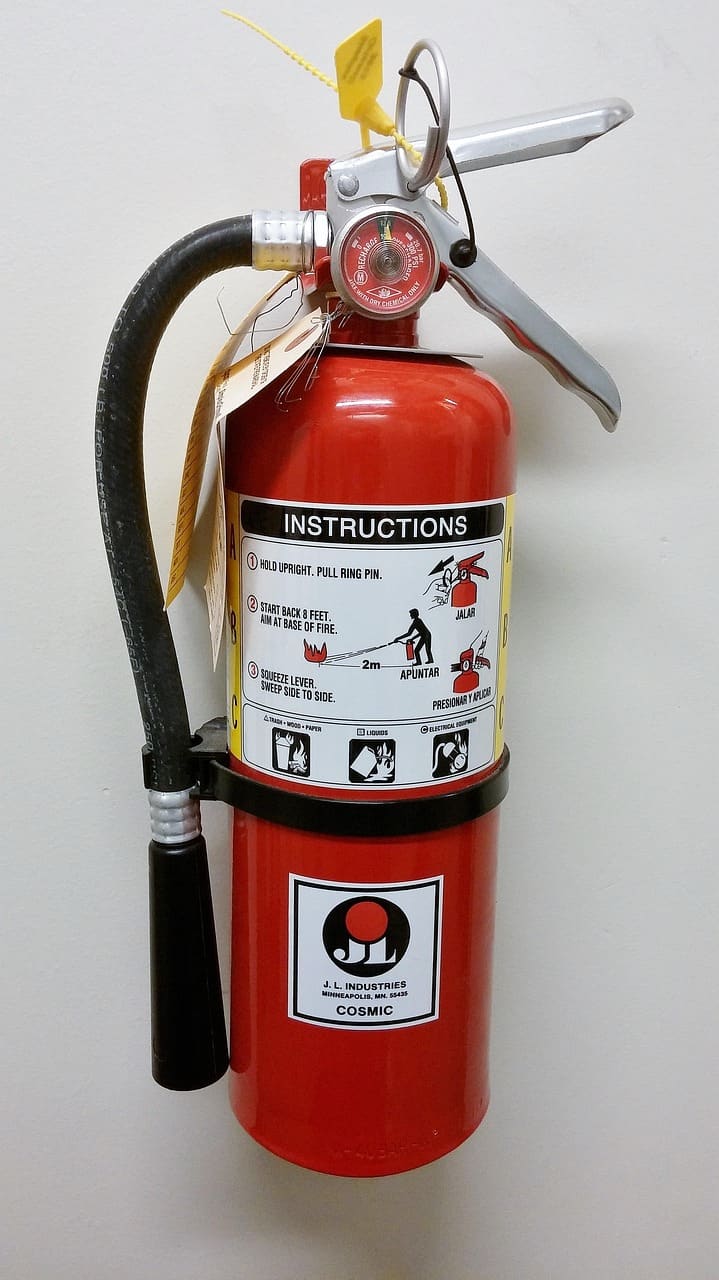
How to Check, Mount and Replace Boat Fire Extinguishers
A monthly five-minute check of every fire extinguisher aboard, plus how the 2022 Coast Guard rule changes affect you, where to mount them, and when to recharge or replace. A boat fire spreads in seconds, and an extinguisher with a dead gauge, missing pin or expired date will not help you or pass a boarding.
Smoke and Heat Detectors on a Boat: Where They Make Sense, What to Buy and How to Test
A fire in a closed cabin, engine room or lazarette can grow for minutes before anyone notices. Learn where smoke alarms and heat detectors make sense aboard, why boats are hard on household alarms, how to power and test them, how they fit with CO alarms, and how automatic engine-room extinguishers and engine shutdown tie in.
Emergency Drills for Your Crew: Engine Failure, Fire, Steering Loss and Man Overboard
Practice what everyone aboard does when the engine quits, a fire starts, the steering fails or someone falls in. A few short drills each season turn panic into a plan, and teach your crew to anchor, call for help on VHF 16 or DSC, and get a tow.
Bilge Blower and Engine Compartment Ventilation on Gas Inboards and Sterndrives
Learn why gas boats have a "run the blower 4 minutes" label, how to check that the blower and vent ducts actually move air out of the engine compartment, and how to replace a blower safely with an ignition-protected marine unit.
How to Check and Test a Gasoline Vapor (Fume) Detector
A gasoline vapor detector sniffs the bilge all the time and sounds an alarm long before fumes can explode. Learn how these detectors work, where the sensor belongs, how to test the system the way its maker says, what causes false alarms, what to do when it goes off, and why it never replaces the blower and your own sniff test.
Marine Generator Routine Maintenance and CO Safety
Keep an Onan, Kohler/Rehlko, Northern Lights, Westerbeke or similar marine generator reliable with regular checks of oil, raw-water cooling, fuel, exhaust and the start battery, plus a monthly run under load. Generator exhaust is a leading source of carbon monoxide on boats, so safety checks come first.
USCG Required Safety Equipment Check by Boat Length
Walk through your boat and confirm you carry every piece of safety gear the US Coast Guard requires for your boat's length and type, and that none of it is expired or worn out. Missing or expired gear is one of the most common tickets on the water, and it is the gear you need when things go wrong.