Smoke and Heat Detectors on a Boat: Where They Make Sense, What to Buy and How to Test
A fire in a closed cabin, engine room or lazarette can grow for minutes before anyone notices. Learn where smoke alarms and heat detectors make sense aboard, why boats are hard on household alarms, how to power and test them, how they fit with CO alarms, and how automatic engine-room extinguishers and engine shutdown tie in.
Time
1 h
Shop would charge
$100-1500
Applies to
All engines
Safety first: A smoke or heat alarm only buys you time; it does not put out a fire. If an alarm sounds and you see or smell smoke, get everyone into life jackets and out of the cabin first, shut off fuel and the engines if you can do it safely, and call the USCG on VHF 16 (or 911 near shore). Do not open an engine hatch on a fire: the rush of air can make it explode into flames. Use the extinguisher port or the fixed system if fitted. Never disable an alarm by pulling its battery; move it if it false-alarms. Any work on 12-volt or AC wiring for a hard-wired or system detector belongs to a marine electrician.
Owners often ask
- Should I put a smoke detector in my boat cabin, and what kind?
This guide walks you through it. Still stuck? Ask the AI Mechanic about your engine.
Tools
- Screwdriver and drill with small bits (for mounting)
- Step stool
- Smoke alarm test spray, if the alarm maker approves it
- Flashlight
Parts & supplies
- Optical (photoelectric) smoke alarm with a hush button and sealed long-life battery, listed for the use (check the maker says it is suitable for boats or RVs)
- Marine CO alarm for each sleeping area, if you have an enclosed cabin and any engine, generator or fuel-burning heater
- Optional - heat detector or monitored fire detection system for the engine room, lazarette or battery compartment (installed by a pro or per the maker's instructions)
Before you start
Why boats need them: In GEICO | BoatUS insurance claims from 2015 to 2019, fire ranked fifth among causes of loss, with many fires starting in the engine compartment, at batteries and in the AC shore power system, often when nobody is watching. Over a quarter of the boats it insures that burn catch fire from something nearby, usually another boat or the marina. On a boat with a closed cabin, you may be asleep a few feet from the engine room, galley stove or heater.
Three different devices:
- Smoke alarm: senses smoke in living and sleeping spaces. Best for cabins.
- Heat detector: senses a fixed high temperature or a fast rise. Used where smoke alarms false-alarm, such as engine rooms, lazarettes and battery compartments.
- CO alarm: senses carbon monoxide from engines, generators and heaters. It is not a smoke alarm. See CO detector safety.
Boats are tough on alarms. The UK Boat Safety Scheme (BSS) notes high humidity, temperature extremes, jolts and engine vibration make boats a challenging environment. It recommends optical (photoelectric) alarms, ideally with thermal enhancement, plus a hush button, because they catch slow, smoldering fires (overheated wiring, foam cushions) and false-alarm less in tight spaces. The BSS standard references are British; in the US, look for a recognized lab listing and a maker's statement that the model is suitable for boats or RVs. Many household alarms say in their manual that they are not for use in vehicles or boats.
The US picture. Writing in BoatUS, a marine surveyor who chairs NFPA 302 (the fire-protection standard for pleasure boats) notes that ABYC recommends smoke alarms on any boat with sleeping quarters or other accommodation spaces, but that no smoke alarm has been independently tested for the marine environment. His practical advice: household alarms listed to UL 217 can work in the dry spaces of a boat, photoelectric types suit the smoky, smoldering fires that electrical faults cause, and radio-linked (wireless interconnected) alarms let one alarm set off all of them. Another surveyor writing in BoatUS suggests alarms made for the RV industry as a good choice, because they are built tougher than household units; if you do use a household alarm aboard, he advises testing it monthly, checking it for corrosion and replacing it every couple of years.
Steps
Walk the boat and list every enclosed space where someone sleeps or relaxes, plus every closed space with an ignition source: engine room, generator space, battery compartment, lazarette with a charger or inverter, and the AC panel area. Open boats with no cabin usually don't need a smoke alarm, but a center console with a closed head or a cuddy cabin with a berth may benefit from one.
The BSS advice for boats:
- Place the alarm along the boat's centerline, on the ceiling, in the same space as a cooker or heater but not too close to it.
- On a sloping ceiling, mount at or near the highest point, and keep it about a foot (300 mm) from walls if you can.
- If you must mount on a wall, keep it 6 to 12 inches (150–300 mm) below the ceiling and not right above a vent or opening window.
- No part of the protected space should be more than about 16 feet (5 m) from an alarm.
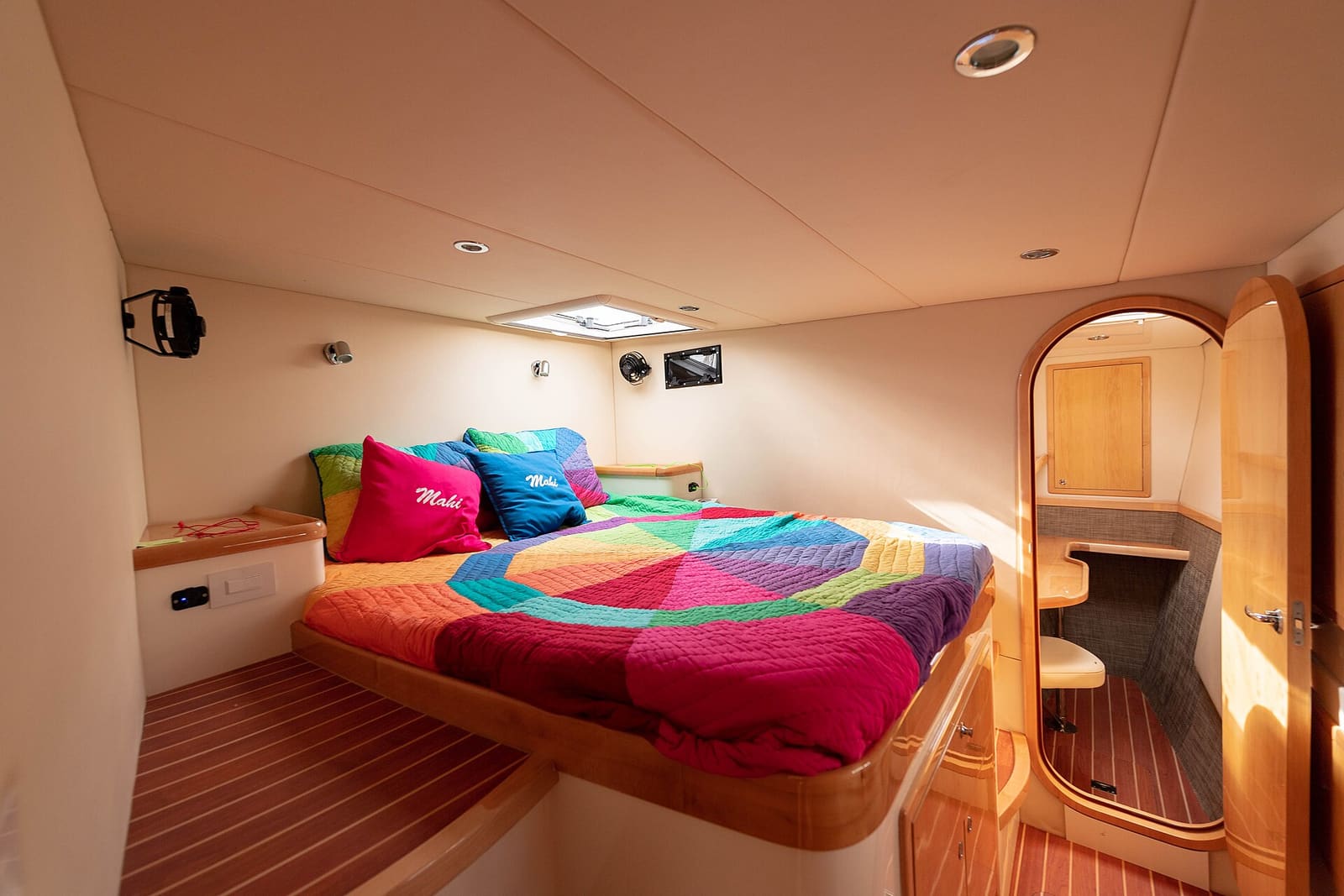
- Mount it where you can reach the test and hush buttons and hear it when asleep with doors closed. BoatUS's surveyor suggests alarms on either side of a solid door, kept away from rain and spray.
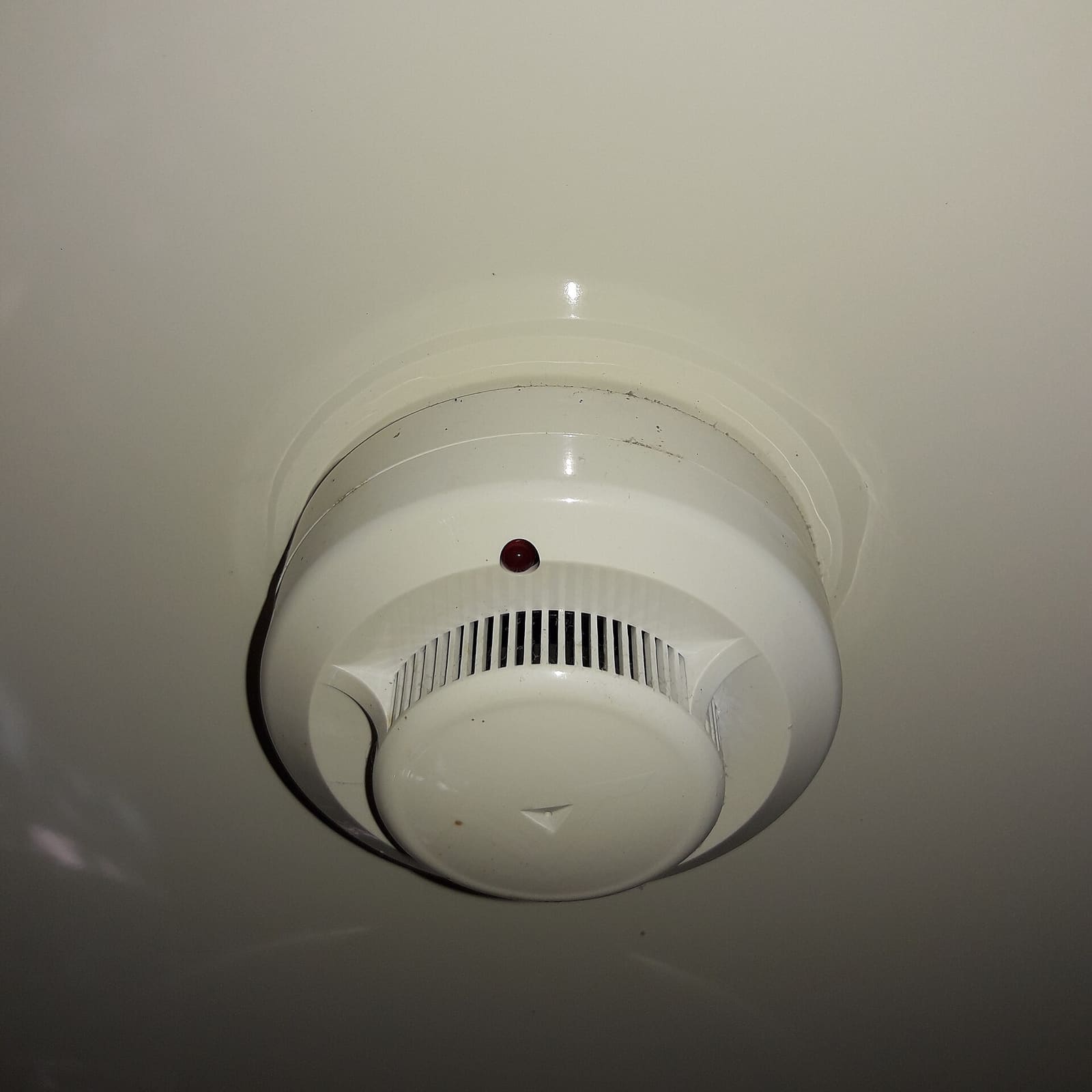
Photo: Georg Pik / Wikimedia Commons · CC0 The BSS says not to put a smoke alarm in the galley or head, where cooking fumes and steam set it off, nor too close to a cooker or heater, nor flush to the ceiling or next to a roof vent. Frequent false alarms are why people pull batteries, so placement matters.
- Sealed long-life lithium battery: simplest for most boats. The BSS recommends long-life batteries but warns that cabin damp may shorten their life, so be ready to replace the alarm before its rated life.
- Replaceable 9-volt battery: replace at least yearly, more often aboard.
- 12/24-volt hard-wired units or monitored systems: used on larger boats; wire them to a circuit that stays on when the boat is unattended if the maker requires it, with proper fusing. That is a marine electrician's job.
The US Fire Administration notes that a smoke alarm with a dead or missing battery is the same as having no alarm.
On boats with several cabins, choose alarms that interconnect so one triggers all. The BSS recommends interlinkable alarms when you fit more than one, and the USFA recommends interconnected alarms in homes for the same reason: everyone hears the warning.
Smoke alarms false-alarm in engine rooms from exhaust and oil vapor, so marine fire detection systems use heat detectors there. Fireboy-Xintex, for example, sells monitored systems with smoke, heat and rate-of-rise heat detectors in separate zones for the engine room, battery compartment, lazarette and accommodation spaces, shown on one helm panel. Choosing and wiring such a system is a pro job, but knowing it exists matters if your boat has a closed engine room that you can't see from the helm.
Many inboard boats have a fixed clean-agent extinguisher in the engine room. Fireboy says its systems discharge automatically when the space reaches 175°F and empty in under 10 seconds. Check the helm status light on every trip: it shows whether the bottle is charged. See fire extinguisher care.
- Manual pull at the helm. BoatUS recommends that automatic systems also have a manual release handle outside the engine room, ideally at the helm, so you can discharge it the moment you see smoke instead of waiting for the heat trigger.
- No fixed system? ABYC recommends that inboard and sterndrive boats without one have a fire port: a small opening that lets you discharge a portable extinguisher into the engine space without lifting the hatch. BoatUS notes that dry chemical extinguishers work poorly through a port because they must be aimed at the base of the flames; a clean-agent portable sized for the space, with a nozzle that fits the port, is the better match.
Fireboy explains that clean-agent gases will not stop a running engine, and a running engine or blower can pull the agent out of the space before the fire is out. Its automatic engine shutdown systems stop engines (and can shut generators, blowers and dampers) when the extinguisher discharges, and the company says shutdown is mandatory where equipment draws intake air from inside the protected space. If your boat has a fixed system without shutdown, ask a marine electrician whether it should have one. After any discharge, wait before opening the space (follow the system's instructions) so the fire doesn't reignite. Because clean agents leave no residue, BoatUS notes you may be able to restart and run home once the cause is fixed, so a shutdown system should have a way to be bypassed for that restart; know where it is.
- Smoke and CO alarms: press the test button monthly and at the start of every trip with overnight guests. Use test spray only if the maker approves it.
- Fixed extinguisher: check the helm light every trip and the bottle's gauge or weight as the maker specifies.
- Monitored systems: follow the maker's test procedure, usually at commissioning and annually by a technician.
Never test with an open flame inside the boat.
The USFA says home smoke alarms need replacing every 10 years. Aboard, damp and vibration can shorten that, and the BSS suggests being ready to replace sooner. Write the install date on the back of each alarm and in BoatMend. CO alarms have their own end-of-life date; check the label.
If you have an enclosed cabin and any engine, generator or fuel-burning heater, you need CO alarms in addition to smoke alarms. Some combination smoke and CO units exist; the BSS notes the maker must state that a combined alarm is suitable for boats. Separate dedicated units are often easier to place correctly, since CO alarms go where people sleep. See CO detector safety and cabin heater safety.
Alarms are only useful if everyone knows what to do. Show guests the alarm sound, the exits (including forward hatches), where the extinguishers are and how the fixed system works. Practice getting out of each cabin at night. Log alarm tests and drills in BoatMend.
Walk the plan for real, as BoatUS suggests: can you reach the stove's gas shutoff without reaching over the burner? Is the forward hatch big enough to climb through, and can it open with the dinghy stored on deck? Is there an extinguisher at the helm or in the cockpit, not only below, where a galley fire could cut you off from it? Post a simple diagram showing every extinguisher and the fixed-system controls.
Common mistakes
- Putting a smoke alarm in the galley or head, getting false alarms, then removing the battery.
- Using a household 120-volt hard-wired alarm on a boat that is often unplugged, so it has no power when nobody is aboard.
- Assuming a CO alarm detects smoke, or that a smoke alarm detects CO.
- Mounting a smoke alarm in the engine room, where it either false-alarms constantly or fails from heat and fumes.
- Opening the engine hatch to "take a look" after an alarm or a smoke smell.
- Never checking the fixed extinguisher's helm light, so a discharged or leaking bottle goes unnoticed.
- Leaving the boat on shore power with chargers and heaters running but no alarm or monitoring of any kind.
When to call a pro
- Installing a hard-wired, 12/24-volt or monitored fire detection system
- Adding or servicing a fixed engine-room extinguisher or engine shutdown system
- Any alarm that sounds with a burning smell, warm panel, or hot wiring: shut off power at the battery switch and AC main and get help
- After any fire or extinguisher discharge, before running the engines again
- Repeated unexplained alarms from a heat detector or monitored system
Tips
- Choose alarms with a hush button; it's the difference between living with an alarm and pulling its battery.
- Test alarms when you change the clocks or at commissioning and haul-out, and log it.
- If you sleep aboard on shore power, a working smoke alarm in the cabin and a CO alarm at the berth are the cheapest life insurance on the boat.
- A small battery-powered alarm in a lazarette with a charger or inverter is better than nothing, but a proper heat detector is the right tool there.
Official references
We read these to write this guide. Your engine's own manual always wins.
- Boat Safety Scheme – Choosing a smoke alarm
- Boat Safety Scheme – Installing Smoke Alarms
- Boat Safety Scheme – Alarm features
- U.S. Fire Administration – Smoke Alarms
- Fireboy-Xintex – Marine Fire Extinguishing Systems
- Fireboy-Xintex – Automatic Marine Engine Shutdown Systems
- Fireboy-Xintex – FBD Series Fire Detection Systems
- BoatUS – Analyzing Onboard Fire Claims
- BoatUS – Three Alarms That Can Save Your Boat (smoke, vapor and high-water alarms)
- BoatUS – How To Handle An Engine Compartment Fire (fire ports and fixed systems)
- BoatUS – Your Boat's On Fire, Now What? (RV-grade alarms, extinguisher placement, escape routes)
Safety: BoatMend is for information only and does not replace a certified marine technician. You are responsible for your safety and your boat. Read the full disclaimer.
Last updated 2026-10-25
Related guides
Carbon Monoxide on Boats: Where It Comes From, CO Alarms and Warning Signs
Carbon monoxide can build up in cabins, under canvas and around the swim platform, and its first symptoms look like seasickness. Learn the danger zones, where to mount marine CO alarms, how to test and replace them, and exactly what to do if an alarm sounds or someone feels sick.
How to Check, Mount and Replace Boat Fire Extinguishers
A monthly five-minute check of every fire extinguisher aboard, plus how the 2022 Coast Guard rule changes affect you, where to mount them, and when to recharge or replace. A boat fire spreads in seconds, and an extinguisher with a dead gauge, missing pin or expired date will not help you or pass a boarding.
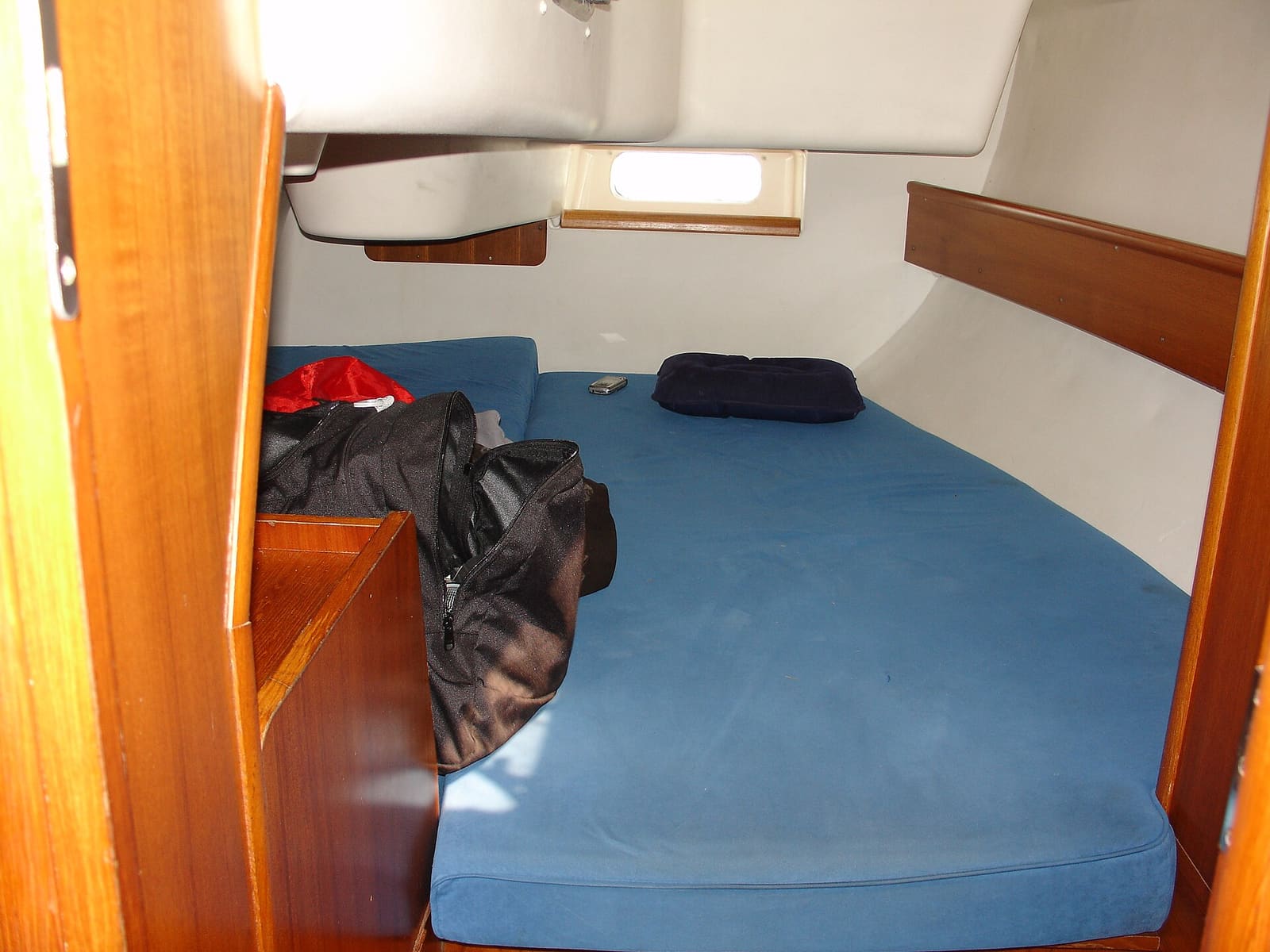
Cabin Heater Safety Aboard: Diesel, Propane and Electric Heaters
Heat your cabin without poisoning the crew or burning the boat. Covers carbon monoxide alarms, exhaust and through-hull checks for diesel and propane heaters, fuel and ventilation, why household and camping heaters don't belong in a closed cabin, and how to use electric space heaters on shore power safely.
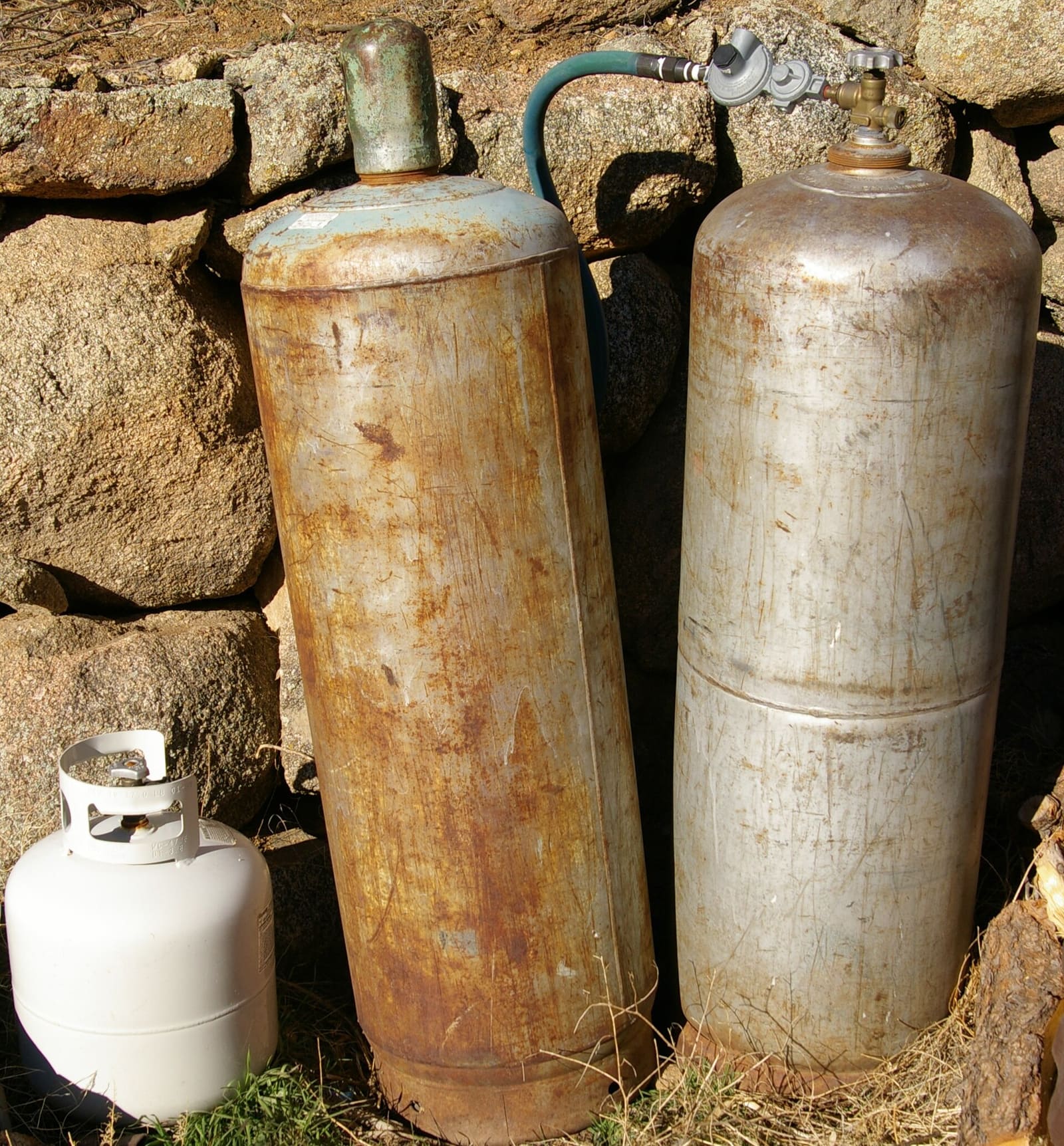
Propane (LPG) Safety on Boats - Locker, Solenoid, Sniffer and Leak Test
Learn why leaking propane sinks into the bilge, how to inspect the locker, cylinders, hoses, solenoid and gas alarm, and how to run a simple leak test. Repairs to a propane system belong to a qualified marine technician.
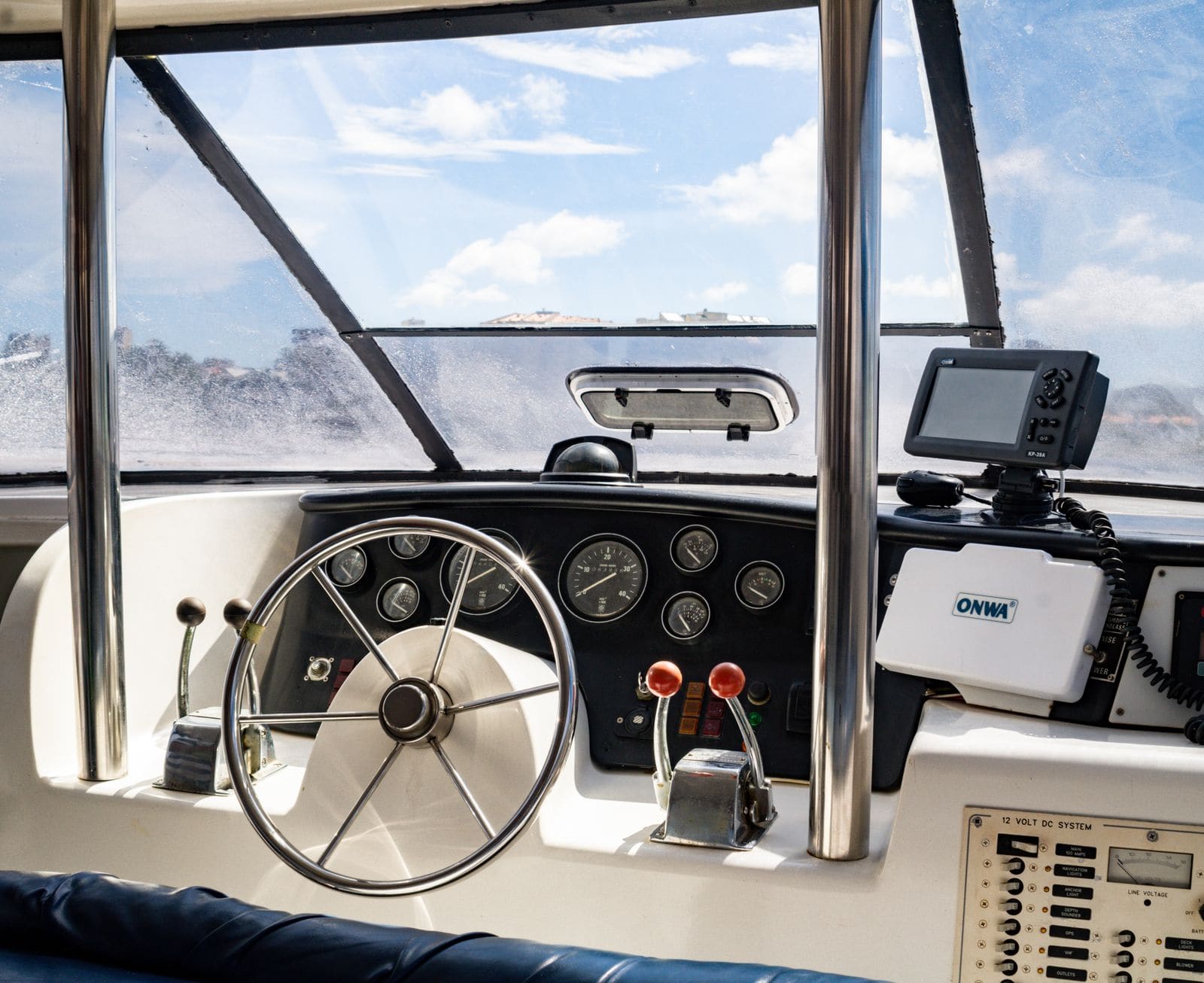
Engine Warning Horn and Dash Lights: What They Usually Mean and What to Do
Learn what a warning horn, beeps or a dash light usually mean on a boat engine, from overheating and low oil pressure to water in the fuel and reduced-power (limp) mode. Find out what to do right away and when to stop the engine. Patterns differ by brand, so match what you hear and see to your owner's manual.
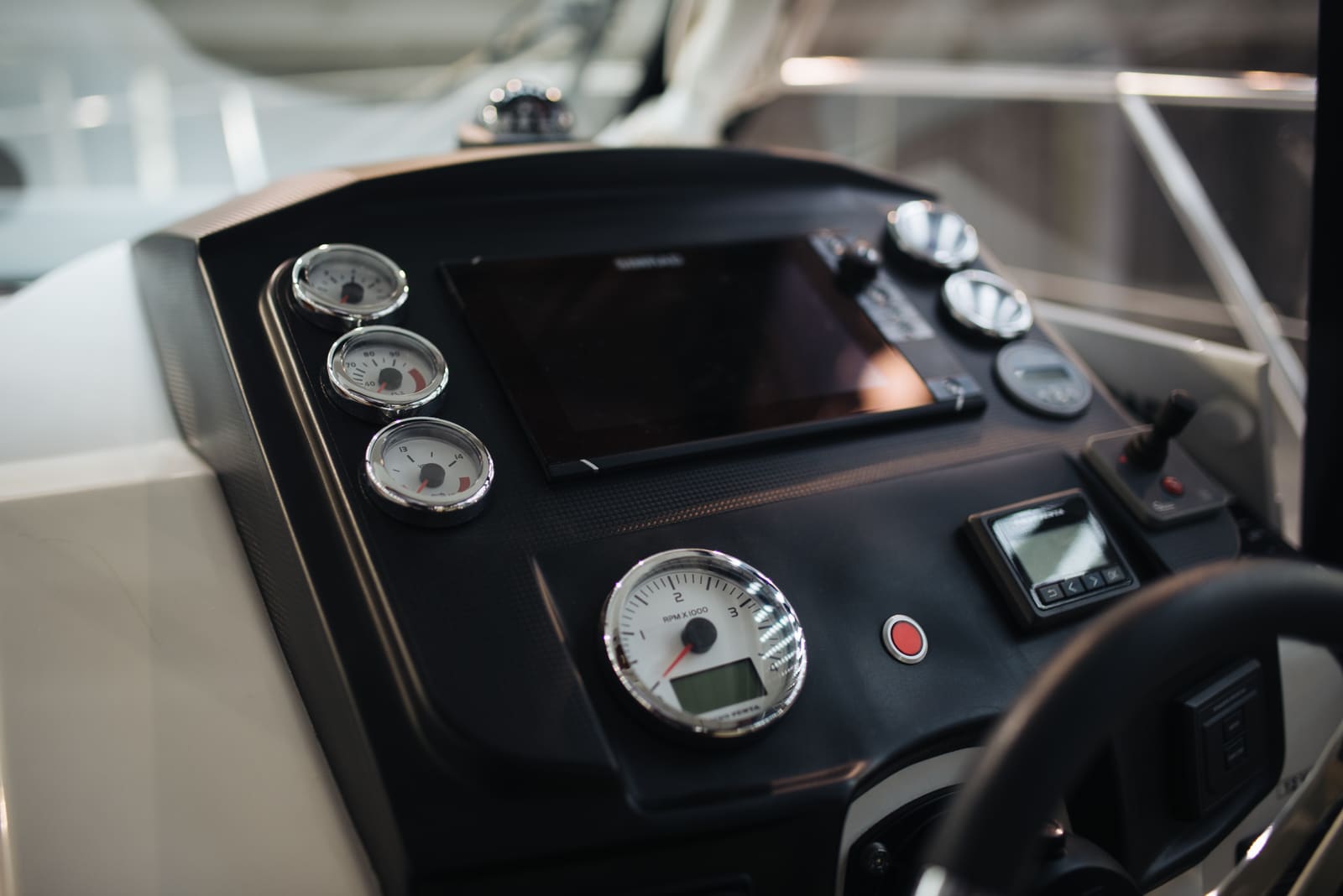
Overheat Alarm: What to Do in the First 60 Seconds
A short, practiced routine for the moment the temperature alarm goes off: take the load off, look for cooling water, shut down if it isn't there, and check every space the exhaust runs through for heat or fire. Based on a June 2026 Coast Guard safety alert about a fatal fire that started with an overheat alarm.
Marine Generator Routine Maintenance and CO Safety
Keep an Onan, Kohler/Rehlko, Northern Lights, Westerbeke or similar marine generator reliable with regular checks of oil, raw-water cooling, fuel, exhaust and the start battery, plus a monthly run under load. Generator exhaust is a leading source of carbon monoxide on boats, so safety checks come first.
Shore Power Safety: Cords, Inlets, Burned Plugs and Electric Shock Drowning
An owner's inspection routine for your shore power cord, plugs, boat inlet, galvanic isolator and ground-fault protection, plus the right way to plug in and the facts about Electric Shock Drowning. This guide is for looking and testing only; any electrical repair belongs to an ABYC-certified marine electrician.