Sterndrive Power Steering Hoses and Fluid Cooler: Inspection and When to Replace
Learn to spot the early signs of a failing power steering hose or fluid cooler on a MerCruiser, Volvo Penta or similar sterndrive or inboard, from rusty crimped hose ends and red fluid in the bilge to a cooler that leaks fluid overboard or lets water into the system. Inspection is an owner job; replacement is usually for a pro.
Time
1 h
Shop would charge
$200-900
Applies to
Sterndrive (I/O), Gas inboard · Bowrider / runabout, Cabin cruiser, Fishing boat, Yacht
Safety first: Power steering fluid is under high pressure when the engine runs. Never feel for a leak with your hand on a running engine: a pinhole spray can inject fluid under the skin, which needs emergency care. Keep hands away from belts and pulleys, and do the close inspection with the engine off, the key out and the engine cool. Fluid sprayed onto a hot exhaust manifold or riser can catch fire: if you smell burning oil or see smoke, shut down and get everyone ready to leave the engine area, and call the USCG on VHF 16 or 911 if there is fire. The fluid cooler sits in the raw-water (sea water) circuit, so a hose that comes off it can let water into the boat: if water is coming in, call TowBoatUS, Sea Tow or the Coast Guard. If you lose steering under way, slow down right away and call for help if you can't get home safely.
Owners often ask
- I keep finding red fluid in the bilge under my sterndrive engine. Could it be the power steering?
- My power steering hose ends are rusty. Do I need to replace the hoses?
This guide walks you through it. Still stuck? Ask the AI Mechanic about your engine.
Tools
- Flashlight or headlamp and an inspection mirror
- White paper towels (to see fluid color)
- Spray degreaser and clean rags
- Oil-only absorbent pads (the kind that repel water)
- Paint marker or masking tape (to mark fittings and leak spots)
- Nitrile gloves and safety glasses
- A helper at the wheel
Parts & supplies
- Power steering fluid your engine manual specifies (to top up after the inspection)
- Replacement hoses or fluid cooler, only after diagnosis (OEM or made by a hydraulic hose shop to the correct pressure rating)
Before you start
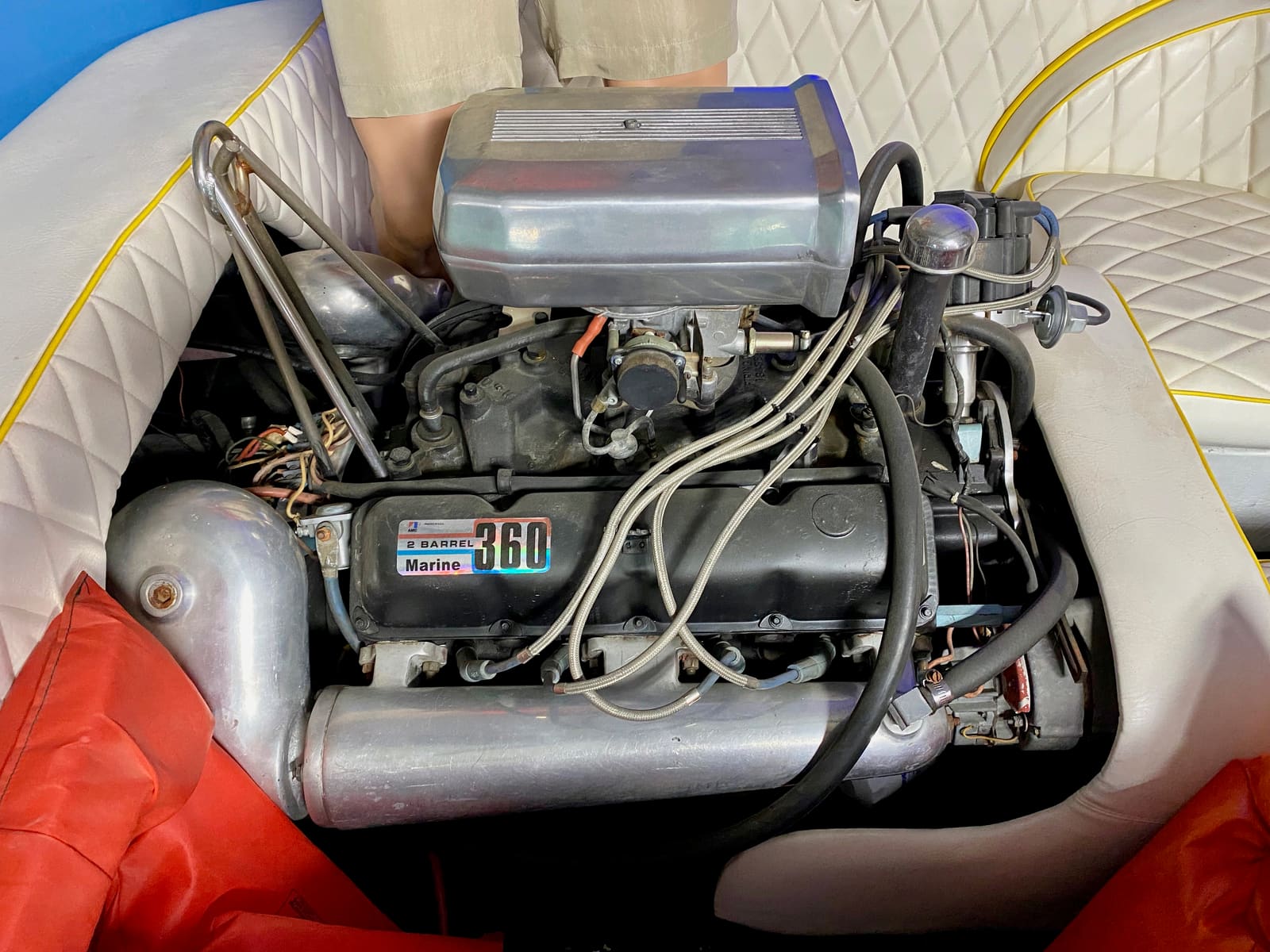
How the system is laid out: on most power-assisted sterndrives, a belt-driven pump on the front of the engine pushes fluid through a high-pressure hose to the steering actuator or control valve near the transom, and a return hose brings it back. Many engines route the fluid through a small power steering cooler, a tube-shaped heat exchanger that the engine's raw cooling water flows through. Some engines have no cooler or use a finned line instead. Trace your hoses from pump to transom and back so you know which is which. This guide covers the hoses and cooler; for fluid, belts and hard steering in general, see our sterndrive power steering guide.
Why these parts fail: the hoses have crimped metal ends (ferrules) squeezed onto the rubber. In a damp, salty bilge those steel ends rust, the rust works under the crimp, and the hose starts to weep or lets go. Hoses also crack with heat and age, and chafe where they touch the engine or hull. The cooler corrodes from the sea water side. When it fails inside, steering fluid can be pumped out with the cooling water (you may see a sheen at the exhaust and a falling fluid level with no visible leak), or water can get into the fluid (milky or foamy fluid).
What you can do yourself: look, clean, mark, monitor and top up. Replacing high-pressure hoses and the cooler is usually dealer work: the hoses must have the correct pressure rating and ends, the system must be bled the right way, and the cooler is part of the raw-water circuit.
Steps
Shut the engine off, take the key out and let it cool. Turn the battery switch off if you'll be leaning near the starter or alternator. Open the engine hatch and air out the compartment; on gasoline engines, sniff for fuel before doing anything else and stop if you smell it.
Check the power steering reservoir as your manual describes. Wipe a drop on a white paper towel:
- Clear red or amber: normal for many systems.
- Dark brown or burnt smell: old or overheated fluid.
- Milky, pink and cloudy, or foamy: water or air in the system. On engines with a cooler, a failed cooler is one of the causes. Have it checked.
Write down the level so you can tell later whether it is dropping.
Look under the engine, the pump and along the hose route for red or amber oil, or an oily film on bilge water. Lay a white paper towel in suspect spots overnight. Don't pump oily bilge water overboard: it is illegal to discharge oil that leaves a sheen. Soak it up with oil-only absorbent pads and dispose of them as your marina or local hazardous waste site says. If you see a sheen on the water around the boat, report it to the National Response Center at 1-800-424-8802 (see our bilge oil cleanup guide).
With a flashlight and mirror, follow each hose from the pump to the transom and back. Boating Magazine's checks say hoses should feel pliant and firm, not mushy, brittle or dry-rotted. Look for:
- Cracks in the cover, especially at bends
- Bulges, blisters or soft spots
- Shiny or flattened spots where it rubs the engine, a bracket or the hull
- Hoses touching or very close to the exhaust manifolds, risers or the belt
- Tight kinks or sharp bends. The NTSB traced a towing-vessel fire to a hydraulic hose bent tighter than its minimum bend radius; it ruptured and sprayed oil on a hot exhaust.
- Missing or broken support clips that let a hose sag or swing
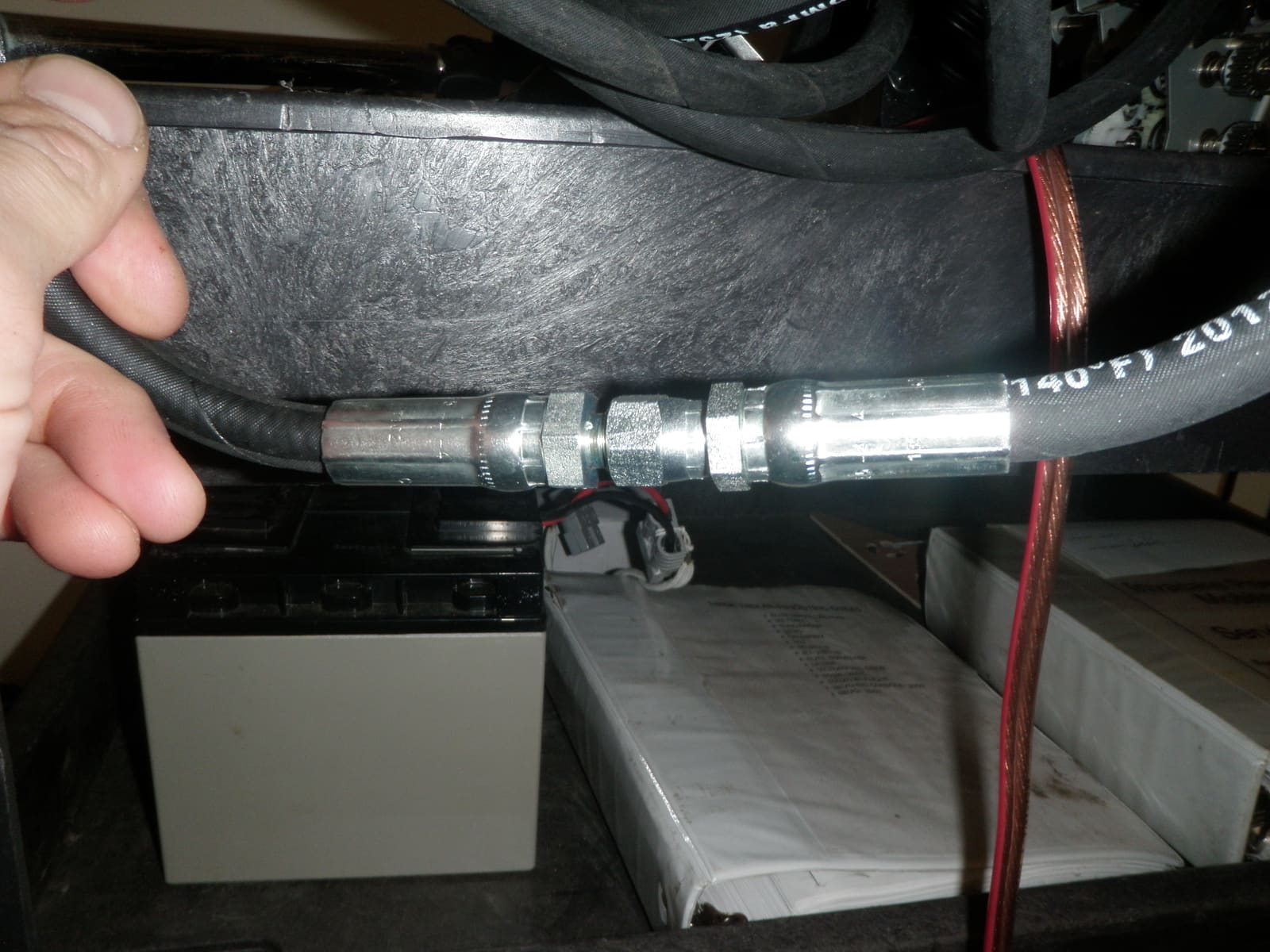
The metal ends are where most old hoses fail. Check every crimp at the pump, cooler and actuator:
- Light surface rust that wipes off: clean it, coat it with a corrosion inhibitor and keep watching.
- Flaking or bubbling rust, pitting, or rust creeping under the crimp: the hose assembly is near the end. Plan to replace it.
- Wetness or caked oily dirt right at the crimp: the hose is weeping there. Replace it.
- A hose that has moved or pulled partly out of its end: stop using the boat and replace it.
Don't try to re-crimp, clamp or wrap a leaking high-pressure hose end.
Look at the nuts where hoses screw into the pump, cooler and actuator. A wet nut can mean a loose fitting or a failed O-ring or flare. You can try snugging a weeping fitting very gently with a proper line (flare-nut) wrench, holding the mating fitting so nothing twists. If it still weeps, or the fitting is cracked or rounded, stop: overtightening can crack fittings or the pump body. That's a pro job.
Find the cooler (often near the front or side of the engine, or on the transom assembly, in line with a raw-water hose). Check:
- The body and end caps for heavy corrosion, green or white crust, or pin-sized wet spots
- The raw-water hoses and clamps on it: tight, not cracked, no rusty or broken clamps. Many cooler "leaks" turn out to be a loose hose or clamp at the cooler.
- The steering fluid connections on it for weeping
Signs the cooler is failing inside: the fluid level keeps dropping with no drip you can find, an oily sheen comes out with the exhaust water, or the fluid turns milky. On many sterndrives the cooler is one of the first parts the incoming raw water reaches, so leaves, weeds or broken impeller vanes can lodge there and cut cooling flow. If your engine has started running warmer, ask your mechanic to check the cooler as well as the impeller (see our overheating guide). A failed cooler is normally replaced, not repaired.
Clean the hoses, fittings and cooler with degreaser and wipe them dry. Then, with the drive in the water or cooling water supplied the way your manual says (never run a sterndrive dry), start the engine. Have your helper turn the wheel slowly lock to lock a few times while you watch from a safe distance with a flashlight, keeping clear of the belt. Watch for hoses that jump or flex a lot, drips forming, or fluid misting. Don't hold the wheel hard against full lock for long. Shut down and look again closely with the engine off.
Put a paint-marker line or tape tag on any suspect spot, lay an oil-only pad under the pump and cooler, and recheck the fluid level and pads after the next few runs. A small weep that never changes is a watch item; a level that keeps dropping or a pad that soaks through is a repair item. Some leaks only show when the system works hard: a hose end or cooler connection that stays dry at the dock can push fluid out during sharp turns under way. If the dock test finds nothing but the level keeps dropping, check the pad and fluid right after a normal run that included some full turns. Log what you found in BoatMend with photos.
Plan replacement when you see any of these:
- Flaking rust at a crimp, weeping at a crimp, or a hose pulling out of its end
- Cracks, bulges, soft spots or chafe through the outer cover
- Fluid leaking overboard, milky fluid, or a corroded or leaking cooler
- Hoses that are original on an older engine and getting stiff, even if dry
Many owners replace both steering hoses and the cooler together on older engines, since they age together.
Replacement hoses must have the correct pressure rating, ends and length for your engine: use the maker's parts or have assemblies made by a hydraulic hose shop to match. The system must then be filled with the specified fluid and bled to remove air. The cooler connects to both the steering and the raw-water circuits; a mistake there can cause a leak, overheating or water coming into the boat. Unless you're experienced with this exact engine and have the service manual, have a dealer or marine mechanic do it, and ask whether any service bulletins apply to your engine's serial number.
After any hose or cooler work, check the fluid level, run lock to lock, and look for leaks after the first trip and again after a few hours. When you winterize, make sure the cooler's raw-water side gets drained or protected with the rest of the cooling system as your manual says; water left in a cooler can freeze and crack it (see our sterndrive winterizing guide).
Common mistakes
- Topping up the fluid every few trips without finding where it goes.
- Wire-brushing deep rust off a crimped end and calling it fixed.
- Feeling along a running hose for the leak.
- Assuming red fluid in the bilge is transmission fluid or trim fluid without tracing it.
- Pumping oily bilge water overboard.
- Using hardware-store hose or hose clamps on a high-pressure steering line.
- Forgetting the cooler's raw-water side when winterizing.
When to call a pro
- Any leak at a crimped end, a cracked or bulging hose, or a hose pulling out of its fitting
- A cooler that leaks, is badly corroded, or seems to be losing fluid overboard
- Milky or foamy fluid, or fluid that smells burnt
- Steering that suddenly gets heavy, jerky or noisy, or a pump that whines even with full fluid
- Fluid near the exhaust or any smell of hot oil
- Rerouting hoses away from the exhaust or belts
Tips
- Take clear photos of your hose routing and the cooler before anyone works on them, so you can check the new parts went back the same way.
- Keep a bottle of the correct steering fluid and a few oil-only pads aboard.
- Make a hose and cooler check part of your spring commissioning and every haul-out.
- When the mechanic replaces the hoses, ask to keep the old ones and look at the crimps: it teaches you what to watch for.
- If a hose lets go under way, the wheel usually gets very heavy rather than useless, but a jammed actuator or cable can lock it. Have a backup plan: Boating Magazine suggests a homemade drogue (a bottomless bucket on a bridle tied to both stern cleats) that steers the boat when you shorten the line on the side you want to turn. Practice with it on a calm day, and slow down and call for a tow if you can't steer safely.
Official references
We read these to write this guide. Your engine's own manual always wins.
- Boating Magazine – Five Inboard and Sterndrive Engine Checks
- Mercury Marine – Owners Resources FAQs (MerCruiser spares, power trim and steering fluid)
- NTSB – Fire aboard towing vessel Desperado (hydraulic hose bend radius, oil spray on hot exhaust)
- U.S. Coast Guard – National Response Center (reporting an oil sheen)
- Boating Magazine – What To Do If Your Boat's Steering Fails
Safety: BoatMend is for information only and does not replace a certified marine technician. You are responsible for your safety and your boat. Read the full disclaimer.
Last updated 2026-10-24
Related guides
Sterndrive Power Steering: Fluid Checks, Hard Steering and Leaks
Troubleshoot the engine-driven power steering on a MerCruiser, Volvo Penta or similar sterndrive or inboard, from the free checks (fluid, belt, cable) to the signs that the pump or actuator needs a pro. Steering that suddenly goes heavy at speed is a safety problem, not a comfort problem.
Hydraulic Steering: Check Fluid, Bleed Air and Fix Stiff or Loose Steering
Check the fluid in your hydraulic steering helm, bleed out the air that makes steering spongy, and track down the usual causes of stiff, loose or noisy steering. Includes notes for boats with mechanical cable steering.
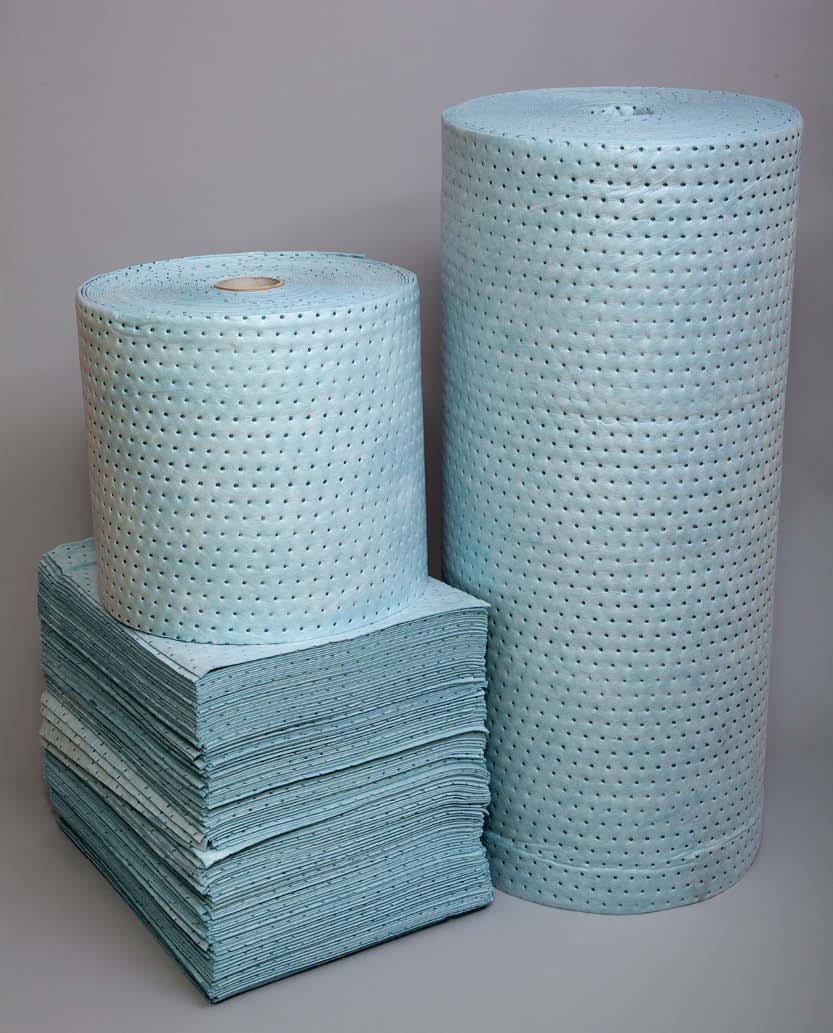
Oil or Fuel in the Bilge: Safe, Legal Cleanup
What to do when you find oil, diesel or gasoline in your bilge. Soak it up with oil-only absorbents, keep it from being pumped overboard, dispose of it properly, report any sheen on the water to the National Response Center, and find the leak so it does not happen again.
Engine Overheating - Troubleshooting Guide
Work through the most likely causes of a hot engine or overheat alarm, from a blocked water intake to a worn impeller or stuck thermostat. Acting fast and in the right order can save your engine and often gets you home without a tow.
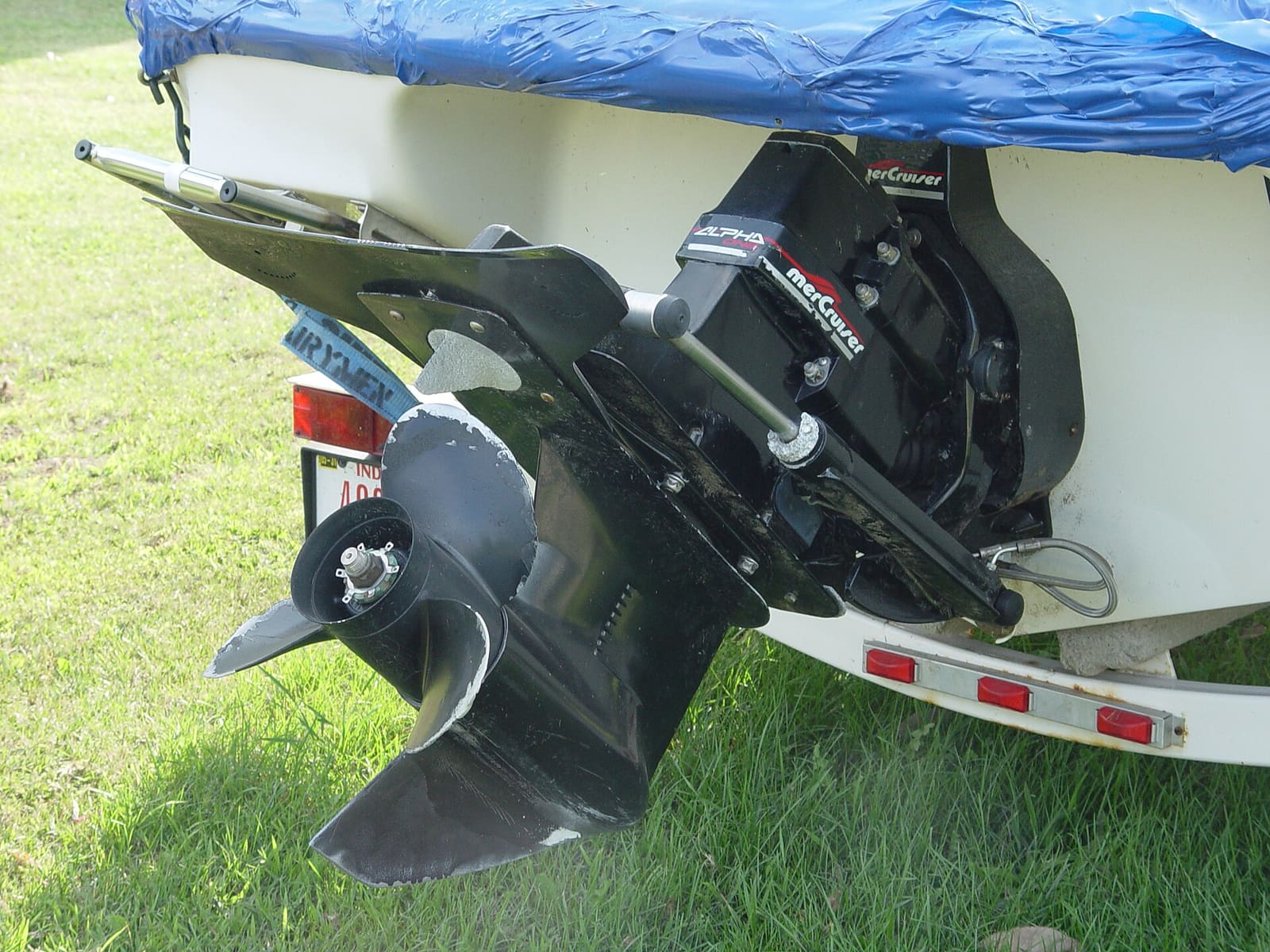
How to Winterize a Sterndrive (MerCruiser, Volvo Penta and Similar)
Get the water out of your sterndrive engine, protect it with antifreeze, and service the drive before storage. A cracked block or manifold from one missed drain plug can cost thousands, and doing it yourself saves a shop bill of several hundred dollars.
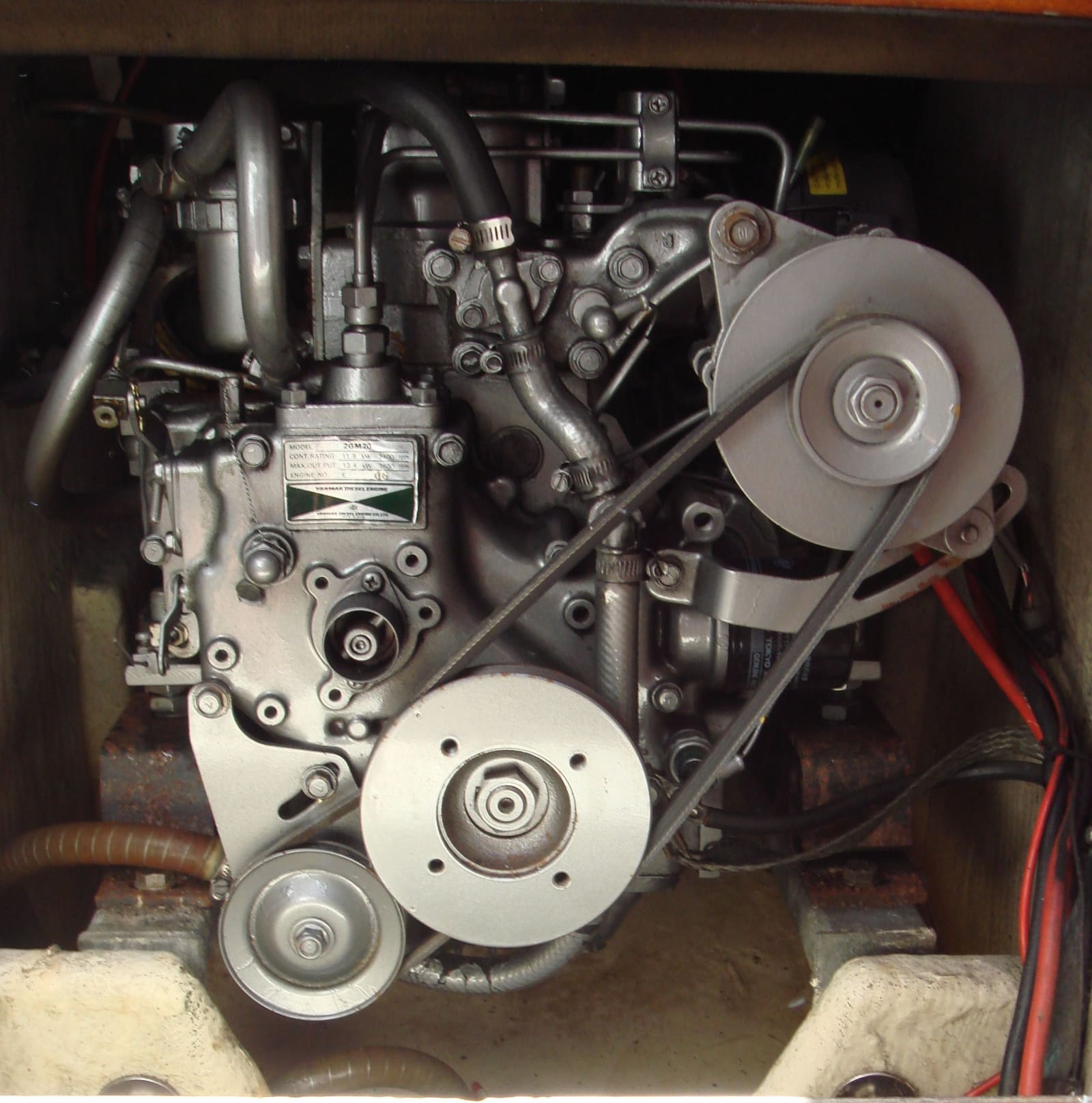
How to Inspect Engine Belts and the Tensioner on Sterndrives, Inboards and Diesels
On many inboard, sterndrive and diesel engines, one belt runs the water pump, the alternator and often the power steering. If it breaks or jumps off, the engine overheats and the steering goes heavy at the same moment. Learn how to inspect the belt, tensioner and pulleys, check tension, and carry the right spare.