How to Inspect Engine Belts and the Tensioner on Sterndrives, Inboards and Diesels
On many inboard, sterndrive and diesel engines, one belt runs the water pump, the alternator and often the power steering. If it breaks or jumps off, the engine overheats and the steering goes heavy at the same moment. Learn how to inspect the belt, tensioner and pulleys, check tension, and carry the right spare.
Time
45 min
Shop would charge
$100-300
Applies to
Sterndrive (I/O), Gas inboard, Marine diesel
Safety first: Only touch belts and pulleys with the engine off, the key out and the battery switch off; BoatUS also suggests disconnecting the battery before adjusting a belt. Belts and pulleys can grab fingers, hair, jewelry and loose clothing in an instant, so never reach near them with the engine running. Hot engines burn: let it cool first. If a belt fails underway and the boat cannot be controlled or you are near hazards, anchor if safe and call TowBoatUS or Sea Tow; in an emergency use VHF channel 16 or dial 911.
Owners often ask
- My serpentine belt came off and I lost steering and the engine overheated. What failed?
- How tight should the alternator belt be on my marine diesel?
This guide walks you through it. Still stuck? Ask the AI Mechanic about your engine.
Tools
- Flashlight
- Socket set and wrenches
- Breaker bar or the tensioner tool your manual lists (serpentine belts)
- Pry bar or wooden hammer handle (manually adjusted V-belts)
- Belt tension gauge (optional)
- Phone camera to record the belt routing
Parts & supplies
- Replacement belt(s) by the part number in your manual or on the old belt
- Tensioner or idler pulley (only if worn)
Before you start
Find out what your belt actually drives, because that tells you what you lose if it fails:
- Gas sterndrives and inboards (V6/V8): most modern ones use a single wide, ribbed serpentine belt that runs the alternator, the engine's water circulating pump and the power steering pump, and on some engines the seawater (raw water) pump too.
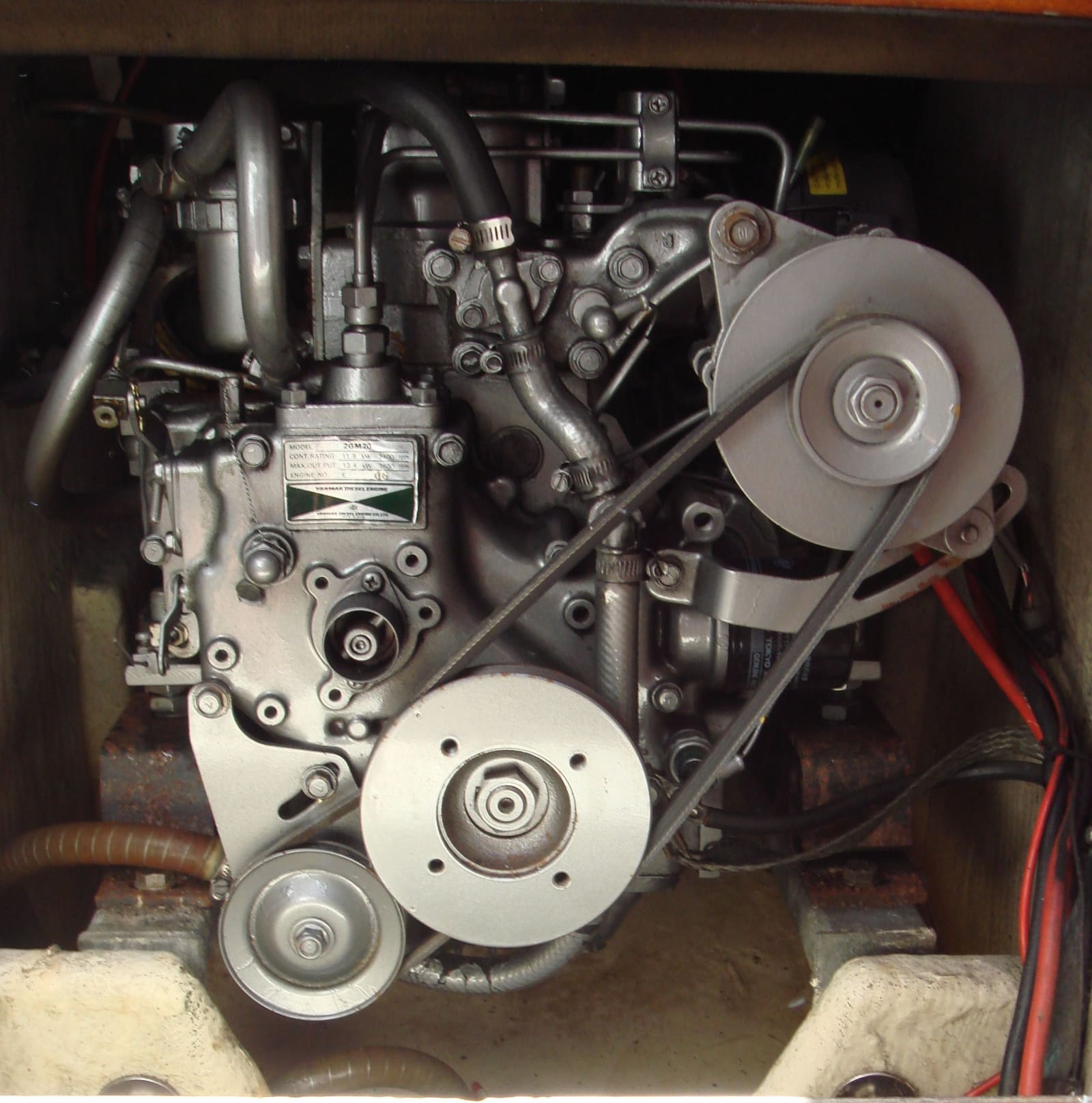
- Diesels: often one or two narrower V-belts driving the alternator and the freshwater circulating pump, and on some engines a raw water pump or a second alternator. Some newer diesels use serpentine belts.
- Generators have belts too (see the generator guide).
When that belt comes off, the engine loses coolant circulation (fast overheating), stops charging, and the power steering goes heavy. A BoatUS member described exactly this: on a twin-engine boat entering a rock-lined channel, the steering suddenly went heavy; below, the starboard engine's serpentine belt was lying in the bilge after the tensioner failed, and they crossed the bay home on one engine with almost no steering.
Belts are tensioned one of two ways:
- Automatic spring tensioner: a spring-loaded arm with a pulley keeps the belt tight. Common on serpentine systems.
- Manual adjustment: an accessory (usually the alternator) swings on a pivot bolt and is locked by a bolt in a slotted bracket. Common on V-belts. Some serpentine systems are manually tensioned too, so check your manual.
Belt inspection is part of the routine on most engines. Westerbeke's maintenance schedule, for example, lists checking for loose belts every day before use and adjusting the drive belts after the first 50 hours.
Steps
Engine off and cool, key out, battery switch off. Open the engine hatch and give yourself good light.
Take a clear photo of the belt path around every pulley before you touch anything. Many engines have a routing decal, but it may be faded or missing. You will need this if the belt comes off.
Run a flashlight along the whole belt, turning the engine by hand only if your manual says that is safe. BoatUS says to look for cracks on the top and the inside of the belt and fraying at the edges, and to replace a belt that shows them. Also look for:
- Shiny, glazed sides or ribs (the belt has been slipping)
- Chunks missing from the ribs
- Oil, coolant or fuel soaking the belt
- A belt riding off-center on a pulley
A lot of fine black dust around the belt path is a warning. Practical Sailor says heavy black belt dust means the belt is too loose, the pulleys are misaligned, or the belt is the wrong type. BoatUS adds that some dust is normal after long running. Fix any oil or coolant leak dripping on the belt, or the new belt will not last either.
BoatUS's thumb test: with the engine off and cool, press on the middle of the longest run between two pulleys. Typically the belt should move no more than about half an inch, but check your manual for where to press and how far it should move. A belt tension gauge takes the guesswork out; Practical Sailor recommends a small, inexpensive pocket gauge for every boat owner's toolbox.
Practical Sailor found most belts it checked were too loose rather than too tight. A loose belt slips, cuts alternator output and lets the alternator run hot; a belt that is too tight wears out pump and alternator bearings.
On spring-tensioned serpentine belts, do not judge tension by pushing on the belt; look at the tensioner instead:
- Many tensioners have marks showing the acceptable range. If the pointer is past the "replace" mark, the belt has stretched too far.
- Rust streaks, a cracked arm, or an arm that sits crooked are bad signs.
- With the belt off (step 8), use the proper tool to move the arm through its travel. It should move smoothly and spring back firmly, with no grinding or sticking.
A tensioner that is weak or seized lets the belt slip or jump off, as in the BoatUS story.
With the belt off, spin each idler and tensioner pulley by hand. It should turn smoothly and quietly with no wobble. A pulley that grinds, rattles, wobbles or feels rough has a failing bearing; replace it. Also look for cracked pulley edges or rust in the grooves. BoatUS says pulley misalignment is checked with a straight edge across the grooves with the belt off, and suggests leaving that to a qualified mechanic.
- Put the tool or breaker bar on the tensioner and move it the way your manual shows to release the belt. Slip the belt off one smooth pulley, then let the tensioner back slowly.
- Compare the new belt with the old one: same length, width and number of ribs. Mercury's FAQ lists belts among the spare parts to carry for a MerCruiser, so get the exact part.
- Route the new belt using your photo, release the tensioner onto it gently, and check that every rib sits in its groove on every pulley.
BoatUS describes the usual method:
- Loosen the alternator's pivot bolt slightly (it must still let the alternator swing), then loosen the bolt in the slotted adjusting arm.
- Swap the belt if needed.
- Pry gently to tension the belt, pressing on the alternator's mounting bracket or a solid part of its casing, never on a part that could crack. A wooden hammer handle works well.
- Hold the tension, tighten the bolt in the slot, then the pivot bolt. A helper makes this much easier.
- Recheck the deflection and adjust until it matches your manual.
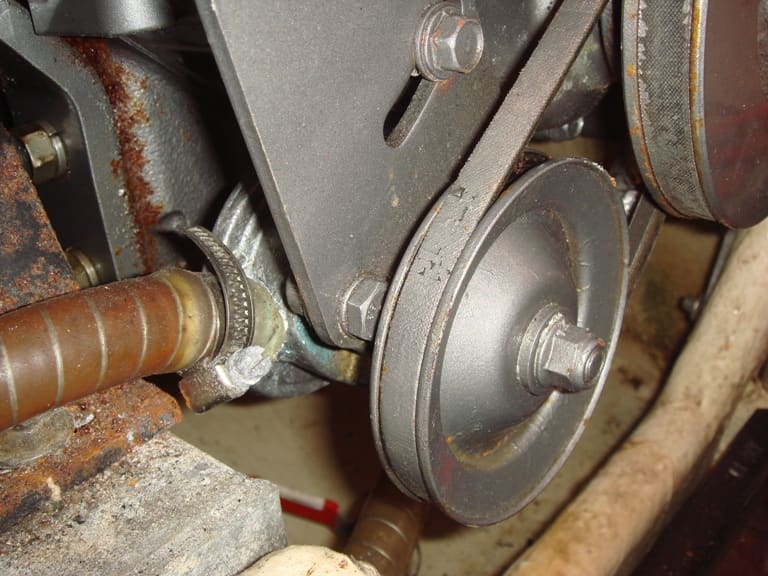
A V-belt on a small marine diesel. The bolt in the slotted bracket (top) is what you loosen to swing the accessory and set belt tension. Photo: PHGCOM / Wikimedia Commons · CC BY-SA 3.0 Run the engine only with cooling water: the boat in the water with the seacock open, or water supplied to the drive or intake the way your manual allows. Stay clear of the belts. Watch the temperature gauge and the voltmeter (charging voltage should rise above resting battery voltage). Listen for squeal. BoatUS suggests testing with an electrical load on, and warns that a new belt loosens somewhat as it beds in. Shut down, let it cool, and recheck tension after the first few hours of running.
A squeal that starts when a big electrical load comes on (refrigeration, an inverter) usually means the belt is slipping under load. BoatUS says to rule out an unusual electrical load or short first, then tighten or replace the belt.
Keep the exact belt (or a set, if your engine has more than one) aboard, plus the tensioner tool or wrenches needed to fit it. BoatUS's belt article says to always keep spare belts handy. Practice a belt change at the dock once so you know you can do it on the water.
Signs: a sudden overheat alarm or rising temperature, a battery or charging warning, a squeal followed by silence, or steering that suddenly goes heavy. Slow down and shut down the affected engine as soon as it is safe, because running without the water pump can overheat it quickly (see the overheating guide). On twin engines, you can usually come home slowly on the other one. Steering may need much more effort without power assist. If you cannot fit the spare safely, anchor if needed and call for a tow.
After a belt failure, a new belt is not always the end of it. If the engine ran hot, or the belt also drives the seawater pump, have the raw water impeller checked (it can be damaged running dry or hot) and watch the temperature closely on the next runs. An engine that overheated badly, or now runs weak or uses coolant, needs a mechanic's check before the next trip; owners in forums regularly report "lack of power" after running on with a broken belt.
Common mistakes
- Never looking at the belt until it fails. A quick look at every oil check catches most problems.
- Replacing a belt but not the weak tensioner or noisy idler that caused it to fail.
- Overtightening a V-belt "to be safe," which wears out alternator and pump bearings.
- Prying on the alternator's thin casing or cooling fins and cracking it.
- Carrying a "close enough" spare belt that turns out to be the wrong length.
- Ignoring black belt dust or a squeal that keeps coming back.
- Spraying belt dressing or lubricant on a squealing belt, or fitting a new belt with oily hands. Yamaha warns to keep lubricants, including overspray from spray lubricants, off belts; oil softens the rubber and makes it slip. Find the cause of the squeal instead.
- Running the engine with the hatch open and hands near the belts to "watch it."
When to call a pro
- The tensioner is cracked, seized or weak, or a pulley bearing is rough and you are not comfortable replacing it
- The belt keeps jumping off, wearing on one edge or shredding (possible misalignment or a failing pump or alternator)
- Overheating continues after the belt is replaced and tight
- Timing belts inside the engine on some diesels and four-stroke outboards: those are a different, critical job for a dealer
- Steering or cooling lost underway: TowBoatUS or Sea Tow, and in an emergency VHF channel 16 or 911
Tips
- Write the belt part number and replacement date in your boat log, and tape a copy of the routing photo inside the engine hatch.
- Keep the engine compartment clean and dry. Practical Sailor notes that a lot of air is pulled through the alternator, so a dirty engine room coats it inside and shortens its life.
- Check belts as part of spring commissioning and again before any long trip.
- If your engine has two belts on the same pulleys, replace them as a matched pair.
Official references
We read these to write this guide. Your engine's own manual always wins.
- BoatUS – How To Tighten Your Boat Alternator Belt
- BoatUS – Cockpit Confessions, For Lack of a Serpentine Belt
- Practical Sailor – Offshore Log, Alternator Breakdown
- Westerbeke – Maintenance FAQ
- Mercury Marine – Owner FAQs (MerCruiser spare parts list)
- Yamaha Outboards – Maintenance Matters, Additional Tasks (belts and hoses)
Safety: BoatMend is for information only and does not replace a certified marine technician. You are responsible for your safety and your boat. Read the full disclaimer.
Last updated 2026-10-24
Related guides
Engine Overheating - Troubleshooting Guide
Work through the most likely causes of a hot engine or overheat alarm, from a blocked water intake to a worn impeller or stuck thermostat. Acting fast and in the right order can save your engine and often gets you home without a tow.
Sterndrive Power Steering: Fluid Checks, Hard Steering and Leaks
Troubleshoot the engine-driven power steering on a MerCruiser, Volvo Penta or similar sterndrive or inboard, from the free checks (fluid, belt, cable) to the signs that the pump or actuator needs a pro. Steering that suddenly goes heavy at speed is a safety problem, not a comfort problem.
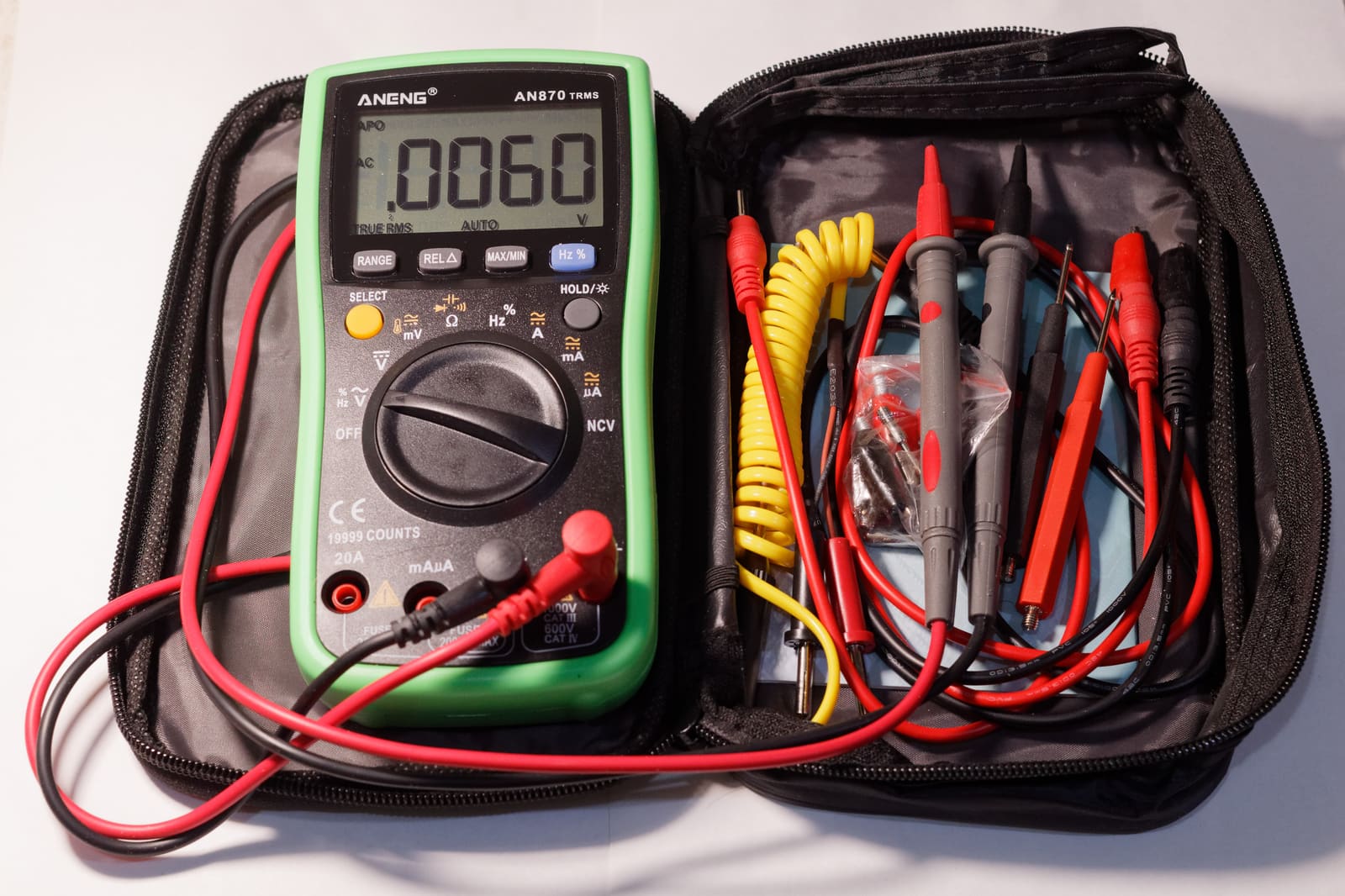
Is My Engine Charging the Battery? Test the Charging System With a Multimeter
A step-by-step way to find out whether your outboard's stator and rectifier/regulator or your inboard's alternator is really charging the battery, what the voltage readings usually mean, and when the problem is just a dirty connection. Exact test specs come from your engine's service manual.
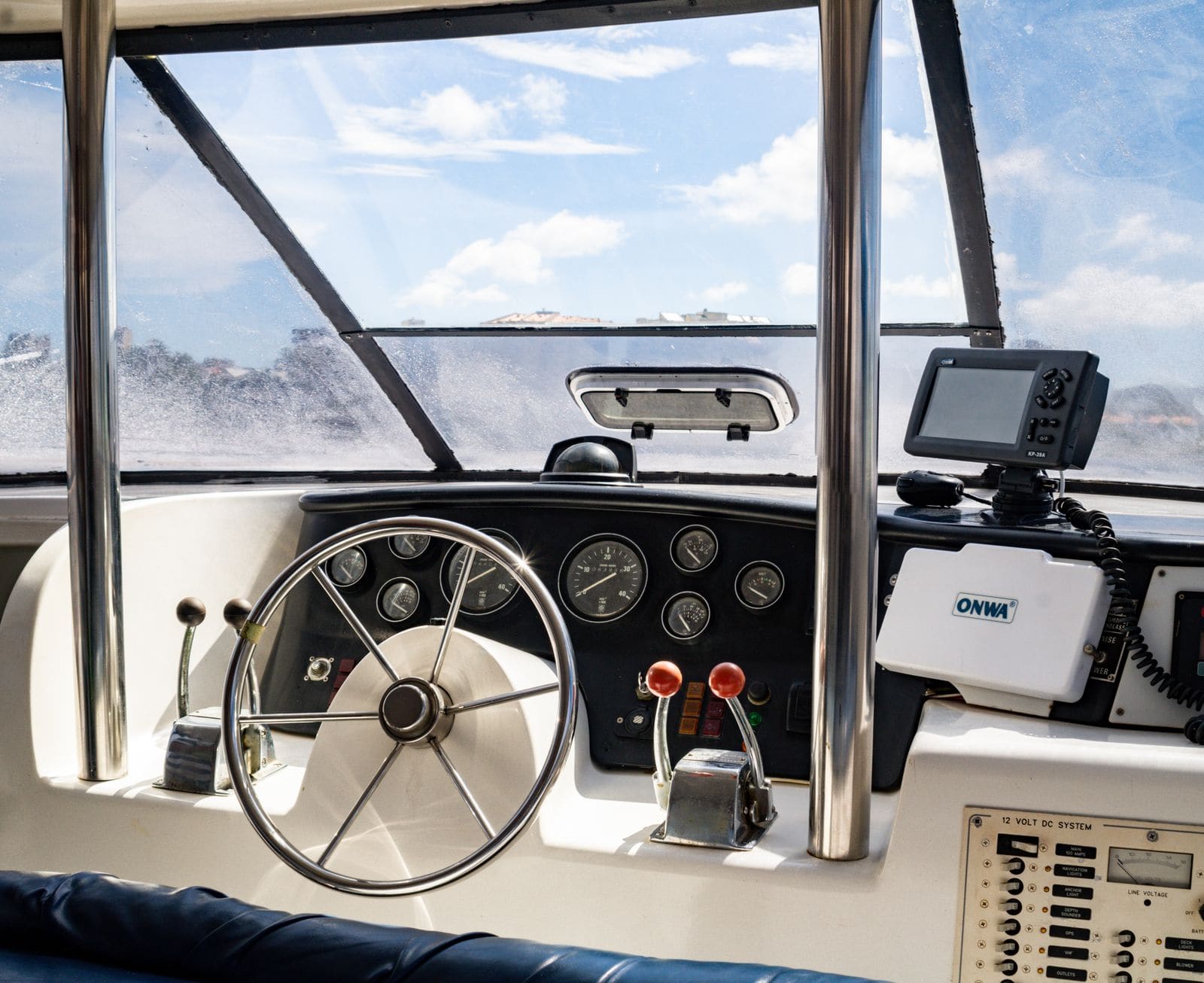
Engine Warning Horn and Dash Lights: What They Usually Mean and What to Do
Learn what a warning horn, beeps or a dash light usually mean on a boat engine, from overheating and low oil pressure to water in the fuel and reduced-power (limp) mode. Find out what to do right away and when to stop the engine. Patterns differ by brand, so match what you hear and see to your owner's manual.
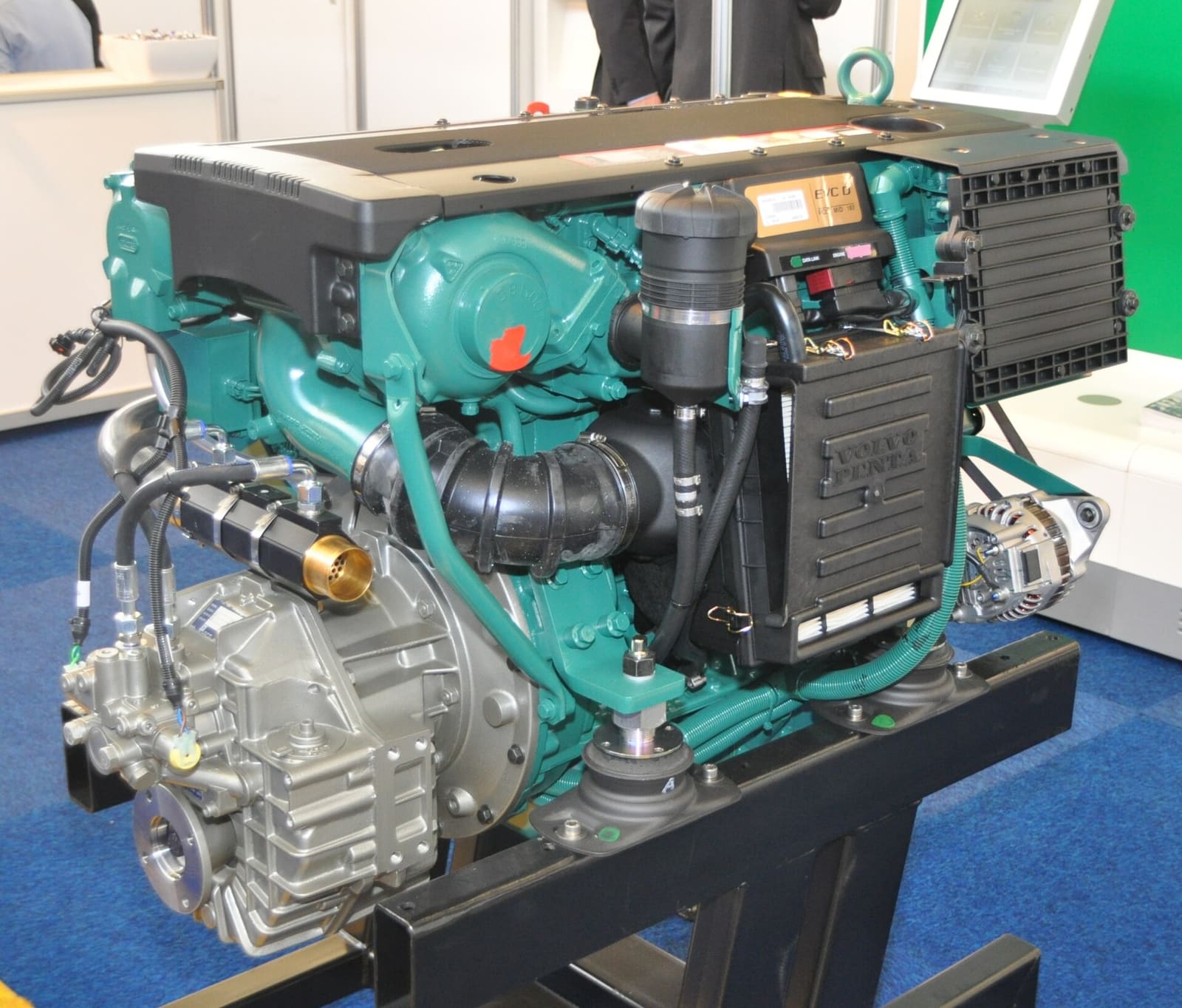
How to Check and Change Coolant in a Closed Cooling System
Check, test and change the coolant in a freshwater-cooled (closed cooling) inboard, sterndrive or diesel, and learn the heat exchanger basics that keep it working. Old coolant quietly eats hoses, pumps and engine passages, and many boats go a decade without a change.
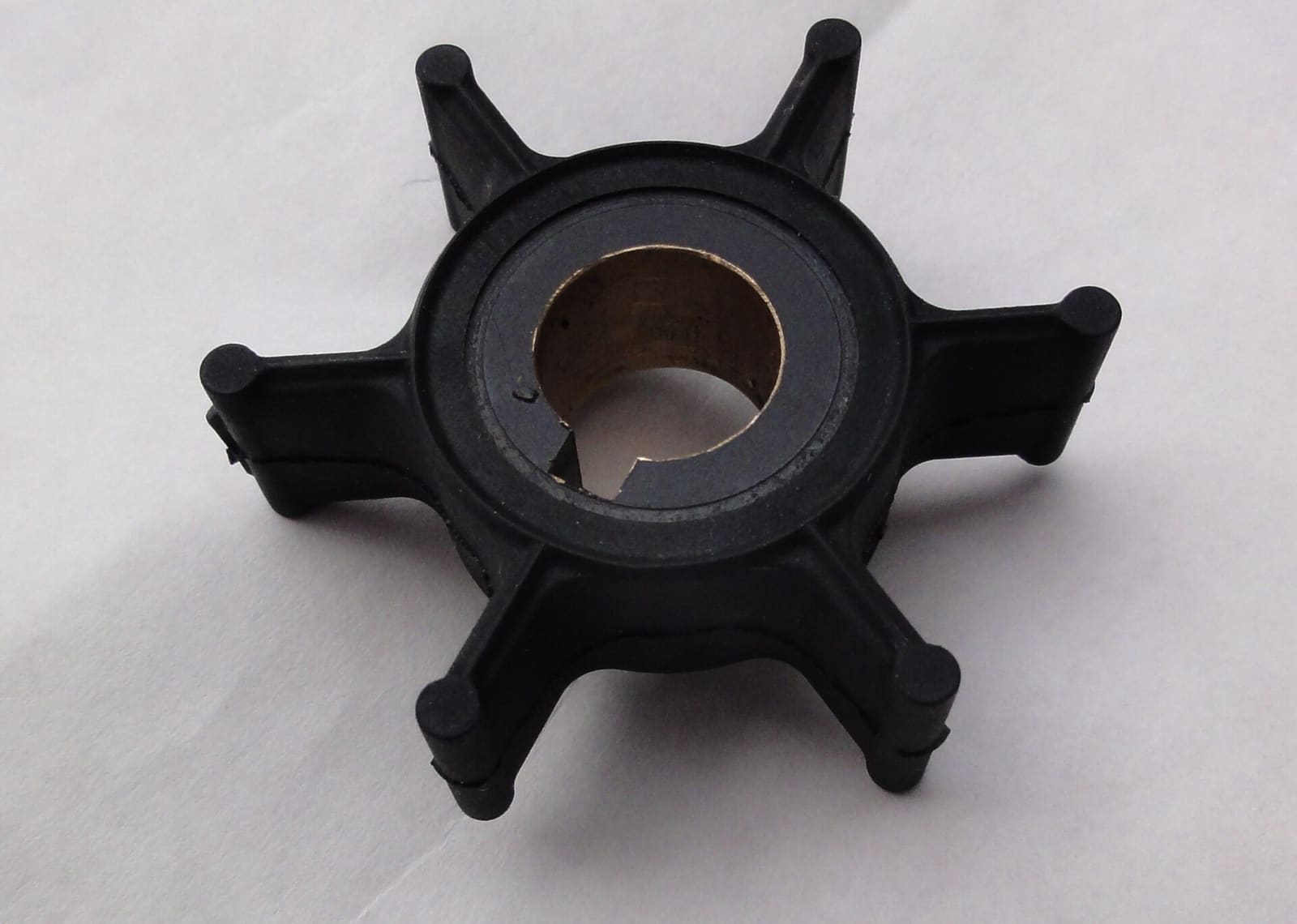
How to Replace the Water Pump Impeller
Replace the rubber impeller that pumps cooling water through your engine, the part most often behind overheating. On many outboards it is a two-hour driveway job that saves a shop bill of several hundred dollars and prevents far costlier heat damage.
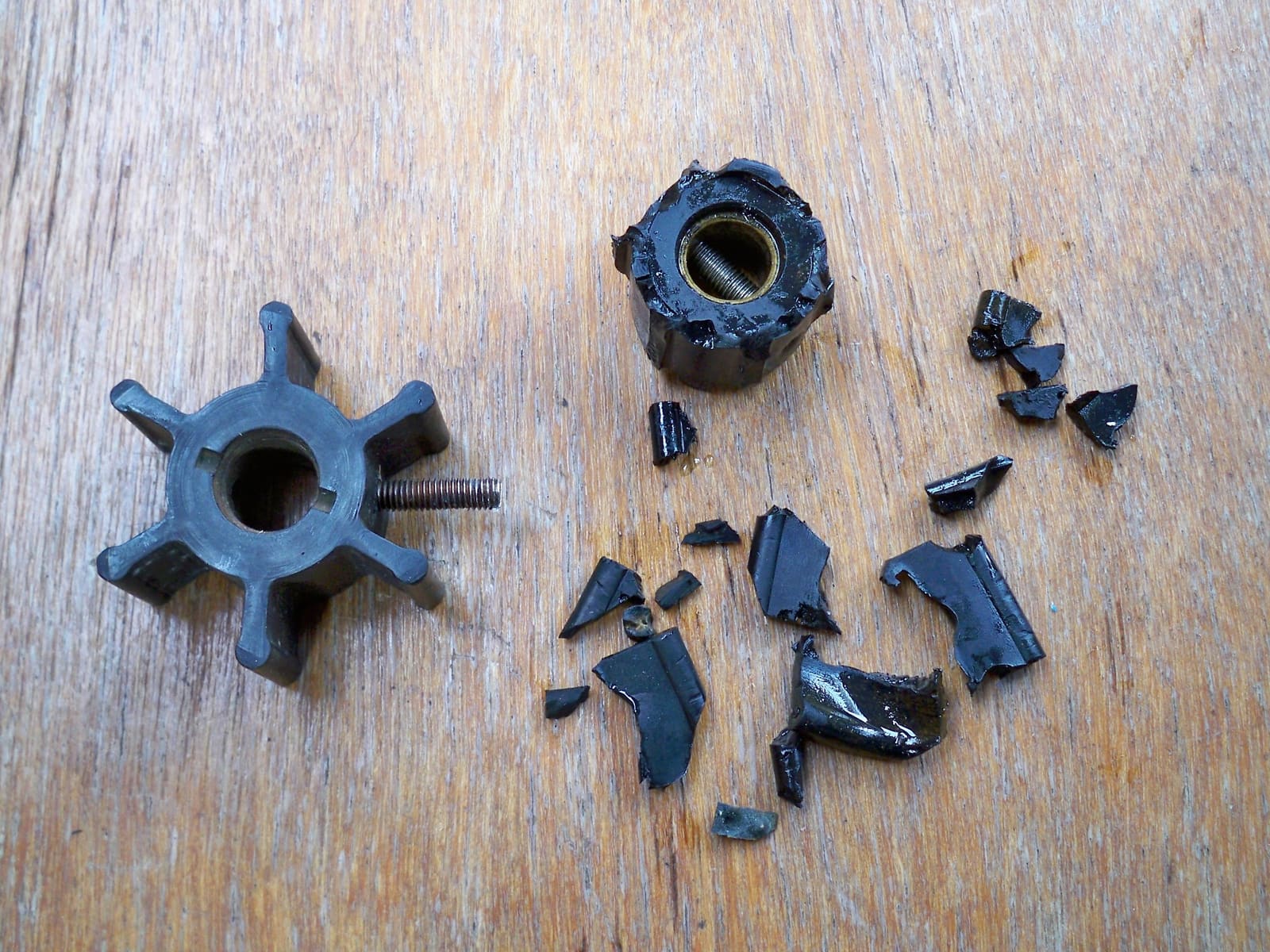
How to Clean the Raw-Water Strainer and Replace the Impeller on a Marine Diesel
Clean the sea strainer and swap the rubber impeller in the raw-water pump of a Yanmar, Volvo Penta, Westerbeke, Beta or similar inboard diesel. A worn impeller is one of the most common reasons a diesel overheats, and this job takes about an hour with basic tools.
Marine Generator Routine Maintenance and CO Safety
Keep an Onan, Kohler/Rehlko, Northern Lights, Westerbeke or similar marine generator reliable with regular checks of oil, raw-water cooling, fuel, exhaust and the start battery, plus a monthly run under load. Generator exhaust is a leading source of carbon monoxide on boats, so safety checks come first.