Salvage and Branded Title Boats: What They Mean, the Risks, and How to Check Before You Buy
Understand boats that an insurer declared a total loss: what salvage, rebuilt and hull-damaged title brands mean, why flood and storm boats hide expensive problems, how branded titles affect insurance, financing and resale, how to dig into a boat's history, and what a survey should check. Title branding rules differ a lot by state, and some states don't brand boat titles at all.
Time
3 h
Applies to
All engines
Safety first: A rebuilt boat can look perfect and still have a weak hull, a waterlogged transom or corroded wiring that can fail at sea or start a fire. Never take a storm or flood boat out until a marine surveyor and a marine technician have checked the hull, fuel system and wiring. This guide is practical help, not legal advice. Title branding and disclosure laws are set by each state, and they change. Check with the titling agency in the boat's state and in yours, and talk to a marine attorney for an expensive purchase.
Owners often ask
- Is a cheap hurricane boat with a salvage title worth buying?
- How can I tell if a used boat was flooded or declared a total loss?
This guide walks you through it. Still stuck? Ask the AI Mechanic about your engine.
Tools
- Phone camera (HIN, serial plates, title front and back)
- Flashlight and a small mirror (to look under decks and behind panels)
- Notebook for every number and answer the seller gives
Before you start
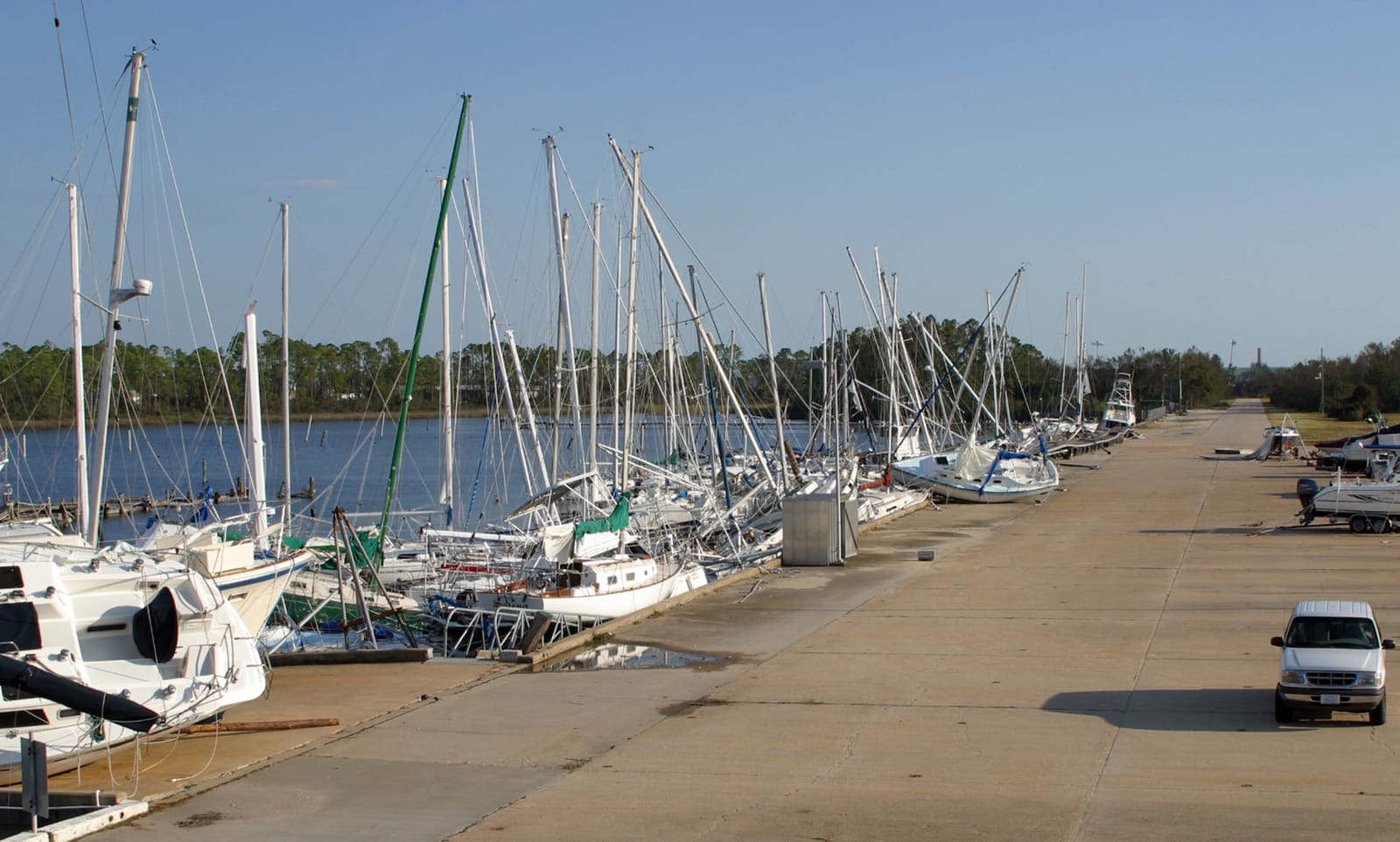
When repairs would cost more than a boat is insured for, the insurer pays the owner and declares a total loss. BoatUS explains that after big storms many boats are declared a constructive total loss (CTL): the repair estimate in the field is higher than the boat's insured value. The insurer pays the owner, takes the ownership papers, and usually sells the boat through a salvage auction or licensed salvage dealer. Kentucky Farm Bureau describes the same path for its totaled watercraft.
A CTL can mean very different things:
- A wreck. Holes in the hull, structural damage, days underwater in salt water.
- A cheap boat that was barely damaged. BoatUS notes a boat can be a CTL just because the owner insured it for very little. Those can be worth fixing, but from the outside it's hard to tell which is which.
What a "branded" title is. Some states mark the title of a boat with serious damage history so later buyers know. Brands and rules vary:
- Nebraska issues a Salvage title for a recent or valuable motorboat when repair cost reaches 75 percent or more of its retail value. After repair it can be retitled, but the title is branded "Previously Salvaged," and brands carry forward on later titles.
- Florida uses a "Hull Damaged" brand. State law defines hull damaged as the hull's integrity compromised by a collision, allision, lightning, fire, explosion, grounding or similar event, or a sinking that creates a significant risk to the hull. An owner who knows of such damage that happened while they owned the boat must disclose it when selling, and an insurer must apply for the brand before transferring a hull-damaged boat.
- Many states don't brand boat titles at all, and some don't title boats. A Coast Guard documented boat has no state title, so a state brand may not follow it.
- There's no car-style history check for boats. BoatUS's government affairs staff put it bluntly when a member asked how to tell whether a used boat had sunk in a hurricane: you can't, yet. About 10 states don't issue boat titles at all, so there's no paper trail, and a boat (even a stolen one) can be moved to a no-title state and registered with nothing to show its past. BoatUS supports the Uniform Certificate of Title for Vessels Act, model legislation that would brand titles of significantly damaged boats nationwide; until your state adopts something like it, the survey (step 6) is your real history report.
So a clean title doesn't prove a clean history.
Steps
Look for words like salvage, rebuilt, previously salvaged, hull damaged, flood, junk, or "insurance company" as an owner. Note every state that titled the boat. Florida's title application, for example, asks for any known title brand and every jurisdiction where the boat was registered or titled. Ask your own agency what brands it recognizes from other states.
Ask: "Has this boat ever been sunk, flooded, in a hurricane, struck by lightning, burned, or declared a total loss by an insurer? Was it bought at a salvage or insurance auction?" Put the answer in the bill of sale or purchase agreement. In a state like Florida, an owner who knows of hull damage has a legal duty to disclose it. A seller who won't answer in writing has answered.
- HIN: confirm it matches the title and look for tampering (see our used-boat paperwork guide). Search the HIN online; salvage auction listings and old for-sale ads sometimes show up with photos of the damage.
- Trailer VIN: NICB's free VINCheck looks for theft and salvage records from participating insurers. It needs a correct 17-character VIN and is built for vehicles, and NICB says it covers only some watercraft and isn't a complete history. It may help with the trailer; don't expect it to clear the boat.
- Commercial boat history reports that search HINs exist. They can find some records, but none covers everything. Treat a "clean" report as one data point.
- State records: ask the titling agency in each state where the boat lived for its title history and any brands.
- Documented boats: order an Abstract of Title from the Coast Guard's National Vessel Documentation Center to see ownership changes, including any insurer.
Walk the boat slowly with a flashlight:
- Mud, sand or a "bathtub ring" water line inside lockers, the bilge, the cabin or behind panels
- New carpet, upholstery or headliner on an otherwise older boat
- Green or white corrosion on wiring, terminals, switch panels and the back of gauges
- Rust on engine blocks, starters and steering cables; new paint over old engines
- Gelcoat cracks or fresh fairing in odd places (chines, the keel, the hull-deck joint)
- A boat that sits low or lists, which can mean waterlogged foam or core
- Hatches and through-hulls with fresh sealant everywhere
- A musty or fuel smell that doesn't go away (don't start anything if you smell fuel)
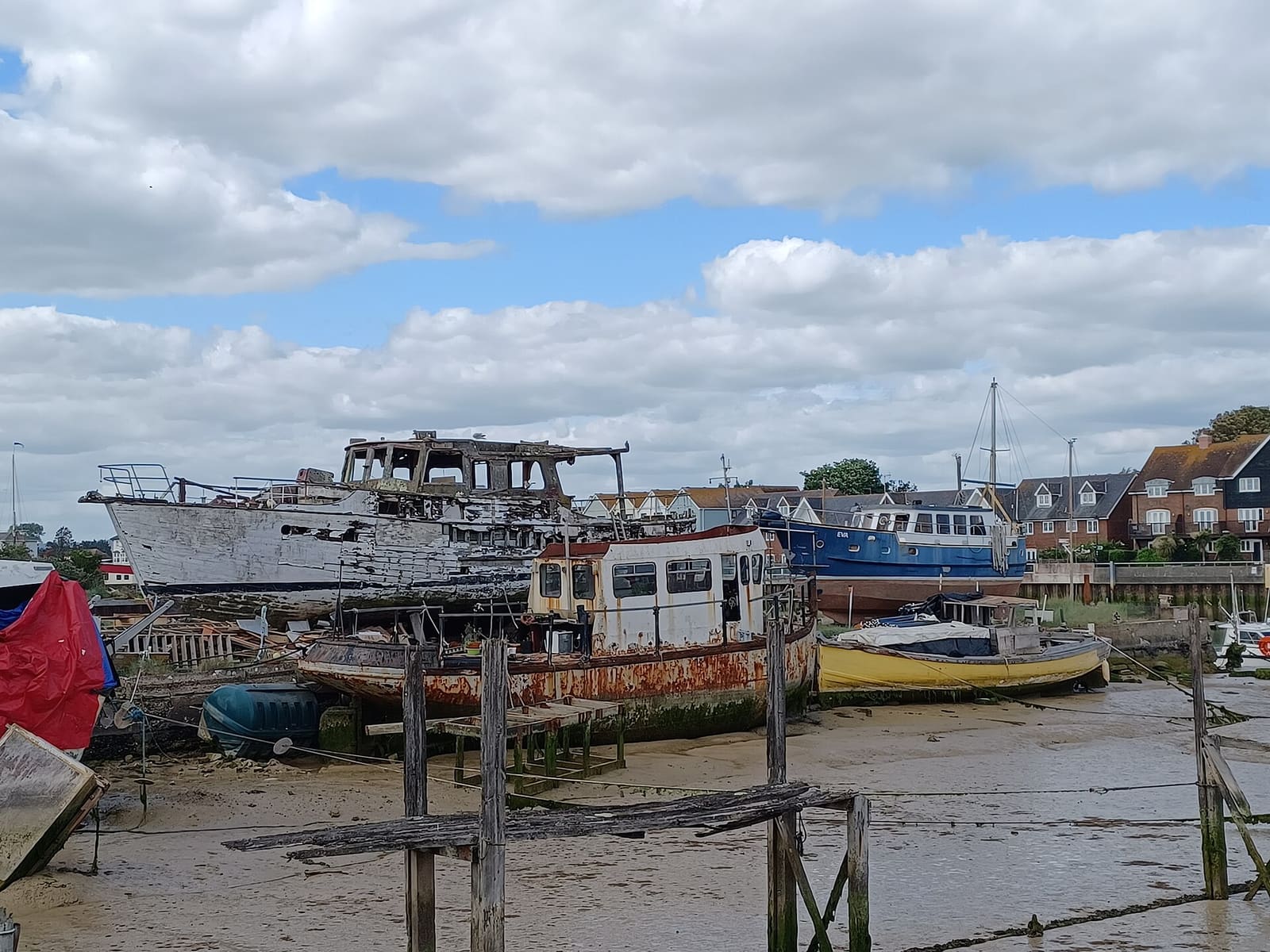
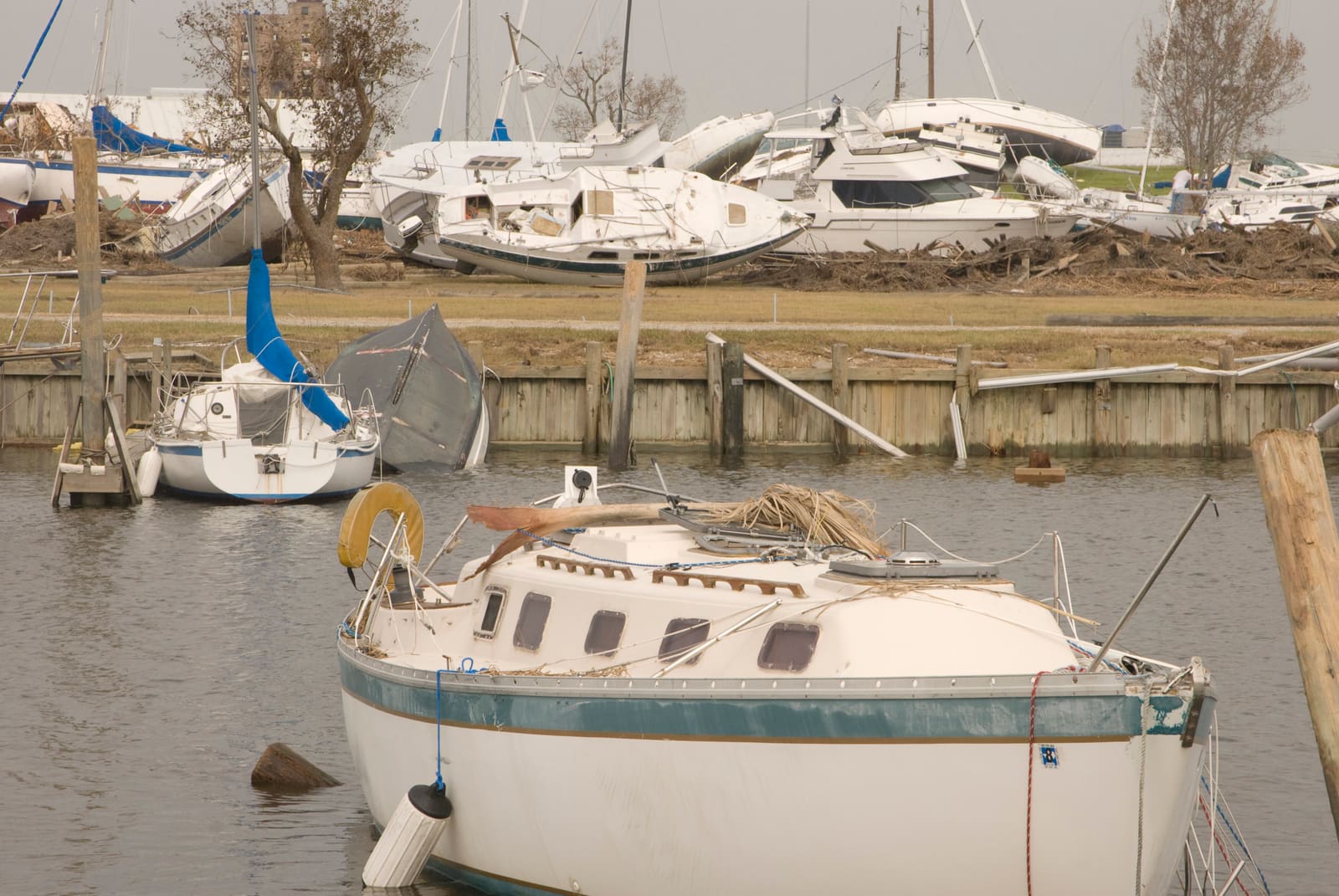
Badly damaged boats often end up sold as is. Some are rebuilt well and some only look rebuilt, so the hull and systems need a professional look. Photo: Simon Burchell / Wikimedia Commons · CC BY-SA 4.0 BoatUS says sinking in salt water is one of the worst things that can happen to a boat, and it's safest to assume the worst:
- Engines, which can be half of a small boat's value, can be ruined by corrosion if they weren't flushed and pickled right away. After big storms, yards often can't get to them for days.
- Wiring and electronics: salt water wicks into wires and connections and can mean a complete rewire.
- Soft goods (cushions, bedding, carpet) usually have to go.
- Wood in bulkheads, stringers and transoms can soak up water and rot.
- Steering and engine controls are usually damaged too.
See our submerged engine recovery, waterlogged foam and transom and stringer guides for what each repair involves.
BoatUS's advice on storm boats is blunt: if you decide to take one on, hire an experienced marine surveyor to inspect it before you bid. Ask for a pre-purchase (condition and value) survey from a SAMS or NAMS member you choose, not one the seller picks. Ask specifically for:
- Moisture readings and sounding of the hull, deck, stringers and transom
- A look at foam, fuel tanks, fuel lines and the fuel fill and vent (fuel leaks are a fire risk)
- Wiring condition, connections and the battery and charging system
- Engine compression and, for bigger engines, an oil analysis by a marine mechanic
- A sea trial if the boat runs
- An opinion on the fair value given the branded title
- Insurance: ask two or three marine insurers whether they'll cover this boat, at what value, and whether they need a survey first. Some may limit coverage or decline a branded or rebuilt boat. Get it in writing before you pay.
- Financing: many lenders won't lend on a salvage or branded boat, or want a survey and a big down payment.
- Warranty: engine makers can refuse warranty transfers on salvage engines. Mercury, for example, reserves the right to refuse transfers for engines bought at auction, from a salvage yard or from an insurance company, and may ask for a dealer inspection. Call a dealer for that brand with the serial numbers.
BoatUS asks storm-boat buyers to think about:
- Transport and storage: auction winners usually have a short time to remove the boat, and it has to live somewhere while it's repaired.
- Labor: paying a yard to repair a storm-damaged boat is rarely cost-effective, and repair hours add up fast.
- Time: a BoatUS member's "one-year" rebuild of a hurricane sailboat took over two years of nearly every spare minute.
- Home rules: zoning or neighborhood rules may not let you keep a wrecked boat in your yard.
- Resale: a branded title usually lowers the value for good, even after a great repair.
BoatUS describes the usual process: bidders register and put down a small deposit, boats are sold "as is, where is" after a few weeks of bidding, and the winner pays, gets the ownership papers, and then titles and registers the boat. Read the auction's terms for pickup deadlines, storage fees, which title or salvage certificate you'll receive, and whether your state will title it. Ask your titling agency before you bid what it needs to title a boat bought from an insurer or salvage dealer.
Insurers usually total and sell the whole package together: boat, motor and trailer. Check that the lot includes paperwork for each piece, because most states title or register the trailer separately (and some title outboards too). A trailer with no title can cost you more time at the DMV than the boat itself.
Many insurers let you buy the boat back at its salvage value. Before you agree, ask the insurer how it will report the loss and ask your state what happens to the title. Nebraska, for example, requires the insurer to tell the DMV, which adds a salvage brand, and the owner must get a salvage title within 30 days. Expect harder insurance and lower resale. Don't accept the first settlement offer without checking it: owners who went through this say listing every add-on (electronics, upgrades, the trailer) and the boat's pre-loss condition with photos and receipts made the biggest difference. Our insurance claim guide covers how to dispute an offer.
Disclose it in writing, even where your state doesn't require it. Florida already requires owners to disclose known hull damage that happened while they owned the boat. Keep the repair invoices and survey to show the work was done right. Honesty protects you from a later claim and helps the next owner insure it.
Common mistakes
- Trusting a clean title from a state that doesn't brand boat titles.
- Assuming a bargain storm boat just needs "cosmetics" because the hull looks fine.
- Skipping the survey because the auction is closing soon.
- Not calling insurers until after the purchase, then finding nobody will cover it.
- Forgetting transport, storage and rewiring costs when comparing the price to a clean boat.
- Starting an engine that sat flooded, which can wreck it if water is still inside.
When to call a pro
- Before you bid or pay on any storm, flood, fire or salvage boat: a SAMS or NAMS marine surveyor
- The engines sat in water or were never pickled: a marine technician before anyone turns the key
- You smell fuel, see fuel stains or the wiring is corroded: stop, don't power anything, and get the boat checked
- The title brand, ownership chain or auction paperwork is confusing: your state titling agency, then a marine attorney or documentation professional
- An expensive boat is being sold with a rebuilt title: get a written survey and an independent valuation
Tips
- Photograph the title, HIN and every serial plate before money changes hands.
- Ask for the repair records, the yard's name and photos taken during the rebuild. Good rebuilds come with good paperwork.
- A lightly damaged, low-insured boat can be a fair deal; the surveyor's report tells you which kind you're looking at.
- Keep your own boat's maintenance log and photos up to date. If it's ever damaged, the records help your claim and any future buyer.
Official references
We read these to write this guide. Your engine's own manual always wins.
- BoatUS – Are Storm-Damaged Boats Trash Or Treasure? (2013)
- BoatUS – Long-Distance Boat Shopping (2016, surveyors and preliminary inspections)
- Nebraska DMV – Motorboat Salvage Certificate of Title (example of a state salvage brand)
- Florida Statutes – 328.045, Title brands ("Hull Damaged")
- Florida Statutes – Chapter 328, Vessels; Title; Certificates; Liens (definition of hull damaged)
- NICB – VINCheck (what it does and doesn't cover)
- Kentucky Farm Bureau – What happens to a boat after a total loss?
- Mercury Marine – Mercury Limited Warranty and Mercury Product Protection Transfer
- BoatUS – Uniform Titling For Boats (2020)
Safety: BoatMend is for information only and does not replace a certified marine technician. You are responsible for your safety and your boat. Read the full disclaimer.
Last updated 2026-10-25
Related guides
How to File a Boat Insurance Claim: Safety, Mitigation, Documentation and Settlement
What to do from the moment something goes wrong until the check arrives: make everyone safe, stop further damage, report right away, document with photos and your maintenance log, handle towing versus salvage, work with the adjuster or surveyor, and understand agreed value, actual cash value and the common exclusions. Policies differ, so your own policy wording always wins.
Used Boat Paperwork: Titles, Liens, HIN Checks, Bill of Sale and Registration
A practical checklist for the paperwork side of buying a used boat: state title or Coast Guard documentation, checking for liens and theft, verifying the hull ID number, writing a proper bill of sale, the trailer's own title, registering in your name, and transferring warranties and checking recalls. Rules vary by state, so confirm each step with your state agency.
How to Inspect a Used Boat Before You Buy
A step-by-step checklist for looking over a used boat, from paperwork and the hull ID number to the transom, engine, compression test, sea trial and trailer. Know what to check yourself, what the red flags mean, and when to pay a marine surveyor.
Buying a Boat That Sat Outside for Years: What Fails, How to Inspect It and What It Really Costs
A boat that sat in a yard for years can be a bargain or a money pit. Learn what usually fails (fuel system, waterlogged foam, stringers and transom, wiring, upholstery, trailer), how to inspect and weigh it, when to pay for a survey, and how to price the repairs before you make an offer.
Outboard Fell Overboard or Engine Got Submerged: What to Do in the First Hours
A dunked engine can often be saved, but only if you act fast and in the right order. Learn what to do (and what never to do) in the first hours after an outboard goes overboard or a boat swamps, how to buy time until a shop can take it, and when it is a loss.
How to Tell if Your Boat's Flotation Foam Is Waterlogged
Learn the signs that the foam under the floor or seats of a small boat has soaked up water, how to check without tearing the boat apart, what the Coast Guard flotation rules mean for you, and why replacing foam is usually a big job for a pro.
How to Check a Boat for Transom and Stringer Rot
Many older fiberglass boats have wood inside the transom, stringers and deck, and water that gets in slowly rots it. Learn the tap test, the flex test, how to read a moisture meter and the other warning signs, and why a rotten transom or stringer is a structural job for a pro, not a weekend patch.
After the Storm: How to Safely Inspect Your Boat and Document Damage
Go back to your boat only when it is safe, check for fuel, live power and sinking risk before you step aboard, photograph everything for your insurer, then work through bilge, lines, canvas, electrical, engine, trailer and mold in a set order. Do not run the engine or leave the dock until it has been checked.