Buying a Boat That Sat Outside for Years: What Fails, How to Inspect It and What It Really Costs
A boat that sat in a yard for years can be a bargain or a money pit. Learn what usually fails (fuel system, waterlogged foam, stringers and transom, wiring, upholstery, trailer), how to inspect and weigh it, when to pay for a survey, and how to price the repairs before you make an offer.
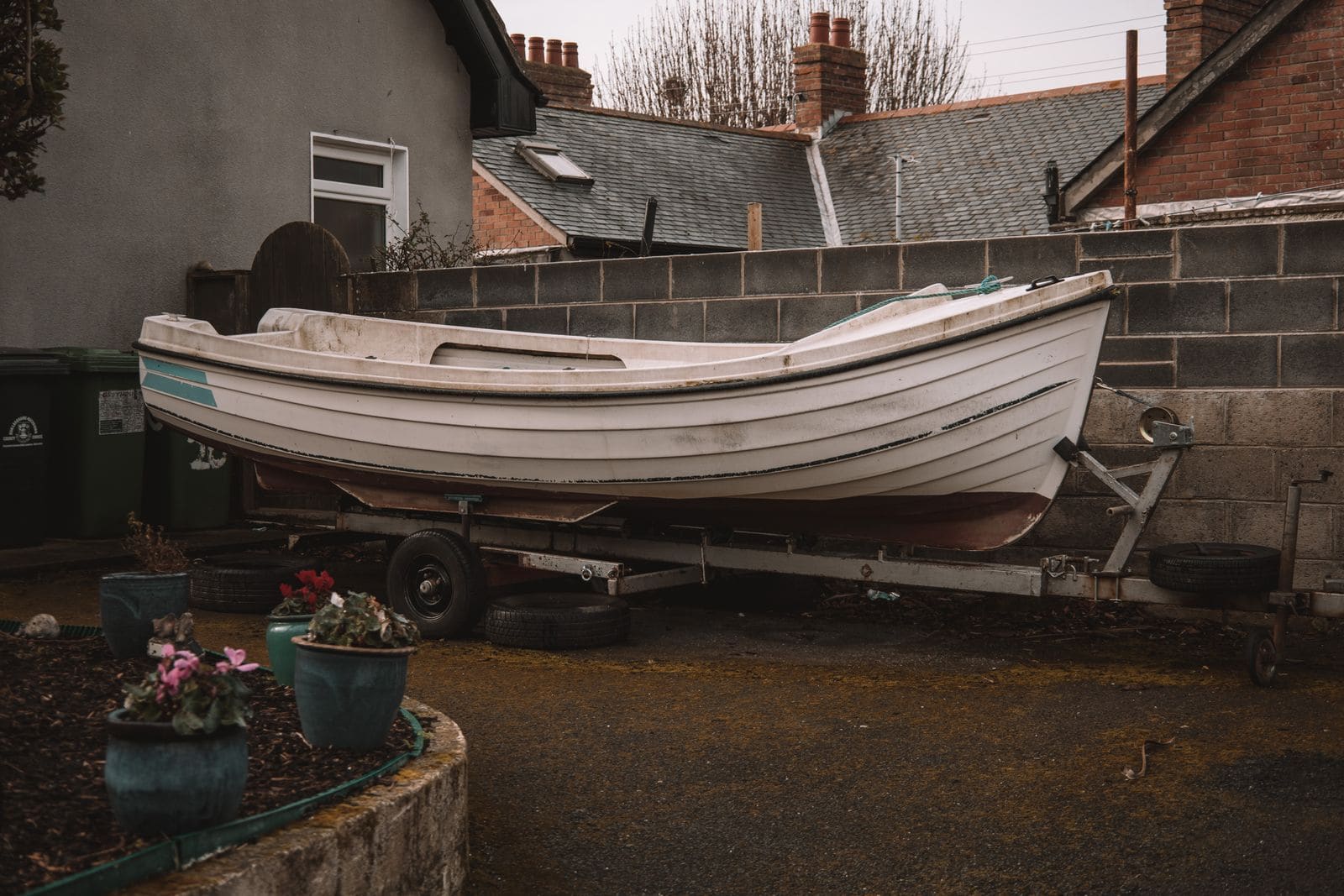
Time
3 h
Shop would charge
$300-1500
Applies to
All engines
Safety first: Do not climb into a boat on a trailer unless the tongue is supported and the wheels are chocked, and watch for rotten decks that can give way under your weight. Old boats often hide wasp nests, rodent droppings and mold, so wear gloves and a dust mask. If you smell gasoline, do not turn on switches or try to start anything: that is a fire risk. Never let the seller "just fire it up" on a long-dead engine before the fuel system is checked, and never run an outboard without flushing muffs or a test tank supplying water.
Owners often ask
- Is a boat that sat outside for years worth buying cheap?
- How can I tell if a cheap old boat is waterlogged before I buy it?
This guide walks you through it. Still stuck? Ask the AI Mechanic about your engine.
Tools
- Bright flashlight and an inspection mirror
- Plastic or phenolic mallet (or a sounding hammer)
- Moisture meter (optional, but useful on fiberglass)
- Digital multimeter
- Clean glass jar for a fuel sample (with the owner's permission)
- Screwdrivers to open inspection plates (with permission)
- Gloves, a dust mask, rags and a phone for photos
Before you start
"Free boat" and "just needs a little work" are some of the most expensive phrases in boating. A boat that sat outside for years has been baked by sun, soaked by rain, frozen and thawed, and visited by rodents and insects. BoatUS warns that one unexpected discovery in a project boat usually leads to another, and that most unfinished projects leave the owner underwater financially.
That said, age alone is not the problem. BoatUS points out that fiberglass itself has a nearly unlimited lifespan; it is wet wood coring in the stringers, deck and transom that ruins boats. From the early 2000s, many production builders moved to rot-resistant composite cores, which makes those boats better candidates. A boat with sound structure that "only" needs systems and cosmetics can be a real deal.
Your order of business: structure first, then engine, then everything else. If the structure fails, nothing else matters.
Steps
Ask how long the boat has sat, whether it was covered (and with what), whether the drain plug was in or out, whether it sat level or bow-high, when the engine last ran, and why it stopped being used. "It ran when parked" means nothing about today. Ask for the title and trailer paperwork now; abandoned or long-stored boats often have paperwork problems (see our used boat paperwork guide).
The yard tells a story:
- Uncovered, or a cover that collapsed into a pond: rain filled the cockpit and bilge, often for years.
- Drain plug in, bow up: water collected at the transom, the worst possible spot.
- Sitting in tall grass or under trees: moisture, leaves clogging drains and rodents.
- Tires sunk into the ground or flat: the trailer sat a long time and the tires are done.
Open the drain plug (with permission) and see what comes out. Clear water draining for a long time is a warning that the hull or foam is holding water.
These are the big-money items. BoatUS describes the basics: tap cored areas with a sounding hammer for dull or hollow spots, use a moisture meter if you have one, look for stress cracks, and watch for flex when weight is applied.
- Walk the deck and feel for soft or bouncy spots.
- Tap the transom and deck every few inches; a sharp click is good, a dull thud is suspect.
- On an outboard boat, push and pull hard on the lower unit while a helper watches the transom. BoatUS says you should be able to put your weight on the drive without seeing any flex.
- Look for brown weeping around screws and fittings, cracks around the motor mounting bolts, and fresh caulk over old holes.
On a cored hull or deck, ask whether anyone added through-hulls, transducers or deck hardware below the waterline or on cored areas: BoatUS's refit expert explains that holes drilled through a core without sealing the edges let water creep into it over the years, and a saturated balsa core means cutting off a skin and rebuilding. Also look for stress cracks at the stringers, bulkheads and running strakes; on a planing hull they can be the first sign that the laminate is tired from years of pounding.
See our transom and stringer rot guide for the full check. BoatUS is blunt: when stringers, decks, bulkheads or transoms go soft, the cost to repair almost always eclipses the finished value of the boat.
Many small boats have flotation foam under the floor. Once foam soaks up water, it adds a lot of weight and keeps the surrounding wood wet. Signs:
- The boat sits low or lists on the trailer or in the water
- It feels sluggish and is slow to plane (from the seller's description or sea trial)
- Water keeps seeping from the drain hole long after the bilge is empty
- An inspection plate or hole in the floor shows wet, dark or crumbly foam
Wet foam usually cannot be dried out in place; it has to be cut out and replaced, which normally means removing the deck. See our waterlogged foam guide.
A truck stop or public scale gives a reality check. Weigh the boat on its trailer (fuel tank level noted, gear removed), then subtract the trailer's weight (from its label, or by weighing it empty if you buy it). Compare the result with the builder's published dry weight plus the engine, battery and fuel. Published figures leave out options and rigging, so treat it as a rough check, but a boat that weighs hundreds of pounds more than expected is probably full of water. Some sellers will meet you at a scale; it is worth asking.
Fuel systems suffer badly from sitting:
- Old fuel: gasoline goes stale and ethanol blends can absorb water and separate. Take a sample from the tank or filter (with permission). Water, sludge, varnish or a sour smell means the tank needs draining and cleaning at least.
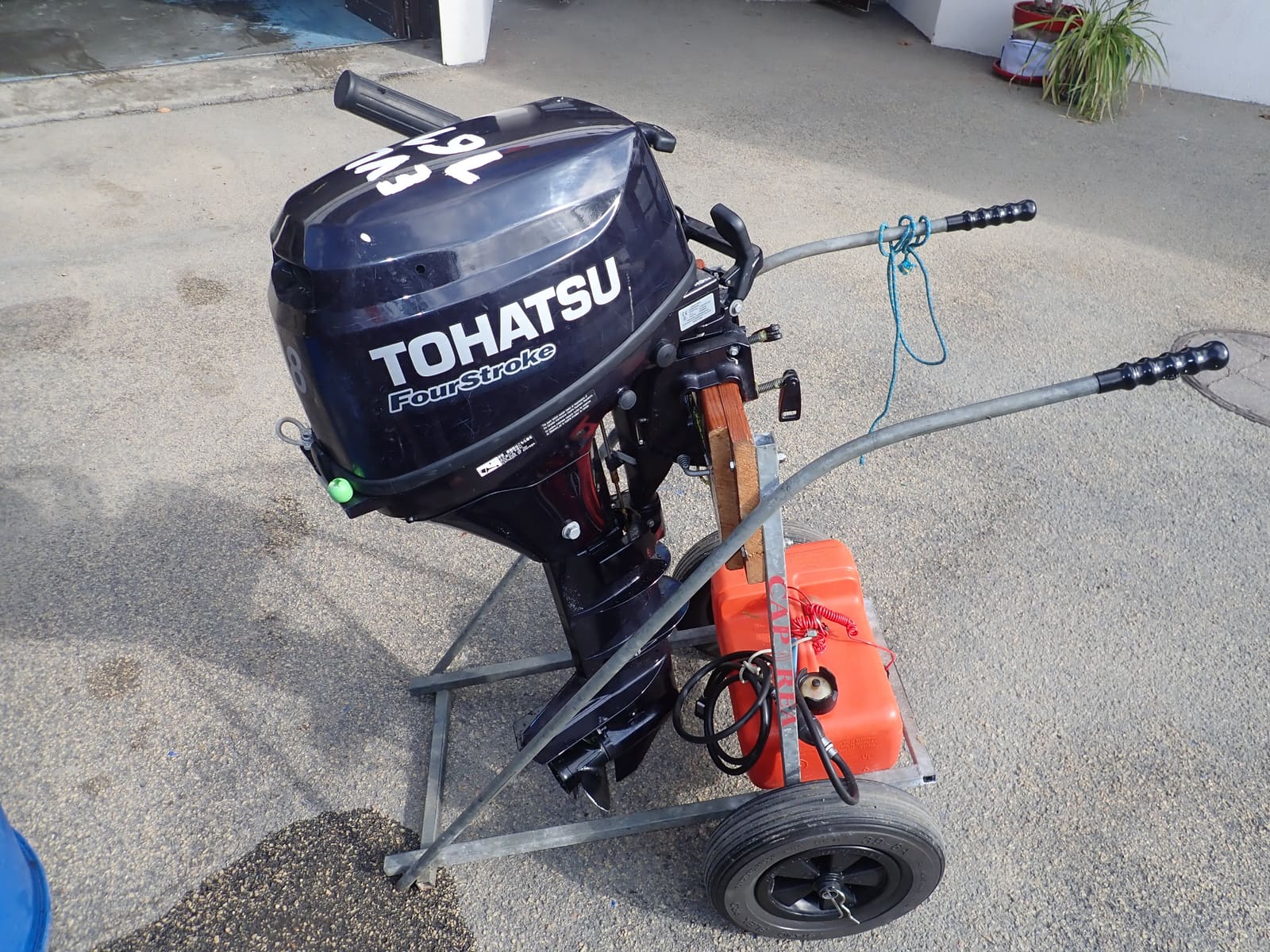
- Hoses: BoatUS explains that ethanol blends tend to make fuel hoses soft while methanol blends make them brittle, and that a gasoline smell on a rag wiped along the hose means it is breaking down. Flexible fuel hose on a boat must be the Coast Guard-approved marine type, marked on the hose. Hard, cracked or mushy hoses all get replaced.
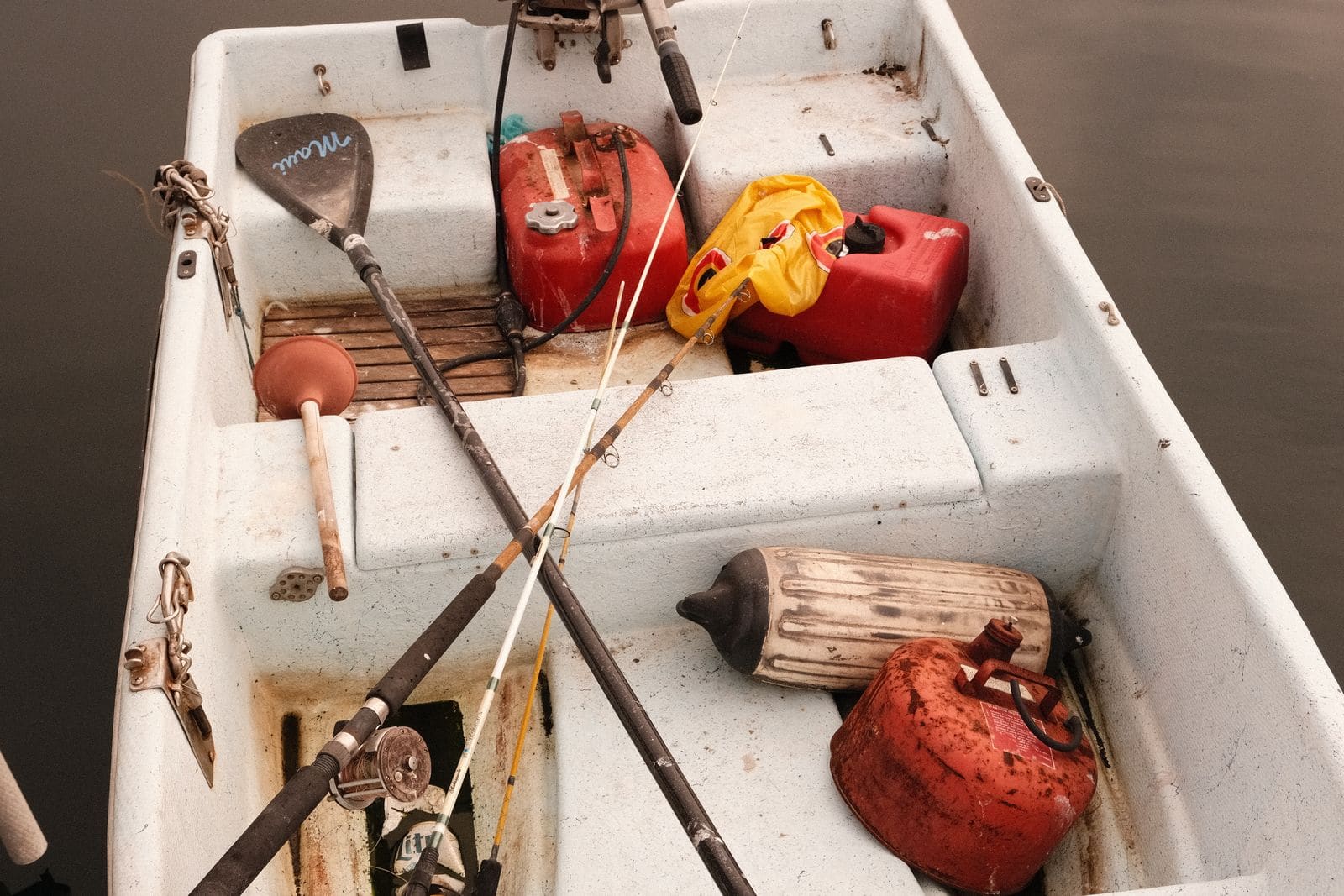
- Tank: BoatUS notes that aluminum tanks corrode when they stay in contact with water, especially when foam was poured around them, and that replacing a built-in tank can mean cutting the deck. Ask how the tank comes out before you buy.
See our fuel tank inspection and fuel line replacement guides.
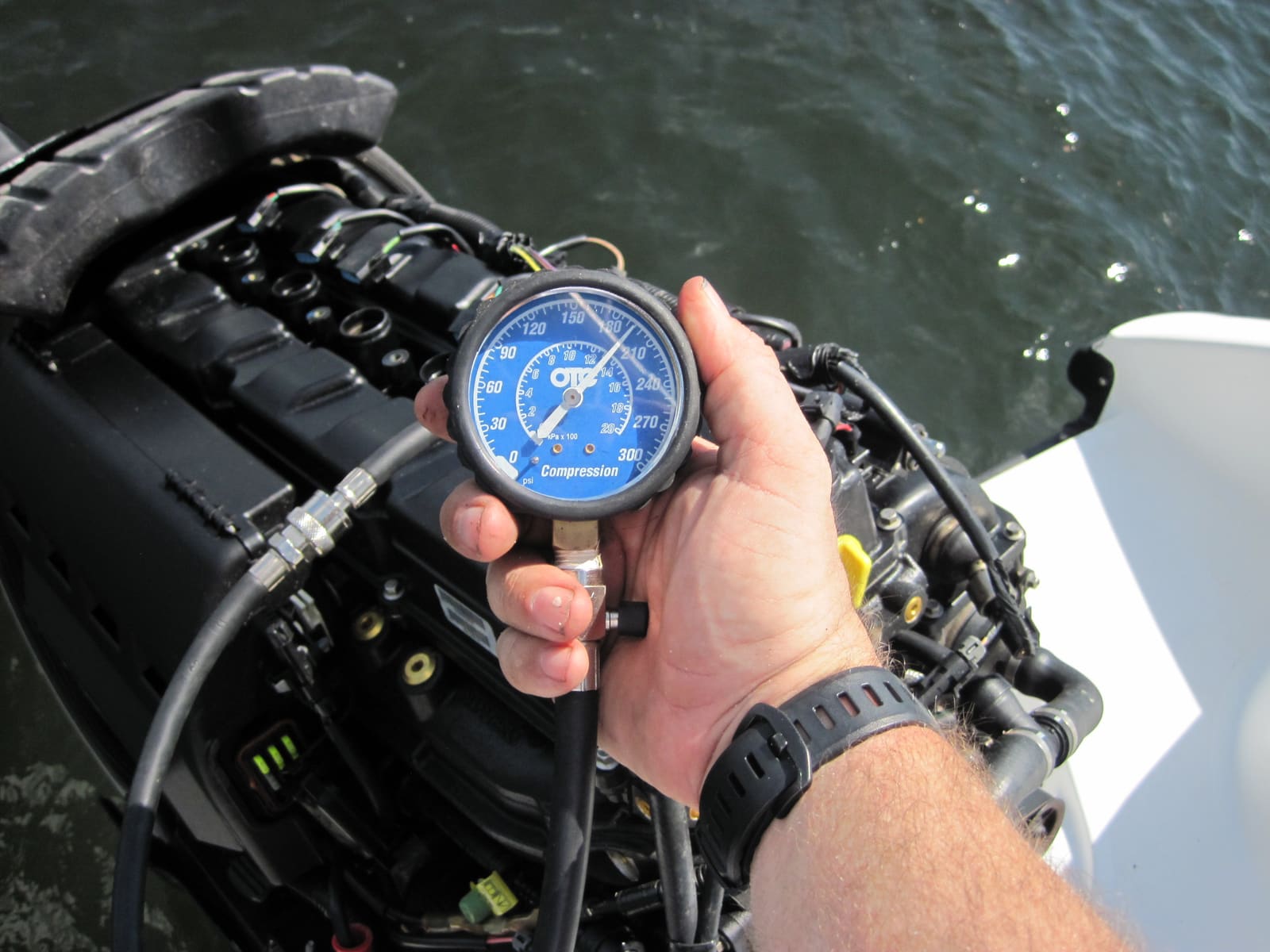
Look for corrosion, rodent nests, chewed wires, cracked or missing hoses, and signs of freezing (cracks in the block or manifolds on inboards and sterndrives). Check the oil level and color: milky oil can mean water got in. On inboards and sterndrives, BoatUS calls out the risers, manifolds and raw-water cooling system as places where a failure can let water into the engine. Turn the flywheel by hand (if the seller allows) to see that it is not seized. A compression test (see our compression test guide) tells you far more than a quick start ever will. An oil sample is a cheap second opinion on four-stroke and inboard engines: Blackstone Laboratories says a lab can often spot an early coolant leak, dirt or fuel in the oil before it looks milky, even if the oil was just changed, and that a seller who refuses a sample for no good reason is a red flag (see our oil sample analysis guide). On an engine that sat for years, the oil is old, so judge the results with your mechanic.
Do not assume it will run after a "quick tune-up." Before any start after years of sitting, the fuel system, cooling pump impeller, oil and battery usually all need attention. Plan for that cost even if the engine turns out to be good.
If the seller says the engine was recently put back in running order and offers a water test, ask them not to run it before you arrive, and be there for the first start of the day. A warm engine can hide hard starting, a sticky choke or smoke that shows only when cold. The run itself must happen in the water, or for an outboard on external flush muffs or in a test tank, never dry; inboards and sterndrives only in the water or with cooling water supplied as their manual says.
BoatUS says to plan on replacing basics such as lights, switches and batteries, and warns that old copper wire corrodes (turning green inside the insulation), which raises resistance. Look for:
- Green or black crusty wire ends and terminals
- Household wire, electrical tape, wire nuts and no fuses
- Chewed insulation from rodents
- A battery that is swollen, cracked or dead
The difference between a cleanup and a full rewire is big money; price it honestly.
BoatUS lists failed through-hulls and hoses among the top causes of sunken boats. Check that seacocks open and close (they can seize when unused for years), that plastic through-hull fittings are not brittle from sun, and that hoses are not stiff, cracked or soft. Plan on replacing old bilge and raw-water pumps. Turn the wheel lock to lock: it should be smooth, with no binding, play, leaks or corroded linkages. Old mechanical steering cables often seize after sitting.
BoatUS notes most oxidized gelcoat can be compounded or wet-sanded back to a shine, and two-part paints are an option if UV damage is too deep. Upholstery and canvas can be re-made, but often at significant cost. Press on seats: if the vinyl is cracked and the foam is soaked, the seat bases (often wood) may be rotted too. Check for mold, mildew smell and rodent damage inside lockers and under cushions.
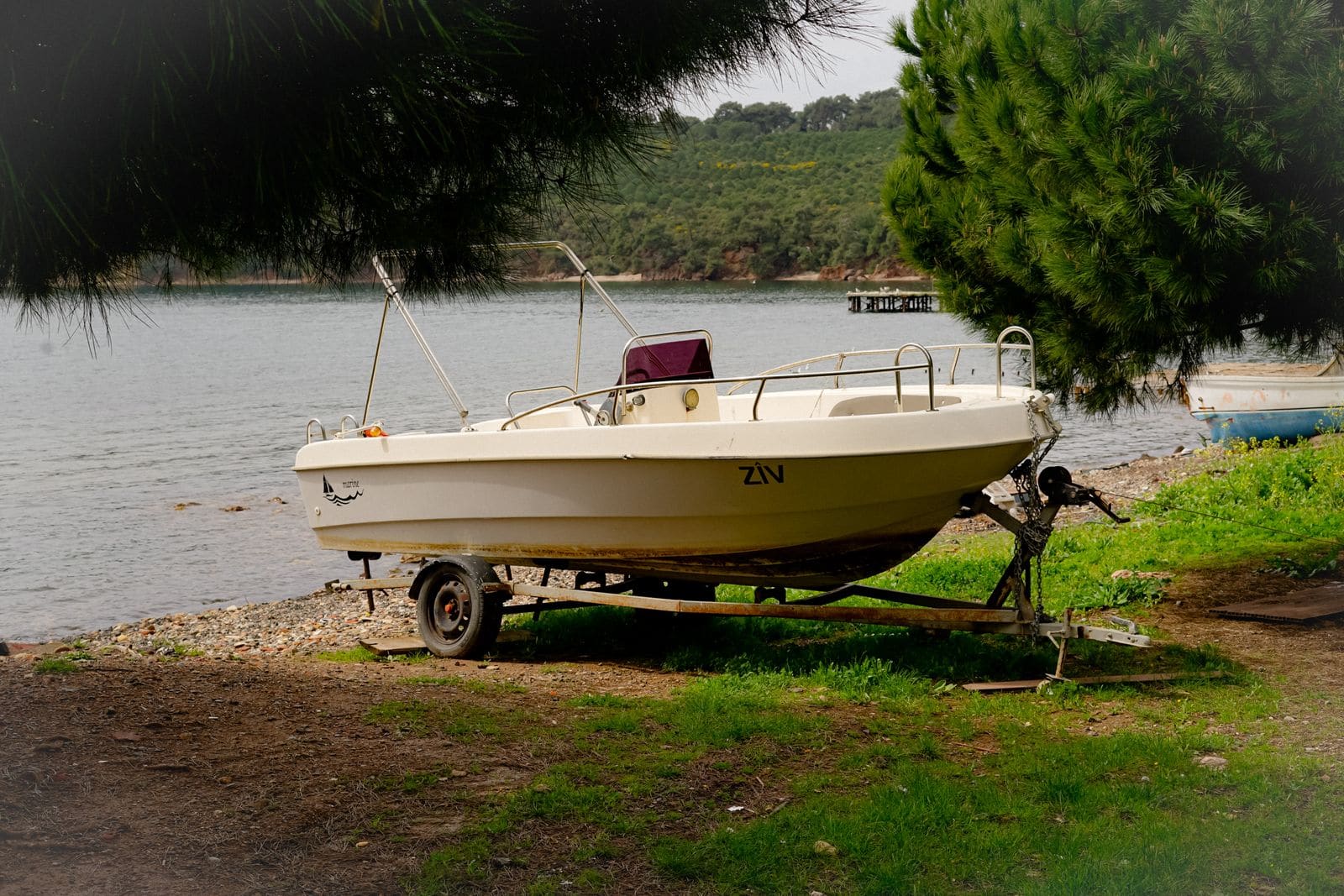
A trailer that sat for years is rarely road-ready. BoatUS suggests checking tires for rot; corrosion on the frame, axles and springs; winches and jacks for sound operation; and whether brakes, if fitted, work. Expect to need tires (check the date code), bearings and lights before towing any distance.
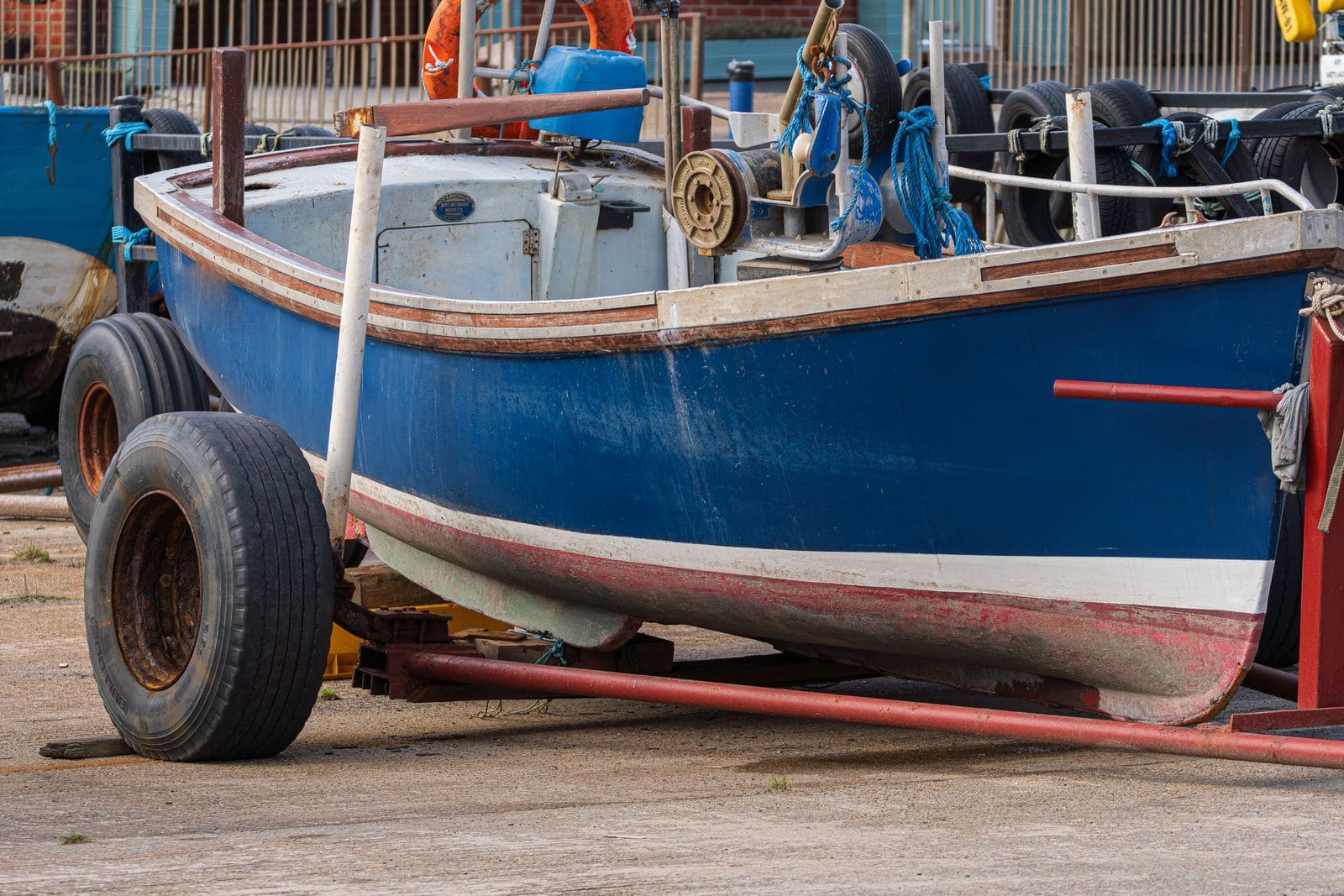
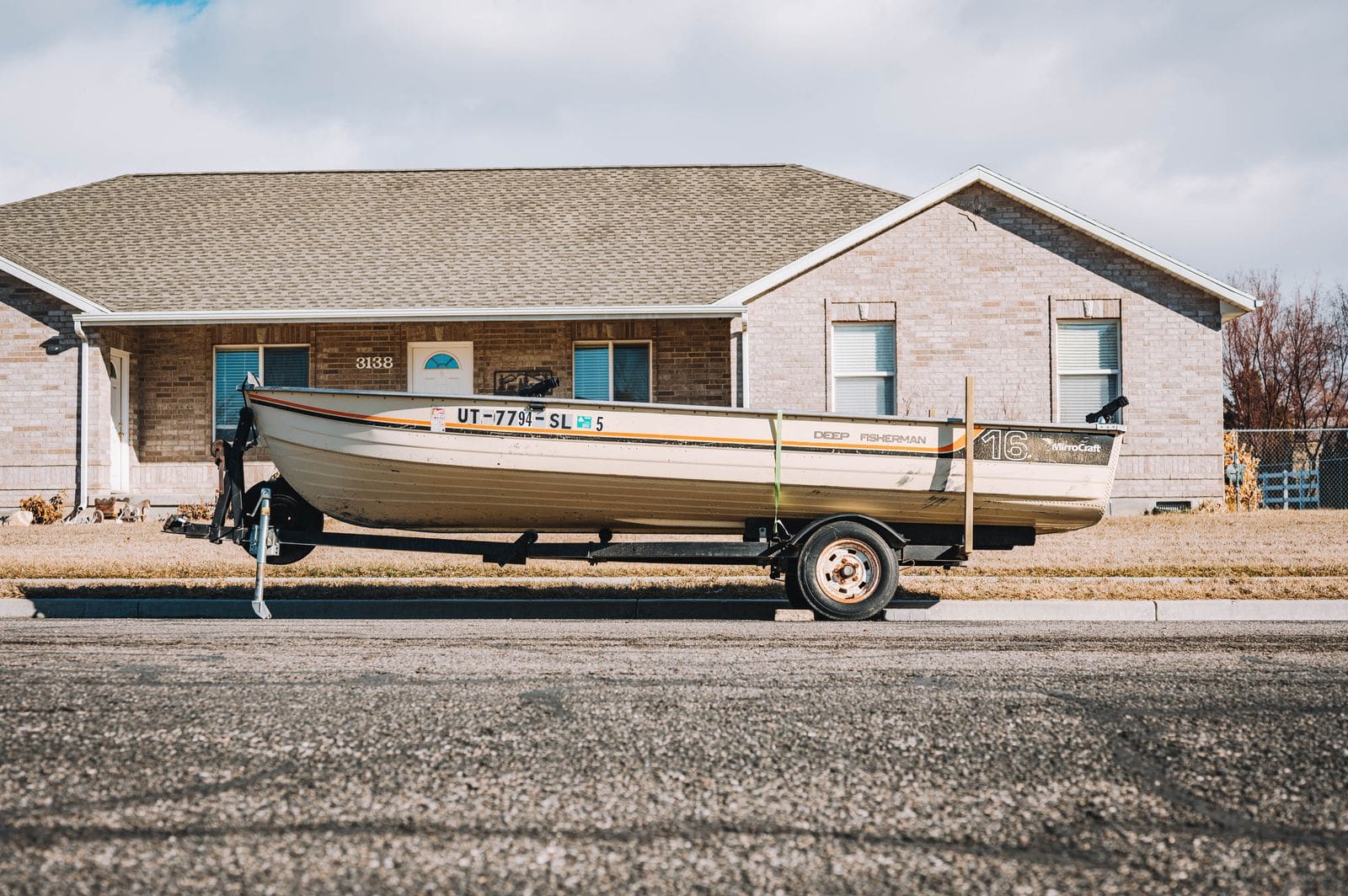
Rusted rims, faded paint and old tires are common on boats that sat for years. Photo: Howard Senton / Pexels Discover Boating puts typical surveys at about $15 to $25 per foot, and BoatUS cites around $500 per engine for a mechanical survey by a technician who knows that brand. On a cheap small boat, your own careful inspection plus a mechanic's compression test may be enough. On anything bigger, financed or insured, hire a SAMS or NAMS surveyor. BoatUS notes you probably will not be able to finance or insure a larger boat without a survey, and that a surveyor may stop early and let you walk away if a deal-breaker such as structural rot turns up.
Following BoatUS's advice, list every item that needs attention, get a price for each, and add at least 15% for surprises. Get a repower quote even if you hope to keep the old engine; BoatUS recommends it because the only guarantee with an old engine is that it runs today. Include:
- Structure (transom, stringers, deck, foam) if any
- Fuel system: tank cleaning or replacement, hoses, filters
- Engine: service, impeller, carburetor or injector work, or repower
- Electrical: batteries, wiring, switches, lights
- Plumbing, pumps and steering
- Upholstery, canvas and cosmetic work
- Trailer: tires, bearings, lights, winch strap
- Safety gear, registration and taxes
Then compare the total with the price of a turnkey boat of the same size. BoatUS points out that the project often ends up close to the cost of a boat you could use tomorrow. Also be honest about your time, skills and workspace: BoatUS reminds buyers that a yard project may need family approval or even a permit, and some marinas do not allow DIY work.
Common mistakes
- Spending money on the engine or upholstery before confirming the structure is sound.
- Believing "it just needs a carb clean" on an engine that has not run in years.
- Starting a long-dead engine on old fuel, or running an outboard with no water supply.
- Ignoring water draining from the hull because "it was just rain."
- Skipping the trailer and then towing home on dry-rotted tires and seized bearings.
- Forgetting the paperwork: no title, an expired registration in someone else's name, or a missing trailer title.
- Budgeting with no contingency, then stalling halfway through.
When to call a pro
- Soft transom, stringers or deck, or signs of waterlogged foam
- Fuel smell, fuel in the bilge, or a built-in tank that may be leaking
- Any boat you will finance or insure, or that is large or complex: hire a SAMS or NAMS surveyor
- Engine evaluation (compression, oil analysis, diagnostics) by a technician who knows that brand
- Wiring that is corroded, unfused or mixed with household wire, or anything involving shore power
- A missing or questionable title, or a HIN that looks altered
Tips
- Take photos of everything and keep a running repair list with prices while you inspect; it becomes your negotiating sheet.
- Bring a friend who has restored a boat. They will spot rot and rodent damage fast.
- If you still want the boat after finding problems, make your offer reflect the repair list, not the asking price.
- Don't trust the hour meter alone. A used-boat buyer interviewed by Boating Magazine suggests paying a mechanic to connect a scan tool to engines that support it; the engine's computer can confirm hours and show stored problems. Look closely at the trailer tongue where it joins the frame too, a common weak point on old trailers.
- History matters as much as age. BoatUS's refit expert suggests extra caution with high-hour planing powerboats from before the 1980s and avoiding planing boats retired from commercial, police or military service, which can put a weekend boater's decade of hours on a hull in one year.
- Small 14- to 18-foot boats with simple layouts are the most realistic DIY structural projects; BoatUS calls a stringer job on these a lot of messy, hard work but within reach of someone with basic fiberglass skills.
- Once you own it, keep it covered with a well-supported, vented cover, drain plug out and bow slightly up, so the next owner does not inherit the same problems.
Official references
We read these to write this guide. Your engine's own manual always wins.
- BoatUS – The Value Proposition (evaluating a free or cheap project boat)
- BoatUS – Replacing Rotten Stringers in a Small Boat
- BoatUS – The Boat Survey
- BoatUS – Marine Exhaust and Fuel Hoses
- Blackstone Laboratories – Pre-Buy Samples, the Art of the Craigslist Deal
- Boating Magazine – Used Boat Buying Secrets
- BoatUS – Buying a Boat Fixer-Upper (2018)
- Discover Boating – How to Buy a Pre-Owned Boat from a Private Seller
- BoatUS – After the Sale Details (titles, liens, trailers)
Safety: BoatMend is for information only and does not replace a certified marine technician. You are responsible for your safety and your boat. Read the full disclaimer.
Last updated 2026-10-24
Related guides
How to Inspect a Used Boat Before You Buy
A step-by-step checklist for looking over a used boat, from paperwork and the hull ID number to the transom, engine, compression test, sea trial and trailer. Know what to check yourself, what the red flags mean, and when to pay a marine surveyor.

Used Boat Paperwork: Titles, Liens, HIN Checks, Bill of Sale and Registration
A practical checklist for the paperwork side of buying a used boat: state title or Coast Guard documentation, checking for liens and theft, verifying the hull ID number, writing a proper bill of sale, the trailer's own title, registering in your name, and transferring warranties and checking recalls. Rules vary by state, so confirm each step with your state agency.
How to Check a Boat for Transom and Stringer Rot
Many older fiberglass boats have wood inside the transom, stringers and deck, and water that gets in slowly rots it. Learn the tap test, the flex test, how to read a moisture meter and the other warning signs, and why a rotten transom or stringer is a structural job for a pro, not a weekend patch.

How to Tell if Your Boat's Flotation Foam Is Waterlogged
Learn the signs that the foam under the floor or seats of a small boat has soaked up water, how to check without tearing the boat apart, what the Coast Guard flotation rules mean for you, and why replacing foam is usually a big job for a pro.
How to Inspect Your Boat's Fuel Tank, Fill, Vent and Hoses
A leaking gas tank is one of the most dangerous problems a boat can have, and it usually starts out of sight. Learn how to inspect portable and built-in tanks, spot aluminum tanks corroding from below, know the ethanol risk for old fiberglass tanks, and check the fill, vent, hoses, clamps and sender, plus why tank replacement is a job for a pro.
How to Replace an Outboard Fuel Line and Primer Bulb
A cracked hose or a stiff primer bulb can leak gasoline, starve your engine or shed rubber into the fuel. Learn how to choose Coast Guard-rated fuel hose, the right connectors for your engine brand and good stainless clamps, install the bulb pointing the right way, leak-test the job and get rid of the old parts safely.
How to Do a Compression Test on an Outboard, Sterndrive, Inboard or PWC
A compression test tells you whether the pistons, rings, valves and head gasket in each cylinder are sealing. Learn when to do one, how to do it safely, how to read the numbers by comparing cylinders, and what a wet test and a leak-down test add.
How to Inspect, Inflate and Replace Boat Trailer Tires
Check your trailer tires the way the pros do: the right type (ST), the right load range, the right cold pressure, and an honest look at their age. Tires are the number one reason boat trailers end up on the side of the highway.
How to Inspect and Repack Boat Trailer Wheel Bearings
Check, clean and repack your trailer's wheel bearings so a seized hub does not leave you stranded on the highway. Boat trailers get dunked in water every launch, which makes their bearings fail far more often than those on dry utility trailers.
Planning a Repower: Horsepower Limits, Transom, Rigging, Prop and Costs
Putting a new engine on a boat you love can cost far less than a new boat, but only if the plan is right. Learn how to read the capacity plate for maximum horsepower and weight, check the transom, sort out controls, gauges and rigging, budget for the prop and the extras, and decide between a dealer installation and doing it yourself.

How to Keep Mice and Rodents Off Your Stored Boat
Mice love a stored boat: dry, quiet and full of soft nesting material and tasty wire insulation. Learn how to remove what attracts them, close their way in, choose deterrents and traps that actually work, avoid the risks of poison, and check the wiring safely in spring.