Planning a Repower: Horsepower Limits, Transom, Rigging, Prop and Costs
Putting a new engine on a boat you love can cost far less than a new boat, but only if the plan is right. Learn how to read the capacity plate for maximum horsepower and weight, check the transom, sort out controls, gauges and rigging, budget for the prop and the extras, and decide between a dealer installation and doing it yourself.
Time
4 h
Shop would charge
$5000-40000
Applies to
Outboard, Sterndrive (I/O) · Fishing boat, Bowrider / runabout, Pontoon, Center console, Cabin cruiser
Safety first: Never install more horsepower or engine weight than your boat is rated for. Too much power or weight on the transom can make a boat dangerously hard to handle, ride low at the stern, take water over the transom or crack a weak transom. Mounting a mid-size or large outboard or lifting a sterndrive engine takes a proper hoist and trained people; a falling engine can kill. Fuel system and high-current battery cable work on a repower should be done to code by a qualified installer.
Owners often ask
- Can I put a bigger outboard on my boat than the capacity plate says?
- Is it worth repowering my old boat, and what does a repower really cost?
This guide walks you through it. Still stuck? Ask the AI Mechanic about your engine.
Tools
- Tape measure and a straightedge
- Flashlight and an inspection mirror
- Phone camera (to photograph the capacity plate, transom, helm and rigging)
- Moisture meter or a plastic mallet for tapping the transom (optional)
- Notebook or spreadsheet for quotes
Parts & supplies
- Nothing to buy yet; this is the planning stage
Before you start
What "repower" means. Replacing a worn-out or failed engine with a new or remanufactured one, keeping the boat. Boating Magazine notes that for a boat with a sound hull, transom and stringers, a repower can bring better performance, easier starting and better fuel economy for a fraction of the price of a new boat. It's a big decision, so plan before you shop.
Is the boat worth it? Before pricing engines, be honest about the hull. A repower makes sense when the hull, transom, stringers, floor, wiring and fuel system are in good shape or worth fixing. Pouring a new engine into a boat with a rotten transom, soggy floor or tired wiring is money lost. If in doubt, pay for a survey first (see our used boat inspection and transom and stringer rot check guides).
Yamaha suggests a simple test: will you keep the boat at least five more years? If not, a new boat may make more sense, because buyers tend to judge a used boat by the hull's age more than the engine's.
New or used engine? A used outboard can save money, but Yamaha recommends a full pre-purchase inspection by a qualified mechanic: a compression check, a look at all fluids, a test of the electrical parts such as power trim, a check for corrosion, belts and seals, a sea trial under load, and a scan of the engine computer with dealer diagnostics, which can show problems you can't see. Ask the seller why they're selling.
The capacity plate is your starting point. Under 33 CFR 183, most monohull boats under 20 feet (except sailboats, canoes, kayaks and inflatables) built since the early 1970s must carry a plate showing maximum persons, maximum weight and, for outboard boats, the maximum horsepower. Discover Boating adds that boats up to 26 feet often carry a similar "Maximum Capacities" plate from the builder. On outboard boats, the weight figure covers persons, motor and gear. The BoatUS Foundation points out that plates on inboard and sterndrive boats don't show a horsepower rating, because the Coast Guard safe-powering standard doesn't apply to them; for those, the builder's original engine options are your guide.
Steps
Find the plate near the helm or on the inside of the transom. Write down the maximum horsepower (some plates show one figure for remote steering and a lower one without), the maximum weight capacity and the persons capacity. The plate must never be removed or altered. If your boat has no plate, or it's unreadable, contact the builder for the original ratings, or ask a marine surveyor if the builder is out of business.
Treat maximum horsepower as a limit, not a target. The BoatUS Foundation notes that while exceeding the plate isn't a federal violation for the owner, many states prohibit installing a motor above the rated horsepower, and your insurance may be void if you exceed the plate's limits. Ask your insurer before you buy. Also check whether the engine you're considering is rated for the steering you have (some plates give a lower limit without remote steering).
Modern four-strokes and some high-output outboards can weigh noticeably more than the older two-strokes they replace. BoatUS warns that extra weight at the stern can affect seaworthiness, especially if you were already at the boat's maximum rating, and suggests asking the builder about the design limits before you shop. Compare the dry weight of your old engine and the new one (from the makers' spec sheets), and remember that the motor's weight counts against the plate's weight capacity. Too much stern weight can bring the transom or motor well dangerously close to the water and cause flooding through scuppers or over the transom.
Twins to a single? BoatUS notes that replacing twin outboards with one big modern one can save weight and drag, but builders caution that the torque of some power-dense engines may be too much for transoms not designed for it. Its rule of thumb: don't exceed the highest single-engine horsepower the builder offered as original equipment, and confirm with the builder.
Boating Magazine stresses that the transom must be structurally sound before a repower, and suggests a certified dealer, marine surveyor or fiberglass expert help make that call. For sterndrives, its sterndrive repower story describes the technician's first step as always inspecting the transom, stringers and engine mounts, since repairs there can be costly. Look for:
- Cracks or stress lines around the motor mounting bolts or the sterndrive transom assembly
- Movement or flex at the transom when you push on the engine
- Soft or wet spots, or a dull thud when you tap with a plastic mallet
- Water weeping from bolt holes or the drain plug area
Our transom and stringer rot check guide explains these tests. A metal transom plate (backing plate) can spread outboard mounting loads, and Boating Magazine's project boat added one as good practice.
Measure your transom height at the motor mount and make sure the new outboard's shaft length matches (common outboard shaft lengths include 15, 20, 25 and 30 inches; confirm in the engine maker's specs). Boating Magazine explains that for most boats the anti-ventilation plate just above the propeller should end up about even with the hull bottom when the engine is vertical: too low adds drag, too high can cause ventilation and poor cooling water pickup. The installer fine-tunes this with the bracket holes. If you have a jack plate or set-back bracket, include it in the plan.
A new engine often means new rigging:
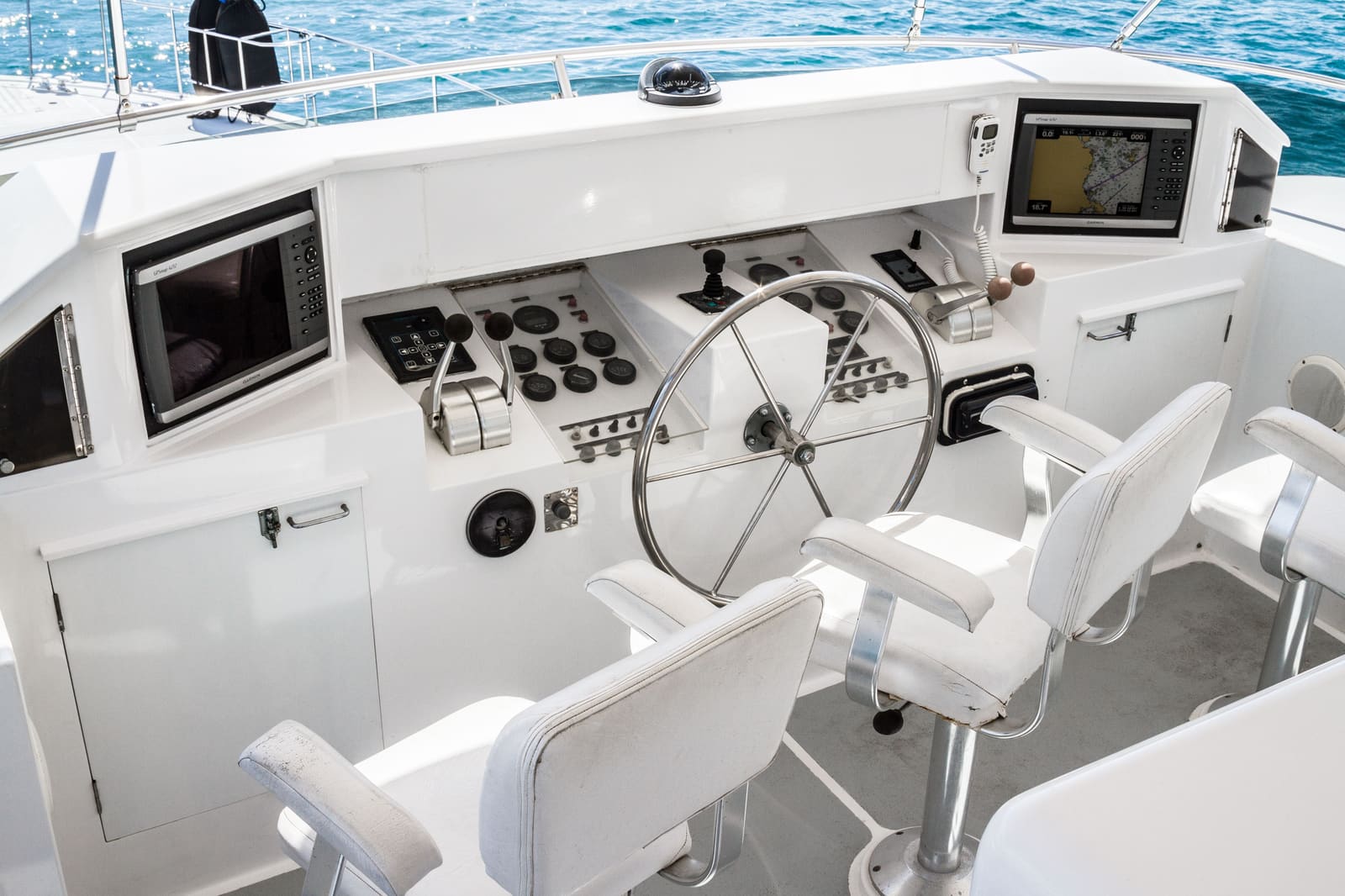
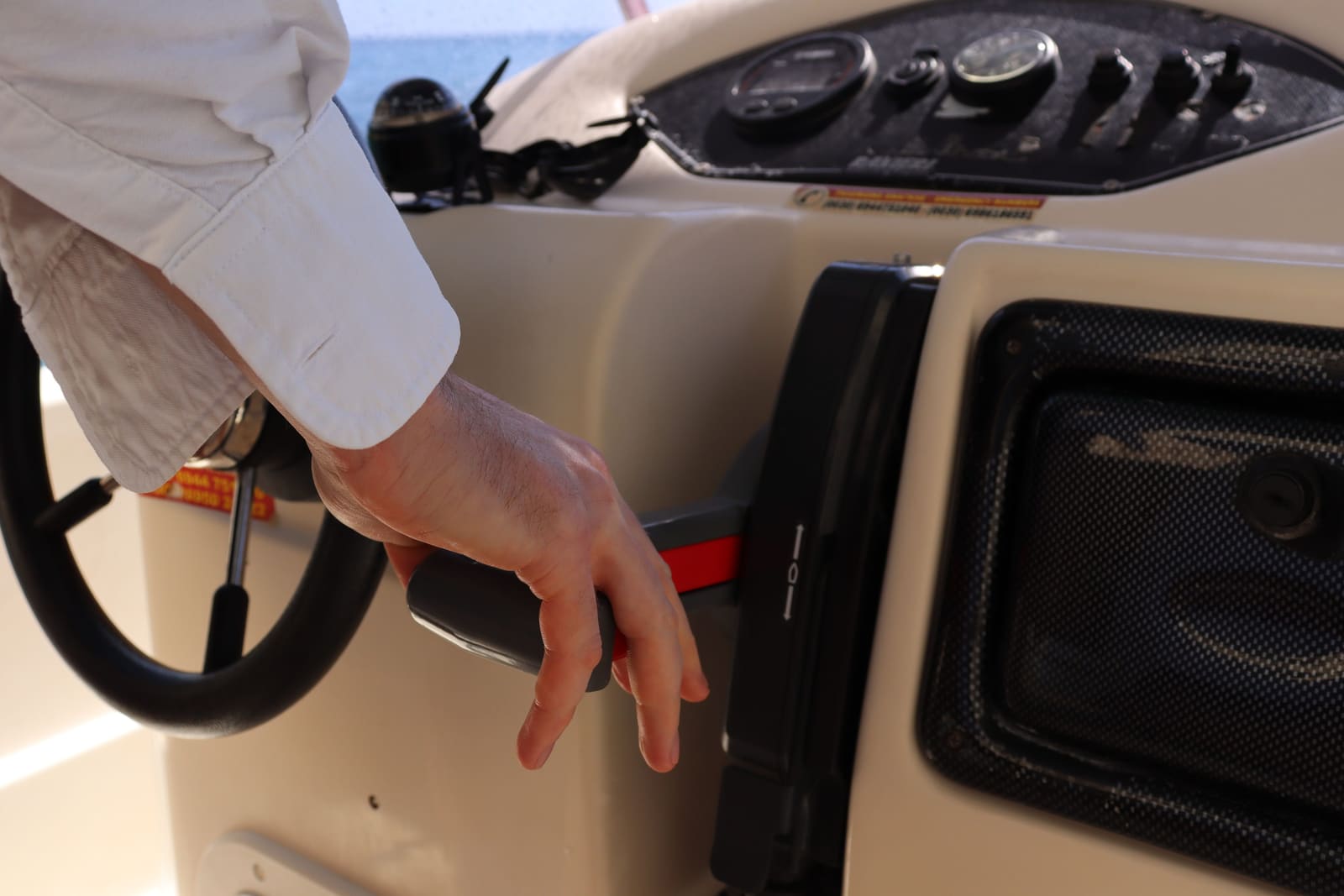
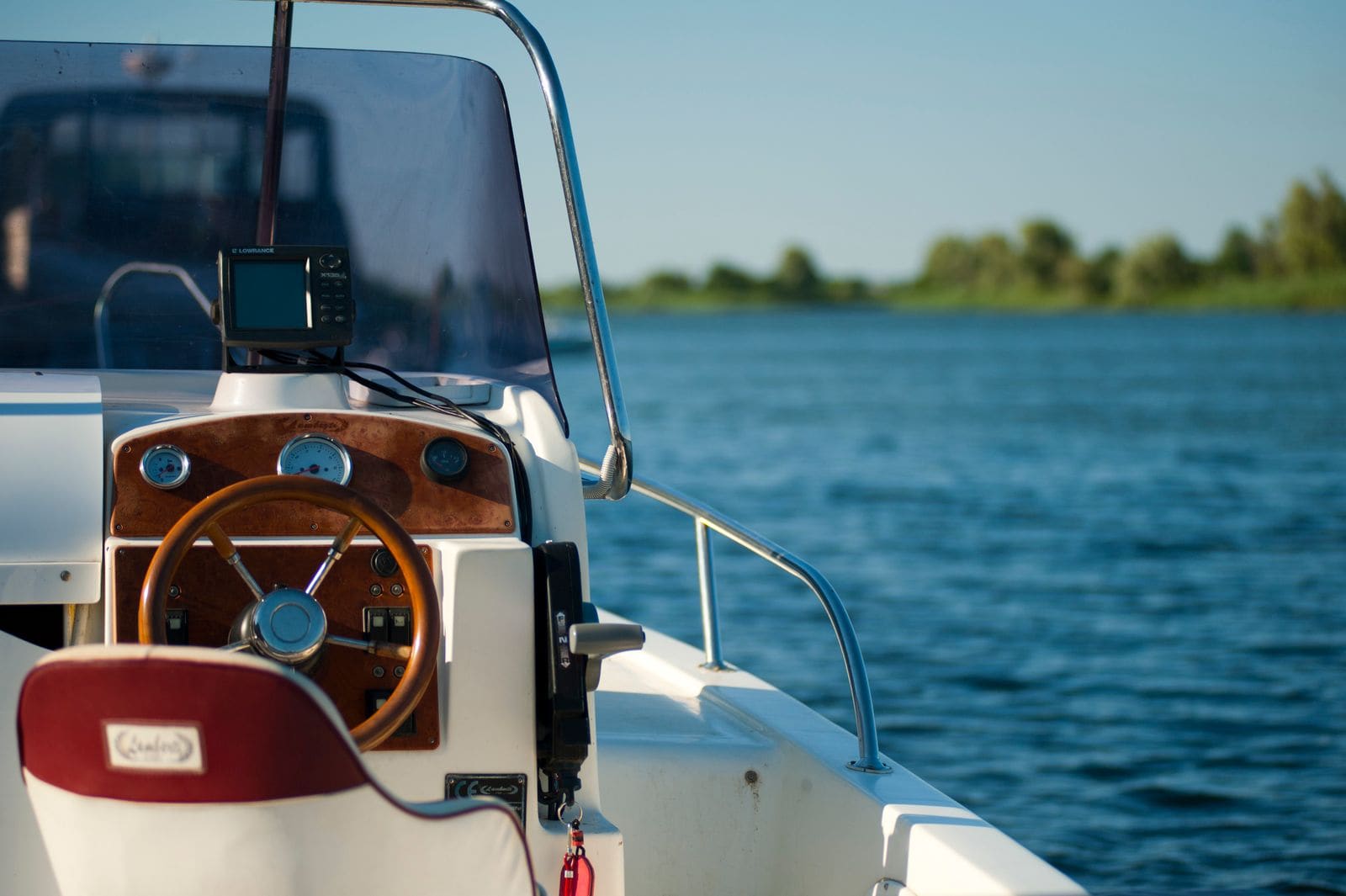
Controls, gauges and displays all have to talk to the new engine. Photo: Thibault Om / Pexels · Pexels License - Controls: mechanical cables may not fit a new engine brand, and many new engines use electronic (digital) throttle and shift. BoatUS calls a repower a chance to simplify the dash and consider electronic controls, and notes that joystick control requires hydraulic steering. Yamaha's take: mechanical shift costs less, while digital shift gives a clean shift every time (no grinding from slow shifting) but needs compatible controls, which adds to the bill.
- Steering: confirm that your steering system (cable or hydraulic) is rated for the new horsepower and engine type, and replace worn cables now.
- Gauges and data: old analog gauges usually won't read a new engine's sensors. Many new engines send data over a NMEA 2000 network or through a gateway, so a chartplotter can show RPM, temperature and fuel flow (BoatUS).
- Wiring: switching brands, as Boating Magazine notes for sterndrives, may require new controls, instruments and a wiring harness.
- Charging: BoatUS suggests checking the new engine's alternator output, including at low RPM, if you run a trolling motor or lots of electronics.
- Batteries and cables: the new engine's manual specifies battery size and cable size; older cables may be too small. Yamaha points out that new outboards' electronics are more sensitive to voltage swings, so test the batteries and charging setup before the new engine goes on.
- Fuel system: fuel-injected engines want clean, water-free fuel. Plan on new USCG-rated fuel hose, a 10-micron water-separating filter, and a check of the tank, vent and anti-siphon valve (see our fuel line replacement guide). Old hoses may not handle ethanol.
- Sterndrives: the transom assembly, bellows, gimbal bearing and drive may need replacing too. Boating Magazine notes that alignment must be done carefully, and that current sterndrive engines are often physically larger than older ones and may not fit the engine bay. Measure the hatch opening and bay before buying.
The old propeller rarely suits a new engine with different power, gear ratio or weight. Budget for at least one new prop, and plan a sea trial with the dealer to confirm the engine reaches the wide-open-throttle RPM range in its manual with a typical load. Our propeller guide covers pitch and diameter.
Get written quotes that list every item, not just the engine. A typical list:
- Engine (new, remanufactured or a "crate" or long-block engine for sterndrives)
- Rigging kit, controls, cables or digital harness, gauges or display
- Steering upgrades, if needed
- Propeller
- Batteries, cables, fuel hose, filter and fittings
- Transom repair or a transom plate, if needed
- Labor for removal, installation, rigging and sea trial
- Disposal or sale of the old engine (some new-engine programs involve scrapping the old engine; remanufactured engines often need a core return)
For scale, Boating Magazine's sterndrive project, a pair of remanufactured 300 hp V-8 engines with new drives and transom assemblies on a 28-foot cruiser, came to roughly $35,000. A small outboard repower can be a few thousand dollars. Ask about financing and seasonal repower promotions.
- Dealer installation: Boating Magazine's outboard mounting took three people, a fork truck and about 90 minutes, with careful measurements and bolt installation done per the engine's installation manual. A dealer also handles rigging, programming, the sea trial, warranty registration and any predelivery inspection the maker requires. Ask whether the warranty depends on dealer installation. Yamaha warns that an improper installation of a larger motor can void the warranty, and Mercury says its engine warranty also covers the controls and rigging installed during a repower, so get the warranty terms for the whole package in writing. Promotions can add conditions too: Suzuki's repower program page, for example, states that engines must be installed by the dealer that sold them.
- DIY: realistic for small portable and tiller outboards that you can safely lift and clamp on. For anything heavier, remote-rigged or with digital controls, the lifting, rigging and programming usually need a dealer. A middle path is to do the prep yourself (clean the transom, replace fuel hoses, upgrade batteries) and have the dealer do the installation.
Line up quotes item by item: same horsepower, shaft length, controls, gauges, prop and warranty. Ask what's included in labor, how long the job will take, whether they'll sea-trial the boat with you aboard and what happens if the boat doesn't reach the expected RPM. Check the dealer's reviews and service department, since that's who you'll see for warranty work.
Mercury's "Repower 101" series suggests agreeing on the full scope before the boat goes to the shop: what the dealer found when evaluating the transom (including aluminum and rivets on metal boats), rigging, electrical system, steering, controls and displays, and what will be replaced. Its point is that there's no single repower price, so the goal is to understand the whole investment up front rather than discover extra work once the boat is apart. Also agree on a timeline and how the shop will keep you updated; a twin-engine job with new steering and wiring takes much longer than a single swap.
At delivery, ask for a walkthrough before your first run: what was changed, how the new controls and displays work, what normal sounds and readings look like, and how trim and controls were set up for your hull (Mercury describes the dealer's on-water testing and fine-tuning of trim, control feel and digital settings as part of finishing the job). Write down anything that feels wrong on the first trips and report it early.
After installation, follow the new engine's break-in schedule exactly. Mercury, for example, warns that a failure caused by improper break-in may not be covered by warranty. Book the first service now. Our engine break-in guide walks through it.
Common mistakes
- Buying an engine before checking the capacity plate and the transom.
- Exceeding the plate's horsepower "because the boat can handle it."
- Comparing horsepower but forgetting the new engine's extra weight.
- Budgeting for the engine only, then being surprised by controls, gauges, prop and rigging.
- Keeping old fuel hoses, a tired filter or undersized battery cables on a new fuel-injected engine.
- Choosing the wrong shaft length or mounting height and fighting ventilation forever.
- Ignoring a soft or cracked transom and bolting a heavier engine to it.
- Skipping the break-in because the boat "just came from the shop."
When to call a pro
- Any doubt about transom or stringer strength (get a survey)
- Lifting and mounting any outboard you can't safely carry, and all sterndrive engine removal and installation
- Digital throttle and shift, joystick, steering upgrades and engine programming
- Fuel system work inside the boat and high-current battery cable installation
- Sterndrive alignment, transom assembly and drive installation
- No capacity plate, or you're unsure what horsepower and weight your boat is rated for
Tips
- Start planning in fall or winter; dealers are less busy and engine promotions are common.
- Ask the builder or an owners' club what engines other owners of your model have run successfully.
- Keep all quotes, invoices, warranty papers and the sea trial results in your BoatMend records; they add value when you sell.
- If the boat has twin engines, plan both together; replacing only one leaves mismatched engines.
Official references
We read these to write this guide. Your engine's own manual always wins.
- BoatUS – Repowering Your Boat
- BoatUS Foundation – Boat Capacities and Capacity Plates (study guide)
- eCFR – 33 CFR 183 Subpart B, Display of Capacity Information
- Discover Boating – All About Capacity Plates
- Boating Magazine – Engine Repower 2020, Part 5 (mounting a new outboard)
- Boating Magazine – How to Repower Your Sterndrive Boat
- Mercury Marine – How to Break In a New Mercury Outboard
- Yamaha Outboards – What to Consider When Repowering a Boat
- Mercury Marine – Repower, A New Outboard Can Give Your Boat New Life (warranty on controls and rigging)
- Suzuki Marine – The Ultimate Repower
- Mercury Marine – Repower 101, Am I a Good Candidate?
- Mercury Marine – Repower 101, From the Trailer to the Shop
- Mercury Marine – Repower 101, The First Run
Safety: BoatMend is for information only and does not replace a certified marine technician. You are responsible for your safety and your boat. Read the full disclaimer.
Last updated 2026-10-24
Related guides
How to Check a Boat for Transom and Stringer Rot
Many older fiberglass boats have wood inside the transom, stringers and deck, and water that gets in slowly rots it. Learn the tap test, the flex test, how to read a moisture meter and the other warning signs, and why a rotten transom or stringer is a structural job for a pro, not a weekend patch.
How to Mount or Re-Tighten an Outboard on the Transom
A loose outboard can steer badly, crack the transom or fall off the boat. Learn how to center the motor, check engine height, tighten clamp screws, seal and bolt through the transom with backing plates, add a safety cable on small motors and spot transom flex before it becomes a costly repair.
How to Inspect a Used Boat Before You Buy
A step-by-step checklist for looking over a used boat, from paperwork and the hull ID number to the transom, engine, compression test, sea trial and trailer. Know what to check yourself, what the red flags mean, and when to pay a marine surveyor.
Propeller Care: Inspect, Remove, Replace and Choose the Right Pitch
Check your prop for damage, pull it to clear fishing line and grease the shaft, reinstall it correctly, and learn how pitch affects your engine's wide-open-throttle RPM. The right prop in good shape protects your engine and often makes the boat run better and use less fuel.
Prop Ventilation vs. Cavitation - Why Your Engine Revs Up and the Boat Loses Grip
Sudden RPM spikes, blowouts in turns, or a prop that slips when you accelerate are usually ventilation, not cavitation. Learn to tell them apart, then work through the fixes in order: trim, load, prop damage, the hull ahead of the prop, engine height, and finally a different prop.
How to Break In a New or Rebuilt Boat Engine
The first hours on a new or rebuilt engine decide how well its piston rings seat and how long it lasts. Learn how to follow your maker's hour and RPM schedule, why you should keep changing the throttle, what to avoid (constant RPM, early full throttle, long idling), what to check every trip and when to do the first oil change.
How to Troubleshoot Dash Gauges, a Dead Tachometer or a Wrong Fuel Gauge
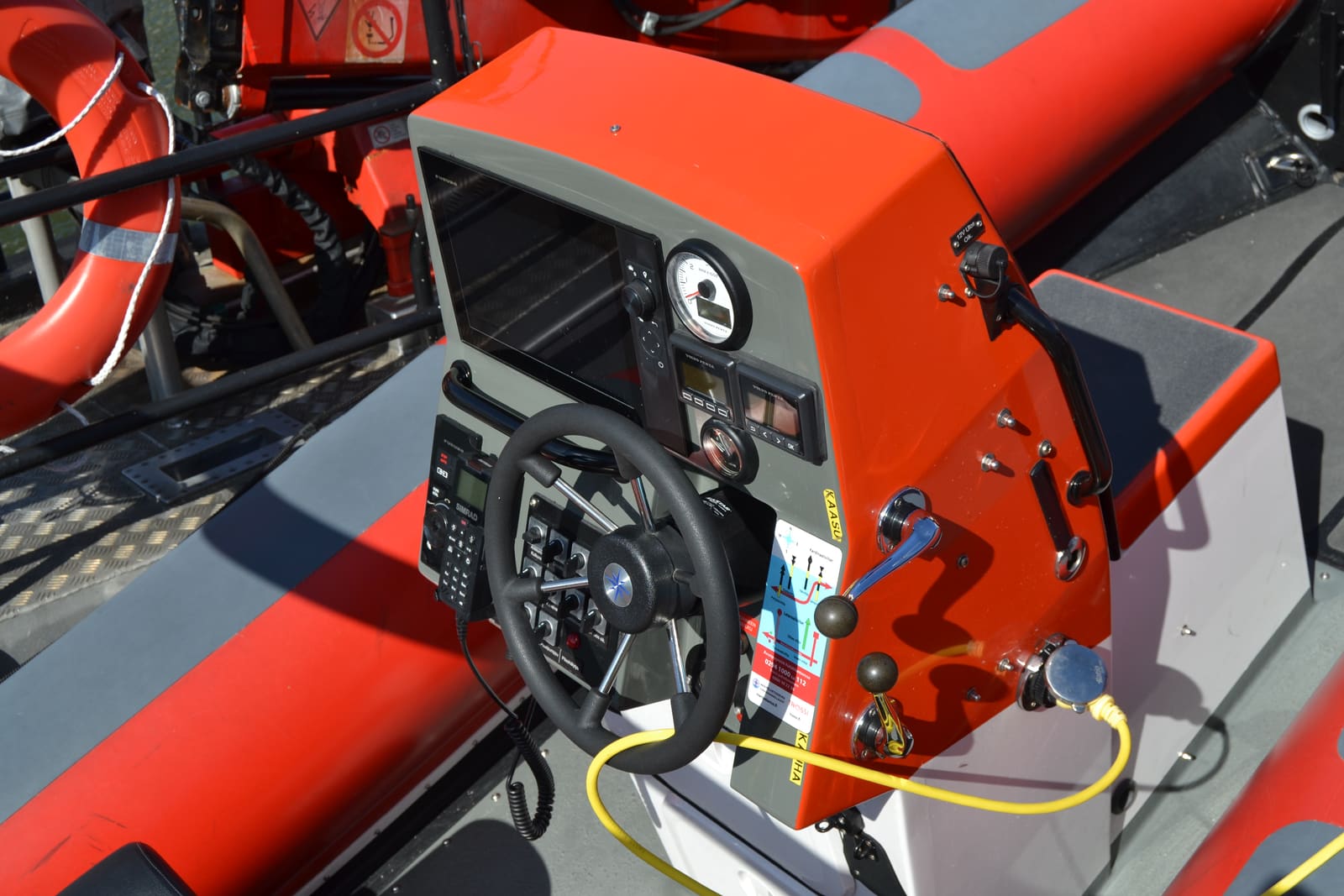
Work through dead or wrong dash gauges from the cheapest check to the most involved: fuses and breakers, power and ground, the gauge-versus-sender test, the tachometer's pulse setting and the extra checks for digital network gauges. Most gauge problems turn out to be a bad connection, not a bad gauge.
Stiff or Seized Mechanical Steering - Lubricate, Inspect and Replace the Steering Cable
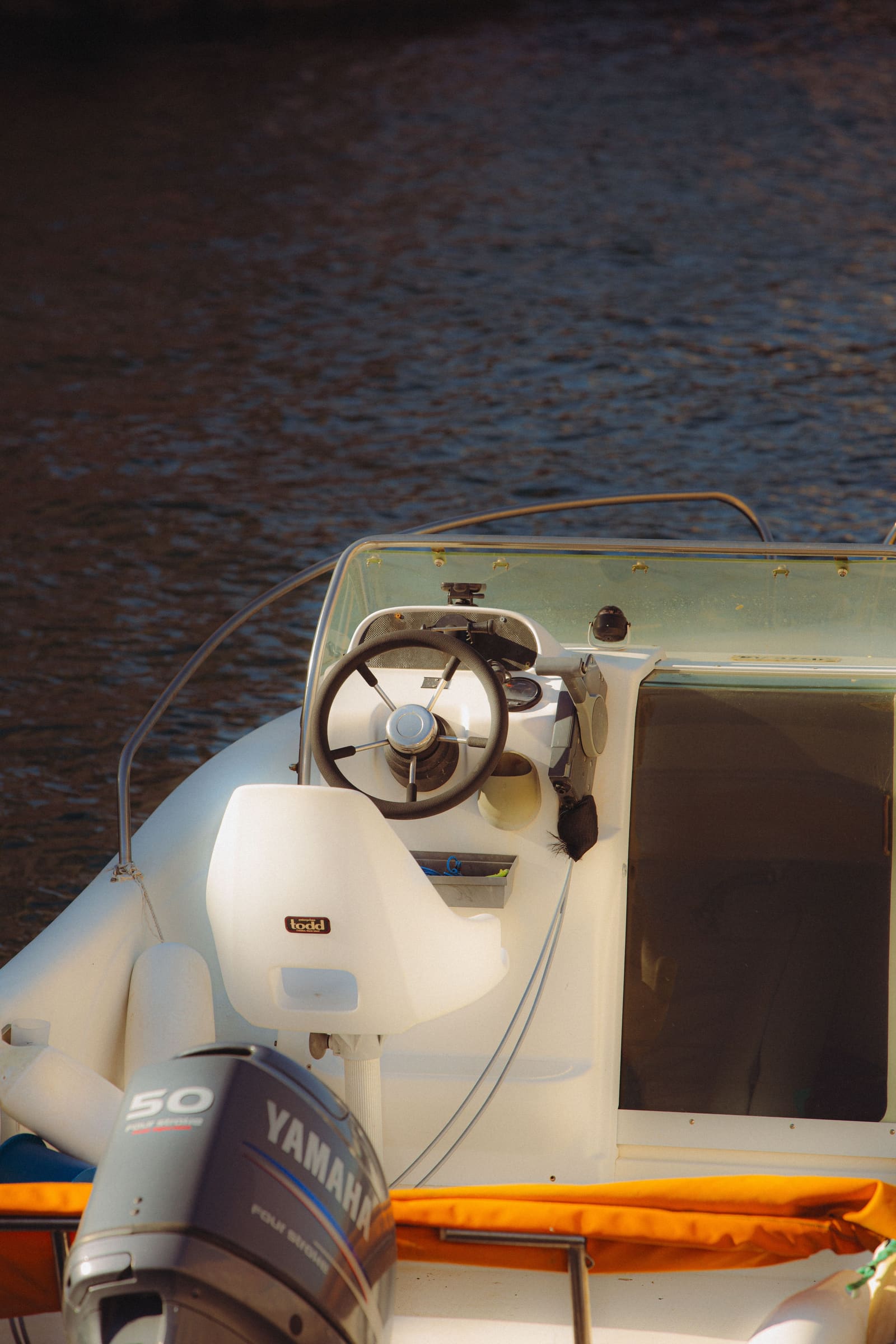
Fix hard, notchy or loose cable steering on an outboard boat. Find out whether the engine, the tilt tube, the cable or the helm is the problem, clean and grease what can be serviced, and measure and install a new cable correctly when the old one is done.
Hydraulic Steering: Check Fluid, Bleed Air and Fix Stiff or Loose Steering
Check the fluid in your hydraulic steering helm, bleed out the air that makes steering spongy, and track down the usual causes of stiff, loose or noisy steering. Includes notes for boats with mechanical cable steering.
How to Replace an Outboard Fuel Line and Primer Bulb
A cracked hose or a stiff primer bulb can leak gasoline, starve your engine or shed rubber into the fuel. Learn how to choose Coast Guard-rated fuel hose, the right connectors for your engine brand and good stainless clamps, install the bulb pointing the right way, leak-test the job and get rid of the old parts safely.
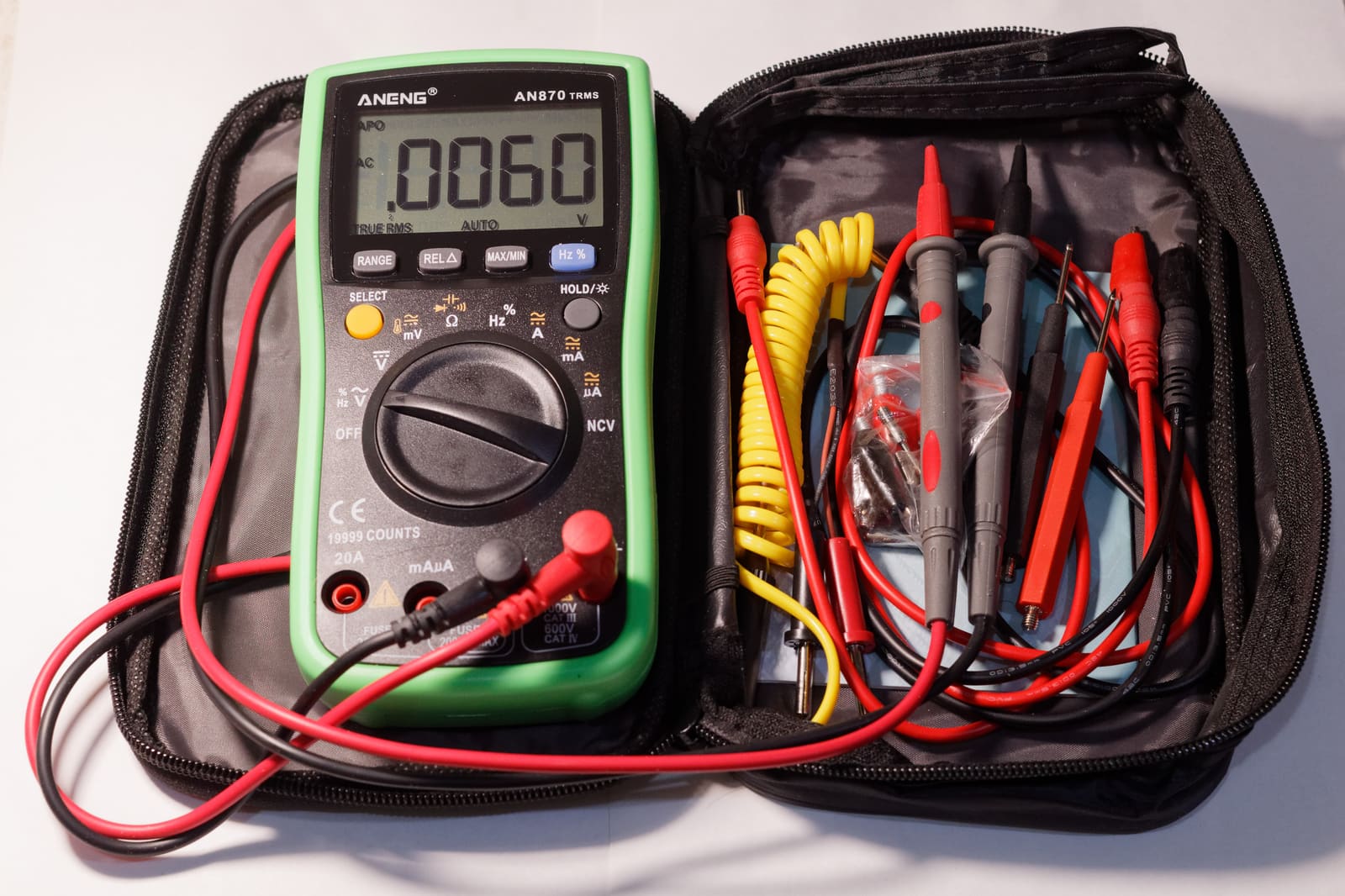
Is My Engine Charging the Battery? Test the Charging System With a Multimeter
A step-by-step way to find out whether your outboard's stator and rectifier/regulator or your inboard's alternator is really charging the battery, what the voltage readings usually mean, and when the problem is just a dirty connection. Exact test specs come from your engine's service manual.
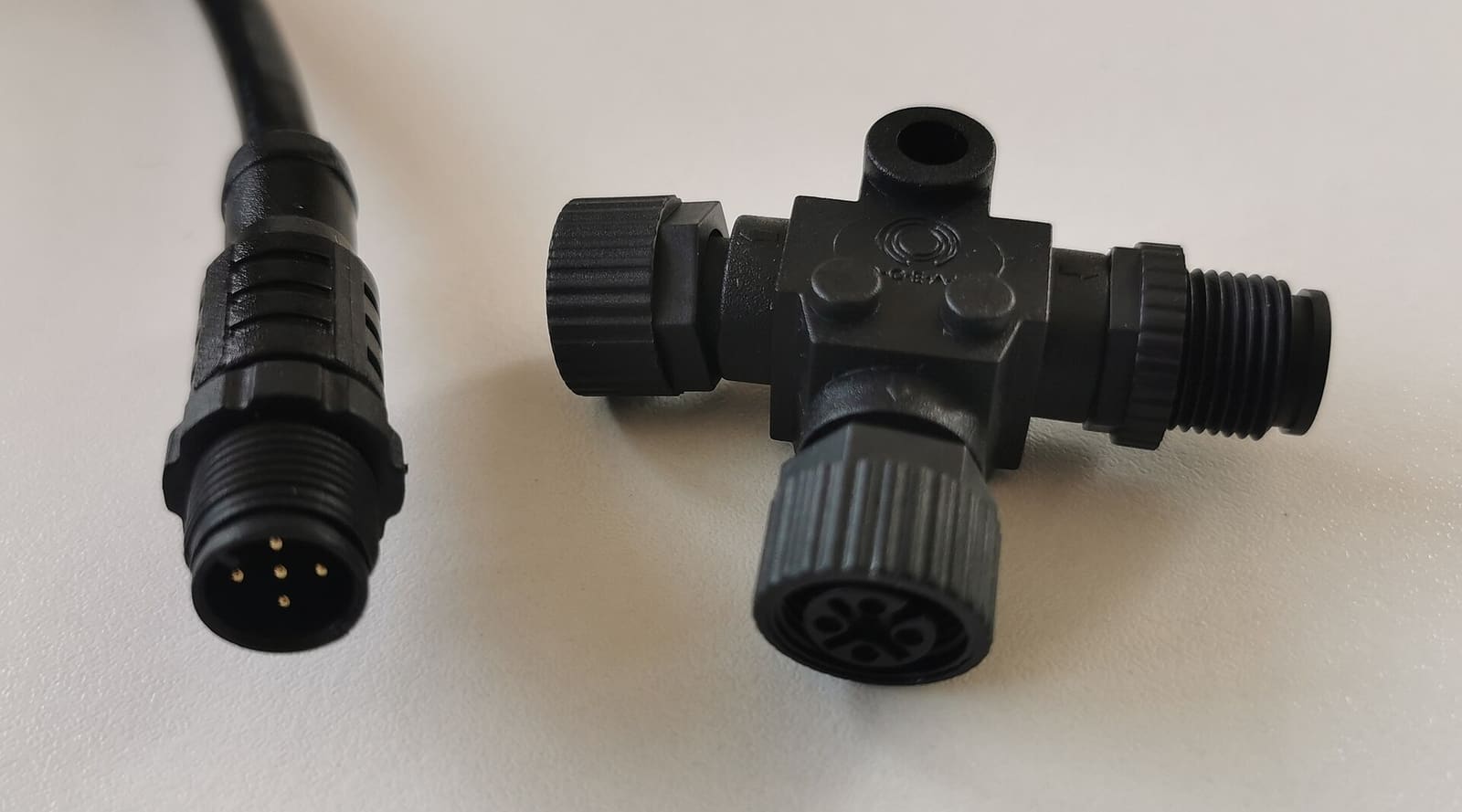
NMEA 2000 Network Basics and Troubleshooting (Plus Chartplotter Updates)
Understand the backbone, terminators, power tap and drop cables that tie your chartplotter, engine data, GPS, depth and autopilot together, then track down why a device keeps dropping off. Finish by updating chartplotter and device software the safe way.
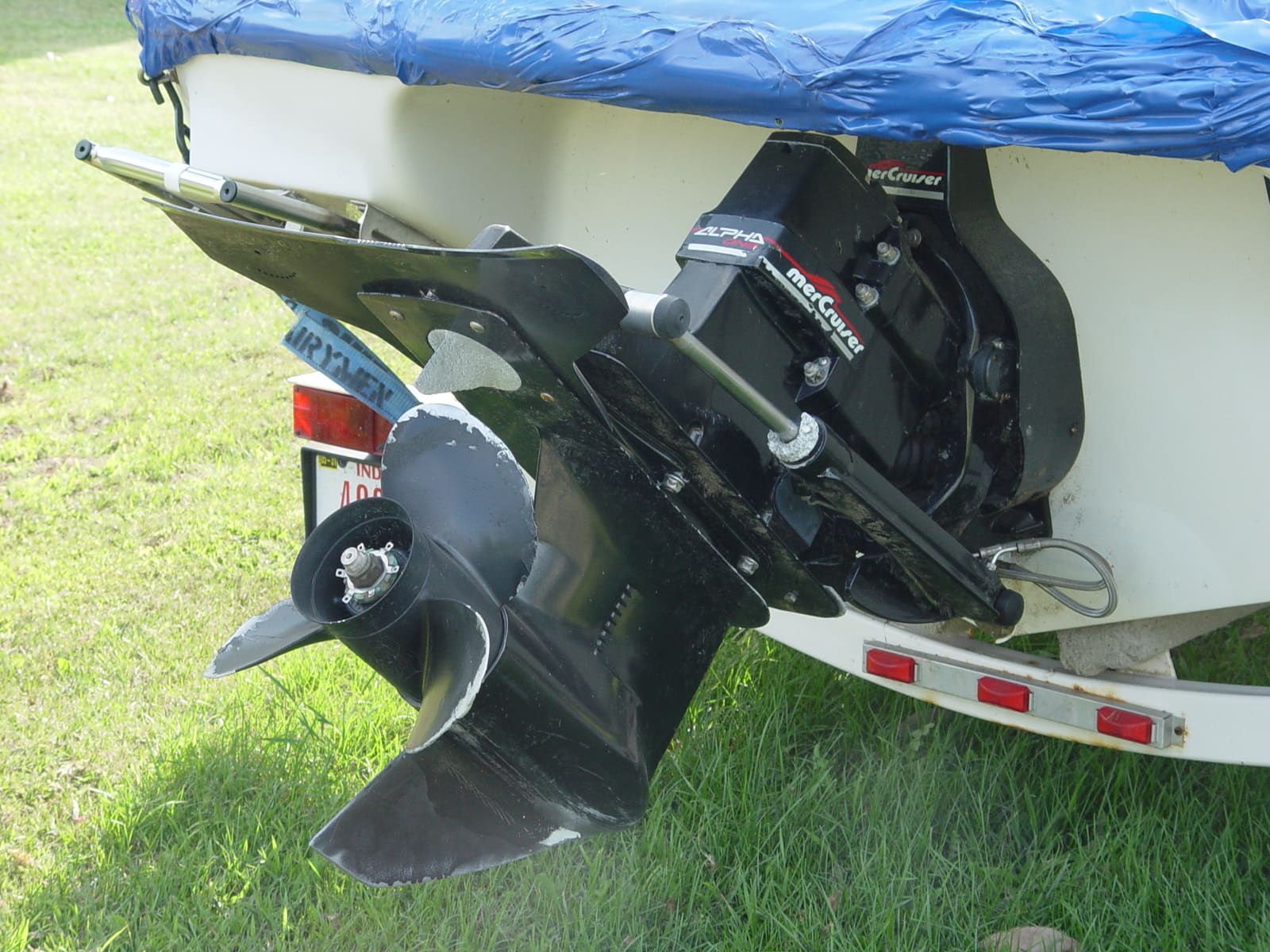
Engine Alignment on Sterndrives and Inboards: What to Check and When
A sterndrive engine must line up with its gimbal bearing and coupler, and an inboard engine with its prop shaft. When it drifts out of line you get vibration, noise and worn-out couplers, bearings and seals. Learn the warning signs, the checks you can do yourself and why the alignment itself is a job for a pro with special tools.
How to Inspect Sterndrive Bellows, Gimbal Bearing, U-Joints and Shift Cable
Learn to spot a cracked sterndrive bellows before it lets water into the boat, and to recognize the warning signs of a worn gimbal bearing, U-joints and shift cable. A failed bellows is one of the top reasons boats sink at the dock, and a 20-minute inspection can catch it.