Tow Ropes, Tubes and Watersports Gear: Inspect, Rig and Retire
Check ski, wakeboard and tube ropes, handles, towable tubes and your boat's tow points before every outing, rig them the right way, and know when to throw gear out. Includes the safety basics (spotter, flag, life jackets, prop and carbon monoxide) that vary from state to state.
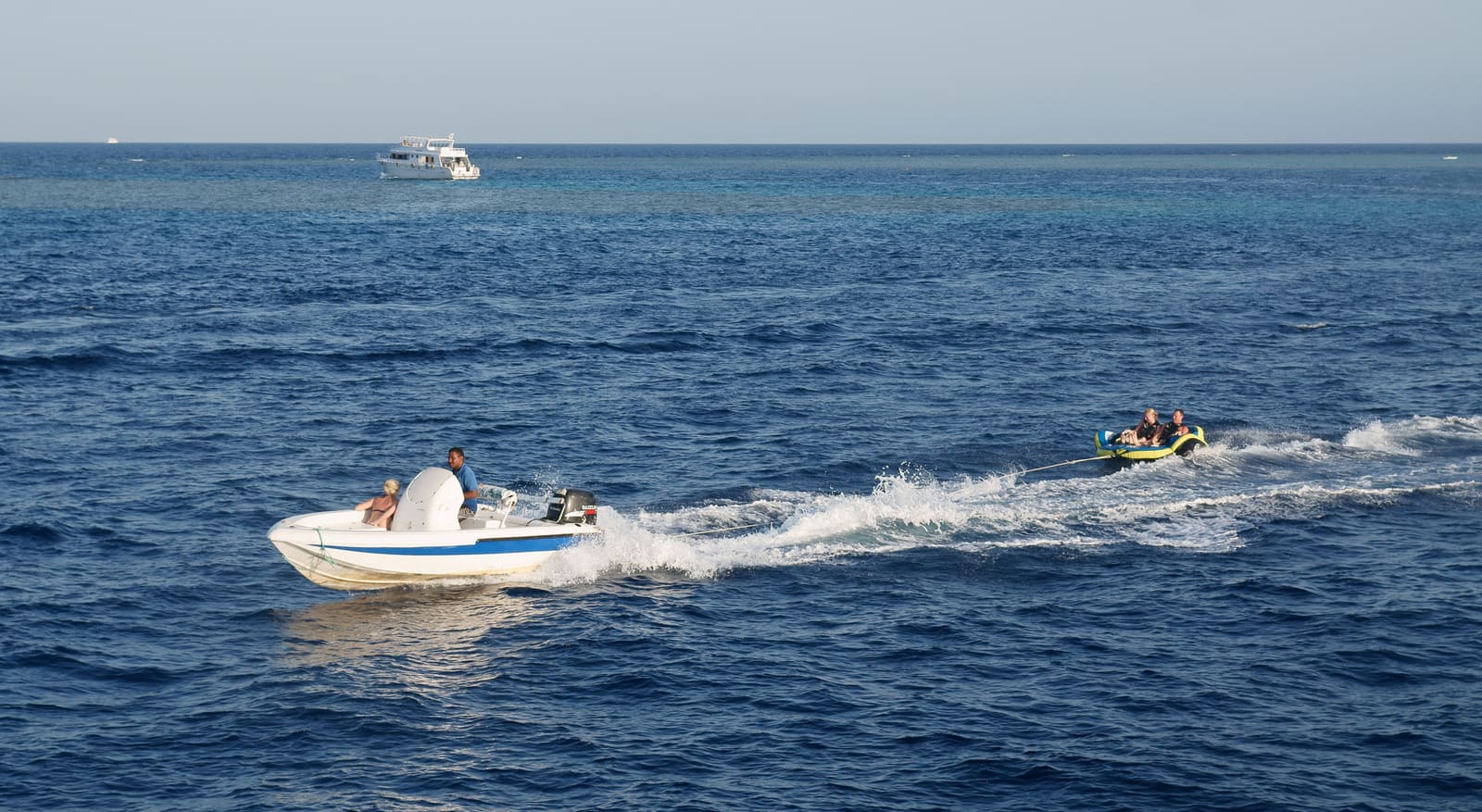
Time
20 min
Applies to
All engines
Safety first: A tow rope under load stores a lot of energy. If it breaks or a fitting pulls out, it can snap back into the boat. Keep everyone in the boat clear of the rope, and never wrap a rope around a hand, arm or leg. Shut the engine off before anyone in the water comes near the stern or swim platform: the propeller can kill, and engine exhaust (carbon monoxide) collects around the back of the boat.
Owners often ask
- My tow rope has some frayed spots. Is it still OK to use?
- Can I pull a tube with my water ski or wakeboard rope?
This guide walks you through it. Still stuck? Ask the AI Mechanic about your engine.
Tools
- Clean rag (to run along the rope)
- Tube pump with the right valve adapter, plus a hand pump for top-offs
- Wrench that fits your tow eye or pylon nuts (to check they are tight)
- Flashlight (to look under the deck at tow point backing plates)
Parts & supplies
- Tube tow rope rated for the number of riders on your tube
- Replacement handle or rope, if inspection fails
- Tube repair kit for the bladder and cover
- Skier-down flag (required in some states)
Before you start
Four kinds of rope, four jobs:
- Water ski rope: some stretch for a smoother ride; often has removable sections to shorten it.
- Wakeboard rope: little or no stretch so the rider gets a consistent pull.
- Wakesurf rope: short and thick, with a handle; used only at low wake-surfing speeds.
- Tube rope: thicker and stronger, rated by the number of riders (and their combined weight) it can safely pull.
They are not interchangeable. West Marine notes tube ropes are thicker with higher breaking strength than wakeboard ropes, and that ordinary boat line is not strong enough and stretches too much.
Rules change by state and lake: BoatUS found big differences in spotter rules, skier-down flags, rope length limits, operating hours, speed limits and distance from shore. Check your state boating agency and any local lake rules before you go.
Steps
Pull the whole rope through a rag, end to end. You are feeling and looking for:
- Fraying, fuzzy or cut spots, and broken strands
- Knots (a knot can greatly weaken a rope; untie any you find, and retire the rope if it will not come out cleanly)
- Hard, stiff or faded sections from sun damage
- Melted or glazed spots (from rubbing on the boat or a hot engine cover)
- Worn loops, splices and the connection to the handle
Rope is cheap compared with an injury. Replace it when you find any of the damage above, when it is badly faded or discolored, or when you cannot remember how old it is and it has spent years in the sun. Tube ropes take the heaviest loads, so be strictest with them. A frayed rope "that still looks mostly OK" is a common question from owners, and the safe answer is to retire it.
- Grip: cracks, torn or slippery rubber, exposed foam or metal
- The bar: bends or cracks (on aluminum and composite handles)
- The bridle (the V-shaped rope from the handle to the main line): wear where it rubs the bar
- The connection to the main rope: tight, not frayed, with any hardware closed and not bent
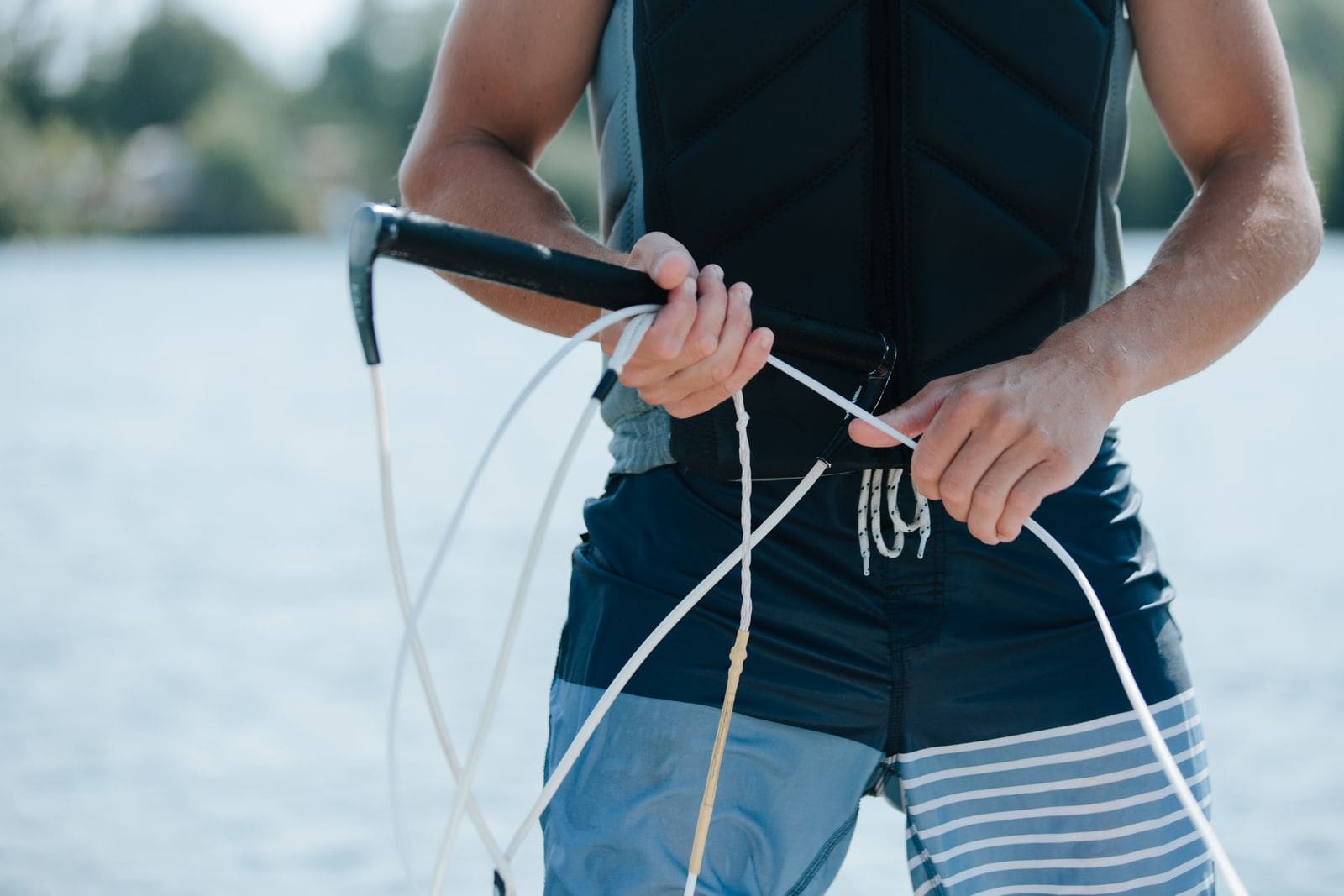
Check the handle grip, the bridle and the point where the rope joins the handle before every session. Photo: Ron Lach / Pexels Inflate to the firmness the maker specifies. Airhead says a towable should be very firm, with almost no wrinkles in the nylon cover. An under-inflated tube drags through the water instead of skimming over it, which overloads the tube, cover, rope and even the boat, and can burst the bladder. Then check:
- Cover: tears, worn seams, broken zippers
- Bladder: leaks (listen and feel), valve caps present and closed
- Rider handles: securely sewn, knuckle guards in place
- Tow point on the tube (quick-connect or tow hook): not cracked or pulled from the cover
Patch small punctures and worn seams before use, as SCHEELS advises; a tube with a failing tow point or rider handles should be retired.
- Never put more riders on a tube than it is rated for. West Marine points out there are only enough handles for the rated number, and HO Sports warns that exceeding the weight limit can damage the tube and make it unsafe.
- Use a tube rope rated for the number of riders and their combined weight. A two-rider rope on a four-rider tube can break.
- Tube ropes are commonly 50 to 65 feet long. A shorter rope puts the tube in the wake.
- Do not use bungee or stretch "shock" ropes unless the tube maker approves them.
Look at the tow eyes, ski pylon or tower before each season and after any hard pull:
- Nuts tight and hardware not bent
- No cracks in the gelcoat or deck around the base (a sign the backing plate is working loose)
- From inside the boat, if you can reach, backing plates and nuts in place and not corroded
Use only the tow points your boat's owner's manual approves for the activity. A tower or pylon may be rated for ski and wakeboard ropes but not for the much heavier pull of a multi-rider tube. Never tie a tow rope to a cleat, railing, bow eye or the outboard motor.
- Attach tube ropes to an approved transom tow eye, or to a tow harness (a Y-shaped bridle across both transom eyes) if your tube maker recommends one.
- Make sure every connection is fully closed and the rope cannot jump off.
- Keep slack rope out of the water and away from the propeller when starting off and picking up riders. Never back the boat over a rope.
- When you are done, pull the rope in right away; a rope trailing in the water can wrap the prop.
- Life jackets: the Coast Guard recommends that anyone being towed wear a properly fitted, approved life jacket, and many states require it. BoatUS notes inflatable life jackets generally do not meet the rules for towed sports, and "competition vests" do not meet Coast Guard requirements.
- Spotter: many states require an observer whose only job is to watch the rider; some allow a wide mirror instead, and minimum spotter ages differ. Even where it is not required, BoatUS recommends always having one.
- Flag: as of BoatUS's 2025 review, 15 states required a skier-down flag (a bright red or orange flag about 12 inches square) shown when someone is in the water.
- Capacity: the boat's capacity plate must cover the driver, the spotter and everyone being towed. On a personal watercraft, check whether your state requires a seat for every rider.
- Agree on hand signals before you start (faster, slower, stop, OK, cut the engine).
- Keep speeds reasonable for the activity and the rider; BoatUS cites roughly 8 to 20 mph as a common range for tubing. Go slower for children.
- Avoid sharp turns. A tube swinging wide on a turn ("whip") can go much faster than the boat and slam into other boats, docks or waves.
- Stay well away from shore, docks, swimmers and other boats. Where there is no rule, BoatUS suggests at least 200 feet.
- Wear the engine cut-off switch lanyard.
Approach a fallen rider slowly, keeping them on the driver's side where you can see them. Shift to neutral well before you reach them, and turn the engine off before they come near the stern or swim platform. Never let anyone sit on the swim platform or "teak surf" behind a running engine; carbon monoxide builds up there.
- Rinse ropes, handles and tubes with fresh water, especially after salt water.
- Let ropes dry completely, then coil them loosely and store them out of the sun.
- Clean tubes with mild soap and water only; harsh chemicals damage the vinyl and cover.
- Do not leave an inflated tube in the hot sun on shore. Airhead notes the heat makes the air expand; let some air out and keep it in the shade.
- Deflate, dry and store tubes indoors in a cool, dry place, away from sharp objects. Carry them; dragging over gravel or concrete wears the cover.
At the start of each season, repeat steps 1 to 6 carefully and replace anything doubtful before the first busy weekend. At the end, wash and dry everything, throw out worn ropes rather than storing them, and note in your BoatMend log what needs replacing next spring.
Common mistakes
- Pulling a tube with a ski or wakeboard rope.
- Using a rope with a knot in it, or tying two short ropes together.
- Overloading a tube beyond its rated riders or weight.
- Tying the rope to a cleat or a railing, or pulling a heavy tube from a tower not rated for it.
- Leaving ropes and tubes in the sun all summer, then wondering why they failed.
- Running without a spotter, flag or the right life jackets where the law requires them.
- Letting a fallen rider swim to the stern with the engine running.
- Letting riders sit or hang on the swim platform, or "teak surf" behind the boat, while the engine runs. The Coast Guard says never to do this and calls teak surfing never safe: exhaust collects there, and carbon monoxide can make a person in the water pass out and drown. Treat "seasick" symptoms in a rider as possible CO poisoning and get them into fresh air.
When to call a pro
- A tow eye, pylon or tower is loose, cracked around its base, or the deck flexes when it is loaded
- You want to add a tow point or tower; installation needs proper backing plates and a correct load rating
- Gelcoat around a tow fitting has cracked (water may be getting into the deck core)
Tips
- Write the purchase date on a tag on each rope so you know how old it is.
- Keep a spare tube rope and a spare handle aboard; a broken rope should not end the day.
- Carry the skier-down flag where the spotter can grab it, even if your state does not require it.
- Before a trip to another state or lake, look up its towing rules; BoatUS found many differ.
- The Water Sports Industry Association (WSIA), the towed-sports industry group, offers a free 24-page Towed Water Sports Boating Handbook and a safety video on towing inflatables. Keep the handbook with your boat's owner's manual and have new drivers and spotters read it.
Official references
We read these to write this guide. Your engine's own manual always wins.
- BoatUS – Ready, Set, Tow… WAIT! A Few Things First (watersports laws)
- USCG Boating Safety – Carbon Monoxide, Protect Yourself
- West Marine – How to Select Towable Tubes and Tow Ropes
- Airhead – Tips to Make Sure Your Towable Water Tubes are Properly Inflated
- SCHEELS – Towable Tube Care
- WSIA – Towed Water Sports Handbook
- WSIA – Inflatables Safety Video
Safety: BoatMend is for information only and does not replace a certified marine technician. You are responsible for your safety and your boat. Read the full disclaimer.
Last updated 2026-10-24
Related guides
Engine Cut-Off Switch (Kill Switch) and Lanyard: The Law, Testing and Daily Use
How the engine cut-off switch (ECOS) and its lanyard or wireless fob work, when federal law requires you to wear it (boats under 26 feet, 3 hp or more, on plane), how to test it before every trip, and why a spare clip aboard matters.
Wake Boat Ballast Systems - Care, Troubleshooting, Weight Limits and Winterizing
Keep your wake boat's ballast tanks, bags and pumps working: fill and drain them the right way, stay under the boat's weight capacity, fix tanks that won't fill or empty, change the pump impellers, stop invasive species from riding along, and protect the system from freezing.
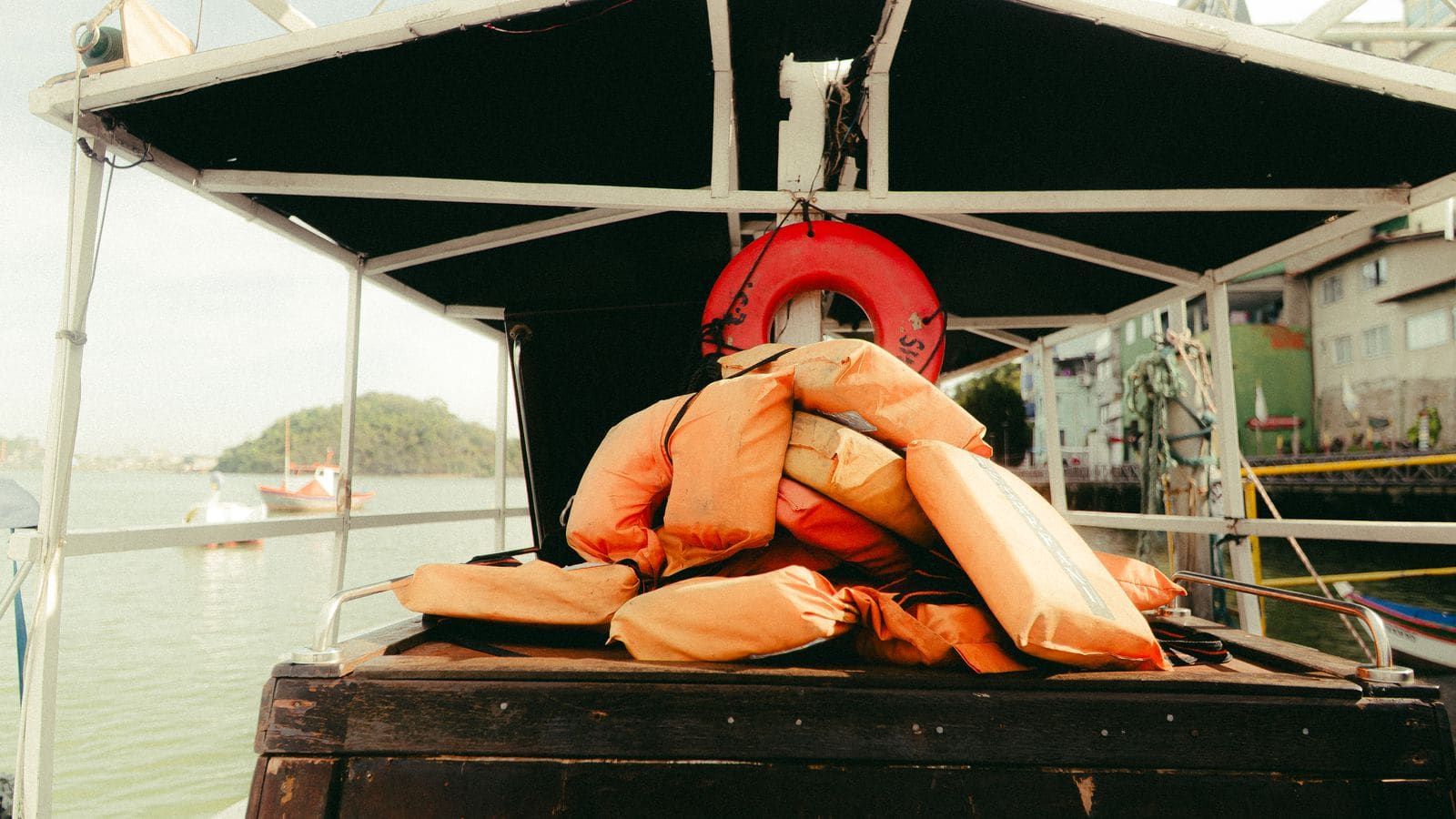
USCG Required Safety Equipment Check by Boat Length
Walk through your boat and confirm you carry every piece of safety gear the US Coast Guard requires for your boat's length and type, and that none of it is expired or worn out. Missing or expired gear is one of the most common tickets on the water, and it is the gear you need when things go wrong.
Carbon Monoxide on Boats: Where It Comes From, CO Alarms and Warning Signs
Carbon monoxide can build up in cabins, under canvas and around the swim platform, and its first symptoms look like seasickness. Learn the danger zones, where to mount marine CO alarms, how to test and replace them, and exactly what to do if an alarm sounds or someone feels sick.
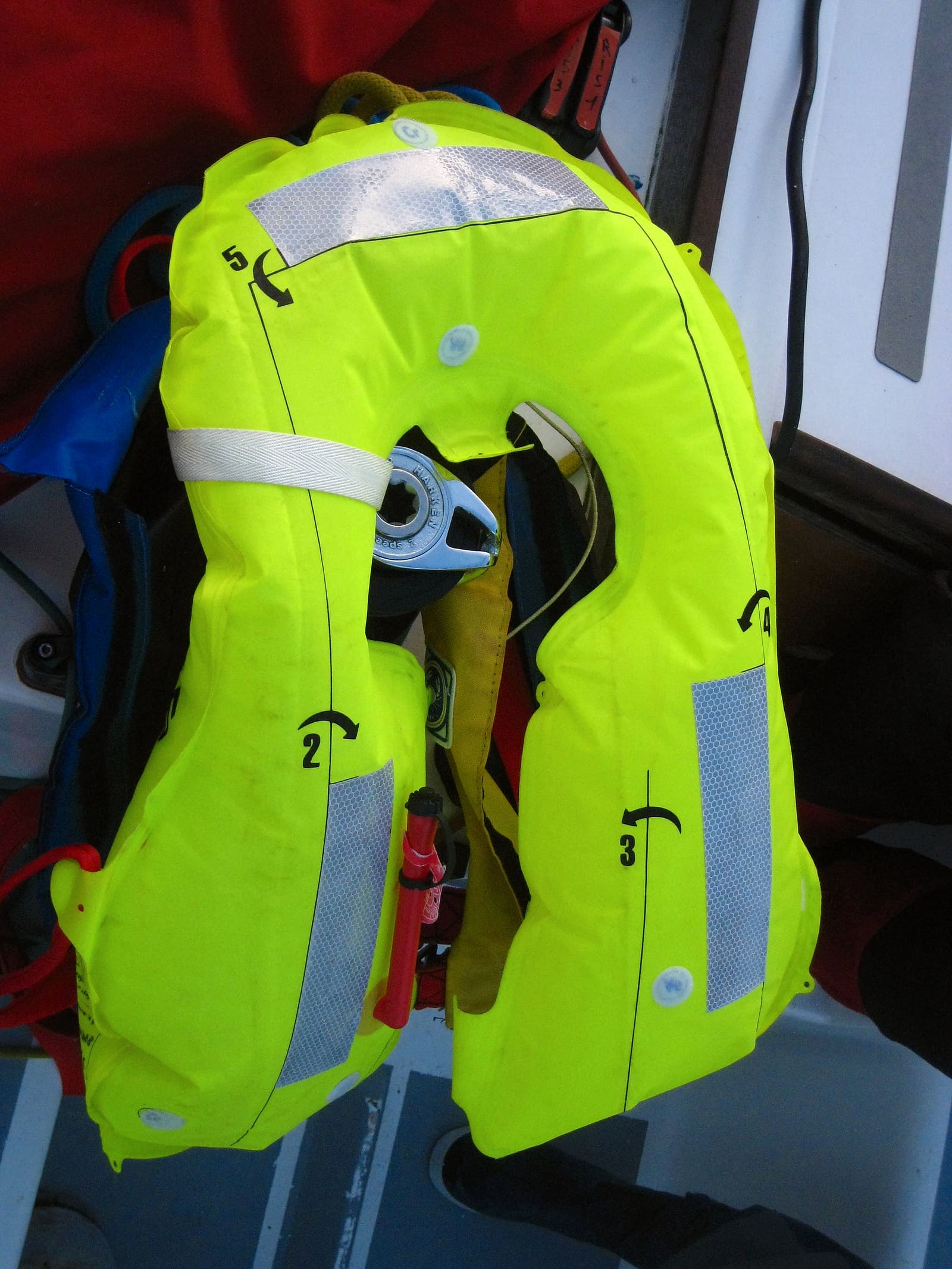
Inflatable Life Jacket Care: Inspect, Test and Rearm
An inflatable life jacket only saves a life if the cylinder is full, the inflator is armed and the bladder holds air. Learn the quick check before every trip, the overnight leak test, how to read replacement dates and how to rearm it after it fires.
Jet Boat Care - Flushing, Clearing the Pump, Oil, Steering Nozzle and Storage
A practical care routine for twin-engine sport jet boats like Yamaha models: pre-ride and post-ride checks, flushing both engines the safe way, clearing debris from the pumps, spotting a worn wear ring, keeping the nozzle and reverse bucket working, and getting the boat ready for storage.