How to Keep Your Boat in the Water Over Winter (De-Icers, Covers and Checks)
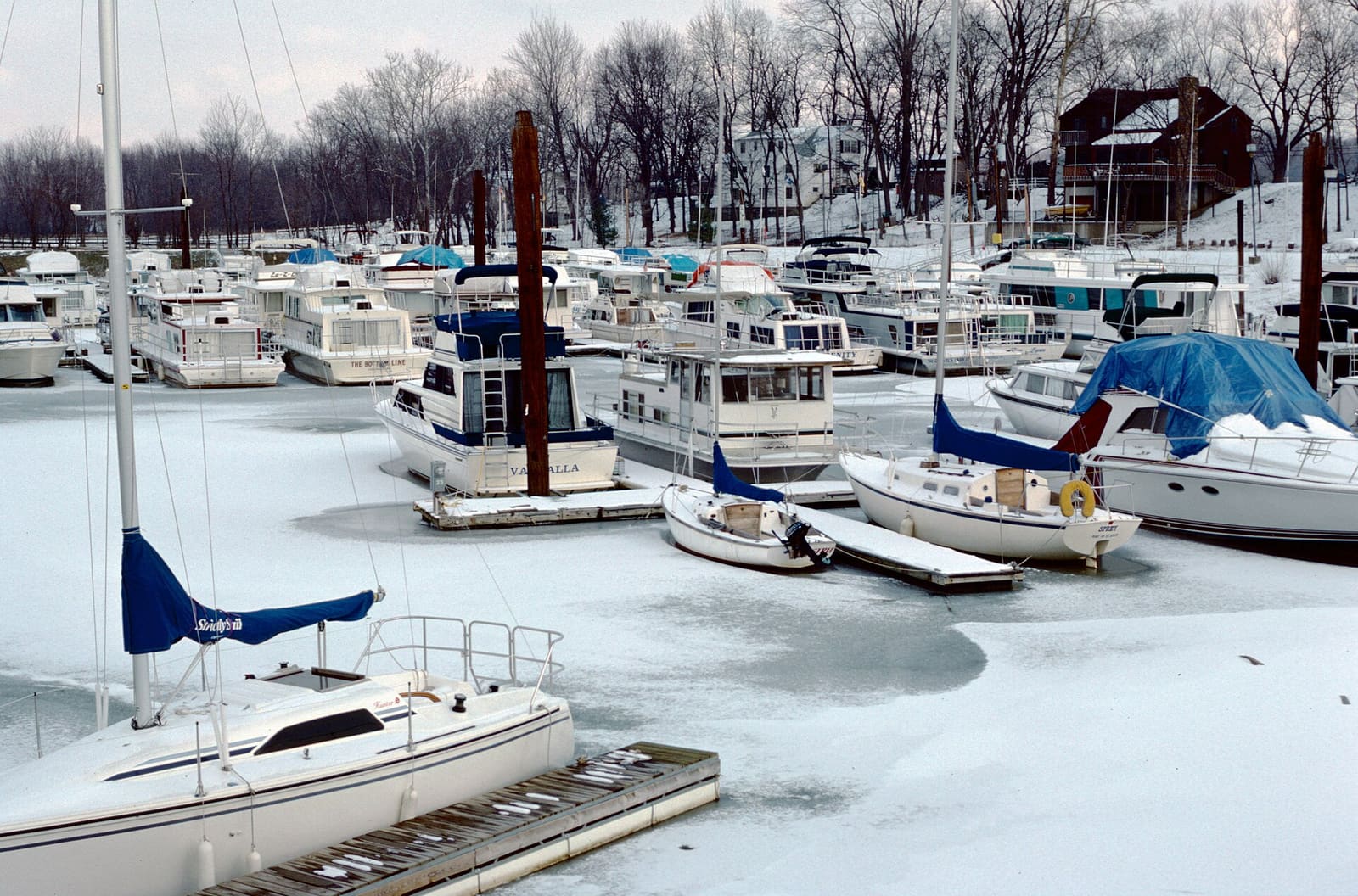
Wintering afloat can be safe if you still winterize every water system, keep the bilge pump and batteries working, use a de-icer correctly on a GFCI-protected circuit, respect the shock and thin-ice risks, and visit the boat regularly.
Time
4 h
Shop would charge
$400-2000
Applies to
All engines
Safety first: A de-icer puts AC electricity in the water. Never let anyone (or a pet) enter the water near a running de-icer or any dock with AC power, and run it only on a GFCI-protected circuit. The open water a de-icer makes leaves thin, weak ice around it, so mark it and keep people off. Icy docks and freezing water are a deadly combination: wear a life jacket and traction footwear, and tell someone when you go to check the boat. Never leave a space heater running on an unattended boat. If you find the boat sinking or taking on water, call the marina, TowBoatUS or Sea Tow, or 911.
Owners often ask
- Can I leave my boat in the water all winter, and do I need a de-icer or bubbler?
- Is it safe to run a dock de-icer, and does it need a GFCI outlet?
This guide walks you through it. Still stuck? Ask the AI Mechanic about your engine.
Tools
- Multimeter (to check battery voltage)
- Flashlight
- Five-gallon bucket and hose for antifreeze
- Screwdrivers and nut drivers for hose clamps
- Ice-safe footwear and a life jacket for dock visits
Parts & supplies
- Non-toxic propylene glycol winterizing antifreeze (never automotive coolant in water systems)
- De-icer or bubbler with the maker's mounting kit and, ideally, a thermostat or timer controller
- Shrink wrap or a winter cover with vents and good support
- Chafe gear and extra dock lines
- Spare bilge pump float switch (optional but handy)
Before you start
Why stay in the water? In milder areas, at marinas with de-icing systems, or for big boats that are costly to haul, many owners winter afloat. The water around the hull holds heat longer than the air, but it does not winterize anything for you. Engines, plumbing, strainers and anything above the waterline can still freeze and crack.
Ask first. Check that your marina allows winter wet storage and what it requires (de-icers, power use, inspections). BoatUS also suggests checking whether your insurance covers ice and freeze damage, because many policies exclude it unless you add that coverage.
What can go wrong. BoatUS's analysis of sinking claims found that boats sink at the dock more than twice as often as under way, and that the single most common cause is a small part below the waterline failing from age. In winter add frozen and cracked fittings, snow loads that push the boat down, ice pressure on the hull and dead batteries that stop the bilge pump.
Steps
Follow the full winterizing procedure for your engine: stabilize the fuel, change the oil and protect the cooling system. BoatUS notes that on a boat in the water you close the intake seacock first, then draw non-toxic antifreeze into the raw-water side from a bucket until it flows out of the exhaust. Drain or fill the sea strainer, seacock body and water-lift muffler too. See our sterndrive and diesel winterizing guides for step-by-step details, and check your engine manual for its drains and procedure.
Fresh water, the head, air conditioning, washdown and livewell pumps all hold water that can freeze. BoatUS's plumbing guide says that if the boat is in the water, you pour antifreeze into the sink drains and close their seacocks. It also warns that a raw-water strainer left full of water can crack and possibly sink the boat. Use only non-toxic propylene glycol in water systems, never automotive coolant.
Since below-waterline parts are the top cause of sinkings at the dock, inspect them now, before the boat is left alone for months:
- Exercise every seacock; a seized one cannot be closed in an emergency.
- Look for cracked, soft or swollen hoses, rusted clamps and weeping fittings. Replace anything doubtful.
- Close the seacocks you do not need while the boat sits.
- Keep cockpit drains and scuppers clear so rain and snowmelt can get out.
If a seacock or below-waterline hose needs replacing, that is a haul-out job for a pro.
BoatUS says you should not winterize the bilge pump on a boat staying afloat, but you must make sure it works. Clean the bilge, lift the float switch by hand to confirm the pump runs and water goes overboard, and check that nothing (debris, wiring, ice) can jam the float. Remember that the pump is a backup: if it runs often, find and fix the leak rather than counting on the pump to keep up all winter.
The bilge pump is only as good as the battery behind it, and a discharged battery can freeze and crack in hard cold.
- Charge every battery fully before you leave.
- If you keep the boat on shore power with a charger, use a marine charger in good condition, a shore power cord with no damage or burned ends, and a pedestal with ground-fault protection. See our shore power guide.
- Without shore power, check battery voltage on every visit and recharge as needed.
- Keep the bilge pump wired so it can run with the battery switch off, as most boats are; confirm yours is.
A winter cover or shrink wrap keeps snow and ice out of the cockpit, but it must be built to shed weight. BoatUS warns that rain and snow can make a cover sag, tear and even make the boat top-heavy, so rig it with a supported slope down and over the sides. Include vents to limit mildew and an access door so you can get aboard. Heavy snow can push a boat low enough to put above-waterline fittings, including exhaust outlets, under water, so plan to clear snow after big storms. See our shrink wrap guide.
A de-icer or bubbler does not heat the water. Kasco explains that its units push warmer water from below up to the surface, which keeps an opening in the ice around boats and docks. Water is densest at about 39°F, so the bottom of a lake or marina stays a little warmer than the surface. That only works if there is enough depth below the unit; check the maker's minimum depth for your model and location.
A de-icer protects against the slow squeeze and lift of ice forming against the hull and dock. It cannot stop every kind of ice damage: moving ice pushed by wind or current, or very shallow water that freezes to the bottom, can still cause trouble.
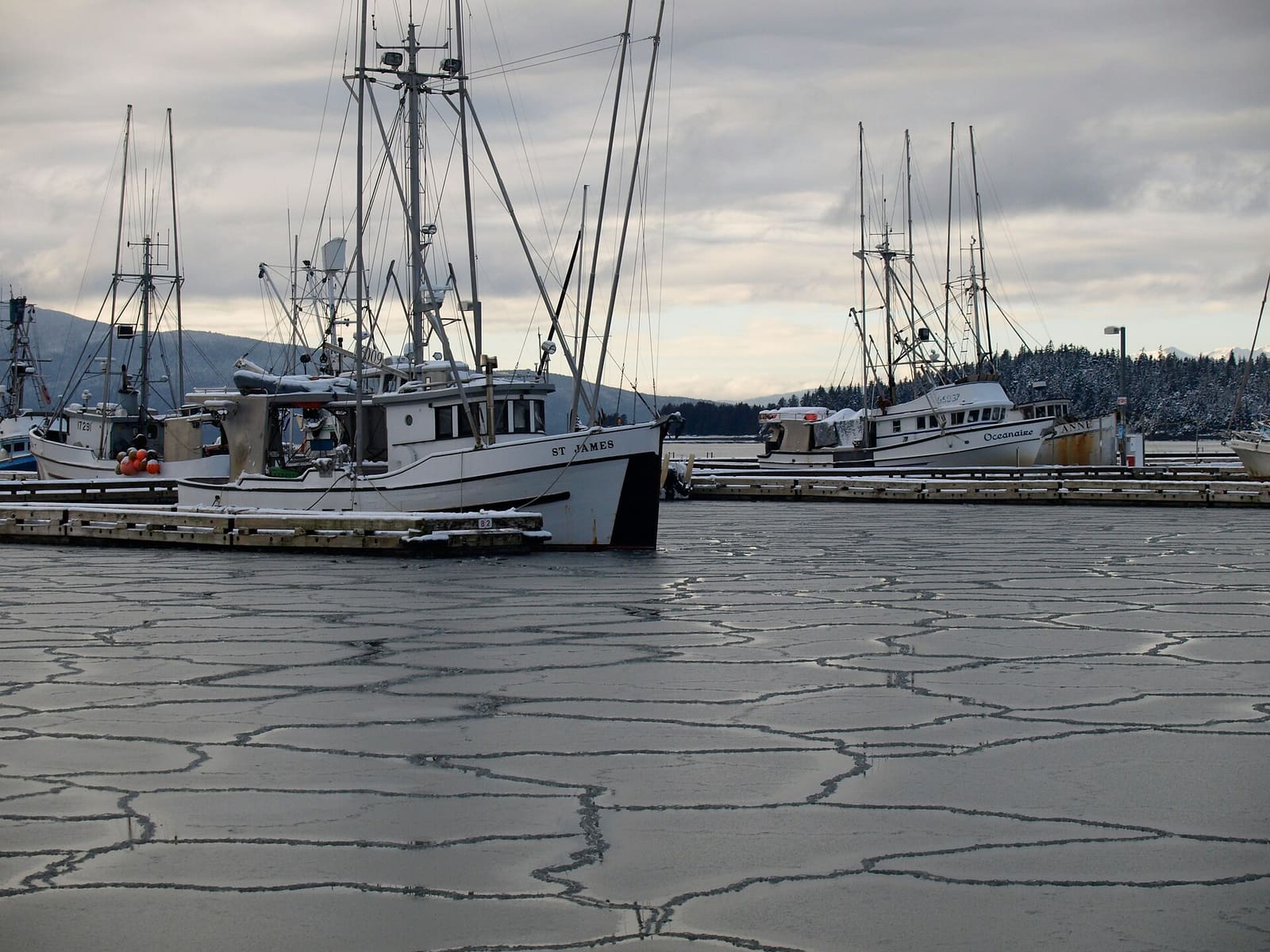
Ice forming around the hull and dock is what a de-icer is meant to prevent. Moving ice can still cause damage. Photo: Gillfoto / Wikimedia Commons · CC BY-SA 3.0 - Mount it with the maker's dock mount or suspension lines, at the depth and angle the instructions call for, so the open area covers the boat and dock.
- Keep it off the bottom so it does not stir up silt, and keep the propeller guard clear.
- Kasco's own rules of thumb, as a starting point: in most cases hang the unit about 4 to 6 feet below the surface and at least about a foot off the bottom; in water only about 3 feet deep or less, long-term de-icing gets hard, so place the unit as close to deeper water as you can and angle it toward the shallow spot. Hanging it straight down makes a round opening; tilting it makes a longer opening you can aim at the boat.
- Install in late fall, before ice forms. Kasco notes that installing through ice is harder and can be dangerous.
- Size it for your winter. Kasco suggests smaller units for mild climates and bigger ones for the northern states, and says that when in doubt, size up and run it less. Point the unit toward shore, not out into the lake, so it does not leave a hidden hole where other people walk or ride.
- Use a thermostat or timer controller if your unit offers one, so it runs only when it is cold enough to need it. Kasco sells controllers that switch on by temperature or time. Kasco puts typical winter power costs at roughly $40 to $50 a month per unit, depending on region and run time.
- Route the cord so it cannot be crushed, chafed or frozen into the ice, and avoid splices and household extension cords.
- Consider whether your marina already runs a de-icing system; adding your own may not be allowed or needed.
A de-icer is an AC appliance sitting in the water. Kasco recommends plugging its units into a GFCI-protected outlet or control box, and says no one should ever enter the water while a de-icer is running. The Electric Shock Drowning Prevention Association specifically includes aerators among the AC equipment around which swimming should be prohibited. BoatUS adds that ESD is far more likely in fresh water and advises staying out of the water within 150 feet of any electrical equipment.
- Press the GFCI test button when you visit to make sure it trips, then reset it.
- If the GFCI trips again on its own, do not keep resetting it. Unplug the de-icer and have it and the circuit checked.
- At a private dock, have a qualified marine electrician inspect the dock wiring every year and add ground-fault protection if it is missing.
Metal equipment in the water near your boat, plus shore power, can speed up corrosion of the hull fittings, drive and props. Before winter, check your boat's anodes and replace any that are half gone. Many de-icers have their own replaceable anode; check and replace it as the maker recommends. If your boat stays plugged in, a galvanic isolator helps protect the underwater metals. See our anodes guide.
The open water around a de-icer can be hidden by snow or a thin skin of new ice. Kasco recommends "Thin Ice" or "Open Water" signs, lighting, fencing or other measures your area requires. Many states and towns have their own rules, so check with your state natural resources agency. Tell your neighbors, ice anglers and snowmobilers nearby, and never walk on ice near a running de-icer.
Ice, snow load and changing water levels (reservoir drawdowns, storm surge) all change how the boat sits. Leave enough slack for the boat to move with the water, add chafe gear where lines touch chocks or ice-crusted docks, and keep fenders between the hull and dock. See our dock lines and fenders guide.
BoatUS recommends checking the boat every few weeks and especially after heavy storms or long cold spells. On each visit:
- Look at the waterline: a boat sitting lower or listing may be taking on water or carrying too much snow.
- Check that the bilge is dry, the pump works and the float moves freely.
- Read the battery voltage and confirm the charger is working.
- Make sure the de-icer is running, the GFCI has not tripped and there is open water around the hull.
- Clear snow from the cover and check that drains and scuppers are not blocked.
- Check lines, chafe gear and fenders.
If you cannot visit, arrange with a friend at the marina or pay for the marina's winter watch service.
Unplug and pull the de-icer, rinse it, check its anode and store it dry. Inspect the hull at the waterline for ice scrapes, check the anodes again and follow your normal de-winterizing steps before running the engine.
Common mistakes
- Assuming the surrounding water will keep the engine and plumbing from freezing.
- Leaving a sea strainer full of water, then finding it cracked and the bilge flooded.
- Plugging a de-icer into a dock outlet with no GFCI, or resetting a GFCI that keeps tripping.
- Swimming, or letting a dog swim, near a dock with a running de-icer.
- No signs around the open water, so someone walks onto thin ice.
- A flat cover that collects snow until it tears or pushes the boat down.
- Letting the battery go flat so the bilge pump stops working.
- Leaving a space heater running on an unattended boat.
- Not visiting the boat from November to April.
When to call a pro
- Any seacock, through-hull or below-waterline hose that needs replacing (requires a haul-out)
- Installing or wiring a new dock outlet, GFCI or de-icer circuit
- A GFCI that keeps tripping, burned plug ends or a warm shore power cord
- The boat is listing, sitting low or taking on water: call the marina or TowBoatUS or Sea Tow right away, or 911 if anyone is in danger
- You are not sure how to winterize your engine or water systems
Tips
- Take a photo of the waterline from the dock in fall. Comparing it on each visit makes a low boat obvious.
- Ask the marina what its winter rules and emergency contacts are, and give them your phone number.
- A remote monitor that texts you about bilge pump runs, battery voltage, shore power loss or high water can save a boat between visits.
- Keep a small winter kit aboard: flashlight, spare fuses, a hand pump and a few rags.
Official references
We read these to write this guide. Your engine's own manual always wins.
- BoatUS Magazine – How To Winterize Boat Plumbing
- BoatUS Magazine – How To Winterize Boat Engines And Drives
- BoatUS Magazine – Keeping Your Boat Afloat
- BoatUS Magazine – Avoid Electric Shock Drowning
- BoatUS Magazine – Boat Covers
- Electric Shock Drowning Prevention Association – Preventing ESD
- Kasco Marine – De-icers
- Kasco Marine – Frequently Asked Questions
- Kasco Marine – Kasco's Top Five De-icer FAQs
- Kasco Marine – How to Size a Kasco De-icer
Safety: BoatMend is for information only and does not replace a certified marine technician. You are responsible for your safety and your boat. Read the full disclaimer.
Last updated 2026-10-24
Related guides
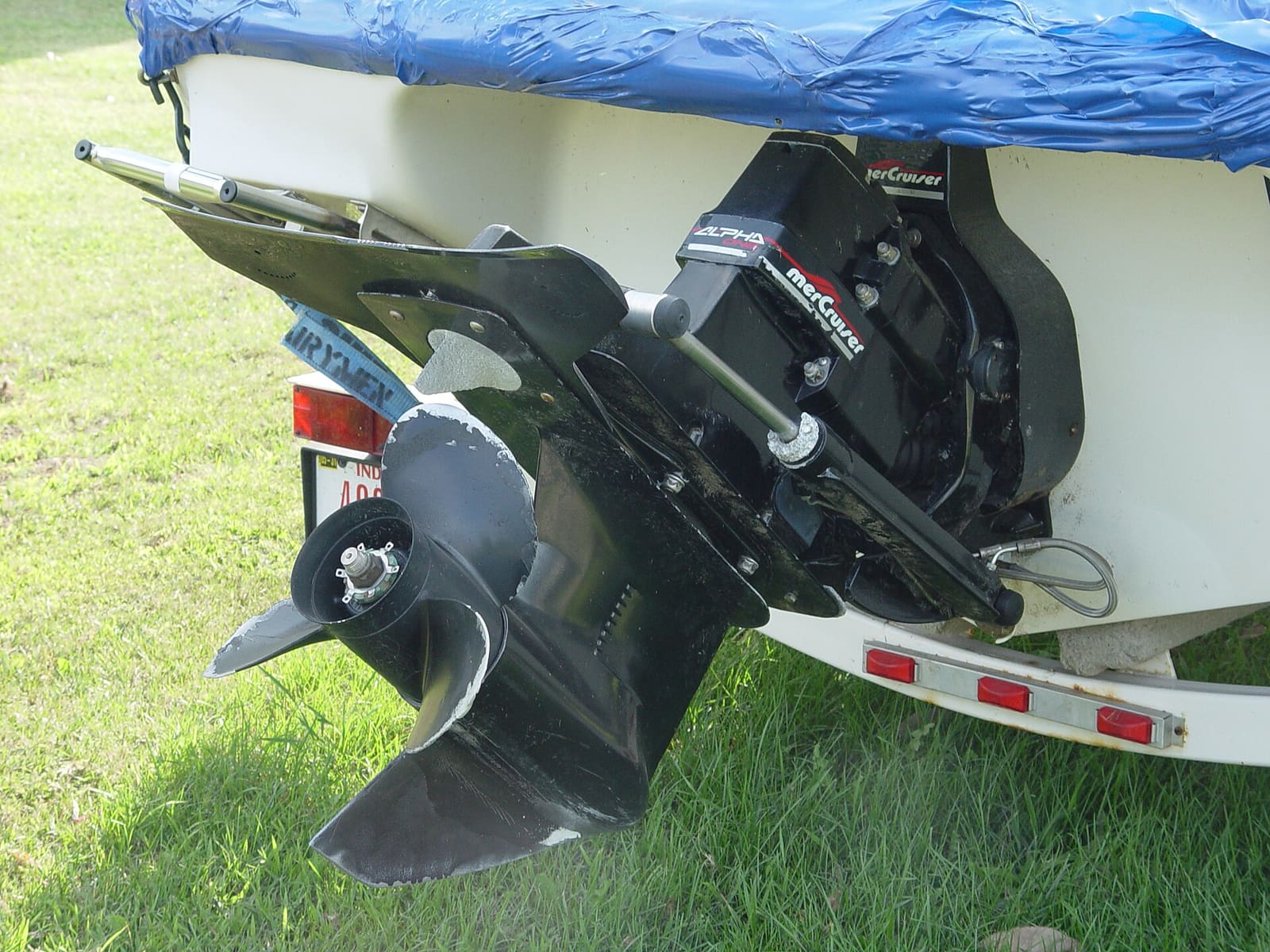
How to Winterize a Sterndrive (MerCruiser, Volvo Penta and Similar)
Get the water out of your sterndrive engine, protect it with antifreeze, and service the drive before storage. A cracked block or manifold from one missed drain plug can cost thousands, and doing it yourself saves a shop bill of several hundred dollars.
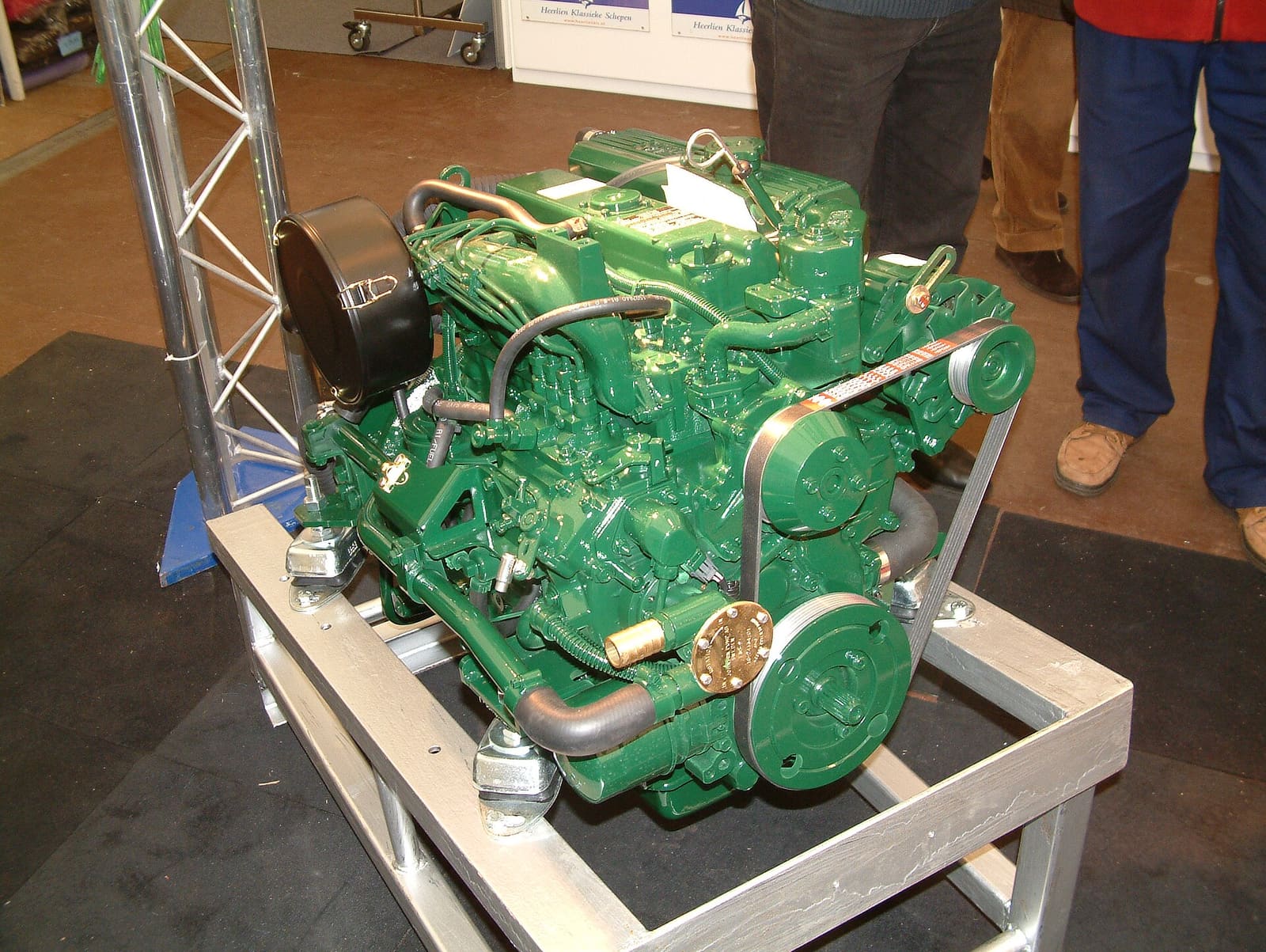
How to Winterize a Marine Diesel Inboard (Sailboat or Trawler)
Lay up a marine diesel for winter the way the engine makers describe it, covering fresh oil, a full and treated fuel tank, antifreeze through the raw-water side, the impeller out, the coolant checked, openings plugged and the battery cared for. Freeze damage to a diesel's raw-water circuit is one of the most expensive and most avoidable winter repairs.
How to Winterize (and Recommission) Your Boat's Freshwater System
Protect the tank, pump, water heater, faucets and showers from freeze damage with non-toxic antifreeze, then flush and sanitize everything in the spring so the water is clean again. A cracked pump or split fitting is a common, avoidable winter repair bill.
How to Inspect and Exercise Seacocks, Through-Hulls and Hose Clamps
Check every hole in your hull below the waterline, work each seacock open and closed, and inspect the hoses and clamps attached to them. A single failed fitting or hose is one of the most common reasons boats sink at the dock.
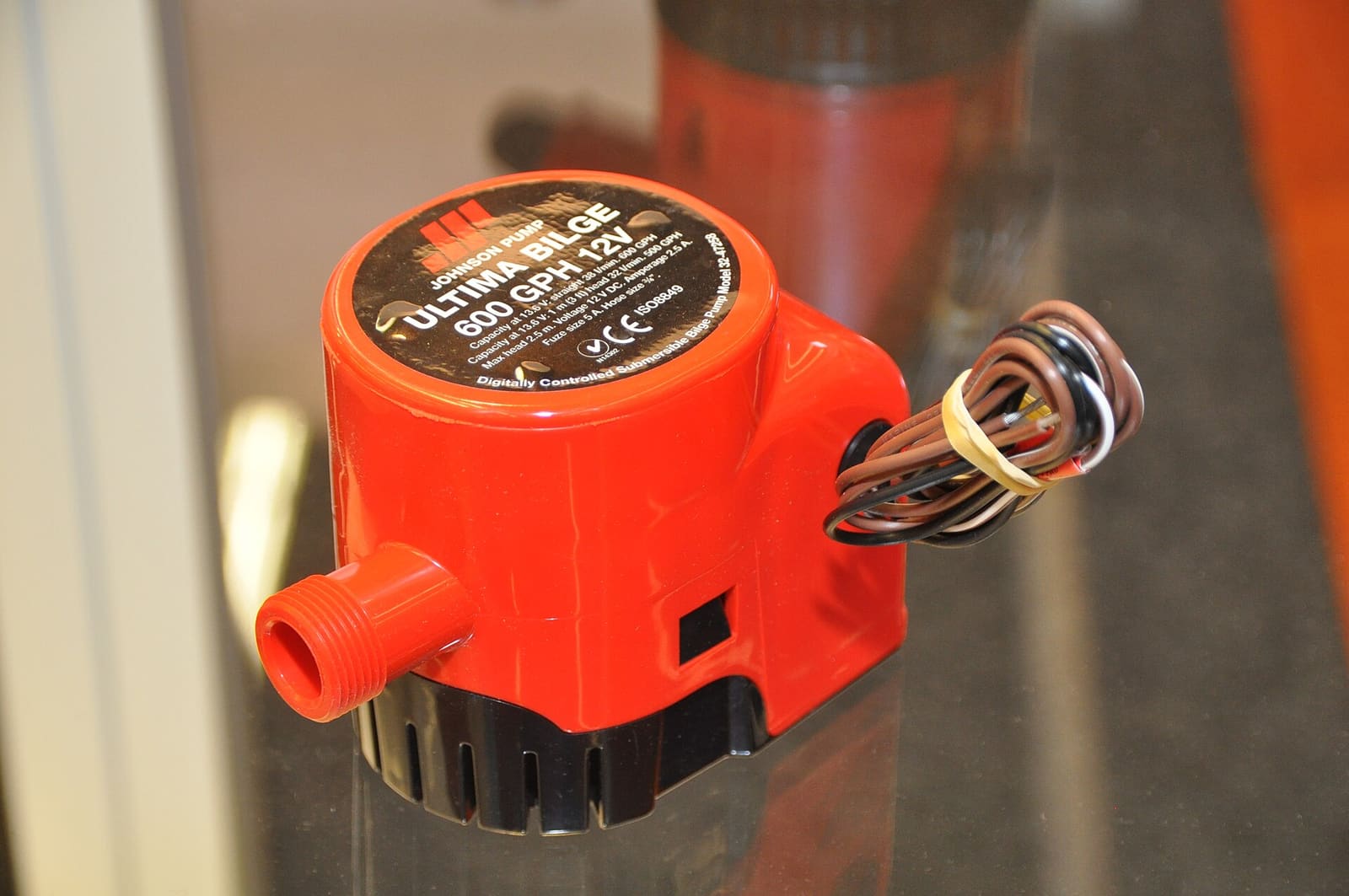
How to Test and Clean Your Bilge Pump and Float Switch
Make sure your bilge pump actually moves water overboard, both on the manual switch and automatically through the float switch. A working bilge pump is one of the most important safety systems on any boat that stays in the water.
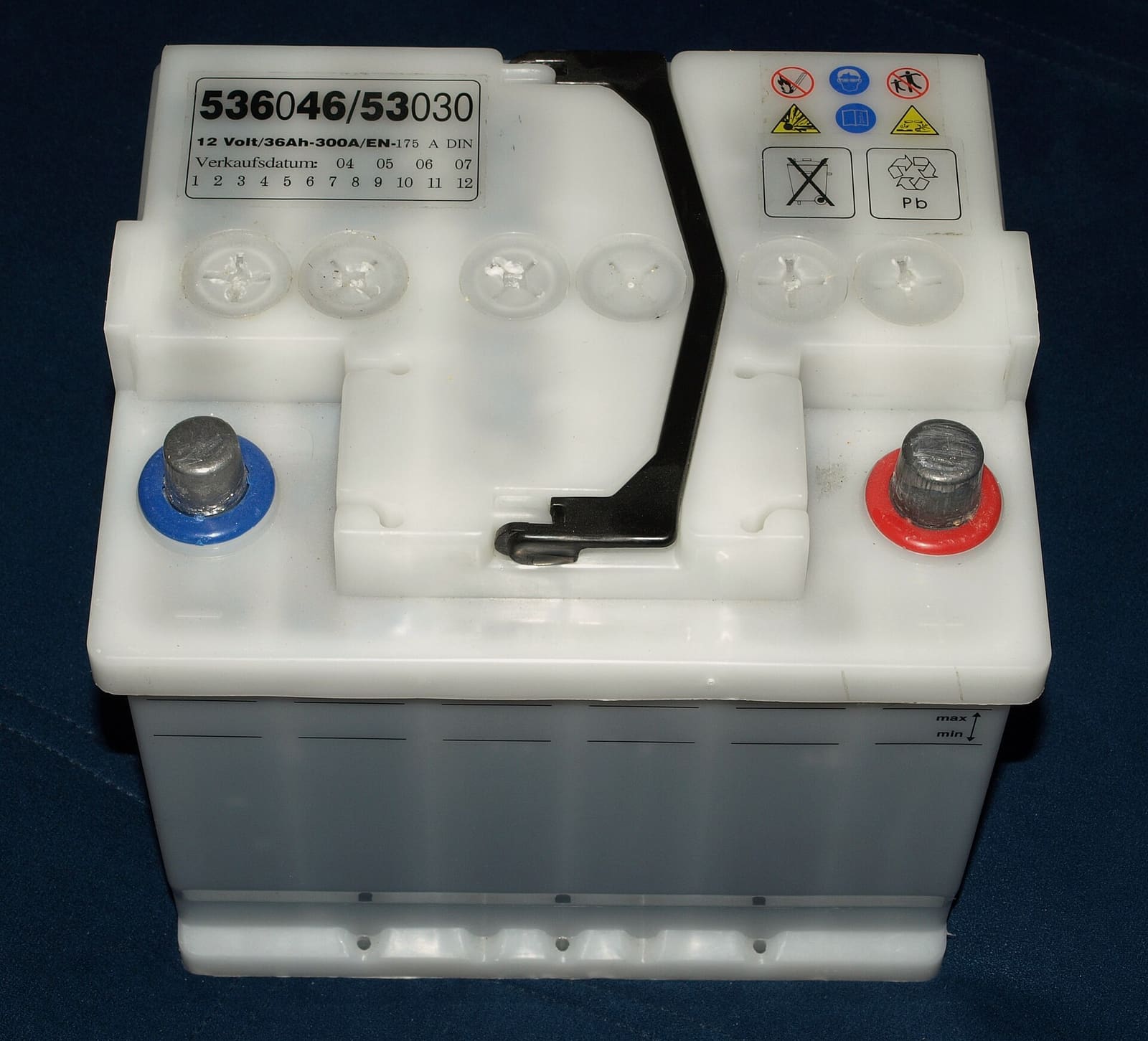
Marine Battery Care: Test, Charge and Store for Winter
Check your boat battery's health, charge it the right way for its type (flooded, AGM or lithium), and store it so it is ready in spring. Most "boat won't start" calls start with a neglected battery.
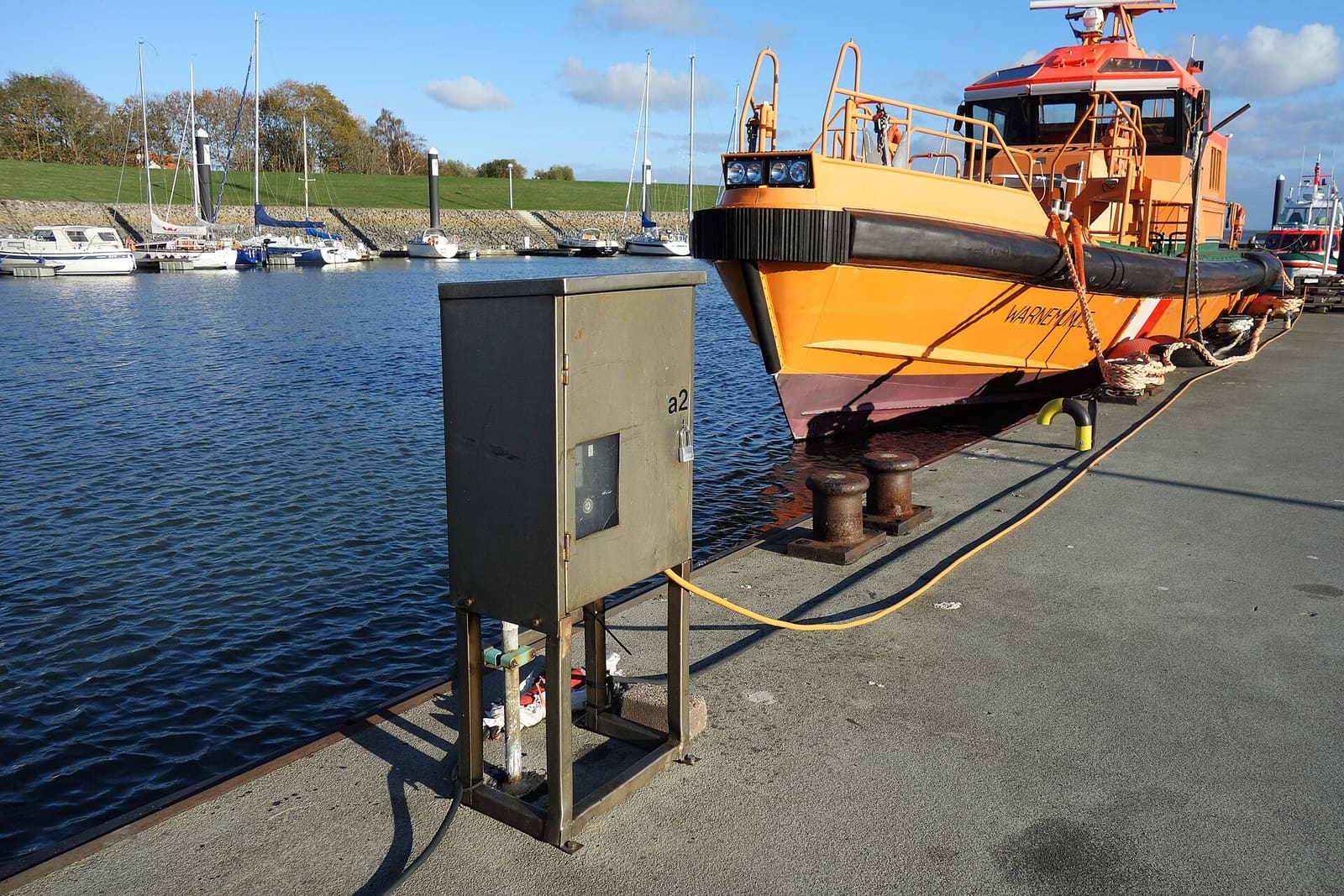
Shore Power Safety: Cords, Inlets, Burned Plugs and Electric Shock Drowning
An owner's inspection routine for your shore power cord, plugs, boat inlet, galvanic isolator and ground-fault protection, plus the right way to plug in and the facts about Electric Shock Drowning. This guide is for looking and testing only; any electrical repair belongs to an ABYC-certified marine electrician.
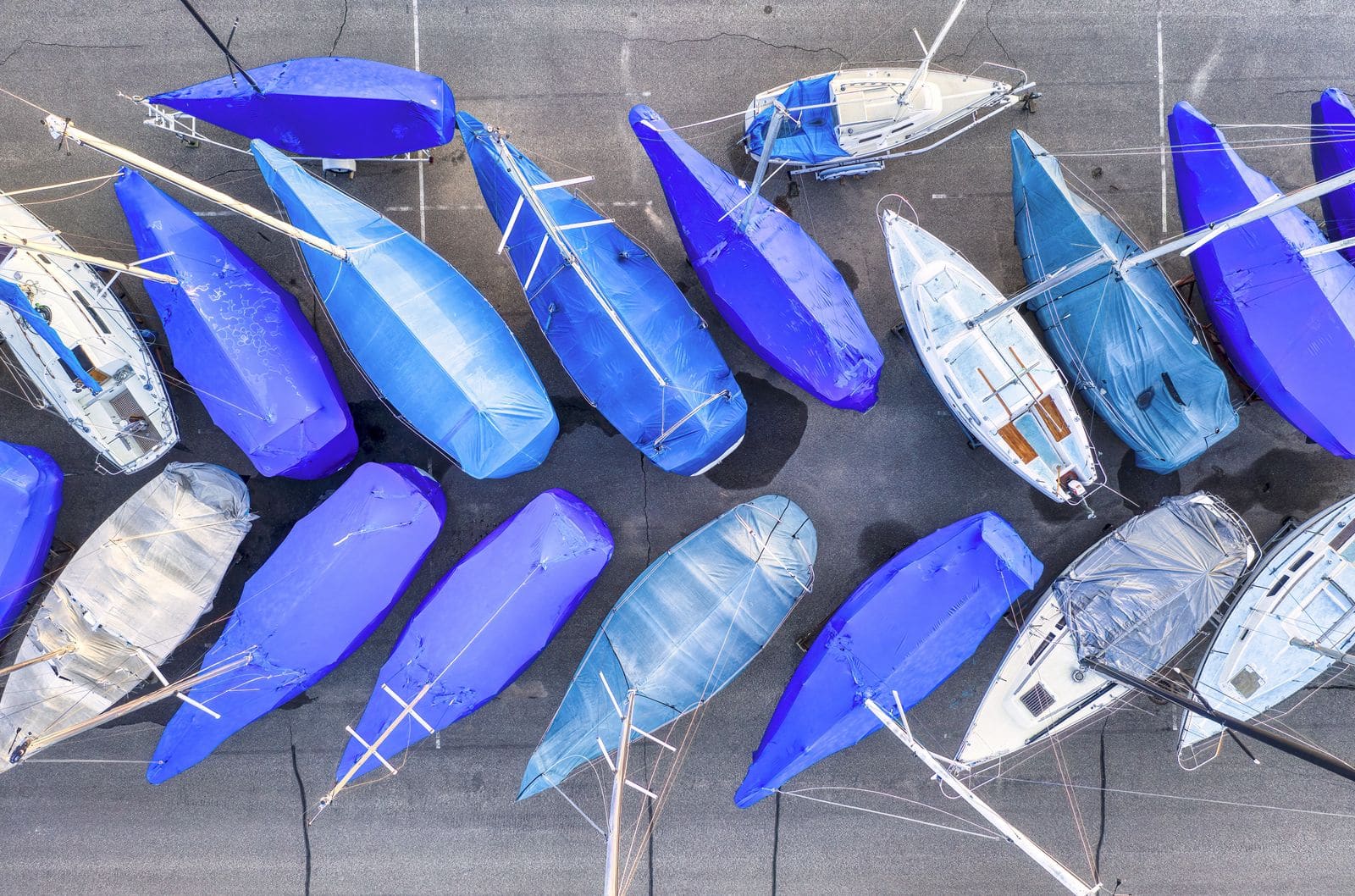
Winter Boat Cover vs Shrink Wrap: Support, Ventilation, Safety and Spring Removal
Choose between a reusable winter cover and shrink wrap, build a support frame that sheds snow, vent it so the boat doesn't mildew, and know the fire risks before you try DIY shrink wrap. Includes spring removal and recycling.
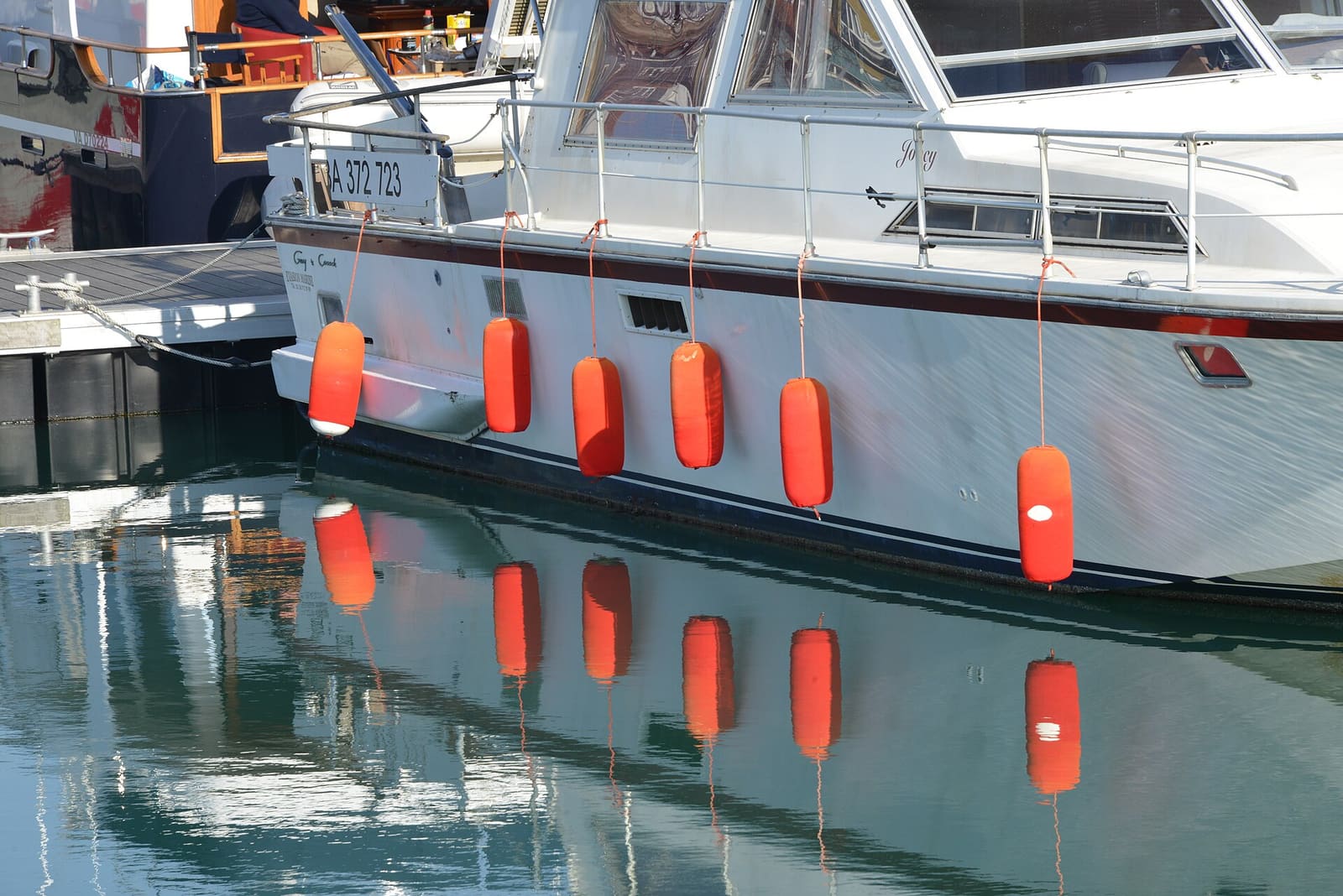
How to Size, Rig and Inspect Dock Lines and Fenders
Pick the right dock line diameter and fender size for your boat, set up bow, stern and spring lines in a slip, add chafe gear, inspect for wear and UV damage, and double everything up before a storm.
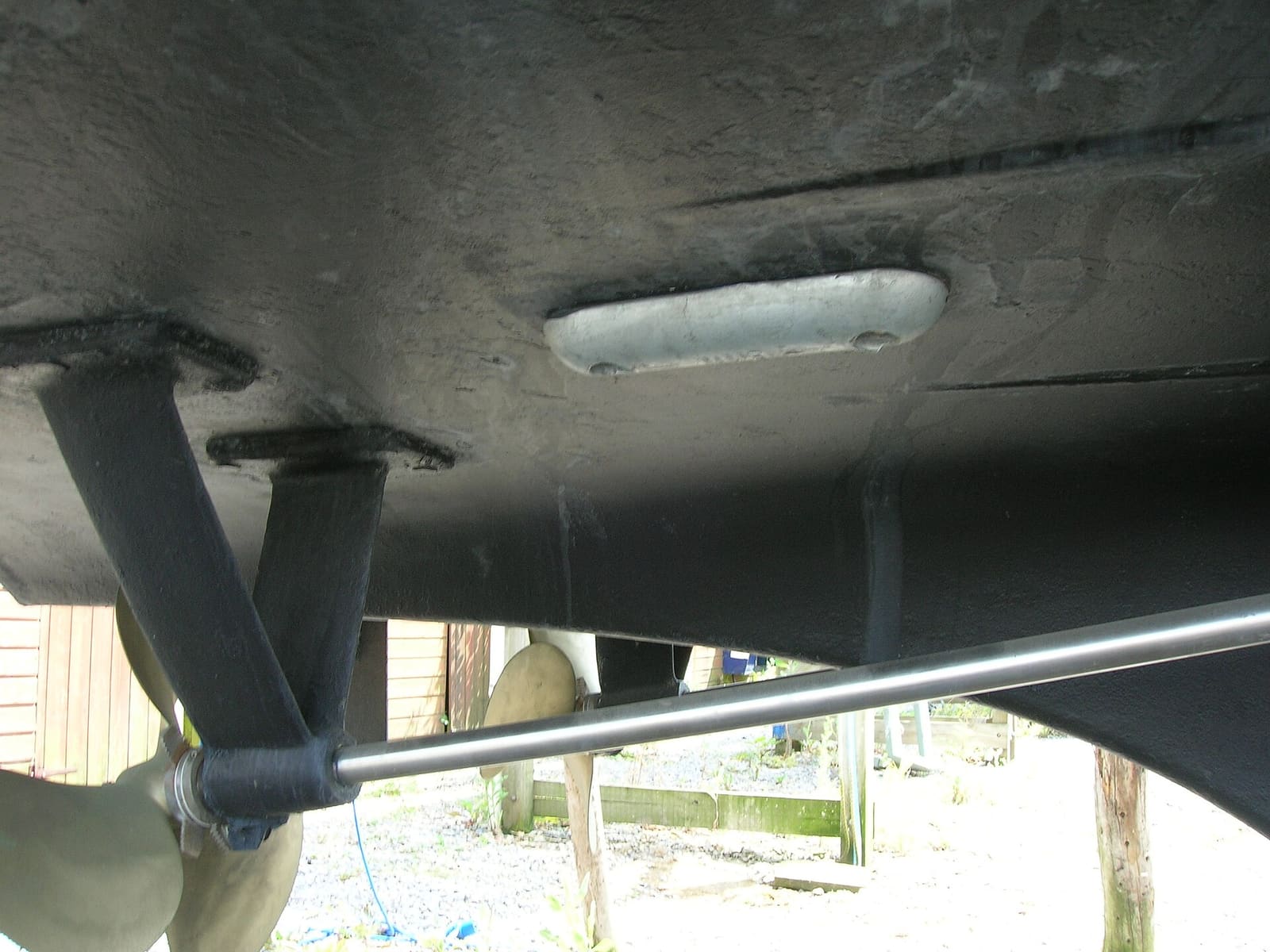
How to Inspect and Replace Sacrificial Anodes (Zincs)
Check the anodes on your outboard, sterndrive or inboard running gear, replace them when they are half gone, and choose the right metal for the water you boat in. Fresh anodes are cheap insurance against expensive corrosion damage to your lower unit, drive and prop.