Sharing a Boat: Co-Ownership Agreements, Partnerships and Boat Club Alternatives
How to share a boat without losing a friend: choosing a partner, what a written agreement should cover (shares, costs, scheduling, maintenance standards, insurance, title, decisions and the exit), how to handle the inevitable disagreements, and when a boat club, rental or peer-to-peer option makes more sense. Practical guidance, not legal or tax advice.

Time
2 h
Applies to
All engines
Safety first: This is practical background, not legal, tax or insurance advice. Co-owners can share responsibility for accidents, debts and taxes in ways that depend on state law and how ownership is set up. A "vanilla" template can cause more problems than it solves, as one maritime attorney writing in The Log puts it. Have a maritime attorney review your agreement, and confirm with your insurer that every person who will run the boat is covered.
Owners often ask
- My buddy and I want to buy a boat together. What should our agreement cover?
- Is a boat club cheaper than owning a boat?
This guide walks you through it. Still stuck? Ask the AI Mechanic about your engine.
Tools
- Shared online calendar
- Shared spreadsheet or expense app
- Logbook kept aboard
- Copies of the title or documentation, registration and insurance policy
Before you start
Sharing a boat splits the fixed costs (slip, insurance, registration, maintenance) that make ownership expensive. It also means sharing decisions, calendar days and the blame for a dinged gelcoat. Practical Sailor, whose writer co-owns a trailerable trimaran, says successful partners treat the arrangement either as a business (strict adherence to a written agreement) or as a marriage (flexibility and compromise), and judge it against the alternatives, not a fantasy.
Practical Sailor's ground rules for picking a partner and a boat:
- Only go in if you could afford to buy and keep the boat on your own. A boat neither partner can afford alone puts pressure on the relationship.
- Look for partners who have owned a similar boat and have some DIY skills; otherwise expect bigger yard bills. A shared boat shouldn't be anyone's first boat.
- A like-minded boater may be a better partner than a close friend.
- Favor boats that are easy to use and that everyone likes. Avoid fixer-uppers. Brand-new boats depreciate fast, and worry over small dings can cause friction.
- Match schedules: a partner who boats on weekdays or in spring and fall pairs well with one tied to weekends.
Not sure you'll use a boat enough? Read step 12 on boat clubs, rentals and peer-to-peer options first.
Steps
Sit down together and answer honestly: How often will each of you use it? Day trips, overnights, fishing, watersports, racing? Who will do the work? How clean is "clean"? How much would each of you spend on upgrades? Are kids, pets and guests coming along? Practical Sailor notes some people assume partners will always go out together; be ready to go with your own crew.
The Log describes two broad approaches:
- Direct co-ownership (a partnership): each person owns a share of the boat, and every owner should be listed on the title or documentation and the registration.
- An entity such as an LLC owns the boat and the partners own the entity. This can make it simpler to buy out a partner, since the boat's paperwork doesn't change, and the operating agreement can be tailored. Downsides: annual state fees, paperwork, and possible securities-type disclosure issues when selling an interest. The Log adds that an entity with no real business purpose probably won't shield owners from liability.
Practical Sailor suggests considering an LLC for a pricier boat or one with a loan. Either way, get advice from a maritime attorney and a tax professional.
The Log calls having only one partner on the title a bad idea, whatever the reason (marina rules, avoiding sales or use tax, or simple laziness). It invites disputes after an accident or over expenses, and makes things much harder if a partner dies. List all owners on the title or Coast Guard documentation and on the registration. Practical Sailor says all partners should also be named on the insurance.
Write down each partner's share of the purchase price and ownership percentage. If there's a loan, every borrower is usually responsible for the whole debt, and the lender typically has a lien on the boat (our financing guide explains how that's recorded). Practical Sailor raises the question to answer in advance: if the boat is totaled and the insurance payment plus the money already paid in is less than the loan balance, who covers the gap?
Practical Sailor sorts costs into three groups:
- Fixed: insurance, slip, registration, utilities
- Predictable: engine service, hauling, bottom paint
- Allowance: unplanned repairs, sail or canvas replacement and reasonable upgrades
The common approach is to split costs by ownership share and pay monthly into a boat operating fund that pays the bills. Fuel is often paid by whoever uses it. Decide what happens if a partner falls behind on payments; Practical Sailor mentions settling up ("true-up") when the partnership ends as one option. The Log raises a fair question to settle in writing: if one partner uses the boat far more, should they pay more?
Practical Sailor recommends one partner handle paperwork and recurring bills, with a clear way to choose and replace that person. Then define how decisions are made:
- Day-to-day (buying a filter, booking a haul-out already budgeted): managing partner decides
- Bigger spending (new electronics, canvas): majority
- Major changes (repower, moving marinas, selling the boat, adding a partner): unanimous
Put dollar thresholds in writing so nobody is surprised by a bill.
Agree on the level of maintenance and whether you'll do it yourselves or use a yard. Practical Sailor suggests describing the division of labor for DIY work, and for yard work, how spending gets approved. Follow the engine and boat manuals' service schedules, and log every job with date, engine hours, parts and cost. A shared maintenance log (BoatMend's boat file works well) prevents "I thought you changed the impeller" moments and helps at resale.
Most day-to-day friction comes from small things. Practical Sailor recommends setting standards for:
- Refilling fuel and water and pumping out the holding tank
- Cleaning, stowing gear and plugging in the charger
- Reporting problems and damage right away, in the log and to the other partners
The Log notes that poor logs lead to disputes over fuel and maintenance, and unexplained minor damage leads to arguments over who pays. A simple checklist kept aboard solves most of this.
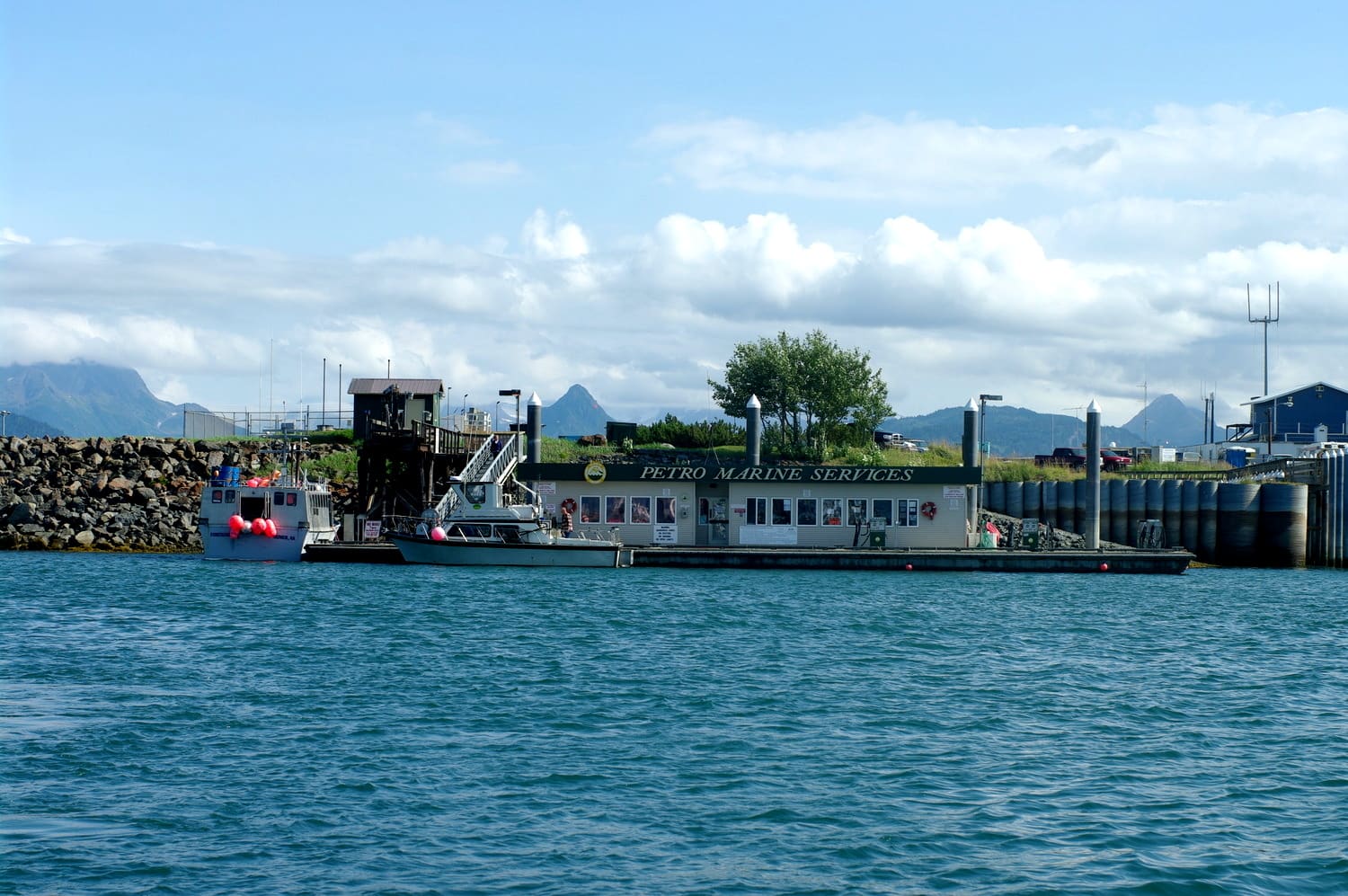
Agree on a fuel rule, such as returning the boat with the tank as full as you found it. Photo: Isaac Wedin / Wikimedia Commons · CC BY 2.0 Use a shared online calendar. Common approaches:
- Split days in proportion to ownership
- Rotate holiday weekends and peak weeks year to year
- Allow open booking for weekdays, with a limit on how far ahead you can reserve
- Agree on how far in advance a long trip must be requested
The Log notes most partnerships have a specific understanding about popular holidays. In short seasons, Practical Sailor warns, your allotted time can vanish fast; plan vacations around the best weeks.
Confirm with your insurer:
- Every owner is a named insured
- Who may operate the boat (partners only? family members? friends?) and any experience requirements
- Whether the boat may be rented out or chartered (most personal policies don't allow it without special coverage)
- Navigation limits and storage requirements
Write the operator rules into the agreement, including boater education requirements where your state requires them.
Thinking of taking paying guests to cover costs? Be careful. The Coast Guard says friends voluntarily sharing actual trip expenses is fine, but carrying people who pay as a condition of the trip is a charter: it needs a Coast Guard-licensed operator, and more than six passengers with at least one paying needs an inspected vessel. Penalties can reach tens of thousands of dollars. Put a clear "no paid trips" rule in the agreement unless you have set the boat up, licensed and insured for it.
The Log calls the sale of a partner's interest the issue that must always be anticipated. Your agreement should answer:
- Can a partner sell to an outsider? Do the others get a veto over who it is?
- Do remaining partners get the first right of refusal? Practical Sailor's partnership sets a pre-agreed value for buyouts, open to negotiation.
- How is the boat valued if you disagree (survey, average of valuation guides, appraisal)?
- What happens if a partner dies, divorces, moves away or stops paying?
- If no one wants to buy, how and when is the boat sold, and how are proceeds and any loan payoff split?
Add a dispute process: talk first, then mediation, before anyone calls a lawyer.
Discover Boating describes three ways to boat without owning:
- Rentals and charters: pay by the hour, day or week plus fuel. Good for occasional use, but costs add up quickly if you go often.
- Boat clubs: an initial membership fee plus monthly or annual dues; the club owns and maintains the fleet, you reserve a boat and show up. Freedom Boat Club describes its model as a one-time entry fee plus monthly dues that vary by location, with training and a fleet of different boat types. Ask any club about availability on peak weekends, training requirements, damage deductibles, fuel charges and how to cancel.
- Peer-to-peer rentals: owners rent their boats through online platforms; no membership fees. Check who provides insurance and what it covers.
Price each option against your co-ownership budget (our budget guide shows how) and how many days you'll really use a boat.
Common mistakes
- Partnering on a boat neither of you could afford alone.
- Keeping only one partner's name on the title or insurance.
- Relying on a handshake, then disagreeing over money when someone wants out.
- No log, so fuel, damage and maintenance turn into he-said, she-said.
- Buying a fixer-upper together and discovering very different ideas of "done."
- Leaving the schedule to "we'll work it out" until both want the Fourth of July.
- Letting friends or family operate the boat without checking the policy.
When to call a pro
- Drafting or reviewing the partnership or LLC agreement: a maritime attorney
- Tax questions about sales or use tax, an LLC or splitting expenses: a tax professional
- Insurance for multiple owners or operators: your marine insurance agent
- Valuing the boat for a buyout: an accredited marine surveyor
- A dispute you can't settle between yourselves: a mediator before litigation
Tips
- Do a trial season, or rent and club together first, before buying.
- Hold a short partners' meeting before and after each season to review the budget, maintenance and schedule.
- Keep the agreement, title, registration, insurance and log in one shared folder.
- Decide in advance how you'll handle small, unexplained damage (for example, a set amount paid from the fund).
- Revisit the agreement every couple of years; Practical Sailor notes situations change, and when they do, "it can be all about the money."
Official references
We read these to write this guide. Your engine's own manual always wins.
- Practical Sailor – Sharing the Cost of Boat Ownership
- The Log – What issues do I need to address in a boat partnership agreement?
- Discover Boating – Go Boating Today (rentals, boat clubs, peer-to-peer sharing)
- Freedom Boat Club – Boat Club 101, Understanding Boat Club Membership
- Discover Boating – Costs of Boat Ownership
- U.S. Coast Guard News – Coast Guard encourages the public to avoid illegal operations this boating season
- BoatUS Magazine – Illegal Charters (2020)
Safety: BoatMend is for information only and does not replace a certified marine technician. You are responsible for your safety and your boat. Read the full disclaimer.
Last updated 2026-10-25
Related guides
The Real Cost of Owning a Boat: Building a Yearly Budget and Cutting Costs with DIY
Add up what a boat really costs each year (storage, insurance, fuel, maintenance, winterizing, registration, depreciation and the surprise repair), check it against the common rules of thumb, and find the places where do-it-yourself work and smarter choices save real money. Practical planning help, not financial advice.

Financing a Boat: Loan Terms, Survey and Insurance Requirements, Liens and the True Cost of Ownership
Understand a boat loan before you sign: typical terms and down payments, what lenders check, why they want a survey and insurance, how the lien is recorded (Coast Guard preferred mortgage for documented boats, state title for the rest), how the payoff works when you sell, and how to add up the real yearly cost beyond the monthly payment. Practical guidance, not financial advice.

Marina Slip and Storage Contracts: What to Read Before You Sign
Walk through a slip, mooring or winter storage contract clause by clause: insurance and additional-insured requirements, hold-harmless and waiver-of-subrogation language, liveaboard and work rules, DIY and outside-contractor limits, storms, termination, refunds and lien rights, plus the questions to ask the marina and your insurer. Practical guidance, not legal advice.
Used Boat Paperwork: Titles, Liens, HIN Checks, Bill of Sale and Registration
A practical checklist for the paperwork side of buying a used boat: state title or Coast Guard documentation, checking for liens and theft, verifying the hull ID number, writing a proper bill of sale, the trailer's own title, registering in your name, and transferring warranties and checking recalls. Rules vary by state, so confirm each step with your state agency.
Used Boat Purchase Agreement and Closing: Deposit, Contingencies, Bill of Sale and Who Pays What
A plain-English walk-through of buying a used boat on paper: getting ready before you offer, what the purchase and sale agreement should say, how the deposit is held and when it comes back, survey, sea trial, financing and insurance contingencies, paying off the seller's loan, the bill of sale, closing and transferring the paperwork, and the costs each side usually covers. Practical help, not legal advice; rules vary by state.
How to Prepare Your Boat for an Insurance or Condition Survey
Get ready for a marine survey your insurer or lender asked for: what a SAMS or NAMS surveyor looks at, the common findings you can fix beforehand (hose clamps, seacocks, bilge, fire extinguishers, wiring), the paperwork to have ready, and how to handle the recommendations afterward.
How to File a Boat Insurance Claim: Safety, Mitigation, Documentation and Settlement
What to do from the moment something goes wrong until the check arrives: make everyone safe, stop further damage, report right away, document with photos and your maintenance log, handle towing versus salvage, work with the adjuster or surveyor, and understand agreed value, actual cash value and the common exclusions. Policies differ, so your own policy wording always wins.

How to Get Your Boat Ready to Sell (Records, Title and Prep)
Prepare your boat for sale the way buyers and surveyors expect: gather the title, registration and HIN paperwork, organize your maintenance records and receipts, fix the small stuff, detail the boat, get it ready for a sea trial and buyer's survey, and close the deal with the right documents.
How to Inspect a Used Boat Before You Buy
A step-by-step checklist for looking over a used boat, from paperwork and the hull ID number to the transom, engine, compression test, sea trial and trailer. Know what to check yourself, what the red flags mean, and when to pay a marine surveyor.
USCG Documentation Renewal: When, How, What It Costs and How to Avoid Look-Alike Renewal Mailers
Keep your boat's Coast Guard Certificate of Documentation current: how long a recreational certificate lasts (1 to 5 years), the federal fee schedule, renewing directly with the NVDC online, what happens if it lapses, why many states still want registration and a decal, and how to spot the third-party letters that charge several times the real fee.