Reading Your Boat's Capacity Label (Old and New 2026 Format) and What It Means for a Repower
Learn to read every line of your boat's capacity plate, including the new ABYC S-7 label the Coast Guard accepted in July 2026 with its maximum outboard motor running weight, and use it to check a load or a repower before you spend money. Practical guidance, not legal advice.
Time
30 min
Applies to
Outboard, Sterndrive (I/O), Gas inboard
Safety first: The numbers on the capacity label are limits for good to moderate weather, not targets. Too many people, too much gear or too heavy a motor can swamp or capsize a small boat, especially one with a low transom. If your label is missing or unreadable, don't guess; see our capacity plate replacement guide. This guide explains what the label means; it isn't legal advice, and your state's boating law decides what's an offense where you boat.
Owners often ask
- My 17-foot boat is rated for 90 hp. Can I put on a 90 hp four-stroke that weighs a lot more than my old two-stroke?
- What is the new capacity label with a motor weight limit, and do I have to replace my old plate?
- Is the new ABYC capacity label required, or can builders keep using the old plate?
This guide walks you through it. Still stuck? Ask the AI Mechanic about your engine.
Tools
- Phone camera
- Flashlight
- Notebook or the BoatMend boat profile
- Spec sheets for your current motor and any motor you're considering
Before you start
Which boats have a label. Federal rules (33 CFR 183.21) require a capacity display on monohull boats under 20 feet, except sailboats, canoes, kayaks and inflatables. Discover Boating says the rule dates from August 1, 1973, and that many builders also put a "Maximum Capacities" plate on boats up to 26 feet. Pontoons and bigger boats may have one too, from the builder.
What changed in 2026. The American Boat & Yacht Council (ABYC) revised its capacity label standard, ABYC S-7 (2026). On July 15, 2026, the Coast Guard issued Policy Letter 26-01 accepting labels made to that standard as an equivalent to the federal label rules in 33 CFR 183 Subpart B. Key points, as of November 2026:
- It's optional for builders. The Coast Guard letter says builders "may" use labels made to S-7 in place of the federal label; a builder who chooses it must follow the S-7 standard in its entirety. The letter adds that builders don't need to notify the Coast Guard to use it. Nothing in the letter makes the new label mandatory.
- ABYC says builders could start using it from July 15, 2026, and that the label design hadn't changed significantly since 1980.
- NMMA's own timeline: NMMA, which sells capacity tags to builders in its certification program, says on its capacity-tag page that the transition to the new tags must be done before August 1, 2028 (model year 2029). That is a deadline inside NMMA's program, not a Coast Guard rule, and it applies to new boats, not to boats already built.
- Nothing changes on your current boat. Older labels stay valid. You don't need to replace a good traditional plate.
So for the next few years you'll see both designs at dealers and on used boats. This guide covers how to read either one, and the new line that matters most when you repower.
Steps
Look near the helm or tiller seat, on the console, or on the inside of the transom. Federal rules want it where the operator can see it when getting underway. Wash off dirt gently and photograph it straight on. Save the photo in your BoatMend boat profile so you have it when shopping for a motor or answering an insurer.
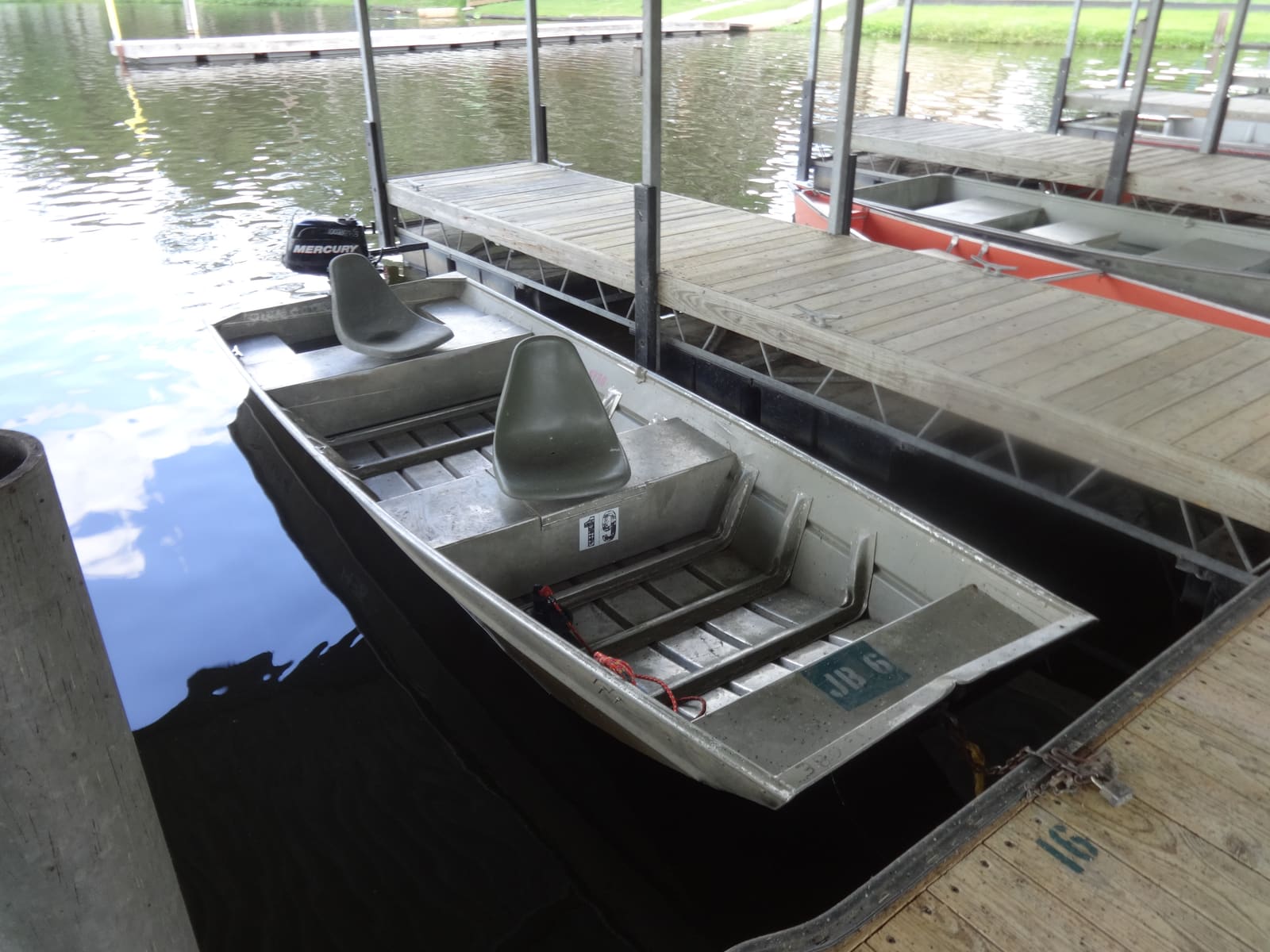
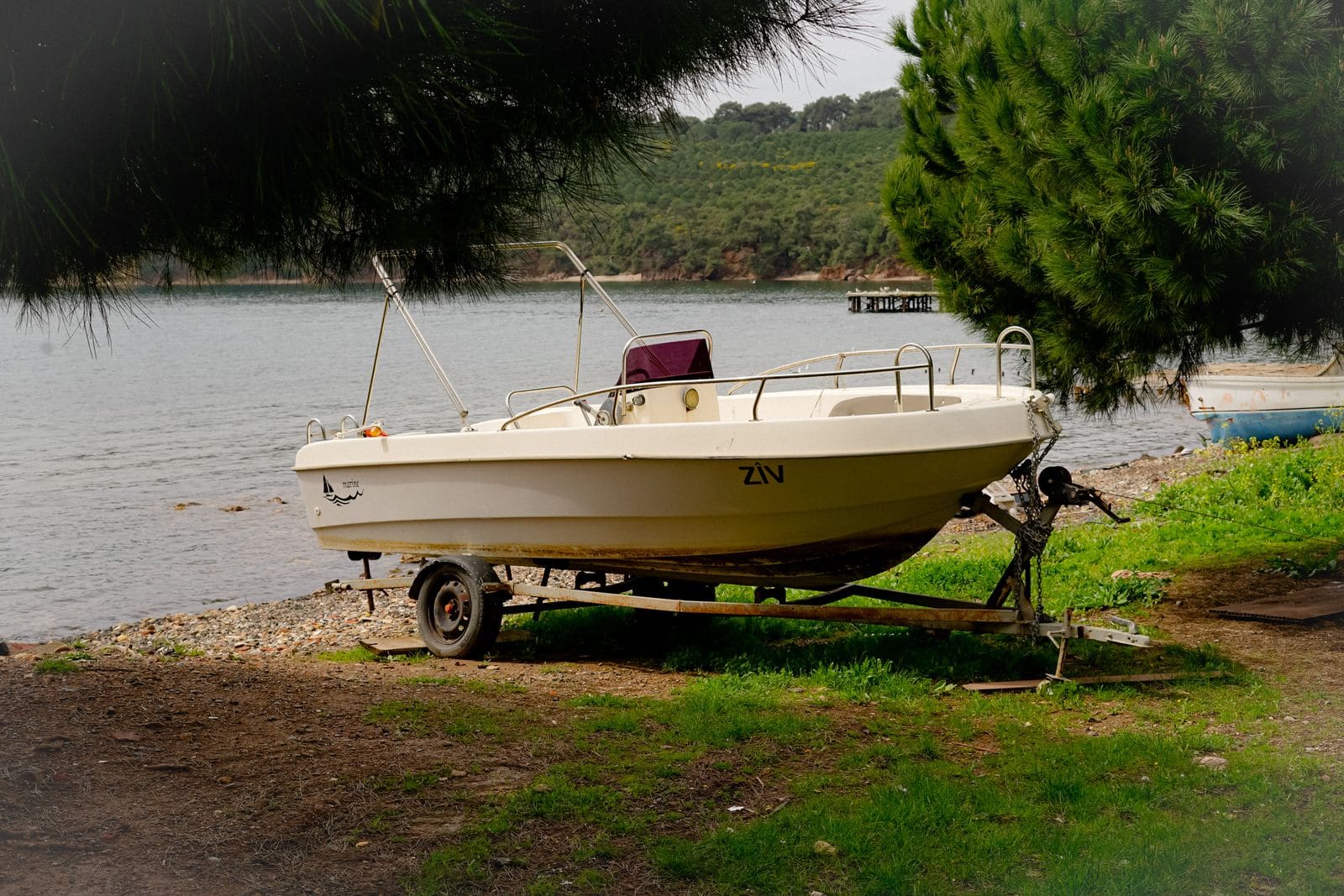
Small open outboard boats under 20 feet like this one are the boats federal rules require to carry a capacity label; on tiller boats, look near the stern seat or inside the transom. Photo: Michael Rivera / Wikimedia Commons · CC BY-SA 4.0 - Traditional label: a yellow panel headed "U.S. Coast Guard Maximum Capacities" (or just "Maximum Capacities" on bigger boats), with lines written out in words, such as "Maximum persons," "Maximum weight (persons, motor, gear)" and "Maximum horsepower."
- New ABYC S-7 label: ABYC's published example for an outboard boat under 20 feet keeps the "U.S. Coast Guard / Maximum Capacities" heading but shows three rows built around symbols and the words "NOT EXCEEDING": a person symbol with a number of people and a pound limit, a bag-plus-person symbol with a pound limit, and an outboard motor symbol with a horsepower figure and a pound limit.
Either way, if your boat has an NMMA certification logo on the plate, the builder was in NMMA's program, which Discover Boating says checks extra industry standards beyond the Coast Guard rules.
Both formats give a number of people and a weight. The weight is the real limit. On older plates the federal formula turns the pounds into people using an average weight that is lighter than most adults today (our capacity plate replacement guide explains the math). Add up your actual passengers' weights and go by whichever limit you hit first. The BoatUS Foundation also reminds owners that the number of seats is not the number of people a boat can safely carry.
On a traditional outboard plate, maximum weight covers persons, motor and gear. On inboard and sterndrive plates it's persons and gear, because the engine is already accounted for. On the new label, the second row shows symbols for gear and people. Because the new outboard label also gives a separate motor weight limit, ask the builder or dealer exactly what the second row includes on your boat before you do any load math. Count everything that's aboard: fuel, coolers, anchors, batteries, a trolling motor, tackle and water toys.
On outboard boats, the horsepower figure is the most power the boat was rated for (33 CFR 183.53 sets how builders calculate it, based on things like length, transom width and steering). Some traditional plates show two figures: a higher one for remote wheel steering and a lower one without it. Use the lower figure if your boat is tiller-steered. Inboard and sterndrive labels don't show a horsepower rating; for those, the builder's original engine options are your guide.
This is the big change. ABYC explains that outboards of the same horsepower now vary widely in weight, so the revised outboard label adds a maximum outboard motor running weight, which it describes as confirming the engine weight the transom was designed for. In plain terms: a motor can be within the horsepower limit and still be too heavy for the boat.
Two practical notes:
- "Running weight" may not equal "dry weight." Motor spec sheets usually list a dry weight. Ask the dealer or builder how the label's running weight is defined and how your motor compares, including anything that hangs on the transom with it (a jack plate, a bracket, the propeller, a kicker).
- Twins and kickers: if the boat has more than one motor, ask the builder how the weight limit applies to the combination.
Most boats on the water today won't have the new weight line. Before a repower:
- Ask the builder what motor weight the transom was designed for, and which motors it offered from the factory.
- Compare the dry weight of your old motor and the new one on the makers' spec sheets. Modern four-strokes are often heavier than the two-strokes they replace.
- If the new motor is noticeably heavier, ask the builder or a marine surveyor before you buy, and remember the extra weight counts against the plate's total weight figure.
- Why weight matters for flotation, too: on outboard boats under 20 feet, the federal swamped-flotation test is run with a standard weight standing in for the motor and controls, taken from a federal table for the boat's maximum rated horsepower (33 CFR 183.220 and Table 183.75). A motor much heavier than that figure wasn't part of the test, so the boat may float lower at the stern if it's ever swamped. One more reason to ask the builder before you hang a heavy motor.
Write down, for the motor you're considering:
- Horsepower vs. the label's maximum (use the right steering figure)
- Weight vs. the label's motor weight (new label) or the builder's answer (old label)
- Transom height and shaft length (see our outboard mounting guide)
- Condition of the transom: a soft or cracked transom can't safely carry even a rated motor (see our transom and stringer rot guide)
If any item is a "maybe," stop and ask the builder or a dealer before paying a deposit.
The BoatUS Foundation says exceeding the listed capacities is not a federal violation for the owner, but many states have laws against overloading or installing a motor above the rated horsepower, and you may void your insurance if you exceed the plate. Florida, for example, makes it an offense to operate a monohull under 20 feet while exceeding the maximum weight, persons or horsepower on the manufacturer's plate (per Florida's official boating course). Check your own state's boating law, and ask your insurer in writing before you mount a motor over the rating. Dealers may also decline to rig a motor above the plate.
The BoatUS Foundation is blunt: capacity plates should never be removed, altered or tampered with. You can't swap your old plate for a new-style label, add your own motor weight, or raise a number because "the boat handles it fine." Only the builder (or, for an orphan boat, a qualified naval architect) can supply new figures; our replacement guide covers that.
Once you know your numbers, use them: count people and add up weight before you leave, keep weight low and centered, and carry well under the maximum in rough water or when towing riders. Our weight distribution guide covers balance side to side and fore and aft.
Save the label photo, the builder's answers about horsepower and motor weight, and the spec sheets for the motor you installed. They help with insurance, a survey, and when you sell the boat.
Common mistakes
- Checking only horsepower on a repower and ignoring the motor's weight.
- Using the higher "remote steering" horsepower on a tiller boat.
- Counting seats instead of adding up pounds.
- Assuming the new label applies to your older boat, or that you must replace an old plate.
- Comparing a "running weight" on a new label with a "dry weight" on a spec sheet without asking how they're defined.
- Mounting a bigger motor first and calling the insurer after.
When to call a pro
- You want more horsepower or a heavier motor than the label (or the builder) allows: talk to the builder, a dealer and your insurer before buying
- The transom flexes, cracks or feels soft, or the boat has been modified (cut-down transom, bracket, jack plate, removed flotation)
- Your label is missing, faded or doesn't match the boat (see our capacity plate replacement guide)
- You're buying a used boat whose motor looks bigger than the plate allows: ask a marine surveyor
Tips
- Photograph the label today and keep it with the HIN in your boat profile.
- Shopping for a new small outboard boat? Ask the dealer whether it carries the new S-7 label and what the motor weight limit is.
- Put the persons and pound limits on a card near the boarding area so guests see them before stepping aboard.
- If you're close to the limits, a lighter motor, a smaller fuel load or one less passenger is cheaper than a capsized boat.
Official references
We read these to write this guide. Your engine's own manual always wins.
- ABYC – Boat Capacity Labels: A New Approach (published July 21, 2026)
- U.S. Coast Guard – CG-BSX-23 Policy Letter 26-01, Acceptance of ABYC S-7 Boat Capacity Labels (July 15, 2026)
- SafeAFloat.com – Coast Guard recreational boat policy letters
- NMMA – Capacity Tags & Yacht Plates (transition to the new tags)
- Discover Boating – All about Capacity Plates
- BoatUS Foundation – Boating Safety Study Guide, Capacities
- Boat-Ed (Florida official course) – Exceeding Maximum Loading or Horsepower
- eCFR – 33 CFR 183.21, Applicability (display of capacity information)
- eCFR – 33 CFR 183.53, Horsepower capacity
- eCFR – 33 CFR 183.220, Preconditioning for tests (flotation test weights for outboard boats rated over 2 hp)
Safety: BoatMend is for information only and does not replace a certified marine technician. You are responsible for your safety and your boat. Read the full disclaimer.
Last updated 2026-11-06
Related guides
Missing or Faded Capacity Plate: How to Read It and Get a Proper Replacement
The capacity plate tells you how many people, how much weight and how much horsepower your boat can safely handle. Learn what each line means, which boats must have one under 33 CFR 183, how to order a replacement from the builder, what to do if the builder is gone, and why homemade numbers are a bad idea.
Planning a Repower: Horsepower Limits, Transom, Rigging, Prop and Costs
Putting a new engine on a boat you love can cost far less than a new boat, but only if the plan is right. Learn how to read the capacity plate for maximum horsepower and weight, check the transom, sort out controls, gauges and rigging, budget for the prop and the extras, and decide between a dealer installation and doing it yourself.

How to Load Your Boat Safely: Capacity Plate, Balance and Stability
Too much weight, or the right weight in the wrong place, is behind most small-boat capsizes and swampings. Learn to read the capacity plate (persons, weight and horsepower), add up your real load, balance it side to side and fore and aft, and adjust for rough water, water aboard and towing riders.
How to Mount or Re-Tighten an Outboard on the Transom
A loose outboard can steer badly, crack the transom or fall off the boat. Learn how to center the motor, check engine height, tighten clamp screws, seal and bolt through the transom with backing plates, add a safety cable on small motors and spot transom flex before it becomes a costly repair.
How to Check a Boat for Transom and Stringer Rot
Many older fiberglass boats have wood inside the transom, stringers and deck, and water that gets in slowly rots it. Learn the tap test, the flex test, how to read a moisture meter and the other warning signs, and why a rotten transom or stringer is a structural job for a pro, not a weekend patch.
How to Care for a Hydraulic Jack Plate (Fluid, Pump, Leaks, Grease and Height)
Keep a hydraulic jack plate (Bob's Machine Shop, T-H Marine Atlas, CMC, SeaStar style) lifting smoothly: check and top up the right fluid, keep the pump and relays dry, find leaks and slow drift, lubricate only the way your model calls for, set running height safely and prepare it for winter. Mounting and setback changes are dealer work.
How to Mount and Maintain a Kicker Motor Bracket
Set up a small auxiliary outboard (a kicker) the right way: choose a manual or spring-assisted bracket, through-bolt it to a sound transom with a backing plate, add a safety cable, sort out steering and fuel, and keep the bracket working season after season.
How to Inspect a Used Boat Before You Buy
A step-by-step checklist for looking over a used boat, from paperwork and the hull ID number to the transom, engine, compression test, sea trial and trailer. Know what to check yourself, what the red flags mean, and when to pay a marine surveyor.

Boat Insurance Policy Basics: Agreed Value vs Actual Cash Value, Navigation Limits, Storm Deductibles and Exclusions
Learn to read a boat insurance policy before you need it: agreed value versus actual cash value, navigation limits and lay-up periods, named storm deductibles, towing, salvage and wreck removal, liability limits, and the exclusions that cause most claim surprises. General information, not legal or insurance advice.