Salt and Scale in Raw-Water Cooling: Flushing Habits, Descaling and When It's a Shop Job
Learn how salt and scale slowly narrow your engine's cooling passages, how to spot the warning signs (a temperature that creeps up over seasons, a weak telltale, thermostats sticking), the flushing habits that prevent it, which descaling products and methods engine makers accept, what never to pour through an engine, and when to hand the job to a shop.
Time
1 h
Shop would charge
$150-900
Applies to
Outboard, Sterndrive (I/O), Gas inboard, Marine diesel
Safety first: Never run an engine out of the water without cooling water. Mercury warns that even a brief dry start can damage the water pump impeller. Remove the propeller before running an outboard on muffs or in a flush bag, keep everyone clear of it, and run at idle only. A built-in flush port is for flushing with the engine off unless your owner's manual specifically allows running it. Descalers are acids: wear gloves and eye protection and keep them off skin and paint. If the temperature alarm sounds on the water, throttle back, shut down when it's safe, and call TowBoatUS, Sea Tow or the Coast Guard on VHF 16 if you can't get home.
Owners often ask
- Can I flush salt scale out of my outboard with vinegar or a lime remover?
- My engine runs a little hotter every season. Could salt scale in the cooling passages be the cause?
This guide walks you through it. Still stuck? Ask the AI Mechanic about your engine.
Tools
- Garden hose with a good water supply
- Flush muffs or a flush bag that fit your gearcase (or your engine's flush adapter)
- Hose pressure gauge (optional)
- Thin wire or a small drill bit turned by hand (for the telltale outlet)
- Infrared thermometer (optional, to compare readings over time)
- Gloves and eye protection
Parts & supplies
- Flush additive or descaler only if your engine maker approves it
- Replacement thermostat gasket, impeller or anodes if a check shows they're due
Before you start
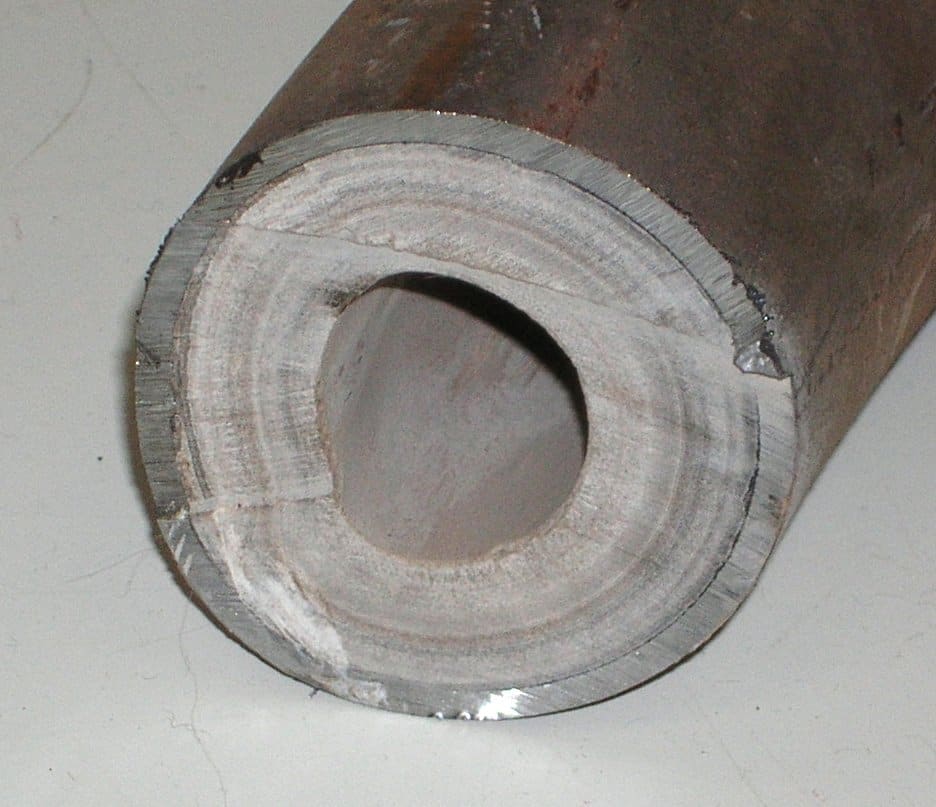
Why scale happens. Most outboards and many sterndrives and inboards are raw-water cooled: they pump in the water they float in, run it through the engine and send it back out. Yamaha notes that every kind of water, fresh or salt, carries contaminants that build up in the passages over time, and that salt water can crystallize on surfaces hotter than about 170°F, forming deposits that restrict flow. A Practical Boat Owner engine expert who has taken apart many saltwater-cooled outboards describes deposits ranging from almost nothing to nearly complete blockages: mixtures of carbon, salt and aluminum salts, hardest around the exhaust outlet and not easy to dissolve.
What it does. Less flow means less cooling. Yamaha also points out that salt deposits can make thermostats and pressure-relief (poppet) valves stick open, so an engine can run too cool as well as too hot. Hot spots in the exhaust passages can also concentrate corrosive combustion by-products.
Closed (freshwater) cooling keeps salt out of the engine block, but the raw water still passes through a heat exchanger and, on many engines, the exhaust manifolds, which scale up the same way (see the closed cooling guide).
Steps
Check your owner's manual for which parts see raw water: the whole engine (most outboards and many older sterndrives and gas inboards), or just a heat exchanger, oil and fuel coolers and the exhaust (closed-cooled engines and most diesels). Note where the flush connection is, if you have one, and what the manual says about using it. Not every outboard has a flush port, and Yamaha notes that outboards with two water inlets need a special adapter for muffs.
Scale builds slowly, so the signs are gradual:
- The temperature gauge reads a little higher each season at the same speed, or the alarm starts going off at high RPM or in hot weather.
- The outboard's telltale ("pee") stream gets weaker or spits.
- The engine runs cooler than normal, or takes ages to warm up. That's a thermostat or poppet valve sticking open.
- On closed-cooled engines, the running temperature rises over months while the coolant level is fine.
Write down your normal temperature and RPM in your BoatMend log once a month. A slow creep is easy to miss without notes.
Before blaming scale, check what's cheaper:
- Intake grates on the gearcase or the raw-water strainer: clear weeds, mud and barnacles.
- The telltale outlet: Yamaha notes that insects such as mud daubers love to nest in it. Clear it gently with thin wire. Also remember that some outboards don't show a stream at idle, only once RPM rises a bit.
- The water pump impeller: Yamaha suggests inspecting it every year, in salt or fresh water. A worn impeller looks just like scale from the helm. If the old impeller is missing vanes, the broken pieces have gone up into the cooling passages and can block them just like scale; they often turn up at the thermostat housing. Find them before you fit the new impeller.
- Thermostats: Honda recommends having the thermostats and water pump serviced every year or every 200 hours when you run in salt or polluted water.
See the engine overheating guide for the full checklist.
This is the habit that prevents most scale. Mercury says an outboard or sterndrive used in salt water should be flushed and rinsed after each use, and also after brackish, polluted or very silty fresh water. Honda gives the same advice and explains that flushing prevents deposits that can clog or corrode the water passages, sensors and thermostats. Do it as soon as you can after hauling out, before the salt dries.
Many newer outboards have a garden-hose fitting on the lower cowl. Yamaha's method: connect the hose to the flush attachment of the non-running outboard, turn the water on full and let it run for 15 minutes so it circulates through the whole cooling system. Mercury says its flush fitting works with the boat on a trailer or in the water and to follow your manual for the exact procedure. BoatUS notes that some makers give a water pressure range or tell you not to open the tap fully, so check your manual. Keep the engine in the position the manual says (often vertical) while flushing and afterward so it drains.
Then rinse the outside. Mercury's Flush Connect article gives a few cautions owners miss: lower the outboard to vertical before hosing the cowl, because water sprayed on a tilted cowl can get into the air intake at the back; with the cowl off, let water run gently over the powerhead (no spray nozzle or pressure washer, which drive water into electrical connectors) and keep it away from the air intake and alternator; then let it dry before closing up.
If your manual calls for muffs or a flush bag, the engine runs, so:
- Remove the propeller first.
- Turn on the water until it squirts out around the muff cups, then start the engine in neutral at idle only. Yamaha says to keep enough pressure that some water always leaks from under the cups.
- In a flush bag, the water level has to be above the water pump; Yamaha says about an inch above the lower unit's split line.
- Watch the telltale. No stream means stop the engine now.
Yamaha suggests 15 minutes. Turn off the engine first, then the water.
Mercury says MerCruiser sterndrives need flush muffs unless they have an accessory engine flush kit, and that MerCruiser engines with SeaCore freshwater cooling should still be flushed to clear salt from the heat exchanger and exhaust. Mercury's FAQ adds that the engine must be running whenever a MerCruiser flush kit is used, that Bravo, inboard and towsport kits work in or out of the water, and that the Alpha kit works only with the boat out of the water.
A flush bag or barrel works for outboards because their water pump sits in the lower unit. Engines with the raw-water pump on the engine itself (many Bravo, Volvo Penta and inboard setups) need hose pressure to push water to the pump, so use muffs or the maker's flush kit instead. Inboards and diesels usually flush through a fitting at the raw-water strainer or seacock. Follow your manual: with an inboard you must not flood the engine through the exhaust, so never leave the water running with the engine stopped.
Honda suggests flushing with its own Salt Terminator product. Other makers sell or approve similar salt-removing flush additives. Use one only if your engine maker approves it, mix it as the label says, and follow with fresh water if the label tells you to. A good additive helps, but it doesn't replace the fresh-water flush itself.
Once an engine is running warm from scale, the fix depends on the engine:
- On outboards and raw-water cooled gas engines, a dealer may circulate a descaler the engine maker approves, remove the thermostats and covers to clean passages, or replace badly blocked parts.
- On closed-cooled engines and diesels, the heat exchanger is the usual target: the end caps come off, the tubes are cleaned and the gaskets replaced. Badly scaled exchangers often go to a shop or radiator shop for cleaning and a pressure test.
The existing BoatMend advice stands: don't pump acids or household cleaners through your outboard on your own. Let a dealer decide what it needs.
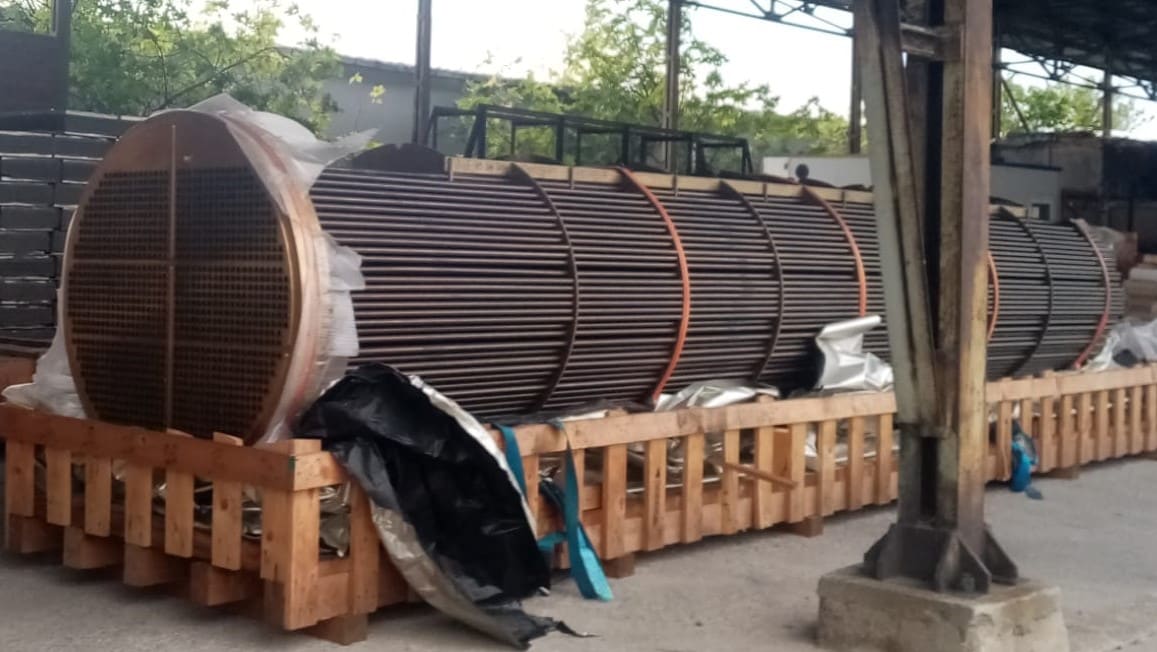
An industrial heat exchanger's tube bundle. A marine heat exchanger is a small version: raw water runs through thin tubes like these, so a little scale blocks a lot of flow. Photo: Harald the Bard / Wikimedia Commons · CC BY-SA 4.0 Some owners descale heat exchangers, oil coolers or A/C condensers themselves, using a product the equipment maker accepts. Star brite's directions for its marine descaling fluid show what a typical job involves:
- Isolate and drain the circuit so no raw water can get in, and flush it with fresh water first.
- Circulate the descaler in a loop from a bucket with a small pump, or let it soak (Star brite says 4–8 hours).
- Don't seal the system. Descaling gives off gas, and Star brite warns that the pressure can cause damage.
- Drain, dispose of the liquid as local rules require, and flush thoroughly with fresh water.
- Star brite recommends replacing all sacrificial anodes afterward.
Star brite's label lists phosphoric acid and warns that the product is corrosive. Wear gloves and eye protection, and keep it off paint and gelcoat.
- Strong acids and homemade mixes (muriatic acid, household lime removers, vinegar "recipes" from videos). The PBO expert warns that small outboards are aluminum, which strong acids dissolve, and that a DIY mix is not recommended.
- Any product your engine maker hasn't approved for the cooling system. It can damage seals, hoses, sensors or the anodes inside the engine, and can void a warranty.
- High pressure. Don't connect a pressure washer to a flush port or force water in harder than the manual allows.
- Running the engine on a descaler without the full cooling water supply the manual calls for.
Run the engine with proper cooling water and check the telltale stream, the temperature at your usual RPM, and every hose and gasket you disturbed. Scale sometimes hides tiny leaks or worn spots, so look again after the first trip. Write the new normal temperature in your log.
Flush after every saltwater trip, inspect the impeller each year, and have the thermostats looked at on the schedule your manual gives (Honda's is every year or 200 hours in salt water). These cheap habits are what keep scale from becoming a shop bill.
Common mistakes
- Skipping the flush "just this once" after a saltwater trip, then letting the boat sit for a week.
- Running the engine on the built-in flush port when the manual says that port is for flushing with the engine off.
- Starting an outboard on muffs before the water is on, or with the prop still fitted.
- Blaming scale when the real problem is a worn impeller, a clogged intake or a mud-dauber nest in the telltale.
- Pumping vinegar, lime remover or muriatic acid through an aluminum outboard after watching a video.
- Sealing a descaling loop closed, so gas pressure builds up.
- Forgetting to replace the anodes after an acid descale.
- Ignoring an engine that runs too cool. Thermostats stuck open by salt need attention too.
When to call a pro
- The temperature alarm sounds or the gauge keeps creeping up after you've checked the intakes, telltale and impeller
- The engine has already overheated: have it checked before you run it again
- Thermostats or poppet valves need removing, or passages need cleaning with covers off
- Any acid descaling of an outboard or gas engine block
- A heat exchanger that needs to come off, be cleaned or pressure tested, or coolant that shows signs of raw water
- Exhaust manifolds or risers that are scaled or rusting (see the exhaust manifold and riser guide)
Tips
- Keep a hose and muffs or the flush adapter in the truck so you can flush at the ramp when the boat lives on a trailer.
- A hose pressure gauge is cheap and takes the guesswork out of the "how hard" question.
- If you keep the boat in salt water and can't flush after every trip, ask your dealer about a shorter thermostat and impeller schedule.
- An infrared thermometer pointed at the same spot on the engine after each run gives you an extra early warning of a slow creep.
Official references
We read these to write this guide. Your engine's own manual always wins.
- Yamaha Outboards – Maintenance Matters, Corrosion Prevention (flushing)
- Yamaha Outboards – Maintenance Matters, Additional Tasks (water pump, thermostats)
- Honda Marine – Salt Water Operation Tips
- Mercury Marine – Maintenance Made Easy, Preventing Corrosion
- Mercury Marine – Service & Support FAQs (MerCruiser flush kits, flushing after saltwater use)
- BoatUS – Outboard Flushing The Right Way
- Practical Boat Owner – Best Outboard Cleaner (expert answer on internal deposits)
- Star brite – Marine Descaling Fluid (directions and warnings)
- Mercury Marine – Mercury Flush Connect, the Easy Way to Fight Corrosion
Safety: BoatMend is for information only and does not replace a certified marine technician. You are responsible for your safety and your boat. Read the full disclaimer.
Last updated 2026-10-24
Related guides
How to Flush Your Engine With Fresh Water
Rinse salt, silt and sand out of your outboard or sterndrive cooling system using the built-in flush port, flush muffs or a flush bag. Flushing after every saltwater trip is one of the easiest ways to prevent corrosion and overheating.
Saltwater Outboard Care: The After-Every-Trip and Monthly Routine
A simple routine that keeps salt from eating your outboard, built from Honda, Yamaha, Mercury and Suzuki advice. It covers flushing after every trip, washing, where to spray anticorrosion (and where never to), monthly greasing, anodes, and tilting up or storing out of the water.
Engine Overheating - Troubleshooting Guide
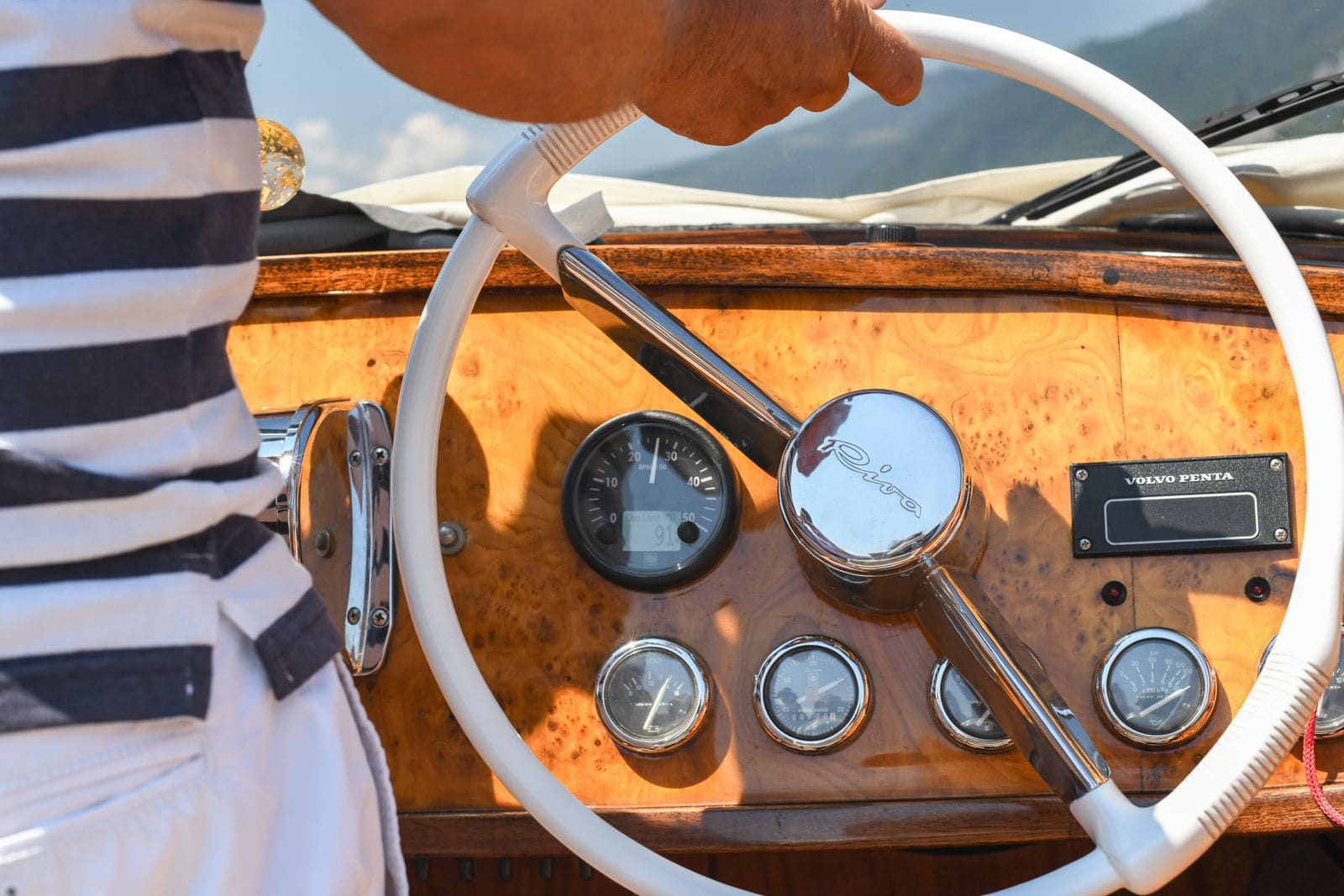
Work through the most likely causes of a hot engine or overheat alarm, from a blocked water intake to a worn impeller or stuck thermostat. Acting fast and in the right order can save your engine and often gets you home without a tow.
How to Replace the Water Pump Impeller
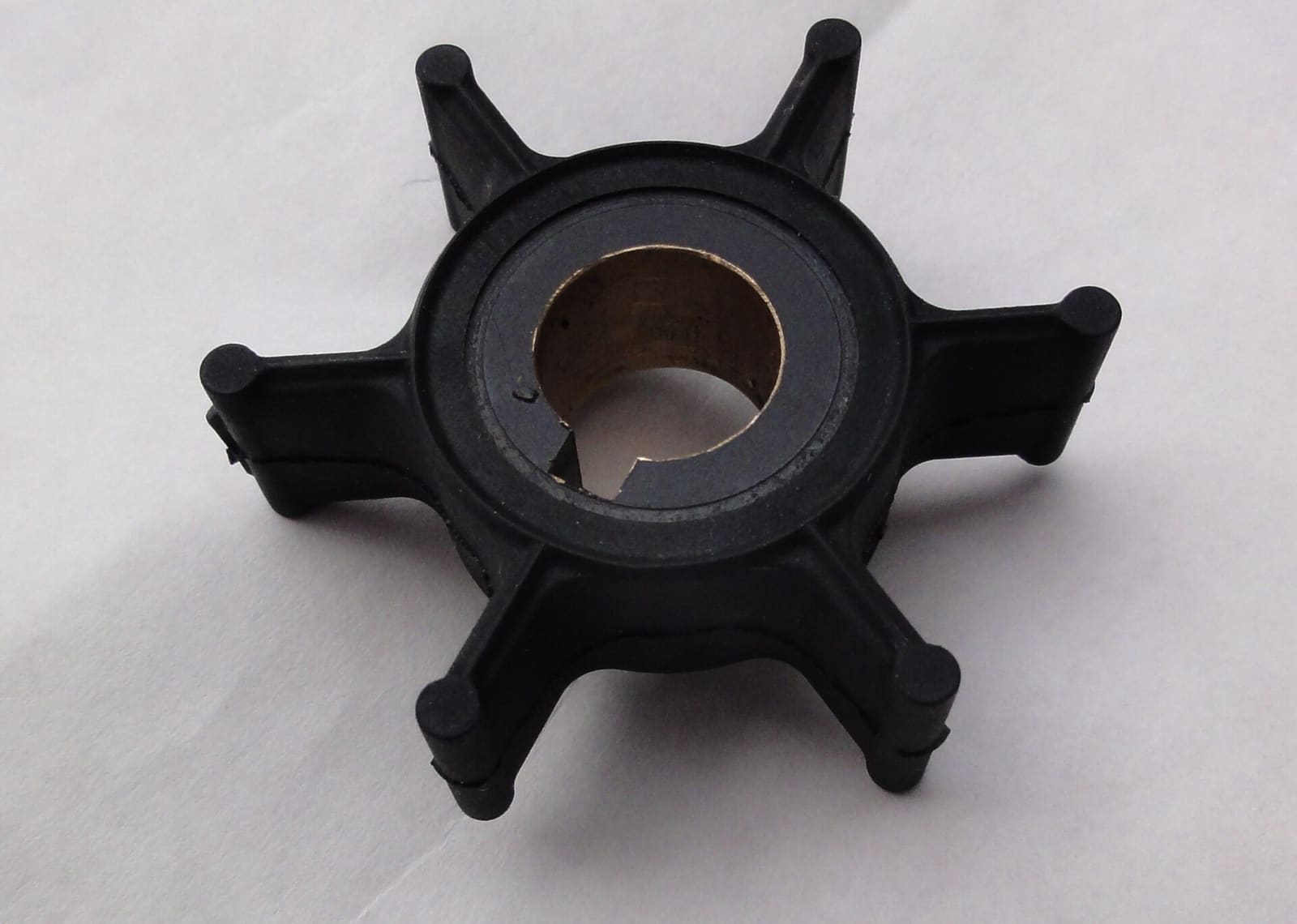
Replace the rubber impeller that pumps cooling water through your engine, the part most often behind overheating. On many outboards it is a two-hour driveway job that saves a shop bill of several hundred dollars and prevents far costlier heat damage.
How to Test and Replace the Engine Thermostat
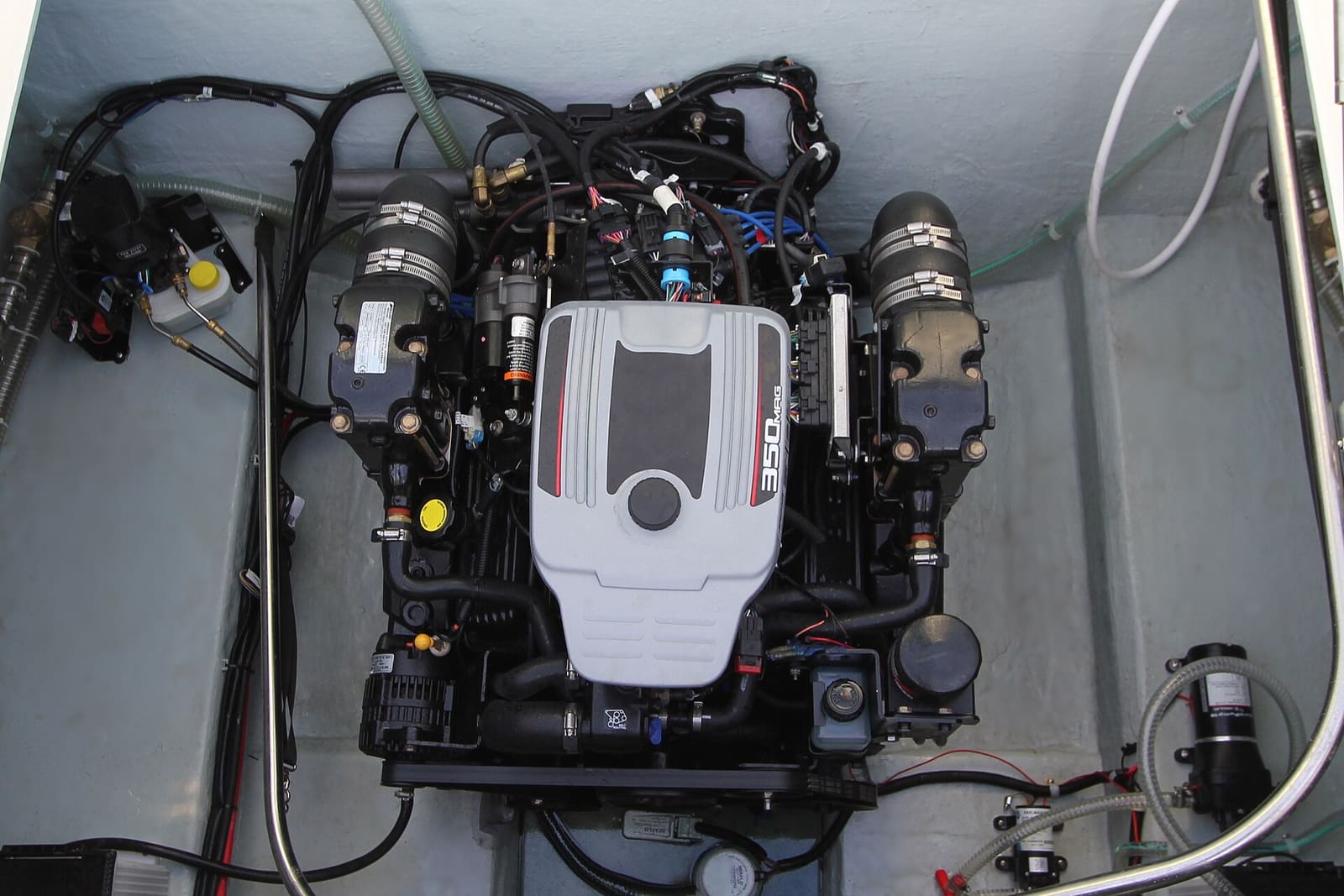
Find, test and replace the thermostat that controls your engine's operating temperature. A stuck thermostat can make an engine overheat or run too cold. On most outboards and many sterndrives it is a one-hour job with basic tools.
How to Check and Change Coolant in a Closed Cooling System
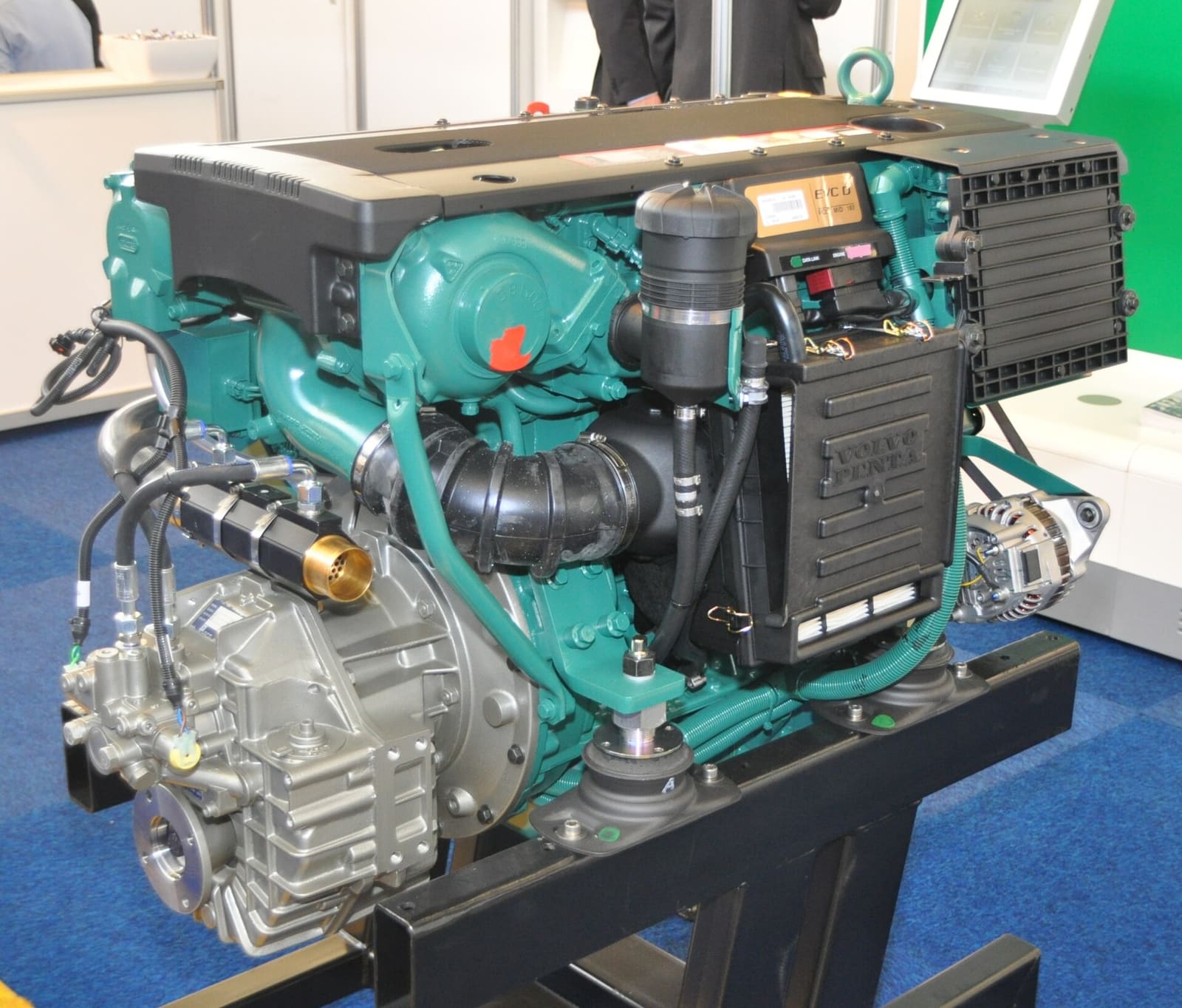
Check, test and change the coolant in a freshwater-cooled (closed cooling) inboard, sterndrive or diesel, and learn the heat exchanger basics that keep it working. Old coolant quietly eats hoses, pumps and engine passages, and many boats go a decade without a change.
How to Inspect and Replace Sacrificial Anodes (Zincs)
Check the anodes on your outboard, sterndrive or inboard running gear, replace them when they are half gone, and choose the right metal for the water you boat in. Fresh anodes are cheap insurance against expensive corrosion damage to your lower unit, drive and prop.
How to Inspect Exhaust Manifolds and Risers on a Sterndrive or Inboard
Cast-iron exhaust manifolds and risers rust from the inside, and when they fail they can let water into the cylinders and ruin the engine. Learn the warning signs, how often to inspect them in salt and fresh water, how to check a riser yourself, and when replacement is a job for a pro.

How to Maintain Your Boat's Air Conditioning Seawater System
Keep seawater flowing through your marine A/C by cleaning the strainer, checking the pump and overboard discharge, descaling the condenser coil when flow drops, cleaning the air filter, and winterizing the seawater circuit before a freeze. Most "A/C not cooling" calls are a water-flow problem.