Diesel Timing Belt: Does Your Engine Have One and When to Replace It
Find out whether your marine diesel's camshaft is driven by a rubber timing belt, a chain or gears, and if it is a belt, plan its replacement by hours and by age. A broken timing belt usually wrecks the engine and stops the boat on the spot, so this is one of the few jobs where "it seems fine" is not good enough.
Time
30 min
Shop would charge
$600-2500
Applies to
Marine diesel
Safety first: Never remove a timing cover or put your hands near belts unless the engine is off, the key is removed and the battery switch is off, so nobody can start it. Timing belt replacement needs special locking tools and exact timing of the camshaft and injection pump; a mistake can destroy the engine on the first turn. Leave the replacement to a qualified marine diesel mechanic unless you have the factory service manual and tools.
Owners often ask
- Does my boat diesel have a timing belt, and how often should it be changed?
This guide walks you through it. Still stuck? Ask the AI Mechanic about your engine.
Tools
- Your engine's owner's manual and maintenance schedule
- Engine serial number (from the engine's ID plate)
- Flashlight
- Notebook or your BoatMend log
Parts & supplies
- Timing belt kit for your exact engine serial number (belt, tensioner and idlers), supplied or fitted by your dealer
- Water pump, if it is driven by the timing belt on your engine (often replaced at the same time)
Before you start
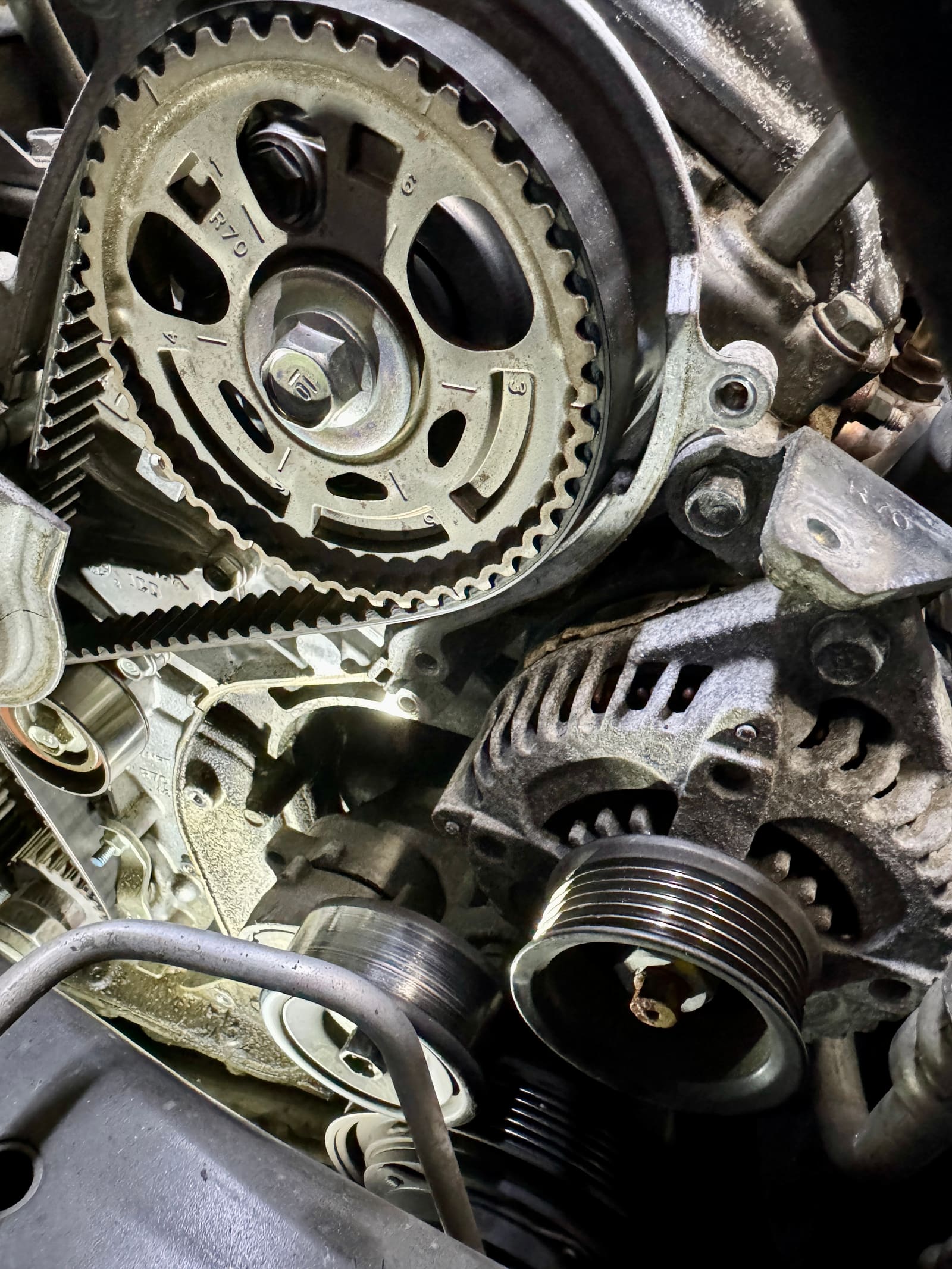
What a timing belt does: inside every four-stroke engine, the camshaft (which opens the valves) and, on many diesels, the fuel injection pump must turn in perfect step with the crankshaft. Engines link them in one of three ways:
- Gears: a train of metal gears at the front or back of the engine. Very durable; no scheduled replacement.
- Chain: a metal chain, like a bicycle chain, running in oil. Long-lived; replaced only when worn.
- Toothed rubber belt: quiet and light, but rubber ages. It has a fixed replacement interval.
Which engines have belts: many purpose-built small marine diesels use timing gears. Belts are more common on marine diesels developed from car or light-truck engines, such as some models from the larger brands. The only reliable answer for your engine is its owner's manual and maintenance schedule, or a dealer looking up your serial number. Do not go by what a friend's "same brand" engine has.
Why it matters so much: Gates, the belt maker, warns that a broken timing belt can cause heavy damage costing thousands of dollars. On most diesels the pistons come very close to the valves, so if the belt snaps, the valves stop where they are and the pistons hit them. Even when the damage is small, the engine stops instantly and will not restart, wherever you happen to be.
Steps
Open the maintenance table in your owner's manual and look for "timing belt," "toothed belt" or "camshaft drive belt." If the schedule lists a timing belt replacement, your engine has one. If the schedule only lists "drive belts" or "V-belt" adjustment, those are the external accessory belts, not the timing belt. For example, Westerbeke's published maintenance schedule lists drive belt checks and adjustment and no timing belt replacement at all.
Find the engine's ID plate (see our engine serial number guide) and ask a dealer for that engine's maintenance schedule. Manufacturers sometimes change parts and intervals within a model run. While you are at it, ask for the timing belt kit part number that matches your serial number.
Look for:
- Service invoices from previous owners or the yard
- A sticker or marker note on the timing cover (many mechanics write the date and engine hours there)
- An entry in the engine log
If you cannot find any record on an engine that has a belt, treat the belt as due now. On a used boat, an unknown belt age is a fair point to negotiate on.
Manufacturers that use timing belts give two limits: a number of engine hours and a number of years. Replace the belt at whichever comes first. Your manual has the exact figures for your engine; some owners and mechanics choose to change it earlier if the engine works hard.
This is the trap for sailboats and weekend boats. A boat that runs 50 hours a year may never reach the hour limit, but the rubber keeps aging from heat, humidity, ozone and long periods of sitting in one position. On low-hour engines, the age limit is the one that matters.
Oil and coolant soften and weaken a timing belt. Gates' investigation of early belt failures found that a leaking water pump or coolant hose ruins the belt and tensioner. If you see oil or coolant weeping from the front of the engine, near the timing cover, or from a belt-driven water pump, get it fixed promptly and ask the mechanic to check the belt.
A timing belt often fails with no warning. Sometimes a worn tensioner or idler pulley makes a whine, chirp or rattle from behind the timing cover first; Gates notes that a worn tensioner or idler lets the belt slip, causing noise and heat. Any new noise from the front of the engine is a reason to have it checked before the next trip.
Some engines have a small inspection window or a removable upper cover. With the engine off, key out and battery switch off, you can shine a light at the visible part of the belt. Things that mean "replace now":
- Cracks across the back of the belt or at the base of the teeth
- Missing, torn or rounded teeth
- Frayed edges or exposed cords
- A shiny, glazed or oil-soaked surface
Do not remove covers that need special tools or disturb anything else on the timing side.
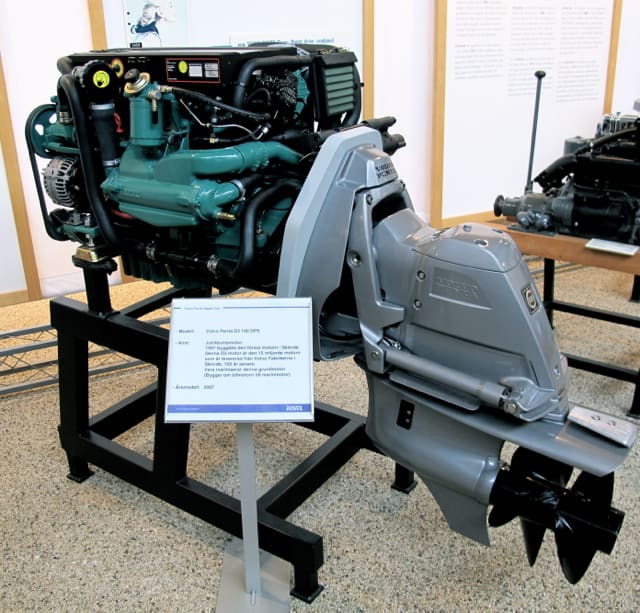
Car-derived marine diesels, such as Volvo Penta's D3 family shown here, commonly use a timing belt. Check your own engine's manual and serial number to be sure. Photo: Mangan2002 / Wikimedia Commons · CC BY-SA 3.0 The external belts you can see (V-belts or a serpentine belt) drive the alternator, the raw water pump on some engines, the freshwater pump and sometimes power steering. Those are owner checks: look for cracks and glazing and check tension as your manual describes. They matter too: BoatUS published an owner's story where a failed belt tensioner let the serpentine belt fall off, stopping one engine and taking out the steering assist. But checking those belts tells you nothing about the timing belt hidden behind its cover.
Gates recommends replacing the tensioner and idler pulleys along with the belt, because a worn bearing can ruin a new belt. If the water pump on your engine is driven by the timing belt, it is normally replaced at the same time; the labor to reach it is already done, and a leaking pump would soak the new belt in coolant. Ask your mechanic to quote:
- Belt, tensioner and idlers (genuine or kit matched to your serial number)
- Water pump, if belt-driven
- Any oil seals behind the timing pulleys that are leaking
- Accessory belts while everything is apart
This is a job for a marine diesel mechanic with the factory procedure and locking tools. On some boats the engine is so tight in its compartment that the engine has to be moved or parts removed to reach the front, which is why costs vary so much from boat to boat. Ask how long they expect it to take on your boat, and whether they have done your engine model before.
When the job is done, write the date and engine hours in your BoatMend log and ask the mechanic to mark them on the timing cover. Keep the invoice; it adds value when you sell the boat. On the first runs, watch the engine temperature (especially if the water pump was replaced) and look for leaks at the front of the engine.
If a diesel stops abruptly and then cranks unusually fast and freely, or will not start at all, a broken timing belt is one possibility. Do not keep cranking; that can add damage. Get the boat safe: sail, anchor if you are drifting toward danger, and call TowBoatUS, Sea Tow or the Coast Guard on VHF channel 16 if you need help. Then have a mechanic check the belt before anyone tries to start it again.
Common mistakes
- Assuming an engine has timing gears (or a belt) because another engine of the same brand does.
- Going only by hours on a low-use engine and ignoring the age limit.
- Replacing only the belt and reusing an old tensioner, idlers or a weeping water pump.
- Thinking the visible V-belt or serpentine belt is the timing belt.
- Buying a used boat without asking when the timing belt was last changed.
- Going by an interval quoted in a forum or by another owner. Owners of the same engine family often post different numbers, and makers update schedules; use the current schedule for your serial number from the manual or a dealer.
- Ignoring an oil or coolant leak at the front of the engine.
When to call a pro
- Always, for the actual timing belt replacement
- The schedule says the belt is due by hours or age, or the last change date is unknown
- Oil or coolant is leaking near the timing cover or the belt-driven water pump
- Any new whine, rattle or chirp from the front of the engine
- The engine stopped suddenly and now cranks oddly or will not start
Tips
- Put a reminder in BoatMend for the timing belt by date as well as by hours.
- When you get a quote, ask whether the water pump and tensioner are included, so you can compare shops fairly.
- If you are shopping for a used boat, ask the seller for the timing belt invoice early. "Unknown" means budget for it.
- Carry spare accessory belts aboard; a timing belt is not something you change at anchor.
Official references
We read these to write this guide. Your engine's own manual always wins.
Safety: BoatMend is for information only and does not replace a certified marine technician. You are responsible for your safety and your boat. Read the full disclaimer.
Last updated 2026-10-24
Related guides
Marine Diesel Service: Oil Change, Fuel Filters and Bleeding Air
Change the oil and oil filter, replace the primary and secondary fuel filters, and bleed air from the fuel system on a Yanmar, Volvo Penta, Beta, Cummins or similar marine diesel. These three skills cover most routine diesel care and can get you out of trouble when the engine dies on a passage.
How to Check and Change Coolant in a Closed Cooling System
Check, test and change the coolant in a freshwater-cooled (closed cooling) inboard, sterndrive or diesel, and learn the heat exchanger basics that keep it working. Old coolant quietly eats hoses, pumps and engine passages, and many boats go a decade without a change.
Marine Diesel Won't Start: Troubleshooting From Battery to Fuel
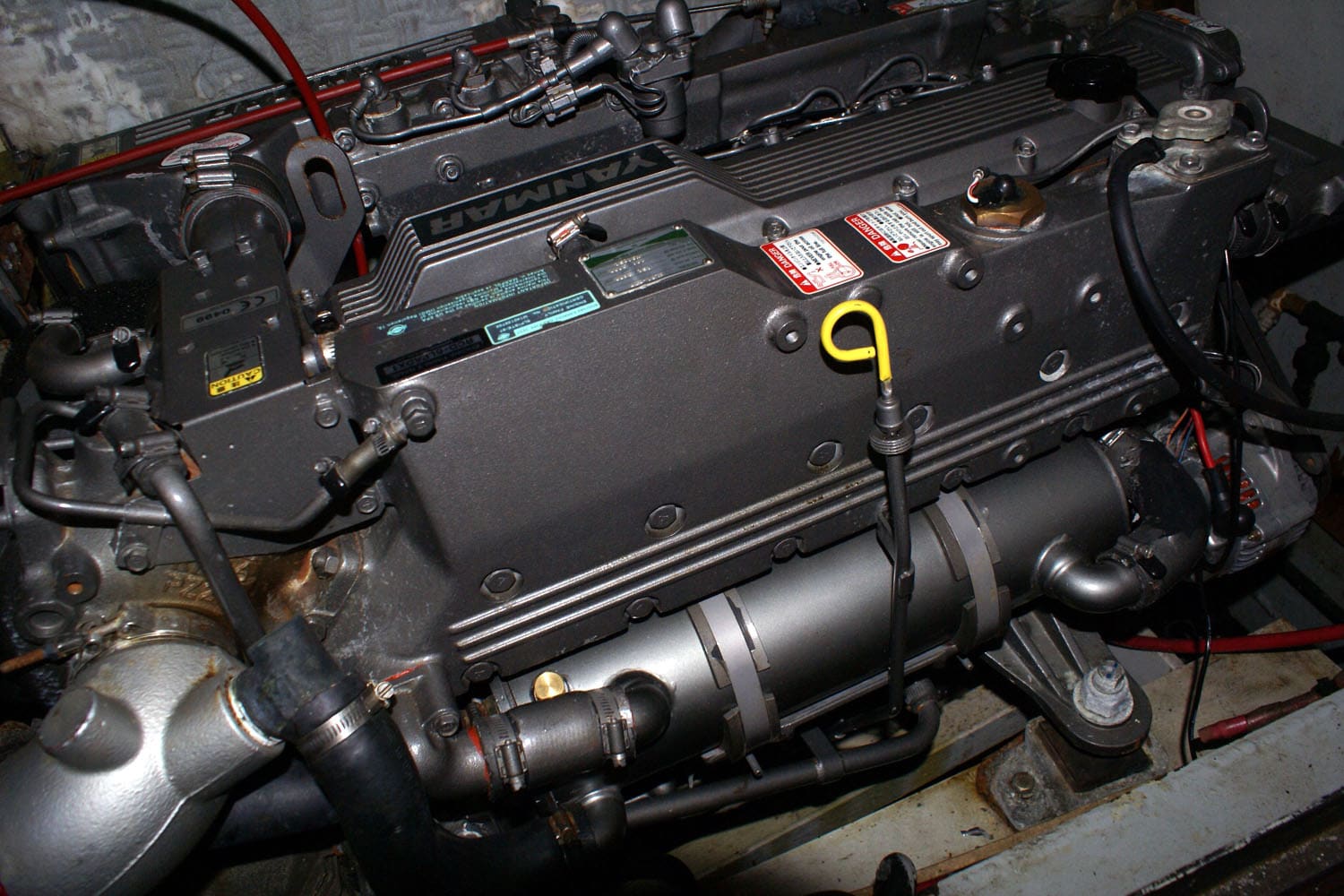
Work through the usual reasons a Yanmar, Volvo Penta, Westerbeke, Beta or similar marine diesel won't crank, or cranks but won't fire, starting with the free and simple checks. Most no-starts come down to the battery, preheat, air in the fuel or a fuel shutoff solenoid.
How to Find Your Engine's Serial Number, Model and Year (and Get the Official Manual)
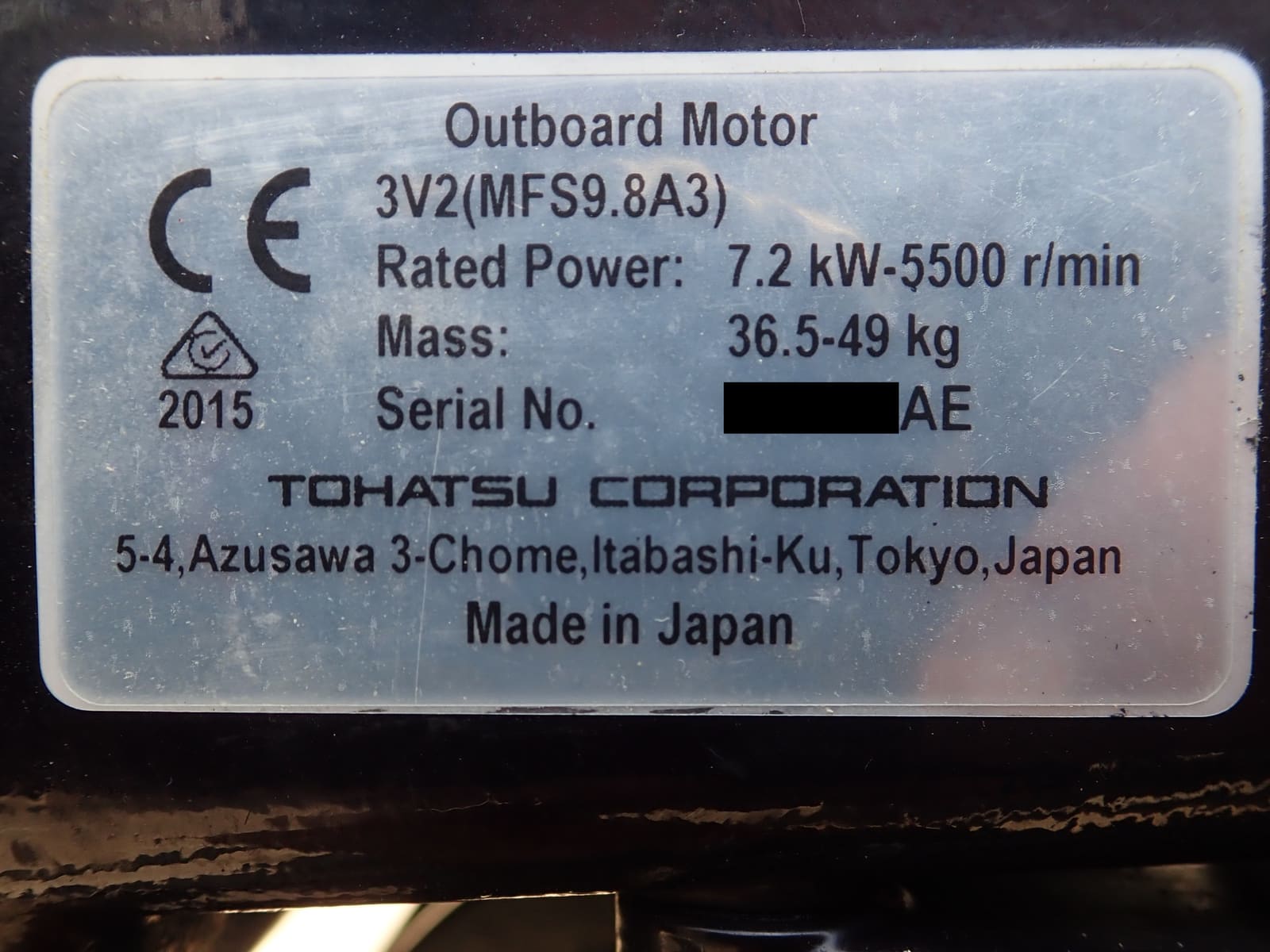
Find the ID label on your outboard, sterndrive, inboard diesel or PWC, read the model and serial number correctly, tell it apart from the boat's HIN, and use it to open the free official owner's manual. It's the first step for ordering the right parts and following the right maintenance plan.
How to Inspect Engine Belts and the Tensioner on Sterndrives, Inboards and Diesels
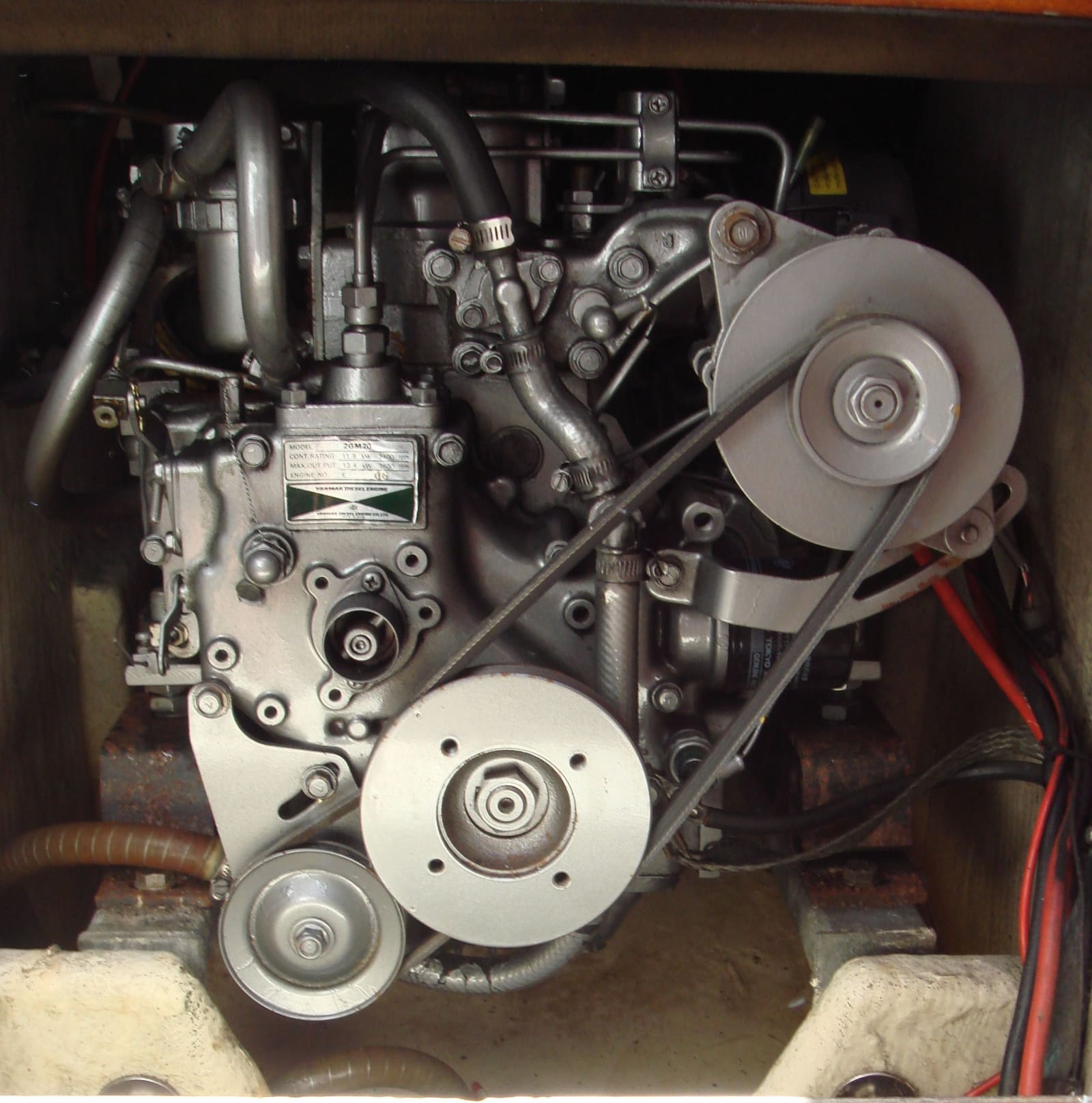
On many inboard, sterndrive and diesel engines, one belt runs the water pump, the alternator and often the power steering. If it breaks or jumps off, the engine overheats and the steering goes heavy at the same moment. Learn how to inspect the belt, tensioner and pulleys, check tension, and carry the right spare.
How to Inspect a Used Boat Before You Buy
A step-by-step checklist for looking over a used boat, from paperwork and the hull ID number to the transom, engine, compression test, sea trial and trailer. Know what to check yourself, what the red flags mean, and when to pay a marine surveyor.