Electric Outboard Care: Battery Storage, Connectors, Saltwater Rinse and Updates
Electric outboards like Torqeedo, Mercury Avator and ePropulsion need far less work than gas engines, but the lithium battery, the connectors and the prop still need care. Charge and store the battery the way the maker says, keep plugs dry and clean, rinse after salt water, check the prop, fin and anodes, install updates, and follow the rules for transporting lithium batteries.
Time
30 min
Shop would charge
$100-250
Applies to
Outboard
Safety first: Lithium batteries store a lot of energy. A battery that is swollen, cracked, hot, smoking, smells odd, was dropped hard or was submerged must not be charged or used: move it outdoors away from anything that burns if you can do so safely, and call the maker or dealer. If it is burning or smoking, get people away and call 911. Always switch the system off and remove the kill switch key (and disconnect the battery where possible) before touching the propeller.
Owners often ask
- How full should I leave my electric outboard battery over the winter?
- Can I take my electric outboard battery on a plane?
This guide walks you through it. Still stuck? Ask the AI Mechanic about your engine.
Tools
- Owner's manual for your motor and battery (from the maker's website)
- The maker's charger and the maker's app, if your motor has one
- Garden hose with a gentle spray nozzle
- Soft cloth and mild soap
- Pliers or the prop tool that came with the motor
- Small flashlight for looking into connectors
Parts & supplies
- Replacement anodes for your model (if fitted)
- Spare prop and the pin, nut or washer your prop uses
- Contact protectant spray, only if your manual approves one
- Spare connector caps
Before you start
What's different from a gas outboard: no fuel, no oil, no spark plugs, no water pump impeller. ePropulsion sums it up for rinsing: just hose it off, there's no impeller to flush. What's left to care for is the battery, the plugs and cables, the prop and lower unit, the anodes and the software.
Know your setup:
- Integrated battery: small tiller motors (for example the Torqeedo Travel, ePropulsion Spirit or Mercury Avator 7.5e) carry their own lithium battery on the motor. Mercury says the Avator 7.5e's 1 kWh battery slides in under the top cowl with no cables to connect.
- External battery bank: larger electric outboards connect by cable to one or more separate batteries. Those systems have heavy-current cables and connectors that need extra respect.
Register it. Mercury notes that the Avator outboard and its battery must be registered separately for warranty coverage. Check whether your maker requires the same. Separately, Discover Boating notes that most states require a boat to be registered if it has any motor, electric and trolling motors included, so a kayak or dinghy that was exempt as a paddle craft may need numbers once you add an electric outboard. Check your state's rules.
The battery's age matters too. Torqeedo says its batteries must go to a Torqeedo service center for inspection eight years after their manufacture date (see the battery sticker). Other makers have their own rules; check your manual.
Steps
Most electric outboards will only run with a magnetic key or lanyard in place. Torqeedo says to attach it to your wrist or life jacket so the motor stops instantly if you fall overboard. Electric motors are silent, so people in the water may not hear a spinning prop. Treat it with the same respect as a gas engine.
- Use only the maker's charger or one the maker approves. ePropulsion's FAQ says third-party chargers aren't allowed under its warranty, and that with third-party batteries the motor can't read the battery's status (so the range display and protection strategy don't work properly).
- Adding a second battery for range? Check the maker's rules before wiring batteries in parallel. ePropulsion, for example, says its E-Series batteries may only be paralleled with the same model of the same age, need a communication terminator, and must be switched on and off master-first; getting the order wrong can damage them.
- Charge in a dry, ventilated spot, out of direct sun and away from anything flammable, and don't leave a charging battery unattended for long periods.
- Torqeedo says its lithium batteries have no memory effect, so you can fully charge after every trip whatever the display shows.
- Heat is the enemy. Torqeedo notes capacity loss speeds up if the battery is kept hot or always stored fully charged, and recommends taking the battery out of the sun and keeping it somewhere cool after use.
- Expect some gradual loss. Torqeedo estimates about 4 percent of capacity per year in normal recreational use.
- Charging while the boat is in the water is a shore power job. Mercury's Avator care page says to charge on the water only through an approved locking shore power inlet on a boat wired for shore power, with the charger plugged into a permanently installed GFCI outlet aboard. Never run a household extension cord from a dock or shore outlet to a charger in a floating boat: a fault can energize the water around the boat, which can kill swimmers. If your boat isn't wired for shore power, take the battery ashore to charge it, or have a marine electrician install a proper system. See the shore power safety guide.
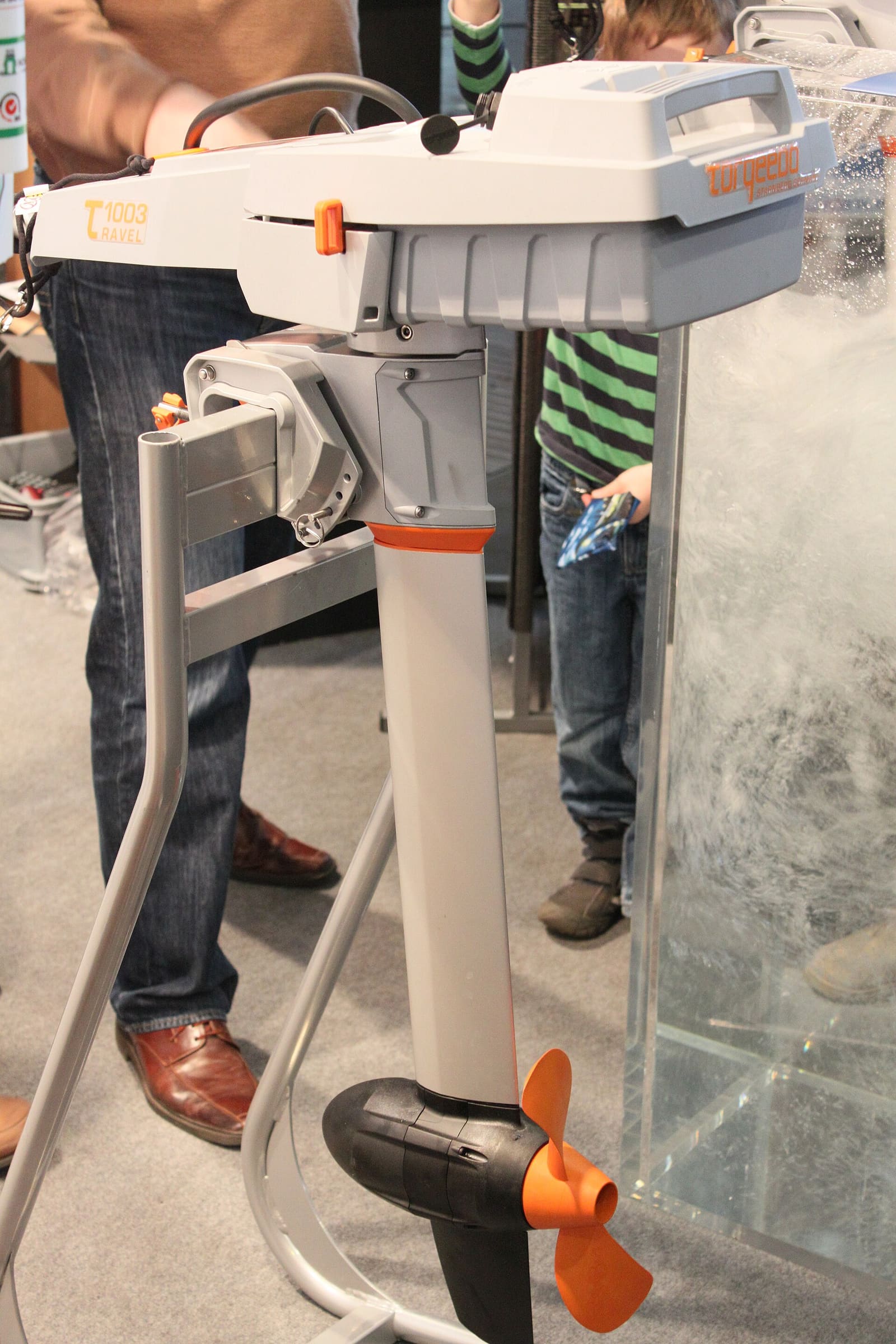
On many small electric outboards the battery sits right on top of the motor. Keep it shaded and dry, and lift it off for charging and storage. Photo: Bin im Garten / Wikimedia Commons · CC BY-SA 3.0 Most electric outboard problems that aren't a flat battery start at a plug. Before connecting:
- Make sure both halves of every connector are dry and free of sand and salt.
- Look inside with a flashlight for green or white corrosion or bent pins.
- Put the caps back on any unplugged connector. Torqeedo's own troubleshooting for a motor communication error is to switch the system off and check the data cables and plugs for corrosion. If your manual approves a contact protectant spray, use it as directed; if it doesn't say, ask the dealer first.
ePropulsion says an outboard isn't meant to sit submerged for long periods and recommends tilting it up after every use. Leaving the lower unit in the water invites marine growth and corrosion, especially in salt water.
ePropulsion recommends rinsing with fresh water after each use in salt water. Use a gentle spray from a garden hose on the shaft, motor pod, prop, clamp bracket and tilt mechanism. Keep the spray off the battery and the charge port unless your manual says that's fine, and never use a pressure washer on any part of the system. Let everything dry before you put covers on or connect plugs.
With the system off and the key removed:
- Look for nicks, cracks or bent blades. Mercury's Avator prop, for example, is a composite; check composite blades for cracks, not just dings.
- Look behind the prop for fishing line or weed wrapped around the shaft.
- Check the skeg (the fin under the motor) for cracks or damage after a grounding.
- Remove the prop at least once a season if your manual allows, clean the shaft, and reinstall with the correct pin, washer and nut. Electric motors are efficient, so even a slightly damaged prop costs you noticeable range.
Electric outboards still have metal parts in the water and many carry sacrificial anodes. ePropulsion says its Spirit 1.0 Plus has four, on the clamp and the lower unit, and advises replacing anodes once they're worn to about half their original size. Never paint them, and make sure they're tight and on bare metal.
Wipe the head, tiller and cables with a soft cloth and mild soap. Look for:
- Cracked or chafed cables, especially where they bend at the tiller or connect to the battery
- Loose clamp screws or a wobbly tilt mechanism
- Damaged seals or cracked housings where water could get in A cracked housing on the motor head or battery is a reason to stop using it and contact the dealer.
Electric outboards run on software, and updates can fix bugs and improve range estimates. Mercury says the Avator comes with a SmartCraft Connect Mobile module and can be updated wirelessly through the Mercury Marine app. Other makers update through an app or a dealer. When updating:
- Start with a well-charged battery and a good phone connection.
- Don't switch off or disconnect anything until the update finishes.
- Check the controls afterward. Torqeedo notes that a software update can erase the remote throttle calibration; its manual explains how to recalibrate.
This is the most important thing for battery life. Follow your maker's number:
- Torqeedo: for winter storage of up to six months, unplug the batteries and store them at about 50 percent charge. Check every eight weeks and recharge to 50 percent if it has dropped.
- ePropulsion (Spirit): store in a dry place at around 60 percent charge and charge it every three months.
- Others: check your manual. Many makers say not to store lithium batteries completely full or completely empty.
- Keep the battery indoors in a dry, moderate-temperature space, off concrete floors and away from heaters, direct sun and anything flammable. Avoid freezing sheds and hot attics; your manual gives the allowed storage temperature range.
- Store the motor clean, dry and upright or in its bag, with connector caps on.
- Put a reminder in BoatMend for the next charge check.
- In the car, secure the battery so it can't slide or be crushed, keep its terminals and connectors capped, and don't leave it baking in a hot vehicle.
- Flying: the FAA limits spare lithium-ion batteries in passenger baggage to 100 watt-hours each, or up to 160 Wh each (two at most) with airline approval, in carry-on only with the terminals protected. Electric outboard batteries are usually far bigger (Torqeedo lists 915 Wh for the Travel 1103 and Mercury lists 1 kWh for the Avator 7.5e), so they can't go in your luggage. Ask the maker or dealer about legally shipping a battery as hazardous material, or plan to rent or buy locally.
- The FAA also warns that lithium batteries can overheat on their own (thermal runaway), especially if damaged, wet, overcharged or poorly packed. Pack carefully even for a car trip.
If a battery is swollen, cracked, was submerged, or holds far less charge than it should, stop using it. Contact the maker or dealer for inspection or replacement and for proper recycling. Never put a lithium battery in household trash, and don't try to open or repair one yourself.
Common mistakes
- Storing the battery fully charged in a hot garage all winter, or letting it sit empty for months.
- Connecting plugs wet or sandy, then chasing error codes caused by corrosion.
- Leaving the motor down in the water at the dock or mooring between trips.
- Hosing the battery or charge port, or pressure washing the motor.
- Ignoring the kill switch because the motor is quiet and "safe."
- Skipping updates, or interrupting one halfway.
- Using a generic charger that isn't approved for the battery.
- Charging in the water from a household extension cord run off the dock, instead of a proper shore power inlet or charging ashore.
- Trying to fly with the battery or packing it in checked luggage.
When to call a pro
- The battery is swollen, cracked, hot, smoking, smells unusual, or was dropped or submerged
- Repeated error codes after you've cleaned and dried the connectors
- Corroded or melted pins, burned or discolored connectors, or damaged high-current cables
- The motor makes grinding noises, vibrates, or water got inside the motor head
- An update fails or the motor won't respond to the throttle after one
- The battery is due for the maker's age-based inspection (Torqeedo: eight years from manufacture)
Tips
- Write the maker's storage charge level on a piece of tape on the battery.
- If your motor has an app, use it to check battery health before the season starts.
- Carry the kill switch key on a bright float or lanyard; without it, you're paddling.
- Keep a spare prop and its pin or nut in the boat; small composite props are cheap insurance.
- Running in salt water often? Check anodes and connectors more frequently than the manual's minimum.
Official references
We read these to write this guide. Your engine's own manual always wins.
- Torqeedo – Support (battery storage and error codes)
- Torqeedo – Travel FAQ
- ePropulsion – Frequently Asked Questions
- ePropulsion – How do we make an outboard corrosion-resistant?
- ePropulsion – Flushing Outboard Motors Guide
- Mercury Marine – Avator 7.5e Electric Outboard
- Mercury Marine – Avator Tutorials and Care (charging on the water)
- Discover Boating – Boat Registration Guide
- FAA – PackSafe, Lithium Batteries
Safety: BoatMend is for information only and does not replace a certified marine technician. You are responsible for your safety and your boat. Read the full disclaimer.
Last updated 2026-10-24
Related guides
Small Portable Outboard Care (2.5 to 20 hp Kickers and Dinghy Motors)
Keep your dinghy motor or kicker starting on the first few pulls. Use fresh fuel, flush it, run the carburetor dry before you put it away, carry and lay it down on the correct side so oil doesn't flood the cylinders, and check the shear pin or prop, gear oil and engine oil on schedule.
Inflatable Boat and Dinghy Care: Cleaning, UV Protection, Leaks and Storage
Keep your inflatable or RIB tender holding air for years. Rinse and clean it the right way, protect the tubes from sun, check pressure with a gauge, find slow leaks with soapy water, service the valves, patch small holes with the correct glue for PVC or Hypalon, and store it clean and dry.

Saltwater Outboard Care: The After-Every-Trip and Monthly Routine
A simple routine that keeps salt from eating your outboard, built from Honda, Yamaha, Mercury and Suzuki advice. It covers flushing after every trip, washing, where to spray anticorrosion (and where never to), monthly greasing, anodes, and tilting up or storing out of the water.
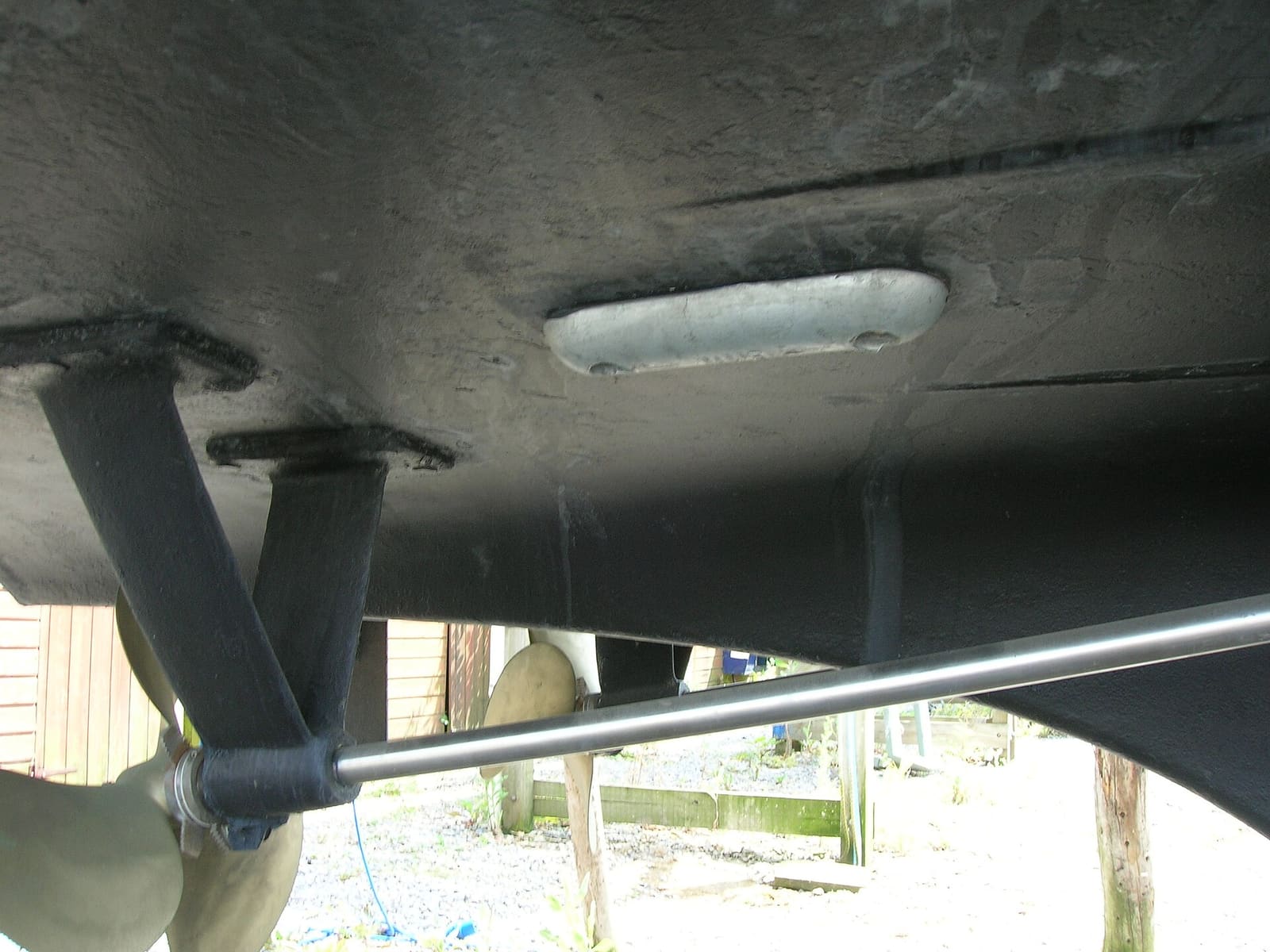
How to Inspect and Replace Sacrificial Anodes (Zincs)
Check the anodes on your outboard, sterndrive or inboard running gear, replace them when they are half gone, and choose the right metal for the water you boat in. Fresh anodes are cheap insurance against expensive corrosion damage to your lower unit, drive and prop.

Propeller Care: Inspect, Remove, Replace and Choose the Right Pitch
Check your prop for damage, pull it to clear fishing line and grease the shaft, reinstall it correctly, and learn how pitch affects your engine's wide-open-throttle RPM. The right prop in good shape protects your engine and often makes the boat run better and use less fuel.
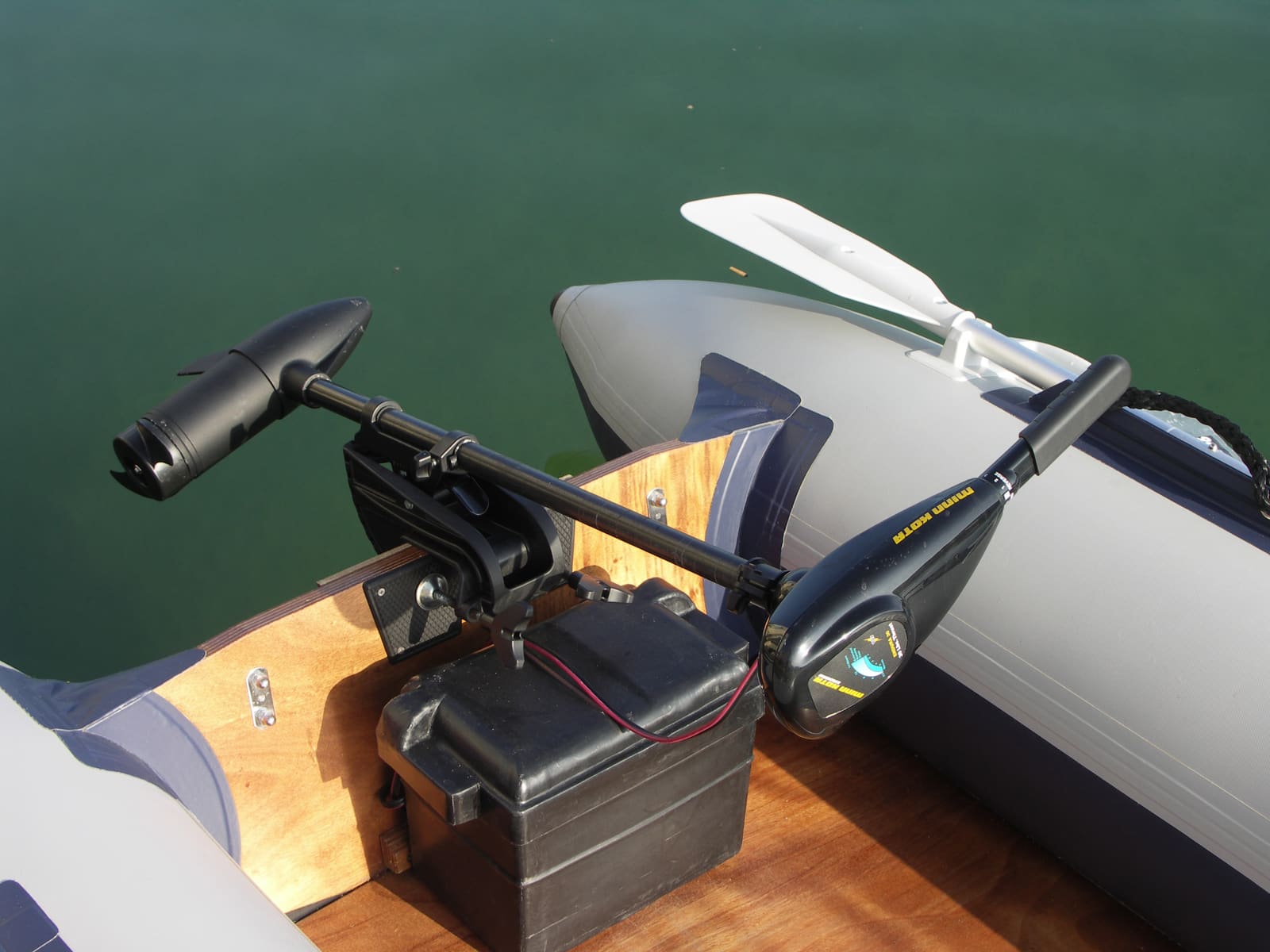
How to Wire a 12, 24 or 36-Volt Trolling Motor and Charge Its Batteries
Set up the battery bank for your electric trolling motor the right way: matched deep-cycle batteries in series or parallel, a circuit breaker sized from the motor maker's chart, a proper plug, and a multi-bank charger that keeps every battery healthy. High-current wiring that runs long distances or ties into other systems is a job for a marine electrician.
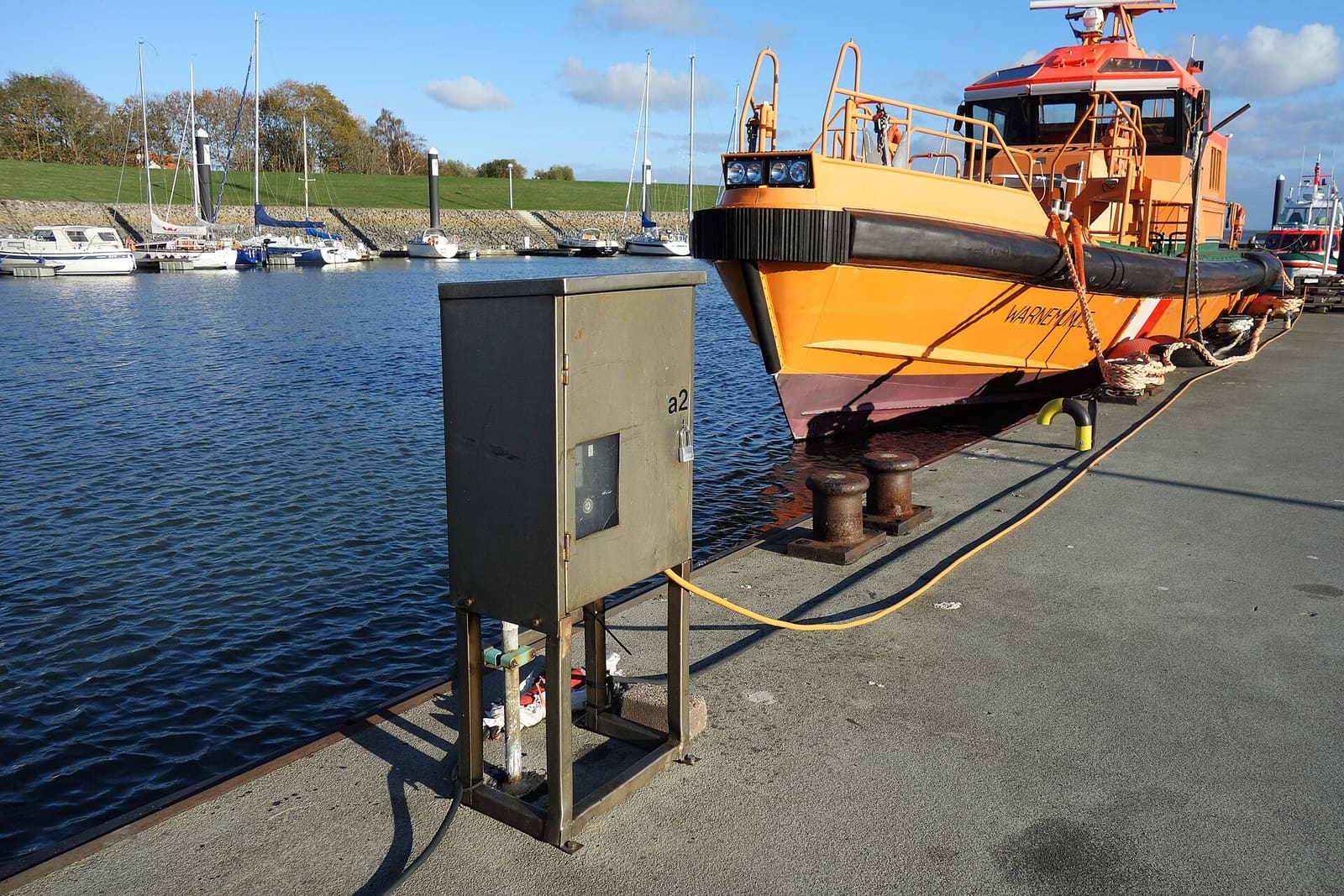
Shore Power Safety: Cords, Inlets, Burned Plugs and Electric Shock Drowning
An owner's inspection routine for your shore power cord, plugs, boat inlet, galvanic isolator and ground-fault protection, plus the right way to plug in and the facts about Electric Shock Drowning. This guide is for looking and testing only; any electrical repair belongs to an ABYC-certified marine electrician.
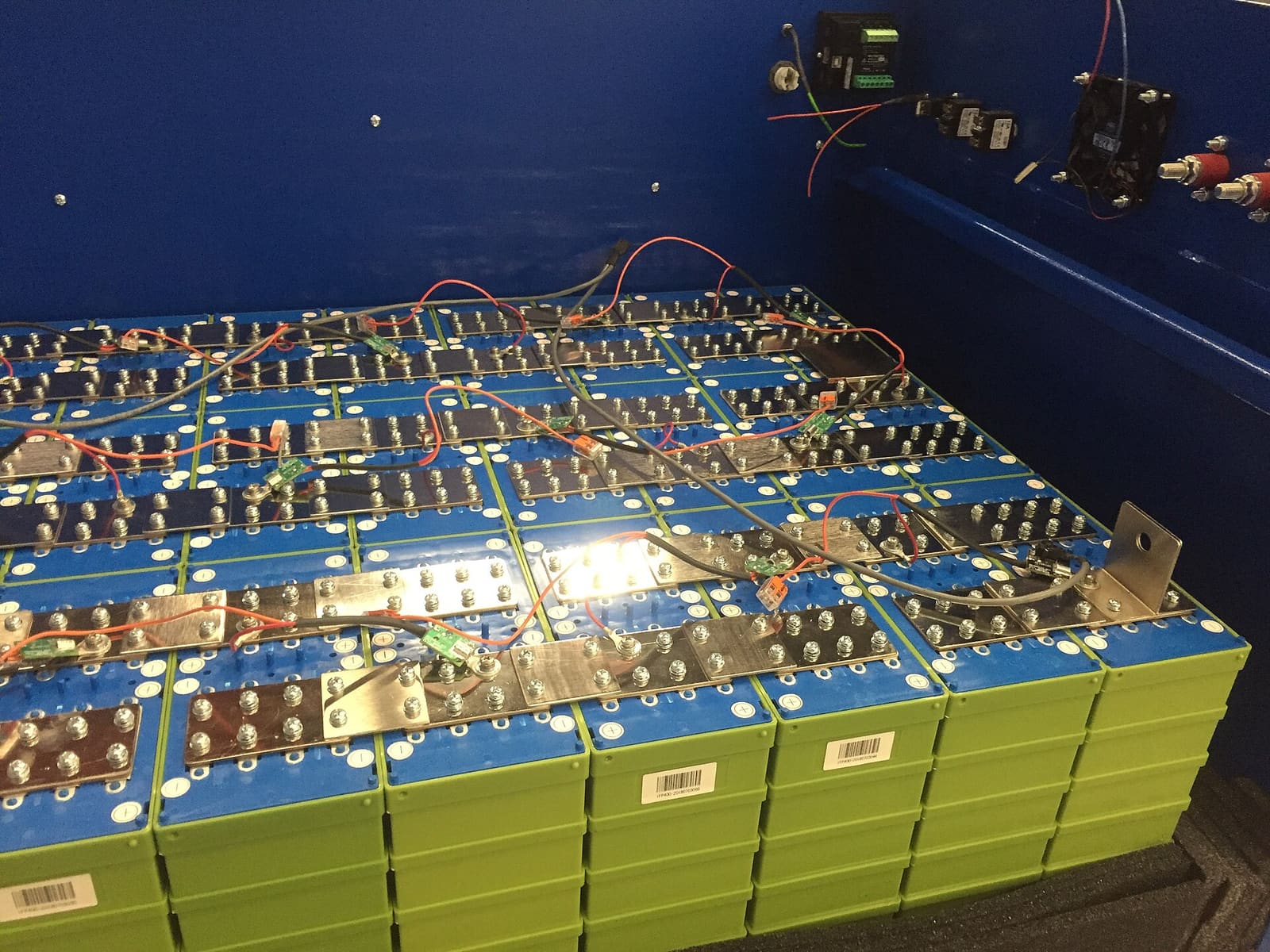
Switching to Lithium (LiFePO4) Boat Batteries: What Changes and When It's Worth It
What really changes when you swap lead-acid for lithium iron phosphate (LiFePO4) batteries on a boat: the battery management system, charger settings, protecting the alternator with a DC-DC charger, not mixing chemistries, cold-weather charging, and which jobs (trolling, house, starting) suit lithium. House-bank conversions should be designed and installed by a qualified marine electrician.