Engine Room Ventilation: Combustion Air, Blowers and Keeping Salt Out
Inboard engines, diesels above all, breathe huge amounts of air, and a hot or starved engine room quietly costs power, fuel and turbo life. Learn how engine-room air works, how to inspect vents, ducts, fans and salt-spray filters, the warning signs of too little air, and the separate gasoline blower rule.
Time
1 h
Shop would charge
$150-5000
Applies to
Marine diesel, Gas inboard, Sterndrive (I/O)
Safety first: On a gasoline boat, the engine-compartment blower is a life-safety device: run it at least 4 minutes and sniff for fuel before every start (see the bilge blower guide), and never start the engine if you smell gasoline. Engine-room fans can start on their own from a thermostat, so switch them off at the panel before you reach into a fan or duct. Engine rooms stay hot after shutdown; let things cool before you touch exhaust parts. Vents must never pull in exhaust: BoatUS warns that any outside air intake must be clear of CO and fumes. If you ever smell exhaust inside the boat or a CO alarm sounds, shut down, get everyone into fresh air and call 911 or the Coast Guard on VHF 16 if anyone feels ill.
Owners often ask
- Why does my diesel lose rpm and run hot when the engine room gets hot?
- I keep finding a film of salt on my engines. Where is it coming from?
- How hot is too hot for my boat's engine room?
This guide walks you through it. Still stuck? Ask the AI Mechanic about your engine.
Tools
- Flashlight or headlamp and an inspection mirror
- Digital thermometer with min/max memory (or a remote temperature sensor)
- Screwdrivers or nut drivers for vent covers and fan housings
- Soft brush, shop vacuum and fresh water for cleaning vent screens
- Notebook or the BoatMend log
Parts & supplies
- Replacement filter media or demister pads for your vent system, if fitted and due
- Replacement ignition-protected blower, only if one has failed (see the bilge blower guide)
Before you start
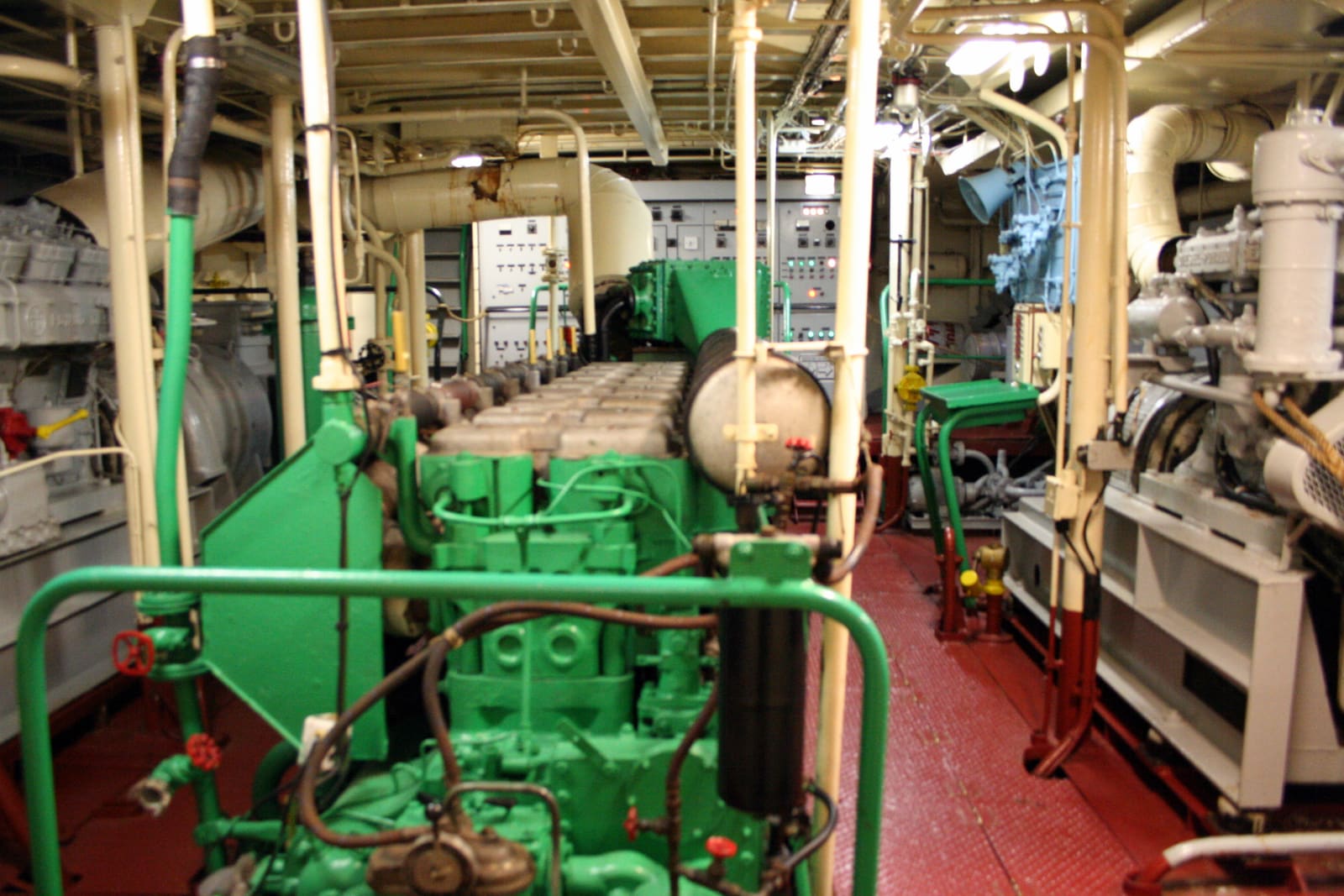
Engines breathe a lot. The late Richard Thiel, a former diesel mechanic writing in Power & Motoryacht, explains that a gasoline engine burns fuel at roughly 14.7 parts air to one part fuel, while a modern high-performance diesel can run as lean as 70 to 1. His example: a typical 8-liter turbo diesel at 2,300 rpm needs about 975 cubic feet of air every minute, roughly the volume of a typical engine room. Yachting adds that a pair of 1,000-horsepower engines pulls around 4,000 cubic feet a minute.
Two jobs for the same air. Engine-room air has to (1) feed the engines' combustion and (2) carry away the heat that engines, exhausts and generators give off. Yachting notes that many boats have enough air for the engines to burn their fuel but not enough to keep the room cool, and hot air holds less oxygen, so the engines make less power and burn more fuel. An MTU engineer quoted there says raising intake air from about 77°F to 113°F cost one large diesel roughly 4 percent of its power while burning about 2 percent more fuel.
Restricted air hurts engines. When the vents are too small or blocked, the engines suck the engine room into a slight vacuum. A Cummins applications manager told Yachting that if that keeps the engine from reaching its rated rpm, turbo temperatures climb and turbo life drops sharply. Newer electronic engines protect themselves by cutting power; older mechanical engines can simply be damaged.
How air gets in. Smaller boats rely on natural ventilation: vents, cowls, louvers and openings, often ducted low into the compartment. Larger boats add fans: in the setups described by Yachting, intake fans push in combustion and cooling air and exhaust fans pull out hot air, often controlled automatically by engine-room temperature and pressure. Everything was sized by the builder to the engine maker's air requirements. Thiel stresses that engine makers publish these requirements, so any change to vents or fans should be checked against them by a qualified installer.
Gasoline boats have a separate legal rule. Federal rules (33 CFR 183 Subpart K) require gasoline engine compartments to have natural ventilation and, for most closed compartments with an inboard gas engine, an exhaust blower whose intake duct sits in the lower third of the compartment but above the normal level of bilge water, plus the familiar "operate blower for 4 minutes" warning label. That blower exists to clear explosive fuel vapor before starting, not to cool the engine. The bilge blower guide covers it; this guide is about breathing and cooling air.
Steps
With the engines off, trace where engine-room air comes in and where it goes out: hull-side or cockpit vents, cowl vents, louvers in the deck or bulkheads, the ducts behind them, and any fans. Note which ones are intake and which are exhaust. Photograph them so you can check them quickly next time. Include the generator's air path if it shares the space.
Look outside and inside. Owners block vents with canvas covers, fenders, cushions, dock lines and gear stowed against louvers inside the engine room. Make sure each opening is clear when the boat is running. Richard Thiel recalls in Power & Motoryacht a boat whose captain had neatly lined up cleaning products in front of an engine-room vent, cutting its effective size roughly in half; that kind of slow creep is the most common way a well-designed system ends up short of air. Never close vents to keep the engine room "warm" or quiet while running.
Brush and vacuum dust and lint from vent screens and grilles, and rinse salt crust from outside louvers with fresh water. Check that flexible ducts are still attached at both ends, not crushed, kinked or torn, and still reach the low or high point the builder intended.
Many boats have baffles, salt eliminators or mist eliminators behind the intake vents to strip water out of the incoming air. Yachting explains why this matters: salty mist entering a hot turbo flashes to steam, leaving salt on the turbo blades and in the intake air coolers, and the gritty salt then wears the cylinders; actual seawater reaching a hot turbo can wreck it. If your system uses filter-type media, inspect it: Yachting notes that older synthetic salt-eliminator media can clog and choke the airflow, and replacing it can noticeably improve both airflow and dryness. Follow the maker's cleaning or replacement schedule.
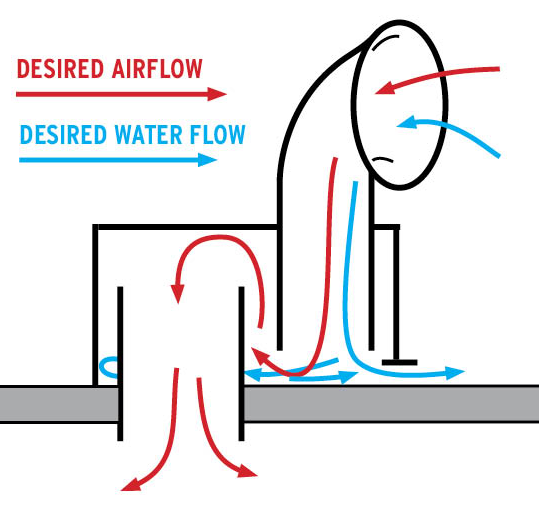
Baffles and mist eliminators work on the same idea as a sailboat's Dorade vent: make the air turn corners so the heavier water drops out and drains away. Diagram: Aaronx / Wikimedia Commons · CC0 Thiel's rule of thumb: if you regularly find a film of fine salt on the engines, they're breathing spray, and it's time to look at baffles or demisters with a professional. Also look for water trails or rust streaks below vents, and wet insulation or damp spots near intakes after a rough passage.
Switch on each engine-room fan and confirm it runs, sounds smooth and moves air (a strip of tissue at the grille shows it). Listen for a rough bearing. Check that wiring is secured and terminals aren't corroded. If fans run from a thermostat or controller, check that the controls work as the manual describes. Remember that on many boats the fire suppression system shuts down fans and closes dampers when it fires; don't defeat that (see the engine room fire system guide). Ventilation maker Delta "T" Systems explains why the dampers matter: closing the openings keeps the extinguishing agent from being diluted and stops fresh oxygen feeding the fire. If your boat has dampers or remote weather closures, make sure they move freely and aren't jammed open by dirt or stowed gear.
The engine needs clean air as well as enough of it. A clogged engine air filter starves the engine even in a well-ventilated room. Inspect and service the filters on the schedule in your manual (see the diesel turbo care guide).
Place a min/max thermometer or remote sensor in the engine room, away from direct contact with hot exhaust parts, and note the outside air temperature too. Record readings after a long run at cruise and right after you throttle back; Yachting points out that engine rooms often get hottest when engines slow to idle while still hot and pulling less air through. Build a baseline over a few trips. A reading that keeps creeping up over time, or a big jump compared with last season, tells you something has changed.
- Can't reach rated rpm at full throttle even with a clean bottom, clean prop and clean filters.
- The engine-room door or hatch is hard to open (feels sucked shut) with the engines working hard. Thiel lists this, and ears popping inside the space, as signs the room is under vacuum; a technician can confirm it by measuring engine-room air pressure at operating speed. Don't go into a running engine room to test this yourself.
- A room you can't stand to be in. Thiel's rule of thumb: engine makers publish ambient-air limits, but in general the engine-room air should be tolerable to stay in; if the air (not the machinery) is too hot to remain in for more than a couple of minutes after a run, look into it.
- More black smoke than normal under load (also see the diesel exhaust smoke guide).
- Rising engine-room temperature or electronics and generators acting up in the heat; Yachting notes heat also harms generators and electrical gear.
- Black soot stains on carpet or upholstery near the salon door or engine-room hatches. Yachting describes boats whose engines pulled their air from the salon, dragging exhaust soot in with it.
- Engine smells inside the cabin, which can mean the engine room is pressurized or air is flowing the wrong way. Yachting notes engine rooms shouldn't be pressurized.
Adding an exhaust fan without enough intake area can make the vacuum in the engine room worse and starve the engines, and pushing air in without a way out pressurizes the space and drives smells into the cabin. Fans also have to fit the fire system's shutdown and, on gasoline boats, must be ignition-protected. Get a qualified marine installer to size any change against the engine maker's air requirements.
Don't confuse cooling air with the vapor rule. Before every start: blower on for at least 4 minutes, a sniff in the engine compartment, and no start if you smell fuel. BoatUS adds that even diesel boats benefit from blowers to clear fumes. Check that the blower works every time you check the vents (details in the bilge blower guide).
Record vent and filter condition, fan checks, salt findings and your temperature readings in BoatMend. Engine-room problems build slowly; the log is what shows the trend.
Common mistakes
- Stowing gear, cushions or fenders against intake louvers, or leaving vent covers on while running.
- Treating the gasoline blower as an engine-room cooling fan, or skipping the 4-minute run.
- Adding fans that push or pull the wrong way without matching intake and outlet area.
- Ignoring a salt film on the engines until the turbo or aftercooler needs work.
- Letting filter-type salt eliminators clog until they choke the airflow.
- Blaming the engine for lost rpm when the engine room simply can't breathe.
When to call a pro
- The engines can't reach rated rpm after the bottom, prop and filters are confirmed clean
- Regular salt on the engines or water coming in through the vents
- Soot or exhaust smell in the cabin, or any CO alarm
- Any change to hull vents, ducts, fans or dampers, including adding blowers
- Fans or dampers tied to the fire suppression system that don't work as they should
- Fuel smell in a gasoline engine compartment: don't start, ventilate and get help
Tips
- Write your engine-room temperature next to engine hours in the log after every long run.
- Rinse outside vent louvers with fresh water when you wash the boat.
- Check vents after a haul-out or winter storage; covers, shrink-wrap and stored gear often end up blocking them.
- Keep the engine room clean and dry; it's easier to spot salt, soot and leaks.
Official references
We read these to write this guide. Your engine's own manual always wins.
- Yachting – Breathing Easy, Engineroom Ventilation
- Power & Motoryacht – The Simple Truth About Marine Engine Maintenance
- eCFR – 33 CFR Part 183 Subpart K, Ventilation
- BoatUS – Bilge Blowers
- Power & Motoryacht – Ventilating Your Boat's Engine Room
- MarineLink – Engineered Ventilation Systems Keep Engine Rooms Humming (Delta "T" Systems)
Safety: BoatMend is for information only and does not replace a certified marine technician. You are responsible for your safety and your boat. Read the full disclaimer.
Last updated 2026-10-26
Related guides
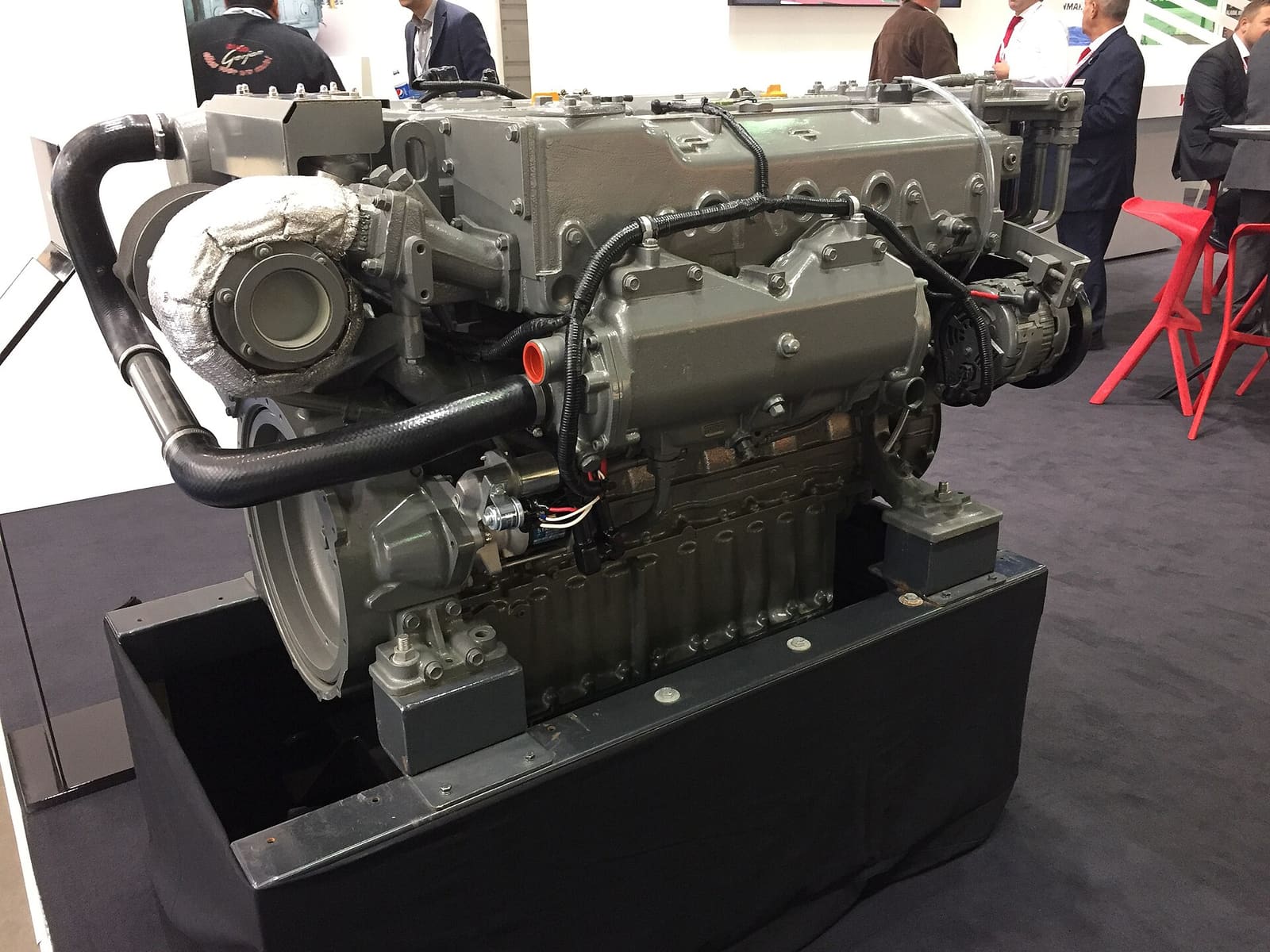
Marine Diesel Turbocharger Care: Warm-Up, Cool-Down and Simple Checks
A turbocharger needs little attention, but the attention it needs matters. Learn how to warm up and cool down a turbo diesel, keep its oil and air clean, track boost, spot leaks and salt corrosion early, and know when a turbo needs a professional.
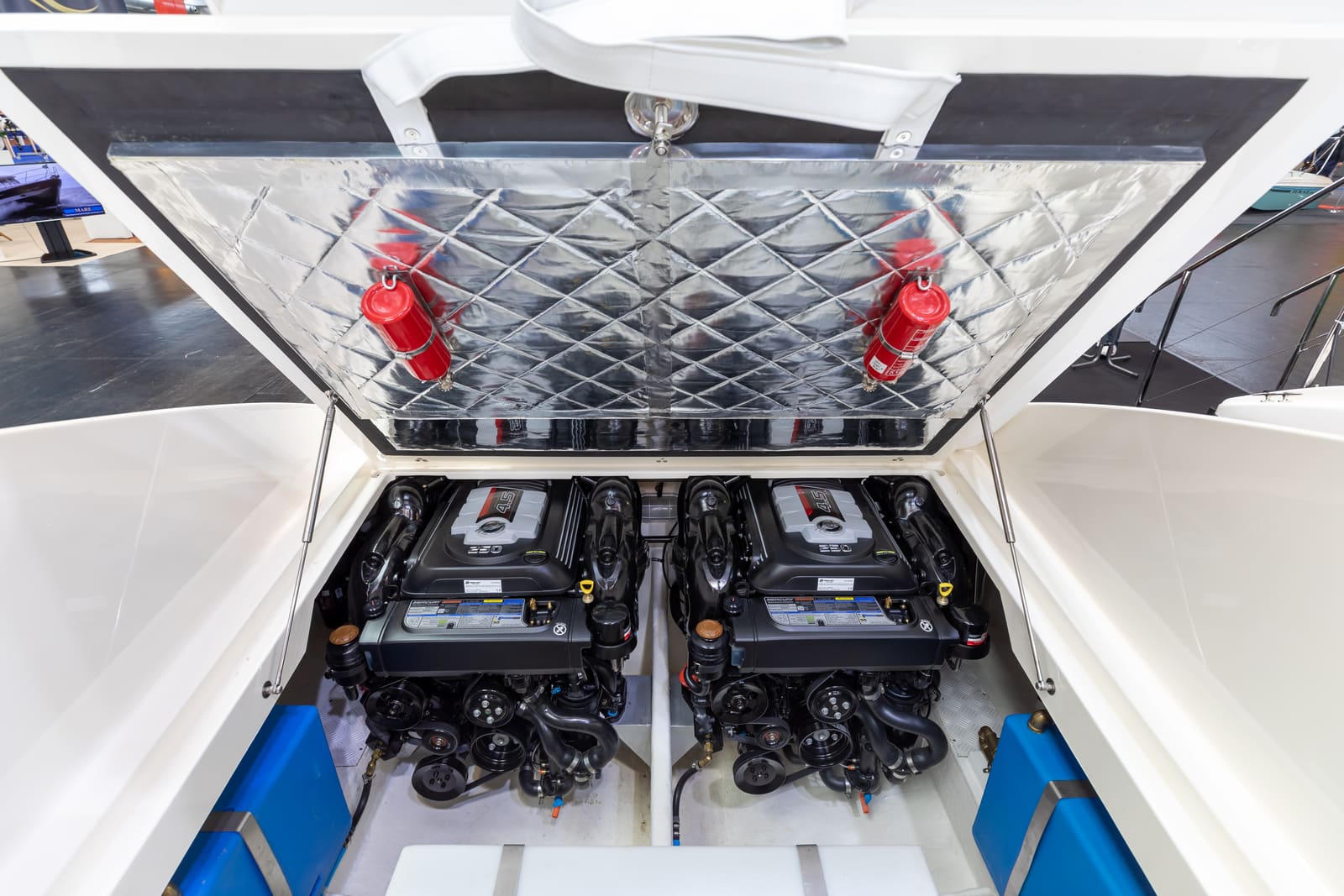
Engine Room Automatic Fire Suppression: How It Works, Checks and What to Do After a Discharge
Understand the fixed clean-agent extinguisher in your engine room - how it fires, why the engines must shut down, how to check the helm status light, gauge and cylinder weight, when it needs service - and the safe sequence to follow if it ever goes off, starting with keeping the hatch closed.
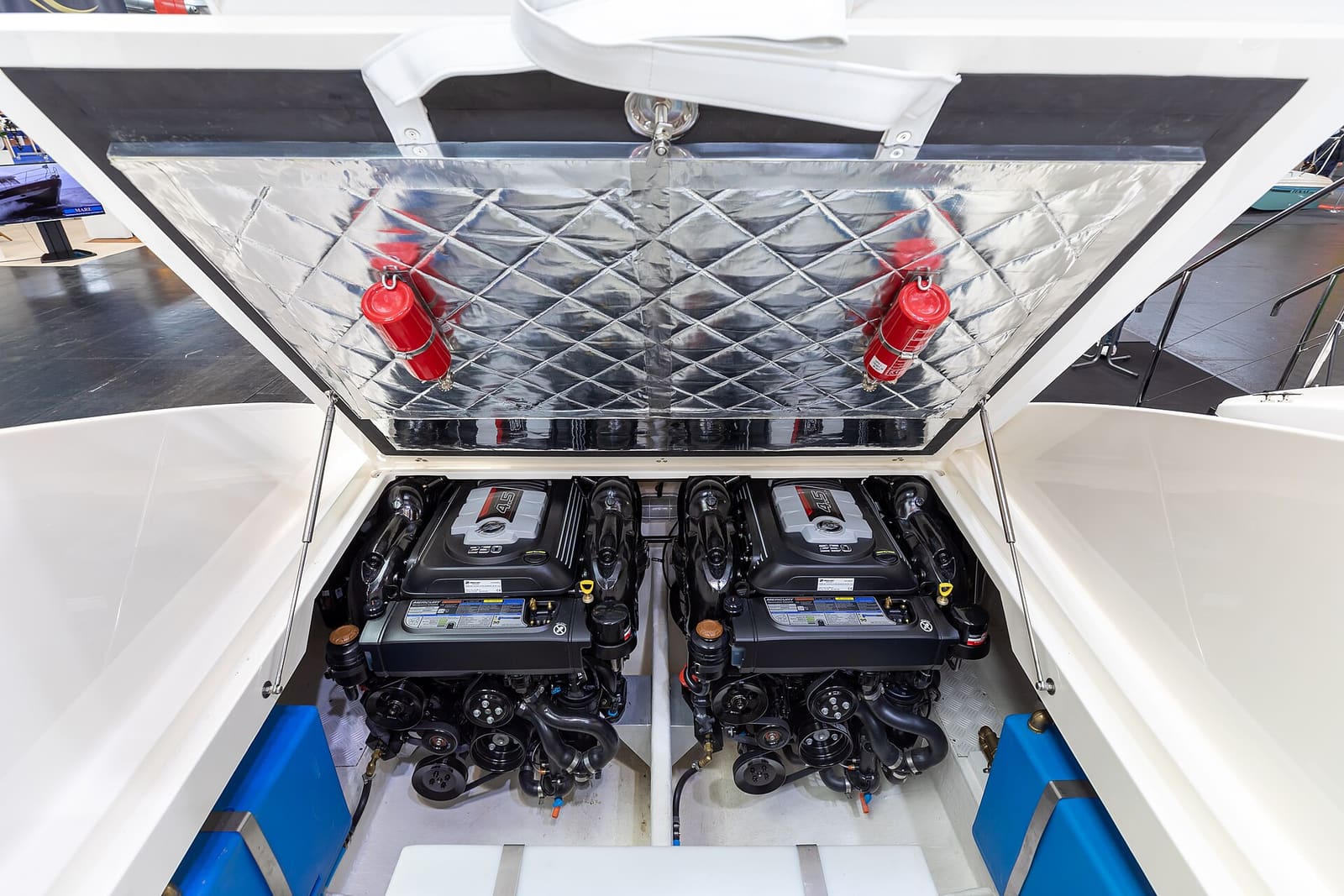
Bilge Blower and Engine Compartment Ventilation on Gas Inboards and Sterndrives
Learn why gas boats have a "run the blower 4 minutes" label, how to check that the blower and vent ducts actually move air out of the engine compartment, and how to replace a blower safely with an ignition-protected marine unit.

Engine Overheating - Troubleshooting Guide
Work through the most likely causes of a hot engine or overheat alarm, from a blocked water intake to a worn impeller or stuck thermostat. Acting fast and in the right order can save your engine and often gets you home without a tow.

Diesel Exhaust Smoke: What Black, White and Blue Smoke Mean
Learn to read the color of your marine diesel's exhaust and run the simple checks that go with each color, from a dirty air filter or fouled prop to a worn mixing elbow or head gasket. Catching smoke early can save an engine.
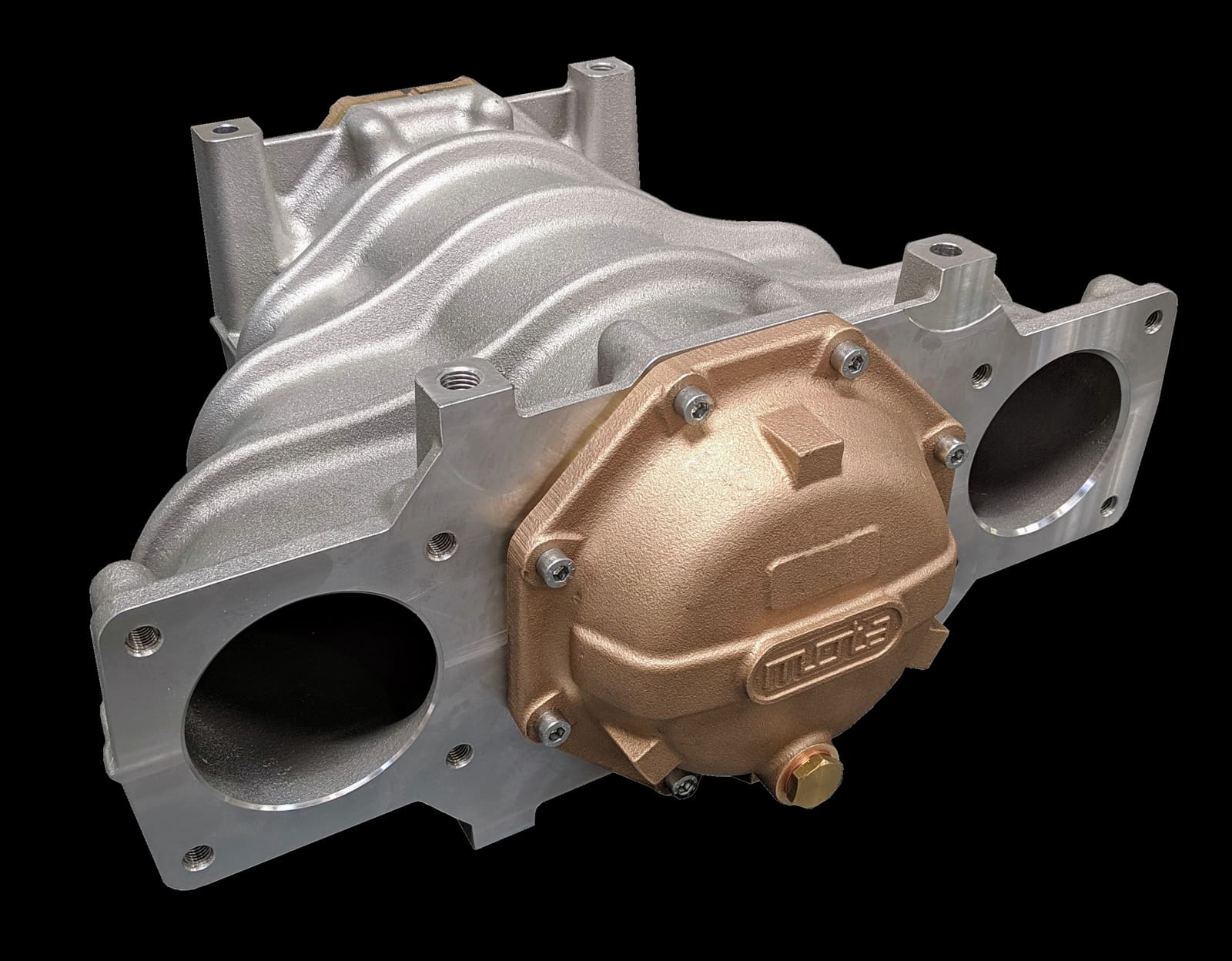
Diesel Aftercooler (Charge-Air Cooler) Care: Why It Needs Service and Warning Signs
Many turbo diesels cool their intake air in an aftercooler with raw seawater running through it. If that cooler corrodes through, seawater can reach the cylinders and wreck the engine. Learn how to tell which type you have, the warning signs, the owner checks, and why the periodic removal and cleaning is a job for a pro.
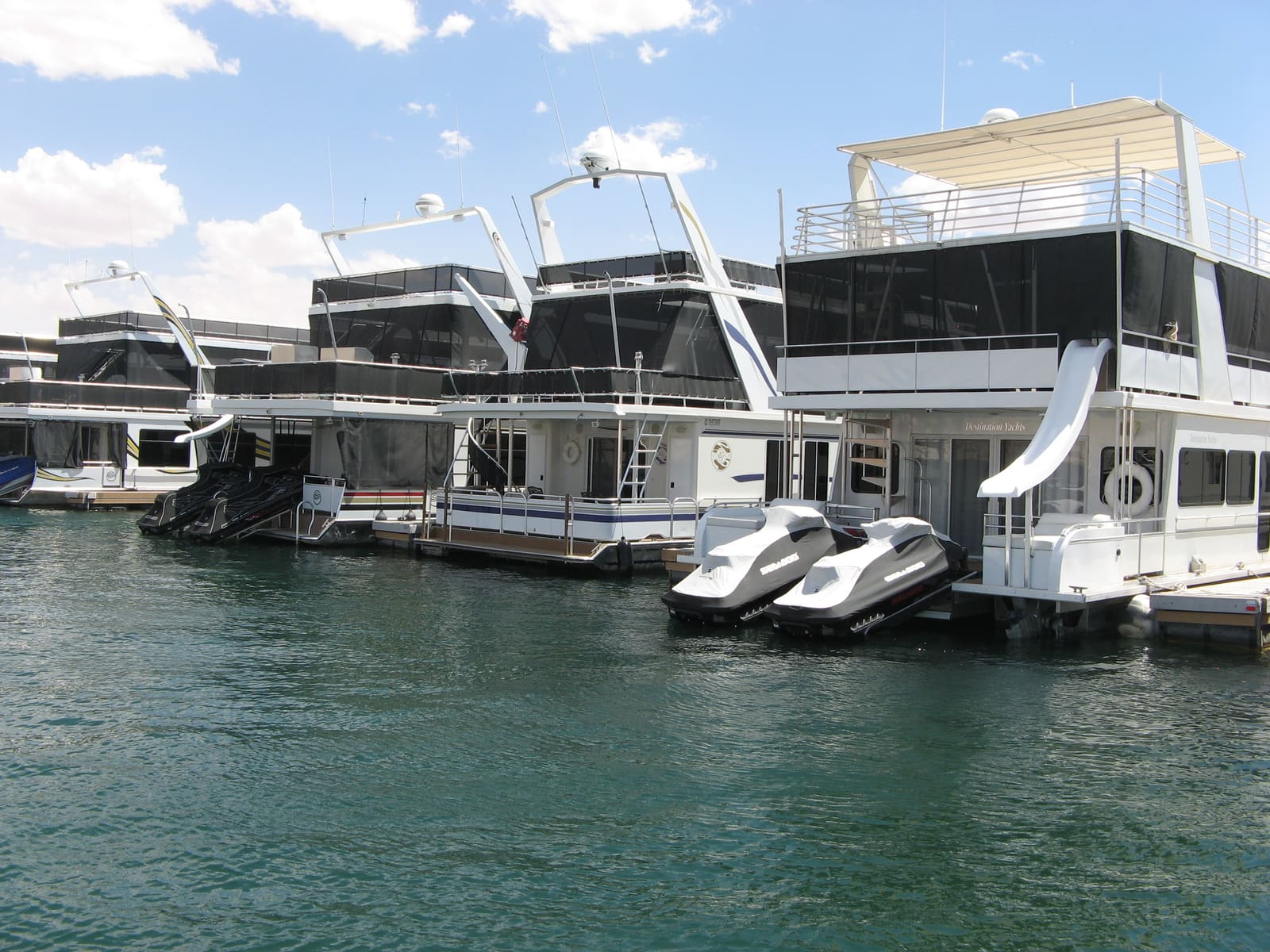
Carbon Monoxide on Boats: Where It Comes From, CO Alarms and Warning Signs
Carbon monoxide can build up in cabins, under canvas and around the swim platform, and its first symptoms look like seasickness. Learn the danger zones, where to mount marine CO alarms, how to test and replace them, and exactly what to do if an alarm sounds or someone feels sick.
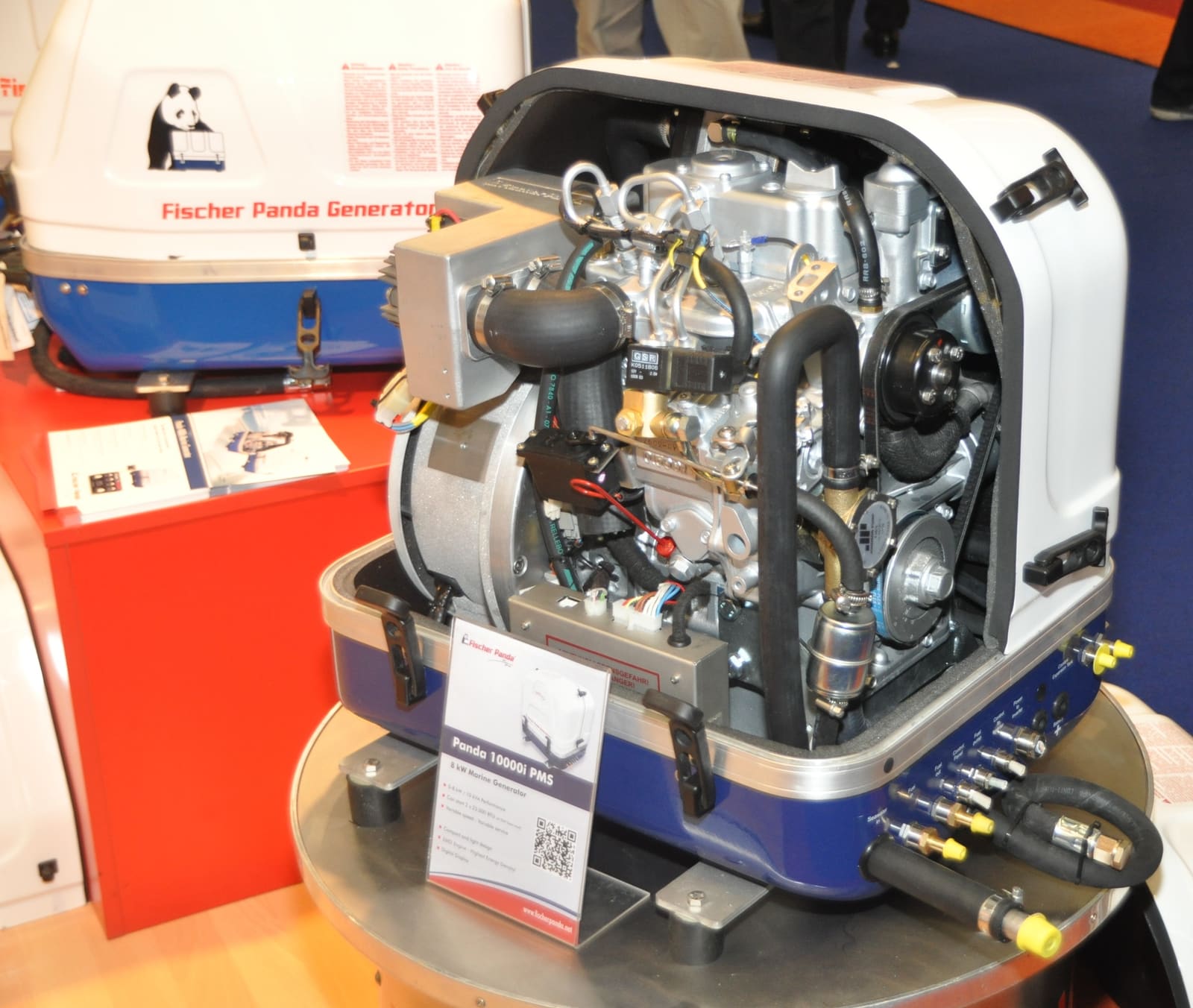
Marine Generator Routine Maintenance and CO Safety
Keep an Onan, Kohler/Rehlko, Northern Lights, Westerbeke or similar marine generator reliable with regular checks of oil, raw-water cooling, fuel, exhaust and the start battery, plus a monthly run under load. Generator exhaust is a leading source of carbon monoxide on boats, so safety checks come first.
How to Check and Test a Gasoline Vapor (Fume) Detector
A gasoline vapor detector sniffs the bilge all the time and sounds an alarm long before fumes can explode. Learn how these detectors work, where the sensor belongs, how to test the system the way its maker says, what causes false alarms, what to do when it goes off, and why it never replaces the blower and your own sniff test.