Heat Exhaustion and Heat Stroke on a Boat: Prevention, Warning Signs and What to Do
Sun, reflected glare, little shade and too little water make boats a classic place for heat illness. Learn how to prevent it, how to tell heat exhaustion from heat stroke, how to cool someone down aboard, how to protect kids and pets, and when to call 911 or the Coast Guard. General first-aid information only, not medical advice.
Time
10 min
Applies to
All engines
Safety first: Heat stroke is a medical emergency. If someone is confused, slurring words, fainting or unconscious after time in the heat, call 911 (or the Coast Guard on VHF channel 16) right away, start cooling them, and head for the nearest dock where an ambulance can meet you. This guide is general first-aid information, not medical advice; follow the dispatcher's instructions.
Owners often ask
- How do I tell heat exhaustion from heat stroke when someone feels sick on the boat?
- Should I give Tylenol or aspirin to someone with heat stroke on the boat?
This guide walks you through it. Still stuck? Ask the AI Mechanic about your engine.
Tools
- Cooler with ice and plenty of drinking water
- Spray bottle or bucket for cool water
- Towels to wet down
- Battery fan (optional)
Parts & supplies
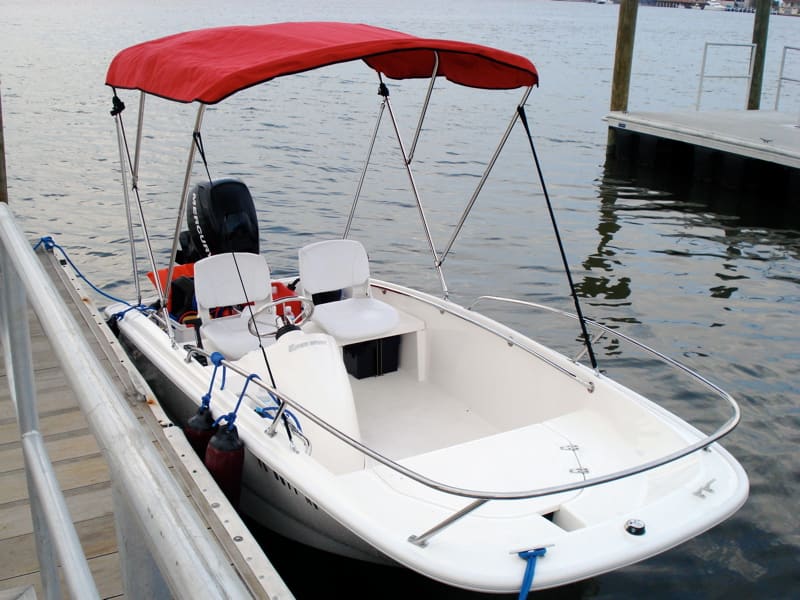
- Shade (bimini top, umbrella or canopy)
- Hats, sunglasses, light loose clothing and sunscreen
- Instant cold packs in the first-aid kit
Before you start
Why boats are hot spots. Out on the water you get direct sun, glare off the water, often little shade and a breeze that can hide how much you're sweating. Long days, fishing, watersports and drinking alcohol add up. The National Weather Service explains that heat illness happens when the body heats faster than it can cool itself, or loses too much fluid and salt through sweating.
Who's at higher risk. The CDC lists people 65 and older, infants and young children, pregnant women, people with heart disease, asthma or other chronic conditions, and anyone working or exercising in the heat. It also warns that many medicines can make you dehydrated or overheated. MedlinePlus gives examples such as beta-blockers, water pills (diuretics) and some medicines for depression, psychosis or ADHD, and adds alcohol and not being used to the heat. One boating-specific example: MedlinePlus warns that the scopolamine seasickness patch has been linked to dangerous overheating, mostly in children and adults over 60, and says to remove the patch right away if body temperature rises or sweating drops. Ask guests privately about conditions or medications you should know about; don't tell anyone to stop a medicine; that's between them and their doctor.
Check the forecast. The CDC's HeatRisk dashboard gives a heat forecast by zip code. On red-or-above days, plan a shorter trip, an early start, or a swim stop near shore.
Steps
Use a bimini top, T-top canvas, umbrella or a rigged tarp. The CDC's advice for long hot days is to stay in the shade as much as possible and take breaks. Rotate people into the shade, especially kids and older guests. Our bimini guide covers repairs and replacement.
The CDC recommends carrying water and drinking throughout the day, and limiting drinks high in sugar, caffeine and alcohol. A simple check it suggests: light yellow or clear urine usually means you're drinking enough. Keep water in a cooler, within reach of every seat, and make drinking a routine at every stop.
Light-colored, loose, lightweight clothing, a wide-brim hat and sunglasses. The CDC gives the same advice for infants and children. Reapply sunscreen; sunburn makes it harder for the body to cool.
Fish or ski in the early morning or evening, the coolest parts of the day, as the CDC suggests. Take swim breaks with the engine off and everyone away from the exhaust. Don't let the operator skip water; a dizzy or confused skipper is a danger to everyone.
The National Weather Service lists painful muscle cramps and spasms, usually in the legs or belly, with heavy sweating. First aid it describes: firm pressure or gentle massage on the cramp and sips of water, unless the person feels nauseated. Get medical help if cramps last more than an hour. Treat cramps as a warning to get into the shade and cool off.
Signs the NWS lists: heavy sweating; weakness or tiredness; cool, pale, clammy skin; a fast, weak pulse; muscle cramps; dizziness, nausea or vomiting; headache; fainting. First aid, from the NWS and Mayo Clinic:
- Move them into the shade and out of the sun.
- Loosen or remove extra clothing.
- Cool them with cool, wet cloths, a spray of water and fanning.
- Offer sips of cool water or a sports drink if they're alert and not vomiting.
- Get medical help right away if they vomit, get worse, or don't improve within an hour.
Mayo Clinic notes untreated heat exhaustion can lead to heat stroke, so head back to the dock rather than "riding it out."
Signs the NWS lists: throbbing headache; confusion; slurred speech; nausea; dizziness; body temperature above 103°F; hot, red, dry or damp skin; a rapid, strong pulse; fainting or unconsciousness. The key difference from heat exhaustion is a change in the brain: confusion, odd behavior, slurred speech or passing out.
- Call 911 or the Coast Guard on VHF 16 immediately. The NWS calls heat stroke a severe medical emergency where delay can be fatal. Give your position and ask where emergency services can meet you.
- Start cooling right away while you head in or wait.
- Don't give fluids to someone with heat stroke, per the NWS; they may not be able to swallow safely.
- Don't give fever medicine. MedlinePlus says not to give aspirin or acetaminophen for heat illness (they won't help and may harm), and not to give salt tablets or drinks with alcohol or caffeine.
- About the temperature: the NWS lists heat stroke at a body temperature above 103°F, MedlinePlus above 104°F. Don't wait for a thermometer; confusion or fainting in the heat is enough to call. MedlinePlus also notes sweating may stop as heat stroke sets in.
The Red Cross says to begin rapid cooling while waiting for emergency medical services. Its preferred method is cold-water immersion up to the neck; if that isn't possible, it lists ice packs, cooling towels, misting and fanning, or a combination. On a boat:
- Get them into shade, lying down, with clothing loosened.
- Soak towels in cooler ice water and cover as much of the body as you can, changing them often.
- Put ice or cold packs on the neck, armpits and groin.
- Spray or pour water and fan them.
- Don't put a confused or fainting person over the side to cool off; they can drown. Only use the water if they're held securely, wearing a life jacket, and you have the people to get them back aboard.
The NWS notes that a fan can make you hotter when the heat index is in the high 90s or above; wet skin plus moving air works better than a fan alone.
Headache, dizziness, nausea and weakness are also signs of CO poisoning. The Coast Guard says CO can make you sick in seconds and builds up near the stern, at idle and even after engines are off. If the person was near the transom, swim platform or in a cabin with an engine or generator running, move everyone to fresh air at the bow and treat it as possible CO; our CO guide covers alarms.
The CDC explains that infants and young children rely on others to keep them cool and hydrated. Keep them in the shade, in light clothing, drinking regularly, and avoid very cold or sugary drinks. The CDC warns that parked cars can heat up dangerously fast, even with a window open; a closed cabin or console on a boat sitting in the sun can do the same, so never leave a child (or pet) in one. A child who becomes unusually sleepy, cranky, flushed or stops sweating needs immediate cooling and medical help.
The American Kennel Club notes dogs cool themselves mainly by panting and through their paw pads, and that heatstroke can develop in minutes. Early signs include heavy panting, drooling and red gums; severe signs include collapse and shock. AKC's first aid:
- Get the dog into shade and moving air.
- Wet the dog with cool or tepid water, not ice-cold, especially on the belly.
- Offer room-temperature water if the dog is alert.
- See a veterinarian even if the dog seems to recover; heatstroke can cause hidden internal damage.
Hot decks can burn paws; put down a wet towel or mat. Our pets guide covers more.
Add heat to your pre-departure briefing: where the water and shade are, and "tell me if you feel dizzy, sick or crampy." People rarely notice their own confusion, so pair up and check on each other, especially anyone who's been fishing in the sun or drinking.
Common mistakes
- Bringing one bottle of water per person for a full day on the water.
- Treating alcohol, soda or energy drinks as hydration.
- Waiting to "see if it passes" when someone is vomiting or confused.
- Giving fluids to someone who is confused or barely conscious.
- Putting an overheated, confused person in the water without a life jacket and someone holding them.
- Mistaking CO poisoning for heat illness or seasickness.
- Leaving a dog on a sun-baked deck with no shade or water.
When to call a pro
- Heat stroke signs (confusion, slurred speech, fainting, very high temperature): 911 or VHF 16 now.
- Heat exhaustion that includes vomiting, gets worse, or doesn't improve within an hour: medical care.
- Heat cramps lasting more than an hour: medical care.
- Possible CO poisoning: fresh air, then medical help.
- Any pet showing heatstroke signs: veterinarian, even if it seems better.
Tips
- Freeze some water bottles; they keep the cooler cold and become drinking water later.
- Keep a dedicated "cool-down kit": towels, a spray bottle and instant cold packs.
- Plan a lunch stop at a shaded dock or restaurant on long summer runs.
- Take a first-aid course; the Red Cross offers them nationwide.
Official references
We read these to write this guide. Your engine's own manual always wins.
- CDC – About Heat and Your Health
- CDC – Heat and Infants and Children
- CDC – People at Increased Risk for Heat-Related Illness
- National Weather Service – Heat-Related Illness (warning signs and first aid)
- Mayo Clinic – Heat exhaustion, first aid
- American Red Cross Training Services – Exertional Hyperthermia/Heat Stroke
- American Kennel Club – Heatstroke in Dogs, Signs, Symptoms, Treatments
- U.S. Coast Guard Boating Safety – Carbon Monoxide, Protect Yourself
- MedlinePlus (National Library of Medicine) – Heat emergencies
- MedlinePlus – Scopolamine Transdermal Patch (heat warning)
Safety: BoatMend is for information only and does not replace a certified marine technician. You are responsible for your safety and your boat. Read the full disclaimer.
Last updated 2026-11-06
Related guides
Boat First-Aid Kit and Medical Prep: What to Carry, Day Trips to Offshore
Build and maintain a boat first-aid kit that fits how far from help you go, with the extras boaters actually need for seasickness, fish hooks, cuts, burns, sun, heat and cold, plus a crew briefing, expiration-date checks and training. General preparation only, not medical advice.
Dogs and Pets Aboard: A Safety Checklist for Boat Owners
Set your boat and your dog up for a safe day on the water, from a well-fitted pet life jacket with a handle to shade, fresh water, safe boarding and a plan for getting a dog back aboard if it goes over the side.
The Pre-Departure Safety Briefing: What to Tell Every Passenger (with a Printable Checklist)
A five-minute talk before you leave the dock turns guests into a crew that can help in an emergency. Cover life jackets, the engine cut-off switch, the fire extinguisher, how to call for help on the VHF, what to do if someone falls overboard, staying seated, seasickness and carbon monoxide near the stern, then use the printable checklist every trip.
How to Choose and Fit Life Jackets for Children and Babies
Pick the right Coast Guard-approved life jacket for each child by weight, check the fit so it can't slip off, look for head support and a crotch strap on little ones, and learn the federal and state wear rules. Inflatables are not for kids, and a life jacket never replaces an adult watching.
How to Replace or Re-Cover a Bimini Top
Decide whether you need new canvas or a whole new top, measure your frame the right way, pick a fabric that will last in the sun, check the frame and hardware, and swap the canvas yourself or brief a canvas shop.
Carbon Monoxide on Boats: Where It Comes From, CO Alarms and Warning Signs
Carbon monoxide can build up in cabins, under canvas and around the swim platform, and its first symptoms look like seasickness. Learn the danger zones, where to mount marine CO alarms, how to test and replace them, and exactly what to do if an alarm sounds or someone feels sick.
Reading Marine Weather Forecasts: Advisories, Wind, Waves and Go/No-Go
Learn where to get the official NOAA marine forecast for your waters, what small craft advisories and warnings really mean, how to read wind and wave numbers, and how to make a simple go/no-go call before you leave the dock.
Boating Under the Influence (BUI): The Law, the Limits and How to Plan a Sober Skipper
Operating a boat drunk or high is illegal in every state and under federal law, with a 0.08 BAC standard for recreational boats under 33 CFR Part 95. Learn why the sun, wind, noise and motion make alcohol hit harder on the water, what happens at a boarding (field sobriety tests, chemical tests and implied consent), the penalties, and how to plan a designated skipper. Practical guidance, not legal advice.