How Much Does Your Outboard Really Charge? Rated vs Net Output, Rpm and Extra Batteries
The amp rating on an outboard's spec sheet is the most it can make at high rpm, not what reaches your battery at idle or trolling speed. Learn how outboard charging really works, how to find and measure your engine's output, how extra batteries and lithium change the picture, and how to plan your electrical use so you never come home with a dead battery.
Time
1 h
Shop would charge
$100-250
Applies to
Outboard
Safety first: Readings with the engine running are taken only with the boat in the water, or on external flush muffs or in a test tank if your manual allows it; never run an outboard dry, and don't use the built-in flush port with the engine running unless your manual says you may. Keep hands, hair, sleeves and meter leads clear of the flywheel, belts and propeller. Never disconnect a battery cable or turn the battery switch off while the engine runs: the voltage spike can destroy the rectifier/regulator and electronics. A battery that is hot, swollen, hissing or smells like rotten eggs is an emergency: shut the engine off, ventilate, and call a technician. If you are stranded with a dead battery, call TowBoatUS or Sea Tow, or VHF 16 / 911 in an emergency.
Owners often ask
- My outboard is rated at 35 amps, so why does my battery still go flat after a day of trolling?
- Can my outboard charge my 24-volt or 36-volt trolling motor batteries while I run?
This guide walks you through it. Still stuck? Ask the AI Mechanic about your engine.
Tools
- Digital multimeter
- DC-capable clamp meter (Hall-effect type) or a battery monitor with a shunt
- Notebook or the BoatMend log
- Helper to drive or hold the throttle during on-water readings
- Flush muffs or a test tank, only if you test on the trailer and your manual allows it
Before you start
Why this matters. Owners are often surprised that their outboard "doesn't charge." Usually it does; it just can't keep up. A day of trolling or idling with a fish finder, livewell, lights and a stereo running can use more power than the engine puts back at low rpm. Knowing your engine's real output tells you whether you have a fault (see the stator and rectifier test guide) or simply ask too much of the system.
The two numbers. Mercury explains it well in its article on outboard alternators:
- Rated output is the most the charging system can make, usually at high rpm. That is the number on spec sheets.
- Net output is what is left for your batteries after the engine's own needs (ignition, fuel pumps, trim, steering) are subtracted.
Mercury also notes that output rises with engine rpm. So the amps on the brochure are a ceiling, not what you get at idle.
Steps
Check your owner's manual and the engine:
- No charging at all: some small rope-start motors.
- Lighting coil: many small tiller motors have a coil under the flywheel meant mainly to run lights. Practical Boat Owner notes its power is deliberately limited, and that it needs a rectifier to charge a battery.
- Stator with rectifier/regulator: most electric-start outboards. Coils under the flywheel make AC, and the rectifier/regulator turns it into controlled DC.
- Belt-driven alternator: many larger outboards, much like a car.
Find the charging rating (in amps) in your owner's manual or on the maker's spec page. Examples from published specs show how wide the range is:
- Yamaha lists 16 amps for its F40 jet, 17 amps for the F60 jet and 35 amps for the F90 to F150 jets. Its spec tables label the figure "Alternator Output at W.O.T.", meaning at wide-open throttle, which is exactly why you won't see it at idle.
- Mercury lists 35 amps on its 75 to 115 hp FourStrokes and 60 amps on the 150. On its jet models it lists 17 amps (25 hp), 18 amps (35 and 40 hp), 35 amps (65 and 80 hp) and 60 amps (105 hp).
- Mercury says the smallest alternator on its V6 to V12 outboards (175 to 600 hp) makes 85 amps, and rates the V10 Verado at 150 amps.
Small tiller motors make far less. Practical Boat Owner's example was a 6 hp motor giving about 8 amps at the rpm a sailboat typically cruises at, and only with an improved rectifier circuit.
Charging output drops off sharply toward idle on most outboards. A motor rated at 35 amps may give only a fraction of that at trolling speed. Some newer engines help: Mercury's 150 hp FourStroke and its 105 hp jet have an "idle charge" feature that raises idle rpm on its own when the battery is low, to boost alternator output. If yours does that, it's normal, not a fault.
Make a simple list of everything that runs while you are out, and its current draw in amps (from the label or manual). Typical items: fish finders and chartplotters, livewell and bilge pumps, navigation and courtesy lights, a stereo and amplifier, and the engine's own electronics. Multiply each by the hours you use it. The battery bank sizing guide walks through this amp-hour budget in detail.
Then compare:
- At cruise: most engines out-charge typical loads.
- At idle or trolling for hours: the loads often win, and the battery slowly drains even though the system works fine.
With the engine off and the battery rested, measure the voltage at the battery posts. Then, with the engine in the water, measure again at idle and at a fast idle or cruise rpm. Voltage that rises above the resting reading means current is going in. The charging system test guide lists typical ranges; your service manual has the exact ones. Write down the rpm next to every reading.
Voltage tells you charging is happening; amps tell you how much. Two owner-friendly ways:
- DC clamp meter: clamp it around the engine's main positive cable or charging lead (not around both positive and negative together). Make sure the meter can read DC amps; many cheap clamp meters read AC only. Zero it before clamping.
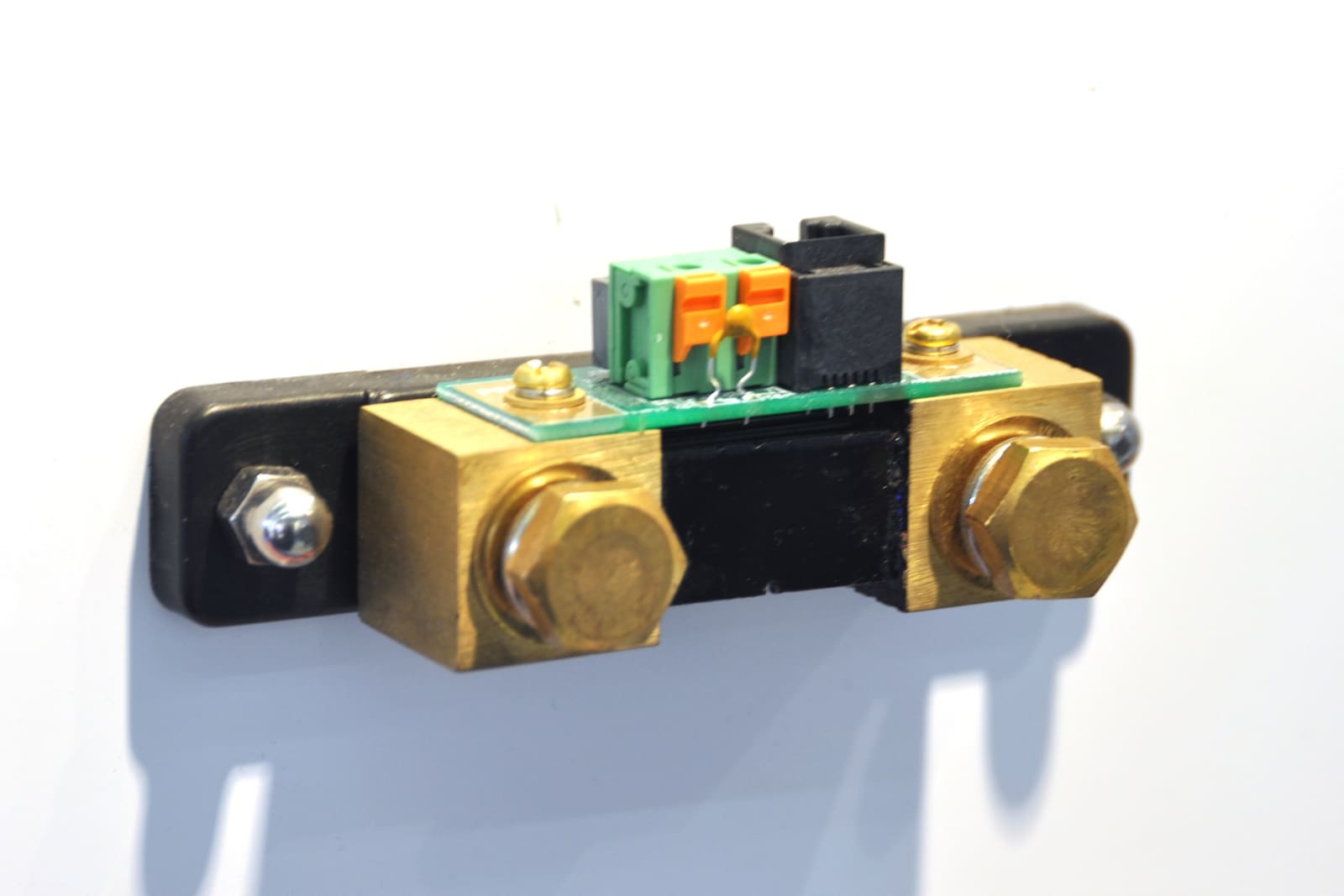
- Battery monitor with a shunt: shows the net amps going in or out of the battery all the time. It is the easiest way to see what really happens on a fishing day (see the battery monitor shunt guide).
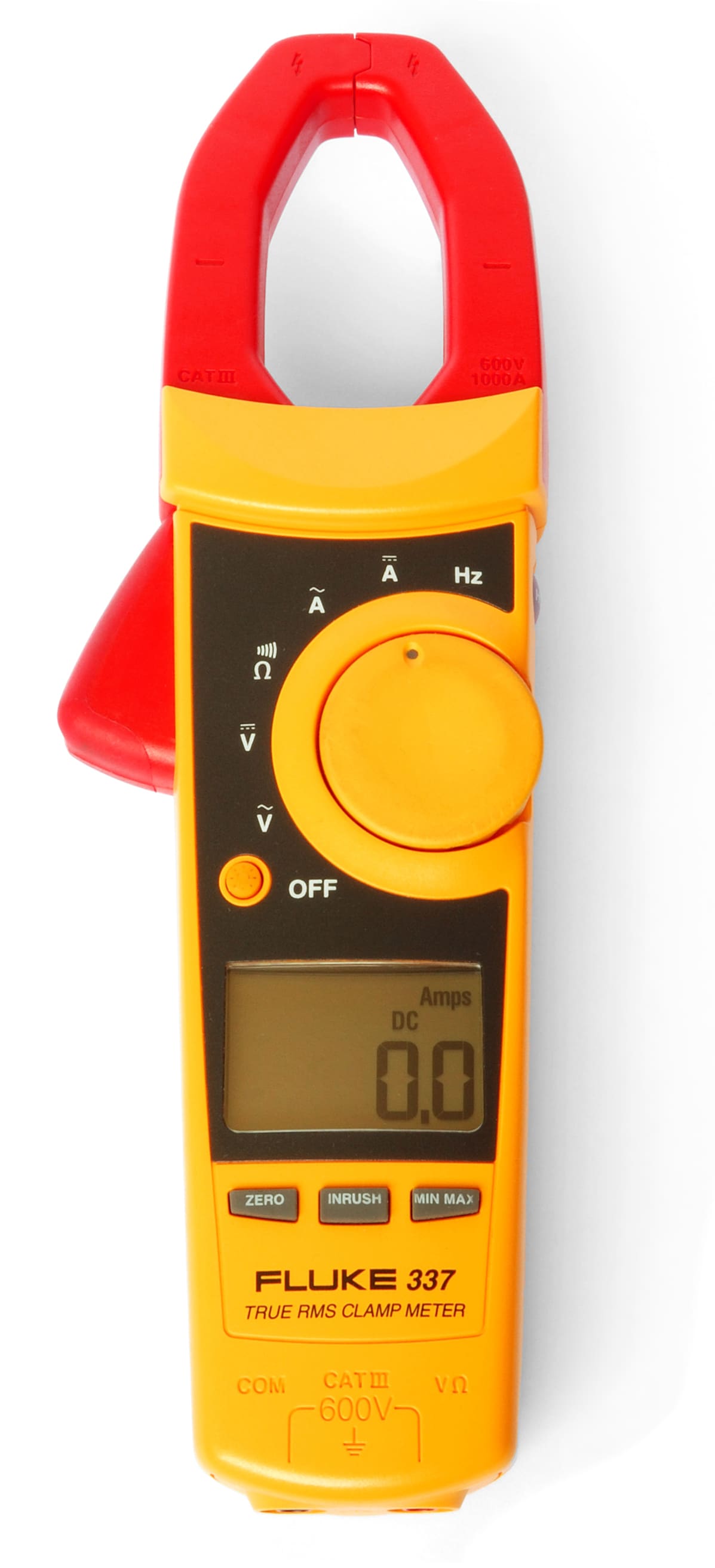
A clamp meter that reads DC amps measures charging current without cutting into wires. Photo: Harke / Wikimedia Commons · Public domain With a helper driving, record amps (or voltage) at:
- Idle in neutral.
- Trolling speed.
- Around 1,500 rpm.
- Normal cruise.
Do it once with your electronics off and once with everything you normally run turned on. The difference shows how much your loads eat into the charge. Log the results; they become your baseline for spotting a failing stator later.
On most outboards, the engine charges the starting battery first. Extra batteries only get charged if the boat is wired for it:
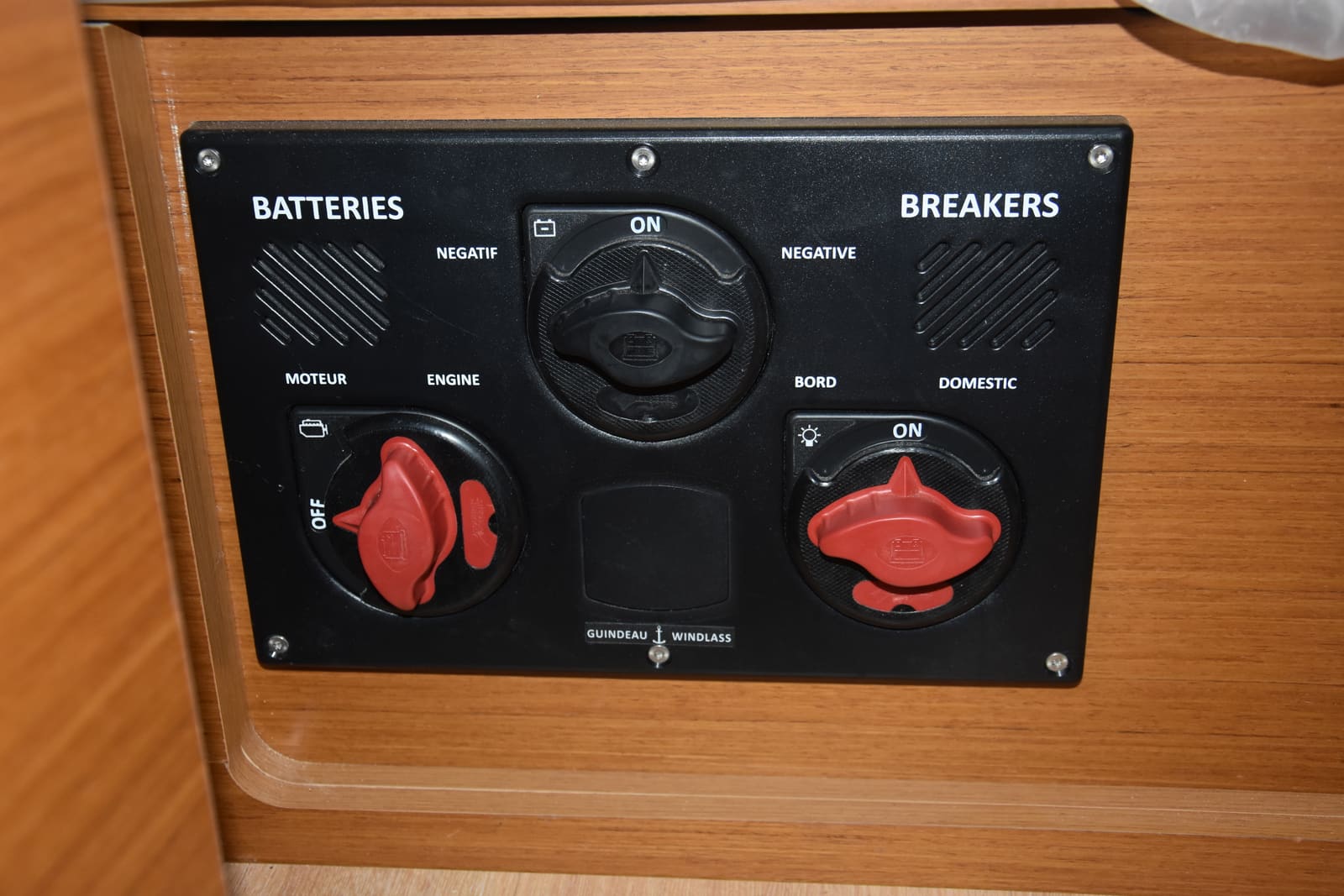
- Battery switch: charges whichever bank is selected (see the dual battery guide).
- Automatic charging relay or isolator: shares charge once the starting battery is up (see the ACR and start isolation guide).
- Built-in charging leads: Yamaha says many of its outboards of 150 hp and up have separate charging leads for house batteries that charge the starting battery first, then switch to the house bank.
Splitting a modest output between two or three batteries means each one fills more slowly.
A 12-volt outboard can't directly charge a 24- or 36-volt trolling motor bank, and at trolling speed it has little to spare anyway. Most anglers recharge the trolling bank with an onboard shore charger between trips (see the onboard battery charger guide). Some add a DC-to-DC charger that can step up voltage; Boating Magazine notes these come in 12-to-12, 12-to-24 and 12-to-48-volt versions. Size any such charger to what your engine can actually spare.
Lithium (LiFePO4) batteries charge differently from lead-acid. Before connecting one to your outboard's charging system, check that your engine maker approves it, and follow the battery maker's instructions. Battle Born warns that if a lithium battery's management system shuts the battery off while an alternator is charging it, the alternator and boat electrics can be badly damaged. A DC-to-DC charger between the engine and the lithium bank is the usual safeguard. Boating Magazine notes you will still need a lithium-capable shore charger to bring the bank to full between trips.
If your measurements show you use more than you make:
- Turn off what you don't need while idling or trolling.
- Charge fully at the dock before every trip.
- Add solar to keep batteries topped up between trips.
- Run at higher rpm for a while on the way home.
- Fit a separate house or trolling bank with its own shore charger.
Don't add home-built charging circuits to an outboard or try to "upgrade" a stator yourself. Ask a dealer whether a higher-output charging kit exists for your model.
If your measured output at cruise is far below what similar engines make, if voltage never rises, or if it climbs too high, the problem isn't usage. Go to the stator and rectifier test guide and the charging system test guide.
Common mistakes
- Expecting the spec-sheet amps at idle or trolling speed
- Calling the stator "bad" when the real problem is a day of idling with heavy loads
- Clamping an AC-only meter around a DC cable and getting zero
- Running a 24- or 36-volt trolling bank and expecting the outboard to keep it charged
- Wiring a lithium battery straight to the engine without checking the engine maker's approval
- Disconnecting the battery with the engine running to "test the alternator"
When to call a pro
- No charging at any rpm, or voltage that climbs well above normal
- A hot, swollen or smelly battery
- Adding house or lithium banks, ACRs or DC-to-DC chargers if you aren't comfortable with heavy DC wiring
- Any higher-output charging kit, stator or alternator change
- A tach that stops along with the charging (often a shared stator or rectifier fault)
Tips
- Log your amps or voltage at idle and cruise once a season. A slow drop is your early warning.
- A battery monitor pays for itself quickly on boats with lots of electronics.
- If you troll all day, plan on shore charging every night rather than counting on the outboard.
- Keep battery terminals clean and tight; a poor connection wastes charge you can't spare.
Official references
We read these to write this guide. Your engine's own manual always wins.
- Mercury Marine – The Mercury Alternator Advantage (rated output versus net power, output rises with rpm)
- Mercury Marine – FourStroke 75-150hp (alternator output by model, idle charge)
- Yamaha Outboards – Jet Drive Outboards (alternator output listed per model)
- Mercury Marine – Jet 105hp (60-amp alternator, idle charge)
- Mercury Marine – Jet 25-40hp (17 and 18-amp alternators)
- Yamaha Outboards – Maintenance Matters, Electrical System (house battery charging leads)
- Practical Boat Owner – Charging a Battery from an Outboard Motor's Lighting Coil
- Boating Magazine – The Basics of DC-to-DC Marine Battery Chargers
- Battle Born Batteries – Alternator Charging 101 for Marine Applications
Safety: BoatMend is for information only and does not replace a certified marine technician. You are responsible for your safety and your boat. Read the full disclaimer.
Last updated 2026-11-06
Related guides
Outboard Stator and Rectifier/Regulator: Symptoms, Safe Owner Checks and When to Hand Off
Most outboards charge the battery with a stator under the flywheel and a rectifier/regulator. Learn how to read the symptoms of undercharging, overcharging and intermittent charging, what voltage checks and inspections an owner can safely do, and which tests and repairs belong to a technician with the service manual.
Is My Engine Charging the Battery? Test the Charging System With a Multimeter
A step-by-step way to find out whether your outboard's stator and rectifier/regulator or your inboard's alternator is really charging the battery, what the voltage readings usually mean, and when the problem is just a dirty connection. Exact test specs come from your engine's service manual.

How to Size a House Battery Bank: Load List, Usable Capacity and Charging
Work out how many amp-hours your boat really uses in a day, how much of a battery's rated capacity you can actually use with lead-acid, AGM or lithium, how much reserve to add, and how your charging sources change the answer, so you buy the right house bank the first time.
Marine Battery Care: Test, Charge and Store for Winter
Check your boat battery's health, charge it the right way for its type (flooded, AGM or lithium), and store it so it is ready in spring. Most "boat won't start" calls start with a neglected battery.
Battery Monitors with a Shunt: Installing, Setting Up and Reading State of Charge
A voltmeter can't tell you how full your house battery really is. Learn how a shunt-based battery monitor counts every amp going in and out, where the shunt goes on the negative side, which settings to change for lead-acid or lithium, and how to read the percentage without being fooled.
How to Use a 1-2-Both Battery Switch and Run Two Batteries
Learn what the 1, 2, Both and Off positions really do, a simple routine that keeps one battery ready to start the engine, how to check that both batteries are charging, and when an automatic charging relay makes life easier. Rewiring high-current cables is a job for a marine electrician.
Start Isolation for Your ACR: Stop the Chartplotter and Stereo from Rebooting at Engine Start
If your plotter, radio or stereo reboots every time you turn the key even though you have two batteries and an automatic charging relay, the relay may be tying the house battery into the cranking dip. Learn how start isolation and dual-circuit battery switches keep the electronics on their own battery, how to find and test the start-only wire, and what to check after the job.

Installing a DC-to-DC Charger: Charging a Lithium or Second Battery Bank from Your Engine
A DC-to-DC charger lets the engine's alternator refill a lithium (or separate) house bank with the right charge profile while protecting the starting battery and the alternator. Learn why you need one, where it can and can't be mounted, how the fusing and cable sizing work, and which settings matter, so you can plan the job or check a technician's work.
Switching to Lithium (LiFePO4) Boat Batteries: What Changes and When It's Worth It
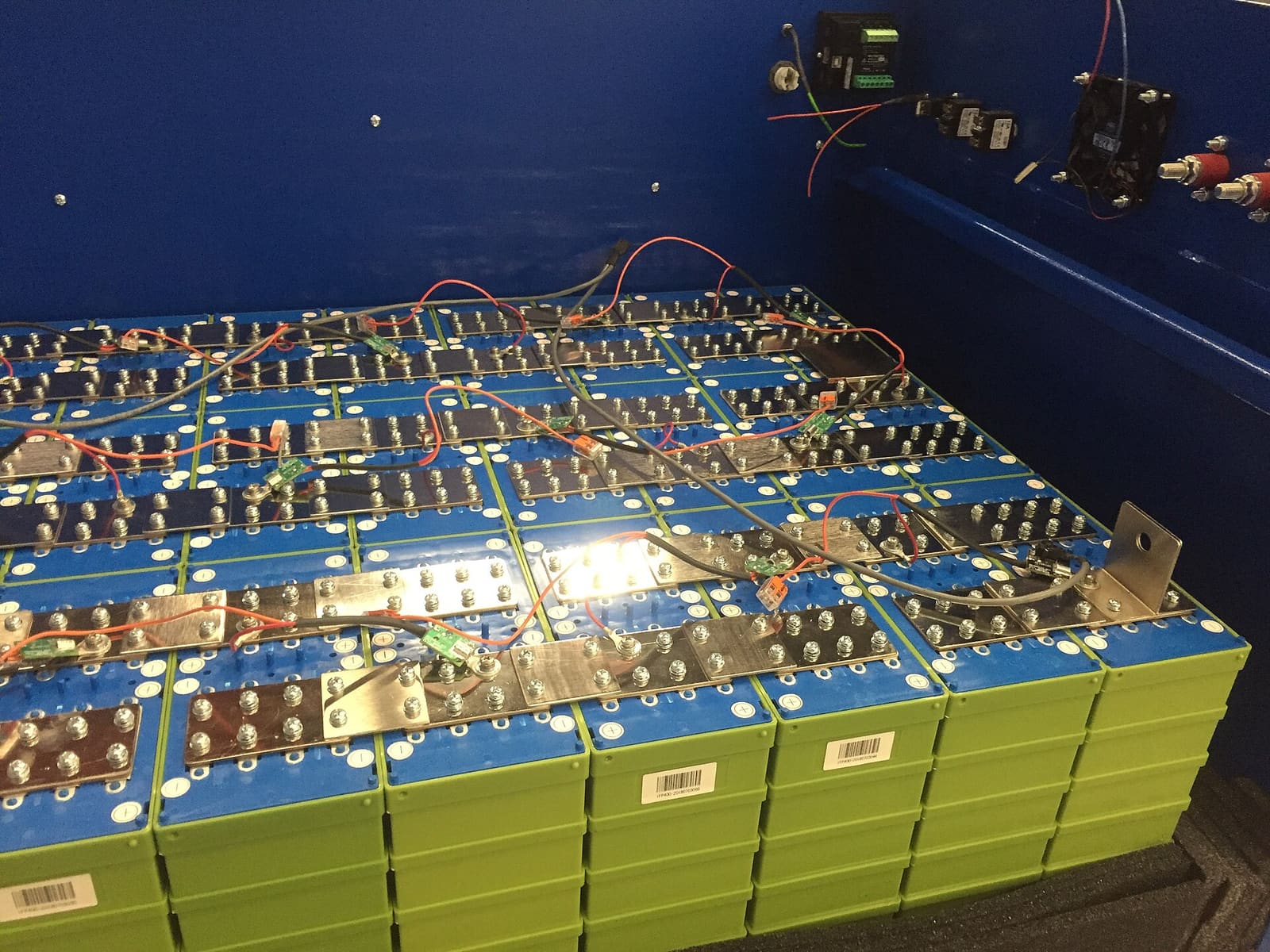
What really changes when you swap lead-acid for lithium iron phosphate (LiFePO4) batteries on a boat: the battery management system, charger settings, protecting the alternator with a DC-DC charger, not mixing chemistries, cold-weather charging, and which jobs (trolling, house, starting) suit lithium. House-bank conversions should be designed and installed by a qualified marine electrician.
How to Choose, Install and Maintain an Onboard Battery Charger
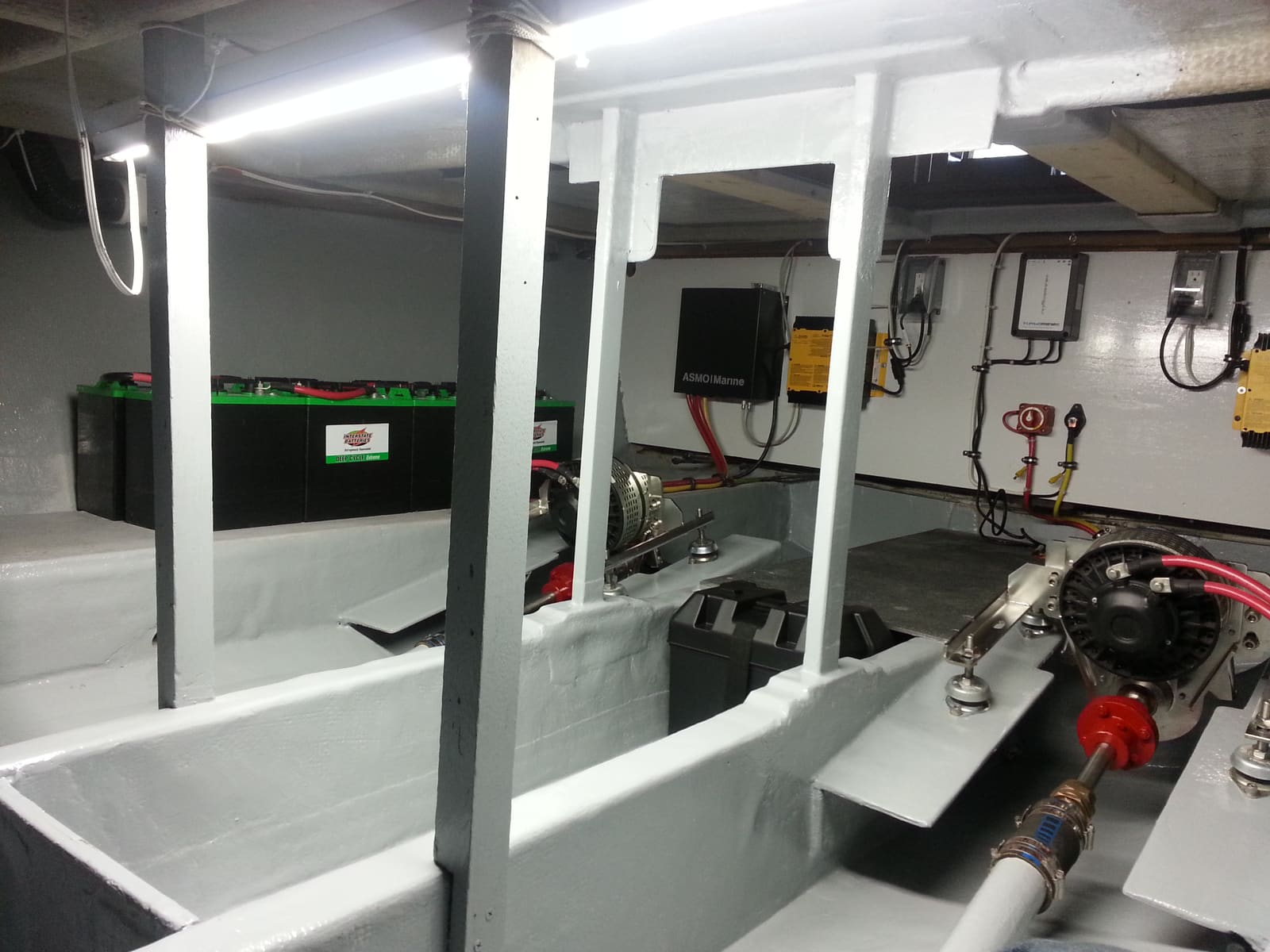
Pick the right marine charger for your batteries (how many banks, how many amps, flooded, AGM or lithium), mount and fuse it safely, set the charge profile, and use it to keep batteries healthy all season and through the winter. The AC (shore power) side is a job for a marine electrician.
Battery Goes Dead While the Boat Sits - How to Find a Parasitic Drain
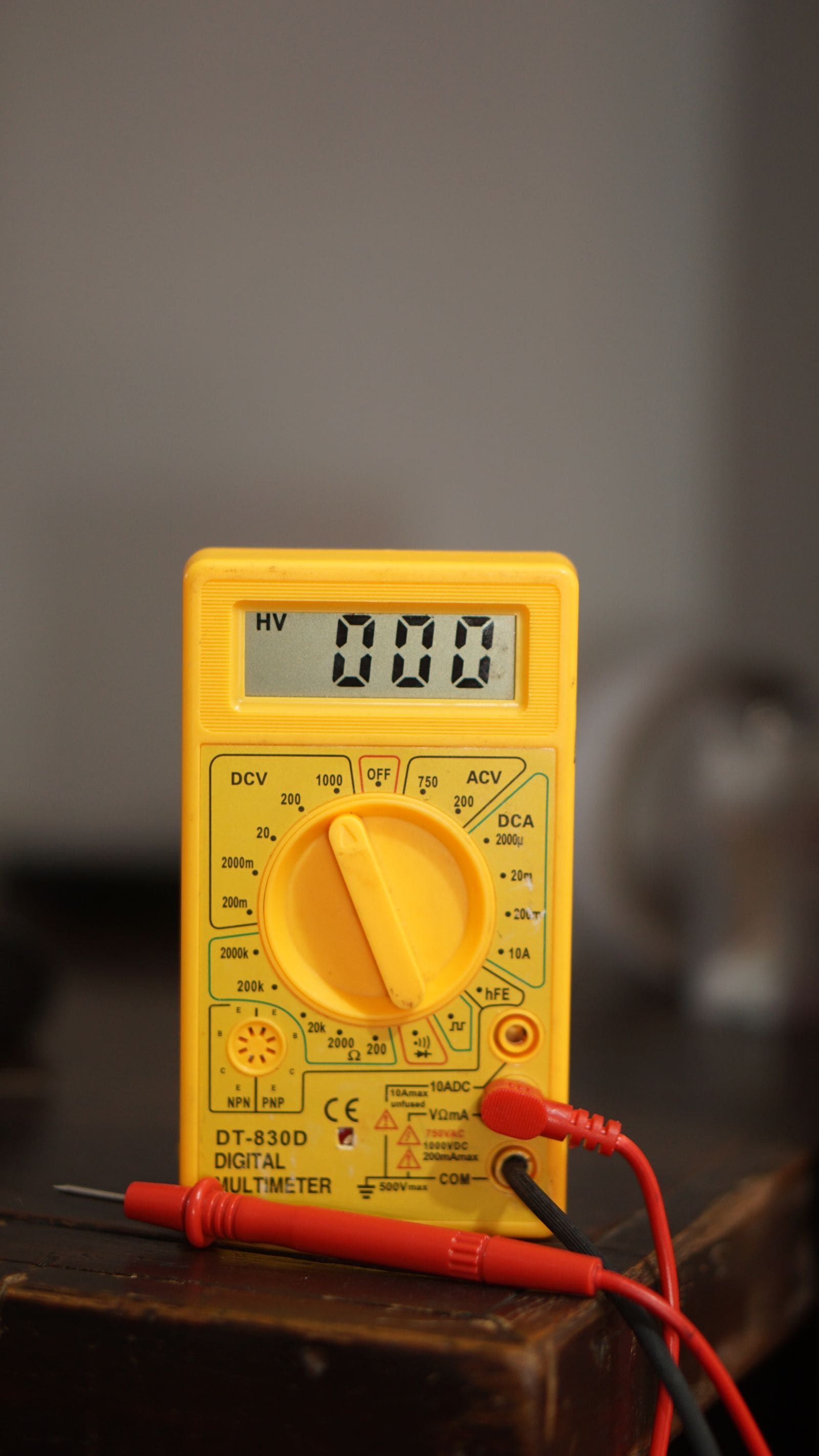
If your boat battery is flat every time you come back, something may be quietly drawing power while you are away. Learn how to tell a bad battery from a drain, find the circuit with a multimeter and the fuse panel, and fix the usual culprits without disabling your bilge pump.
How to Wire a 12, 24 or 36-Volt Trolling Motor and Charge Its Batteries
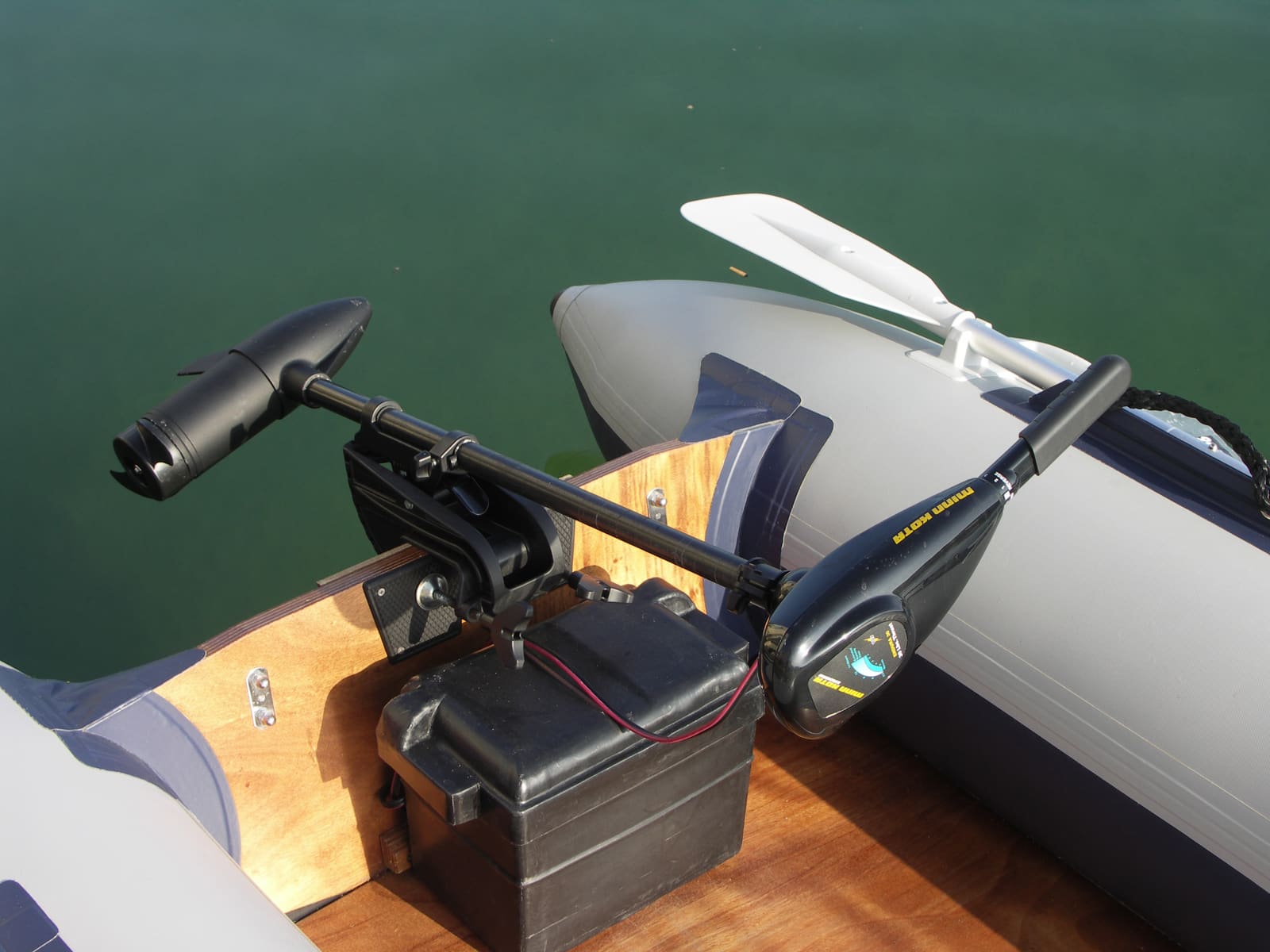
Set up the battery bank for your electric trolling motor the right way: matched deep-cycle batteries in series or parallel, a circuit breaker sized from the motor maker's chart, a proper plug, and a multi-bank charger that keeps every battery healthy. High-current wiring that runs long distances or ties into other systems is a job for a marine electrician.