How Much Is a Used Boat Worth? Pricing Guides, Comps and Condition
Work out a realistic price for a used boat, whether you're buying or selling: check sold and listed comps, read J.D. Power, BUCValu and ABOS values the right way, value the engines separately, adjust for hours, condition, upgrades and location, and know when a valuation survey is worth paying for.
Time
2 h
Shop would charge
$300-1000
Applies to
All engines
Safety first: Pricing isn't dangerous, but the money is real. Never give your HIN and a credit card to a "boat blue book" site you found through an ad; BoatUS warns that imitation value sites are common. A price guide never replaces a survey and sea trial: a boat with a wet transom or a tired engine is worth far less than any book says.
Owners often ask
- Why does the J.D. Power or BUCValu value for my boat seem so low? Does it include the outboard?
- How much less than the asking price do used boats actually sell for?
- Why do J.D. Power (NADA) and BUC give such different values for my used boat, and which one should I trust?
This guide walks you through it. Still stuck? Ask the AI Mechanic about your engine.
Tools
- Computer or phone for listing sites and value guides
- Spreadsheet or notebook for comps
- Camera (to document condition honestly)
Parts & supplies
- Boat paperwork - title or documentation, original spec sheet or window sticker, service records
- Engine serial numbers and the hour meter reading
Before you start
There's no single "true" price for a used boat. BoatUS puts it simply: there's no Zillow for boats. You build a price from three things: what similar boats are listed and sold for (comps), what the value guides say, and an honest look at this boat's condition, engines and location.
Gather first:
- Exact identity: year, make, model, length, and the factory options. The original spec sheet or dealer invoice helps, since online value tools ask about options.
- Engines: make, horsepower, model year and serial numbers for each engine, plus the hours (see our engine hour meter and serial number guides).
- Records: service receipts, repower paperwork, survey reports.
- Trailer: its year, axles, brakes and condition. It's often valued separately.
Steps
"Value" means different things:
- Retail (private sale or dealer lot): what a buyer pays for a boat in normal condition.
- Trade-in: what a dealer offers. BoatUS notes it's always below market value because the dealer must store, finance and resell the boat at a profit.
- Insured value: what your policy pays. It can be agreed value or actual cash value; see our insurance guides.
- Loan value: what a lender will finance, often based on a guide or survey.
Know which number you need before you start searching.
Search listing sites for the same make and model, a few model years either side. BoatUS mentions boatmart.com, boattrader.com, yachtworld.com and yachtr.com. Record each boat in a simple table:
- Year, engine(s) and engine year
- Hours, if listed
- Location
- Asking price and how long it's been listed
- Condition notes from the photos and description
Watch for the same boat posted on several sites. BoatUS found the same listings repeated across sister sites.
Listings show what sellers hope for. BoatUS says that in a stable market, asking prices typically run about 6% to 10% above what boats actually sell for. A boat that's been listed for months at the same price probably isn't worth that price. Brokers and surveyors can see actual sold prices through industry databases; owners usually can't.
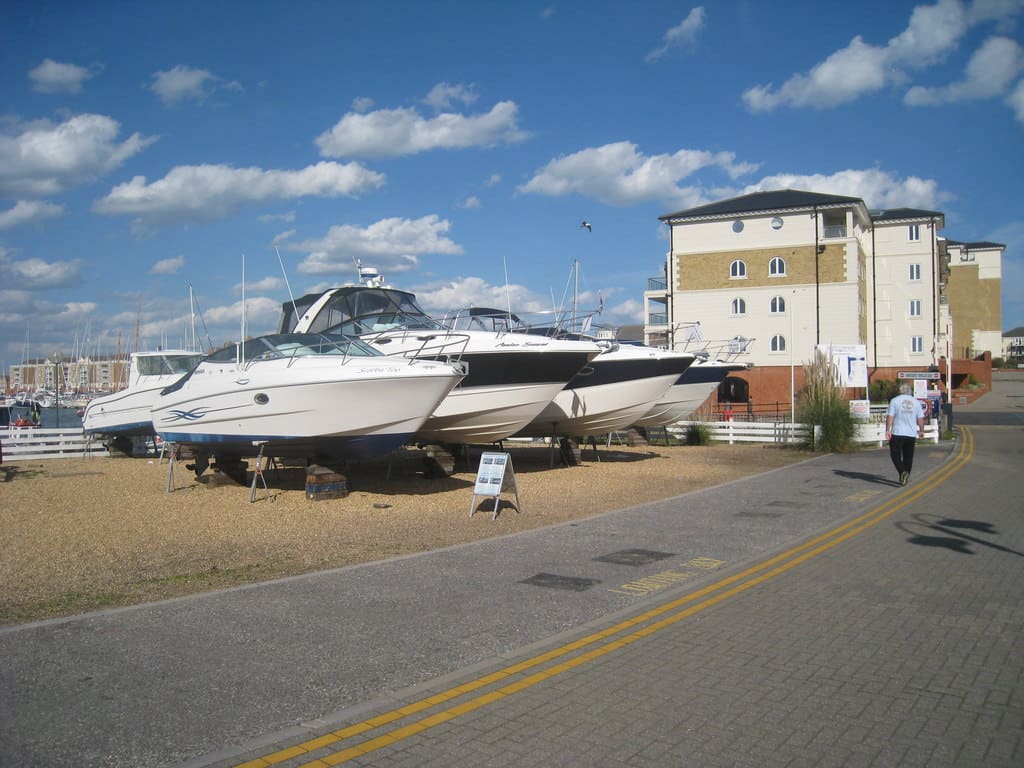
Photo: Oast House Archive / Wikimedia Commons · CC BY-SA 2.0 Three guides are commonly used in the US, and each calculates differently, so expect them to disagree:
- J.D. Power (formerly NADA) boat values: free online at jdpower.com/boats. Value pages show a Low Retail and an Average Retail figure, and let you add options.
- BUCValu (from the BUC Used Boat Price Guide): free values after registration (BoatUS says three), shown as a low-to-high range by condition.
- ABOS Marine Blue Book: sold to the trade; BoatUS says its insurance partners use ABOS, and a single consumer valuation through pricedigests.com cost $35 when BoatUS checked in 2025.
Kelley Blue Book does not publish boat values (BoatUS). Sites using "blue book" in their name to catch search traffic and asking for your HIN and card number are a red flag.
This trips up many owners. Some guide values cover only the hull. In the BoatUS example, BUCValu's estimate for a 24-foot center console didn't include its twin outboards, and the writer added the price of similar used outboards to reach a realistic range. On J.D. Power, some models are listed as a "pre-rig" series; that usually means the boat was sold rigged for, but without, an engine, so check whether the value you're reading includes any power.
Read the fine print on each value page. If engines aren't included, look up the engine value separately (outboards often have their own listings in the guides) or price similar used engines.
BoatUS found the condition and age of the motors was the biggest factor in its comps: boats with original old two-strokes made up the low end of asking prices, and a boat repowered with newer four-strokes didn't match any of them.
Ask yourself:
- Are the engines original or repowered, and when?
- Are the hours high or low for the boat's age? A well-maintained engine with steady use can beat a low-hour engine that sat for years.
- Are there records, a compression test or oil analysis to back up the condition?
There's no universal "dollars per hour" rule. Use hours as one input along with records and a mechanic's check.
BoatUS warns sellers to be honest about condition, or the sale will be disappointing. Broken things lower the price unless you fix them. Typical deductions buyers make:
- Soft deck, wet transom or stringers (a major cost, see our transom guide)
- Faded gelcoat, torn upholstery, worn canvas
- Electronics that don't work, or are badly out of date
- Trailer needing tires, bearings or brakes
- Missing paperwork or an unclear title (a serious problem, not a small deduction)
BoatUS says upgrades do count: refreshed vinyl, electronics about three years old or newer, a repower, or a system the boat didn't have before (air conditioning, a windlass). Keep the receipts. Upgrades rarely return their full cost, but they make a boat easier to sell and support a price at the top of the range.
Discover Boating (the NMMA's consumer site) gives some rough rules of thumb for how much comes back:
- Electronics: a good recent suite may add up to about half of what it cost, but electronics five years old or older add very little.
- Accessories: getting back 10 to 20 percent of what you paid is a good result.
- A repower in the last few years: you may recover around 50 to 60 percent of the cost in the sale price.
Treat these as starting points, not promises. A buyer pays for what the boat is worth to them, not for your receipts.
Where the boat is matters. BoatUS found:
- A big cruiser on a small inland lake sells differently than the same boat on the Great Lakes.
- Florida prices were lower for one model (sun and salt) and higher for another.
- Some popular models barely appeared in certain regions.
Discover Boating adds that where there are few people and few buyers, a boat can be worth as much as 10 percent less than in a busy area, while a market flooded with similar boats (it names south Florida) gets competitive. Widen your search radius if you find few comps, and consider what it would cost to ship or trailer the boat to a better market. Demand also tends to be strongest when the local boating season is about to start, and buyers have more leverage in the off-season; watch your own market.
Boat prices rose sharply during the 2020–2021 boom and have since come down. BoatUS reported in 2025 that used boats were spending more time on the market (an average of about 165 days in early 2025, from Boats Group data). If you're selling, plan for months, not weeks. BoatUS suggests tracking listings for a few months to see which boats sell, how fast, and whether prices drop.
- Valuation survey: a seller can hire an accredited marine surveyor (find one through SAMS or NAMS) for a pre-listing condition and value survey. BoatUS notes it's usually done where the boat sits, without a haulout or sea trial, so it costs less than a full pre-purchase survey. The seller owns the report and can share it with buyers; if recent, some lenders and insurers may accept it. Surveyors have access to industry sold-price data.
- Broker: sees sold prices reported by other brokers and handles showings. BoatUS lists a traditional commission of about 10%, sometimes negotiable, with minimum fees that can run from $2,500 to $7,000.
- Buyers: always get your own pre-purchase survey and sea trial. See our used boat inspection and insurance survey guides.
Put your comps, the guide ranges and your adjustments side by side:
- Start from the guide range for the boat (plus engines if they're separate).
- Check it against real comps in your region.
- Adjust for engines, condition and upgrades.
- Sellers: list near the realistic top and decide your lowest acceptable price before the first call. Buyers: set your maximum before you see the boat, and subtract the cost of any repairs the survey finds.
Write down how you got there. It makes negotiation calmer and gives a buyer's lender or surveyor something to check.
Common mistakes
- Using one value guide and treating it as the truth.
- Comparing asking prices to asking prices and forgetting boats sell for less.
- Forgetting that the guide value may not include the outboards, or including the trailer twice.
- Pricing the boat as "excellent" when it has a soft deck, dead electronics or overdue maintenance.
- Expecting full credit for every upgrade dollar.
- Typing your HIN and card number into a fake "blue book" site.
- Expecting a dealer trade-in to match a private-sale price.
When to call a pro
- A financed, insured or high-value boat: hire an accredited marine surveyor for a valuation or pre-purchase survey
- Comps are rare (unusual model, custom boat, classic): a surveyor or broker with sold-price data
- Any sign of structural damage, water intrusion or engine trouble: get a survey and mechanic's inspection before agreeing on price
- The title, liens or documentation are unclear: see our paperwork guides before money changes hands
Tips
- Save screenshots of comps with the date; listings disappear.
- A clean boat, a folder of receipts and good photos often sell faster than a lower price on a dirty boat.
- If the trailer is included, check its value separately; J.D. Power and other guides list trailers too.
- Oil analysis taken before listing gives a buyer's surveyor something to compare with later.
Official references
We read these to write this guide. Your engine's own manual always wins.
Safety: BoatMend is for information only and does not replace a certified marine technician. You are responsible for your safety and your boat. Read the full disclaimer.
Last updated 2026-10-26
Related guides

How to Get Your Boat Ready to Sell (Records, Title and Prep)
Prepare your boat for sale the way buyers and surveyors expect: gather the title, registration and HIN paperwork, organize your maintenance records and receipts, fix the small stuff, detail the boat, get it ready for a sea trial and buyer's survey, and close the deal with the right documents.
How to Inspect a Used Boat Before You Buy
A step-by-step checklist for looking over a used boat, from paperwork and the hull ID number to the transom, engine, compression test, sea trial and trailer. Know what to check yourself, what the red flags mean, and when to pay a marine surveyor.
How to Prepare Your Boat for an Insurance or Condition Survey
Get ready for a marine survey your insurer or lender asked for: what a SAMS or NAMS surveyor looks at, the common findings you can fix beforehand (hose clamps, seacocks, bilge, fire extinguishers, wiring), the paperwork to have ready, and how to handle the recommendations afterward.
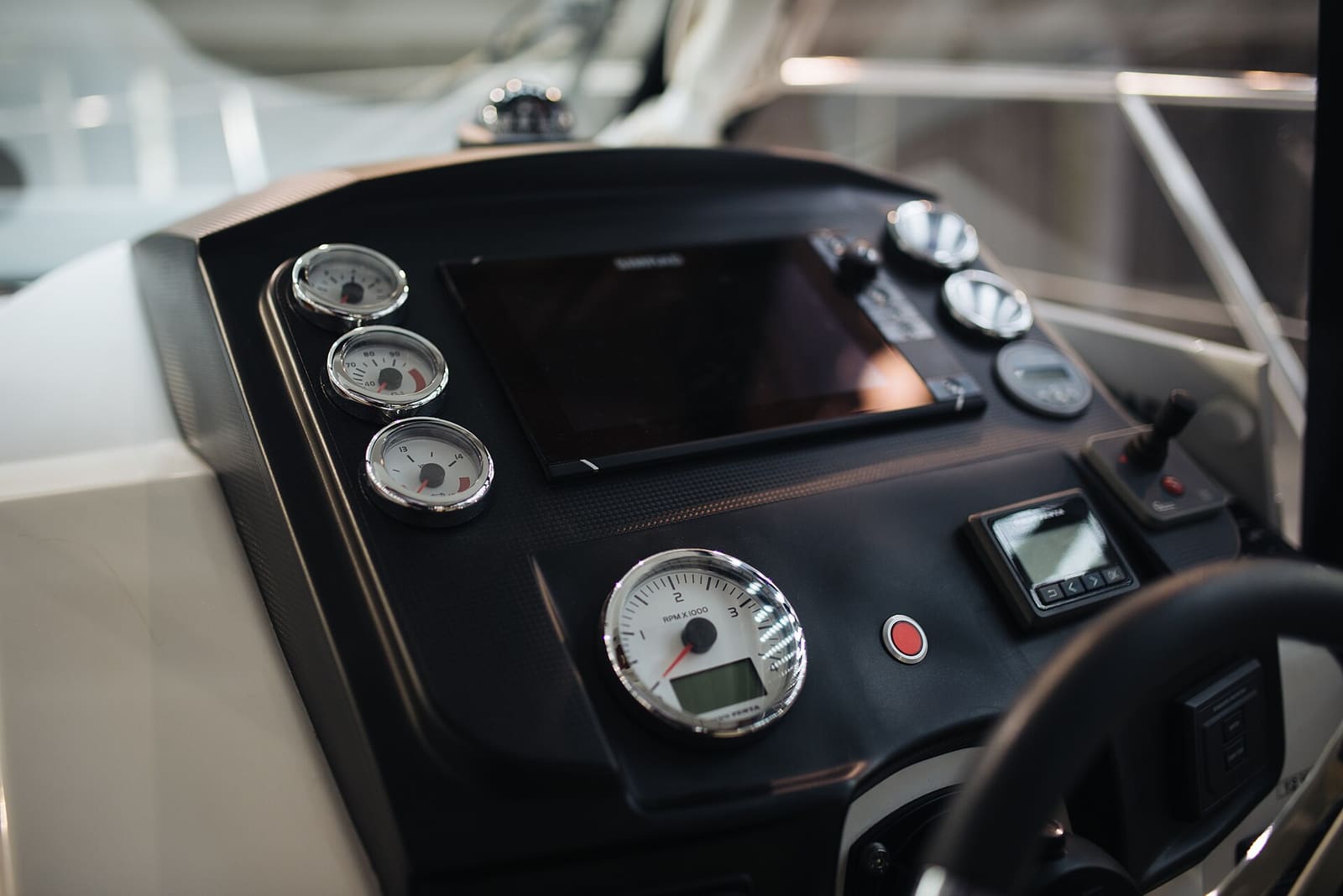
Engine Hour Meters: Why Hours Matter, How to Verify Them and How to Replace a Meter Honestly
Engine hours set your service schedule and a big part of your boat's resale value. Learn the difference between analog meters and engine-computer hours, how to verify the real hours on a used boat, and how to replace a dead or broken meter while keeping an honest record of the old hours.
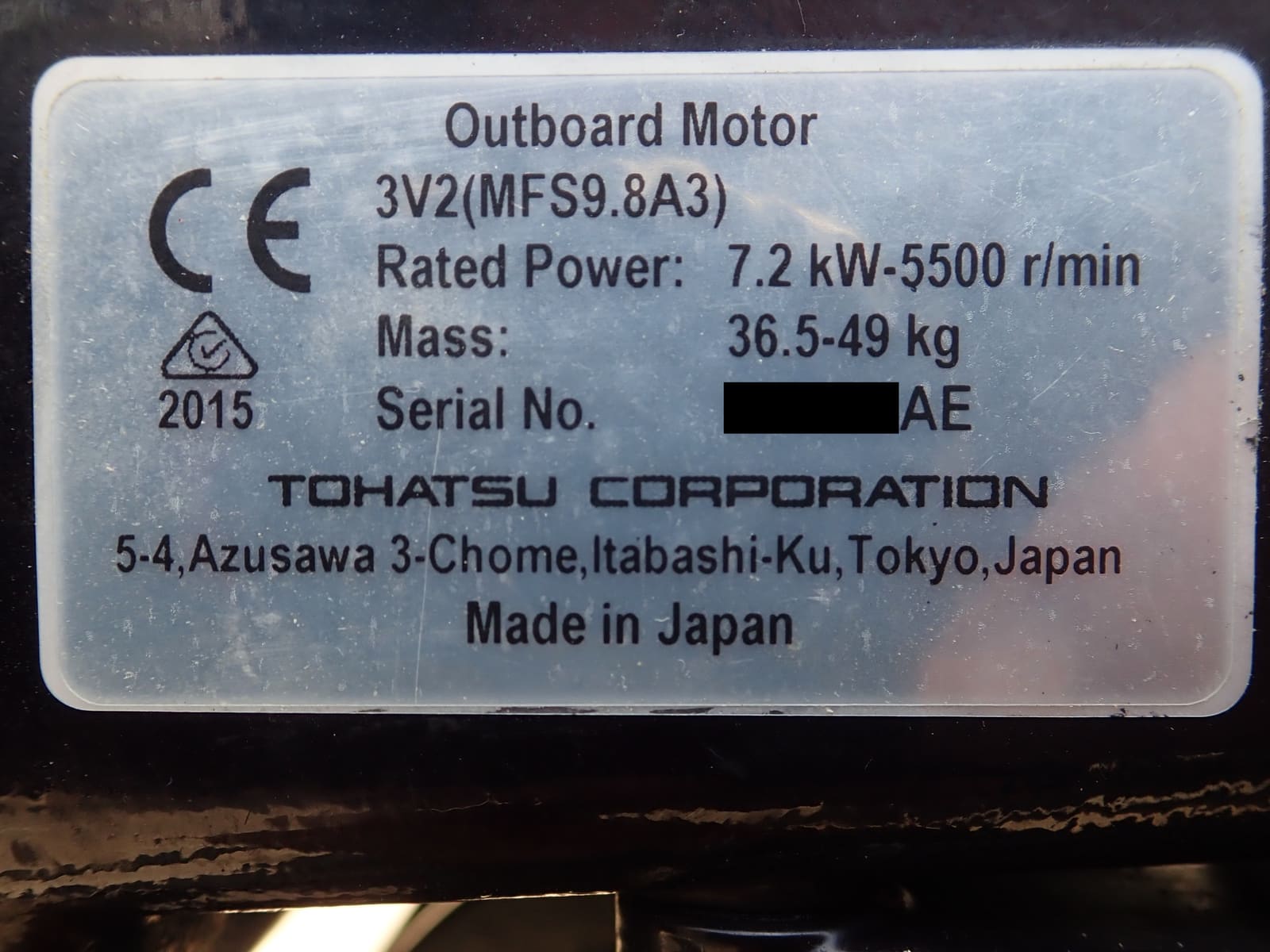
How to Find Your Engine's Serial Number, Model and Year (and Get the Official Manual)
Find the ID label on your outboard, sterndrive, inboard diesel or PWC, read the model and serial number correctly, tell it apart from the boat's HIN, and use it to open the free official owner's manual. It's the first step for ordering the right parts and following the right maintenance plan.
Used Boat Purchase Agreement and Closing: Deposit, Contingencies, Bill of Sale and Who Pays What
A plain-English walk-through of buying a used boat on paper: getting ready before you offer, what the purchase and sale agreement should say, how the deposit is held and when it comes back, survey, sea trial, financing and insurance contingencies, paying off the seller's loan, the bill of sale, closing and transferring the paperwork, and the costs each side usually covers. Practical help, not legal advice; rules vary by state.
Avoiding Boat-Buying Scams: Fake Listings, Fake Escrow, Overpayment Checks and Safe Payment
How to spot and avoid the scams that target boat buyers and sellers: too-good-to-be-true listings, sellers who are always overseas, look-alike escrow and shipping websites, overpayment checks and fake payment notices. Covers verifying the boat, the title, the HIN and the seller, paying safely, and what to do fast if you already sent money. Practical help, not legal advice.
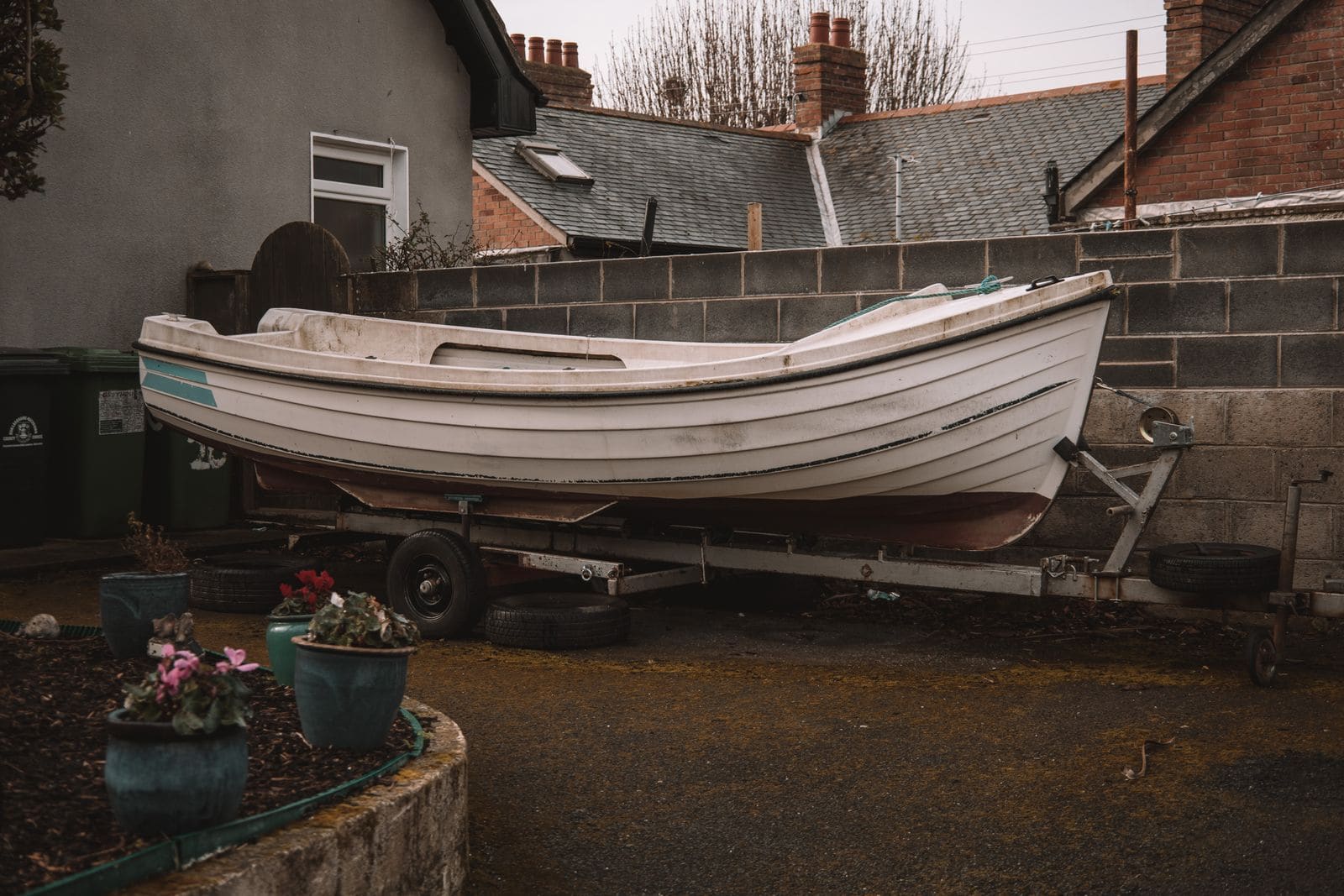
Buying a Boat That Sat Outside for Years: What Fails, How to Inspect It and What It Really Costs
A boat that sat in a yard for years can be a bargain or a money pit. Learn what usually fails (fuel system, waterlogged foam, stringers and transom, wiring, upholstery, trailer), how to inspect and weigh it, when to pay for a survey, and how to price the repairs before you make an offer.
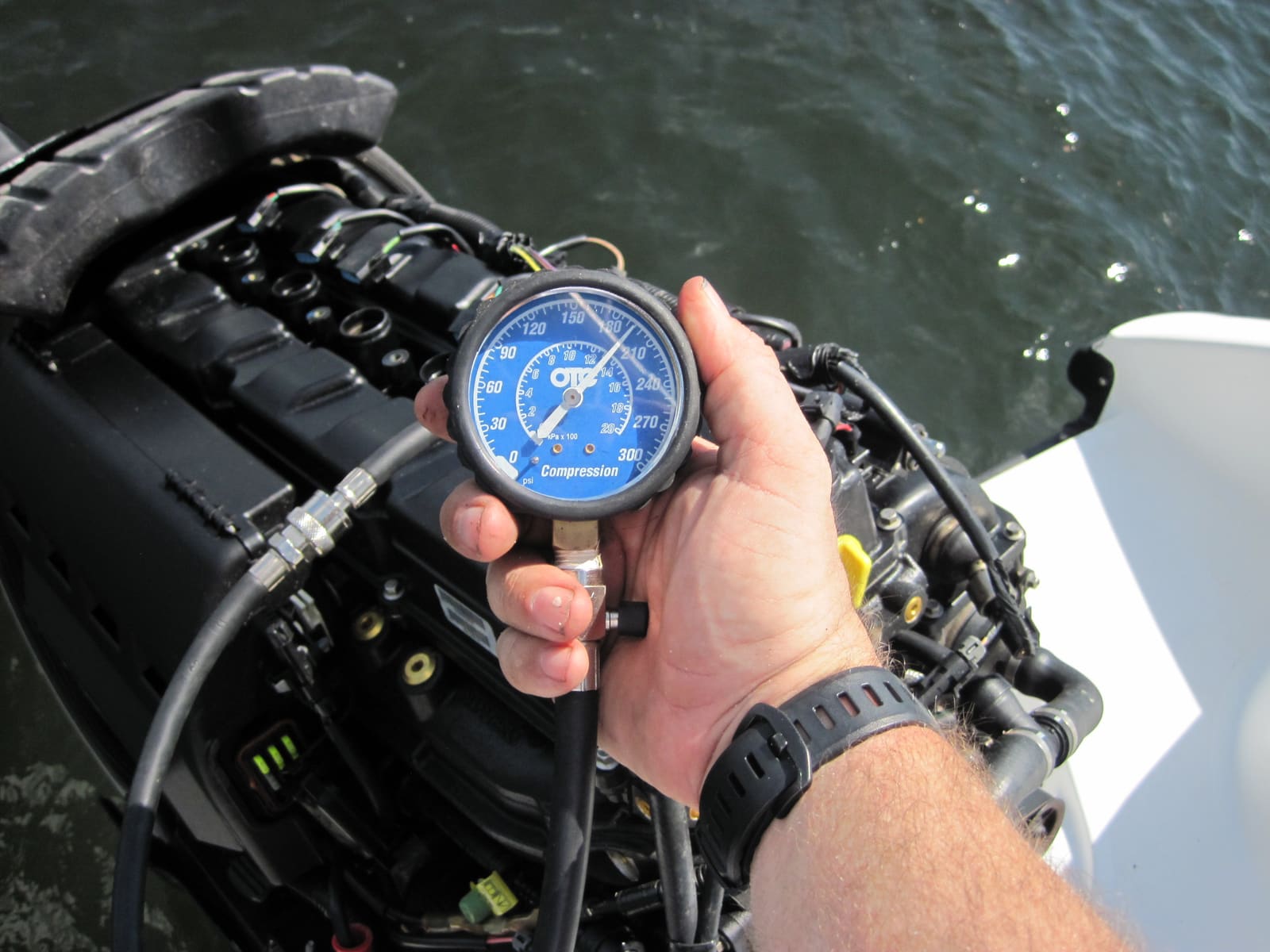
How to Do a Compression Test on an Outboard, Sterndrive, Inboard or PWC
A compression test tells you whether the pistons, rings, valves and head gasket in each cylinder are sealing. Learn when to do one, how to do it safely, how to read the numbers by comparing cylinders, and what a wet test and a leak-down test add.

Engine and Gearbox Oil Analysis: How to Take a Clean Sample and Read the Report
A lab oil analysis is like a blood test for your engine, transmission or lower unit. Learn how to pull a clean sample, what the lab measures, what wear metals, coolant, sea water and fuel in the oil can mean, and why the trend over several samples matters more than any one number.