Ignition-Protected Parts: Why Car Starters and Alternators Don't Belong in a Gas Boat
On a boat with a gasoline inboard, sterndrive or generator, every spark-producing part in the engine space must be ignition protected so it can't set off fuel vapors. Learn what the term means under 33 CFR 183.410, which parts need it, how to read the markings, why cheaper automotive parts are dangerous, and how to check what's already in your engine compartment.
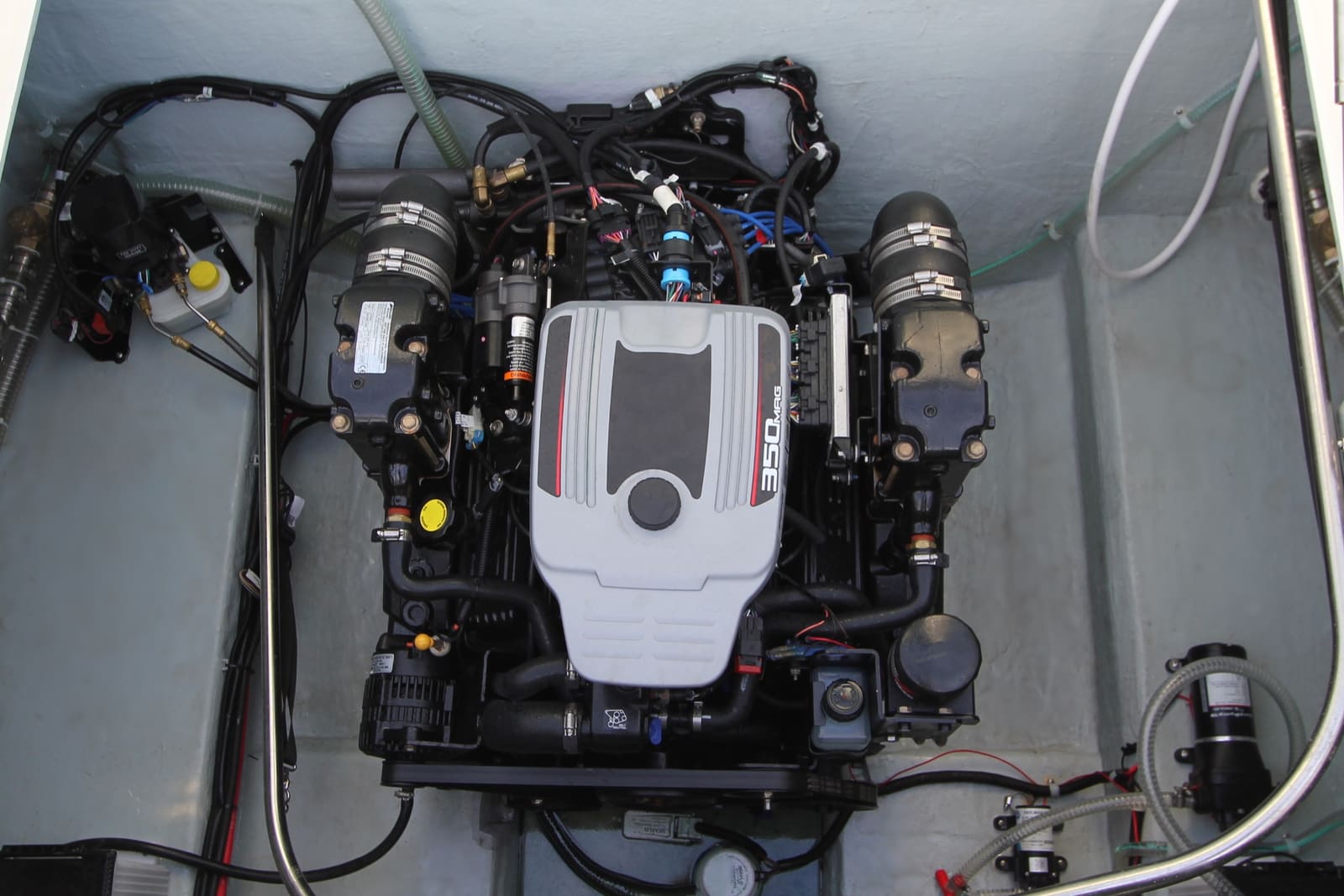
Time
1 h
Applies to
Sterndrive (I/O), Gas inboard
Safety first: Gasoline vapor is heavier than air and collects in the bilge, where a single spark can cause an explosion. If you smell gasoline at any time, don't start the engine, don't touch any switches (including the blower or bilge pump), get everyone off the boat and away from it, and call the fire department (911) or, on the water, the Coast Guard on VHF channel 16. Have a qualified marine technician find and fix the leak before anyone powers anything up.
Fuel smell, water coming in, CO alarm or smoke? Stop, get everyone in life jackets and call USCG on VHF 16 or 911. For a tow: Sea Tow or TowBoatUS.
Owners often ask
- Can I put an auto parts store alternator on my MerCruiser?
- Is it OK to keep the dinghy gas can in the engine room of my diesel boat?
This guide walks you through it. Still stuck? Ask the AI Mechanic about your engine.
Tools
- Flashlight or headlamp
- Phone camera for photos of labels and part numbers
- Small mirror for reading labels on the back of parts
- Notebook or your boat profile for a parts list
Parts & supplies
- None for the inspection; replacement parts only as marine, ignition-protected versions specified by your engine or boat maker
Before you start
Gasoline fumes are the major cause of boat explosions, BoatUS says, and because explosions usually happen with people aboard, the injuries are often serious. For an explosion you need two things in the same space: fuel vapor and something that sparks. Leak-free fuel systems and good ventilation take care of the first. Ignition-protected electrical parts take care of the second.
Blue Sea Systems describes an ignition-protected device as one built so that it won't ignite the fuel-air mixture around it, even if vapor gets inside and ignites there, and so that its surface can't get hot enough, or make a big enough spark, to set off the vapor outside.
This guide is for boats with a gasoline inboard, sterndrive or gasoline generator (and for diesel boats that carry gasoline or propane, see Step 4). You're not going to replace anything today. The goal is to know what you have, spot the parts that don't belong, and make sure the next replacement is the right one.
Steps
The Coast Guard's rule is 33 CFR 183.410. It requires that each electrical component won't ignite a surrounding propane-and-air mixture (in the most explosive range) while it operates at its rated voltages and currents, unless it's isolated from gasoline fuel sources such as the engine and the valves, connections and fittings of the fuel tank and its lines.
The rule applies to boats with gasoline engines for propulsion, power generation or mechanical power, except outboard engines (183.401). Parts that are built into an outboard, and portable equipment, are excluded (183.405). Boat builders must comply; as the owner, you keep the boat that way every time you replace or add a part.
183.410 counts a part as isolated (no protection needed) only if one of these is true:
- A bulkhead that meets the rule's height and tightness requirements separates it from the fuel source.
- It sits below the fuel source with a way to keep leaking fuel and vapor away from it, or above it with a deck or enclosure in between.
- There are at least two feet of space between the part and the fuel source, and that space is open to the outside air.
In practice: anything electrical in the engine compartment of a gas inboard or sterndrive, and in compartments with the gas tank, its fittings or a gas generator, should be ignition protected. Blue Sea adds that a well-ventilated area that's blocked from fume-prone areas doesn't need it. If you're unsure where your boundaries are, ask a surveyor or ABYC-certified technician.
Some are obvious. BoatUS lists starters, alternators, distributors, starter solenoids and all electric motors: they make sparks as part of their normal work, so marine versions are sealed to contain them. Blue Sea adds the less obvious ones:
- Fuses and fuse blocks (a fuse can arc when it blows)
- Circuit breakers and switches, including battery switches and relays
- Household GFCI outlets
- Power-tool motors
Other common engine-space items: bilge blowers (BoatUS notes their electrical parts are ignition protected so they don't cause the explosion they're meant to prevent), bilge pumps, electric fuel pumps, trim and steering pump motors, battery chargers, inverters, and battery isolators or automatic charging relays.
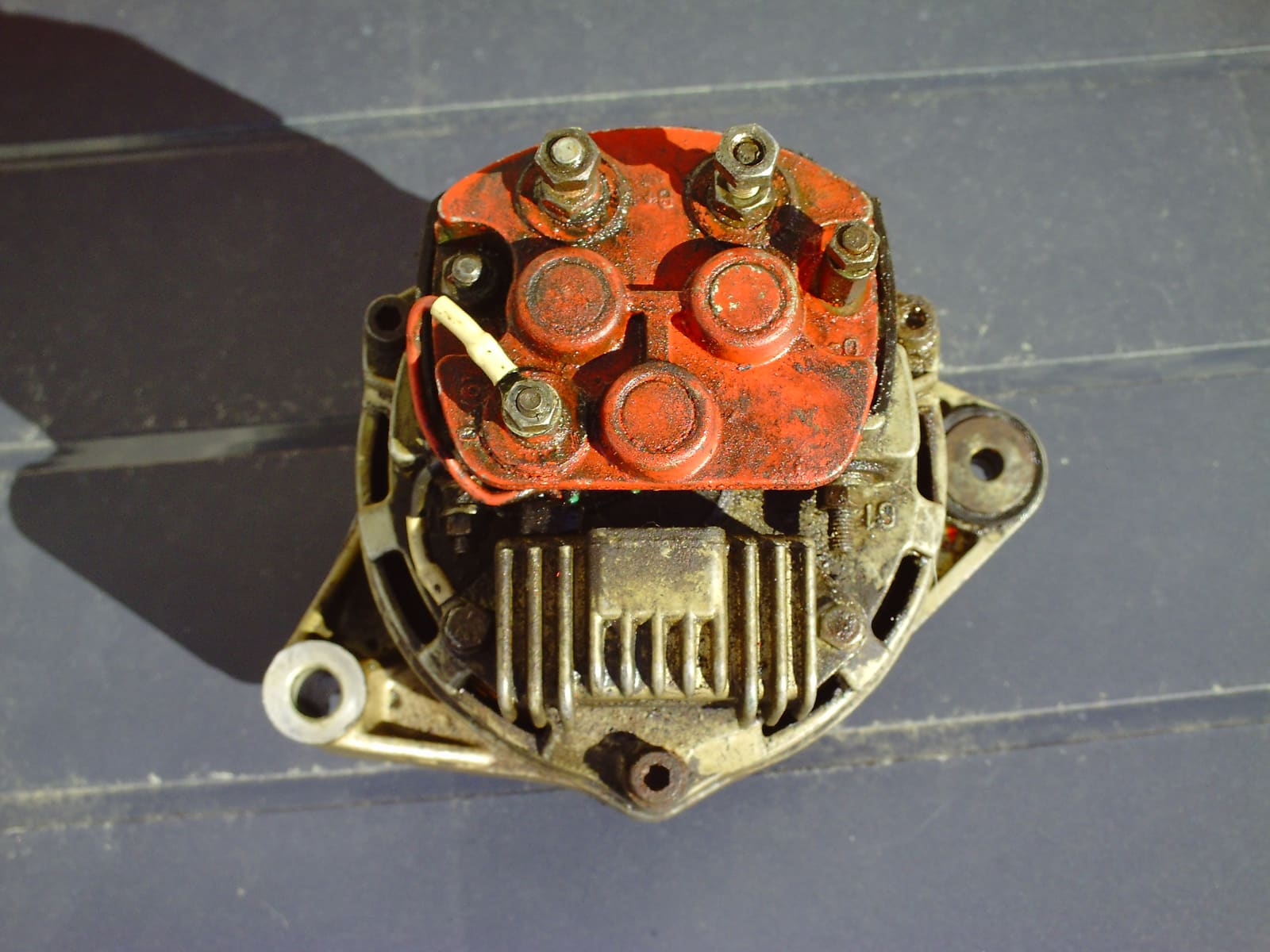
An alternator from a boat engine. Car and marine alternators can look almost identical and bolt on the same way; the difference is inside, in how sparks are contained. Photo: Green Yoshi / Wikimedia Commons · CC BY 3.0 A diesel engine room doesn't need ignition-protected parts just because of the diesel. But Blue Sea warns that if gasoline for the dinghy's outboard is stored in the same compartment as an unprotected device, the boat is at risk; a non-protected starter could ignite vapor from a leaky gas-can cap. Propane is just as dangerous: BoatUS points out it's heavier than air and sinks into the bilge, and it belongs only in a dedicated, vented locker. Keep gas cans and spare propane cylinders out of engine rooms, lockers and cabins.
Blue Sea notes that SAE, ISO and UL all require ignition-protected devices to be marked as such. Look on the label, the housing or the packaging for:
- The words "Ignition Protected"
- SAE J1171 (the marine standard for external ignition protection), ISO 8846, or UL 1500
- A reference to USCG 33 CFR 183.410
BoatUS adds that a product marked "Marine" or "Ignition Protected," or carrying the UL Marine mark, means the maker states it was built or tested to these standards. A label that only says "waterproof," "sealed" or "heavy duty" is not the same thing.
With the engine off and cool and the boat at the dock, open the hatch and let it air out. Then, with a flashlight (not a work light plugged into shore power), go part by part and photograph each label:
- Starter, solenoid, alternator, distributor (older carbureted engines)
- Blower motor and bilge pump(s)
- Electric fuel pump, power steering and trim pumps
- Battery switches, fuses, fuse blocks and breakers
- Battery charger, inverter, relays, isolators
- Anything added by a previous owner: stereo amplifier, light strip, outlet, wiring with inline fuse holders
Write down any part with no marking you can find. Blue Sea's advice for an unmarked device where one is required: check with a marine electrical professional or the device's maker, and if protection can't be confirmed, replace it.
Replacement starters and alternators are the classic trap. A car starter or alternator can bolt onto a marine V8 or V6 exactly like the original, and it costs less. BoatUS explains why it's not the same: under a car's hood a constant draft keeps vapor from building up, so sparks don't matter, but in a closed bilge one spark and some gasoline fumes can be a disaster. Automotive starter solenoids and alternators may have vents or exposed contacts that let sparks out.
The same goes for fuel parts. BoatUS notes some automotive carburetors and fuel pumps are vented so they can drip fuel outside if a float sticks or a diaphragm fails. Marine carburetors route that overflow back into the engine, and marine fuel pumps are built not to leak externally.
If your receipts or the part itself say "automotive," or a shop "found a cheaper one," treat it as suspect until proven otherwise.
When something needs replacing:
- Start with the engine maker's part number from your dealer or the parts catalog for your engine serial number.
- If you buy aftermarket, confirm the listing says marine and ignition protected, and names the standard. Ask the seller in writing if it doesn't.
- Check the part when it arrives for the marking before it goes in the boat.
BoatUS sums it up: ignition-protected parts cost more to build, and that extra cost is what keeps a spark inside the part.
Ignition protection only works while the part is complete. During any service:
- Don't leave off covers, end caps, gaskets or terminal boots.
- Don't drill extra holes in housings or enlarge cable entries.
- Replace a cracked distributor cap or damaged starter housing; don't patch it.
- Keep the flame arrestor on the carburetor or throttle body clean and in place (it's a separate required part that stops a backfire flame from reaching the bilge).
Portable equipment is exempt from the rule because it's not supposed to live in the engine space, not because it's safe there. Don't run drills, grinders, heat guns, shop vacs, fans or trouble lights in a gasoline engine compartment unless the space has been ventilated and you're sure there's no fuel smell. Never install a household outlet, a battery charger meant for cars, or an inverter down there unless it's marked ignition protected.
This catches out owners adding new marine gear, too. "Marine" doesn't automatically mean ignition protected. In a Boating Magazine install of a well-known marine DC-to-DC charger, the article points out that the charger is not ignition protected and must stay out of the engine compartment, and also shouldn't sit above a lead-acid battery that can vent fumes. Read the installation manual's location section for every charger, inverter, relay or amplifier before choosing where it goes.
Ignition protection is a backup, not a license to skip ventilation. BoatUS recommends running the bilge blower for at least four minutes before starting a gasoline inboard, and using your nose first: open the hatch and sniff the bilge. A blower can't remove spilled liquid gasoline, which keeps giving off vapor. Our blower and fume detector guides cover both.
Go through your list:
- Unmarked starter, alternator, distributor or solenoid: have it checked or replaced with a marine, ignition-protected unit before the next season.
- Unmarked switches, fuses, breakers, outlets or add-on electronics in the engine space: have a marine electrician relocate them outside the space or replace them with ignition-protected versions.
- Gas cans or propane in the wrong place: move them to proper vented storage today.
Keep the photos and part numbers in your boat profile for the next owner or surveyor.
Common mistakes
- Buying an auto-parts-store starter or alternator because it bolts right on and costs less.
- Assuming "sealed" or "marine grade" in an online listing means ignition protected.
- Adding a stereo amp, battery charger or household outlet in the engine compartment of a gas boat.
- Storing the dinghy's gas can in a diesel boat's engine room or a locker next to the battery switch.
- Leaving off the starter's or alternator's covers and boots after a repair.
- Running power tools or a plug-in work light in a gas bilge right after refueling.
- Skipping the blower and sniff test because "all the parts are ignition protected anyway."
When to call a pro
- Any fuel smell, fuel in the bilge, or a leaking fuel fitting: don't start the engine or touch switches; get everyone off and call for help
- Replacing a starter, alternator, distributor or fuel pump on a gasoline inboard or sterndrive
- Unmarked electrical parts you can't identify in the engine or fuel-tank compartment
- Moving or adding any electrical device in or near a gasoline engine space
- Propane installations or any propane smell aboard
- Buying a used gas-powered boat: ask the surveyor to check for non-marine parts
Tips
- Take a photo of every engine-compartment label now, while you're not in a hurry; it makes ordering the right part much easier later.
- Ask your shop to write "marine, ignition protected" and the part number on the invoice for any electrical part they install.
- A fuel vapor detector with an alarm at the helm adds one more layer between a leak and a spark.
- Outboard owners: the engine's own parts are exempt, but if you add a gas generator, an inboard tank compartment or store gas below deck, the same thinking applies to anything electrical nearby.
Official references
We read these to write this guide. Your engine's own manual always wins.
- eCFR – 33 CFR 183.410, Ignition protection
- eCFR – 33 CFR 183.401, Purpose, applicability, and effective dates (boats with gasoline engines)
- eCFR – 33 CFR 183.405, General (outboard and portable equipment exceptions)
- Blue Sea Systems – Do You Have The Ignition Protection You Need on Your Boat?
- BoatUS – Guard Against Disaster, Use Marine Parts
- BoatUS – Preventing Explosions Aboard
- BoatUS – Bilge Blowers
- BoatUS Magazine – How To Handle Propane On A Boat
- Boating Magazine – Installing a DC-to-DC Charger on Your Boat
Safety: BoatMend is for information only and does not replace a certified marine technician. You are responsible for your safety and your boat. Read the full disclaimer.
Last updated 2026-10-25
Related guides
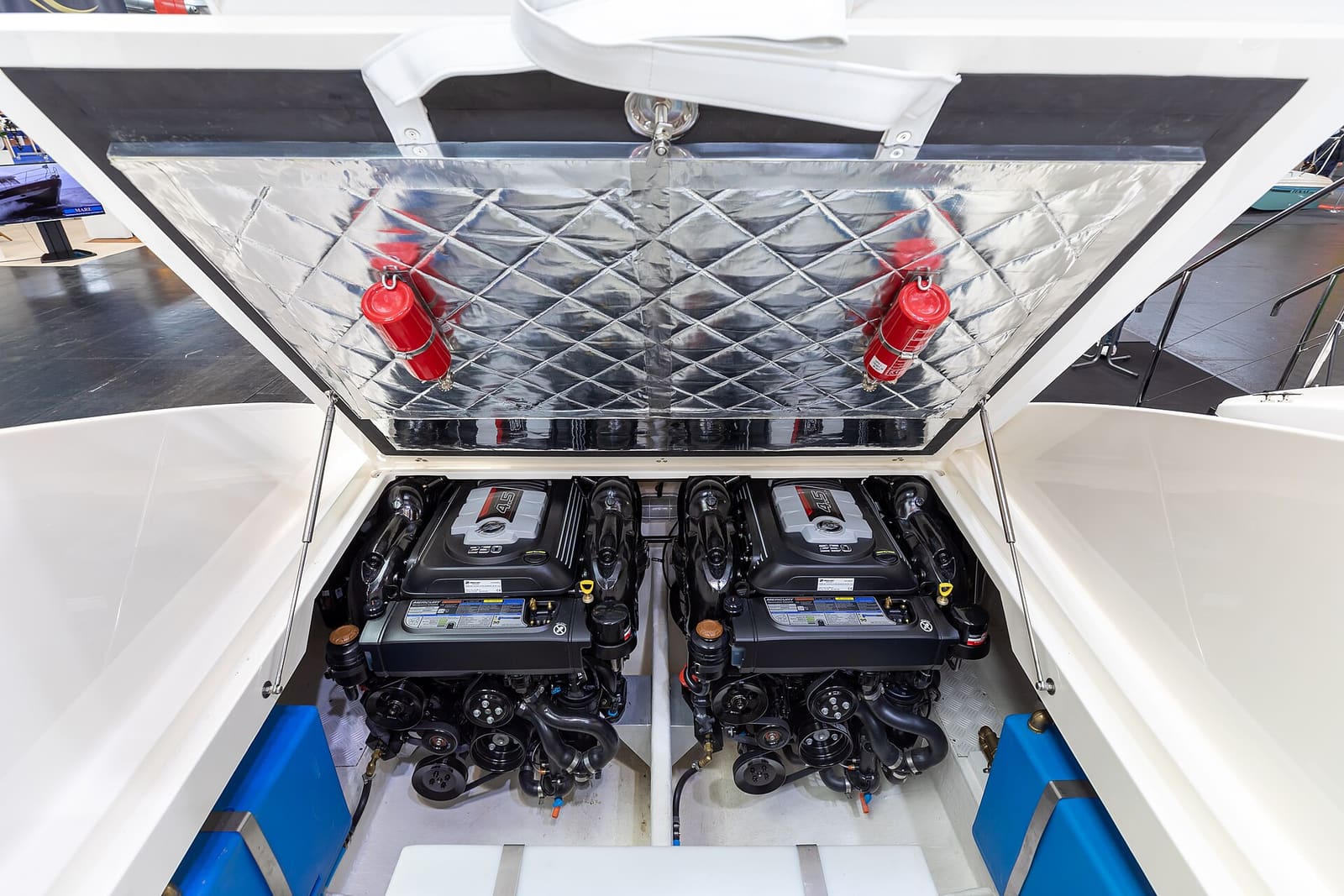
Bilge Blower and Engine Compartment Ventilation on Gas Inboards and Sterndrives
Learn why gas boats have a "run the blower 4 minutes" label, how to check that the blower and vent ducts actually move air out of the engine compartment, and how to replace a blower safely with an ignition-protected marine unit.
How to Check and Test a Gasoline Vapor (Fume) Detector
A gasoline vapor detector sniffs the bilge all the time and sounds an alarm long before fumes can explode. Learn how these detectors work, where the sensor belongs, how to test the system the way its maker says, what causes false alarms, what to do when it goes off, and why it never replaces the blower and your own sniff test.
Fuel Smell on Board: What to Do and How to Find the Source
A gasoline smell on a boat is a fire and explosion warning. Learn what to do in the first minutes, the most common sources (fill and vent hoses, tank fittings, fuel lines, carburetors and injectors, overfilling), how to look safely, and when to stop and call a pro.
Engine Clicks but Won't Crank - Testing the Battery, Cables, Neutral Switch, Solenoid and Starter
A click (or nothing) when you turn the key is usually a power delivery problem, not a dead engine. Work from the battery and cables through the neutral switch, start relay and solenoid to the starter motor using simple voltage-drop tests, and learn how to jump-start safely when gasoline vapor may be around.
Is My Engine Charging the Battery? Test the Charging System With a Multimeter
A step-by-step way to find out whether your outboard's stator and rectifier/regulator or your inboard's alternator is really charging the battery, what the voltage readings usually mean, and when the problem is just a dirty connection. Exact test specs come from your engine's service manual.
Engine Room Automatic Fire Suppression: How It Works, Checks and What to Do After a Discharge
Understand the fixed clean-agent extinguisher in your engine room - how it fires, why the engines must shut down, how to check the helm status light, gauge and cylinder weight, when it needs service - and the safe sequence to follow if it ever goes off, starting with keeping the hatch closed.
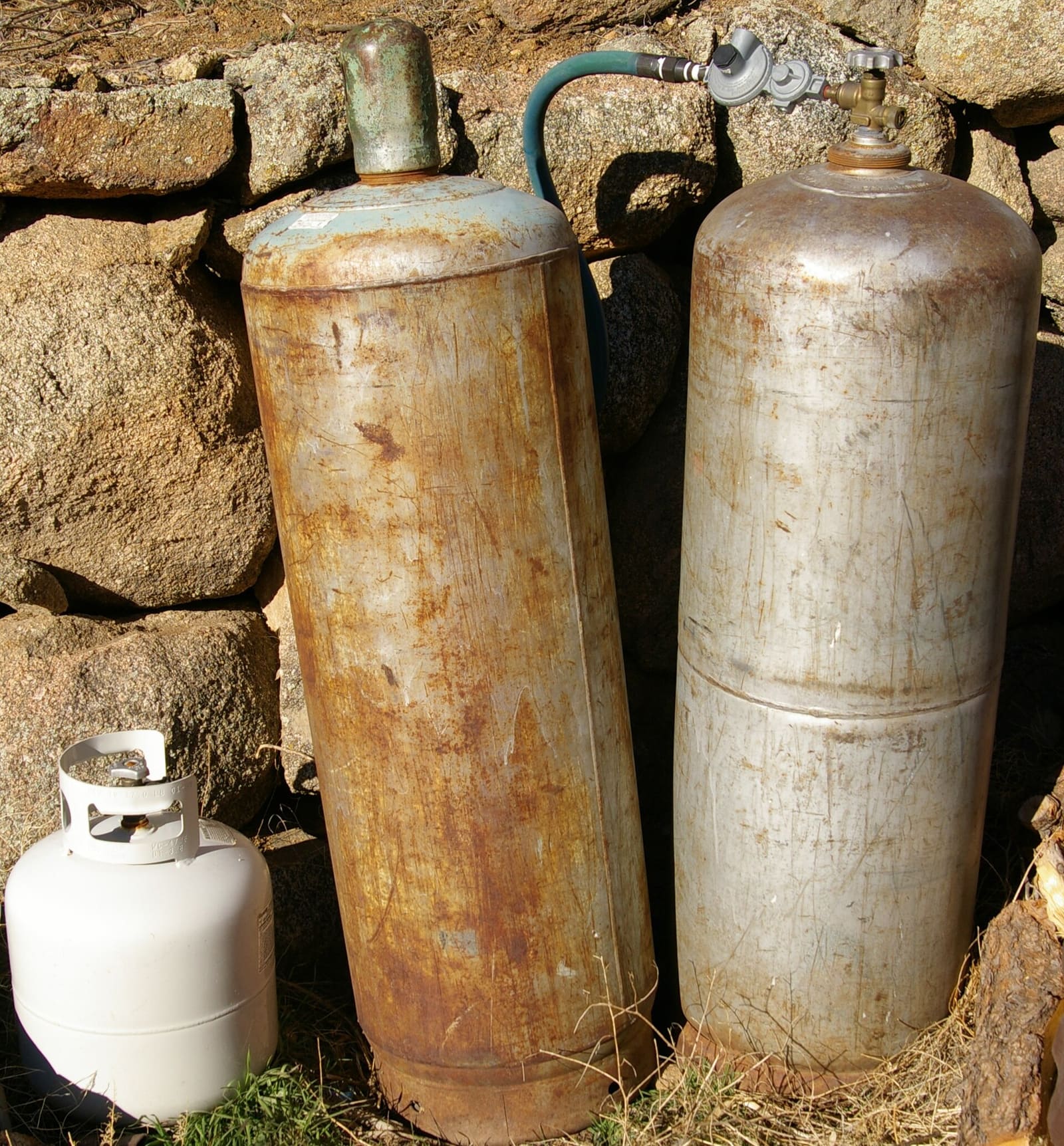
Propane (LPG) Safety on Boats - Locker, Solenoid, Sniffer and Leak Test
Learn why leaking propane sinks into the bilge, how to inspect the locker, cylinders, hoses, solenoid and gas alarm, and how to run a simple leak test. Repairs to a propane system belong to a qualified marine technician.
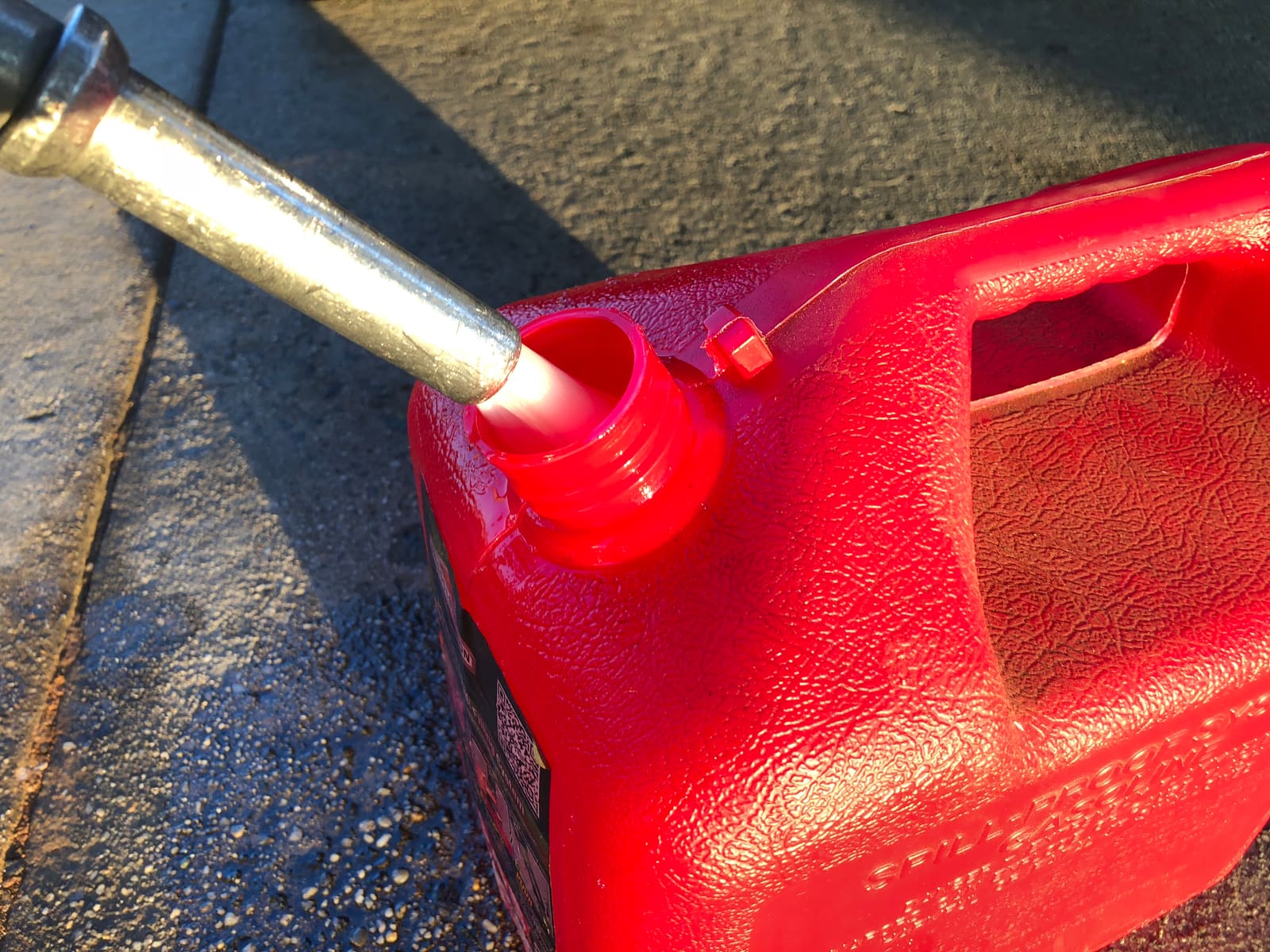
Portable Gas Cans and Fuel Storage: Filling, Storing at Home and Aboard, and Getting Rid of Old Gas
Gas cans and portable boat tanks are handy and dangerous in equal measure. Learn what makes a modern can compliant, why you always fill it on the ground, how to store gasoline at home and on the boat, how long ethanol fuel really lasts, and how to dispose of old gas legally.
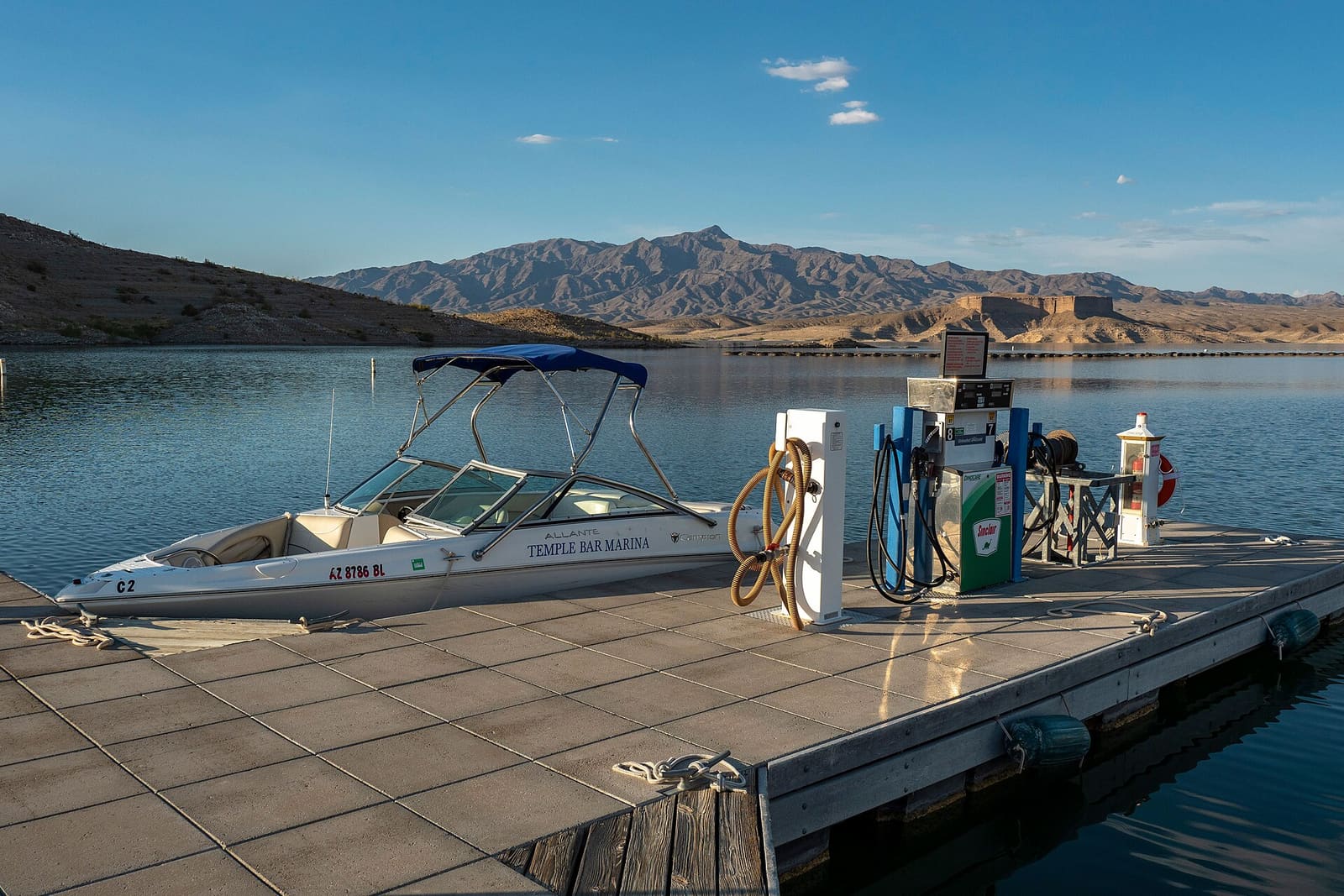
How to Refuel a Boat Safely (Gas Dock, Gas Station and Portable Tanks)
A step-by-step fueling routine that keeps gasoline vapor out of your bilge and fuel out of the water: shut everything down, close up, keep the nozzle in contact, stop short of full, ventilate, run the blower and sniff before you start. Includes portable tanks, personal watercraft and what to do about a spill.
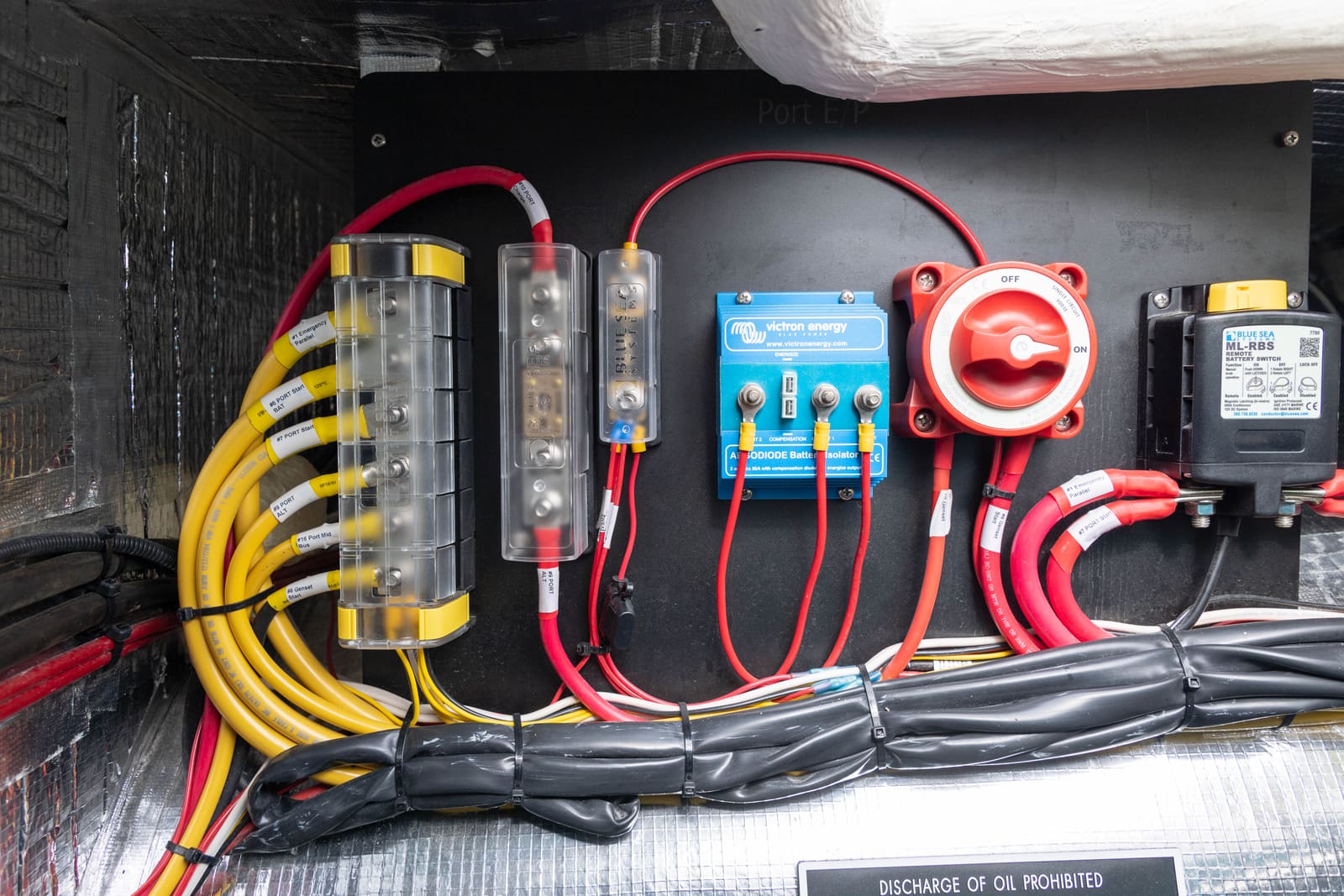
Battery Isolators Compared: Diode, ACR, Combiner and DC-DC Charger
Learn what the box between your engine and your batteries actually does, why an old diode isolator can leave batteries never quite full, and which charging setup suits an outboard, an inboard or a lithium house bank, plus a simple meter check of the one you have.
Marine Generator Routine Maintenance and CO Safety
Keep an Onan, Kohler/Rehlko, Northern Lights, Westerbeke or similar marine generator reliable with regular checks of oil, raw-water cooling, fuel, exhaust and the start battery, plus a monthly run under load. Generator exhaust is a leading source of carbon monoxide on boats, so safety checks come first.

Fuse Keeps Blowing? How to Troubleshoot a Boat Fuse Block or Breaker Panel
Work through a blown fuse or tripping breaker the safe way: confirm it, tell a short from an overload, isolate the device or wire at fault, replace a worn breaker or panel switch with the same rating, and label every circuit, without ever fitting a bigger fuse.