Taking Delivery of a New Boat: Dealer PDI, Paperwork, Sea Trial and First Service
What to check before you sign for a new boat: the dealer's pre-delivery inspection, the HIN and title paperwork, warranty registration, required safety gear, a systems walk-through and a real sea trial. Then break the engine in properly and book the first service so the warranty stays intact.
Time
4 h
Applies to
All engines
Safety first: Don't take a new boat out alone on its first run. Do the sea trial with the dealer's captain or technician aboard, in calm conditions, with life jackets for everyone. If you smell fuel, see water coming in, or an alarm sounds, stop, shut down if it's safe, and let the dealer handle it. Never sign "accepted" on a boat with an unresolved fuel, steering or water-ingress problem.
Owners often ask
- What should I check before I sign for delivery of a new boat?
- How do I know the dealer actually registered my new engine warranty?
This guide walks you through it. Still stuck? Ask the AI Mechanic about your engine.
Tools
- Phone camera (photos and short videos of every check)
- Notepad or a printed checklist for your punch list
- Flashlight
- The owner's manuals for the boat, engine(s) and electronics
Parts & supplies
- USCG-required safety gear for your boat (see our safety equipment guide), if not included
- Spare engine oil and filters for the first service, if you plan to do it yourself where the warranty allows
Before you start
A new boat comes with a factory warranty, but the warranty depends on steps the dealer and you must complete. Mercury's limited warranty, for example, says coverage only applies after the Mercury-specified predelivery inspection (PDI) is done and documented, and only once an authorized dealer registers the engine. Other engine and boat makers have similar rules.
Delivery day is your best chance to catch problems while the dealer still has every reason to fix them. Plan for several hours, not a quick handshake. Ask in writing, when you sign the purchase agreement:
- That the boat will be fully commissioned (PDI done) before delivery
- That delivery includes a systems walk-through and a sea trial
- Who pays for anything found wrong, and how fast it will be fixed
Steps
The PDI is the dealer's job: rigging, fluids, steering, electrical checks and a test run so the boat is ready to use. Ask to see the completed checklist and keep a copy. It should be signed and dated by the technician. If the boat was rigged at the dealer (engine hung, controls and gauges installed), ask who did it and whether it was test-run on the water.
Do this in daylight, ideally with the boat on the trailer:
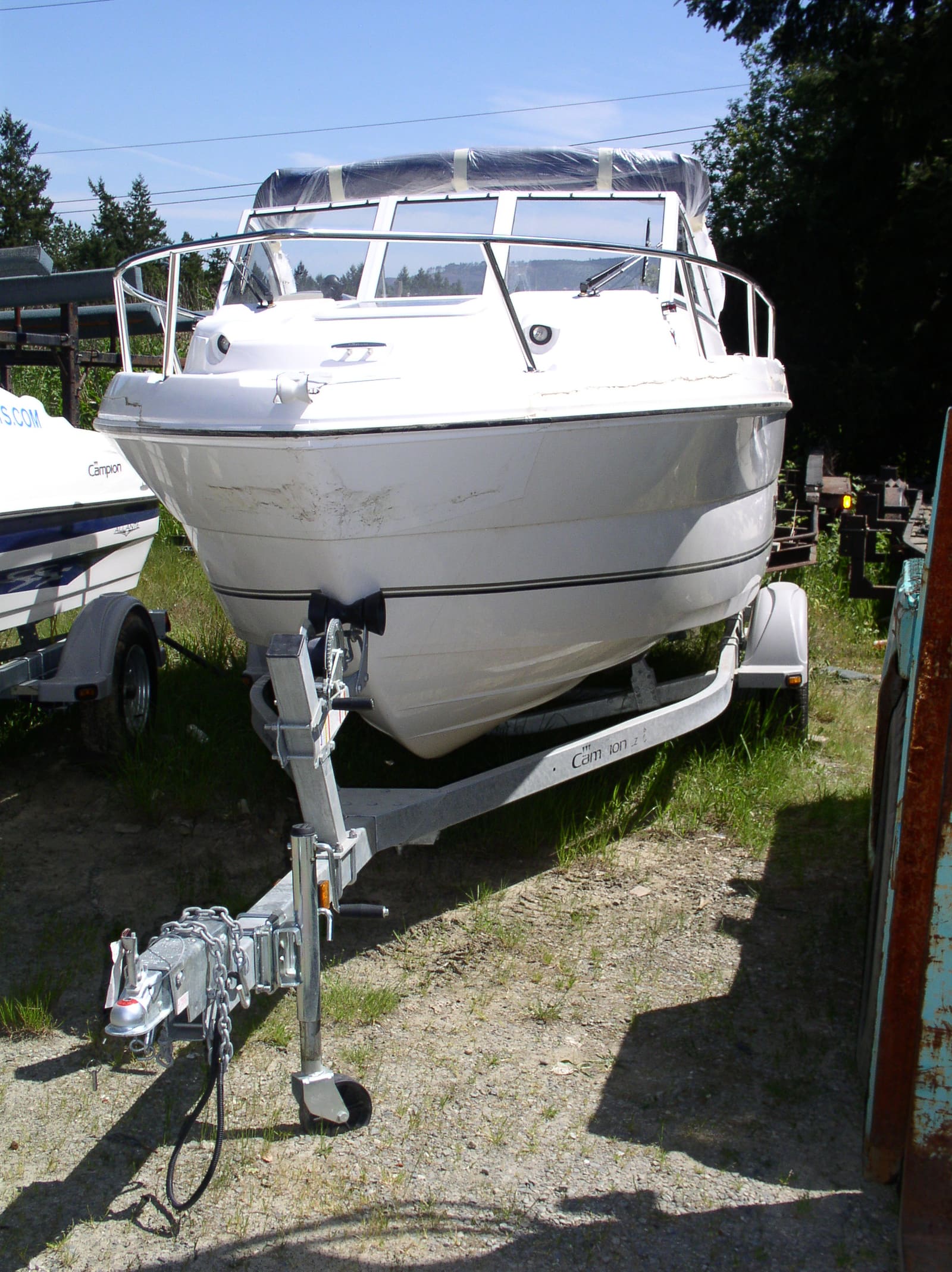
- Gelcoat: scuffs, scratches, cracks or chips from shipping or the lot (look closely at the bow and chines)
- Hull bottom: damage from trailer bunks or rollers
- Rub rail, cleats, rails and windshield: secure, no cracks
- Canvas and upholstery: tears, stains, missing snaps
- Trailer (if included): tires, lights, winch, strap, safety chains and brakes
Photograph anything wrong with a close-up and a wider shot. Add it to your punch list (step 11).
Federal rules (33 CFR 181.29) require two identical hull identification numbers: the main one on the outside of the transom on the starboard side, near the top, and a duplicate in a hidden spot inside. The numbers must be permanently attached so tampering would show.
- Read the 12-character HIN on the transom and compare it with the bill of sale, the manufacturer's certificate of origin and the registration application. One wrong character causes title problems later.
- Find the manufacturer's certification label, which states the boat complies with US Coast Guard safety standards (33 CFR 181.15).
- On most monohull powerboats under 20 feet, find the capacity plate near the helm with the maximum persons, weight and horsepower. Discover Boating notes these limits are legal requirements.
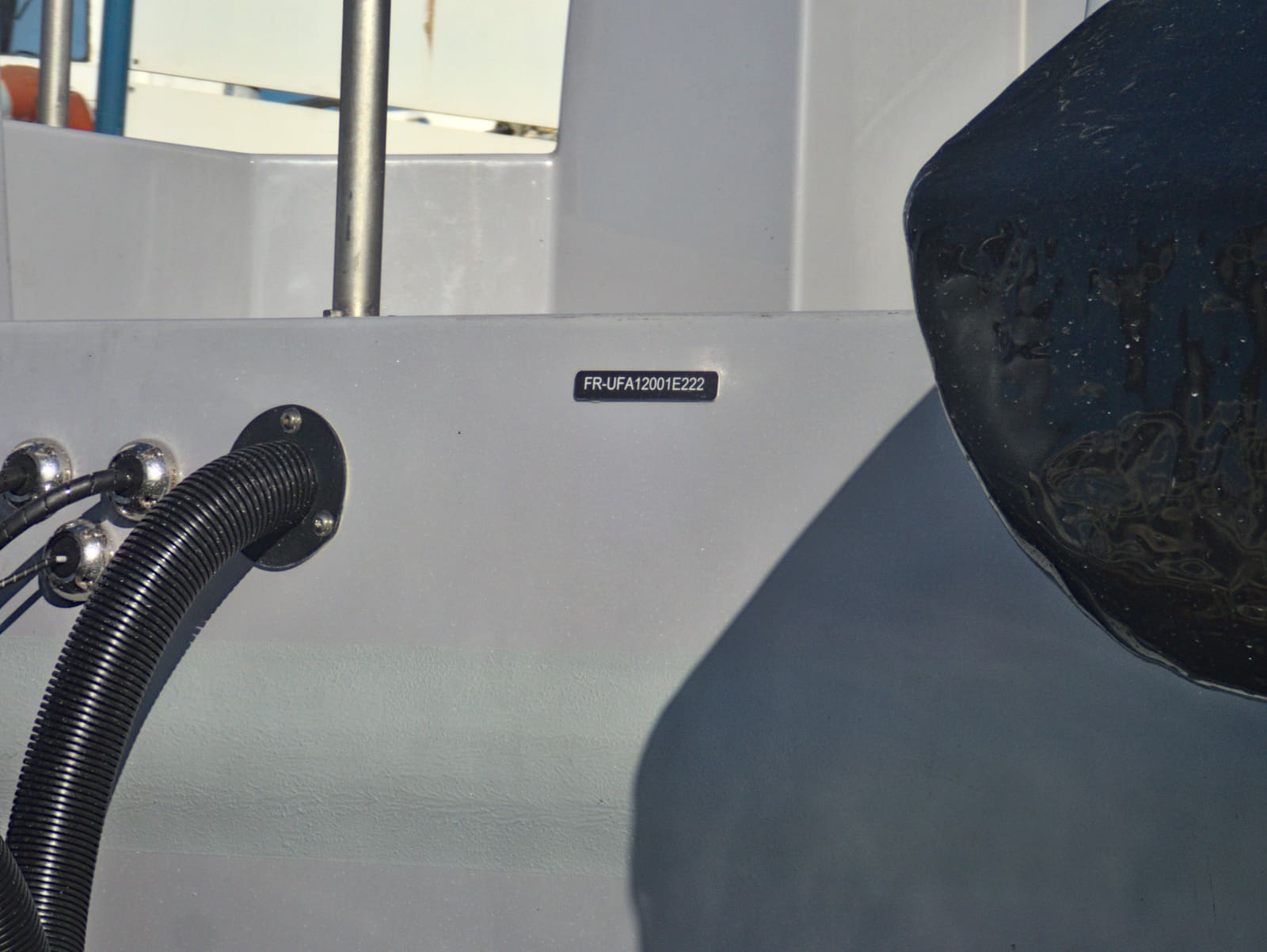
Photo: PtiBzh / Wikimedia Commons · CC0 1.0 You should go home with:
- Bill of sale showing the HIN, engine serial numbers and price
- Manufacturer's certificate (statement) of origin, or confirmation that the dealer is sending it to your state's titling office or your lender
- State registration paperwork, or temporary registration and instructions for numbers and decals (see our registration guide)
- Warranty documents for the boat, engine(s), trailer and electronics
- Owner's manuals for everything, including the engine operation and maintenance manual
- Keys and spares, including any lanyard or wireless kill-switch fob
- The completed PDI sheet and any service contracts
Mercury states that the dealer should complete warranty registration at the time of sale and submit it right away, and that coverage isn't effective until the product is registered. Registration with the engine maker is separate from state registration and titling. Yamaha's owner blog says its dealers register the engine online and Yamaha then mails a factory warranty card.
Before you leave:
- Ask for a printout or confirmation of the registration for each engine and for the boat itself.
- Make sure your name, address and pleasure use (not commercial) are correct. Mercury says wrong registration information can void coverage.
- Register electronics and other major gear yourself if the maker asks you to.
- Write down every engine serial number (see our engine serial number guide). Yamaha notes the engine's ID number is on the side of the motor, so you can still get warranty service on the road without the card.
Keeping your contact details current with the boat and engine makers also matters for safety recall notices. You can search for recalls through the US Coast Guard's boating safety site.
Find out exactly what safety equipment comes with the boat; many dealers include only some of it. Before the first trip you need, as required for your boat's size and type: wearable life jackets for everyone, a throwable device where required, fire extinguisher(s), visual distress signals for coastal waters, a sound-producing device, working navigation lights and ventilation. Check our USCG safety equipment guide, and consider a free Vessel Safety Check.
Ask the technician to show you each system and let you operate it yourself:
- Battery switch(es), breaker or fuse panel, charger and shore power (if fitted)
- Fuel fill, vent, tank shutoff and how to read the gauge
- Bilge pump: manual and automatic, and where the float switch and pump are
- Engine checks before start: oil level, trim fluid, cooling-water telltale or gauges
- Trim, tabs, steering, kill switch, horn, lights, electronics and VHF
- Drain plug(s), seacocks (if any), head and freshwater system
- Where the fire extinguisher, first-aid kit and fuel shutoffs are
Film short clips on your phone. They're a great reference later.
Run the boat the way you'll use it, with the dealer aboard:
- It starts easily, idles smoothly, shifts cleanly and the steering is free in both directions.
- It reaches its rated RPM range at wide open throttle, briefly and only if the engine maker's break-in rules allow it on day one. Mercury's warranty excludes damage from a propeller that keeps the engine from reaching its recommended RPM, so the dealer should confirm the prop is right. The same warranty also excludes damage from an engine mounted too high on the transom or run trimmed out too far, so ask the technician to confirm the engine height and show you a sensible trim range.
- Gauges read sensibly; no alarms; no unusual vibration or noises.
- Trim, tabs and electronics work underway.
- After the run, open the engine hatch and bilge: no water, fuel or oil leaks, no fuel smell.
See our sea trial guide for a full list of what to watch and listen for.
Break-in protects the engine and, for some makers, the warranty. Mercury's outboard break-in for most models is: the first 2 hours at varied throttle settings up to 4,500 rpm, then the next 8 hours in normal use but never more than 5 minutes at a time at wide open throttle. Mercury warns that an engine failure caused by improper break-in may not be covered. Other brands and engine types differ, so follow the operation and maintenance manual for your engine. Our engine break-in guide covers the general approach.
Most new engines have an early first service (often an oil and filter change and a general check) after a short number of hours or months; your manual gives the exact interval. Mercury's warranty says owners must follow the maintenance schedule, keep records, and that coverage can depend on proof of maintenance. It also lists corrosion protection (keeping anodes in place and replaced on schedule) as a condition.
- Ask the dealer when the first service is due and book it now.
- Ask whether you can do routine maintenance yourself without hurting the warranty, and which records you must keep. Discover Boating notes that many warranties don't cover non-factory repair work.
- Know the basic federal rule. Under the Magnuson-Moss Warranty Act (15 U.S.C. 2302(c)), a warrantor generally can't make your warranty depend on using a particular brand of part or service unless it provides that part or service free. That doesn't make every repair safe for the warranty: Mercury, for example, still excludes damage caused by improper service and can ask for proof of proper maintenance. If you do your own oil changes, use the oil and filters your manual specifies and keep dated receipts and log entries.
- Start a maintenance log on day one (see our maintenance log guide).
Write down every item you found: cosmetic damage, missing parts, anything that didn't work. Go through the list with the salesperson or service manager and get a signed note of what the dealer will fix and by when. Don't sign a delivery acceptance that says "no defects" if you've found some. Keep your photos with the list.
The dealer will often offer extended service plans at delivery. Don't decide under pressure. Some factory plans can be added later, within limits set by the maker (for example an hours limit or time window). Read our extended service plans guide, compare the cost with the factory warranty you already have, and decide at home.
Common mistakes
- Signing the paperwork first and inspecting the boat afterward.
- Leaving without confirmation that the engine warranty is registered.
- Not comparing the HIN on the transom with the bill of sale and title documents.
- Skipping the sea trial "because it's new."
- Running a new engine at full throttle for long stretches in the first hours.
- Missing the first scheduled service, then finding a warranty claim questioned.
- Assuming the boat comes with all the required safety gear.
When to call a pro
- Any fuel smell, fuel leak or water in the bilge on delivery: don't accept the boat until the dealer fixes and explains it
- Alarms, overheating, steering stiffness or shifting problems during the sea trial
- Paperwork doesn't match the boat (HIN, engine serials, or missing certificate of origin): sort it out before final payment
- Large or high-value boat: consider an independent marine surveyor for a new-boat inspection, especially if the boat was shipped
- Warranty problems: contact the boat or engine maker's customer service directly if the dealer can't resolve them
Tips
- Schedule delivery on a weekday morning with calm weather, when the service department is open.
- Bring a friend to take notes and photos while you listen.
- Keep all delivery documents in one folder, with scans in the cloud.
- Ask for the dealer's service contact and after-hours number in writing.
- Take a boating safety course before the first trip if you haven't already.
Official references
We read these to write this guide. Your engine's own manual always wins.
- Mercury Marine – Mercury Limited Warranty (registration, predelivery inspection, maintenance)
- Mercury Marine – How to Break In a New Mercury Outboard
- Yamaha Outboards – Outboard Warranties Are Like Insurance for Your Motor
- eCFR – 33 CFR 181.29, Hull identification number display
- eCFR – 33 CFR 181.15, Contents of certification labels
- Discover Boating – All About Capacity Plates
- Discover Boating – Boat Warranties 101
- Cornell LII – 15 U.S.C. 2302, Magnuson-Moss rules for written warranties (tie-in prohibition)
- USCG Boating Safety – Recalls
Safety: BoatMend is for information only and does not replace a certified marine technician. You are responsible for your safety and your boat. Read the full disclaimer.
Last updated 2026-10-26
Related guides
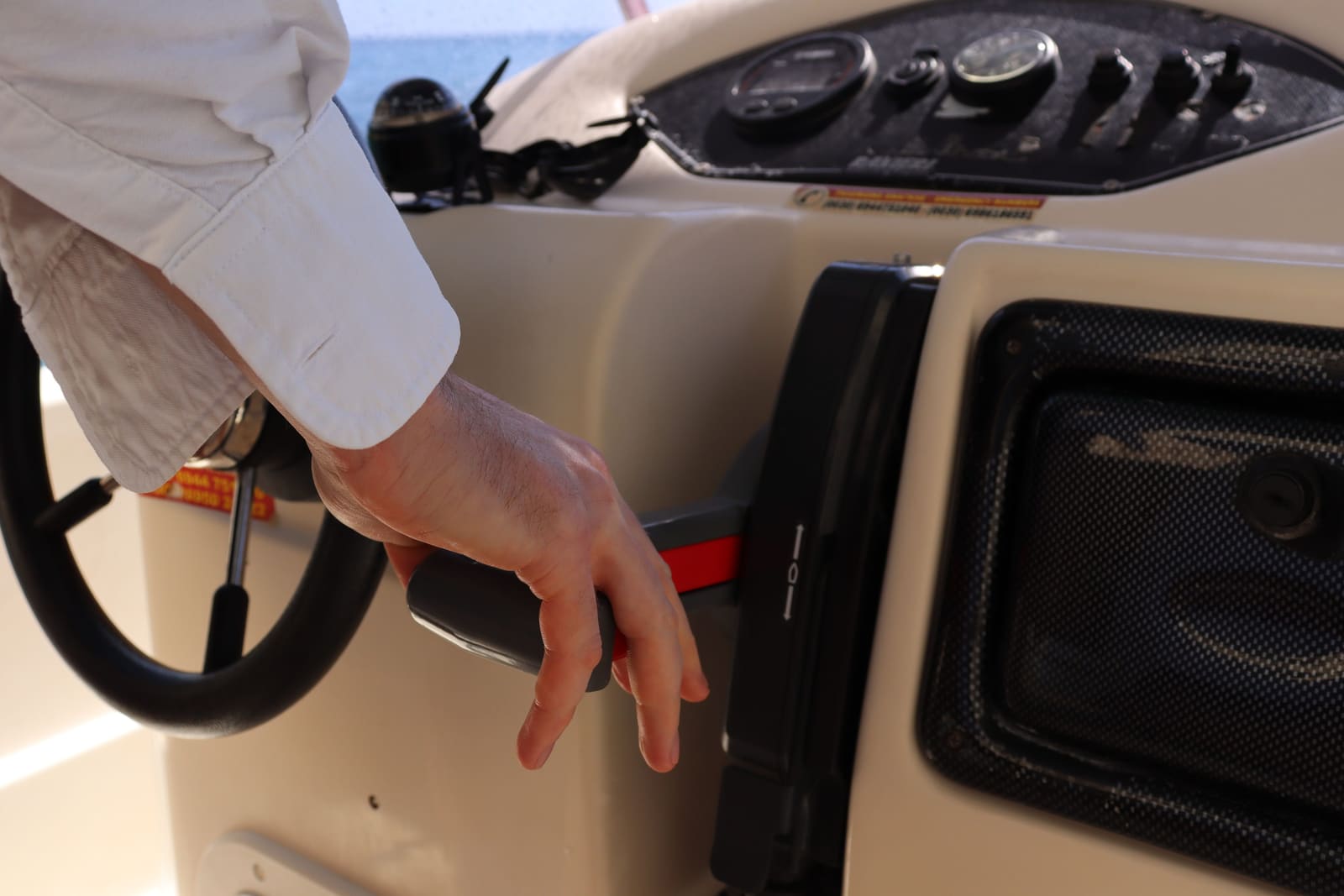
How to Break In a New or Rebuilt Boat Engine
The first hours on a new or rebuilt engine decide how well its piston rings seat and how long it lasts. Learn how to follow your maker's hour and RPM schedule, why you should keep changing the throttle, what to avoid (constant RPM, early full throttle, long idling), what to check every trip and when to do the first oil change.

How to Sea Trial Your Boat After Maintenance or Repair
A step-by-step test run after service work: dock checks first (leaks, fluids, steering, kill switch), then a gradual climb through the RPM range while you watch temperature and pressure, a wide-open-throttle check against your engine's spec, shifting and trim tests, and a bilge check afterward. Catch a loose clamp or a missed step at the dock, not miles out.
Extended Warranties and Service Plans for Boat Engines: Factory Plans vs Third-Party Contracts
Decide whether an extended service plan is worth it: how factory plans such as Mercury Product Protection and Yamaha Y.E.S. differ from third-party contracts, what they usually cover and exclude, why maintenance records decide claims, how deductibles, transfers and cancellations work, and the questions to ask before you sign. Practical guidance, not legal or financial advice.

USCG Required Safety Equipment Check by Boat Length
Walk through your boat and confirm you carry every piece of safety gear the US Coast Guard requires for your boat's length and type, and that none of it is expired or worn out. Missing or expired gear is one of the most common tickets on the water, and it is the gear you need when things go wrong.
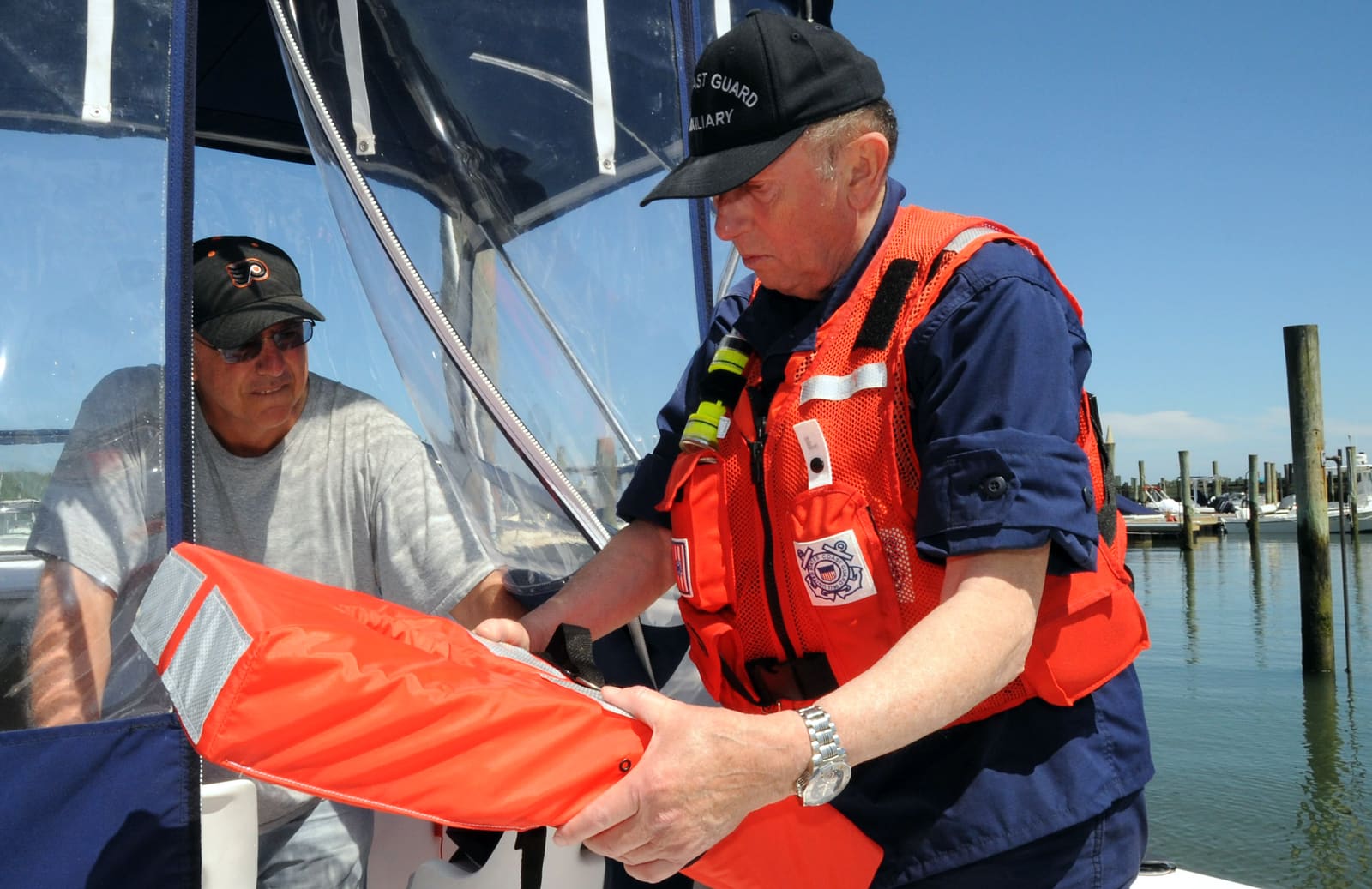
How to Prepare for a Free Vessel Safety Check
Volunteers from the Coast Guard Auxiliary and America's Boating Club will inspect your boat's safety gear for free, with no ticket if something is missing. Learn how to request a Vessel Safety Check, what the examiner looks at, how to get your boat ready and what to do with the fix list.
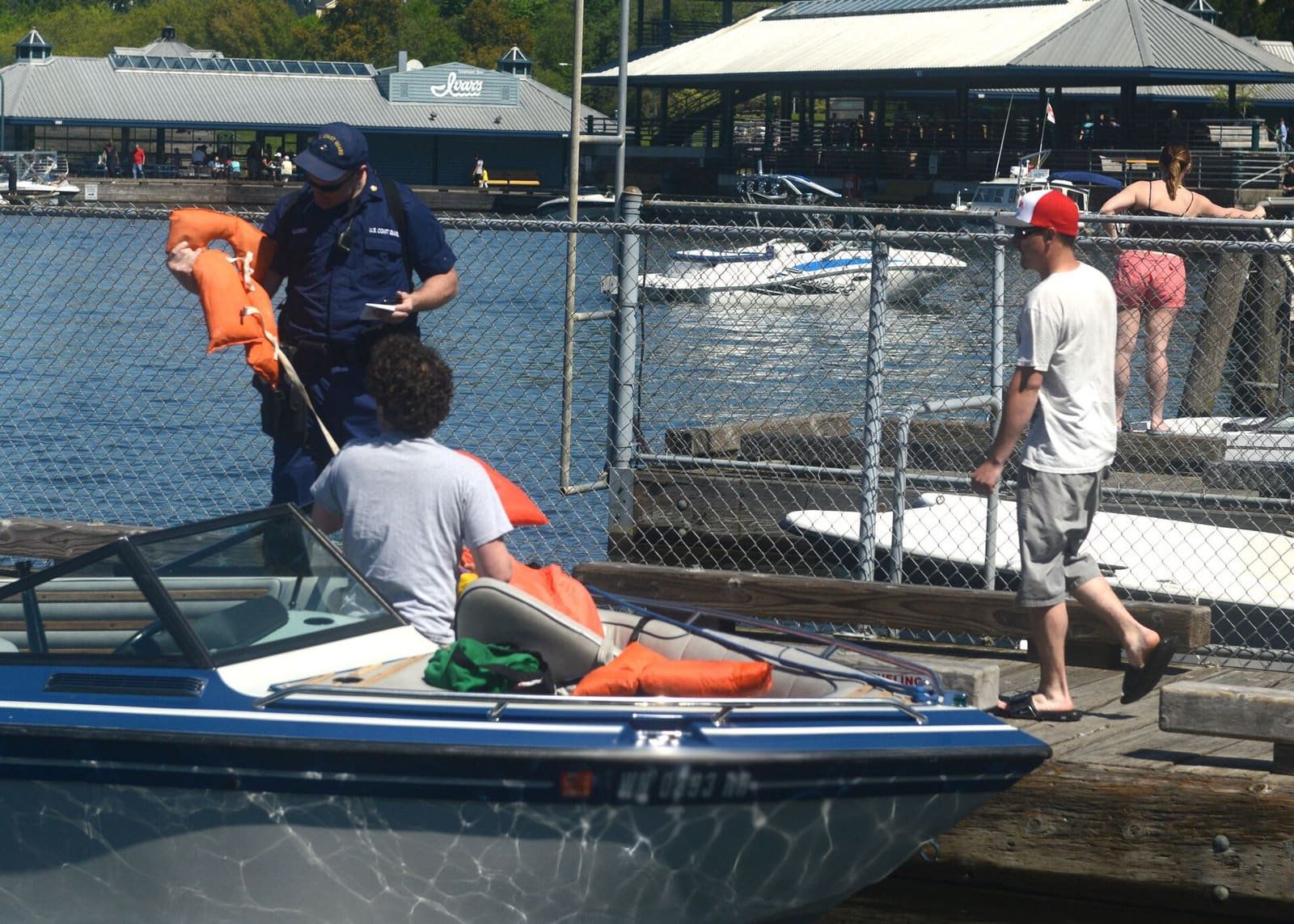
Boat Registration Numbers and Validation Decals: Federal Display Rules, State Placement and Renewals
Display your state registration number and validation decal the way federal rules (33 CFR 173 and 174) and your state require: size, block style, contrast, spacing, placement on the forward half, decal position, what documented boats show instead (name and hailing port), what to carry aboard, and how to never miss a renewal. States add their own details, so check your state boating agency.

How to Keep a Boat Maintenance Log and Organize Your Receipts
Set up a simple maintenance log that records the date, engine hours, work done, parts and who did it, and keep receipts and photos organized. Good records help with warranty and insurance claims, show buyers the boat was cared for and reveal wear patterns before something fails.
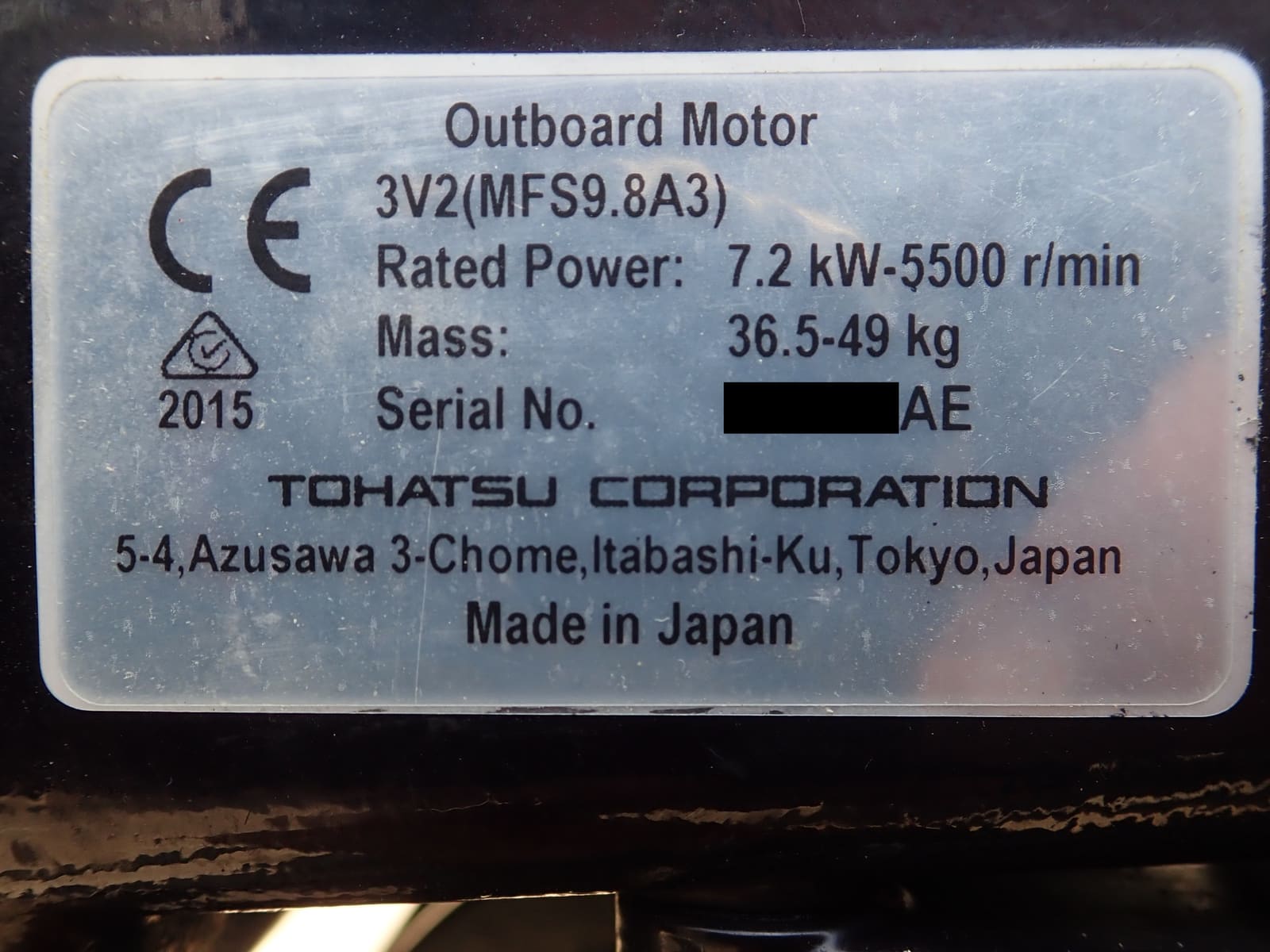
How to Find Your Engine's Serial Number, Model and Year (and Get the Official Manual)
Find the ID label on your outboard, sterndrive, inboard diesel or PWC, read the model and serial number correctly, tell it apart from the boat's HIN, and use it to open the free official owner's manual. It's the first step for ordering the right parts and following the right maintenance plan.
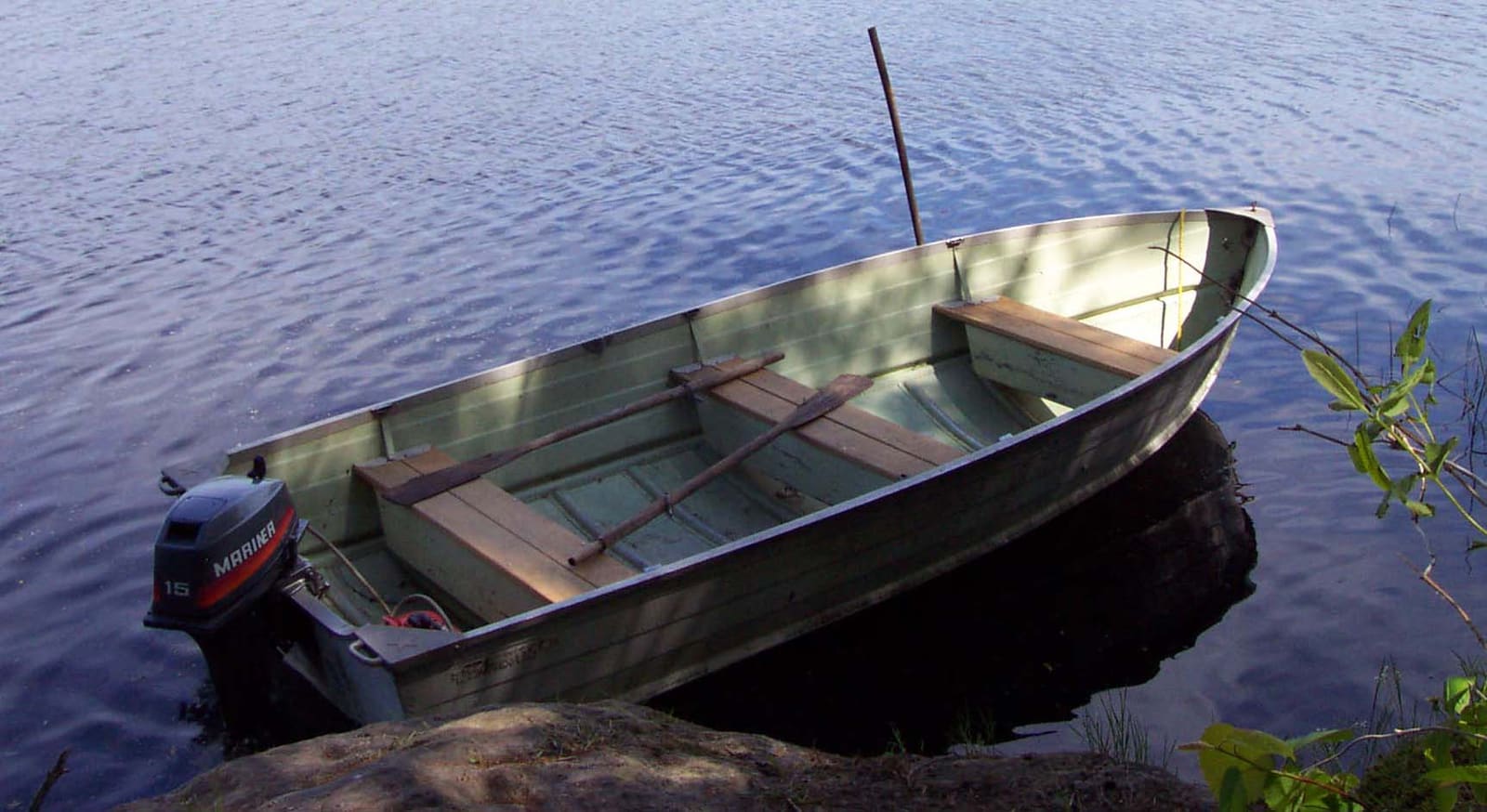
Missing or Faded Capacity Plate: How to Read It and Get a Proper Replacement
The capacity plate tells you how many people, how much weight and how much horsepower your boat can safely handle. Learn what each line means, which boats must have one under 33 CFR 183, how to order a replacement from the builder, what to do if the builder is gone, and why homemade numbers are a bad idea.
The Pre-Departure Safety Briefing: What to Tell Every Passenger (with a Printable Checklist)
A five-minute talk before you leave the dock turns guests into a crew that can help in an emergency. Cover life jackets, the engine cut-off switch, the fire extinguisher, how to call for help on the VHF, what to do if someone falls overboard, staying seated, seasickness and carbon monoxide near the stern, then use the printable checklist every trip.