Outboard or Sterndrive Rough or Surging Idle: Find the Cause, Cheapest Check First
An engine that shakes, hunts or surges at idle but runs fine on plane is telling you something specific. Learn how to read the pattern, then work in order from free checks (warm-up, tank vent, primer bulb, fuel) through plugs, air leaks, carburetor idle circuits and the idle air control valve, and know when it's time for a compression test or a dealer scan.
Time
1 h 30 min
Shop would charge
$150-600
Applies to
Outboard, Sterndrive (I/O)
Safety first: Run an outboard only in the water, on external flush muffs or in a test tank (not on the built-in flush port with the engine running unless your manual allows it), and run a sterndrive only in the water. Keep everyone clear of the propeller, flywheel and belts. On a sterndrive or any boat with an enclosed engine space, run the bilge blower before starting, as the label at the helm says. If you smell gasoline, see fuel on the engine or in the bilge, stop: don't start the engine, don't make sparks, ventilate, and get a technician; if it happens on the water, call TowBoatUS, Sea Tow or VHF 16. Don't spray carburetor cleaner or starting fluid around a running engine to "find" air leaks; it can catch fire on hot exhaust parts.
Owners often ask
- My outboard idles rough and surges but runs fine on plane. Where do I start?
- My motor idles fine in neutral but stumbles when I shift into gear. Why?
This guide walks you through it. Still stuck? Ask the AI Mechanic about your engine.
Tools
- Clear glass jar for a fuel sample
- Spark plug socket and ratchet
- Flashlight and an inspection mirror
- Screwdrivers and nut drivers for the cowling, air silencer or flame arrestor
- Flush muffs or a test tank (outboards on the trailer), or the boat in the water
- Notebook or the BoatMend log
- Fire extinguisher within reach
Parts & supplies
- Spark plugs specified in your owner's manual
- Fuel filter or fuel/water separator element specified for your engine
- Fresh fuel (ethanol-free if you can get it) and a marine fuel stabilizer
- Primer bulb or fuel line assembly, only if yours is faulty
Before you start
Read the pattern first. West Marine points out that when the roughness happens tells you more than any single test. Write down which of these fits:
- Rough only at idle, fine once you add throttle: idle mixture, the idle air control valve (fuel injection) or an air leak.
- Rough at all speeds, including cruise: ignition (plugs, wires, coils) or a general fuel supply problem. See the loss of power guide too.
- Rough only when cold, fine once warm: choke or cold-start enrichment, or just normal warm-up.
- Gets worse the longer it runs, especially on hot days: heat-related trouble such as vapor lock, or cooling.
- Surges up and down rather than shaking: idle air control, carburetor sync, or fuel delivery that comes and goes.
- Fine in neutral, rough in gear: gear adds load at idle and shows up a marginal problem; the cause is usually the same as the others above.
If the engine actually dies when you pull back to idle, or won't keep running after it starts, the starts then dies guide is the better fit.
Carbureted or fuel-injected? Many steps apply to both, but carburetors have idle jets and mixture screws, while fuel-injected (EFI) engines have an idle air control valve and a computer that stores fault codes. Your owner's manual or the engine's model tag will tell you which you have.
Steps
A slightly rough idle for the first minute or so after a cold start is normal, West Marine says, especially in cool weather, while choke or enrichment is adjusting the mixture. Many EFI engines also idle higher when cold. Judge the idle only once the engine is fully warm and its idle has settled. If it smooths out when warm, check the choke (carbureted) and leave it there.
A closed or blocked tank vent lets a vacuum build in the tank, which starves the engine and can make it hunt and surge. Open the vent on a portable tank. On a built-in tank, check the vent fitting on the hull for mud-dauber nests or salt crust. Make sure you have plenty of fuel and that any fuel valves are fully open.
With the engine idling, gently squeeze the primer bulb a few times.
- Idle smooths out: the engine is short of fuel. Look for a cracked or soft bulb, a leaking fuel line connector or O-ring, a clogged filter, a blocked vent or a sticking anti-siphon valve.
- No change: fuel supply is probably not the issue; move on.
- Bulb stays flat or won't firm up: suspect a bad bulb, a loose connector or an air leak on the suction side. Air sucked in at a fitting makes the idle hunt even though no fuel drips out.
The primer bulb and fuel line guides cover replacements.
Old or wet fuel is one of the most common causes of a rough idle, and it can still run the engine well enough at higher rpm. If the boat sat for a few months, suspect the fuel first. Mercury's simple check: drain a few ounces from the bottom of the tank or filter into a clear glass jar and let it settle for about 30 minutes.
- Clear bubble or layer at the bottom: water.
- Cloudy, gel-like layer: ethanol phase separation.
- Dark, varnish-smelling fuel: stale.
Yamaha warns that once ethanol fuel absorbs enough water, the water-alcohol mix sinks to where the pickup is. Any of these means the tank needs pumping out and the filters changing (see the ethanol fuel care guide). Dispose of bad fuel at a hazardous waste site.
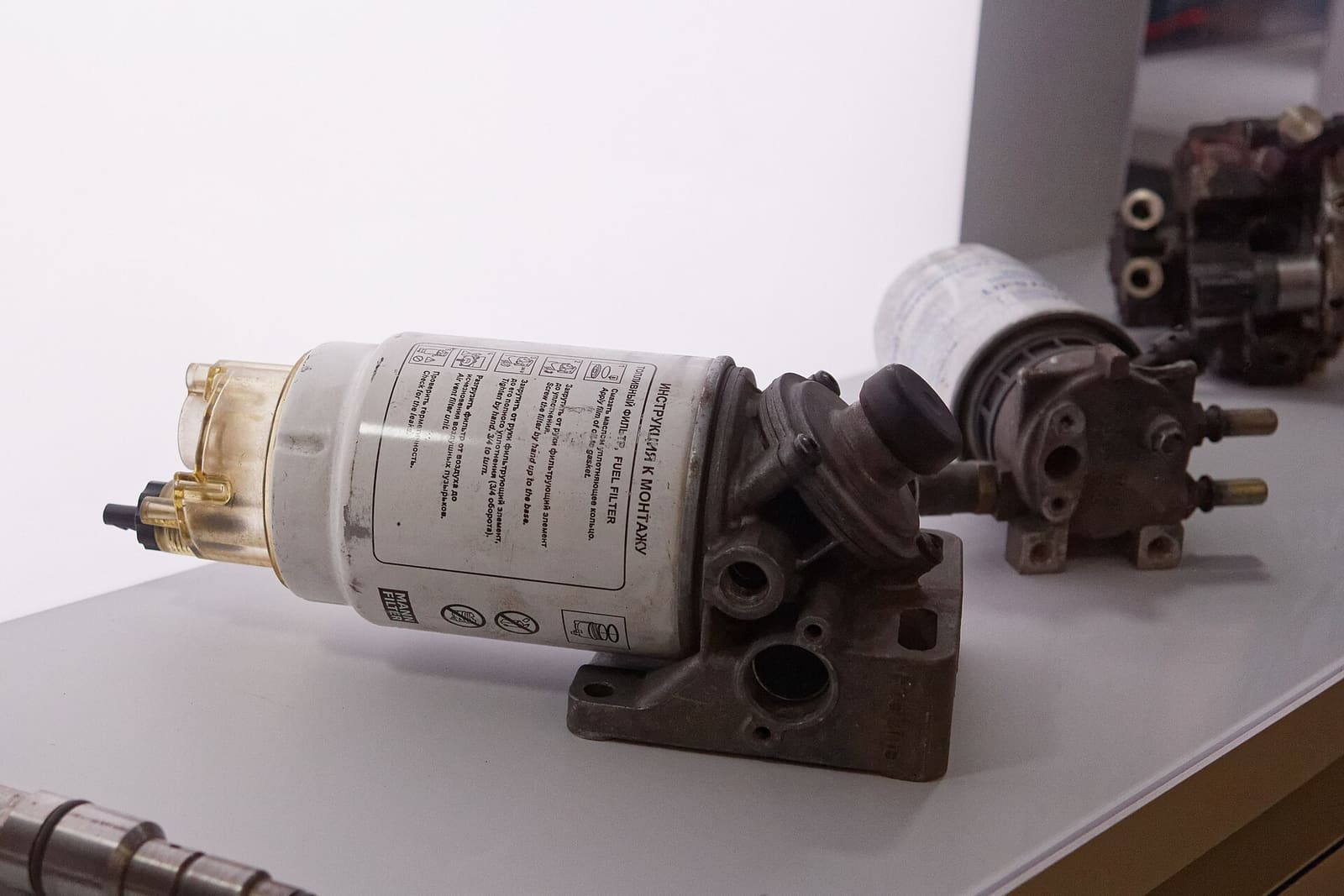
Drain the water-separating filter's bowl if it has one, and replace the element on schedule or now if you found water (see the fuel water separator guide). Many outboards also have a small filter on the engine. Boating Magazine lists a clogged fuel filter among the top reasons engines sputter, and suggests carrying a spare. Prime and check for leaks before starting.
West Marine notes a fouled plug can fire well enough at higher rpm but struggle with the lean, finely metered mixture at idle. With the engine off and cool, remove the plugs one at a time and look:
- Black, dry soot: running rich, choke sticking or lots of idling.
- Wet, oily: too much oil (two-strokes) or oil getting into that cylinder.
- One plug different from the rest: that cylinder has its own problem; note which one.
- Light brown with fairly sharp edges: healthy. Yamaha describes this as what a good four-stroke outboard plug should look like, and suggests pulling and checking four-stroke plugs every 100 hours or every other season (typical; confirm in your manual).
Replace them with the type your manual specifies and set any gap to its spec (see the spark plugs guide). While you're there, check that every plug wire and boot is pushed fully home and isn't cracked.
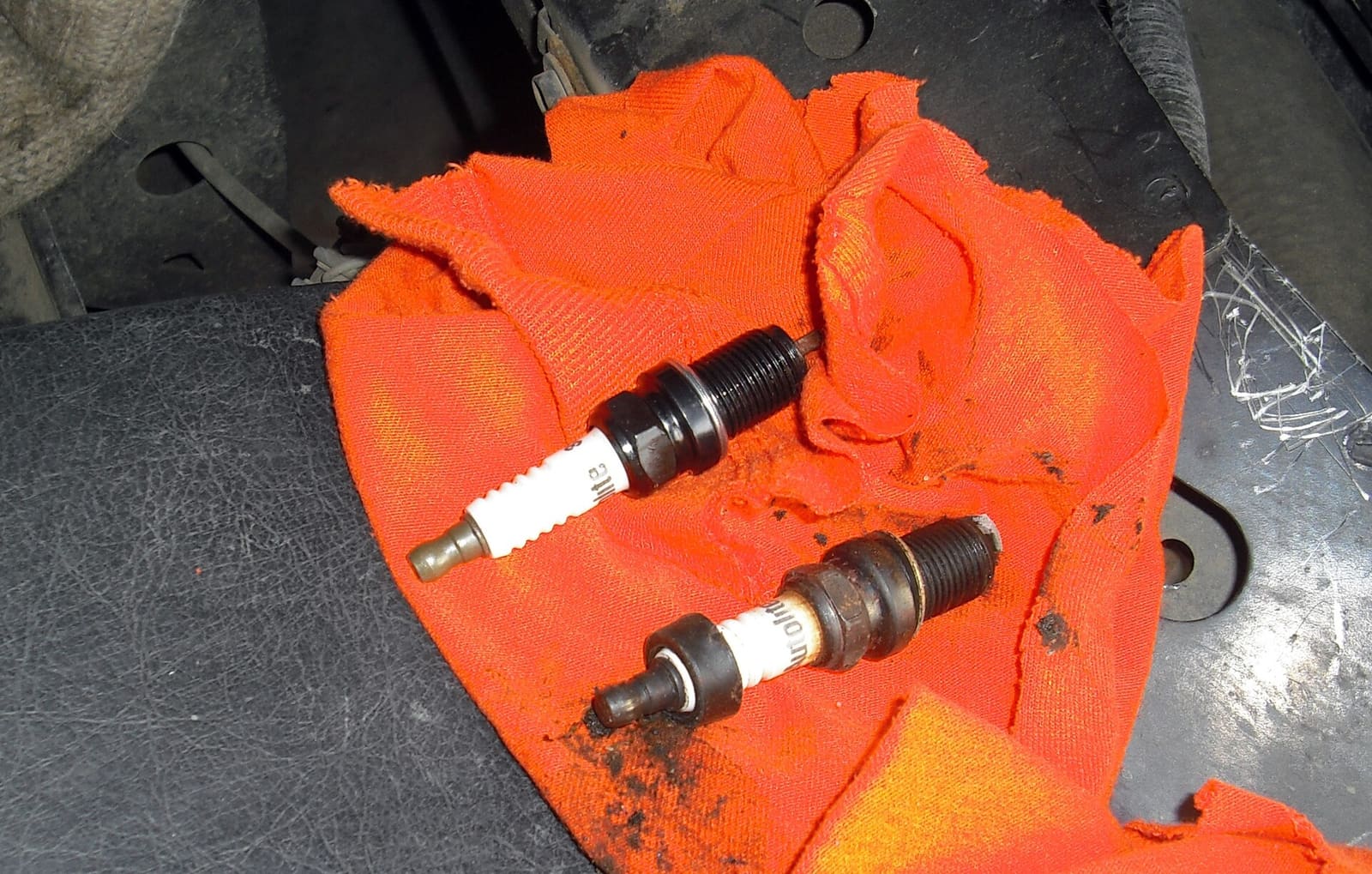
An old, sooty plug next to its replacement: a fouled plug may still run at cruise but misfire at idle. Photo: Myke2020 / Wikimedia Commons · Public domain Air that sneaks in past the throttle has a big effect at idle and little at cruise, which is why an air (vacuum) leak so often shows up as a rough or high idle. With the engine off, look and feel for:
- cracked, split or loose vacuum hoses
- loose intake or carburetor mounting bolts
- gaskets that are wet, dry-cracked or blown out
- a missing cap on an unused vacuum fitting
With the engine idling, you may hear a hiss. Keep your hands clear of moving parts. Don't spray cleaner to find leaks; a shop can use a smoke tester safely.
A blocked air intake makes the mixture rich. On outboards, look under the cowling at the air silencer for leaves, nests or a rag left from winterizing. Yamaha points out that birds and bugs like to build in outboard air intakes and recommends checking them for nests and debris; a cowling cover helps keep them clear while the boat sits. On a gas sterndrive or inboard, clean the flame arrestor as described in the flame arrestor guide, and reinstall it; never run without it.
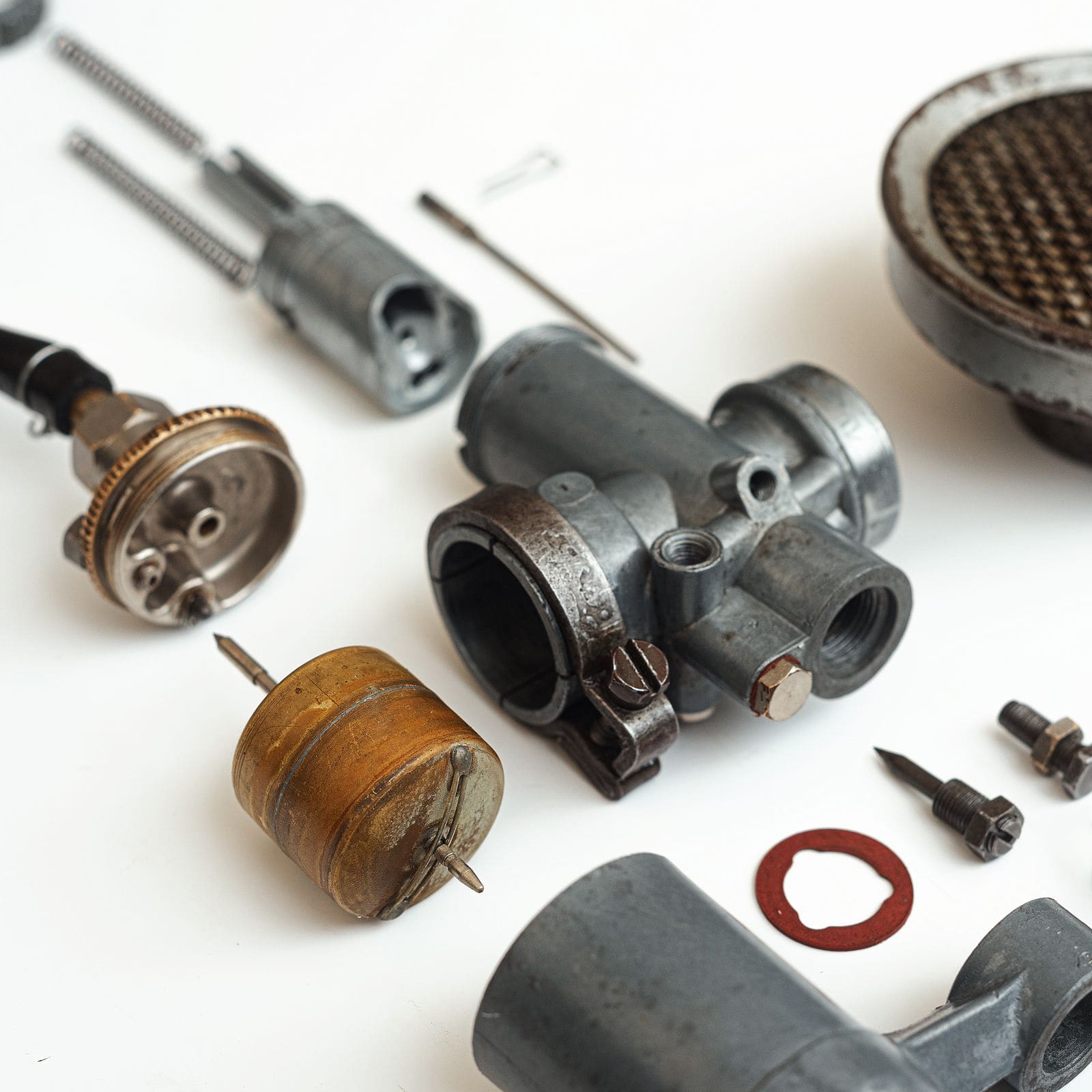
Fuel that sat in a carburetor can leave varnish in the tiny idle passages and jets, which upsets idle while doing little harm at full throttle, where bigger passages do the work. If the fuel was old and the plugs are fine, the carburetor cleaning guide shows how to clean the bowls and idle jets. Some owners try a fuel-system cleaner in fresh fuel first; a badly gummed carb needs taking apart.
Many carburetors have an idle mixture screw. Vibration or an earlier adjustment can leave it off. West Marine says small adjustments following your maker's documented procedure are reasonable for a handy owner, but they are easy to overdo. Before you touch one, count and write down the turns as you gently seat it, so you can return to where you started. On engines with several carburetors, the carbs also have to open together (sync); that's a dealer job with the right gauges.
On EFI engines, the idle air control (IAC) valve meters the air that keeps idle steady. A dirty or sticking one is a common cause of rough, surging or high idle, and also of stalling as you throttle back. Some service manuals describe cleaning it; others call for replacement. Before you buy parts, have a dealer read the engine's fault codes and live data, because an air leak, a sensor fault or a fuel pressure problem can look the same. Check also for any warning horn or light at the helm (see the engine warning alarms guide).
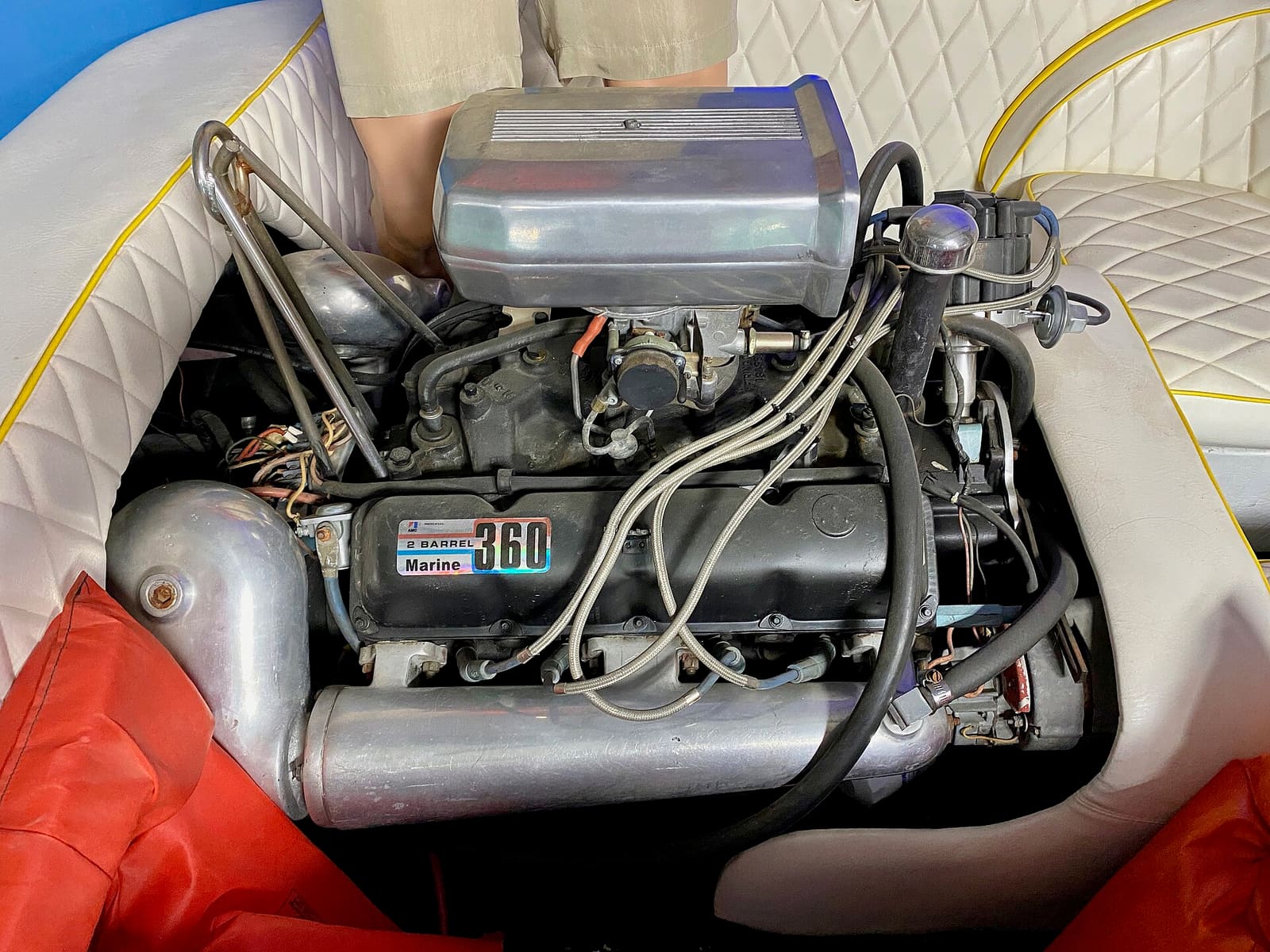
Older carbureted sterndrives with a distributor need periodic plug, wire, cap and rotor service, and wrong ignition timing causes rough running. The sterndrive ignition tune-up guide covers what owners can check. Look at the condition of the cap and rotor and the plug wires before anything else.
Too much oil makes a two-stroke foul plugs, smoke and idle poorly. If you premix, check your ratio against the manual. If the engine has oil injection, see the two-stroke smoke troubleshooting guide.
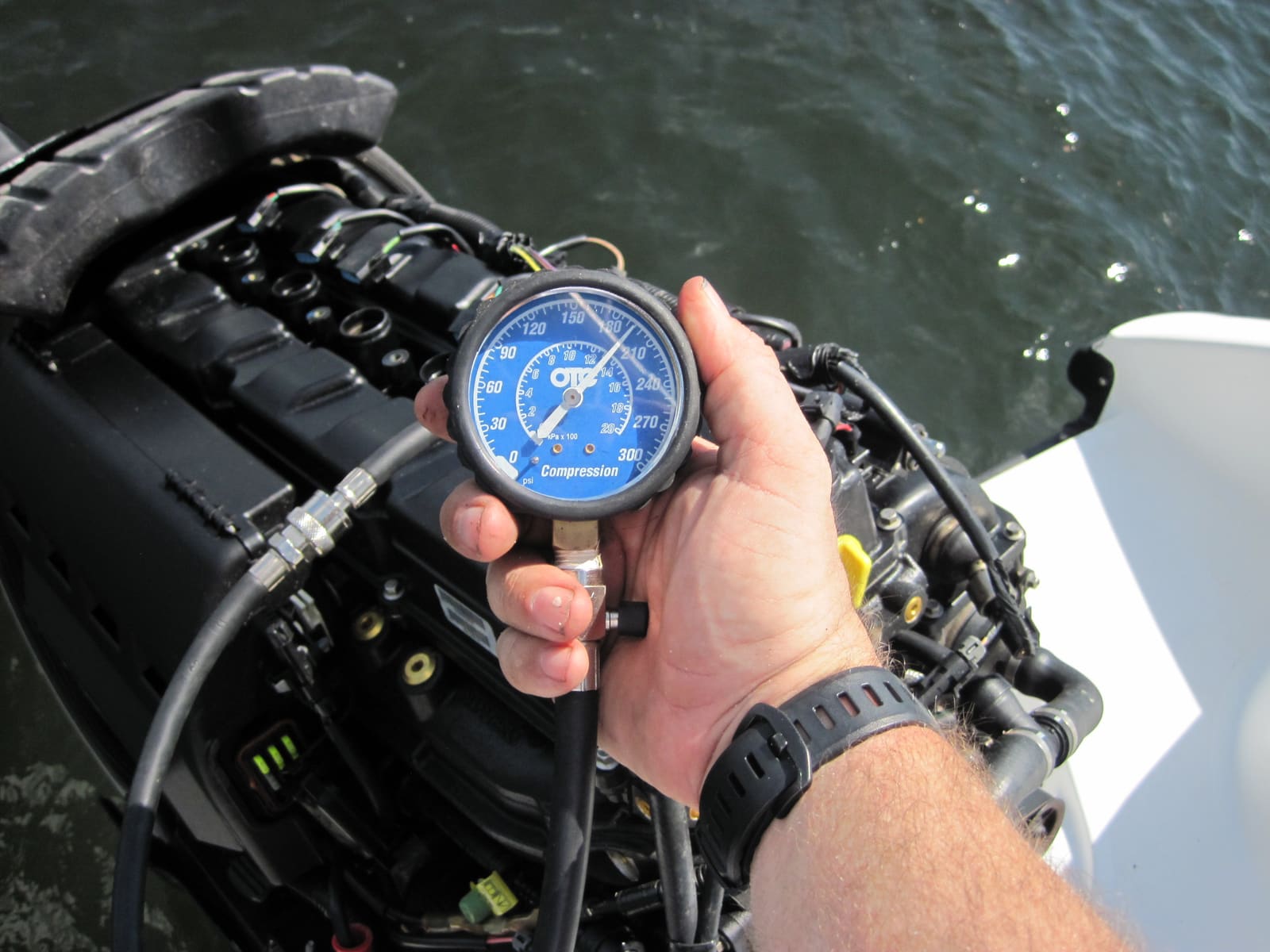
If fuel, plugs, air leaks and the idle system all check out, a cylinder with low or uneven compression could be the cause; West Marine puts this test after the cheaper checks. The compression test guide explains how to do it and what the readings mean.
Write down the pattern, the checks, the fix and the idle rpm afterward in BoatMend. Rough idle often comes back with the next tank of old fuel, and your notes will save time next season.
Common mistakes
- Judging the idle on a cold engine, before it has warmed up
- Turning carburetor mixture screws before checking fuel, plugs and air leaks
- Spraying carb cleaner or starting fluid on a running engine to look for leaks
- Buying an IAC valve or a fuel pump without first having fault codes read
- Changing plugs but not the fuel that fouled them
- Ignoring a soft primer bulb or a leaky connector because "no fuel is dripping"
- Running the engine on the built-in flush port or out of the water
When to call a pro
- Any fuel smell or fuel leak
- Fault codes, warning horns or a check-engine light on an EFI engine
- Carburetor sync on multi-carb engines, or a carb that needs a rebuild
- Low or uneven compression
- Rough idle with overheating, low oil pressure or unusual noise
- Ignition timing and fuel pressure checks on sterndrives
Tips
- Run the engine regularly; idle circuits and injectors stay cleaner on fresh fuel.
- Keep the tank filled between outings and before storage, as Mercury suggests, and add stabilizer for longer layups (Boating suggests it for storage of more than three months), running the engine long enough to get treated fuel into it.
- Carry spare plugs, a spare fuel filter and a primer bulb on board.
- Note your normal warm idle rpm when the engine is running well. It makes the next diagnosis much easier.
Official references
We read these to write this guide. Your engine's own manual always wins.
- West Marine – Why Won't My Outboard Idle Smoothly?
- West Marine – Diagnosis Guide, Engine Stalls When Throttling Down?
- Mercury Marine – Fuel Basics (checking for water and phase separation)
- Yamaha Outboards – Maintenance Matters, Fuel & Fuel System (ethanol, water, debris)
- Yamaha Outboards – Maintenance Matters, Additional Tasks (spark plugs, air intake passages)
- Boating Magazine – Most Common Boat Engine Problems and How to Fix Them
Safety: BoatMend is for information only and does not replace a certified marine technician. You are responsible for your safety and your boat. Read the full disclaimer.
Last updated 2026-11-06
Related guides
Engine Starts Then Dies - Troubleshooting Guide
Track down why your boat engine fires up and then stalls, whether at idle, when you shift into gear, or after a few minutes of running. Most causes are in the fuel supply and can be checked with no special tools.
How to Inspect and Replace Spark Plugs
Pull, read and replace the spark plugs on a gas outboard, sterndrive, inboard or PWC. Fresh, correctly gapped plugs help the engine start easily and run smoothly, and the old plugs tell you a lot about the engine's health.
How to Clean the Carburetor on a Small or Older Outboard
Old fuel turns to varnish and plugs the tiny jets in a carburetor, so the engine only runs on choke, surges or will not idle. Learn when the carburetor really is the problem, how to drain and clean it, and when a rebuild kit or a replacement makes more sense.
Loss of Power, Hesitation or Misfire - Troubleshooting Guide
Figure out why your engine bogs down, stumbles, will not reach full rpm or runs rough. Work from simple checks like trim, prop and fuel filter to ignition and engine protection modes before paying for diagnostics.
How to Diagnose and Replace an Outboard Primer Bulb
A primer bulb that won't firm up, collapses while you run, stays rock hard or weeps fuel is telling you something. Learn what each symptom means, how to rule out the tank vent and connectors first, then fit a low-permeation bulb with the arrow toward the engine, clamp it right and test it.
How to Replace a Fuel/Water Separating Filter (and Check for Water in Your Fuel)
Swap the spin-on fuel/water separator on your gas boat and learn to spot water and ethanol phase separation before it stalls the engine. It is one of the cheapest jobs on the boat and one of the best protections for a fuel-injected engine.
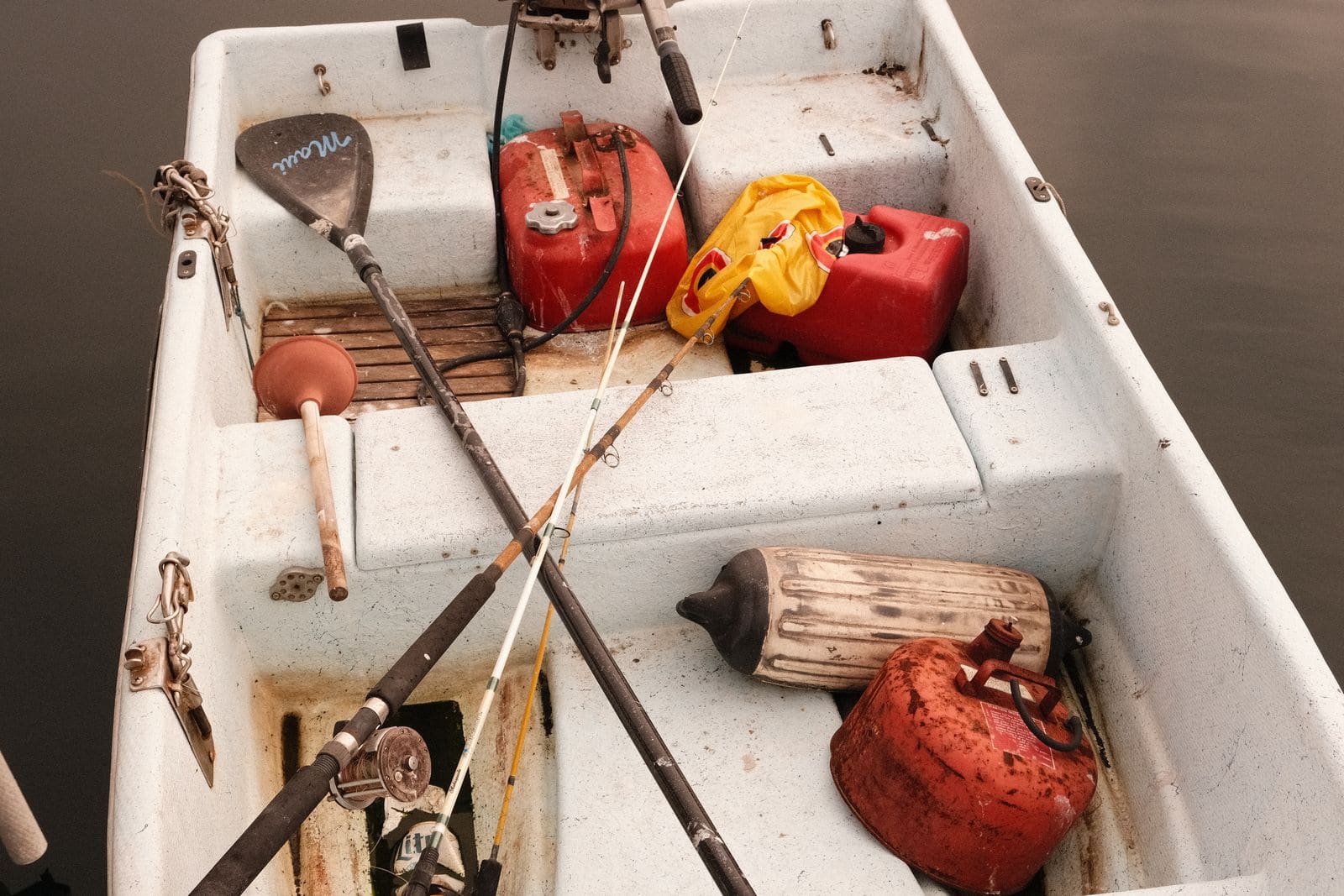
Ethanol (E10) Fuel Care: Stabilizer, Phase Separation, Fuel Lines and Tank Vents
Keep E10 gasoline from damaging your boat engine. Learn how to use stabilizer, test for water and phase separation, and inspect the fuel lines, primer bulb, anti-siphon valve and tank vent. Most fuel-related breakdowns start with one of these.
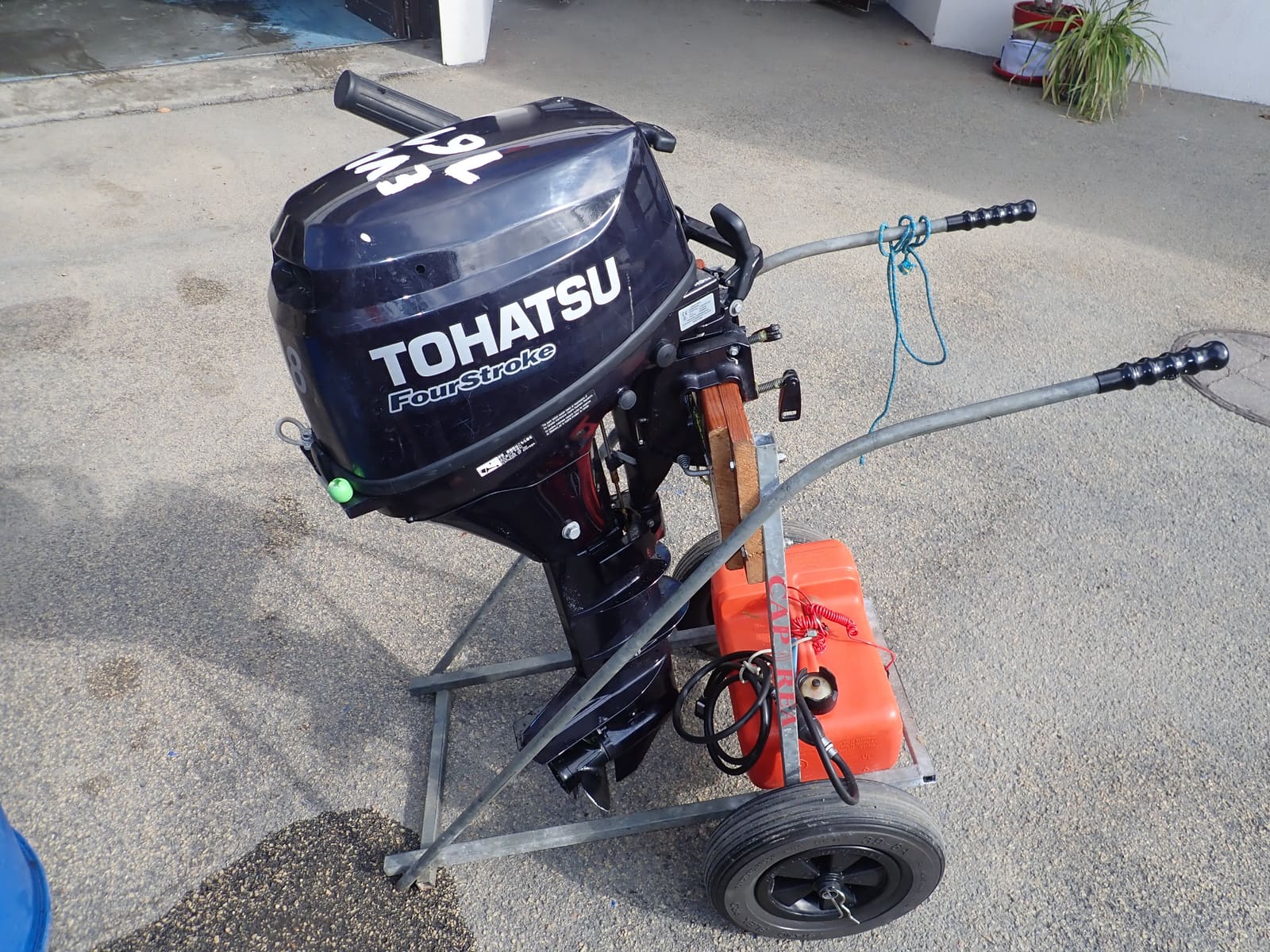
How to Replace an Outboard Fuel Line and Primer Bulb
A cracked hose or a stiff primer bulb can leak gasoline, starve your engine or shed rubber into the fuel. Learn how to choose Coast Guard-rated fuel hose, the right connectors for your engine brand and good stainless clamps, install the bulb pointing the right way, leak-test the job and get rid of the old parts safely.
Fuel Anti-Siphon Valve: Diagnosing a Sticking Valve and Replacing It Safely
The anti-siphon valve at your built-in fuel tank stops gasoline from draining into the bilge if a fuel line breaks, but a cheap or sticky one can starve the engine at speed. Learn how to tell a restricted valve from a blocked vent or filter, how to clean or replace it with a quality valve of the right type, and why you should never pull the check ball out.
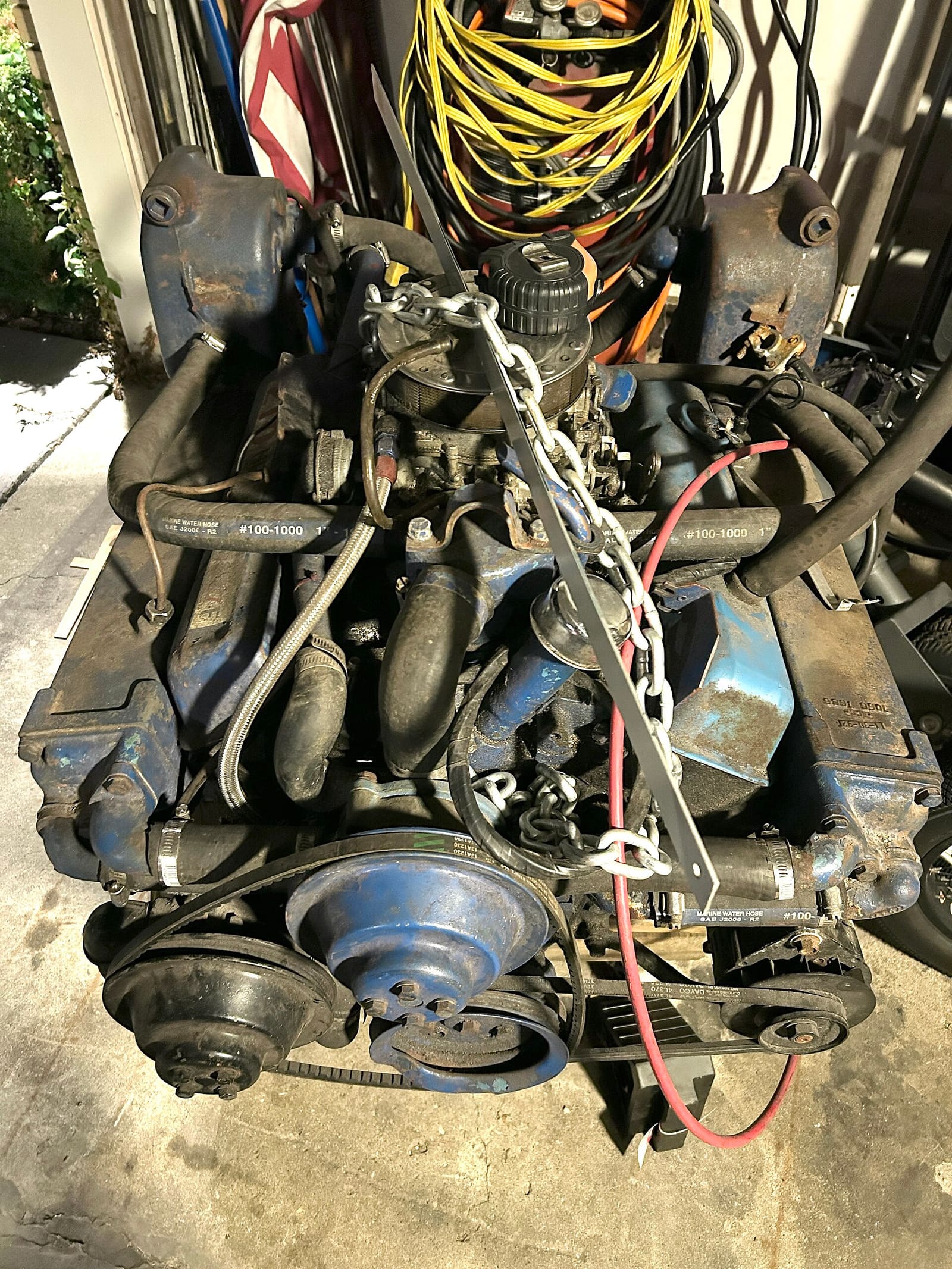
How to Inspect and Clean a Backfire Flame Arrestor
Every gasoline inboard and sterndrive engine must have a backfire flame arrestor to stop a backfire from setting the engine compartment on fire. Learn what the rules require, how to spot a clogged or damaged arrestor, how to clean it the way your engine maker allows, and why you must never run the engine without it.
Ignition Tune-Up on an Older Sterndrive or Inboard V6/V8
Older carbureted sterndrive and inboard V6 and V8 engines need regular spark plugs, plug wires, distributor caps and rotors to start easily and run smoothly. Learn the signs a tune-up is due, how to replace these parts one at a time, why only marine ignition-protected parts belong in a gas engine bay, and why ignition timing is a job for a shop.
How to Do a Compression Test on an Outboard, Sterndrive, Inboard or PWC
A compression test tells you whether the pistons, rings, valves and head gasket in each cylinder are sealing. Learn when to do one, how to do it safely, how to read the numbers by comparing cylinders, and what a wet test and a leak-down test add.
EFI Outboard Vapor Separator Tank (VST) and Injectors - Symptoms, Filters and When It's a Dealer Job
On a fuel-injected outboard, the vapor separator tank holds fuel right at the engine and feeds the high-pressure pump and injectors. Learn why ethanol varnish and debris clog its filter, how a starving VST feels (stalls at speed, won't hold RPM), what you can safely maintain yourself, and when it's time for the dealer.
Vapor Lock and Hot Restarts: Why Your Boat Won't Start After a Stop on a Hot Day
On hot days, fuel can boil into vapor in the lines, carburetor or fuel system after you shut down, so the engine cranks but won't start, or starts and dies after a fuel stop. Learn how to recognize heat soak, restart a hot engine the right way, and reduce the problem with fuel choices, ventilation and line routing.
Two-Stroke Smoking More Than Usual - Troubleshooting Guide
Tell normal two-stroke smoke from a warning sign, then work through the usual causes in order, from the oil mix and choke to spark plugs, oil injection, carburetor and overheating, and know when to shut down.
Fuel Smell on Board: What to Do and How to Find the Source
A gasoline smell on a boat is a fire and explosion warning. Learn what to do in the first minutes, the most common sources (fill and vent hoses, tank fittings, fuel lines, carburetors and injectors, overfilling), how to look safely, and when to stop and call a pro.
Engine Warning Horn and Dash Lights: What They Usually Mean and What to Do
Learn what a warning horn, beeps or a dash light usually mean on a boat engine, from overheating and low oil pressure to water in the fuel and reduced-power (limp) mode. Find out what to do right away and when to stop the engine. Patterns differ by brand, so match what you hear and see to your owner's manual.