Marina and Storage Liens: How Lien Sales Work, Buying a Lien-Sale Boat, and Not Losing Yours
How unpaid slip, storage or repair bills turn into a lien and then a sale, using Florida and California as examples; what an owner can do to stop it; and how a buyer checks that a lien-sale or abandoned boat comes with paperwork the state will actually title. Every state has its own process and deadlines, so confirm with your state agency.
Time
2 h
Applies to
All engines
Safety first: This guide is practical help, not legal advice. Lien and abandoned-boat laws are different in every state (and federal maritime law can apply to documented boats), deadlines are short, and mistakes can cost you the boat or the money you paid. If you've received a lien notice, or you're about to pay real money for a lien-sale boat, call your state's boat titling agency and talk to an attorney who handles marine or lien matters. Never move or take a boat that is being held for a lien; that can be a crime.
Owners often ask
- The marina sold an abandoned boat to me. What paperwork do I need to get a title?
- I got a lien notice from my storage yard. How long do I have before they sell my boat?
- I cannot afford to keep my old boat anymore. Is there a way to get rid of it for free?
This guide walks you through it. Still stuck? Ask the AI Mechanic about your engine.
Tools
- Phone camera (HIN, notices, paperwork)
- Folder for the storage contract, bills, letters and receipts
- Notebook for dates, names and deadlines
Before you start
A lien is a legal claim against property until a debt is paid. A possessory lien is one where the business holding your boat can keep it until you pay. Florida's law, for example, gives a marina a possessory lien for storage and dockage fees, repairs and other work, and the costs of preserving and selling the boat, starting from the day the boat arrived. If the bill goes unpaid long enough and the business follows the state's steps, it can sell the boat to pay the debt. That's a lien sale.
Who can end up holding a lien:
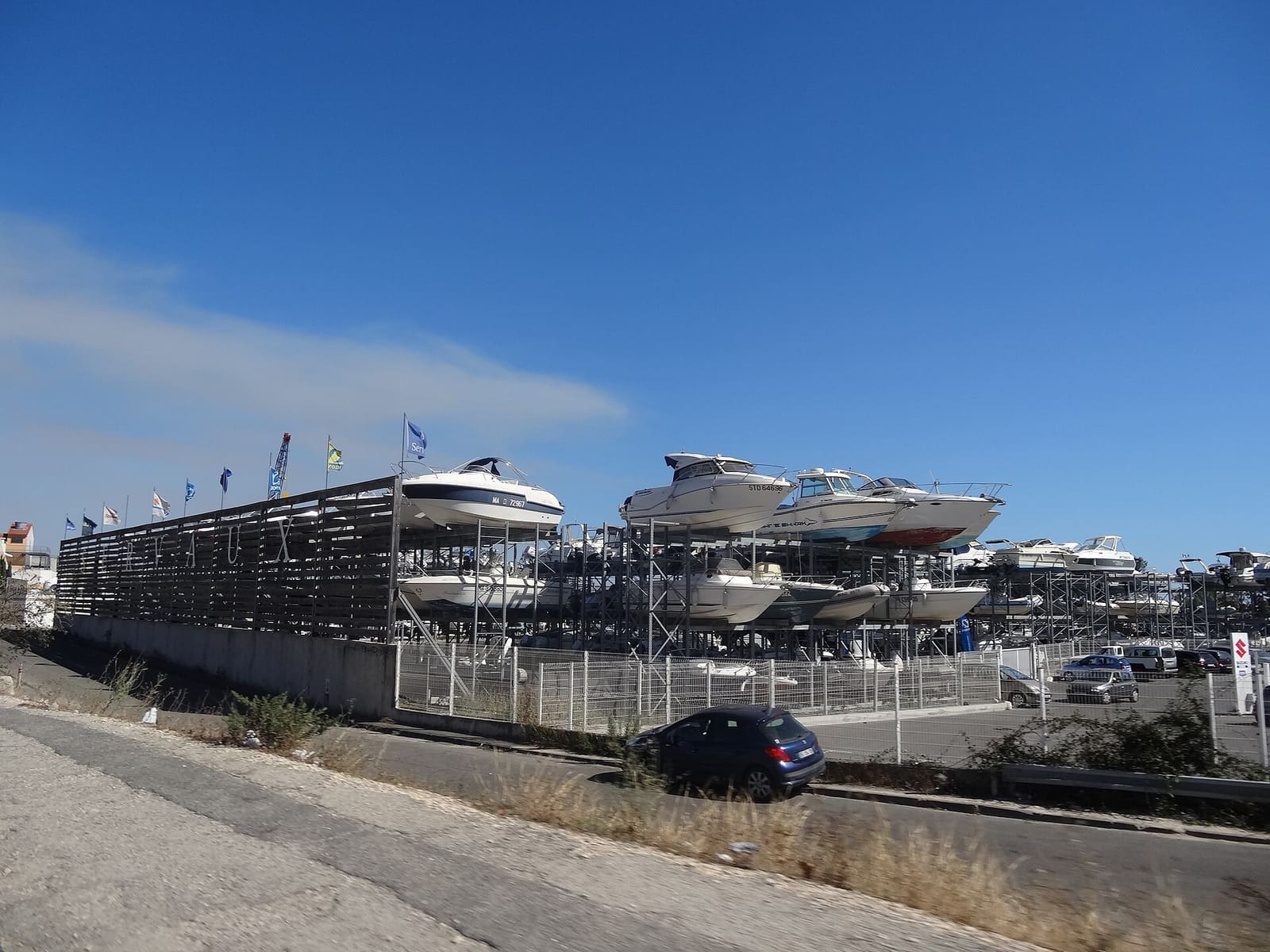
- Marinas and dry-stack storage (slip rent, storage)
- Boatyards and repair shops (unpaid repair bills)
- Self-storage lots, under each state's self-storage laws
- Towers and salvors, in some situations
BoatUS notes that marina contracts usually spell out what happens if you don't pay: the marina may file a lien, may be able to "arrest" the boat so you can't move it, and may make you pay its legal costs. For Coast Guard documented boats, federal maritime law can apply, which is a specialty area.
This guide uses two state examples. Your state's process may be very different.
- Florida (F.S. 328.17): the marina handles the sale without going to court, following notice, advertising and timing rules.
- California (Harbors and Navigation Code 500 and following): for boats worth more than $1,500, the lienholder must ask the DMV for authorization, and owners can demand a court hearing.
Steps
Find the sections on fees, late charges, what happens if you fall behind, the lien and "arrest" language, and who pays legal costs. BoatUS also points out that contracts can require insurance, registration, an operable boat and more, and that some can be terminated for cause, including unpaid fees. Ask questions or negotiate before you sign.
Lien notices go to the address on record. In Florida, a notice sent by certified mail to your last known address is presumed delivered when mailed, whether you see it or not. California's DMV mails notices to the registered and legal owners at their addresses of record.
- Give the marina or yard a current mailing address, phone and email.
- Update the state agency too. Federal rules (33 CFR 173.29) require registered owners to notify the issuing authority of an address change within 15 days.
- If you move or the boat sits for years, check on it and the bills at least a few times a year.
If you think a storage or repair bill is wrong, say so in writing, keep copies, and pay what you agree you owe. Ask for an itemized statement. Try to agree on a payment plan, and get any agreement in writing and signed. Silence is the fastest way to a lien sale.
Read it the day it arrives and write down every date. Some examples of what notices and timelines look like:
- Florida: the marina must send written notice (in person or by certified mail) to the owner and to lienholders shown in state, Coast Guard, UCC and judgment records, and post it at the marina and on the boat. The notice has to itemize the claim and say the boat will be sold unless paid. It must go out at least 60 days before a sale. Then the marina advertises once a week for two weeks, and the sale can't happen sooner than 15 days after the first ad.
- California: after the lienholder applies, the DMV mails the owners a notice and a form. To get a court hearing, an owner must sign and return a declaration of opposition within 15 days of the mailing date. If they do, the lienholder can sell only after winning in court (it must sue within 60 days of the DMV's notice) or getting a release. The DMV also places a stop on registration or title transfer. Once authorized, the official code text says the lienholder must advertise the sale once in a local newspaper 10 to 30 days before the sale (or post notices if the county has no paper) and mail a notice of the pending sale, return receipt requested, to the owners at least 20 days before it. If you get one of these notices, that's your last practical window to pay, negotiate or file the opposition.
If you're short on time or money, call the lienholder right away, and call an attorney.
In Florida, the owner or a lienholder can pay the lien plus reasonable expenses and late interest any time before the sale and take the boat back. Expect the amount to include storage that kept adding up, advertising and other sale costs. Get a written payoff figure and a receipt.
In Florida, the marina is paid from the sale first (if its lien has priority), other secured lienholders' rights attach to what's left, and any balance is held for the owner; if the owner doesn't claim it within a year, it's treated as abandoned. If a wrecked or junked boat was left at a marina and the sale doesn't cover removal costs, the owner can still owe the difference. And under federal rules (33 CFR 173.77), your registration certificate becomes invalid when you lose your interest in the boat by legal process.
Can't afford to keep the boat at all? Before bills pile up, look for a vessel turn-in program. Some states and local agencies take unwanted recreational boats free of charge. California's program, for example, is run by participating local agencies with state boating grants: the owner fills out a release form and sends a copy of the title. Programs differ by state (some are only for boats already flagged as at risk, some run as one-day events), so ask your state boating agency. Surrendering a boat properly is far cheaper than a lien sale or a derelict-vessel case.
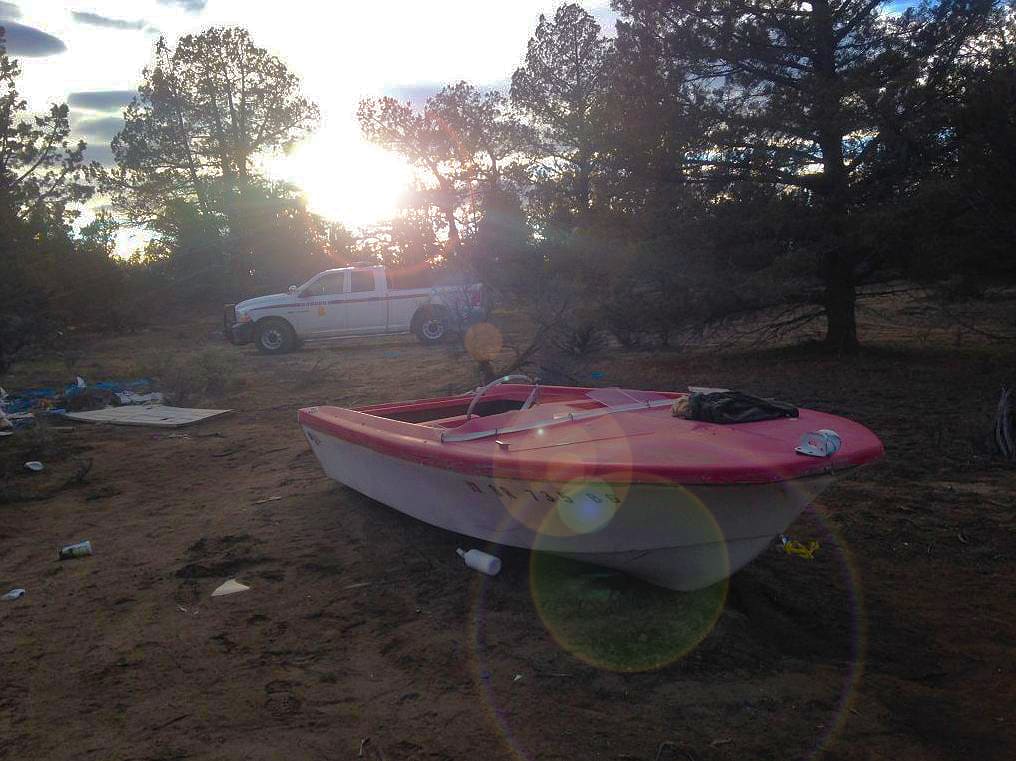
Boats that are abandoned, whether at a marina or on public land, end up in a state process. If you can't keep a boat, sell or dispose of it properly instead. Photo: BLM Oregon & Washington / Wikimedia Commons · CC BY 2.0 Lien-sale boats are often sold as is, sometimes with no keys, no records and no history, after sitting unused for a long time. Some are bargains; many need everything. Inspect it like any neglected boat (see our weathered used boat guide), and assume engines, fuel and batteries need work until proven otherwise.
The new owner has to prove to the state that the sale was legal. Florida's law lists what a buyer must submit to transfer title after a marina lien sale:
- The original bill of sale signed by the marina
- A copy of each registered or certified letter sent to the previous owner and lienholders
- A certified copy of the published newspaper notice of the sale
Florida requires the marina to give the buyer these documents when the purchase price is paid. California runs lien sales through DMV authorization and DMV forms. Whatever state you're in, ask the seller for every document the state needs, and don't pay until you have them.
Compare dates and names:
- Do the HIN, the notices and the bill of sale match the boat? Check the HIN plate (see our used-boat paperwork guide).
- Were the owner and every recorded lienholder notified? Florida requires a lien search of the state records, a Coast Guard abstract for documented boats, a UCC search and a judgment lien search, and a reasonable search of another state's records when the boat carries out-of-state or foreign numbers.
- Did the right amount of time pass between the notice, the ads and the sale?
- Is the trailer included, and does it have its own paperwork? Trailers are often titled separately, by a different agency.
A lien sale doesn't always wipe the slate clean. In Florida, a good-faith buyer takes the boat free of other claims except a prior lien perfected under state or federal law. A recorded bank loan, for example, could still be attached to the boat. Search the title and lien records yourself, as BoatUS recommends for any used boat, and for a documented boat order the Coast Guard's Abstract of Title. Ask an attorney if anything is recorded.
Give them the HIN and the state of registration. Ask: Is there a stop order or open lien sale on this boat? What exactly will you need from me to title it after a lien sale? Are there extra steps for a boat from another state or a Coast Guard documented boat? If the paperwork isn't right, the fix can be a court order or a bonded title process, which takes time and money.
File for title and registration as soon as you have the paperwork, and watch the deadline. Texas, for example, requires transfers within 45 working days or tax penalties and interest apply. Expect a HIN verification, sales or use tax and fees. Keep copies of everything; you'll need them if you ever sell.
Common mistakes
- Owners moving and never updating the address with the marina or state, then missing every notice.
- Ignoring a disputed bill instead of disputing it in writing.
- Owners trying to tow the boat out at night to avoid the bill.
- Buyers paying cash for a "lien-sale" boat with only a handwritten receipt.
- Assuming the lien sale cleared a bank loan or a Coast Guard mortgage.
- Forgetting the trailer's title.
- Buying a documented boat at a state lien sale without checking how the Coast Guard record will be cleared.
When to call a pro
- You received a lien notice or a DMV lien-sale notice: call the lienholder, then an attorney before the deadline
- You're a marina or yard owner considering a lien sale: follow your state's statute exactly and get legal advice
- The boat is documented, financed, from another state or has unclear ownership: a marine attorney or documentation professional
- The seller can't produce the paperwork your state lists: walk away or get legal advice before paying
- The boat may be derelict, sunk or leaking fuel: the state boating agency or local authorities handle derelict vessels; don't try to move it yourself
Tips
- Set a calendar reminder to check your storage account and the boat each season, especially if it's far from home.
- Put the marina's billing contact and your contract in your boat folder.
- If you can't afford to keep a boat, sell it, donate it or dispose of it properly while you still control it.
- Buyers: photograph the HIN, every notice and the bill of sale the day you pay.
Official references
We read these to write this guide. Your engine's own manual always wins.
- Florida Statutes – 328.17, Nonjudicial sale of vessels (marina liens)
- California Legislative Information (official) – Harbors and Navigation Code section 503 (lien sale authorization, notices, opposition)
- BoatUS – What's Really In Your Marina Contract (2015)
- eCFR – 33 CFR 173.29, Notification to issuing authority (address changes within 15 days)
- eCFR – 33 CFR 173.77, Validity of certificate of number
- BoatUS – After the Sale Details (titles, liens, trailers, documentation)
- Texas Parks and Wildlife – Buying and Selling a Boat/Outboard Motor in Texas
- Richardson Bay Regional Agency (California) – Vessel Turn-In Program
Safety: BoatMend is for information only and does not replace a certified marine technician. You are responsible for your safety and your boat. Read the full disclaimer.
Last updated 2026-10-25
Related guides
Used Boat Paperwork: Titles, Liens, HIN Checks, Bill of Sale and Registration
A practical checklist for the paperwork side of buying a used boat: state title or Coast Guard documentation, checking for liens and theft, verifying the hull ID number, writing a proper bill of sale, the trailer's own title, registering in your name, and transferring warranties and checking recalls. Rules vary by state, so confirm each step with your state agency.
Salvage and Branded Title Boats: What They Mean, the Risks, and How to Check Before You Buy
Understand boats that an insurer declared a total loss: what salvage, rebuilt and hull-damaged title brands mean, why flood and storm boats hide expensive problems, how branded titles affect insurance, financing and resale, how to dig into a boat's history, and what a survey should check. Title branding rules differ a lot by state, and some states don't brand boat titles at all.
Buying a Boat That Sat Outside for Years: What Fails, How to Inspect It and What It Really Costs
A boat that sat in a yard for years can be a bargain or a money pit. Learn what usually fails (fuel system, waterlogged foam, stringers and transom, wiring, upholstery, trailer), how to inspect and weigh it, when to pay for a survey, and how to price the repairs before you make an offer.
How to Inspect a Used Boat Before You Buy
A step-by-step checklist for looking over a used boat, from paperwork and the hull ID number to the transom, engine, compression test, sea trial and trailer. Know what to check yourself, what the red flags mean, and when to pay a marine surveyor.

How to Get Your Boat Ready to Sell (Records, Title and Prep)
Prepare your boat for sale the way buyers and surveyors expect: gather the title, registration and HIN paperwork, organize your maintenance records and receipts, fix the small stuff, detail the boat, get it ready for a sea trial and buyer's survey, and close the deal with the right documents.
Buying a Boat in Another State: Survey, Paperwork, Taxes, Registration and Getting It Home
A step-by-step plan for buying a boat that is hundreds of miles away: checking it remotely with a local surveyor, matching the HIN and VIN to the title, avoiding long-distance scams, paying the right sales or use tax, registering in your home state, the trailer's own paperwork, temporary permits, and legal towing or professional transport for wide boats. Rules vary by state, so confirm each step with the agencies involved.
Boat Registration Numbers and Validation Decals: Federal Display Rules, State Placement and Renewals
Display your state registration number and validation decal the way federal rules (33 CFR 173 and 174) and your state require: size, block style, contrast, spacing, placement on the forward half, decal position, what documented boats show instead (name and hailing port), what to carry aboard, and how to never miss a renewal. States add their own details, so check your state boating agency.