Buying a Boat at Auction: Insurance Salvage, Impound and Lien-Sale Boats Without Nasty Surprises
How insurance salvage, impound, lien-sale and government boat auctions work, what kind of title you'll actually get, why the engine warranty may not follow the boat, how to inspect when you can't sea trial, and how to budget for liens, fees and getting the boat home. General information, not legal advice.
Time
4 h
Shop would charge
$300-1500
Applies to
All engines
Safety first: Auction boats are often sunk, storm-damaged or neglected. Don't climb onto a boat on poor blocking or a damaged trailer, don't connect a battery or try to start an engine that may have been underwater, and treat any fuel smell as a fire risk. Never put a "bargain" boat in the water until a qualified person has checked the hull, fuel system, through-hulls and steering. This guide is general information, not legal advice: confirm title rules with your state boating agency.
Owners often ask
- Is it worth buying a boat from an insurance salvage auction?
- Will the outboard warranty transfer if I buy the boat at an auction?
- How can I find out why a boat ended up at auction before I bid?
This guide walks you through it. Still stuck? Ask the AI Mechanic about your engine.
Tools
- Flashlight and small mirror
- Moisture meter or a surveyor who brings one
- Camera or phone for photos of HIN, engine serial numbers and damage
- Notebook with the auction terms, fees and pickup deadline
Before you start
Boats reach auctions by several roads, and each one changes what you're buying:
- Insurance salvage auctions: boats an insurer declared a total loss (often a "constructive total loss," where repairs would cost more than the insured value). BoatUS describes how the insurer pays the owner, takes the ownership papers, has the boat moved to a storage yard, photographed and briefly described, then listed online for bids.
- Lien-sale auctions: marinas, storage yards or repair shops selling a boat to recover unpaid bills.
- Impound, abandoned and government auctions: boats seized by police, abandoned at public ramps or waterways, or surplus government boats. USA.gov lists the three main federal sellers: GSA Auctions (government surplus boats and marine gear), U.S. Treasury auctions (property forfeited for tax or Treasury law violations, including cabin cruisers, sailboats and yachts) and U.S. Marshals Service auctions (assets seized by Justice Department agencies, often luxury motor yachts). The Marshals Service says it runs its sales through contracted auction companies, so check that any "government auction" site you land on is actually linked from the agency's own .gov page.
- Repossession and estate auctions: lender repos and estate sales, often in better shape but still sold as is.
Almost all of them are as is, where is, no warranty, no returns. The price is low because the risk has been passed to you. Plan on paying for an inspection, transport, storage and repairs on top of your bid.
Steps
Find and save the terms of sale. Look for:
- Buyer's premium and fees added to the winning bid
- Deposit and payment deadline (and which payment methods are accepted)
- Pickup deadline and daily storage fees after it. BoatUS notes the winner of an insurance auction has a short time to remove the boat from the yard.
- What title or paperwork comes with the boat (see step 2)
- Whether the trailer, motor and equipment shown in photos are included
- Whether inspection before the sale is allowed, and when
If the terms don't say what paperwork you'll get, ask in writing. If they won't answer, walk away.
The paperwork decides whether you can register, insure, finance and later sell the boat:
- Clear title (or registration in non-title states): the best case, common on repos and some estate sales.
- Salvage or branded title: many states brand total-loss boats (our salvage title guide explains the brands). Expect lower resale value, and some insurers and lenders won't cover them or will need a survey.
- Lien-sale or certificate-of-sale papers: the seller's statutory paperwork, which you take to the state agency to apply for a new title.
- Bonded title: when ownership papers are missing, some states let you title the boat by posting a bond. Texas, for example, publishes a list of abandoned boats and motors that someone has applied to title through its bonded title process, and calls that route more expensive and slower than a normal transfer.
- Documented boats: ownership is a federal Coast Guard record, so the state paperwork alone may not be enough (see our expired documentation guide). For a documented boat sold after a court order or a forfeiture, the Coast Guard's documentation center has a special bill of sale for the government seller (form CG-1356); ask the auction whether it will provide one.
Call your state boating agency with the auction lot description and ask exactly what you'll need to title and register it.
Some liens can follow the boat even after an auction. Florida's marina lien law is a good example: a good-faith buyer at a marina lien sale takes the boat free of other claims except a prior lien perfected under state or federal law, such as a lender's lien on the title or a preferred ship mortgage on a documented boat. Before you bid:
- Ask the auction for the lien search or notice records.
- Check the title or state record for a lienholder.
- For documented boats, order an abstract of title from the Coast Guard's documentation center.
Our paperwork and lien-sale guides walk through these checks.
Photograph the hull identification number (HIN) and every engine serial number, and compare them with the auction listing and paperwork. Signs of trouble: a missing, ground-off or replaced HIN plate, numbers that don't match the paperwork, or a "state-assigned" HIN with no explanation.
Don't rely on one database. NICB's free VINCheck searches theft and salvage records from participating insurers only, is built around 17-character vehicle VINs, and covers only some watercraft; most boat HINs are 12 characters. A clean or empty result doesn't prove the boat is clean. Ask the state agency and, for documented boats, the Coast Guard record as well.
Most auction yards allow a preview but no sea trial and no engine run. Use the time well:
- Hull and deck: cracks, crushed areas, repairs, delamination; tap with a plastic mallet for dull spots. Use our used-boat inspection guide.
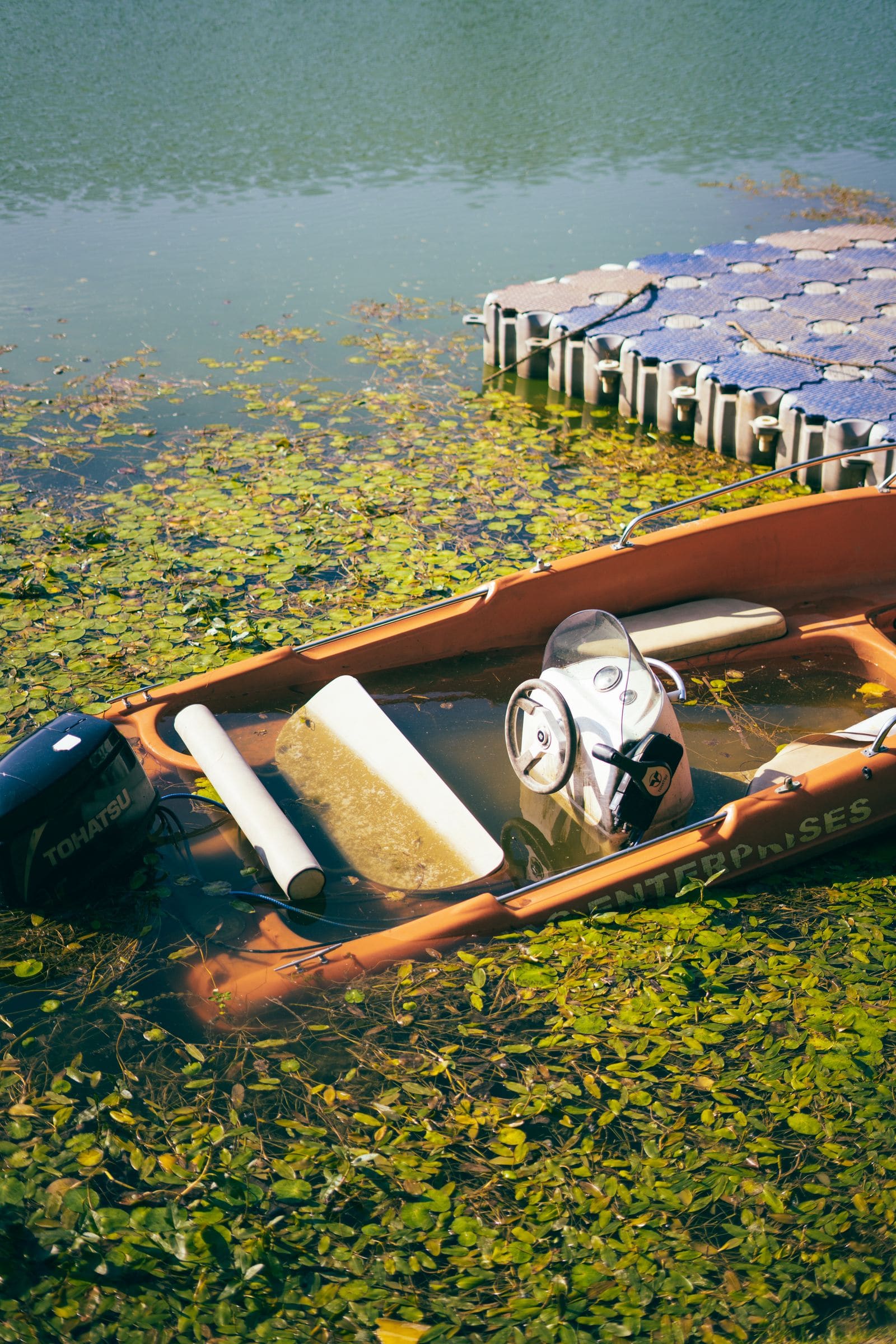
- Signs of sinking: a waterline of dirt or scum inside the cabin or bilge, silt in lockers, rusted fasteners, corroded wiring, wet or smelly foam and upholstery.
- Transom and stringers: soft spots, flexing, wet core (see our transom and stringer guide).
- Trailer: if included, check tires, bearings, frame rust, lights and title or registration for the trailer itself.
BoatUS warns that a boat that looks fairly undamaged may have been underwater for days, and that it's safer to assume the worst for a boat that sank in salt water. If you're bidding on anything bigger than a small runabout, hire an accredited marine surveyor before you bid.
Engines can be half of a small boat's value. If there's any sign the boat sank or was swamped, budget as if the engine needs a full rebuild or replacement until a technician proves otherwise. BoatUS points out that engines often aren't flushed and pickled quickly after a storm, so corrosion sets in. Don't crank or start an engine that may have water in it; our submerged-engine guide explains why.
Remaining factory warranty or extended coverage usually depends on the manufacturer approving a transfer. Mercury's US transfer page, for example, says it may refuse to transfer coverage on engines bought as repossessions, at auction, from a salvage yard, liquidator or insurance company, or from unauthorized dealers, and that it may require a paid dealer inspection first. Price the boat as if it has no warranty. If coverage matters, ask the engine maker before you bid.
Add up:
- Winning bid plus buyer's premium and fees
- Sales or use tax at registration (our tax guide covers this)
- Title, registration and any bond costs
- Transport, and storage while you repair
- Survey, engine inspection, parts and labor
BoatUS notes that paying a yard to repair a badly storm-damaged boat is rarely cost-effective, because labor can run to hundreds of hours. Set a maximum bid from this total, write it down, and stick to it.
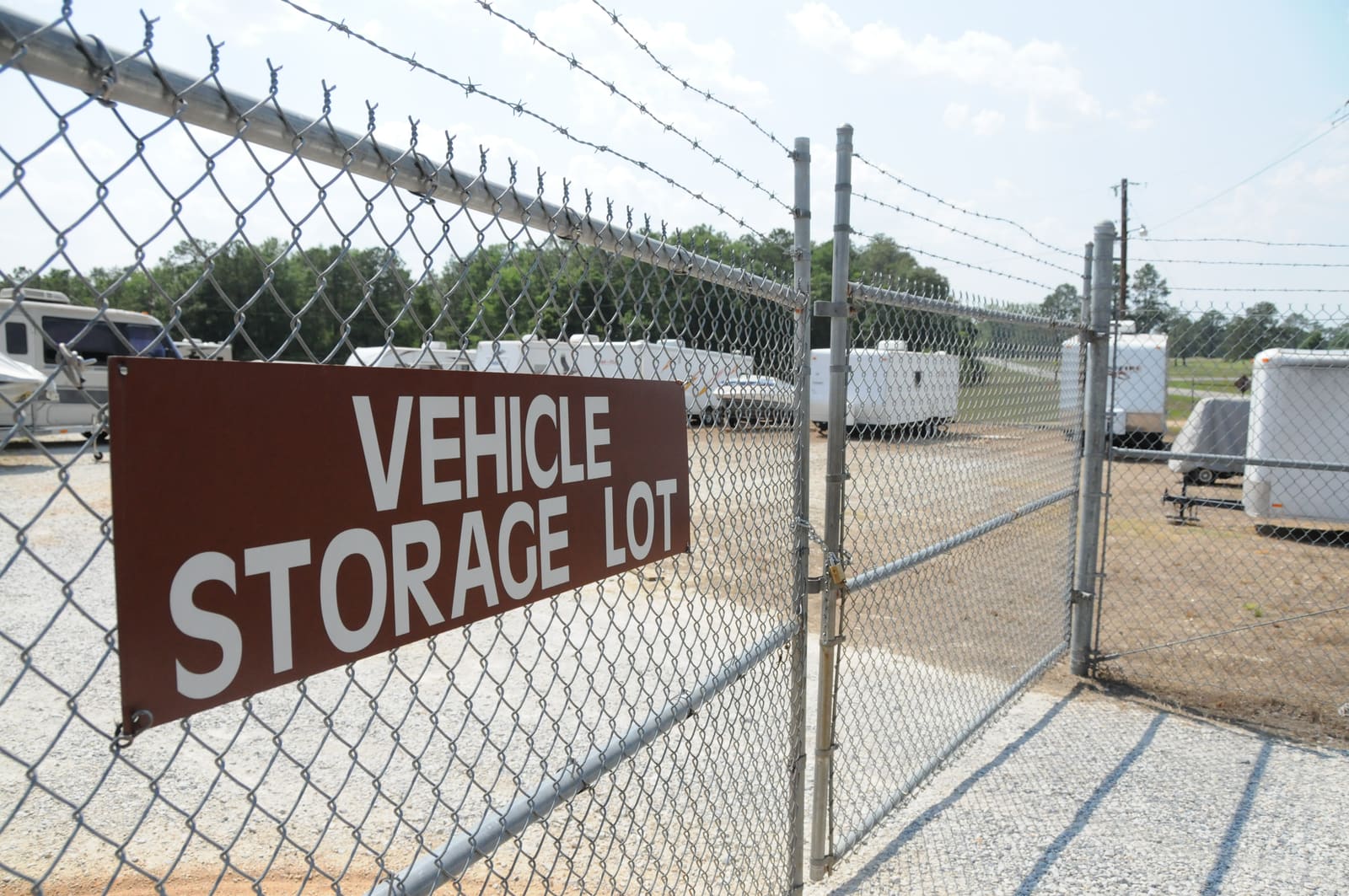
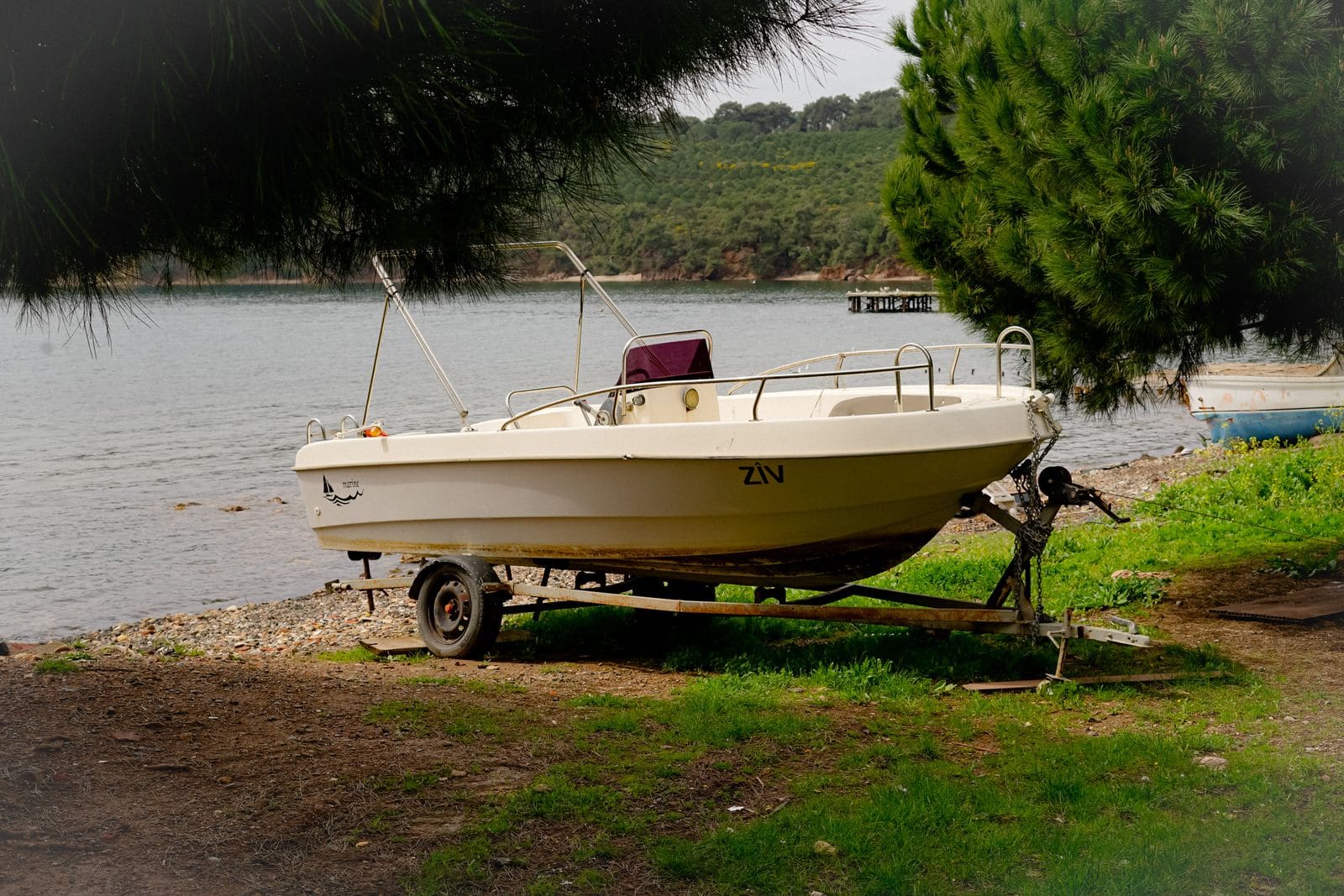
Auction and impound boats usually sit in a yard like this, with a strict pickup deadline and daily fees after it. Photo: Russell Sellers, Fort Rucker / Wikimedia Commons · Public domain - Confirm the yard's pickup hours, loading help (forklift or travel lift) and deadline.
- If the boat has no trailer or the trailer isn't roadworthy, line up a licensed boat transporter in advance (our transporter guide shows how to check one).
- Measure width and height; wide boats may need oversize permits.
- Arrange a place to keep it. BoatUS suggests checking that zoning or HOA rules allow a project boat at home.
Register, place your deposit, and bid only up to your written maximum. Online auctions can run for weeks and end with a rush; don't chase the price past your number. Losing an auction costs nothing; overpaying for a wreck can cost years.
- Pay within the deadline and get a receipt, bill of sale and all ownership documents.
- Take them to your state agency to title and register the boat (and pay any use tax) within its deadline.
- Get insurance in place before transport; ask your insurer how it handles branded titles.
- Keep every auction document, photo and receipt; the next buyer will want to see them.
Before launch, have a qualified technician check fuel lines and tank, steering, through-hulls and seacocks, bilge pumps and wiring. On a boat that sank, plan to replace fuel hoses, electrical connections and upholstery foam. Our launch checklist and sea-trial-after-service guide help with the first outing.
Common mistakes
- Bidding from photos alone, without inspecting or sending a surveyor.
- Assuming the engine warranty transfers with the boat.
- Forgetting the buyer's premium, tax, transport and storage when setting a bid.
- Missing the pickup deadline and paying daily storage (or losing the boat).
- Buying a boat with papers your state won't accept, leaving you with something you can't register.
- Not checking for a bank lien or a preferred mortgage that survives the sale.
- Starting an engine that was underwater "just to see if it runs."
When to call a pro
- Any boat that sank, burned or shows structural damage: hire an accredited marine surveyor before you bid.
- The paperwork is unclear, the boat is documented, or there may be a surviving lien: talk to a marine title or documentation professional or an attorney.
- You're unsure your state will title the boat: ask the state boating agency before bidding.
- Fuel smell, fuel leaks or damaged wiring after you take delivery: stop and have a marine technician inspect before any engine start.
- Moving a large or oversize boat: use a licensed, insured transporter.
Tips
- Watch a few auctions without bidding to learn how prices and fees really add up.
- Ask the auction if the insurer's damage photos or condition notes are available.
- Bring a friend who knows boats; it's harder to fall in love with a wreck when someone is pointing at the waterline in the cabin.
- Keep the lot listing, photos and terms as a PDF in your BoatMend boat file.
Official references
We read these to write this guide. Your engine's own manual always wins.
- BoatUS – Are Storm-Damaged Boats Trash Or Treasure? (2013, how insurance salvage auctions work)
- Mercury Marine – Mercury Limited Warranty and Mercury Product Protection Transfer (auction, salvage and insurance purchases)
- NICB – VINCheck (what it does and doesn't cover)
- Florida Statutes – 328.17, Nonjudicial sale of vessels (marina lien sales, prior perfected liens)
- USA.gov – Government auctions of boats and aircraft (GSA, Treasury, U.S. Marshals)
- U.S. Marshals Service – Asset Forfeiture (sales of seized vessels through contracted auctioneers)
- U.S. Coast Guard NVDC – Instructions and Forms (CG-1356 bill of sale by government entity)
- eCFR – 46 CFR 67.301, Issuance of Abstract of Title (documented boats)
- Texas Parks and Wildlife – Abandoned Boats/Outboard Motors listing (bonded title process)
- Texas Parks and Wildlife – Buying and Selling a Boat/Outboard Motor in Texas (bonded title when papers are missing)
Safety: BoatMend is for information only and does not replace a certified marine technician. You are responsible for your safety and your boat. Read the full disclaimer.
Last updated 2026-10-26
Related guides
Salvage and Branded Title Boats: What They Mean, the Risks, and How to Check Before You Buy
Understand boats that an insurer declared a total loss: what salvage, rebuilt and hull-damaged title brands mean, why flood and storm boats hide expensive problems, how branded titles affect insurance, financing and resale, how to dig into a boat's history, and what a survey should check. Title branding rules differ a lot by state, and some states don't brand boat titles at all.
Marina and Storage Liens: How Lien Sales Work, Buying a Lien-Sale Boat, and Not Losing Yours
How unpaid slip, storage or repair bills turn into a lien and then a sale, using Florida and California as examples; what an owner can do to stop it; and how a buyer checks that a lien-sale or abandoned boat comes with paperwork the state will actually title. Every state has its own process and deadlines, so confirm with your state agency.
How to Inspect a Used Boat Before You Buy
A step-by-step checklist for looking over a used boat, from paperwork and the hull ID number to the transom, engine, compression test, sea trial and trailer. Know what to check yourself, what the red flags mean, and when to pay a marine surveyor.
Used Boat Paperwork: Titles, Liens, HIN Checks, Bill of Sale and Registration
A practical checklist for the paperwork side of buying a used boat: state title or Coast Guard documentation, checking for liens and theft, verifying the hull ID number, writing a proper bill of sale, the trailer's own title, registering in your name, and transferring warranties and checking recalls. Rules vary by state, so confirm each step with your state agency.
Outboard Fell Overboard or Engine Got Submerged: What to Do in the First Hours
A dunked engine can often be saved, but only if you act fast and in the right order. Learn what to do (and what never to do) in the first hours after an outboard goes overboard or a boat swamps, how to buy time until a shop can take it, and when it is a loss.
Buying a Documented Boat With an Expired or Deleted Coast Guard Certificate
What an expired or deleted Certificate of Documentation means when you buy a used boat, how to check the record and any mortgage with an Abstract of Title, your two paths (keep it documented or move it to a state title), and how to spot private sites that look like the Coast Guard. General information, not legal advice.

Boats With No HIN: State-Assigned Hull Numbers for Homebuilt, Pre-1972 and Damaged-HIN Boats
What to do when a boat has no hull identification number, a homemade or kit boat needs one, an older boat predates the 1972 rule, or the number has been damaged or altered: the federal rules, how a state assigns a HIN, the inspection, the proof of ownership and build receipts to bring, how to fix the number to the hull, and the red flags that mean walk away. Practical help, not legal advice; every state runs its own process.
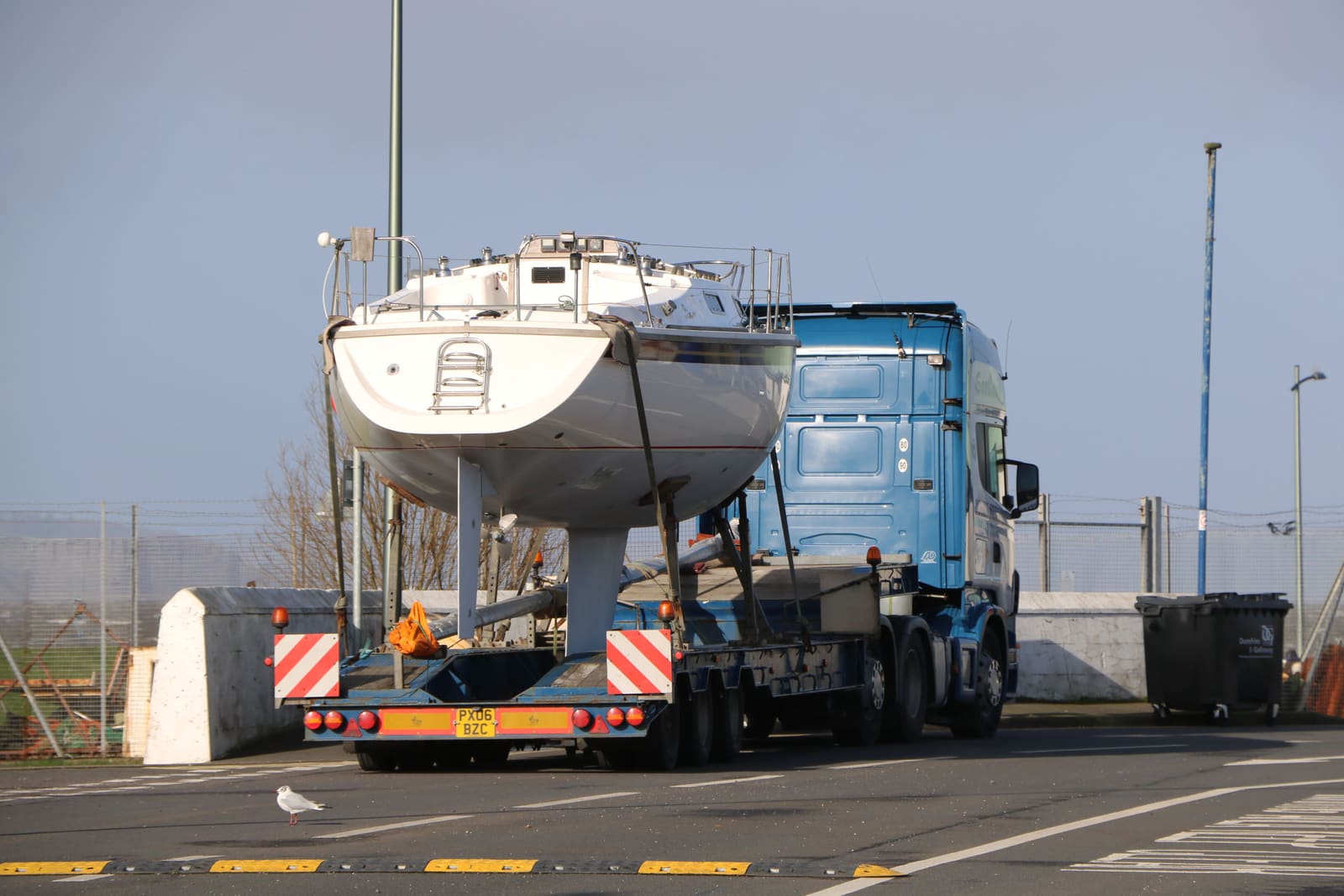
Shipping a Boat with a Professional Transporter: Quotes, Vetting, Prep and Claims
Most boat shipments go fine, but when they don't, the owner who checked the carrier's authority and insurance, prepped the boat properly and documented everything at pickup and delivery is the one who gets paid. Here's how to hire a transporter, prepare the boat and handle damage.
Avoiding Boat-Buying Scams: Fake Listings, Fake Escrow, Overpayment Checks and Safe Payment
How to spot and avoid the scams that target boat buyers and sellers: too-good-to-be-true listings, sellers who are always overseas, look-alike escrow and shipping websites, overpayment checks and fake payment notices. Covers verifying the boat, the title, the HIN and the seller, paying safely, and what to do fast if you already sent money. Practical help, not legal advice.
Boat Taxes by State: Sales and Use Tax, Yearly Property or Excise Tax, Visiting Limits and Moving
Understand the taxes a boat can trigger in the US (sales or use tax when you buy, a yearly property or excise tax where you keep it, and deadlines when you visit or move to another state) so you can budget for them and avoid penalties. General information, not legal or tax advice.