How to Winterize a Gas Inboard Ski or Wake Boat (Direct Drive and V-Drive)
Ski and wake boats with a gasoline inboard (MasterCraft, Malibu, Nautique and similar) have more places to trap water than an outboard: the engine block and manifolds, the heater, the transmission cooler, ballast tanks and the shower. Learn the order of the job, how to protect the fuel and oil, how to drain or fill with antifreeze the way your engine maker says, and the spots owners miss.
Time
4 h
Shop would charge
$400-900
Applies to
Gas inboard
Safety first: An inboard engine must never run without cooling water, not even for a few seconds. It has no "dry" mode: the raw-water pump impeller and the exhaust system are destroyed in moments. On the trailer, run it only with a garden-hose flusher or a bucket feeding the raw-water intake, exactly as your engine manual describes, and keep hands, hair and clothing away from the belts. Gasoline vapor collects in the engine compartment: run the blower before starting, never smoke or use open flames, and if you smell fuel, stop and find the leak before going on. Work in a ventilated space because the exhaust contains carbon monoxide.
Owners often ask
- Do I have to winterize the heater core on my wake boat separately from the engine?
- Should I drain my inboard ski boat engine or fill it with antifreeze for winter?
- Do I need to winterize the add-on ballast bag in my wake boat?
This guide walks you through it. Still stuck? Ask the AI Mechanic about your engine.
Tools
- Your engine owner's manual (Indmar, Ilmor, PCM, MerCruiser or other) with the drain locations
- Garden-hose engine flusher ("fake-a-lake") or a bucket setup for the raw-water intake
- Five-gallon bucket and funnel
- Oil extractor or drain pump, oil filter wrench and drain pan
- Screwdrivers and nut drivers for hose clamps
- Flashlight, rags and absorbent pads
- Low-pressure air source (optional, only if your manual says to blow out lines)
- Tags or tape and a marker for "drained / plugs out" notes
Parts & supplies
- Marine fuel stabilizer (and any other additive your manual names)
- Engine oil and filter to your manual's specification
- Fuel filter or water-separating filter, if due
- Nontoxic propylene glycol RV/marine antifreeze rated for your winter lows (several gallons)
- Fogging oil, only if your engine manual calls for it
- Transmission fluid, if a change is due
Before you start
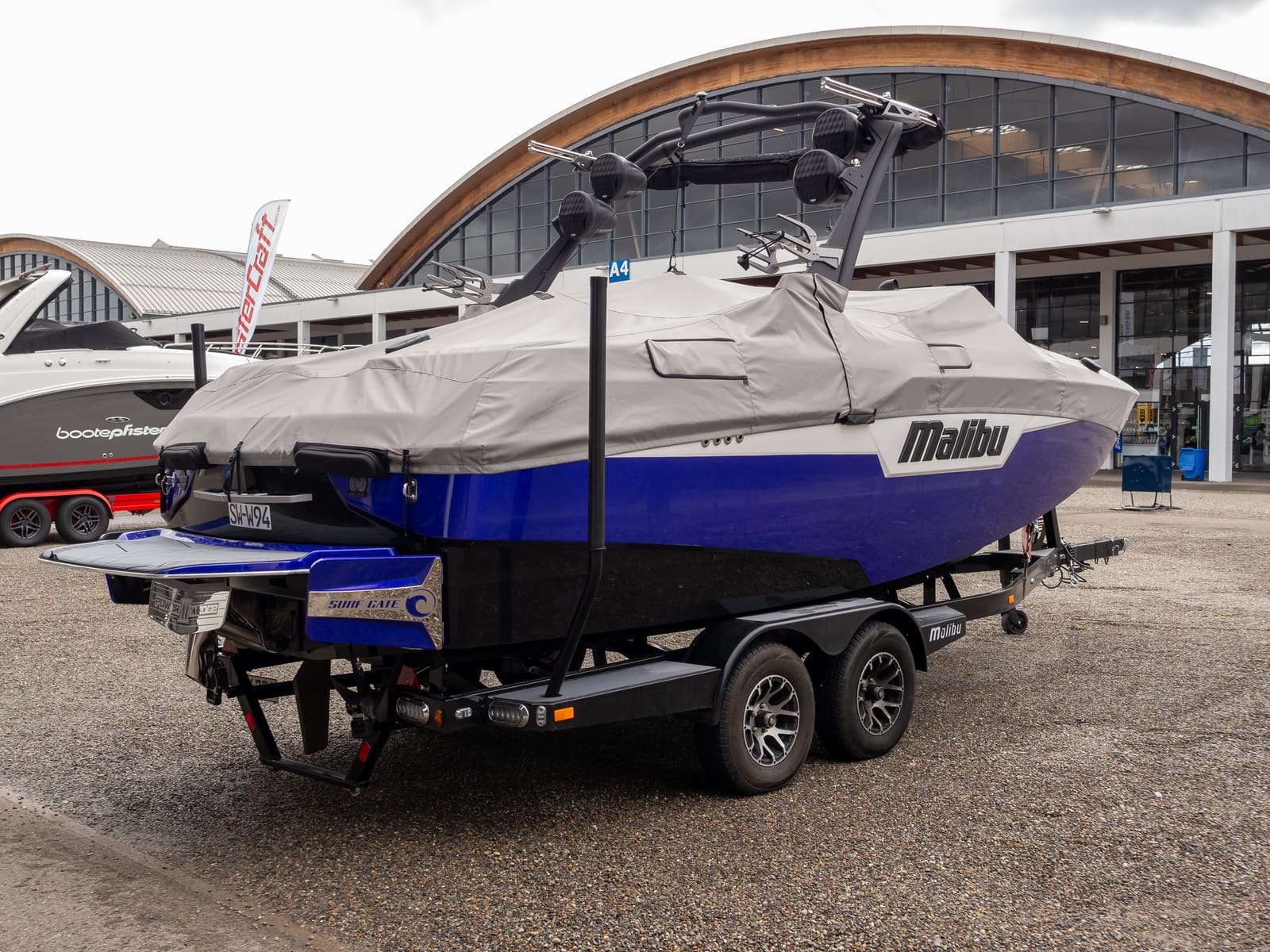
Why these boats are different: a ski or wake boat carries its gas V8 inside the hull, driving the prop through a straight shaft (direct drive) or through a V-drive with the engine at the stern facing backward. The engine is cooled by lake water pumped through the block and manifolds (raw-water cooling) or through a heat exchanger (closed cooling). On top of that, many have a cabin heater fed by engine water, a transmission cooler, a transom shower, and ballast tanks and pumps. MasterCraft lists the heater, shower, ballast tanks, washdown tanks, coolers and bilge and ballast pumps among the parts that freeze and break if water is left inside, and notes that freeze damage isn't covered by warranty.
What this guide covers: the order of the job and the boat-specific spots. The engine's own drain points and method come from your engine manual (Indmar, Ilmor, PCM, MerCruiser and others all differ), and MasterCraft itself recommends dealer winterization because mistakes are expensive. If your boat has a sterndrive, use the sterndrive winterizing guide instead. If it is a diesel, use the diesel inboard guide.
Pick a method and stick to it: BoatUS describes two ways to protect the raw-water side: drain it completely, or fill it with nontoxic propylene glycol antifreeze. It calls circulating antifreeze the preferred method for inboards, as long as the engine runs long enough to get it everywhere. Many owners and shops drain first and then add antifreeze. Follow what your engine maker says for your engine.
Steps
Find the winterizing section of your engine manual and your boat owner's manual. Mark every drain on the engine (block, manifolds, risers, water pump, cooler hoses), every heater and shower hose, the transmission cooler, and each ballast tank and pump. Take photos now so you can put hoses back where they came from.
MasterCraft says to do the fuel before any water comes out of the engine, because you need to run the engine to circulate the additives. Its steps: fill the tank to about 90 to 95 percent with fresh gas, add a marine or ethanol-grade stabilizer (and a biocide if you choose to use one) as the label directs, then run the engine for at least 15 minutes in the water. It warns that stabilizer only works in fresh fuel and won't fix gas that has already gone bad. BoatUS adds that a nearly full tank breathes in less moist air over the winter (see the ethanol fuel guide).
Bring the engine to full operating temperature, on the lake or on the trailer with a hose flusher. BoatUS points out that a thermostat blocks some cooling passages until the engine is hot, so antifreeze added to a cold engine may never reach them. Never run it on the trailer without the flusher turned on and connected.
BoatUS explains that acids and moisture in used oil can pit bearings over the winter. Change the oil and filter while the engine is warm, using the grade your engine manual names. On many inboards the oil pan drain is hard to reach in the boat, so owners use an oil extractor or the drain hose some engines come with (see the oil extractor guide). Briefly run the engine (with water) to fill the new filter and check it doesn't leak. Change the fuel filter now too if it's due.
With the engine off, open each drain plug or petcock and pull each drain hose your manual lists. BoatUS warns that small pockets of water can crack expensive parts and that a petcock that won't drain may be clogged with rust; clear it with a wire. Remember the hoses to the water pump, manifolds and the raw-water strainer. If your boat has closed cooling, only the raw-water side is drained; the coolant side stays full, at the mix your manual specifies (see the closed cooling guide).
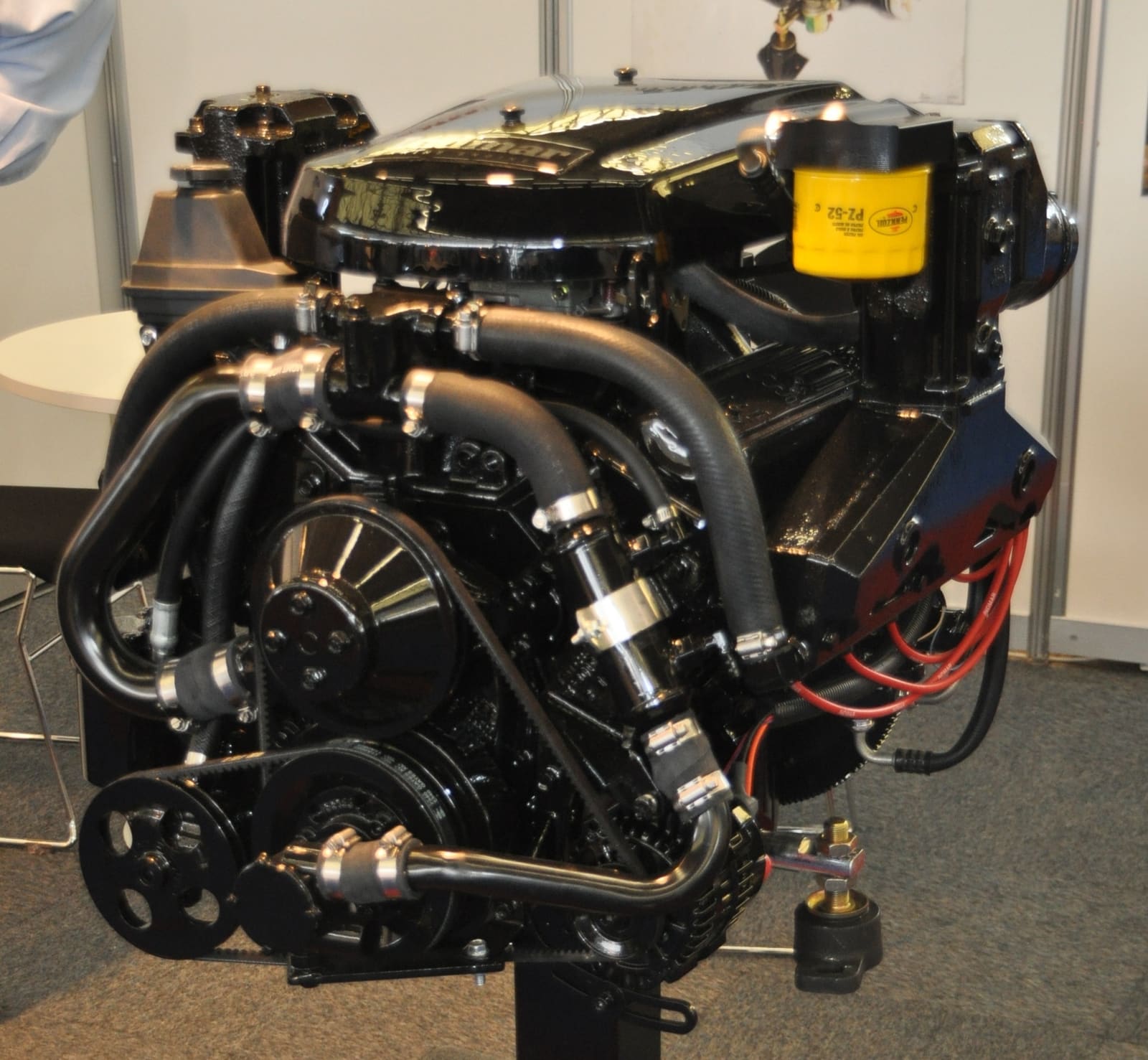
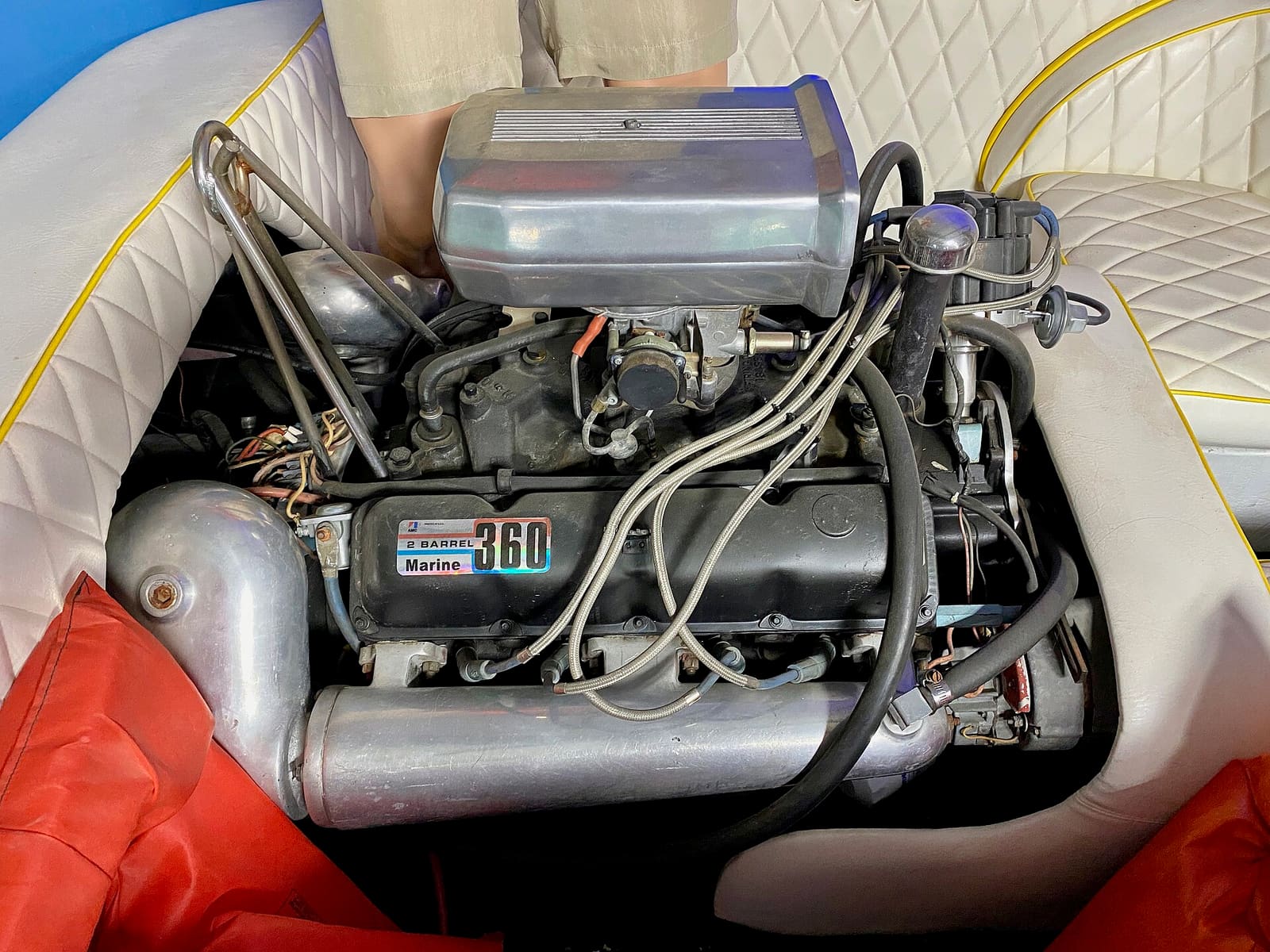
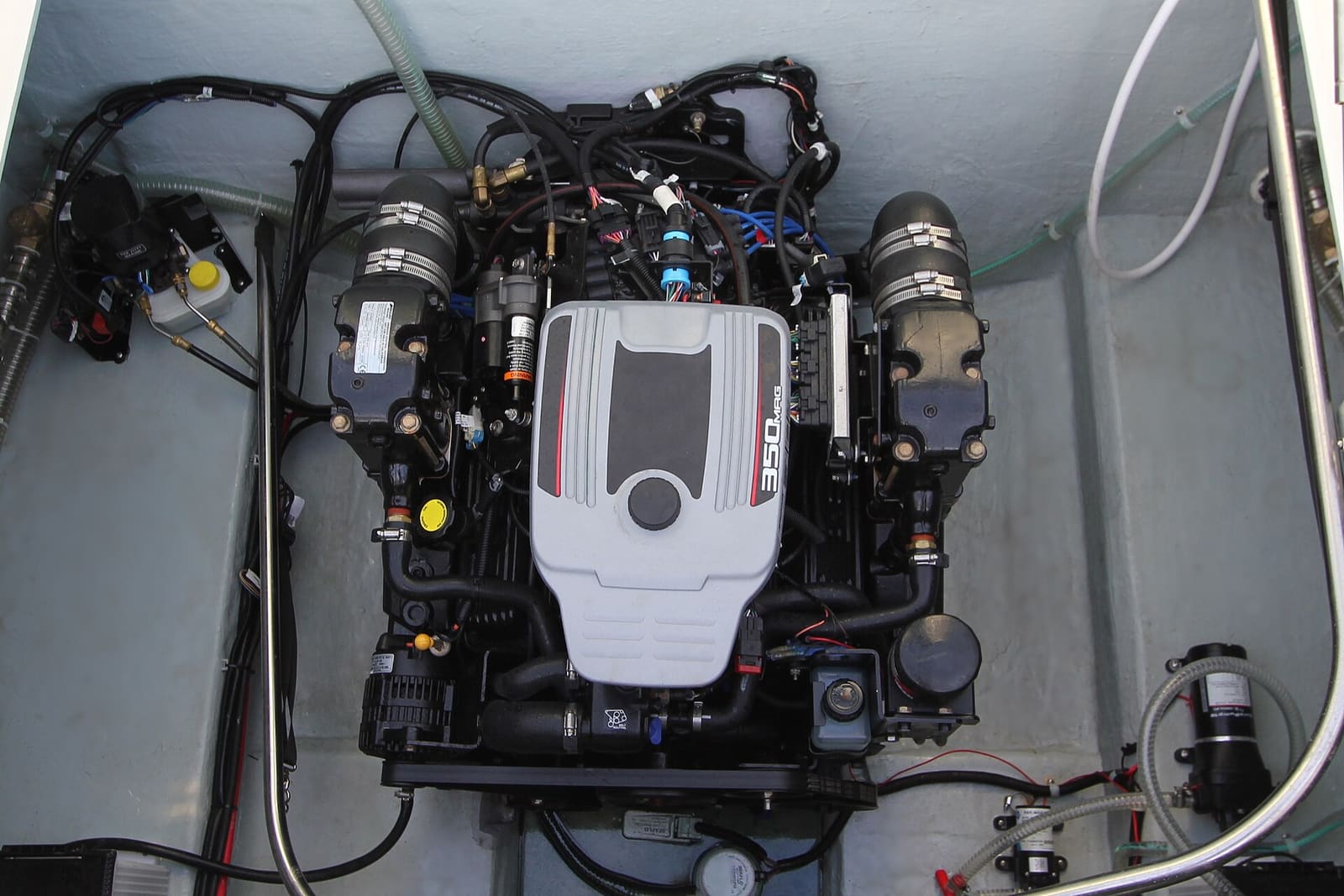
Every low hose and fitting on an inboard can trap water. Photo: S.J. de Waard / Wikimedia Commons · CC BY-SA 3.0 Most V-drive and direct-drive transmissions are cooled by a small raw-water cooler. Water left in it can freeze and crack it, and a cracked cooler can let water into the transmission. Drain it at the point your manual shows, and check the transmission fluid level and color while you're there (see the V-drive transmission guide for what the fluid tells you).
To fill, reinstall the drains, then feed nontoxic propylene glycol antifreeze into the raw-water intake from a bucket (or the method your manual names) while the engine idles, until antifreeze comes out the exhaust. BoatUS says to keep it running until antifreeze has flowed out of the exhaust for 30 seconds or more, and to make sure it reaches everything downstream of where you add it. MasterCraft uses a -50°F nontoxic propylene glycol RV-type antifreeze for engine, ballast and freshwater systems, and says colder climates may need a -100°F rating. Have more than you think you'll need. Never let the bucket run dry while the engine is running.
BoatUS describes fogging gas engines at the end of the antifreeze run. Many modern fuel-injected inboards have their own procedure or don't call for fogging at all, so follow your engine manual (see the fogging guide).
The cabin heater is easy to forget. It is fed by engine water through two hoses, and its core sits away from the engine, often under the dash. Drain or fill it exactly as your engine or boat manual says. Label the two heater hoses before you pull them, so they go back on the same fittings in spring; reversed hoses are a common spring mistake owners report. The same goes for a transom shower, washdown pump and any freshwater tank (see the freshwater system guide). If you blow lines out with air, use low pressure and only where your manual allows it.
Empty every ballast tank and bag. MasterCraft's method for its boats is to remove and dry soft bags, reconnect the bridge fittings, pour antifreeze into each ballast vent, then use the manual ballast switches to pump it out through the pumps, hoses and valves; some models with check valves need a little antifreeze left in the line. Your boat will differ, so use your owner's manual (see the wake boat ballast guide).
Boating Magazine's general method for rigid tanks is similar: with the boat level on the trailer, open the ballast drain valves in the bilge and pump each tank empty, pour an antifreeze solution into each tank through its hull-side vent fitting with a bucket under the drain fitting, then run that tank's pump in drain mode for a few seconds until antifreeze comes out, and close the valve. For a portable add-on bag that fills through a separate hose, it says to disconnect the fill hose and shake the bag out so no water is left in the pump. Follow your owner's manual where it differs.
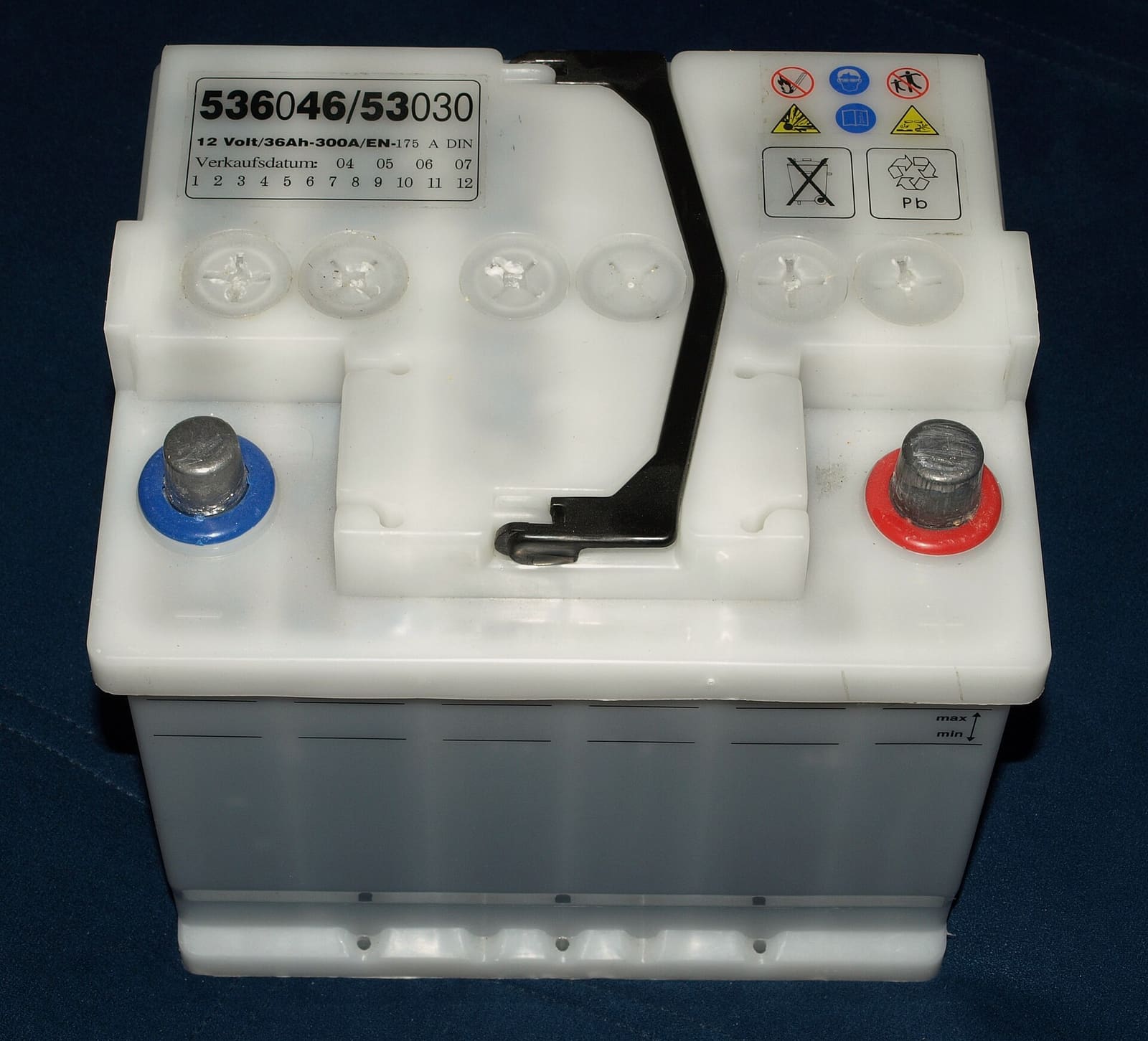
MasterCraft's power package checklist includes greasing the throttle and shift linkages and cables, and removing the batteries for winter: fully charged, stored cool and dry, away from heat or sparks (see the marine battery guide). Its spring checklist mentions removing duct tape from the exhaust flaps, so many owners tape the exhaust outlets for the winter to keep animals and debris out (see the exhaust flapper guide).
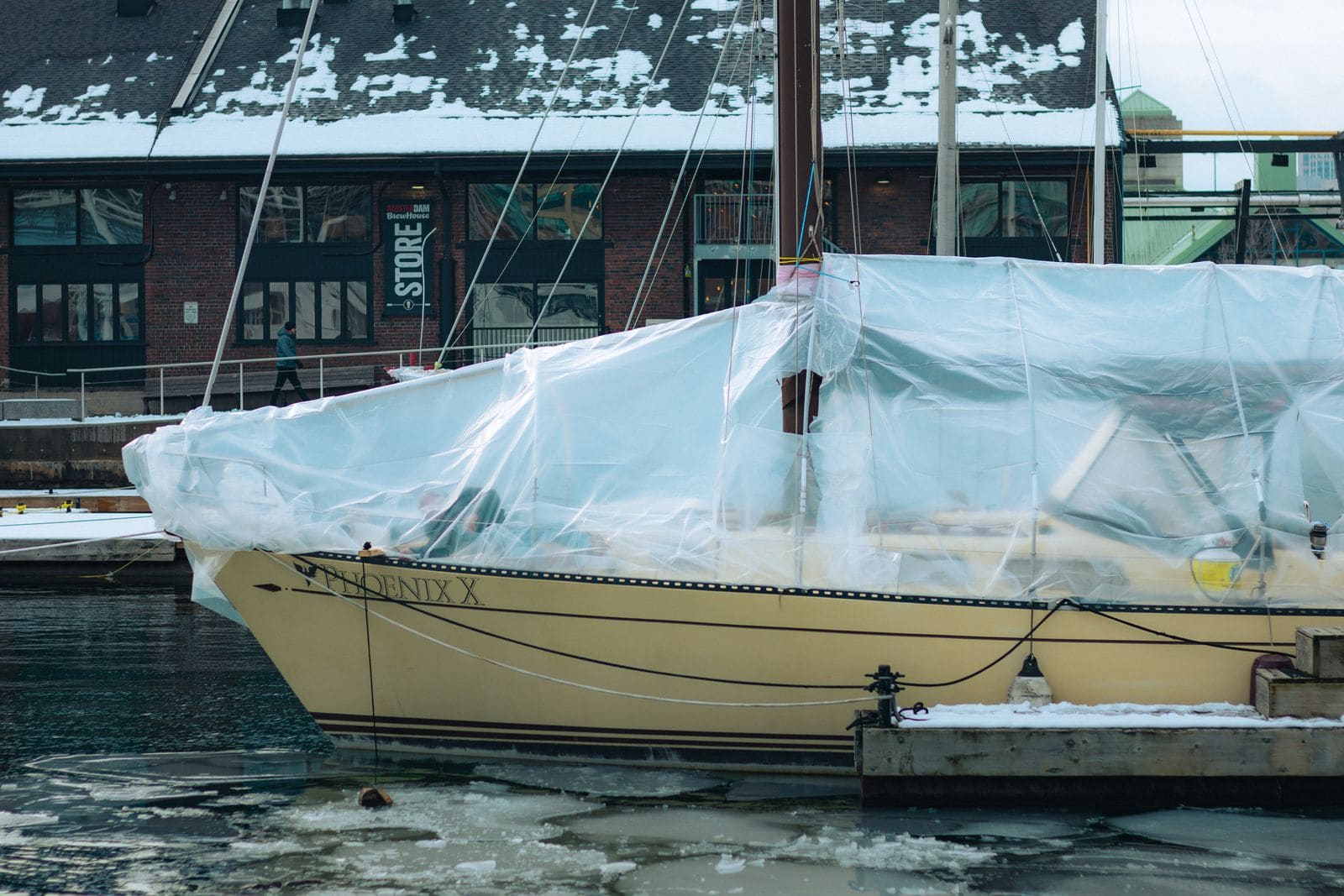
Leave a tag at the helm listing which plugs are out and which hoses are off. On the trailer, pull the bilge and transom drain plugs so rain can't collect, and store the plugs where you'll find them. Cover the boat so water and snow can't pool on it.
MasterCraft's reactivation list: reinstall every drain plug, reconnect the heater, head, washdown and wet bar hoses and check them for leaks, look for nests, check fluids, look for freeze cracks and loose clamps, grease the prop spline and install the prop, and start with the boat in the water. Note what you did now in BoatMend so the spring list is ready (see the de-winterizing guide).
Common mistakes
- Running the engine on the trailer "just for a second" without water. It ruins the impeller and can damage the exhaust.
- Adding antifreeze to a cold engine, so the thermostat keeps it out of part of the block.
- Forgetting the heater core, the transmission cooler or the shower, which are not on the engine.
- Leaving water in a ballast pump or a soft ballast bag in the boat.
- Using automotive ethylene glycol antifreeze on the raw-water side instead of nontoxic propylene glycol.
- Adding stabilizer to old fuel and expecting it to fix it.
- Not tagging the boat, then launching in spring with drain plugs out.
When to call a pro
- You can't find every drain point in your manual or on the engine
- A drain won't flow even after clearing it with a wire
- Oil looks milky, or you find water in the transmission fluid
- You see cracks, rust trails or weeping on the block, manifolds or cooler
- Closed-cooling coolant is weak or rusty and you're not sure what your engine takes
- The boat is still under warranty and the maker requires dealer winterization
- Any fuel smell or leak in the engine compartment
Tips
- Do the job before the first hard freeze, not after. One cold night can crack a manifold.
- Keep a printed list of drain points inside the engine hatch for next year.
- Buy antifreeze early in the fall; stores run low after the first freeze warning.
- If you store indoors in a heated building, ask your engine maker whether a lighter routine is allowed; don't assume.
Official references
We read these to write this guide. Your engine's own manual always wins.
- MasterCraft Knowledge Center – Fuel System Winterization
- MasterCraft Knowledge Center – General Storage Info
- MasterCraft Knowledge Center – Ballast System Winterization
- MasterCraft Knowledge Center – General Power Package Winterization
- MasterCraft Knowledge Center – Reactivating the Boat After Storage
- BoatUS – How to Winterize Boat Engines and Drives
- Boating Magazine – How to Winterize Ballast Tanks (Boating Tech Team, 2024)
Safety: BoatMend is for information only and does not replace a certified marine technician. You are responsible for your safety and your boat. Read the full disclaimer.
Last updated 2026-11-06
Related guides
How to Winterize a Sterndrive (MerCruiser, Volvo Penta and Similar)
Get the water out of your sterndrive engine, protect it with antifreeze, and service the drive before storage. A cracked block or manifold from one missed drain plug can cost thousands, and doing it yourself saves a shop bill of several hundred dollars.
How to Winterize a Marine Diesel Inboard (Sailboat or Trawler)
Lay up a marine diesel for winter the way the engine makers describe it, covering fresh oil, a full and treated fuel tank, antifreeze through the raw-water side, the impeller out, the coolant checked, openings plugged and the battery cared for. Freeze damage to a diesel's raw-water circuit is one of the most expensive and most avoidable winter repairs.
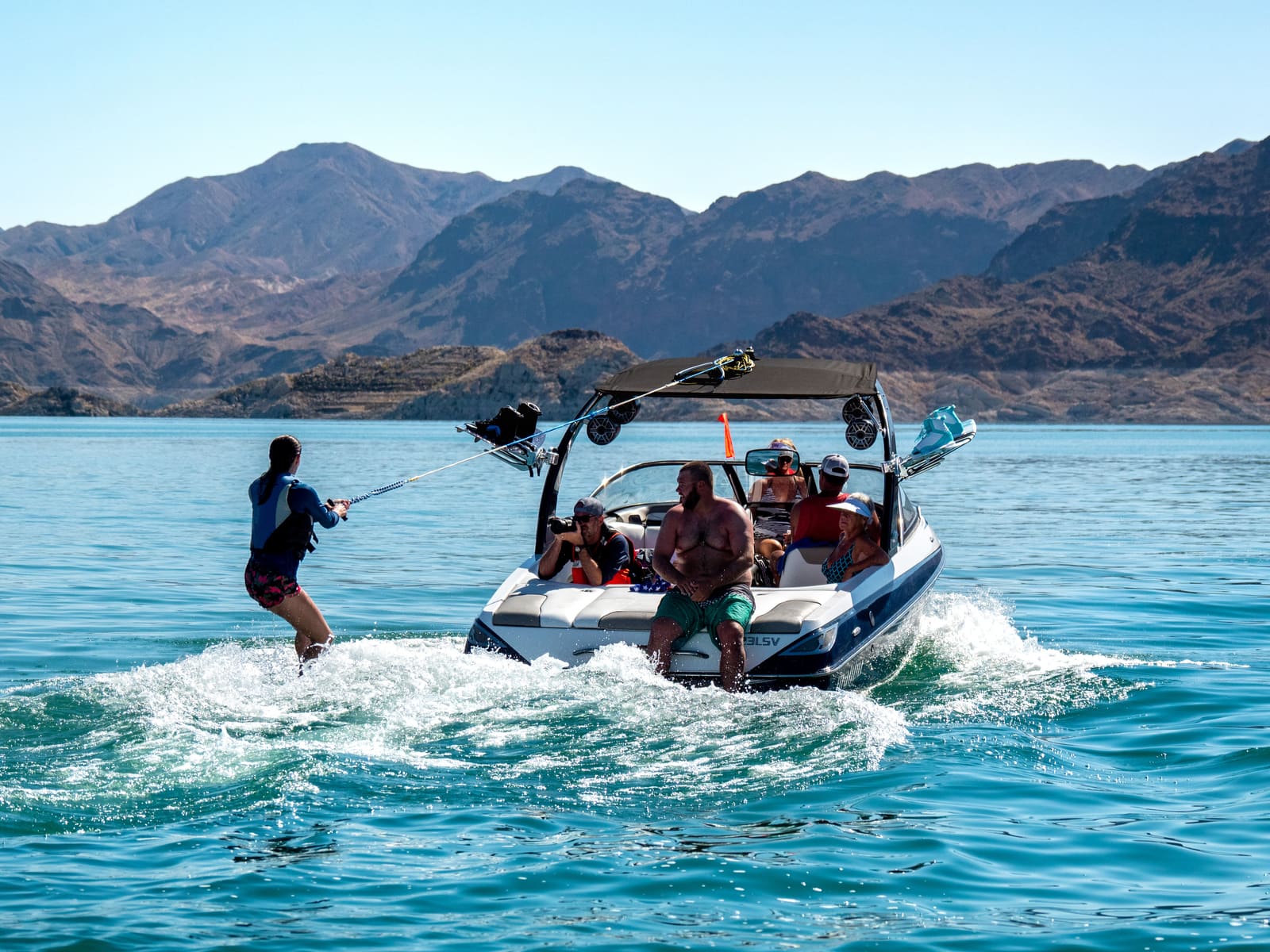
Wake Boat Ballast Systems - Care, Troubleshooting, Weight Limits and Winterizing
Keep your wake boat's ballast tanks, bags and pumps working: fill and drain them the right way, stay under the boat's weight capacity, fix tanks that won't fill or empty, change the pump impellers, stop invasive species from riding along, and protect the system from freezing.
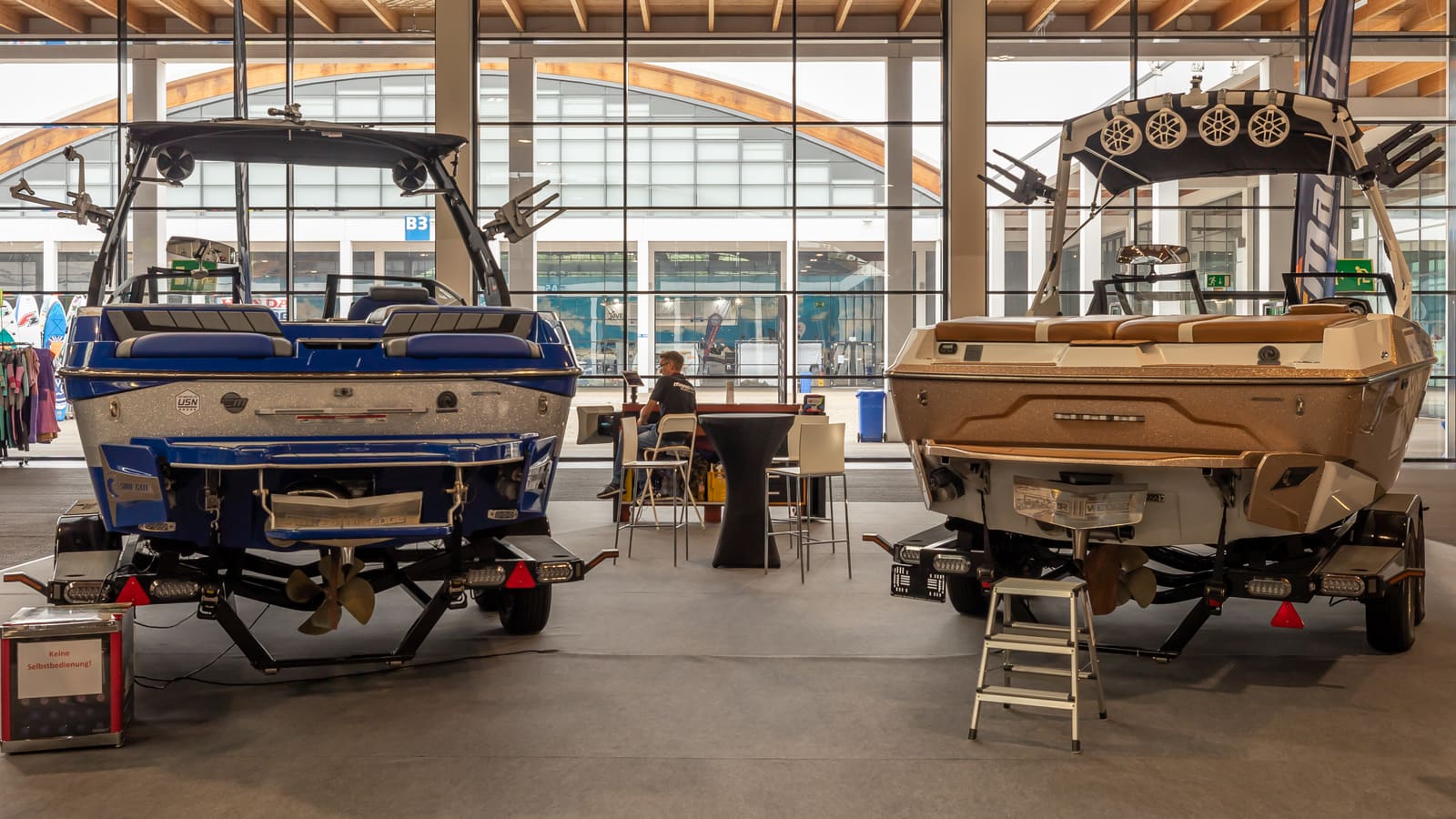
V-Drive Transmission Care for Wake and Ski Boats: Fluid, Cooler, Coupler and Shaft Seal
Wake boats and many ski boats put the engine in the stern, backward, and turn the power through a V-drive transmission. Learn how to check and read the transmission fluid, why the cooler and its drain matter in winter, what the coupler and shaft seal tell you, and which noises and leaks mean it's time for a technician.
How to Fog an Engine for Storage
Coat the inside of your engine's cylinders with fogging oil before a long layup so rust does not form over the winter. Learn when fogging applies, how it differs for carbureted, fuel-injected and direct-injection engines, and why your maker's instructions come first.
Ethanol (E10) Fuel Care: Stabilizer, Phase Separation, Fuel Lines and Tank Vents
Keep E10 gasoline from damaging your boat engine. Learn how to use stabilizer, test for water and phase separation, and inspect the fuel lines, primer bulb, anti-siphon valve and tank vent. Most fuel-related breakdowns start with one of these.
How to Check and Change Coolant in a Closed Cooling System
Check, test and change the coolant in a freshwater-cooled (closed cooling) inboard, sterndrive or diesel, and learn the heat exchanger basics that keep it working. Old coolant quietly eats hoses, pumps and engine passages, and many boats go a decade without a change.
How to Winterize (and Recommission) Your Boat's Freshwater System
Protect the tank, pump, water heater, faucets and showers from freeze damage with non-toxic antifreeze, then flush and sanitize everything in the spring so the water is clean again. A cracked pump or split fitting is a common, avoidable winter repair bill.
How to Flush an Engine While the Boat Stays in the Water
Boats kept in a saltwater slip, on a mooring or on a lift can't always use flush muffs. Learn how built-in outboard flush ports, sterndrive and inboard flush kits and flush-valve seacocks work, which engines can use them in the water, how to avoid back-flow and hydrolock, and a simple after-every-trip routine.
How to Inspect and Replace Exhaust Shutters and Flapper Valves
The rubber shutters inside a sterndrive's exhaust and the flappers at an inboard's exhaust outlet are one-way valves that keep water from washing back into the engine. Learn where they are, how they fail, how to check them every year, and why riser service is the perfect time to replace them.
How to Use an Oil Extractor Pump for Boat Oil Changes
Change engine oil cleanly through the dipstick tube with a manual or electric extractor: know which engines it suits, warm the oil first, get as much out as you can, then refill to the dipstick, recycle the old oil and clean the pump so it's ready next time.
Marine Battery Care: Test, Charge and Store for Winter
Check your boat battery's health, charge it the right way for its type (flooded, AGM or lithium), and store it so it is ready in spring. Most "boat won't start" calls start with a neglected battery.
Winter Layup Master Checklist (Step-by-Step, With Links to Each Job)
One ordered checklist for putting any boat away for winter, from booking storage and treating the fuel to winterizing the engine, water systems, head and batteries, then blocking, covering and securing the boat. Each step links to the detailed BoatMend guide for that job.
Spring Commissioning - Getting Your Boat Ready for the Season
Wake your boat up after storage with a step-by-step check of the battery, fuel system, engine, drive and safety gear. Catching a cracked hose or dead battery in the driveway beats a tow on opening weekend, and saves a typical shop commissioning fee.