Cold-Weather Boating: Cold Water Safety, Gear and Engine Care in Late Fall and Winter
Boating after the crowds leave can be beautiful, but cold water changes the risks. Learn why cold shock is the first danger, why the popular 1-10-1 rule needs caution, what to wear, how to plan, and how to care for the engine, battery and anything that holds water between trips.
Time
30 min
Applies to
All engines
Safety first: In cold water, the first minutes are the deadliest: a sudden gasp and uncontrolled breathing can make you inhale water even if you're a strong swimmer. Wear your life jacket, not just carry it. If someone falls in or the boat is in trouble, call the Coast Guard right away on VHF channel 16 (or press the DSC distress button) or call 911; don't wait to see if you can manage alone.
Fuel smell, water coming in, CO alarm or smoke? Stop, get everyone in life jackets and call USCG on VHF 16 or 911. For a tow: Sea Tow or TowBoatUS.
Owners often ask
- Is it safe to wear an inflatable life jacket when boating in winter?
- Is the 1-10-1 cold water rule accurate?
This guide walks you through it. Still stuck? Ask the AI Mechanic about your engine.
Tools
- Life jacket or float coat for everyone aboard (USCG-approved, sized and worn)
- VHF radio with DSC and your MMSI programmed, plus a charged handheld
- Personal locator beacon (PLB) for each person if you can
- Dry bag with a full change of warm clothes
- Mylar emergency blankets
- Portable power bank and cables
- Boarding ladder you can use from the water
Parts & supplies
- Synthetic or wool base layers, waterproof outer layer, insulated waterproof boots and gloves
- Wetsuit or dry suit for paddling, dinghy sailing or anything where falling in is likely
- Food and non-alcoholic drinks
Before you start
Cold water is the hazard, not cold air. The National Weather Service warns that warm air can give a false sense of security while the water stays cold, and that cold shock can be just as severe in 50 to 60°F water as in 35°F water. In many places water stays cold well into late spring and turns cold again early in fall.
When to take extra steps. BoatUS Magazine gives a simple rule of thumb: add the air and water temperatures together. If the total is under 100°F, use the cold-weather precautions in this guide. For paddling, dinghy sailing or anything where you're likely to get wet, use 120 as the line.
About "1-10-1." You may have heard the rule "1 minute to control your breathing, 10 minutes of useful movement, 1 hour before you pass out from hypothermia." It's popular in boating courses, but the National Center for Cold Water Safety calls it a myth that understates the danger: breathing can stay out of control for longer than a minute, your strength fades steadily from the moment you hit the water, and in near-freezing water people can be helpless within a few minutes. Treat those numbers as a best case, never as a plan.
Fewer boats means slower help. BoatUS notes there are fewer people around to help in the off-season, so rescue may take longer, and some marinas, fuel docks and pump-outs keep winter hours or close.
Steps
Look up water temperature (NOAA buoys and local reports) as well as air temperature, wind and waves. BoatUS points out that fall and winter winds and cooling water can build stronger waves and currents, and fog is more common. If the numbers say "cold," plan a shorter trip close to shore, with company.
BoatUS says a float plan, or at least telling a trusted person where you're going and when you'll be back, matters even more when it's cold and dark early. Tell them when you're back, too. Check that fuel, pump-out and launch services you'll need are open.
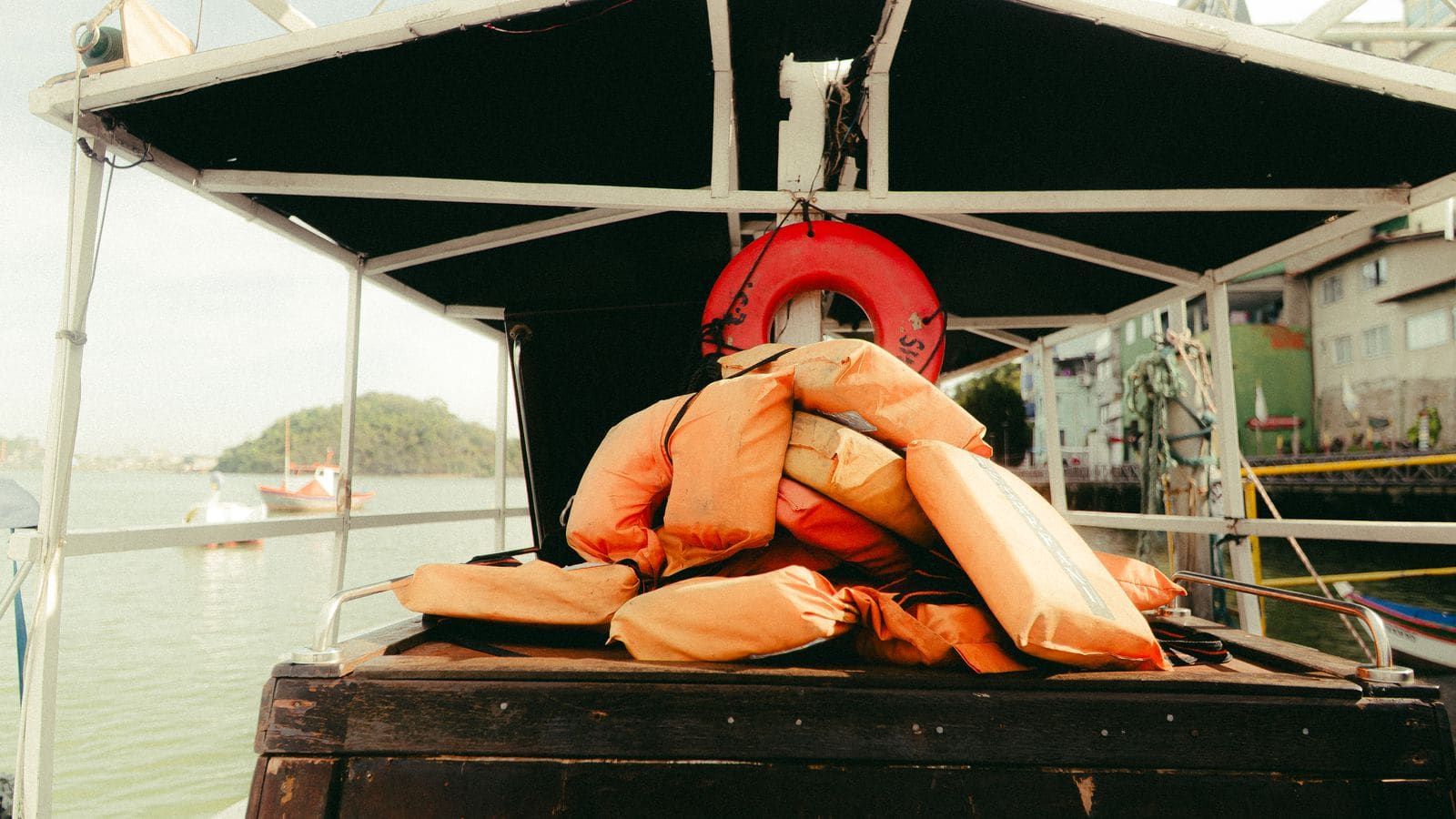
The NWS says a life jacket greatly improves survival: it keeps your head up through the gasping phase and buys time once your muscles stop working. BoatUS adds that it's also a warm extra layer. For frequent winter boating, consider a USCG-approved float coat (a parka with foam flotation inside). The Coast Guard's advice is simple: the best life jacket is the one you'll actually wear.
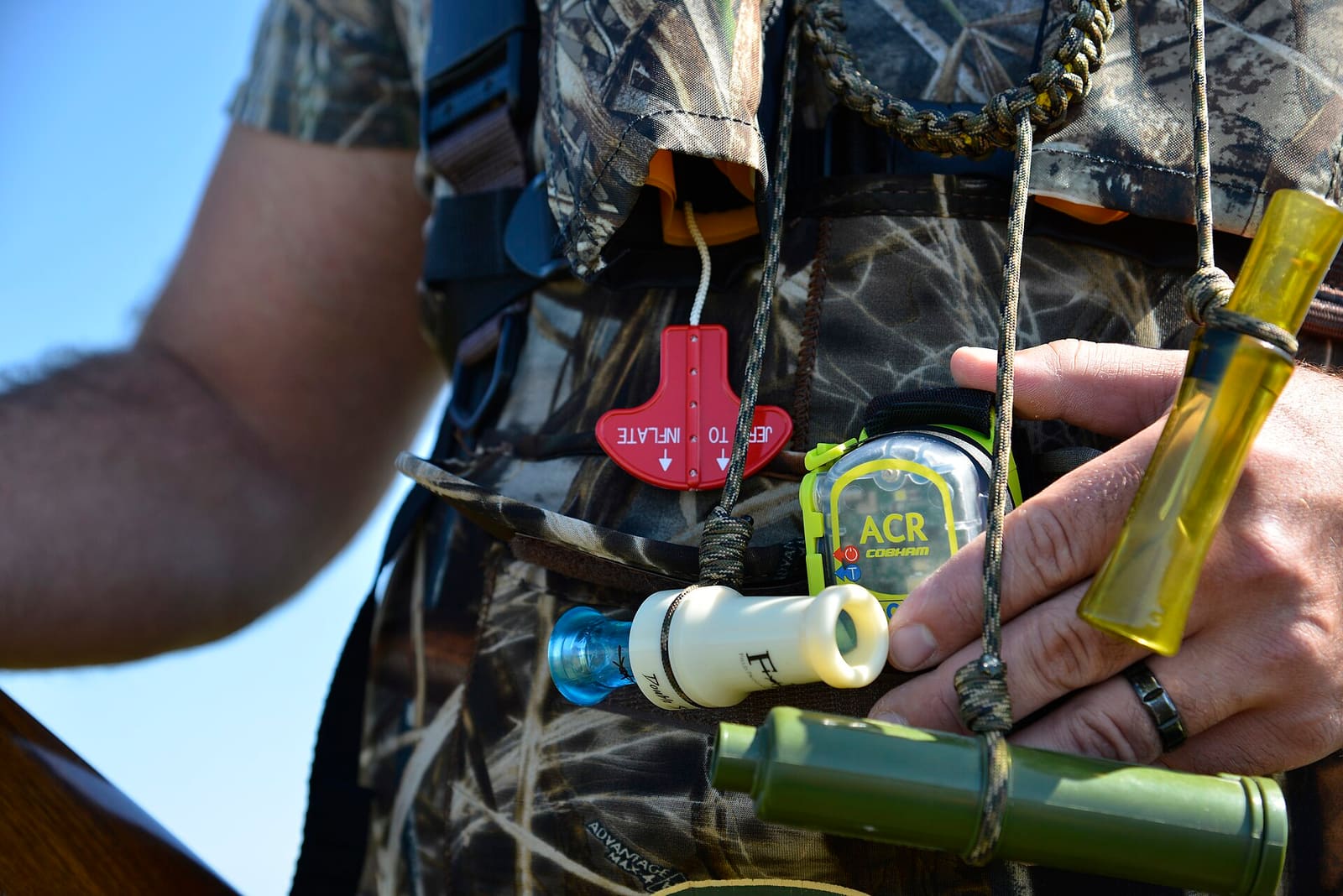
Photo: Petty Officer 2nd Class Nate Littlejohn, U.S. Coast Guard / Wikimedia Commons · Public domain BoatUS reports that most inflatable life jacket makers don't recommend them at 40°F and below, because they inflate more slowly and give less buoyancy near freezing. Read your model's label and manual. In very cold weather, a foam vest or float coat is the safer choice. See the inflatable life jacket care guide.
BoatUS's advice: synthetic or merino wool base layers (wet cotton pulls heat away), a waterproof outer layer, good waterproof gloves and insulated waterproof boots, and bright colors so you're easy to spot. For paddling or small-boat sailing, where falling in is likely, wear a wetsuit or dry suit; a Coast Guard search-and-rescue controller quoted by BoatUS recommends a dry suit once the water drops below about 60°F. For cold water, pick a life jacket with a light and, if you can, a splash guard: a cold-water physiologist in the same article warns that waves breaking over the face are a big drowning risk once you can no longer hold your head up. Pack a full change of clothes in a dry bag. Sunscreen and eye protection still matter; spray and wind add up fast.
What "dressed for the water" really means: the National Center for Cold Water Safety says most people get the strongest cold shock in water between about 50 and 60°F if they have no wetsuit or dry suit, and that the air temperature doesn't matter once you're in. Its test is practical: would what you're wearing keep you calm and able to use your hands long enough to climb back aboard, swim a short distance or wait for rescue? A wetsuit only counts if it's thick enough and fits snugly; a dry suit only works if it doesn't leak and has warm layers under it. Try your gear in the water close to shore before you rely on it.
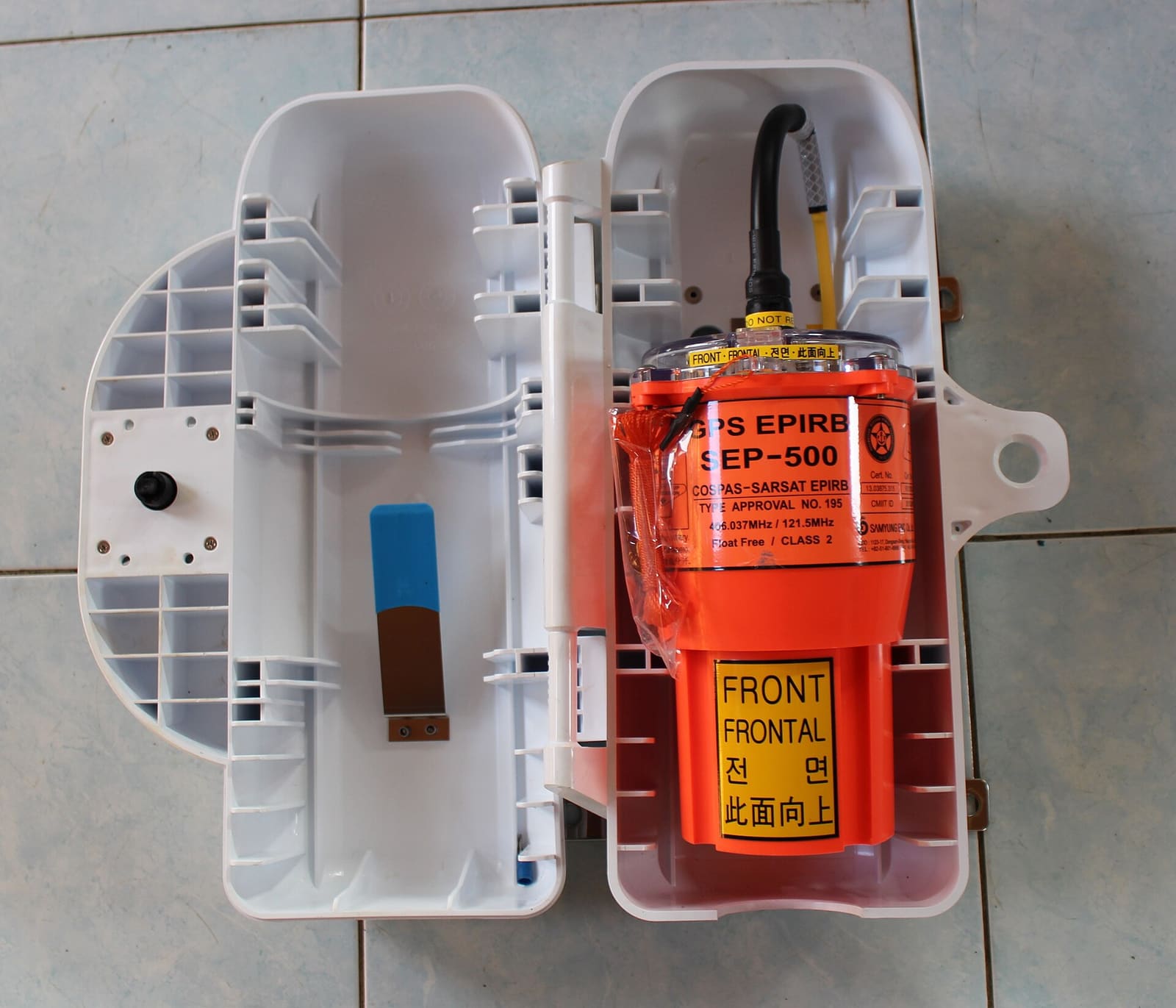
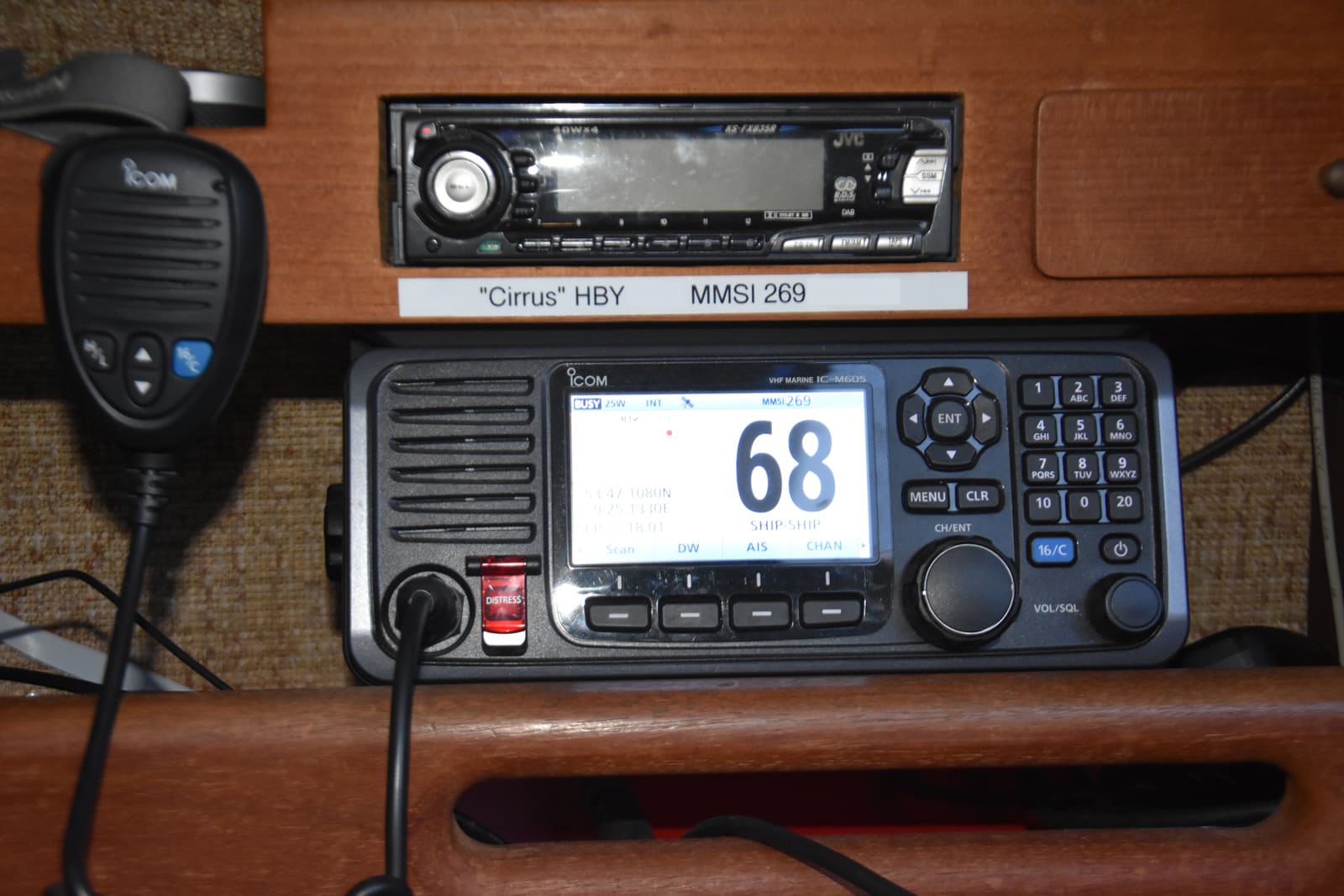
Make sure the VHF works and, if it has DSC, that your MMSI is programmed so a distress call sends your position. BoatUS suggests a personal locator beacon for each person as backup. Cold drains batteries faster, so charge phones and handhelds fully and carry a power bank. Mylar emergency blankets are cheap and light. See the VHF and PLB guides.
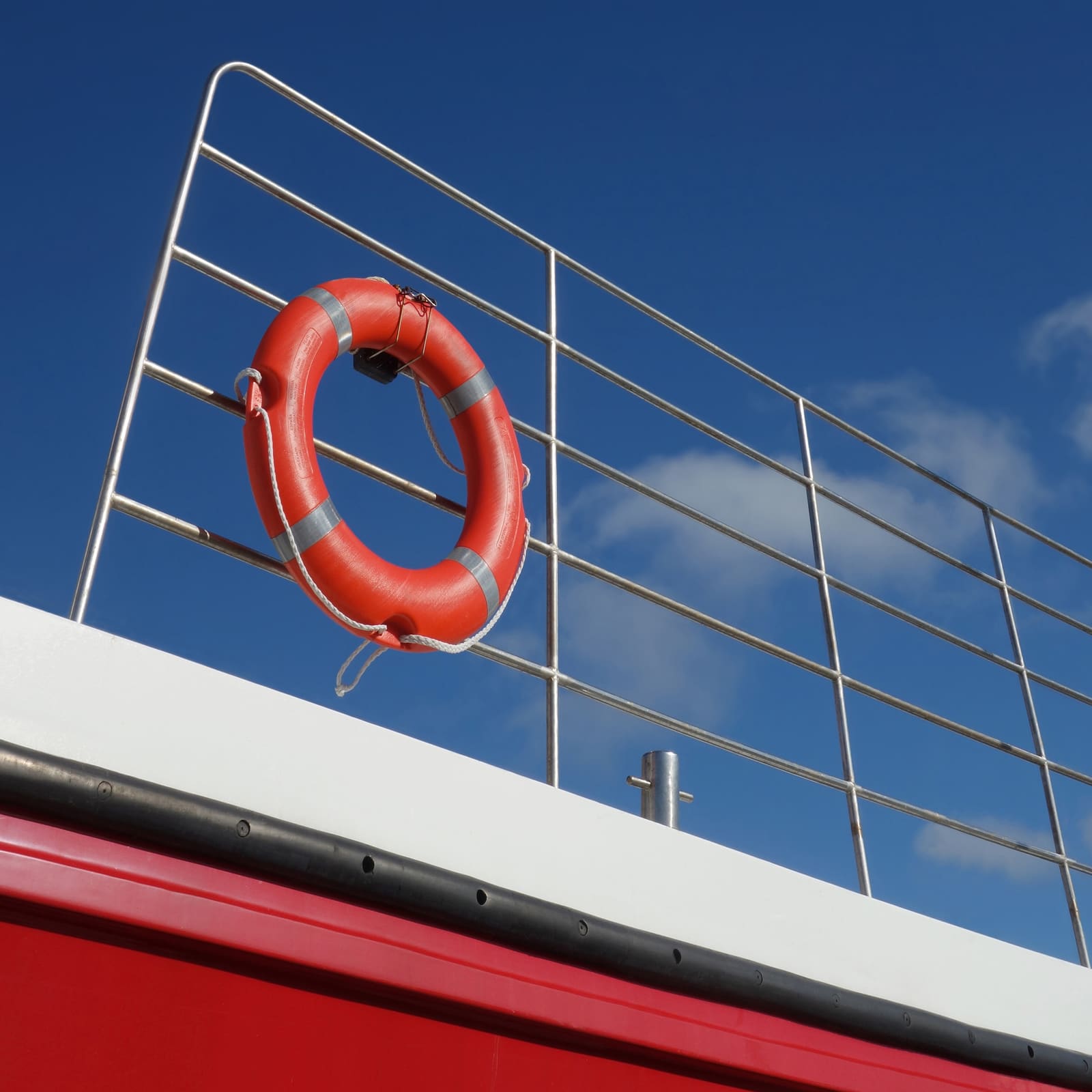
With fewer boats around, going overboard alone is especially dangerous. Wear the engine cutoff lanyard or a wireless ECOS fob, as BoatUS suggests for solo boaters. Make sure there's a boarding ladder you can reach and use from the water with cold, clumsy hands. See the kill switch, wireless fob and man-overboard gear guides.
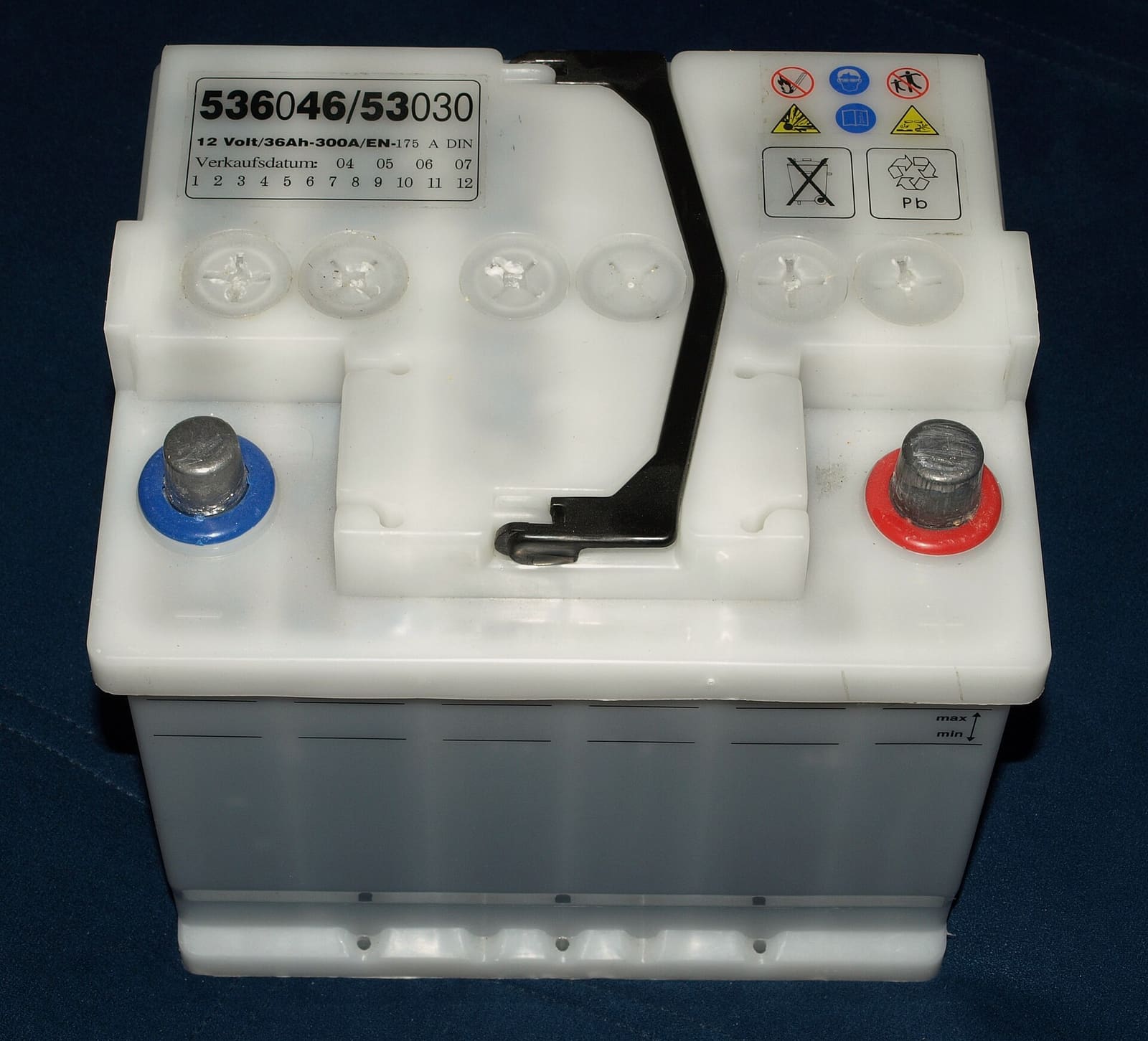
BoatUS notes that cold reduces battery capacity. Start each trip with fully charged batteries, check terminals, and don't run electronics for long with the engine off. A weak battery that started fine in summer may not crank on a cold morning. See the marine battery guide.
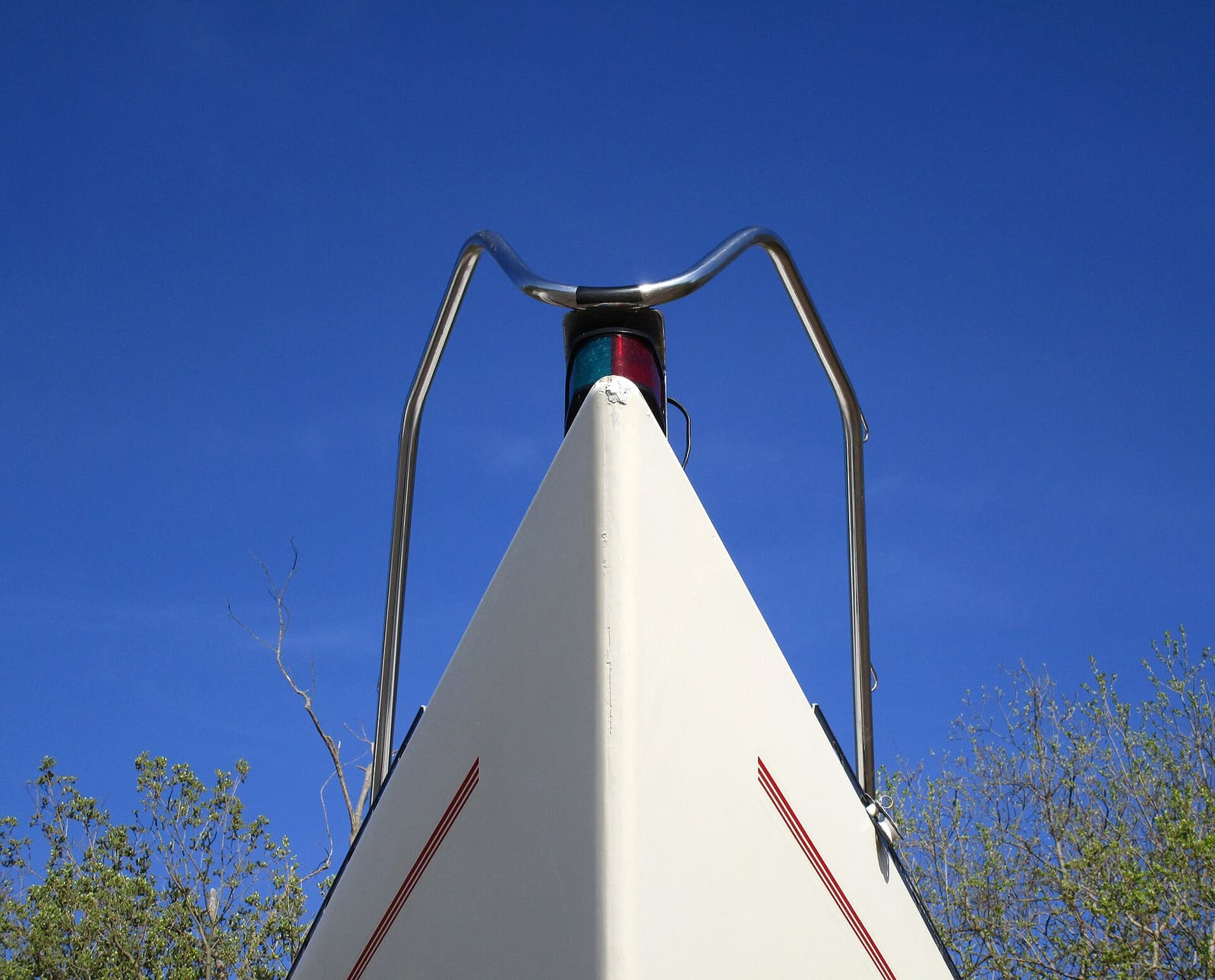
Let the engine idle and warm up as your owner's manual describes before putting it under load. Check the telltale or exhaust water flow right after starting; ice or slush at the water intake can block cooling. Expect lower fuel economy in rough, cold conditions and keep a good reserve. Make sure navigation lights work: BoatUS reminds boaters that daylight fades fast in fall and winter, and lights are required after dark and in reduced visibility.
Spray freezes on decks, rails and windshields, making footing slick and adding weight up high. Ramps and docks ice over, especially in the morning. Keep the deck clear, wear boots with good grip, use handholds and move carefully. Avoid skim ice: it can cut into hulls and damage props and lower units.
BoatUS's advice: expect the gasp reflex and focus on getting your breathing under control; kick off heavy boots that drag you down; if you can't get out, cross your arms over your chest and draw your knees up to hold heat (the HELP position); and stay with the boat or anything that floats, because a bigger object is easier to spot. Get out of the water as fast as you can; the NWS warns that body temperature can keep dropping after rescue, so get the person warm, dry and sheltered right away. BoatUS cautions against applying heat to the arms and legs of a hypothermic person. Call for medical help.
More from the cold-water experts BoatUS interviewed:
- In the first minute or two, protect your airway. Hold on to something, or lie back and float; don't start swimming right away. The cold-shock gasp passes in about a minute or so, and knowing that helps you stay calm.
- Then you have roughly 10 to 20 minutes of useful hand and arm strength to climb out, grab a line or get to something that floats. Use it on the things that matter most. If you must move, kick with your legs and keep your arms close to your body.
- Getting someone aboard: lift them as close to horizontal as you can, because hauling a cold person out straight up can make blood pressure crash; if their airway is at risk, get them out any way you can. Once aboard, keep them lying down, still and wrapped up, and keep encouraging them ("keep fighting") instead of telling them to relax. People can collapse just before, during or after rescue.
- The National Center for Cold Water Safety adds that it's very hard to tell "badly chilled" from true hypothermia without a core temperature, and children cool much faster than adults. Treat any cold, shivering, confused person as an emergency.
BoatUS warns that household space heaters tip over easily on a boat, open-flame heaters must never be left unattended (including while you sleep), and any fuel-burning heater can produce carbon monoxide. Use heaters made for boats, follow their instructions, and have a working CO alarm. See the cabin heater and CO detector guides.
Anything that holds water can freeze and crack between trips:
- Outboards: after use or flushing, Mercury says to tilt the motor all the way down so trapped water drains from the cooling passages. Store it down when a freeze is coming.
- Inboards and sterndrives don't drain themselves; if a hard freeze is forecast, drain the engine per your manual or winterize it.
- Livewells, baitwells, washdown pumps and raw-water strainers: drain them and leave valves open per the pump maker's instructions.
- Freshwater lines and the head: drain or protect them if the boat sits in freezing weather.
- Boats left in the water need bilge pumps powered, batteries charged and, in ice country, a de-icer or bubbler. See the in-water winter storage guide.
BoatUS notes you burn more calories staying warm and still lose fluids even when you don't feel thirsty. Bring snacks and warm or cold non-alcoholic drinks; alcohol speeds heat loss and clouds judgment.
Common mistakes
- Judging the day by the air temperature instead of the water temperature.
- Carrying life jackets in a locker instead of wearing them.
- Relying on an inflatable life jacket below its rated temperature.
- Wearing cotton, and no dry clothes aboard.
- Going out alone without telling anyone, without a kill switch, or without a way to reboard.
- Trusting "1-10-1" as a survival timeline.
- Leaving the outboard tilted up or the livewell full when a freeze is coming.
- Using a household space heater in the cabin.
When to call a pro
- Any person in the water, or a boat taking on water, disabled or drifting toward danger: call the Coast Guard on VHF 16 or 911 immediately, then TowBoatUS or Sea Tow for non-emergencies
- Someone shivering hard, confused, slurring or very drowsy after cold exposure: get medical help
- A cracked outboard, block, manifold or strainer after a freeze
- Installing a cabin heater or its fuel and exhaust: use a qualified marine technician
- Ice damage to the hull, prop or lower unit
Tips
- Keep a cold-weather bag aboard all season: hats, gloves, a fleece, a dry bag of clothes and emergency blankets.
- A hand warmer in the pocket with your phone helps the battery last longer, BoatUS's fishing editor suggests.
- Practice putting on your life jacket and reboarding in the summer, when mistakes aren't deadly.
- Plan to be back well before dark.
Official references
We read these to write this guide. Your engine's own manual always wins.
- BoatUS Magazine – 11 Hot Tips To Enjoy Cold-Weather Boating
- National Weather Service – Cold Water Hazards and Safety
- National Center for Cold Water Safety – The 1-10-1 Myth
- National Center for Cold Water Safety – Cold Shock
- USCG Boating Safety – Wearing Your Life Jacket
- Mercury Marine – 7 Mistakes to Avoid When Winterizing Your Mercury Outboard (flush, then tilt down to drain)
- BoatUS – The Crippling Effects Of Cold-Water Immersion
- National Center for Cold Water Safety – Hypothermia
- National Center for Cold Water Safety – Always Dress for the Water Temperature
Safety: BoatMend is for information only and does not replace a certified marine technician. You are responsible for your safety and your boat. Read the full disclaimer.
Last updated 2026-10-25
Related guides
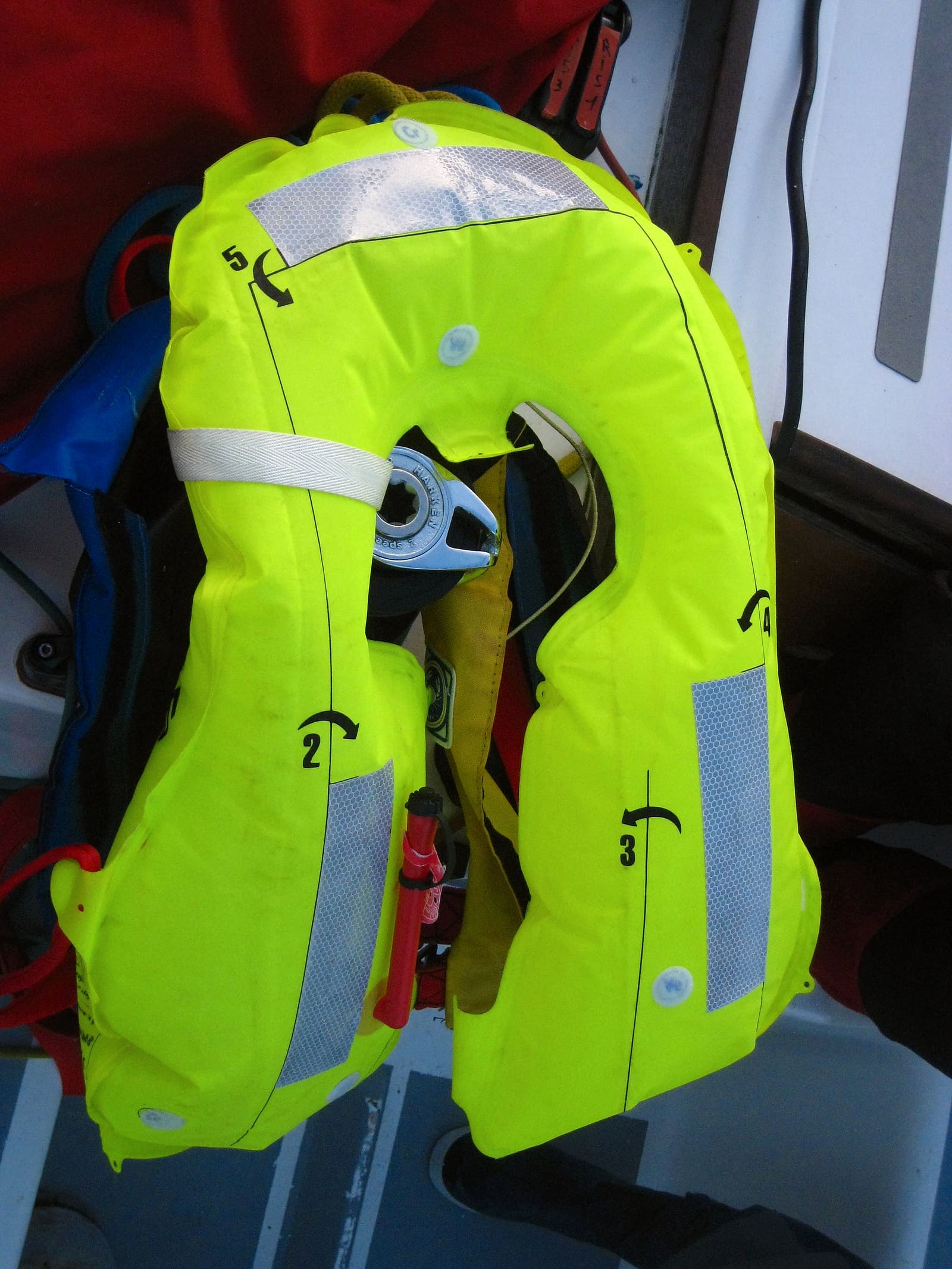
Inflatable Life Jacket Care: Inspect, Test and Rearm
An inflatable life jacket only saves a life if the cylinder is full, the inflator is armed and the bladder holds air. Learn the quick check before every trip, the overnight leak test, how to read replacement dates and how to rearm it after it fires.
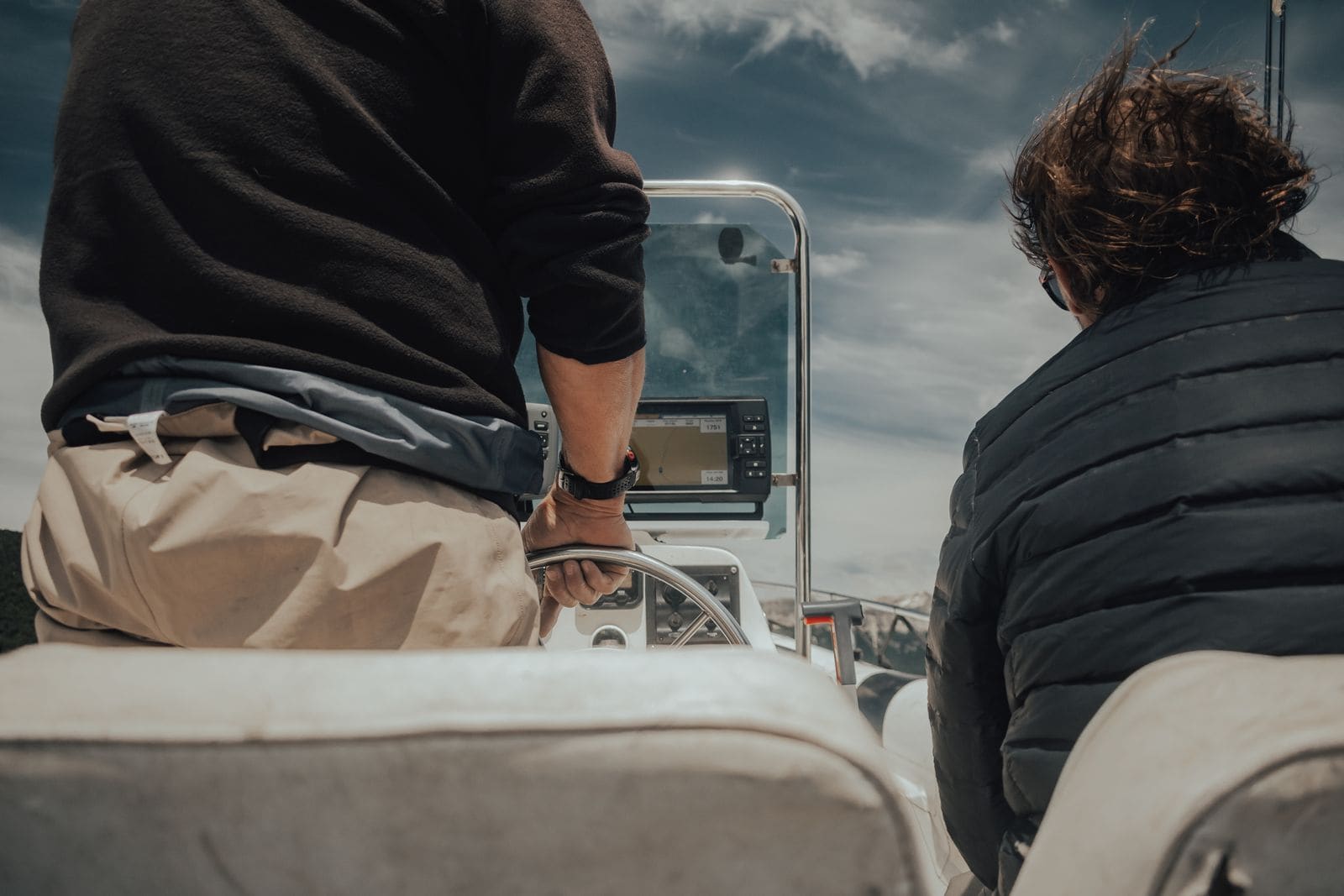
Engine Cut-Off Switch (Kill Switch) and Lanyard: The Law, Testing and Daily Use
How the engine cut-off switch (ECOS) and its lanyard or wireless fob work, when federal law requires you to wear it (boats under 26 feet, 3 hp or more, on plane), how to test it before every trip, and why a spare clip aboard matters.
Wireless Engine Cut-Off (ECOS) Fobs: Pairing, Battery Checks, Testing and the Law
How wireless kill-switch systems such as Fell Marine MOB+, Mercury 1st Mate, Garmin OnBoard and Yamaha's wireless MOB tags work, how to pair and test them, when to change fob batteries, how they fit the federal engine cut-off law compared with a lanyard, and why you should always carry a spare.
Man-Overboard Recovery Gear: Throwables, Lifesling, Ladders and MOB Alarms
Set up and check the gear that gets a person in the water back aboard - a throwable within reach, a floating rescue line or Lifesling-style sling, a boarding ladder someone in the water can pull down, and MOB alarms or AIS beacons - and practice the drill so it works when it counts.
EPIRB and PLB Care: Registration, Batteries, Self-Test and Mounting
Keep your 406 MHz emergency beacon ready to work on the worst day of your life. Register it free with NOAA and renew every two years, track the battery and hydrostatic release dates, run the self-test without triggering a false alert, and know what happens after you press the button.
Set Up Your VHF Radio: MMSI, DSC, GPS Hookup and Radio Checks
Get a free or low-cost MMSI number, program it into your DSC radio, connect your GPS so a distress alert sends your exact position, check the antenna, and learn the Channel 16 rules and the right way to do a radio check.
How to Test and Fix Your Boat's Navigation Lights
Learn which navigation lights your boat must show and when, then test them and fix the usual culprits such as corroded sockets, loose pole-light plugs and blown bulbs. Working lights are legally required at night and in poor visibility and are how other boats see which way you are heading.
Marine Battery Care: Test, Charge and Store for Winter
Check your boat battery's health, charge it the right way for its type (flooded, AGM or lithium), and store it so it is ready in spring. Most "boat won't start" calls start with a neglected battery.
Cabin Heater Safety Aboard: Diesel, Propane and Electric Heaters
Heat your cabin without poisoning the crew or burning the boat. Covers carbon monoxide alarms, exhaust and through-hull checks for diesel and propane heaters, fuel and ventilation, why household and camping heaters don't belong in a closed cabin, and how to use electric space heaters on shore power safely.
Carbon Monoxide on Boats: Where It Comes From, CO Alarms and Warning Signs
Carbon monoxide can build up in cabins, under canvas and around the swim platform, and its first symptoms look like seasickness. Learn the danger zones, where to mount marine CO alarms, how to test and replace them, and exactly what to do if an alarm sounds or someone feels sick.
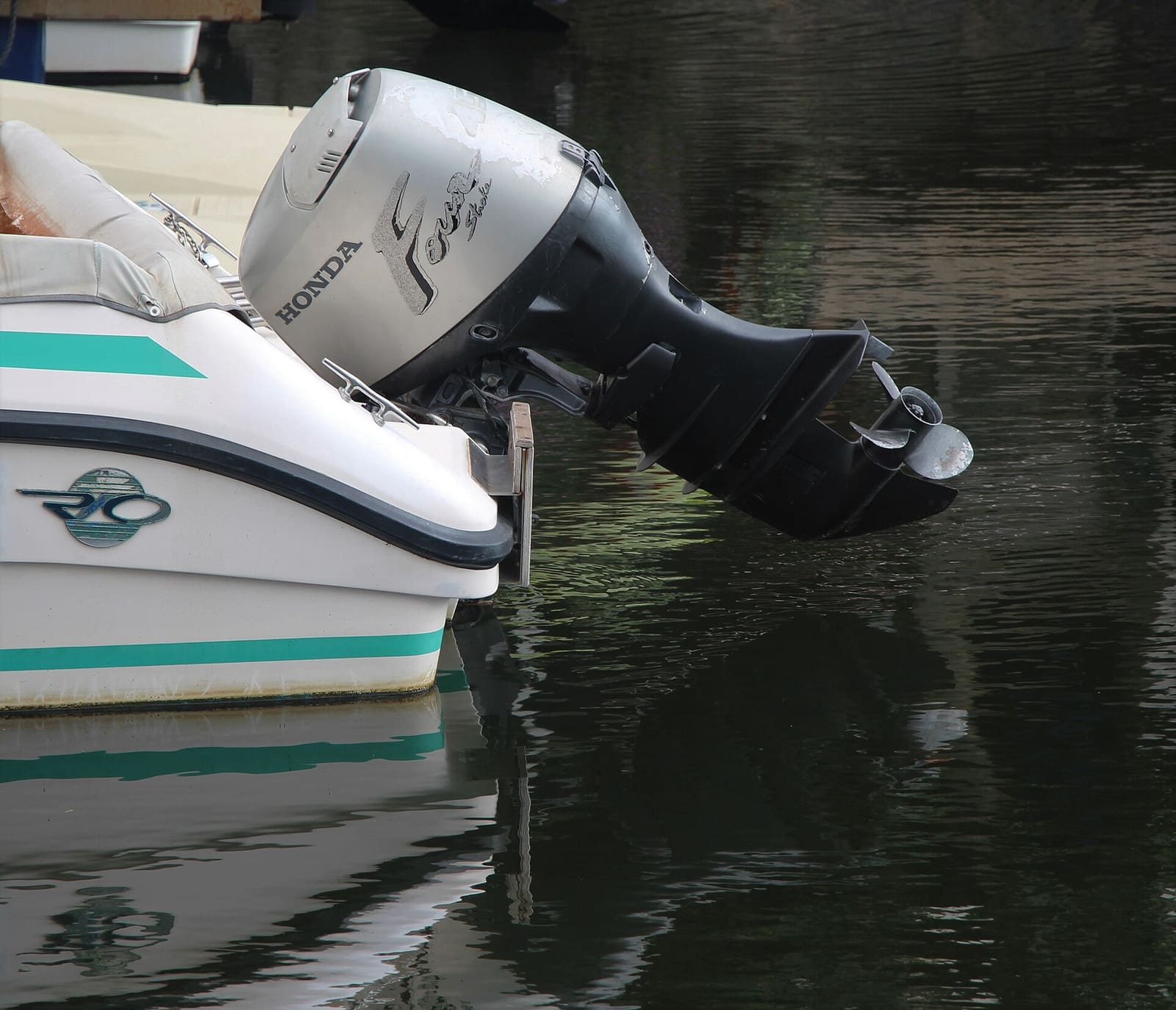
How to Winterize an Outboard Engine
Protect your outboard from freeze damage, stale fuel and internal corrosion over the off-season. Most owners can do it in an afternoon with basic tools, compared with a shop bill that often runs several hundred dollars.
Livewell, Baitwell and Washdown Pumps - Clean, Troubleshoot and Winterize
Find out why a livewell or washdown pump runs but moves no water, from a closed valve or clogged pickup to an airlock, then clean the system and winterize both sides of every pump so nothing cracks over the winter.
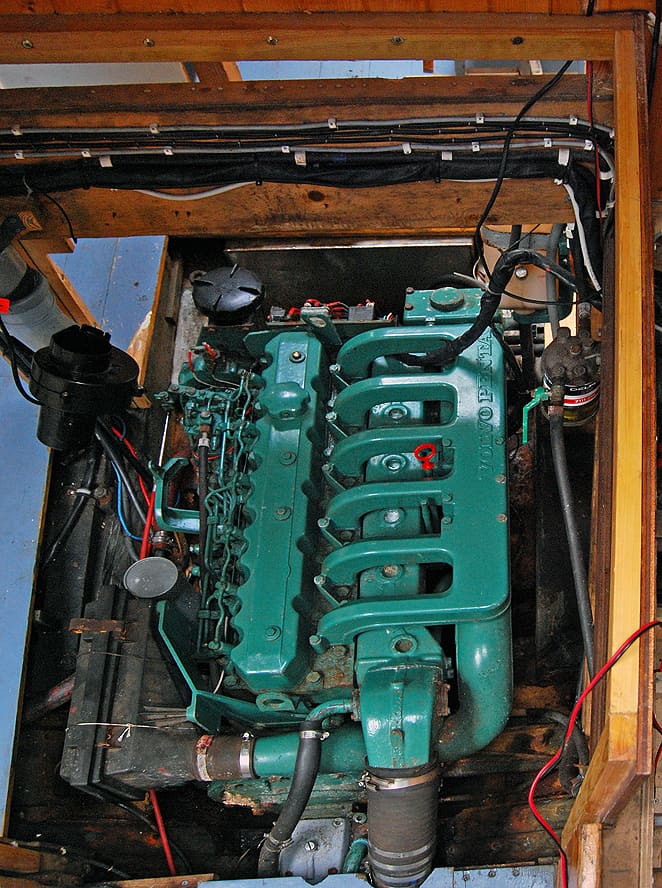
How to Inspect and Clean a Raw-Water (Sea) Strainer
The sea strainer is the cheap screen that keeps weeds, shells and plastic out of your engine, generator and A/C pumps. Learn how to clean it safely with the seacock closed, reseal the lid so it can't suck air, spot a cracked bowl before it floods the boat, and winterize it.
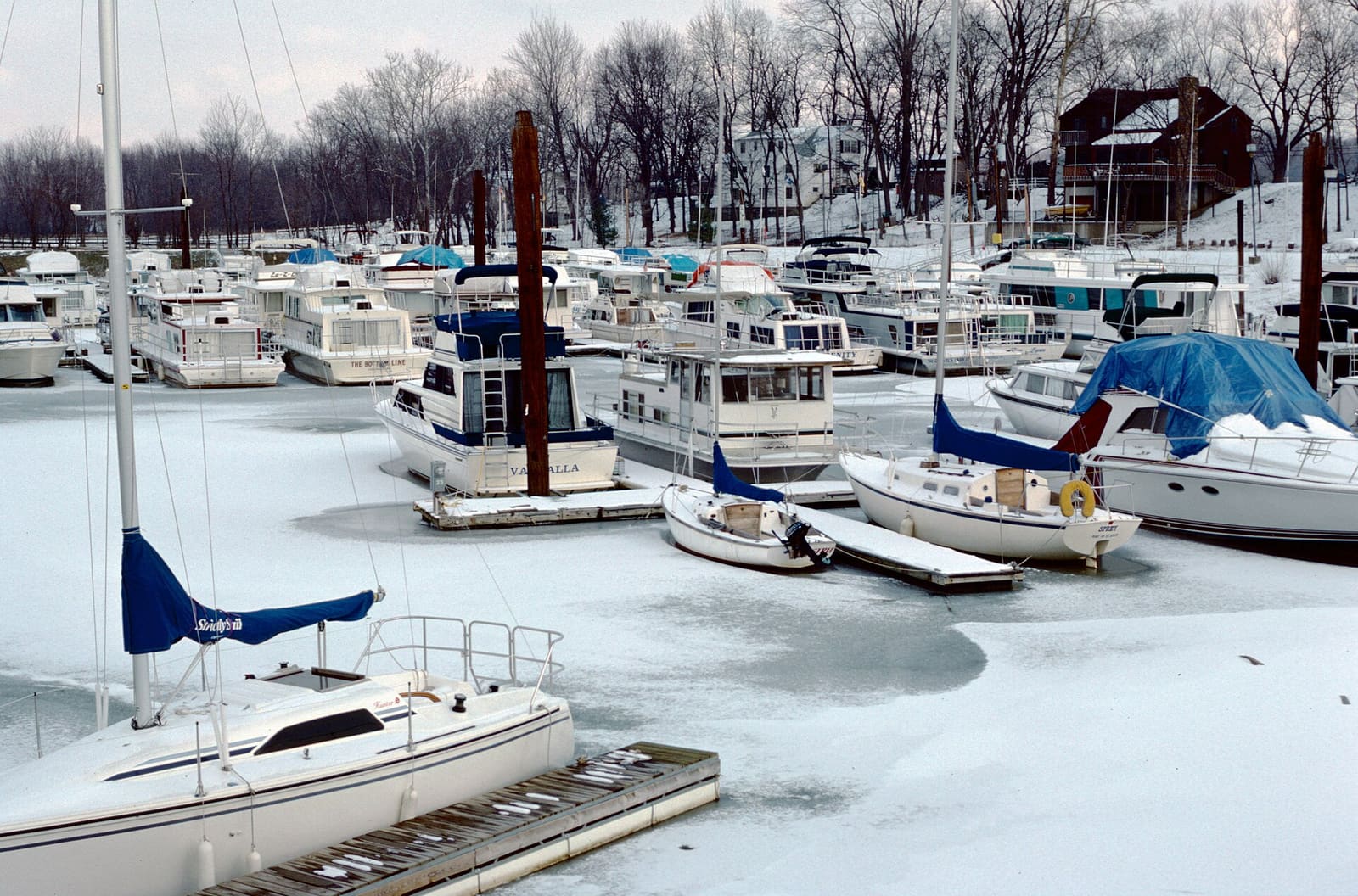
How to Keep Your Boat in the Water Over Winter (De-Icers, Covers and Checks)
Wintering afloat can be safe if you still winterize every water system, keep the bilge pump and batteries working, use a de-icer correctly on a GFCI-protected circuit, respect the shock and thin-ice risks, and visit the boat regularly.
USCG Required Safety Equipment Check by Boat Length
Walk through your boat and confirm you carry every piece of safety gear the US Coast Guard requires for your boat's length and type, and that none of it is expired or worn out. Missing or expired gear is one of the most common tickets on the water, and it is the gear you need when things go wrong.